G
Species Profile

Gnat

Tiny flies, huge diversity.
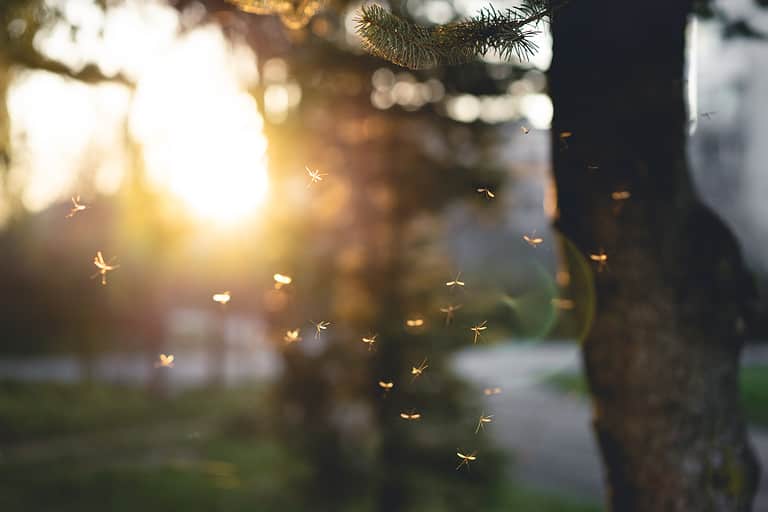
Henrik Larsson/Shutterstock.com
gnats vs fruit flies

At a Glance

Order Overview This page covers the Gnat order as a group. Stats below are general traits shared across the order.
Also Known As Midge, No-see-ums, Sandfly, Eye gnat, Punkies, Buffalo gnat
Diet Omnivore
Activity Diurnal+
Lifespan 30 years
Weight 1.0E-5 lbs
Status Not Evaluated
Did You Know?

"Gnat" isn't a scientific group-people use it for several small fly lineages, including fungus gnats, biting midges, black flies, and non-biting midges.

Scientific Classification

Order Overview "Gnat" is not a single species but represents an entire order containing multiple species.

Gnats are small-bodied true flies (Diptera) commonly encountered around water, vegetation, fungi-rich soils, or decomposing organic matter. The term is informal and can refer to multiple lineages, including both biting and non-biting forms.

Kingdom
Animalia
Phylum
Arthropoda
Class
Insecta
Order
Diptera

Distinguishing Features

  • Small true flies (one pair of wings)
  • Often mosquito-like in silhouette in some groups (midges, fungus gnats)
  • Many species form swarms; some are strongly attracted to CO₂, lights, or moist habitats
  • Biting occurs in some families (e.g., Ceratopogonidae, Simuliidae) but not others (e.g., Chironomidae)

Physical Measurements

Males and females differ in size

Length
0 in (0 in – 0 in)
Weight
0 lbs (0 lbs – 0 lbs)
Top Speed
16 mph
About 1–10 km/h

Appearance

Primary Colors
Secondary Colors
Skin Type Gnats have a hard insect cuticle (exoskeleton) with fine hairs (setae). Many look matte from dense tiny hairs or a dusty, frosty coating. Some have a thinner cuticle; mosquito-like Diptera may have scales.
Distinctive Features
  • Order-level body plan (Diptera): one functional pair of wings; hindwings reduced to halteres (balancing organs).
  • Across the order Diptera, adult body length ranges about 1–70 mm and wingspan about 2–120+ mm. Gnats are usually small (about 1–10 mm) but the term is not strict.
  • Order Diptera adults often live days to weeks, sometimes 1–2 months. The life cycle egg to larva to pupa to adult can take 1–3 weeks up to over a year, depending on temperature and habitat.
  • Gnat larvae: fungus gnat larvae in fungus-rich soil, leaf litter or potting mix; non-biting midge larvae in sediment; biting midge larvae in wet mud and marsh edges; black fly larvae on stones in flowing water.
  • Mouthparts vary widely across Diptera: many are non-biting with sponging/lapping or reduced mouthparts; some lineages include piercing mouthparts (blood-feeding) in females. Do not assume all "gnats" bite.
  • Antennae and wing venation are highly variable; many small gnats have relatively long, multi-segmented antennae (often more obvious in males), while others have shorter antennae. Wings may be clear, faintly smoky, or patterned.
  • Legs often slender; some groups have notably long legs (e.g., many fungus-gnat-like forms), while others (e.g., black flies) are more stout-bodied.
  • In Diptera, larvae eat dead matter, fungi, plants, animals, or filter food in water; adults drink nectar or honeydew, may prey or sometimes blood-feed. Habitat and larval diet predict gnat type in homes, wetlands, streams.

Sexual Dimorphism

Sex differences are common in Diptera but vary by group. Many gnat-type flies differ by sex in antennae, eye size or spacing, and genitalia. In blood-feeding groups females usually bite and males feed on nectar; many gnats of both sexes do not bite.

  • Often more plumose (feathery) antennae in many midge- and mosquito-like groups; used for detecting female wingbeat frequencies (varies by lineage).
  • In some groups, larger or more contiguous compound eyes (holoptic) compared with females (not universal).
  • External genital claspers/terminalia often conspicuous under magnification; body may be slightly smaller in some species.
  • Antennae often less plumose/more threadlike than males in groups where males are plumose (varies).
  • In blood-feeding lineages, mouthparts may be more developed for piercing; females may have larger abdomen associated with egg production and blood/nectar meals.
  • Ovipositor/terminal segments may be adapted for inserting eggs into water, wet substrates, soil, or plant/fungal material depending on lineage and larval habitat.

Did You Know?

"Gnat" isn't a scientific group-people use it for several small fly lineages, including fungus gnats, biting midges, black flies, and non-biting midges.

Across Diptera, adults range from ~0.4 mm (tiny phorid flies) to ~70 mm long (giant mydas flies), with some crane flies reaching ~10 cm wingspans.

Many "gnat-type" flies form mating swarms that hover over visual markers (a rock, a path, a person's head).

Some midges (family Ceratopogonidae) are key pollinators of cacao-without tiny flies, chocolate harvests can drop.

Non-biting midge larvae (Chironomidae) can contain hemoglobin-like pigments, helping them survive low-oxygen mud ("bloodworms").

Black fly larvae (Simuliidae) are streamlined for fast currents and filter-feed with fan-like mouthparts.

Diptera's single pair of wings plus halteres (tiny gyroscope organs) make many flies exceptionally agile in flight.

Unique Adaptations

  • Halteres (all Diptera): Modified hindwings act as gyroscopic sensors, enabling rapid aerial turns and stable hovering-especially noticeable in tiny "gnat-like" flies.
  • Mouthpart diversity: Within Diptera, mouthparts span sponging/lapping (many non-biting flies) to piercing-sucking (mosquitoes, black flies, biting midges), reflecting very different ecologies.
  • Aquatic breathing strategies: Dipteran larvae may use surface-breathing siphons, cuticular diffusion, gills, or oxygen-binding pigments-adaptations vary by family and habitat oxygen levels.
  • Silk and slime trails: Fungus gnat larvae can produce silk strands in soil/fungal mats, helping them move and stabilize tunnels in loose substrates.
  • Attachment in currents: Black fly larvae use hooks and silk pads to anchor in fast-flowing streams while they filter-feed.
  • Chemical tools of biters: In lineages that blood-feed, saliva can include anticoagulants and anti-inflammatory compounds that help them feed (and can cause itchy reactions).

Interesting Behaviors

  • Swarming courtship: Many small dipterans gather in aerial swarms; individuals use wingbeat sound and visual cues to find mates-timing and location vary widely by lineage.
  • Habitat-sorting by larvae (key to "gnat types"): fungus gnat larvae commonly develop in fungi-rich soils/potting mix; black fly larvae cling to rocks in running water; many biting midges use damp soils or muddy edges; non-biting midges often develop in lakes/ponds.
  • Filter feeding vs. grazing: Some larvae filter microscopic particles from water (black flies, many midges), while others graze fungi/algae or scavenge decaying plant matter; a smaller subset are predators.
  • Blood-feeding (variable): Only certain groups have biting females (e.g., many biting midges, black flies, mosquitoes); many other "gnats" do not bite and instead feed on nectar or not at all as adults.
  • Mass emergences: Some aquatic midges emerge in huge synchronized bursts, briefly becoming a major food pulse for fish, birds, bats, and spiders.
  • Host-finding: Biting forms may home in on CO₂, body heat, and odors; sensitivity and preferred hosts differ among species.
  • Dispersal patterns: Some remain localized near larval habitats, while wind can carry small flies long distances-leading to sudden "gnat days" far from obvious sources.

Cultural Significance

Gnat swarms and bites affect daily life, tourism, and clothing traditions where biting midges or black flies live. Some Diptera spread disease; others break down matter, are pests, pollinate cacao, feed wildlife, and show water quality.

Myths & Legends

Biblical tradition (Exodus): One of the Ten Plagues is rendered in some translations as "gnats" (others as lice), a supernatural infestation sent across Egypt.

Aesop's fables: Stories such as "The Gnat and the Bull" (and related gnat tales) use the tiny insect as a symbol of overestimating one's importance versus true strength.

Arctic and Subarctic Indigenous folklore (multiple traditions): There are stories in which mosquitoes/gnat-like biting insects originate from the remains or ashes of a slain monster or giant, explaining their persistent torment of people.

Highland and island lore in Scotland: Biting midges-the infamous "wee beasties"-feature in local storytelling and humor as near-supernatural nuisances that can drive travelers to despair and locals to ingenuity (nets, smoke, timing).

You might be looking for:

Fungus gnats

28%

Sciaridae (family)

Small dark flies whose larvae often feed on fungi/decaying organic matter; common in damp soils and houseplants/greenhouses.

Biting midges / no-see-ums (often called gnats)

24%

Ceratopogonidae (family)

Tiny biting flies; females of many species feed on blood and can be severe pests.

Black flies (sometimes called gnats)

18%

Simuliidae (family)

Small, hump-backed biting flies associated with flowing water; can swarm and bite humans and livestock.

Non-biting midges

16%

Chironomidae (family)

Mosquito-like flies that do not bite; often emerge in large numbers near water.

Sand flies / moth flies (term varies regionally)

14%

Psychodidae (family)

Includes moth flies and (in some classifications) sand fly groups; some are nuisance flies and a few transmit pathogens in certain regions.

Life Cycle

Birth 100 larvas
Lifespan 30 years

Lifespan

In the Wild
7–1095 years
In Captivity
10–28 years

Reproduction

Mating System Polygynandry
Social Structure Aggregation Group
Breeding Pattern Transient
Fertilization Internal Fertilization
Birth Type Internal_fertilization

Most gnats (Diptera) have many males and females that mate with multiple partners. They often have short matings in swarms or where they hatch. Sperm goes inside the female, and she can store it. Some species mate once or rarely need males.

Behavior & Ecology

Social Swarm Group: 1000
Activity Diurnal, Nocturnal, Crepuscular, Cathemeral
Diet Omnivore Sugar-rich liquids (nectar/honeydew/plant exudates) for many adults; microbe-rich decaying organic matter, fungi, algae, or small invertebrates for many larvae (varies widely across Diptera lineages often called "gnats").
Seasonal Hibernates

Temperament

Highly variable across the order; many are non-aggressive and simply nuisance swarmers around people, lights, or vegetation.
In lineages that blood-feed, females may actively seek hosts and bite; host-seeking intensity can vary with time of day, humidity, wind, and reproductive state.
Generally risk-averse with rapid escape flight; interactions are usually tolerance-based rather than territorial.
Many species show strong attraction to moisture, CO₂/odors, fungi/organic decomposition cues, and/or light, depending on lineage.

Communication

Wingbeat/flight-tone 'hum' used indirectly in mate recognition in some dipterans; not true vocal calls and highly variable among lineages.
Aggregation/swam cues: visual landmark use (contrast points/edges), polarized light and horizon cues; individuals may join swarms by responding to the presence/motion of others.
Chemical cues: pheromones or short-range chemical signals in some groups; widespread use of olfaction to locate mates, hosts In biting forms), and oviposition sites (microbial/decay odors
Tactile/chemosensory contact during courtship and mating; antennal mechanosensation and detection of wingbeat frequencies in some lineages.
Host-seeking signals (biting forms): CO₂ plumes, body heat, skin odors, and moisture gradients; reliance varies strongly among taxa.

Habitat

Biomes:
Tropical Rainforest Tropical Dry Forest Savanna Desert Hot Desert Cold Mediterranean Temperate Grassland Temperate Forest Temperate Rainforest Boreal Forest (Taiga) Tundra Alpine Freshwater Marine Wetland +9
Terrain:
Mountainous Hilly Plateau Plains Valley Coastal Island Riverine Volcanic Karst Rocky Sandy Muddy +7
Elevation: -1969 in – 19685 ft 1 in

Ecological Role

Highly diverse consumers linking microbial production, plants, and higher trophic levels; includes decomposers, pollinators, predators/biocontrol agents, and (in some lineages) blood-feeding parasites/vectors.

nutrient cycling and decomposition via larval feeding in detritus/fungi-rich substrates pollination and support of plant reproduction (some groups visit flowers regularly) food-web support as abundant prey for fish, amphibians, birds, bats, and other insects biological control where larvae/adults prey on pest arthropods (varies by lineage) microbial regulation in aquatic and soil systems through grazing/filtering (negative service) disease transmission and nuisance biting in blood-feeding lineages; impacts vary strongly across the order

Diet Details

Main Prey:
Small insects Small arthropods Aquatic microinvertebrates Vertebrate blood meals Carrion and animal fluids and waste-associated animal matter
Other Foods:
Nectar and pollen-associated resources Plant sap and sugar-rich exudates Fermenting fruit and plant juices Fungi and fungal spores Decaying organic matter Algae and microbial biofilms

Human Interaction

Domestication Status

Wild

Diptera (true flies), including many called gnats, are mostly wild and not domesticated. Some are strongly managed: laboratory strains like fruit flies, mass-reared insects for sterile-insect technique and pest control, and species raised for uses like blowfly larvae in maggot debridement therapy or as feeder insects. Many live in human-made habitats, causing frequent contact.

Danger Level

Low
  • disease transmission in some biting gnat groups (e.g., sand flies can transmit leishmaniasis; black flies can transmit river blindness; biting midges can transmit important livestock diseases such as bluetongue)
  • biting and blood-feeding in multiple groups (pain, itching, secondary infections, hypersensitivity reactions)
  • myiasis (larval infestation) in certain flies affecting humans or livestock
  • allergic/asthma triggers and irritation from airborne fragments or heavy indoor infestations
  • food contamination and sanitation issues (some species breed in waste/decay and can foul food-handling areas)
  • nuisance swarms around water, vegetation, fungi-rich soil, compost, drains, and decomposing organic matter-common for many insects called "gnats," though many are harmless

As a Pet

Not Suitable as Pet

Legality: Generally legal to keep non-regulated small flies/"gnats," but laws commonly restrict possession/transport of pest species, agricultural pests, invasive species, or disease vectors; permits may be required for rearing certain Diptera for research, biocontrol, or medical use. Local regulations vary widely.

Care Level: Expert Only

Purchase Cost: Up to $50
Lifetime Cost: Up to $200

Economic Value

Uses:
Public health (negative and positive) Agriculture (both pests and beneficials) Ecosystem services Research and education Waste management/bioconversion Medical and forensic applications
Products:
  • pollination services (some Diptera are important pollinators in crops and wild plants)
  • decomposition and nutrient cycling (larval feeding in detritus, dung, carrion, fungi-rich soils)
  • biological control (predatory/parasitoid larvae in some lineages; mass-rearing for control programs)
  • sterile insect technique outputs and rearing services (programmatic pest suppression in some pest flies)
  • maggot debridement therapy (sterile larvae used clinically to remove necrotic tissue)
  • forensic entomology indicators (fly development used in post-mortem interval estimation)
  • feeder insects/animal feed and bioconversion (some flies farmed to convert organic waste to biomass)
  • negative economic impacts: crop damage (e.g., some leaf-, stem-, root- and fruit-associated larvae), livestock losses (biting flies, myiasis), nuisance outbreaks, contamination in food/processing environments

Relationships

Related Species 6

Fungus gnats Sciaridae Shared Order
Non-biting midges Chironomidae Shared Order
Biting midges
Biting midges Ceratopogonidae Shared Order
Black flies Simuliidae Shared Order
Mosquitoes
Mosquitoes Culicidae Shared Order
Sand flies Phlebotominae Shared Order

Ecological Equivalents 4

Animals that fill a similar ecological role in their ecosystem

Mayfly
Mayfly Ephemeroptera Like many dipterans informally called "gnats" (e.g., midges, black flies), mayflies commonly emerge in huge swarms near water. Adults are small, short-lived, and important as prey for fish and birds, though their life history and mouthparts differ.
Caddisflies Trichoptera Often share freshwater larval habitats with aquatic dipterans (e.g., Chironomidae, Simuliidae). Both contribute to stream food webs and can indicate water quality, but caddisflies are not true flies and have different development and wing structure.
Springtails Collembola They occupy fungi-rich soils, leaf litter, and decaying organic matter, overlapping with many gnat larvae (notably fungus gnats). Both are common around houseplants and in greenhouses and can proliferate with high moisture and abundant detritus.
Thrips Thysanoptera Tiny, plant-associated insects frequently confused with gnats in homes and greenhouses. Both can occur on vegetation and in protected cultivation, though thrips are typically plant-feeders with rasping-sucking mouthparts rather than fly larvae that develop in moist substrates.

Types of Gnat

8

Explore 8 recognized types of gnat

Common fungus gnat Bradysia impatiens
Fungus gnat Bradysia coprophila
Highland midge (biting midge) Culicoides impunctatus
Biting midge Culicoides sonorensis
African black fly Simulium damnosum
Plume midge (non-biting midge) Chironomus plumosus
Non-biting midge Chironomus riparius
Sand fly Lutzomyia longipalpis

The term gnat generally refers to a group of small flies that bite and annoy humans (although it can also include some non-biting insects as well). It’s difficult to give a precise scientific definition of a gnat because it’s more of a loose casual term rather than a taxonomical one. They don’t all fit neatly into a single genus or family. With that said, there are a few things that unite all of them together. This article will cover some interesting facts about the habitat, diet, life cycle, and appearance of this small insect.

3 Incredible Gnat Facts!

  • The gnat has a four-stage life cycle: eggs, larva, pupa, and adult. When the mating season arrives, males will sometimes assemble in large swarms called ghosts and hover above fields or streets at dusk. After mating together, the female will lay her eggs in the water (and for some species the land as well). The larvae are generally free-roaming and aquatic. They may take a few weeks to become a pupa and then transform into an adult. The entire life cycle may take just a month and sometimes two.
  • Some non-biting species are excellent pollinators. When they consume the sweet parts of a flower, they pick up the pollen and carry it to another plant, where it’s fertilized.
  • Some fungus gnats from New Zealand have the ability to glow in the dark in the larval stage. They hang upside down from cave ceilings and create long sticky threads to lure unsuspecting prey.

Gnat Species, Types, and Scientific Name

As mentioned in the introduction, the gnat isn’t a taxonomical classification but rather a very loose informal group. There are multiple families that people generally refer to as gnats, including the wood gnats (Anisopodidae) and the fungus gnats (Mycetophilidae and Keroplatidae). Some scientists also include black flies and midges in the definition as well. All of these families belong to the sub-order of Nematocera. A sub-order is a classification below order but above family. Mosquitoes and crane flies are also part of the same sub-order but not considered to be gnats. They are all part of the fly order Diptera.

Appearance: How to Identify Gnats

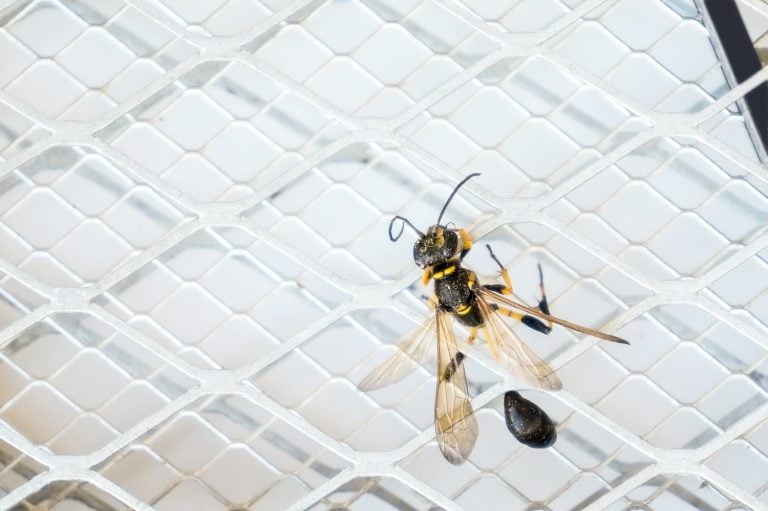
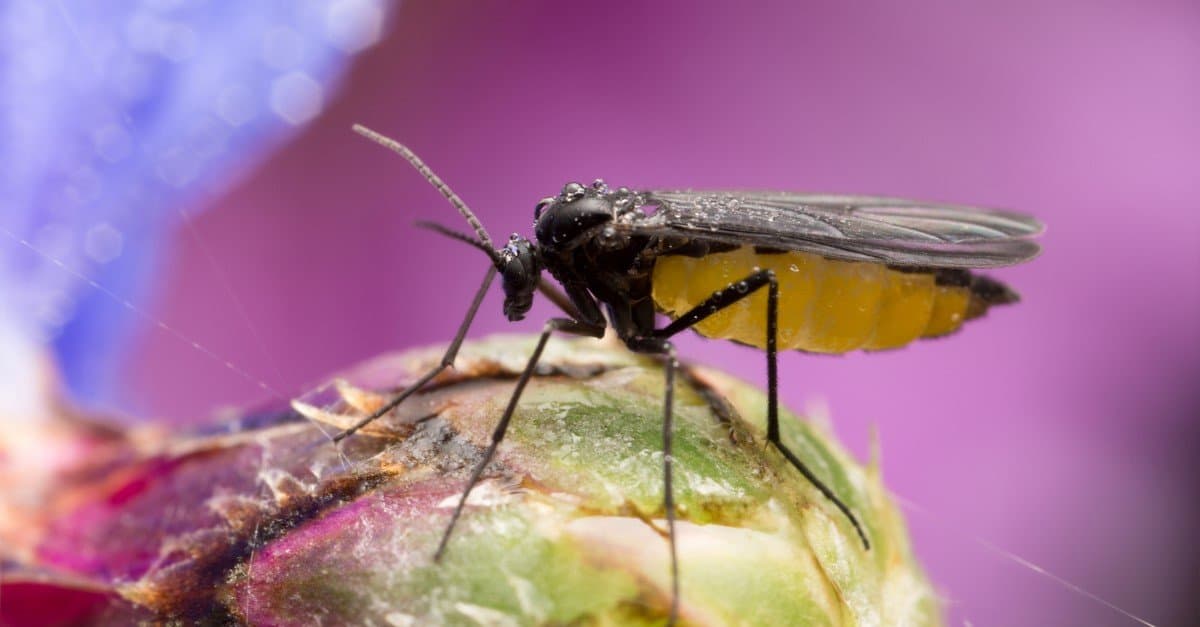
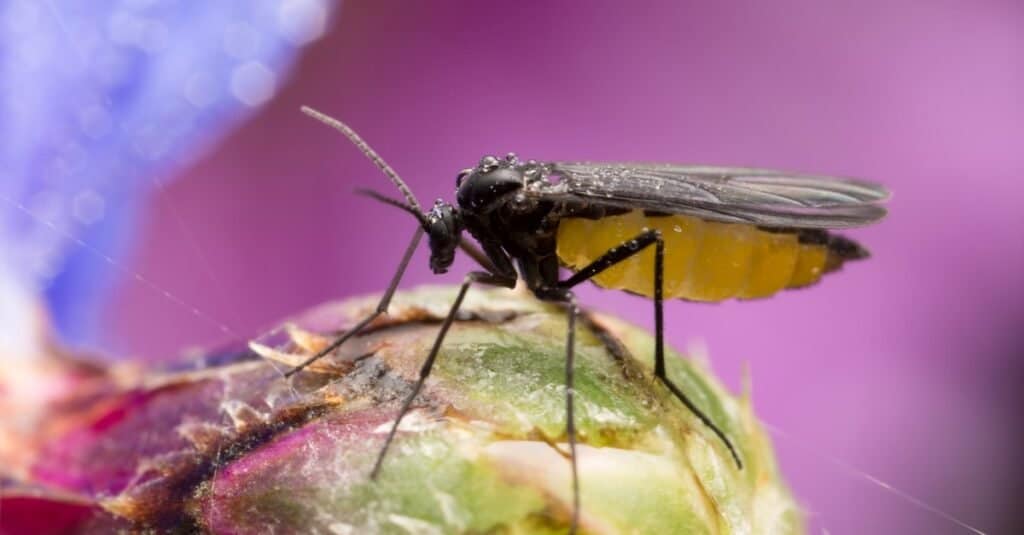
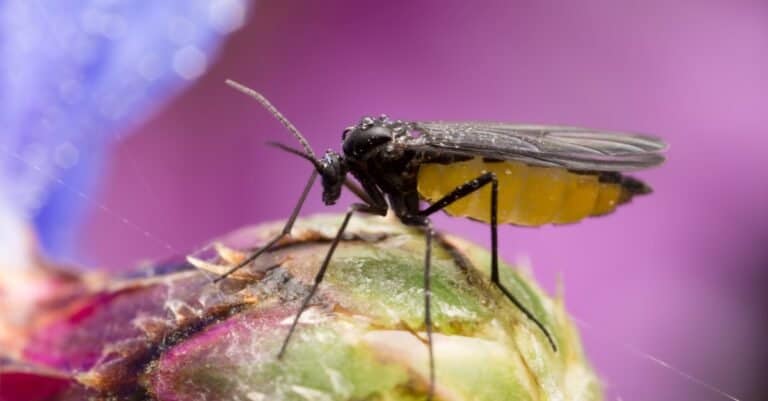
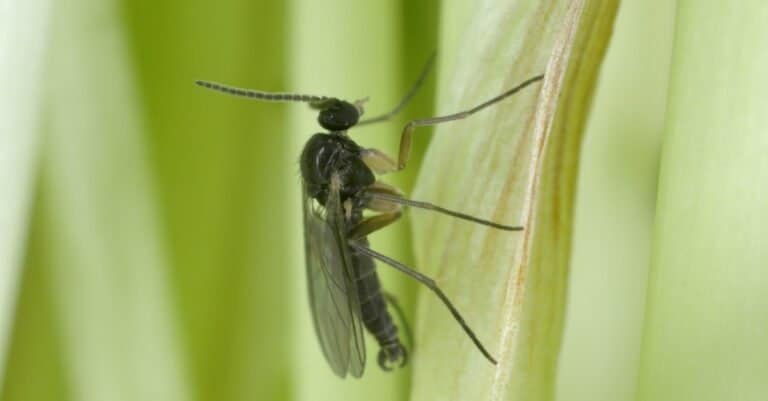
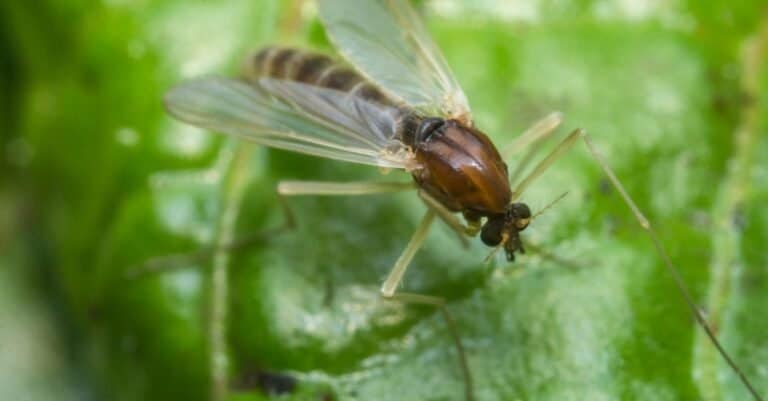
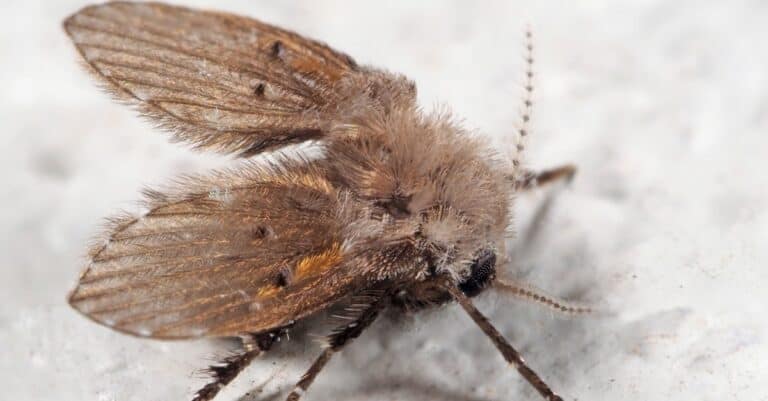
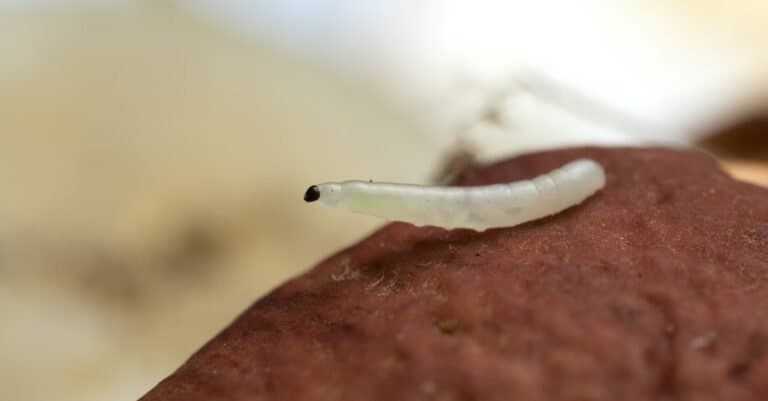
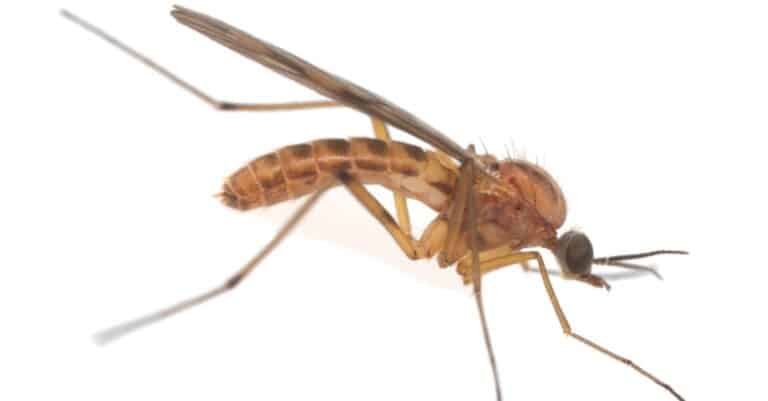
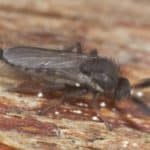
Gnats are generally small, long-legged insects with single pairs of wings. Featuring a small head, bulbous thorax, and long abdomen, normally with black or brown colors, their bodies tend to be quite slender compared to a standard fly, almost like a mosquito. Most species measure no more than an inch long, and some are only a fraction of an inch. Biting species have tough mouthparts to pierce the skin, while non-biting species have softer mouthparts. In contrast to the adult form, the larva has a long worm-like body and no wings at all.
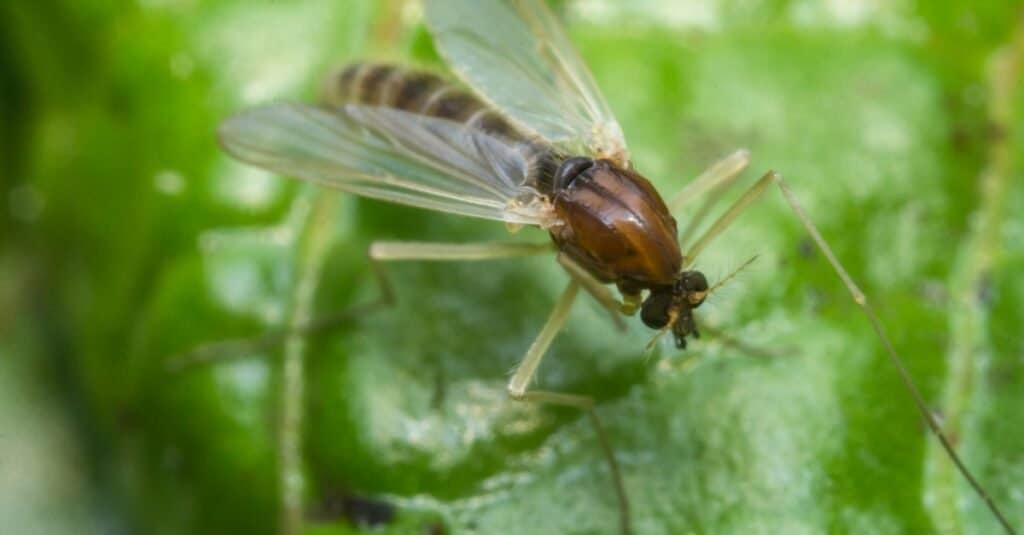
Close up of small sand fly gnat on green leaf.

Close up of small sand fly gnat on a green leaf.

Gnat vs. Fruit Fly

Fruit flies are small-bodied members of the fly order that feed on decomposing fruits and vegetables. They tend to breed quite prolifically in meat, spilled soda, or alcohol. They look much more like a typical house fly than anything else. While some websites list them as a type of gnat, this is probably not quite right, because they are part of different groups. Nevertheless, both can be annoying pests in the home. Of course, neither fruit flies or gnats live that long.

Habitat: Where to Find Gnats

These insects are found in just about every ecosystem around the world except for the extreme north and south. They tend to live near water or wet soil, although some do not.

Diet: What Do Gnats Eat?

Depending on whether they’re biting or non-biting gnats, they can feed on a wide variety of different foods. Many species are either herbivores or omnivores.

What eats the gnat?

Gnats are preyed upon by all kinds of different animals, including frogs, reptiles, small mammals, birds, fish, spiders, and other insects. They have few defenses against predators except for their flying ability, but they are not often strong flyers.

What does the gnat eat?

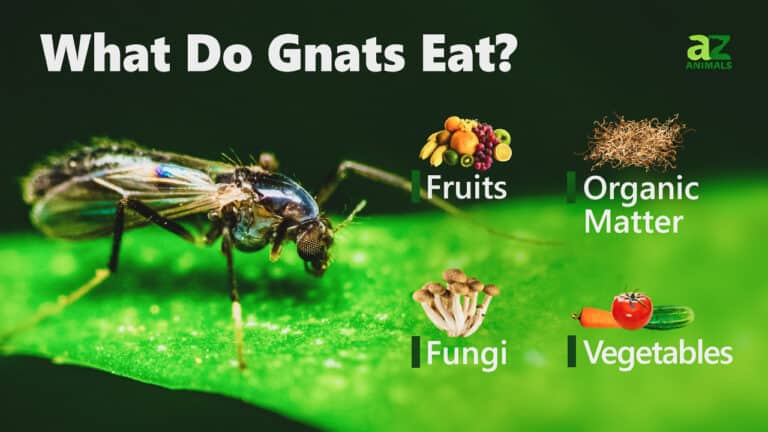
Most gnats generally feed upon plant material, including fruits, stems, and leaves, as well as other small bits of organic matter and even sometimes meat, but some species or groups are specialized for specific types of foods. Fungus gnats consume mushrooms and other fungi. Eye gnats, while generally harmless, are attracted to the fluids secreted by the eye. Biting gnats will generally draw blood from animals, giving them enough nutrients to create eggs, but otherwise, they feed on plants too when not tending to the young. There are all sorts of interesting facts about their feeding behavior.

Prevention: How to Get Rid of Gnats

Depending on the species, gnats are generally considered to be an annoyance to people. Some of them bite the skin and draw blood; others will consume crops or lay their eggs near plants. Gnats are also generally attracted to moisture and organic matter, so if you’re not careful, they can easily get into the garbage or the home. At their worst, biting gnats can transmit parasites and diseases to people. While some species are benign, an infestation is something you should generally take seriously.

In order to get rid of them, there are a few steps you should take. You will need to eliminate or reduce sources of standing water around your yard and home. Dispose of any rotting or decomposing food immediately and keep the trash bin away from the home. Repair any holes in your door or window to prevent them from entering. Some gnats are also attracted to light in the evening, so keep the lights off to prevent them from gathering around your home. Finally, you should regularly clean bathrooms, kitchens, and other areas with lots of moisture. If gnats still persist in your home or property, then you might want to consider using some kind of pesticide or spray to control populations. All of these strategies may need to be pursued simultaneously to ensure maximum prevention.

View all 261 animals that start with G

Sources

  1. Britannica / Accessed December 21, 2021
  2. Orkin / Accessed December 21, 2021
  3. Orkin / Accessed December 21, 2021
A-Z Animals Staff

About the Author

A-Z Animals Staff

AZ Animals is a growing team of animals experts, researchers, farmers, conservationists, writers, editors, and -- of course -- pet owners who have come together to help you better understand the animal kingdom and how we interact.
Connect:

Thank you for reading! Have some feedback for us?


Gnat FAQs (Frequently Asked Questions)

The gnat is a small flying insect in the order of Diptera (the fly order). While it doesn’t have a clear scientific definition, this insect can be identified by certain physical characteristics.