
K
Species Profile

King Quail

Synoicus chinensis

Small quail, big color.
Independent birds/Shutterstock.com

King Quail Distribution

Click a location to explore more animals from that region

Loading map...
King quail

At a Glance

Wild Species
Also Known As Chinese painted quail, Blue quail, Painted quail, Asian blue quail
Diet Omnivore
Activity Crepuscular+
Lifespan 2 years
Weight 0.06 lbs
Status Least Concern
Did You Know?

It's a true quail in Phasianidae (Galliformes), not a buttonquail (family Turnicidae).

Scientific Classification

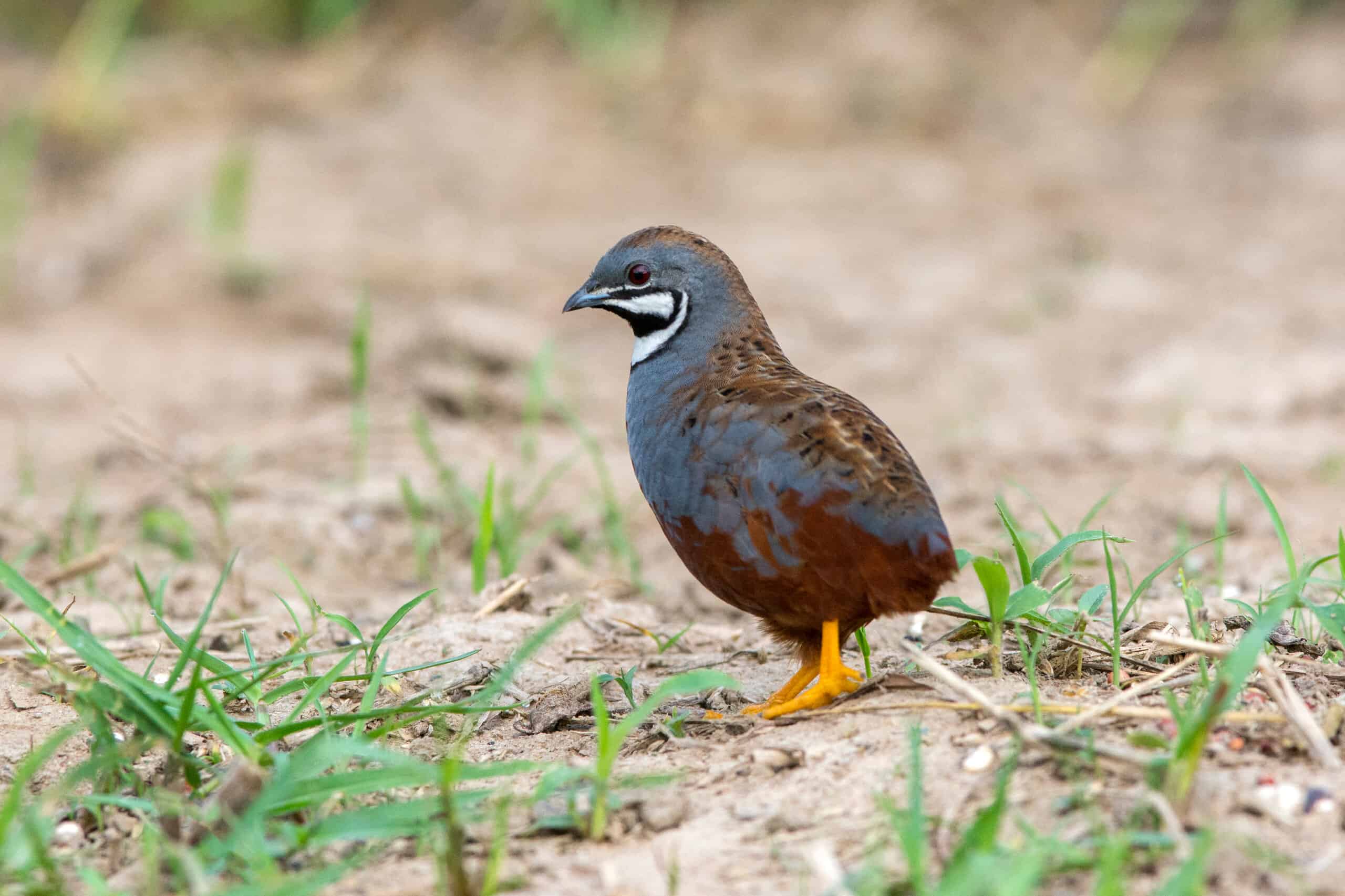
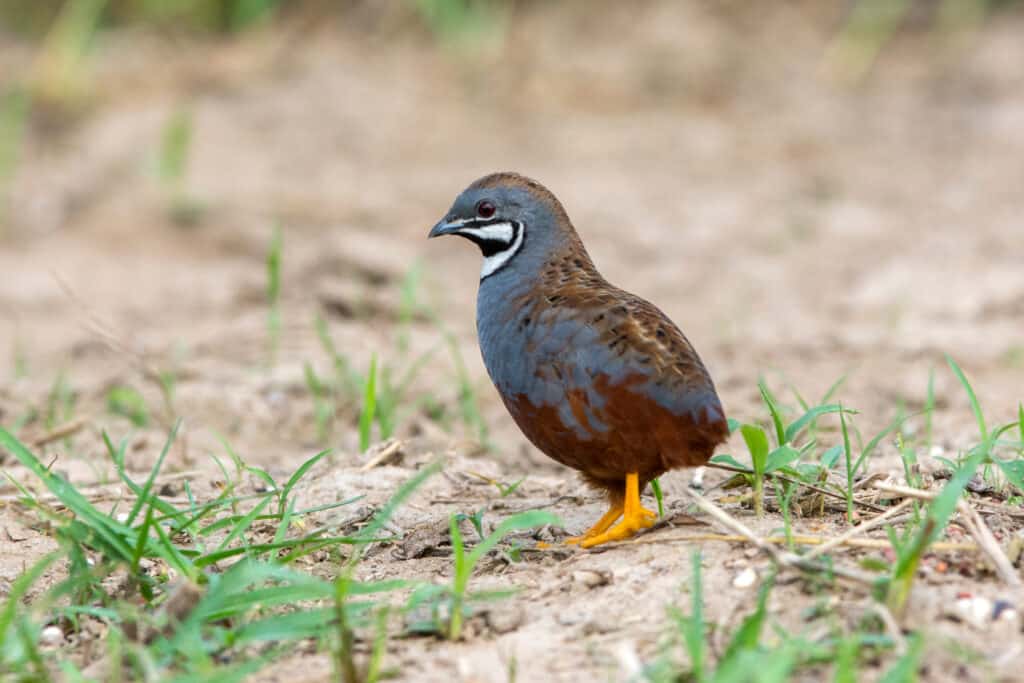
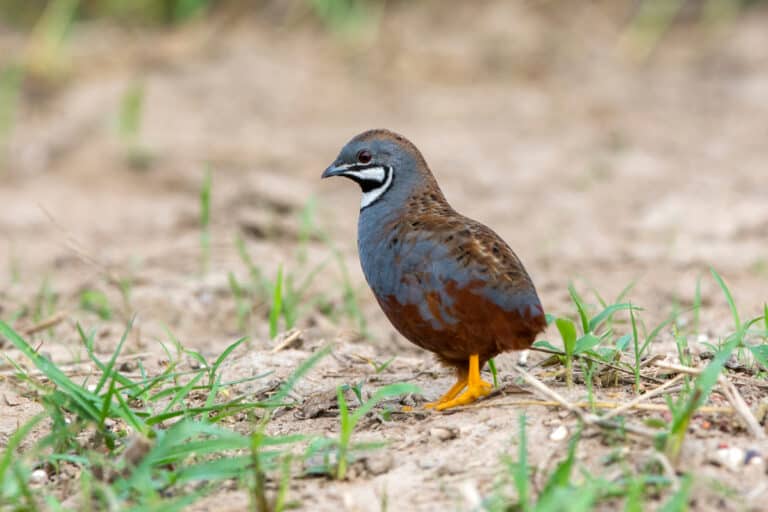
A very small ground-dwelling galliform bird often kept in aviculture; males are typically slate-blue with a chestnut belly patch, giving rise to the name “blue-breasted quail.”

Kingdom
Animalia
Phylum
Chordata
Class
Aves
Order
Galliformes
Family
Phasianidae
Genus
Synoicus
Species
Synoicus chinensis

Distinguishing Features

  • Very small true quail (compact body, short tail) relative to Coturnix species like Japanese/Common quail
  • Sexual dimorphism: males often show bluish-gray breast and head with chestnut underparts; females are more brown and mottled
  • Ground foraging behavior in dense grasses; quick, low flight when flushed

Physical Measurements

Males and females differ in size

Length
5 in (5 in – 6 in)
5 in (5 in – 6 in)
Weight
0 lbs (0 lbs – 0 lbs)
Tail Length
1 in (1 in – 2 in)
1 in (1 in – 1 in)
Top Speed
30 mph
flying

Appearance

Primary Colors
Secondary Colors
Skin Type Feathered plumage; bare bill and scaly legs/feet typical of Galliformes (Phasianidae).
Distinctive Features
  • Very small true quail (Phasianidae, Galliformes): total length typically 12-14 cm (Madge & McGowan 2002; HBW).
  • Compact, rounded body; short tail; rapid ground-running with low, explosive flush when startled.
  • Male diagnostic: slate-blue breast/face with contrasting dark facial border and chestnut belly patch (species accounts: HBW; Madge & McGowan 2002).
  • Female and non-breeding birds are more uniformly buff-brown with heavier mottling/barring for camouflage.
  • Often forms pairs or small coveys outside breeding; strong ground-foraging behavior (seeds/invertebrates) typical of small quail (HBW).
  • Primary scientific name: Synoicus chinensis (older literature: Coturnix/Excalfactoria chinensis); not a buttonquail (Turnix spp., Charadriiformes).
  • Captive longevity commonly reported ~3-6+ years under aviculture; wild longevity rarely quantified due to high predation (compiled husbandry/ZIMS-style records; handbook summaries).

Sexual Dimorphism

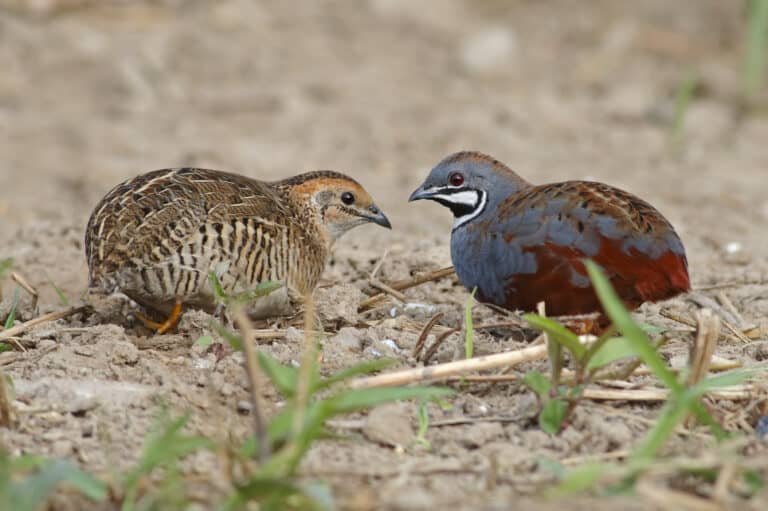
Sexes are strongly dimorphic: males show slate-blue breast/face and a chestnut belly patch with sharper facial contrast, while females are predominantly buff-brown, more heavily mottled/barred for camouflage, lacking the blue breast and chestnut patch.

  • Slate-blue breast and facial coloration (key field mark).
  • Chestnut/rufous belly patch.
  • Higher-contrast face patterning with dark bordering around pale throat.
  • Overall buff-tan to brown plumage with cryptic mottling/barring.
  • No slate-blue breast or chestnut belly patch.
  • Generally duller face with less contrasting borders.

Did You Know?

It's a true quail in Phasianidae (Galliformes), not a buttonquail (family Turnicidae).

Adults are very small: about 12-14 cm long (HBW/BirdLife accounts for Synoicus chinensis).

Females are typically heavier and more cryptically patterned than males-classic ground-bird camouflage.

Typical clutch size is about 4-8 eggs, incubated roughly 16-19 days (reported in major species accounts such as HBW).

Chicks are precocial: they leave the nest soon after hatching and forage with adults.

The species has been widely kept in aviculture under older names (e.g., Excalfactoria chinensis; also placed in Coturnix historically) and the common name "Chinese painted quail."

Males often give a clear, whistled advertising call, most frequently at dawn and dusk in suitable cover.

Unique Adaptations

  • Sexual dichromatism with function: bright slate-blue male breast aids signaling in dense cover, while the browner female's mottling provides strong nest camouflage.
  • Short, rounded wings enable rapid take-off bursts from ground cover-effective for evading predators in grassland mosaics.
  • Precocial young and short incubation (about 16-19 days) support rapid recruitment in seasonal or frequently disturbed habitats (e.g., grasslands, field margins).
  • Compact body and low profile let it move through dense grasses and ground litter with minimal visibility.
  • Cryptic, ground-nesting life history paired with "sit tight" behavior reduces detection risk before a last-moment flush.

Interesting Behaviors

  • Skulking "freeze-and-hide" strategy: when threatened it often crouches motionless in grass; if approached closely it erupts in a short, explosive flush flight.
  • Ground foraging in short steps, picking seeds and small invertebrates from soil surface and low vegetation, often along grassy edges and cultivated margins.
  • Dust-bathing: works dry soil/sand into plumage to reduce ectoparasites and maintain feather condition, then shakes vigorously.
  • Courtship and mate communication: males advertise with repeated whistled calls; pairs use soft contact notes while moving through cover.
  • Nest behavior: a shallow ground scrape lined with grass, placed under dense cover; the incubating bird sits tight and relies on camouflage.
  • Social spacing: outside breeding, individuals may be seen as pairs or in small groups in good habitat, keeping to cover rather than open ground.

Cultural Significance

Synoicus chinensis (king quail, Chinese painted quail) is a small, popular aviary bird. Males have blue breasts and chestnut bellies. Kept as pets in aviaries, they pick seeds and insects from the ground. A true quail (Phasianidae), not a buttonquail (Turnicidae).

Myths & Legends

Early European naturalists first described the King Quail (Blue-breasted Quail) from birds labeled "China." Its scientific name shifted—Excalfactoria chinensis, Coturnix—before settling as Synoicus chinensis, showing how keepers and scientists refined quail names.

In 19th–20th century bird keeping stories, the King Quail (Blue-breasted Quail, Synoicus chinensis) was called 'king quail' for the male's jewel-like colors and 'Chinese painted quail' as a tiny living decoration not for hunting.

In many Asian and European tales, quails mean quiet, ground-hugging hiding and sudden flight—like the hidden bird that disappears in grass. This fits Synoicus chinensis's crouch-and-flush behavior, even if not named.

Conservation Status

LC Least Concern

Widespread and abundant in the wild.

Population Decreasing

Protected Under

  • Not listed on CITES Appendices
  • Protected under general wildlife protection frameworks in parts of its range (specific statutes vary by country/state/territory)

Life Cycle

Birth 8 chicks
Lifespan 2 years

Lifespan

In the Wild
0.5–5 years
In Captivity
2–8 years

Reproduction

Mating System Monogamy
Social Structure Socially Monogamous
Breeding Pattern Seasonal
Fertilization Internal Fertilization
Birth Type Internal_fertilization

During the breeding season, king quail typically form monogamous pairs; males court with calls and short chases and mate by internal fertilization. Females usually lay about 5-7 eggs and incubate ~16-18 days; males often remain nearby to guard and accompany chicks.

Behavior & Ecology

Social Covey Group: 6
Activity Crepuscular, Diurnal
Diet Omnivore Small grass and millet-type seeds (fine seeds typical of Poaceae), taken in high frequency when available.

Temperament

Generally secretive and terrestrial; usually seen singly or in pairs, but may form small groups (coveys) outside the breeding season.
Shy, cover-dependent, and prone to freeze or run before flushing when approached.
During breeding, males may show increased territoriality and aggression toward rivals.
Captive/avicultural lines can vary: some pairs tolerate conspecifics, others fight persistently.

Communication

Soft contact calls used to maintain covey cohesion while moving through vegetation.
Male advertisement/courtship calls (short whistles/trills) most frequent at dawn/dusk.
Alarm calls: sharp, brief notes associated with sudden predator detection and flushing.
Anti-predator freezing and rapid, low running through grass; flush only at close range.
Visual signaling at close distance: head/neck postures during courtship and male disputes.
Parent-chick coordination via following behavior and proximity; chicks respond to brood calls.

Habitat

Biomes:
Savanna Temperate Grassland Tropical Dry Forest Temperate Forest Wetland Freshwater
Terrain:
Plains Valley Coastal Island Riverine Muddy
Elevation: Up to 5905 ft 6 in

Ecological Role

Small-bodied ground-foraging omnivore functioning as both seed consumer and insect predator in grasslands, savannas, and agricultural mosaics.

Regulates populations of small insects (including ants/termites and other ground-dwelling arthropods) through predation Influences plant community dynamics via selective seed consumption (seed predation) and occasional minor seed movement Contributes to nutrient cycling through foraging disturbance of litter/soil surface and deposition of droppings Serves as prey for small- to medium-sized raptors and terrestrial predators, supporting higher trophic levels

Diet Details

Main Prey:
Ants Termites Small beetles Grasshoppers and crickets Caterpillars Small ground-dwelling insects and arthropods
Other Foods:
Grass and sedge seeds Herb seeds Spilled grain Tender green shoots and young leaves Fruits and berries Grit

Human Interaction

Domestication Status

Semi domesticated

Synoicus chinensis, the king quail or blue-breasted quail, is kept in captivity and bred for color types, but it has not gone through long-term domestication like the chicken. Captive birds are often many generations from wild stock and kept for decoration, shows, and small egg production. Farming for meat is more common in Coturnix quail.

Danger Level

Low
  • Minor scratches/pecks during capture/handling; stress-related injury to the bird is a larger welfare concern than human injury
  • Zoonotic enteric bacteria risk typical of poultry/aviary birds (e.g., Salmonella spp.) if hygiene is poor
  • Allergens/respiratory irritation from dander and bedding dust
  • External parasites (mites/lice) can transfer to people temporarily but typically do not establish on humans

As a Pet

Suitable as Pet

Legality: King quail (blue-breasted quail) are usually legal in the U.S. if bred in captivity, but state and local rules vary. Permits and USDA/APHIS or state disease rules may apply. Check laws first.

Care Level: Moderate

Purchase Cost: $15 - $80
Lifetime Cost: $300 - $1,500

Economic Value

Uses:
Ornamental aviculture (pet/aviary trade) Small-scale egg production (limited) Education/research (limited use as a small galliform model)
Products:
  • live birds (captive-bred adults/juveniles)
  • fertile eggs/hatching eggs
  • manure/compostable litter (incidental byproduct)

Relationships

Related Species 5

Brown quail Synoicus ypsilophorus Shared Genus
Stubble quail Synoicus pectoralis Shared Genus
Japanese quail Coturnix japonica Shared Family
Common quail Coturnix coturnix Shared Family
Rain quail Coturnix coromandelica Shared Family

Ecological Equivalents 4

Animals that fill a similar ecological role in their ecosystem

Buttonquails Turnix sylvaticus Very small, terrestrial, cryptic, ground-foraging birds that rely on dense grass/herb cover. They overlap strongly in niche (invertebrate and seed foraging at ground level) despite belonging to a different order (Charadriiformes).
Zebra finch
Zebra finch Taeniopygia guttata Shares arid/grassland seed-based foraging and uses ground and low vegetation for feeding; ecological similarity is primarily in diet (grass seeds) and habitat association rather than taxonomy.
Red junglefowl Gallus gallus A ground-dwelling galliform that forages by pecking and scratching for seeds and invertebrates, and uses a similar anti-predator strategy (freeze/flush), although it is much larger-bodied.
Grey francolin Ortygornis pondicerianus Small-to-medium-sized galliforms of open scrub and grass-mosaic habitats; similar diet breadth (seeds and insects) and ground-nesting habits make them functional analogs where their ranges overlap in South and Southeast Asia.

King quail (Synoicus chinensis) are small “true quail” native to Asia and Australia. They inhabit shrublands, grasslands, and swamps and spend much of their time foraging on the ground in flocks. These birds have rounded bodies and come in varying shades of blue, silver, and maroon, with their signature rusty red undersides. Learn everything there is to know about this quail species, including where to find it, what it eats, and how it behaves.

5 Amazing King Quail Facts

  • You can find king quail worldwide in Aviculture, but they inhabit Southern Asia, Oceania, and parts of Australia in the wild.
  • Females look similar to males but don’t come in shades of blue.
  • Their calls sound like a descending whistle or raspy snoring.
  • They can fly but prefer to stay on the ground. They also cannot fly long distances.
  • They have a short lifespan of around two years, but can live up to 13 years in captivity.

Where to Find Them
King Quails

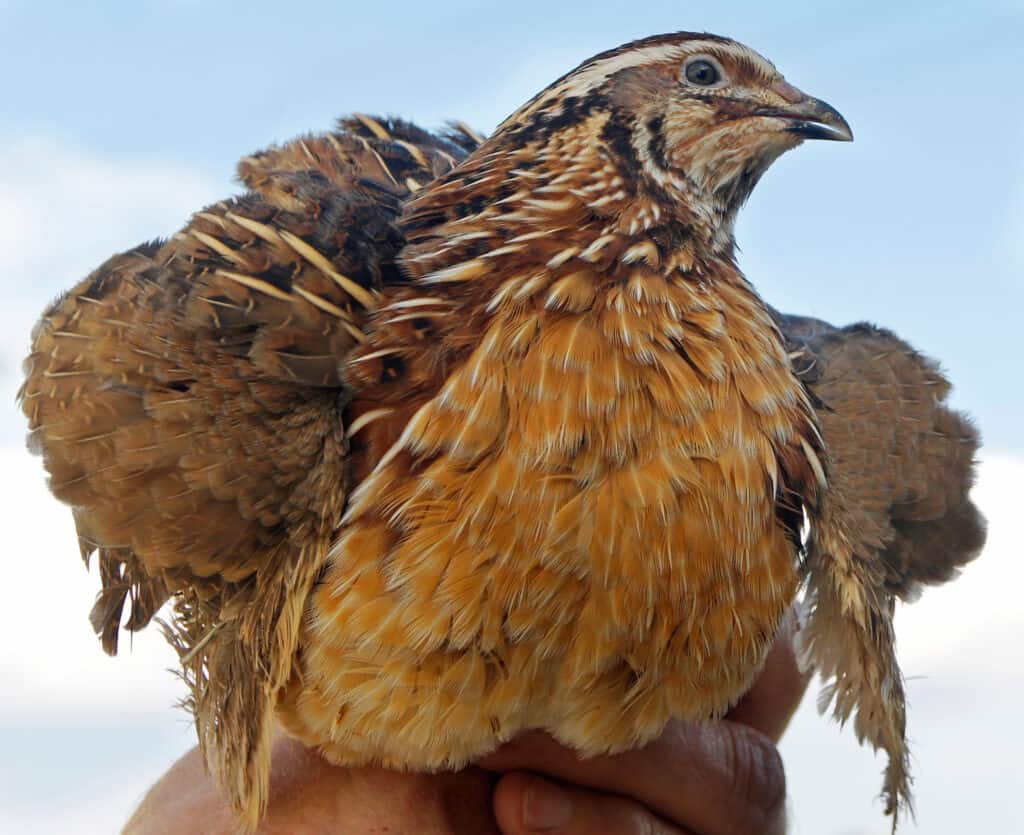
King Quails can fly but prefer to stay on the ground. They also cannot fly long distances.

The king quail is native to Asia and Australia and found in at least 19 countries, including China, India, Singapore, Guam, and Thailand. In Aviculture, you can find king quail worldwide. They range from Southern China to Oceania to Southeastern Australia in the wild. They live in tropical and temperate shrublands, grasslands, swamps, and near coastal areas. Look for them on the ground as they forage in flocks, and keep an eye out for their rusty red undersides.

Nest
King quail

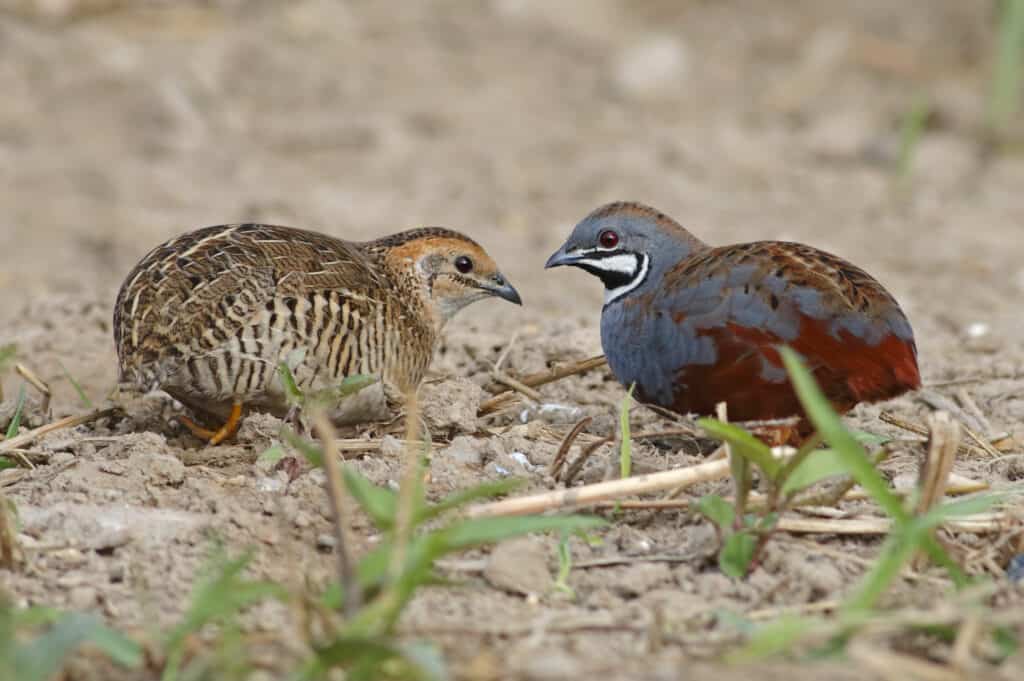
King quail are monogamous and form strong pair bonds.

King quail, also known as the Asian blue quail, are small ground-dwelling birds. These birds are known for their intricate nest-building skills, which they use to create a safe haven for their eggs and chicks.

The nests of king quails vary depending on the location where they live and breed. In general, these birds prefer nesting in grassy areas with low vegetation cover, such as savannas or open woodlands. They typically build their nests close to the ground using materials like leaves, twigs, stems, and other plant matter.

Interestingly, king quails will often reuse old nests from previous breeding seasons after making some necessary repairs. When building new nests or repairing old ones, these birds will use their beaks to weave together strands of grass and other materials until a sturdy structure is formed.

Once completed, king quail nests feature a central cup-shaped depression lined with soft feathers or fur that serve as insulation against temperature changes during incubation. Female king quails lay around 6-8 eggs per clutch, which hatch within 12-14 days under optimal conditions.

Overall, despite being relatively simple structures compared to those built by larger bird species like eagles or storks, King Quail’s nests are marvels of engineering ingenuity that enable these tiny birds to successfully raise their young in challenging environments while avoiding predators such as snakes and foxes.

Scientific Name

The king quail (Synoicus chinensis) is from the Galliformes order in the Phasianidae family.

The king quail has six recognized subspecies:

  • S. c. chinensis: Found in India and Sri Lanka to Malaya, Indochina, southeastern China, and Taiwan
  • S. c. trinkutensis: Nicobar blue-breasted quail: Found on the Andaman and Nicobar Islands
  • S. c. lineata: Found in the Philippines, Borneo, the Lesser Sundas, Sulawesi, and the Sula Islands
  • S. c. lepida: Found in the Bismarck Archipelago
  • S. c. australis: Found in eastern Australia
  • S. c. colletti: Found in northern Australia

Evolution and Origins
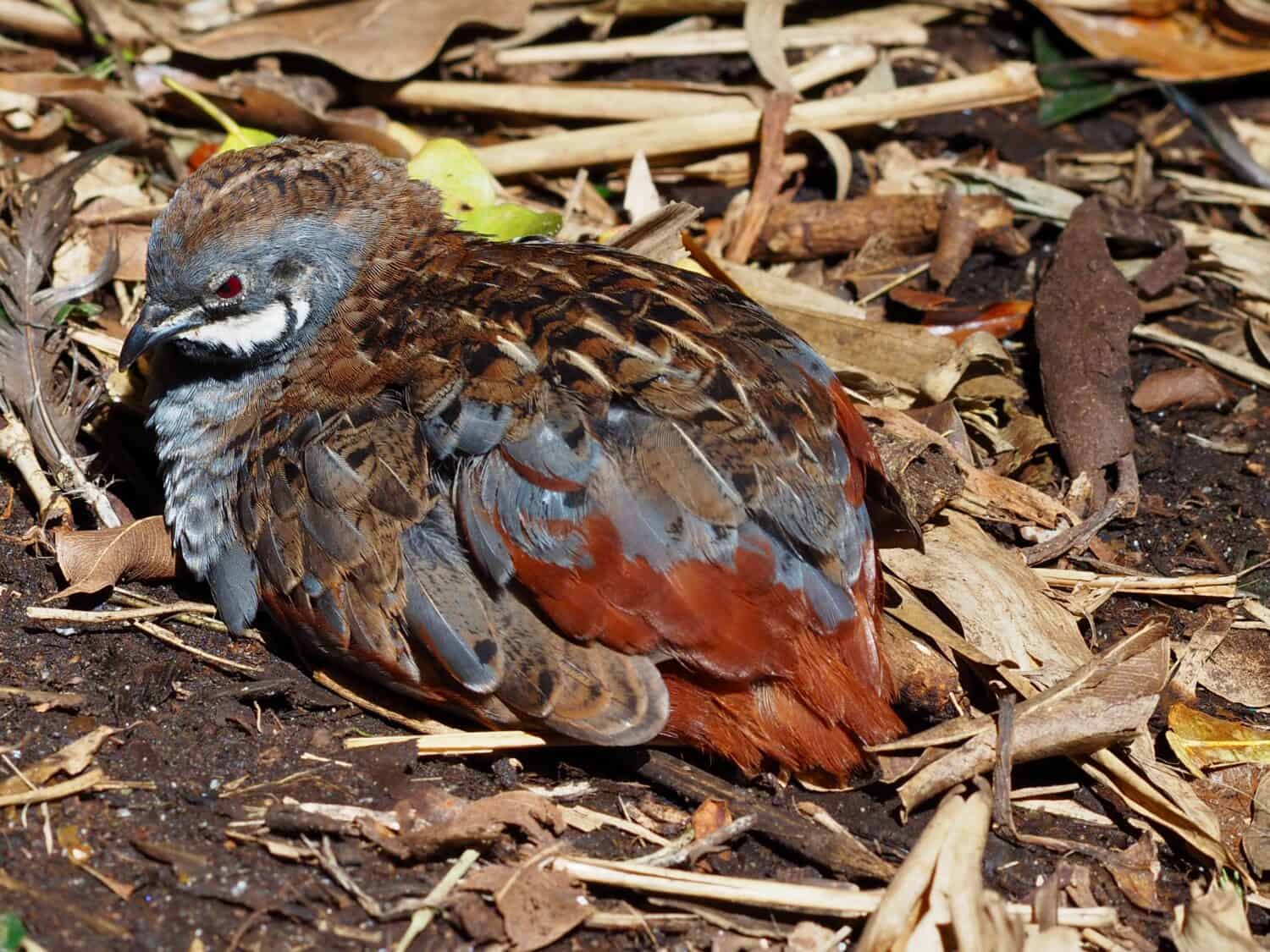
Diminutive Tiny Dainty Male King Quail in a Natural Background.

King quail are also called blue-breasted quail, Asian blue quail, and Chinese-painted quail.

The evolutionary history of the king quail is a fascinating subject that has intrigued scientists for many years. While there is limited information in the fossil record about this bird species, researchers have been able to draw some conclusions about its evolution and origins through genetic analysis and molecular studies.

King quails are thought to be part of the Phasianidae family, which includes pheasants, partridges, and chickens. They are small game birds that inhabit grasslands and woodlands across Asia and Australia.

According to current research, it appears that king quails evolved around 5-6 million years ago from a common ancestor with other members of the Phasianidae family. Genetic studies suggest that they may have diverged from their closest relative — the Japanese quail — around 4 million years ago.

One interesting aspect of king quail evolution is their ability to hybridize with other species within their family. This suggests that they may have played an important role in shaping the diversity of modern-day game birds.

While there is not much evidence in the fossil record specifically related to king quails, researchers have found fossils belonging to other members of their family dating back as far as 33 million years ago. These fossils provide valuable insights into how these birds evolved and adapted to different environments.

Overall, while our knowledge about the evolutionary history of king quails remains somewhat limited due to a lack of physical evidence in the fossil record, ongoing research continues to shed new light on this intriguing topic.

Size, Appearance, & Behavior
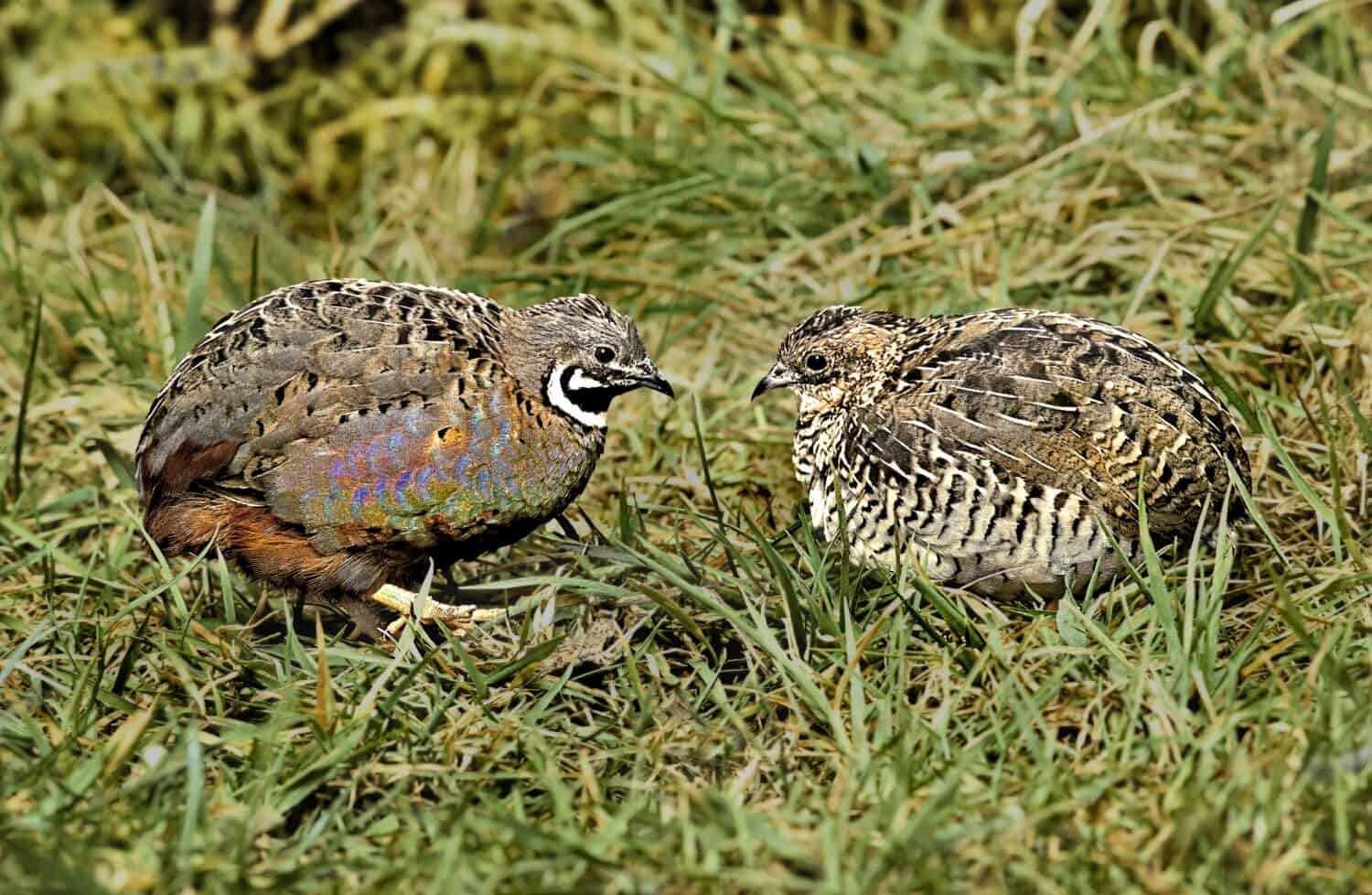
Synoicus chinensis - Blue-breasted Quail male  female

King quail typically weigh between 0.99 and 1.4 ounces (30–40 grams). They have beautifully colored feathers.

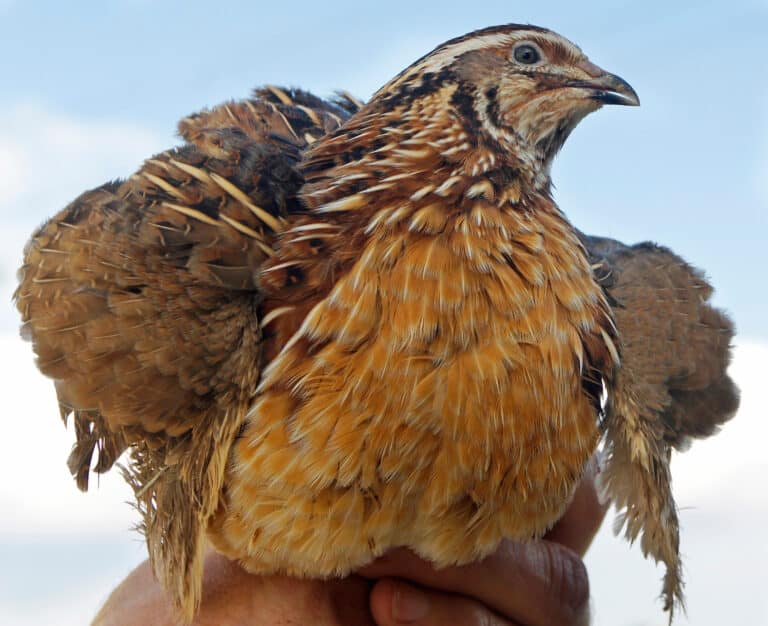
The king quail is the smallest “true quail,” measuring 4.9 to 5.5 inches long and weighing 0.99 to 1.4 ounces, with an unknown wingspan. These rounded birds come in many colors: blue, brown, silver, maroon, and black. Their feet and legs are orange, their beaks are black, and their bellies are a red or rust color. They also have black and white striped necks. Females look similar to males, except they don’t come in shades of blue. 

These birds are social, forming long-term pair bonds and foraging on the ground with other quail. This species is not known for being overly noisy, but males may get loud during the breeding season. Their calls sound like a descending whistle or raspy snoring. They are capable of flying but prefer to spend their time on the ground. They don’t fly as well as other birds and do not travel long distances.

Migration Pattern and Timing

The king quail is nonmigratory, choosing to stay in its environment year-round. Also, these birds prefer to remain on the ground and can only fly short distances.

Diet
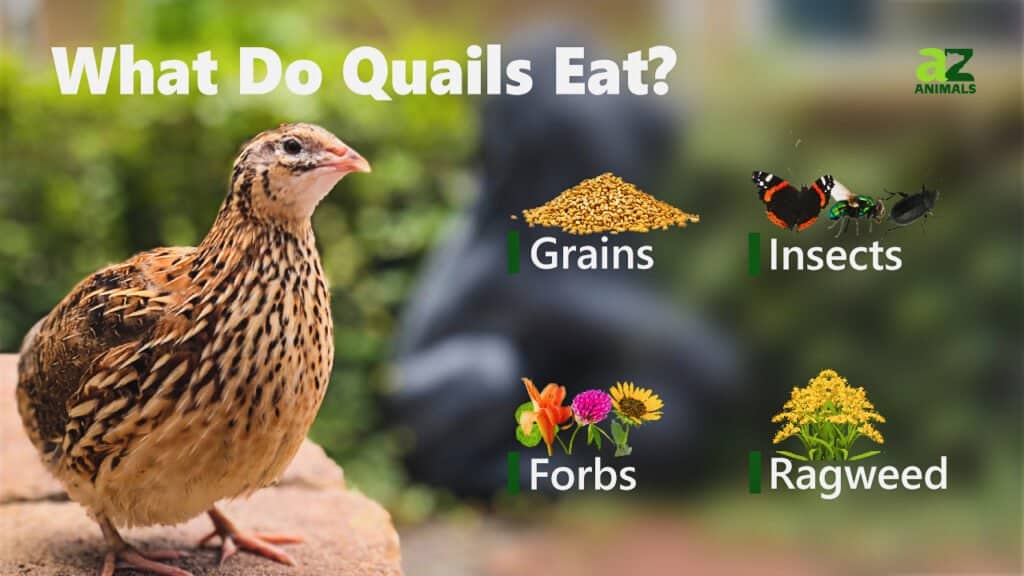
What Do Quails
King quails are omnivores that forage from the ground.

What Does the King Quail Eat?

They eat small insects, seeds, grasses, plants, small nuts, berries, and grains. They form “coveys,” or groups of 10 to 30, to forage and roost. You can find them pecking on the ground in the early morning and mid to late afternoon. 

Predators, Threats, and Conservation Status
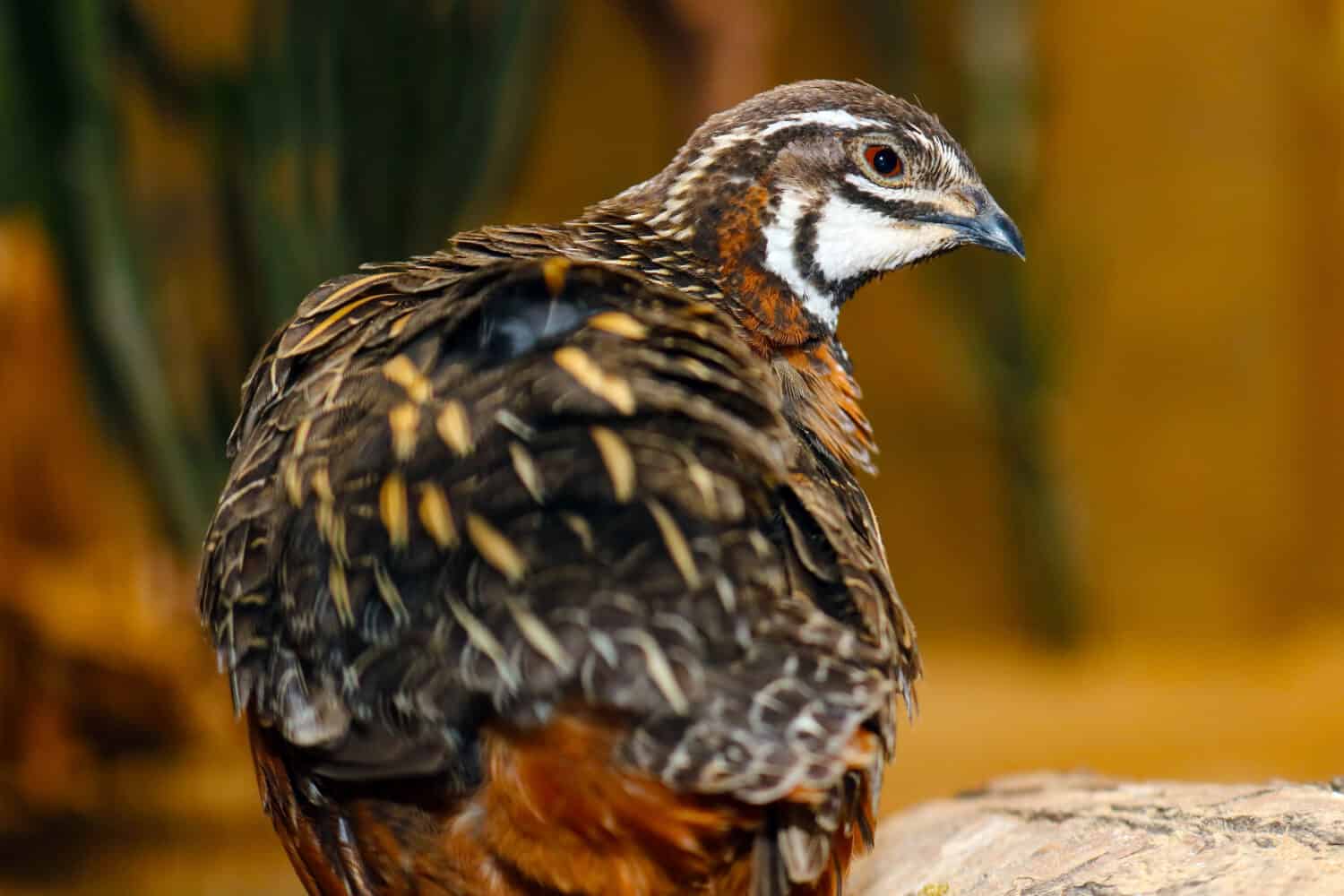
King quail (synoicus chinensis) in back view turning its head to the side

King quail have short lifespans and only live an average of 3 years.

The IUCN lists the king quail as LC or “least concern.” Due to its extensive range and stable population, this species does not meet “threatened” status thresholds. Their exact threats are unknown, but they may be vulnerable to habitat changes from the agricultural industry, climate change, and overhunting.

What Eats the King Quail?

King quail predators include foxes, raccoons, squirrels, coyotes, bobcats, skunks, domestic dogs, and cats. Nest predation is also an issue for this species; their young are vulnerable to hawks, owls, rats, and weasels. When threatened, the king quail postures low to the ground, emitting a rapid peeping call, and may lunge at or chase an intruder, especially if it’s another bird.

Reproduction, Young, and Molting
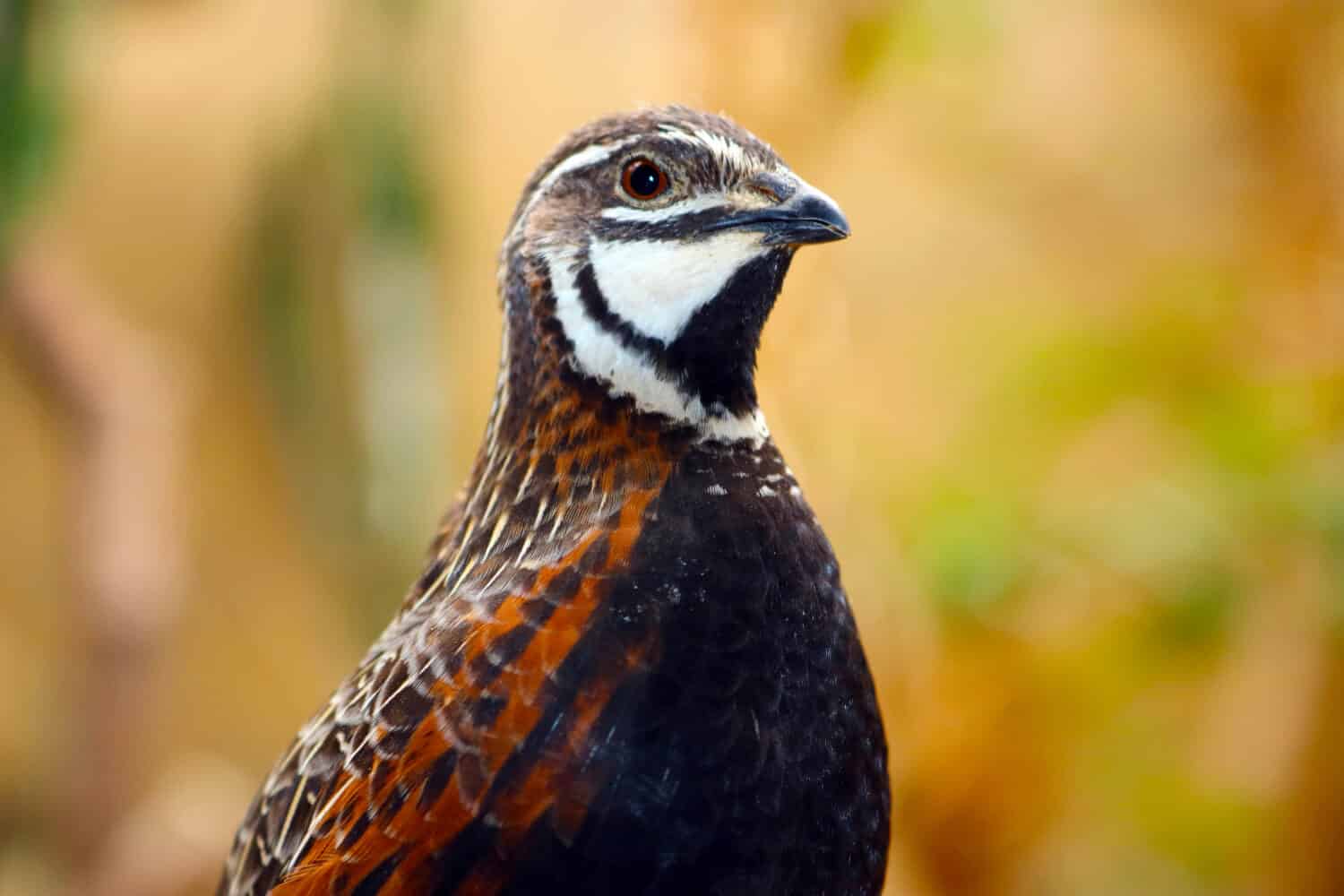
Portrait of a king quail (synoicus chinensis) in profile view

King quail lay between 5 to 13 eggs and keep them warm for 16 days.

King quail are monogamous and form strong pair bonds. This species’ mating system has not been thoroughly researched, so we don’t know much about their courting behavior and reproduction habits. Females typically lay 5 to 13 eggs and incubate them for 16 days. Their young leave the nest shortly after hatching and learn how to fend for themselves by following their mother. They are independent around six to seven weeks and sexually mature under three months. Their average lifespan is 2.8 years, but they can live up to 13 years in captivity.

Population

The global king quail population is unknown but is estimated to be stable without evidence. They are also not experiencing any extreme fluctuations or fragmentations in their numbers.

View all 103 animals that start with K

Sources

  1. Mdahlem.net / Accessed October 7, 2022
  2. PLOS one / Elizabeth Adkins - Regan / Published June 3, 2016 / Accessed October 7, 2022
  3. BirdLife International / Accessed October 7, 2022
Niccoy Walker

About the Author

Niccoy Walker

Niccoy is a professional writer for A-Z Animals, and her primary focus is on birds, travel, and interesting facts of all kinds. Niccoy has been writing and researching about travel, nature, wildlife, and business for several years and holds a business degree from Metropolitan State University in Denver. A resident of Florida, Niccoy enjoys hiking, cooking, reading, and spending time at the beach.
Connect:

Thank you for reading! Have some feedback for us?


King Quail FAQs (Frequently Asked Questions)

They are capable of flying but prefer to spend their time on the ground. They don’t fly as well as other birds and do not travel long distances.