


G
Species Profile

German Sheppit

Canis lupus familiaris

Built to work, born to bond
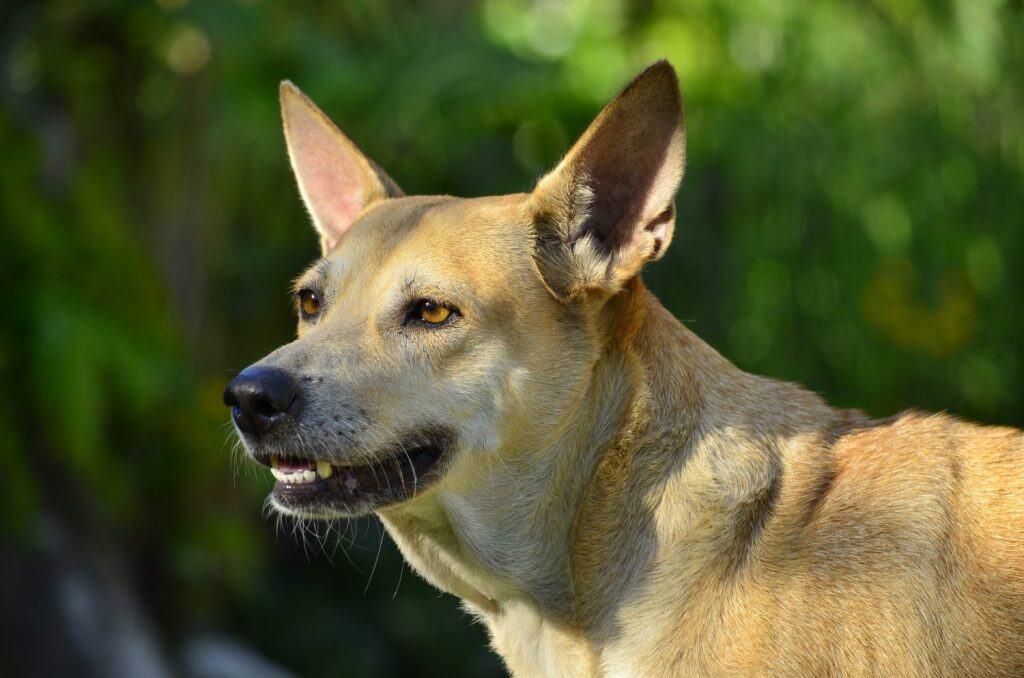
MDV Edwards/Shutterstock.com

German Sheppit Distribution

Click a location to explore more animals from that region

Origin Location

This map shows the native origin of the German Sheppit. As a domesticated species, they are now found worldwide.

Loading map...

Found in 1 country

Size Comparison

Human 5'8"
German Sheppit 1 ft 12 in

German Sheppit stands at 35% of average human height.

A female adult Shepherd Pit, a mix breed dog, a cross between a German Shepherd Dog and American Pit Bull Terrier

At a Glance

Domesticated
Also Known As Alsatian, Alsatian Wolf Dog, GSD, German Shepherd
Diet Omnivore
Activity Diurnal+
Lifespan 5 years
Weight 40 lbs
Status Not Evaluated
Did You Know?

The breed was standardized in 1899 by German cavalry officer Max von Stephanitz, often called the "father" of the German Shepherd Dog.

Scientific Classification

The German Shepherd Dog is a large, intelligent, versatile domestic dog breed developed in Germany for herding and guarding, now widely used as a working dog (police, military, search-and-rescue) and companion.

Kingdom
Animalia
Phylum
Chordata
Class
Mammalia
Order
Carnivora
Family
Canidae
Genus
Canis
Species
Canis lupus

Distinguishing Features

  • Large, athletic build; strong, slightly elongated body
  • Erect, pointed ears; alert expression
  • Dense double coat; common colors include black-and-tan, sable, solid black
  • Characteristic trotting gait; high trainability and working drive

Physical Measurements

Males and females differ in size

Height
2 ft 1 in (1 ft 12 in – 2 ft 2 in)
1 ft 11 in (1 ft 10 in – 1 ft 12 in)
Length
4 ft 6 in (4 ft 1 in – 4 ft 11 in)
3 ft 11 in (3 ft 7 in – 4 ft 3 in)
Weight
77 lbs (66 lbs – 88 lbs)
60 lbs (49 lbs – 71 lbs)
Tail Length
1 ft 6 in (1 ft 4 in – 1 ft 8 in)
Top Speed
30 mph
Top speed about 48 km/h

Appearance

Primary Colors
Secondary Colors
Skin Type German Shepherd Dog skin is dark on lips and eye rims. It has dense double coat (coarse outer hairs and thick undercoat). Sheds heavily seasonally. Some have sensitive skin or allergies needing gentle care.
Distinctive Features
  • Large, athletic domestic dog breed with a slightly elongated body and well-muscled build; developed in Germany for herding/guarding and widely selected for service roles (police, military, search-and-rescue).
  • Erect, triangular ears set high on the skull (a hallmark breed ID feature compared with many other domestic breeds).
  • Wedge-shaped head with strong muzzle; dark almond-shaped eyes; typically a distinct black facial mask in common colorways.
  • Thick double coat (stock coat most common; longer 'plush/long coat' occurs in some lines) providing weather resistance for outdoor work.
  • Low, sweeping tail carried down at rest; bushy tail due to dense coat.
  • Movement: ground-covering trot is characteristic of working lines; overall appearance signals endurance and trainability for sustained tasks.
  • Temperament (breed-typical): highly intelligent, biddable, loyal, vigilant/protective; requires early socialization and structured training to prevent reactivity or anxiety.
  • Care requirements: high daily exercise and mental work (obedience, scent work, tracking, agility, herding-style outlets); thrives with a job/role and consistent handling.
  • Grooming: frequent brushing (multiple times weekly; daily during seasonal shedding) to manage undercoat and reduce matting; routine nail/ear/teeth care.
  • Breed health problems include hip and elbow dysplasia, degenerative myelopathy, gastric dilatation-volvulus (bloat), skin/allergy problems, and exocrine pancreatic insufficiency in some lines. Keeping weight down and controlling growth and exercise in puppyhood helps protect joints.
  • Breed-vs-base-species context: a domesticated, human-bred form of Canis lupus with selection for cooperative work, responsiveness to training, and stable utility traits; not a separate wild species.

Sexual Dimorphism

Males are typically larger and more heavily muscled with broader heads/neck ruff; females are usually slightly smaller and more refined while maintaining the same overall breed silhouette and coat patterns.

  • Greater overall height/weight and bone substance
  • Broader head and thicker neck/forequarters
  • Often more pronounced chest and musculature
  • Slightly smaller frame with a more refined head/neck
  • Often a lighter, more agile build while retaining strong working structure
  • Same coat colors/patterns; differences are primarily size and robustness

Did You Know?

The breed was standardized in 1899 by German cavalry officer Max von Stephanitz, often called the "father" of the German Shepherd Dog.

German Shepherds helped popularize the idea of the modern working dog-especially in police and military roles-thanks to trainability and nerve.

Coat colors commonly include black-and-tan and sable; the color comes from gene variants that are widespread across domestic dogs (Canis lupus familiaris).

They can be trained for highly specialized scent work, from missing-person searches to medical detection (e.g., hypoglycemia alerts), leveraging the species' exceptional olfaction.

The famous early canine movie star Rin Tin Tin was a German Shepherd rescued from a WWI battlefield and became a major Hollywood icon.

The breed has two major "types" shaped by selection: working lines emphasizing performance and show lines emphasizing appearance (especially angulation and gait).

Unique Adaptations

  • Working-dog anatomy within the domestic dog species: strong, athletic build with efficient trotting gait suited for sustained movement alongside a flock or handler.
  • Dense double coat (outer guard hairs + insulating undercoat) supports work in variable weather; seasonal shedding is heavy ("blowing coat").
  • Erect ears aid sound localization and signal intent/attention in dog-to-dog and dog-human communication.
  • Temperament profile shaped by selection: high biddability, confidence, and protective instincts compared with many companion-bred dogs.
  • Breed-specific conformation trends: some show lines have increased rear angulation, which can affect biomechanics; moderate structure is generally favored for durability.
  • Species context: like other domestic dogs (descended from gray wolves, Canis lupus), German Shepherds retain social cooperation and scenting ability but are selected for human-directed work and trainability.

Interesting Behaviors

  • Herding-style "gather and guide": may circle, block, and control movement with body position-traits selected from pastoral work.
  • Natural watchfulness: often chooses a vantage point (doorway/window) to monitor territory and family, reflecting guardian selection.
  • "One-person focus": can form an intense working partnership with a primary handler, common in police/service training.
  • Mouth-oriented problem solving: many individuals explore or carry objects; channel with tug, retrieve games, and bitework sports under expert supervision.
  • High responsiveness to cues: excels at chained behaviors (multiple-step tasks) and learns patterns quickly-beneficial but can lead to boredom without enrichment.
  • Vocal communication: alert barking and "talking" grumbles can be common; early training helps distinguish appropriate alerts from reactivity.

Cultural Significance

German Shepherd Dog (Canis lupus familiaris) became a global symbol of the modern working dog, used in police work, military, search-and-rescue, assistance, and sport. It stands for loyalty, courage, ability, and shifted from farm work to public service and was called 'Alsatian' after WWI.

Myths & Legends

Origin lore from the breed's early days tells of Max von Stephanitz searching German herding districts for the ideal all-purpose sheepdog; the "founding dog" Horand von Grafrath became the model for a unified national breed.

In Britain and parts of the Commonwealth, the name "Alsatian Wolf Dog" (later "Alsatian") became a cultural story of rebranding after World War I, tied to the Alsace region and lingering wolf-like mystique.

Rin Tin Tin's WWI rescue story grew into a modern legend of a war orphan turned superstar, credited in popular accounts with helping keep Warner Bros. financially afloat in the studio's early years.

Working-dog circles preserve hero narratives of German Shepherds that carried messages, located wounded soldiers, or guarded posts during wartime-tales that shaped the breed's reputation for bravery and reliability.

A persistent cultural motif casts the German Shepherd as the archetypal "protector at the threshold," a household guardian figure in stories, film, and urban folklore about loyal dogs defending families from danger.

Conservation Status

NE Not Evaluated

Has not yet been evaluated against the criteria.

Population Stable

Life Cycle

Birth 7 pups
Lifespan 5 years

Lifespan

In the Wild
2–10 years
In Captivity
7–14 years

Reproduction

Mating System Polygynandry
Social Structure Managed Domestic
Breeding Pattern Serial
Fertilization Managed Selective
Birth Type Internal_fertilization

German Shepherd Dog (Canis lupus familiaris) breeding is people-managed: selective, temporary pairings within a broader polygynandrous dog population. Heat about every 6 months, pregnancy ~63 days. Breeders use health screens (hips, elbows, degenerative myelopathy) and sometimes controlled methods.

Behavior & Ecology

Social Pack Group: 4
Activity Diurnal, Crepuscular, Cathemeral
Diet Omnivore Animal-based proteins and fats (e.g., beef or chicken; many individuals show high motivation for meat-rich foods and training treats)

Temperament

Breed-distinguishing hub: very high trainability, strong work drive, and handler responsiveness; commonly excels in structured tasks (tracking, obedience, protection sports, detection) relative to many other domestic dog breeds.
Protective, vigilant, and often aloof/neutral with strangers; tends to show strong territorial awareness. With insufficient early socialization, may develop fear-based reactivity or defensive aggression-management emphasizes controlled exposure and confidence-building.
High energy with a need for daily physical exercise plus mental work (nosework, obedience, problem-solving). Under-stimulation frequently presents as pacing, fence running, mouthiness, excessive barking, or frustration-based behaviors.
Social pattern variation across hubs: well-bred, well-socialized individuals are steady and environmentally resilient; some lines (especially high-drive working lines) may be more intense, reactive, or prone to over-arousal without clear routines and training.
Compared to wolves (Canis lupus), German Shepherd Dogs, bred by people, have less hunting drive, are more likely to cooperate with humans, and usually tolerate living with people and other pets when socialized.
Care requirement hub: thrives on predictable leadership, reward-based training with clear boundaries, and regular outlets for chewing and carrying; harsh or inconsistent handling can increase anxiety and defensive responses.
Health problems affecting behavior include hip and elbow dysplasia, degenerative myelopathy, cruciate disease, pannus, pancreatic insufficiency, allergies/atopy, and bloat. Pain or nerve problems cause irritability, being less friendly, or avoidance; early vet care helps.

Communication

Bark Alarm/alert, demand, frustration; often a strong territorial signal in the breed
Growl Warning/guarding, resource defense, play-context-dependent
Whine Appeasement, attention-seeking, anticipation, stress
Howl Less frequent than some breeds; can occur with sirens, separation, or social facilitation
Snort/huff Sharp exhale used as alerting or frustration signal in some individuals
Body posture and facial expression: erect ears, forward stance, raised hackles, muzzle tension; clear changes with arousal/guarding
Tail carriage and wag style: high stiff wag Arousal/alert) vs. loose sweeping wag (affiliative
Eye contact and "stare": can be used for herding/controlling movement and during guarding; training should teach appropriate disengagement
Scent communication: urine/fecal marking, ground scratching; intensive sniffing for information gathering Especially in working lines
Mouth-oriented signals: controlled mouthing/carrying behaviors (common in the breed); requires early bite inhibition and appropriate outlets
Proxemics: blocking/positioning between handler and stranger, shadowing family members, patrolling boundaries in familiar territory

Habitat

Biomes:
Temperate Forest Temperate Grassland Mediterranean Boreal Forest (Taiga) Tundra Alpine Desert Hot Desert Cold Savanna Tropical Dry Forest Tropical Rainforest Freshwater Wetland Marine +8
Elevation: Up to 14763 ft 9 in

Ecological Role

Human-associated mesopredator/omnivorous scavenger (domestic working and companion canid)

Assists humans in herding/guarding livestock, indirectly influencing grazing patterns and predator deterrence Pest deterrence and control in human-dominated landscapes (discourages or opportunistically preys on small mammals) Carrion and waste consumption in free-ranging contexts, contributing to nutrient cycling (with potential disease-risk tradeoffs) Search-and-rescue, detection, and security roles that support human safety and disaster response (indirect ecological and societal benefit)

Diet Details

Main Prey:
Small mammals Birds and eggs Ungulate carrion and offal Domestic livestock scraps and offcuts
Other Foods:
Cooked grains/starches Vegetables Fruits Edible plant fiber sources

Human Interaction

Domestication Status

Domesticated

Canis lupus familiaris (domestic dog) comes from the gray wolf and was shaped by people choosing traits for tame behavior, a social bond with humans, and jobs like herding, guarding, hunting, and companionship. The German Shepherd Dog, made in Germany by Max von Stephanitz about 1900, was bred for intelligence, trainability, protection, endurance, and many working roles.

Danger Level

Moderate
  • Bite/injury risk can be significant due to large size, strong jaws, speed, and protective instincts-especially with poor socialization, fear, neglect, or irresponsible protection training
  • Territorial or barrier aggression (e.g., fence reactivity) leading to redirected bites
  • Risk increases in adolescents/young adults if under-exercised or under-trained
  • Accidental injury (knock-downs) from exuberant behavior in high-energy individuals
  • Zoonotic risks common to domestic dogs (e.g., parasites) mitigated by routine veterinary prevention and hygiene

As a Pet

Suitable as Pet

Legality: German Shepherd Dogs (Canis lupus familiaris) are usually legal as pets in most places. Local rules (licenses, leashes, vaccines, housing or insurance) or breed bans and landlord/HOA limits can still apply. Protection or work training may have extra rules.

Care Level: Experienced

Purchase Cost: $500 - $3,000
Lifetime Cost: $20,000 - $55,000

Economic Value

Uses:
Companionship Professional working services (police/military/security) Search-and-rescue and disaster response Service/assistance and therapy work Sport/competition (IGP protection sport, obedience, agility, herding) Breeding and sales Training and behavior services Veterinary, nutrition, grooming, and pet supply markets
Products:
  • companion puppies and retired working dogs placed into homes
  • trained protection/security dogs and handler training packages
  • detection dogs (narcotics/explosives) and certification services
  • search-and-rescue dogs and specialty training programs
  • service dog candidates (occasionally) and public-access training
  • sport dogs and titling/club participation fees
  • equipment and supplies (leashes, crates, muzzles, bite sleeves, harnesses, grooming tools)
  • veterinary services frequently utilized in the breed (orthopedics, dermatology, GI care)

Relationships

Ecological Equivalents 6

Animals that fill a similar ecological role in their ecosystem

Belgian Malinois
Belgian Malinois Canis lupus familiaris Occupy a very similar working niche (police/military work, detection, protection sports). Compared to the German Shepherd Dog, Malinois are often lighter and faster with higher baseline drive and typically less angulated rear structure. Both breeds require intensive training, daily exercise, and structured mental work.
Dutch Shepherd
Dutch Shepherd Canis lupus familiaris Follows a comparable herding-to-service-dog pathway and occupies similar modern working roles (protection, search and rescue (SAR), police). Shares needs for clear handler guidance, high enrichment, and joint-friendly conditioning; often selected for athleticism and work endurance.
Labrador Retriever
Labrador Retriever Canis lupus familiaris Working lines. They share a modern role as service and working dogs (detection, search and rescue, assistance). Labrador Retrievers focus more on scent work and assistance, while German Shepherds focus more on protection and patrol.
Gray Wolf
Gray Wolf Canis lupus Closest wild match: a social canid that uses complex signals and works cooperatively. German Shepherds were bred for trainability, controllable guarding and herding instincts, reduced fear of people, and other work-related traits; humans feed, train, and provide veterinary care for them.
African Wild Dog
African Wild Dog Lycaon pictus Ecological parallel as a highly social, endurance-oriented cooperative canid; a useful comparison for pack coordination and stamina, although German Shepherds are domesticated, human-directed workers rather than free-ranging hunters.
Coyote
Coyote Canis latrans Overlaps in opportunistic canid behavior and adaptability to human-altered landscapes. In areas with feral or loose dogs, coyotes can compete with and occasionally prey on small or young dogs; German Shepherd Dogs (GSDs) are typically managed companions/working animals rather than wild generalists.

The German Sheppit is a first-generation hybrid between a German Shepherd and a Pit Bull. German Shepherds are big herding dogs that excel at many different tasks, including police work, search and rescue, and home protection. The Pit Bull, by contrast, is a group of several different breeds, including the American Pit Bull Terrier and the American Staffordshire Terrier, all united by a muscular, short-haired appearance.

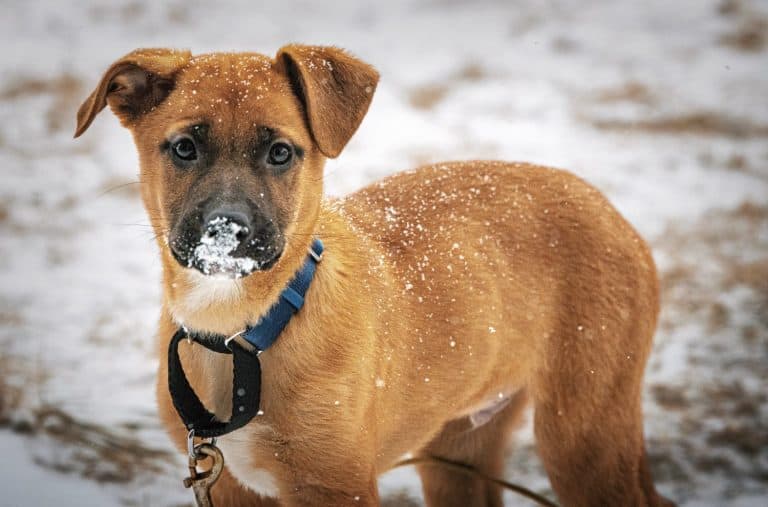
As a result of this breeding, the German Sheppit can have a wide variety of different appearances and temperaments. This dog is more likely to look like a Pit Bull than its German Shepherd parent, including a large head, a shorter muzzle, and folded ears. The coat will be a mix between two or more of the following colors: black, white, tan, fawn, and grey, as well as brindle. Temperamentally, the German Sheppit is likely to be loyal and protective, but it may mix different characteristics in unusual and unexpected ways.

3 Pros and Cons of Owning a German Sheppit

Pros!Cons!
Loyal and Protective
The German Sheppit will form a close bond with everyone in the family.
Requires Plenty of Space
The German Sheppit is probably not well-suited for apartment living.
Intelligent and Trainable
This dog learns human commands quickly and easily.
High Intensity
This dog has a very strong and intense drive or energy level.
Strong Work Ethic
The German Sheppit loves to be given a task to perform.
Attention Seekers
This dog needs almost constant attention.
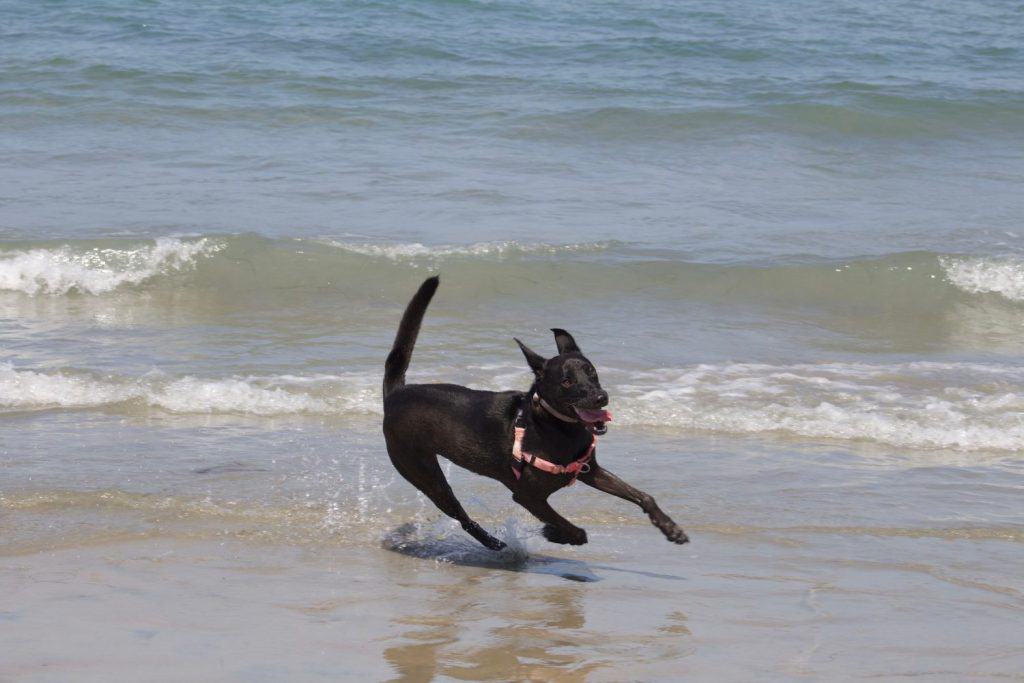
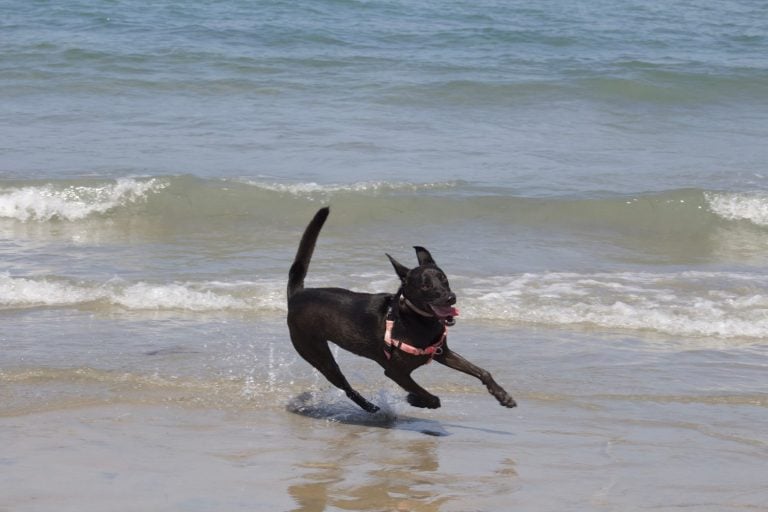
Black German Shepherd-Pit Bull mix dog with the zoomies at Ocean Beach Dog Beach

The German Sheppit is a medium to large dog.

Size and Weight

Depending on the size of its Pit Bull parents, the German Sheppit can be a medium or large dog. It also tends to have a very muscular frame. German Sheppits are usually 17 to 26 inches high, and weigh between 30 and 90 pounds.

Common Health Issues

The German Sheppit will almost certainly inherit some health problems from both of its parent breeds. This may include allergies, skin problems, heart disease, progressive retinal atrophy, epilepsy, bladder stones, cancer, bloating, patellar luxation (essentially, a chronically loose kneecap), or hypothyroidism (the signs of which are lethargy and weight gain). Another potential problem you should look out for is a bleeding disorder called Von Willebrand’s disease, caused by low levels of the clotting protein.

A good breeder will try to reduce or eliminate the risks of many conditions, but there is always the chance that some problem will arise. That is why you should schedule regular checkups at the vet for tests and an examination. If everything goes well with its health, then the German Sheppit should have an average lifespan of around 10 to 12 years.

German Sheppit Temperament

The Pit Bull (and to a lesser extent, the German Shepherd) has a poor reputation as an aggressive and dangerous breed, but this is somewhat unfair. As long as it’s well-trained and properly socialized as a puppy, your dog should have very few behavior problems and exhibit no aggression toward people. In fact, these dogs have many positive qualities. With their hard-working, fiercely loyal, intelligent, and people-oriented personality, they can make excellent police dogs, guard dogs, or watchdogs. But in order to remain happy and content, this dog will require plenty of attention and care from its owner. If ignored or left alone, then it may resort to destructive behavior and other unwanted traits.

How to Take Care of the German Sheppit

The German Sheppit is by no means an easy hybrid dog to care for. Its exercise, diet, and social needs are quite high. Since it will demand so much of its owner’s time and attention, this is probably not a good choice for novice or first-time dog owners. If you have any other questions or concerns about how to raise your dog, then you should consult a trainer working with power breeds or the local vet.

The Best Dog Food for German Sheppits

A full-grown German Sheppit probably needs around 3 to 4 cups of high-quality dry food, designed for active dogs, every day. If your dog suffers from bloating (a very serious condition that can cause the stomach to expand rapidly), then it’s not a good idea to leave out all of the food at once. Instead, you should divide up its daily diet into several meals per day and stick to a regular schedule that the dog will anticipate and understand.

This breed can suffer from heart disease, so stay up-to-date on the connection between legumes in dog food and heart failure in dogs. Try to prioritize finding a legume-free dog food. Also, German Sheppits can have a propensity for allergies, which makes allergy-care dog food a good idea.

Maintenance and Grooming

Despite its short hair, the German Sheppit is actually quite a heavy shedder, and you may need to buy a special vacuum just to clean it up. This dog will probably need to be groomed at least three times a week with a hard-bristle brush. Since the dog’s natural oils should serve to keep the coat clean, you will only need to bathe your dog about once a month or whenever it becomes particularly dirty. Use a mild shampoo to prevent skin irritation. Proper dental hygiene can be maintained by brushing the teeth at least three times a week to prevent bad breath and disease. Check the ears and clean them out with cotton at least once a week to prevent obstructions and infections. Finally, you should trim the nails before they become long and unwieldy.

Training

The German Sheppit should undergo rigorous obedience training and socialization so it will learn how to properly interact with people and other dogs. It does tend to take charge and boss everyone around, so owners will need to demonstrate that they’re the leader. Positive reinforcement methods and rewards work best for this type of dog, but you should also not let it get away with disobedient behavior. If you are struggling to train it, then you might want to contact a professional trainer in your area.

Exercise

The German Sheppit is a very energetic dog that needs around 60 to 90 minutes of exercise per day, preferably in the form of long walks, runs, hiking, and free-roaming in a park or yard. It also needs additional activity time, like toys, ball games, or simple tasks throughout the day. Without enough exercise, this dog may become anxious and destructive.

Puppies

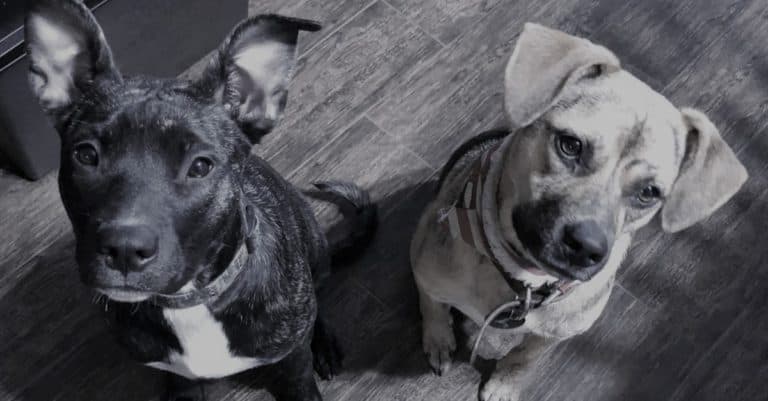
Mixed breed puppy German shepherd-pit-bull mix first experience with snow!

German Sheppit puppy’s first experience with snow!

In order to become a well-behaved full-grown adult, German Sheppit puppies need to begin obedience training, house training, and proper socialization within the first few months of life. Many owners of the German Sheppit may want to add crate training as well. Not only does it provide puppies with a safe space, but it also assists with house training; the dog will not want to release its bladder or bowels as long as it remains in the crate. But owners should try to treat the crate like a second home and not a cage or prison.

German Sheppits and Children

Despite their reputation for aggressive behavior, a properly socialized German Sheppit should be very kind and protective around children. But just as your dog needs to understand how to socialize with children, it is important to teach smaller kids in particular how to behave around a larger dog. The German Sheppit needs to be treated as a proper member of the family with a mind of its own and not just a toy or plaything.

Dogs Similar to the German Sheppit

Besides its two parent breeds, the German Shepherd and Pit Bull, the German Sheppit may resemble the following dogs in both physical appearance and temperament:

  • Boxer: The Boxer is a big, strong, intelligent working dog with a remarkable work ethic and drive. Physically, it has a square body, short hair, a small stub for a tail, very pointed and erect ears, a broad muzzle, big eyes, and a wrinkled forehead.
  • Bullmastiff: As a cross between a Bulldog and a Mastiff, this is another big, muscular, and intelligent working dog that was originally bred to keep away poachers from gamekeepers’ land. Today, it still makes an excellent watchdog and guard.
  • American Bulldog: A descendant of the English Bulldog, this breed combines strength, agility, and endurance into a friendly package. Black, white, red, brown, tan, and brindle are all accepted coat colors.
View all 261 animals that start with G

Sources

  1. K9 Web / Accessed April 16, 2021
  2. Dog Time / Accessed April 16, 2021
Jeremy Duke

About the Author

Jeremy Duke

I am a former educator and current freelance content writer and optimization editor. My family and I live in Oklahoma City where we are in the process of adopting our first rescue dog!
Connect:

Thank you for reading! Have some feedback for us?


German Sheppit FAQs (Frequently Asked Questions)

The German Sheppit is a crossbreed mix between a German Shepherd and a Pit Bull. This is a loyal, protective, and intelligent dog whose most common physical characteristics include short but dense fur, a muscular body, a small muzzle, and folded ears. Coat colors include black, white, fawn, tan, grey, and even brindle.