A
Species Profile

Ambrosia Beetle

Curculionidae

Farm fungi. Tunnel wood. Rule trees.
Tomasz Klejdysz/Shutterstock.com

Ambrosia Beetle Distribution

Click a location to explore more animals from that region

Invasive Species
Loading map...
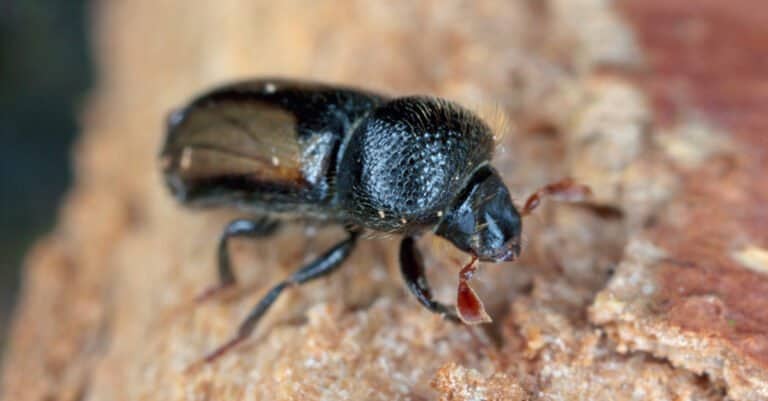
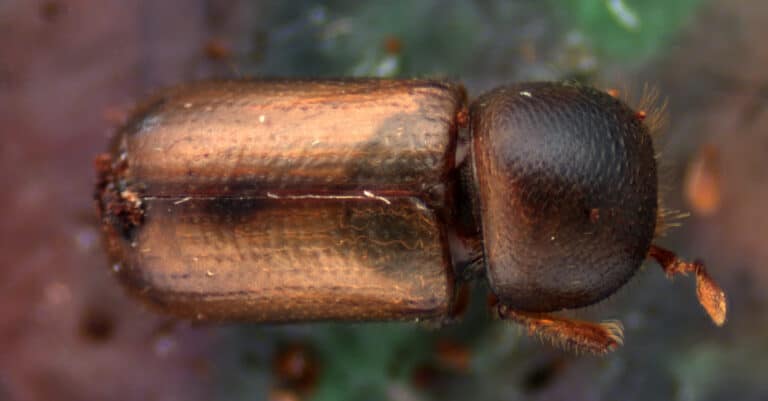
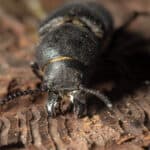
close up of an ambrosia beetle

At a Glance

Family Overview This page covers the Ambrosia Beetle family as a group. Stats below are general traits shared across the family.
Also Known As Ambrosia weevils, wood-boring beetles, wood borers, wood-borer weevils, fungus-farming beetles, shot-hole borers, gallery beetles
Diet Herbivore
Activity Nocturnal+
Lifespan 9 years
Weight 0.0001 lbs
Status Not Evaluated
Did You Know?

"Ambrosia beetles" aren't a single lineage-fungus-farming evolved in multiple groups within Curculionidae (mainly Scolytinae and Platypodinae).

Scientific Classification

Family Overview "Ambrosia Beetle" is not a single species but represents an entire family containing multiple species.

Ambrosia beetles are small, cylindrical wood-boring beetles (technically weevils) that excavate galleries in wood and “farm” symbiotic ambrosia fungi as their primary food source. Many species attack stressed or recently dead trees, while some invasive species can infest apparently healthy hosts and act as serious forestry or horticultural pests.

Kingdom
Animalia
Phylum
Arthropoda
Class
Insecta
Order
Coleoptera
Family
Curculionidae

Distinguishing Features

  • Wood-boring lifestyle with galleries in sapwood/heartwood
  • Cultivation and transport of symbiotic fungi (mycangia)
  • Often attracted to ethanol emitted by stressed trees
  • Very small (often a few millimeters), cylindrical body form typical of scolytines/platypodines

Physical Measurements

Males and females differ in size

Length
0 in (0 in – 1 in)
Weight
0 lbs (0 lbs – 0 lbs)
Top Speed
6 mph
Slow fliers: ~2–6 km/h

Appearance

Primary Colors
Secondary Colors
Skin Type Hard shell made of chitin with strongly hardened elytra and pronotum; body usually cylindrical and compact. Elytra often pitted or lined, sometimes with fine hairs. Many carry wood dust (frass) that dulls color.
Distinctive Features
  • Body form: typically small, compact, and cylindrical (a 'bullet-shaped' wood-borer profile), with the head often partially concealed from above by the pronotum.
  • Ambrosia beetles (Curculionidae), especially Scolytinae and Platypodinae, are usually 1–10 mm long; most are near the lower end, with largest species up to about 15 mm.
  • Ambrosia beetles (Curculionidae) develop from egg to adult in about 4–8 weeks in warm conditions, but development can take months or ~1 year; adults live weeks to months, some survive winter nearly a year.
  • Mycangia (key ambrosia trait): many species possess specialized fungus-carrying structures (mycangia) on the thorax, head, mouthparts, or elytra/pronotum regions (exact placement varies by lineage). These transport and inoculate symbiotic "ambrosia" fungi into new galleries.
  • Feeding ecology: unlike typical bark beetles that primarily feed on phloem/inner bark, ambrosia beetles tunnel into sapwood/heartwood and feed mainly on cultivated symbiotic fungi growing on gallery walls (wood is mainly substrate, not primary nutrition).
  • They dig branching or chambered tunnels in wood; gallery shapes vary (radial, long, brood chambers, or complex networks). Fungal growth lines the galleries and feeds adults and larvae.
  • Many lineages show inbreeding/sib-mating inside galleries, with broods developing together in protected wood. Some species help each other (overlapping generations or gallery maintenance), but this varies.
  • Many ambrosia beetle species mostly settle in stressed, dying, recently dead, or freshly cut trees, but some invasive or outbreak species can attack healthy trees when helped by fungi, climate, or mass attacks.
  • Some ambrosia beetle species become serious forest or garden pests, especially invasive ones that attack many plants and spread harmful fungi. Most mainly break down dead wood and cause little harm.
  • Entry/exit holes and frass: adults often produce small round entry holes; fine powdery frass may be pushed out, sometimes forming compact "toothpick" frass strings in certain species/conditions (not universal).
  • Antennae and mouthparts: elbowed antennae typical of weevils; the classic long 'snout' (rostrum) is reduced/modified compared with many other Curculionidae, reflecting specialized wood-boring habits (degree varies among lineages).
  • Legs/flight: most species are capable fliers (critical for host-finding), but dispersal ability and flight muscle development vary; some males in certain groups may be weak fliers or effectively flightless. (Variation is substantial.)

Sexual Dimorphism

Sexual dimorphism is common but varies in Ambrosia beetles (Curculionidae). Often females disperse and start galleries; males are smaller and sometimes rare from inbreeding. The pattern and strength differ across taxa.

  • Often smaller than females; in some lineages males are dwarfed and may have reduced wings/flight capacity and remain within natal galleries.
  • Males may be less frequently encountered in traps/at hosts when females are the primary dispersers (varies by species and mating system).
  • In some taxa, males show subtle differences in pronotal/elytral armature or setation, but these traits are lineage-specific rather than universal.
  • Often the primary dispersing sex and the gallery founder; typically more robust-bodied in species with strong dimorphism.
  • Frequently bear the most developed mycangia and are the main vectors introducing ambrosia fungi into new hosts (mycangia presence/placement varies among taxa).
  • May show proportionally larger abdomen to support egg production; differences can be slight to pronounced depending on species.

Did You Know?

"Ambrosia beetles" aren't a single lineage-fungus-farming evolved in multiple groups within Curculionidae (mainly Scolytinae and Platypodinae).

Most don't eat wood; they eat the ambrosia fungi growing on the gallery walls inside the wood.

Many species have strong female bias: sisters often mate with brothers inside the natal gallery, and males in some groups are tiny and flightless.

They can attack hundreds of host tree species; many are attracted to ethanol-a stress signal released by damaged or dying trees.

Some invasives (e.g., polyphagous/Kuroshio shot hole borers and redbay ambrosia beetle) can attack apparently healthy hosts and introduce lethal fungal diseases.

Their tunneling can create "pinholes" and fungal staining valued in specialty lumber (often sold as "ambrosia" wood).

Unique Adaptations

  • Mycangia: specialized spore-carrying organs (in different body locations depending on lineage) that transport the ambrosia fungi between trees.
  • Fungus-compatible mouthparts and gut biology: adapted for grazing fungal tissues and spores rather than chewing nutritious plant tissue.
  • Compact, cylindrical body form: streamlined for pushing through tight wood tunnels; many have reinforced head/pronotum suited to boring.
  • Reproductive system suited to gallery life: frequent sib-mating and skewed sex ratios; in some groups males are reduced and seldom leave the wood.
  • Tolerance of low-oxygen, high-CO2 microhabitats: life inside wood favors physiology and behavior that function in poorly ventilated galleries.

Interesting Behaviors

  • Fungus farming (ambrosia symbiosis): adults inoculate tunnels with symbiotic fungi and then feed on the fungal growth rather than phloem or wood.
  • Gallery engineering: families carve branching tunnels and chambers that regulate airflow and moisture to favor their fungi; layouts vary widely among species and wood types.
  • Host selection tied to stress: many species preferentially colonize stressed, storm-damaged, cut, or recently dead trees; others can mass-attack vigorous trees, especially when carrying pathogenic fungi.
  • Inbreeding-based colony structure: mating commonly occurs within the gallery; dispersing females often found new galleries alone, carrying the fungal starter culture.
  • Chemical cue use: many species orient to ethanol and other volatiles from stressed trees; pheromones and aggregation signals vary among taxa.
  • Multi-partner symbioses: besides the primary ambrosia fungus, galleries can host additional fungi, yeasts, and bacteria; outcomes range from beneficial to harmful depending on species and context.

Cultural Significance

Ambrosia beetles (Curculionidae) matter to forestry, orchards, and city trees: they spread fungi that can kill trees and cause outbreaks, and make pinholes and stains in wood. The stains create 'ambrosia' figures prized by woodworkers. They spread worldwide in wood packing, logs, and nursery stock.

Myths & Legends

Name origin: "Ambrosia" comes from Greek mythology-the food of the gods-applied by naturalists to these beetles because their larvae feed on a cultivated fungus rather than the wood itself.

Woodcraft lore and naming: in the lumber trade, "ambrosia maple" and similar terms developed around the distinctive streaking and pinholes associated with ambrosia beetle fungal staining, turning an insect-fungus interaction into a valued aesthetic.

In modern forestry, laurel wilt in the southeastern U.S. became a warning story: an introduced ambrosia beetle (Curculionidae)–fungus partnership killed many native laurels, especially redbay, changing landscapes and people's ties to these trees.

You might be looking for:

Black timber bark beetle / European shot-hole borer

26%

Xylosandrus germanus

A widespread invasive ambrosia beetle; attacks stressed trees and can cause sap flow and dieback.

Asian ambrosia beetle

22%

Xylosandrus crassiusculus

Common invasive ambrosia beetle in many regions; bores into small trunks/branches and introduces symbiotic fungi.

Polyphagous shot hole borer (complex)

20%

Euwallacea fornicatus species complex

A species complex of ambrosia beetles associated with Fusarium dieback; important pest in some subtropical regions.

Oak pinhole borer

12%

Platypus cylindrus

A platypodine ambrosia beetle that bores into hardwoods; notable in oak decline contexts in parts of Europe.

Tea shot-hole borer

8%

Euwallacea perbrevis (often treated within the E. fornicatus complex)

An ambrosia beetle recorded from various hosts; sometimes implicated in horticultural/ornamental tree damage.

Life Cycle

Birth 50 larvas
Lifespan 9 years

Lifespan

In the Wild
1–18 years
In Captivity
2–24 years

Reproduction

Mating System Polygyny
Social Structure Aggregation Group
Breeding Pattern Transient
Fertilization Internal Fertilization
Birth Type Internal_fertilization

Ambrosia beetles (Curculionidae) usually mate inside natal galleries. One male often mates with many sisters (polygyny), causing inbreeding and female-biased broods. Mating is internal; some show arrhenotoky. No true cooperative breeding, only mild subsociality.

Behavior & Ecology

Social Colony Group: 30
Activity Nocturnal, Crepuscular, Diurnal
Diet Herbivore Cultivated ambrosia fungi (symbiotic "ambrosia" gardens)
Seasonal Hibernates 12 mi

Temperament

Cryptic and avoidance-oriented (most time spent within wood)
Generally non-aggressive toward non-conspecifics outside the host
Resource-/tunnel-defensive when galleries are disturbed (blocking entrances, pushing, biting)
Tolerant of high local conspecific density during mass attacks/aggregations in suitable hosts (varies strongly among species, including invasive pest taxa)

Communication

pheromones for aggregation, mate-finding, and host colonization coordination Composition and strength vary widely among taxa
chemical cues from host volatiles (e.g., ethanol and other stress-related compounds) guiding host location; sensitivity differs across species
contact chemoreception within galleries Recognition of conspecifics/kin and fungal condition via cuticular and substrate-borne chemicals
substrate-borne vibrations/stridulation used by some ambrosia-associated weevils for close-range signaling within wood Presence and importance vary among groups
fungal symbiont odors and gallery microclimate cues influencing behavior E.g., tending, tunneling, and brood placement

Habitat

Biomes:
Tropical Rainforest Tropical Dry Forest Savanna Mediterranean Temperate Forest Temperate Rainforest Boreal Forest (Taiga) Wetland +2
Terrain:
Mountainous Hilly Plateau Plains Valley Coastal Island Riverine Volcanic Karst Rocky +5
Elevation: Up to 12467 ft 2 in

Ecological Role

Fungus-farming wood borers that function both as decomposer-associated insects (facilitating wood decay via fungal introduction) and, in some species, as major forest/horticultural pests and disease/fungus vectors when attacking living trees.

Accelerate decomposition and nutrient cycling by introducing and cultivating wood-decay/ambrosia fungi in dead or stressed trees Create microhabitats and increase structural heterogeneity in wood for other saproxylic organisms (secondary users of galleries) Influence forest succession and tree mortality patterns (especially during drought/stress events) Act as vectors of symbiotic and opportunistic fungi, including pathogenic/vascular-staining fungi in some host-beetle-fungus combinations Serve as prey items for predators/parasitoids, supporting food webs in forest ecosystems

Diet Details

Other Foods:
Ambrosia fungi Fungal growth Plant-derived sap and wood nutrients Opportunistic fungi

Human Interaction

Domestication Status

Wild

Ambrosia beetles are not domesticated. Across the ambrosia-beetle lineages within Curculionidae (notably Scolytinae and Platypodinae), they have long interacted with humans indirectly via forestry and horticulture. Human activity has instead driven accidental movement and establishment (global trade in wood/packing material, live plants, firewood), producing numerous invasive populations; management focuses on exclusion/quarantine and tree health rather than any form of cultivation.

Danger Level

Low
  • Direct harm is uncommon: they do not sting and rarely cause any meaningful bite/skin injury
  • Indirect hazard via tree decline/mortality: falling limb/tree risk and property/landscape losses when infestations contribute to dieback
  • Allergy/irritation potential from wood dust/frass and associated fungi during cleanup or processing of infested wood (variable, context-dependent)
  • Economic and food/plant security impacts from invasive species complexes and their associated fungi (some combinations can be highly damaging to trees)
  • Pesticide exposure risk arises from control efforts rather than from the beetles themselves

As a Pet

Not Suitable as Pet

Legality: Ambrosia beetles (Curculionidae): keeping dead or pinned specimens is usually legal. Keeping or moving live beetles is often restricted or needs permits, especially for non-native types or when moving wood or plants across borders.

Care Level: Expert Only

Purchase Cost: Up to $50
Lifetime Cost: Up to $200

Economic Value

Uses:
Forestry and timber (pest damage, wood staining/defects, tree mortality in some host-fungus combinations) Horticulture and nurseries (attacks on stressed ornamentals/fruit trees; occasional severe impacts from invasive complexes) Biosecurity and trade (quarantine treatments, inspection, shipment rejection/claims, monitoring programs) Urban forestry (decline and removal/replacement costs when trees are heavily infested or pathogen-associated) Ecosystem services (natural wood decomposition and nutrient cycling in dead/dying trees) Scientific value (model systems for insect-fungus symbiosis, chemical ecology, invasion biology)
Products:
  • Negative: reduced timber value from galleries, staining, and secondary fungal colonization
  • Negative: losses in nurseries/landscaping and costs of tree removal/replacement
  • Services: monitoring/trapping programs (often ethanol-baited), quarantine treatments, pest-management consulting
  • Research outputs: insights into symbiotic fungi (e.g., enzymes) and microbe-insect interactions

Relationships

Related Species 9

Bark beetles
Bark beetles Scolytinae Shared Family
Pin-hole borers / ambrosia beetles Platypodinae Shared Family
Palm weevils and rhinoceros weevils Dryophthorinae Shared Family
Broad-nosed weevils Entiminae Shared Family
Typical snout weevils Curculioninae Shared Family
Leaf-rolling weevils Attelabinae Shared Order
Flea weevils Ceutorhynchinae Shared Family
Boll weevil Anthonomus grandis Shared Family
Rice weevil Sitophilus oryzae Shared Family

Ecological Equivalents 6

Animals that fill a similar ecological role in their ecosystem

Longhorn beetles Cerambycidae Larvae occupy dead or dying wood and excavate galleries. They often overlap in host material and are common in the same logs or trees, though they typically feed directly on wood tissues rather than farming fungi.
Jewel beetles
Jewel beetles Buprestidae Many species colonize stressed or recently dead trees and can be major forest pests. Ecological overlap is strongest during early colonization of weakened hosts.
Powderpost and deathwatch beetles Ptinidae Wood-boring beetles that develop in dry or seasoned wood; share a gallery-making lifestyle but typically rely on the wood and associated microbes rather than on obligate ambrosia fungi.
Horntails Siricidae Larvae develop in wood, and many species carry symbiotic fungi to help condition the wood—functionally analogous to fungus-associated wood-boring, though not true fungus-farming like ambrosia beetles.
Fungus-growing termites Macrotermitinae They cultivate symbiotic fungi for nutrition. The similarity is in the agricultural cultivation of microbes rather than the specific wood-boring niche.
Leafcutter ants
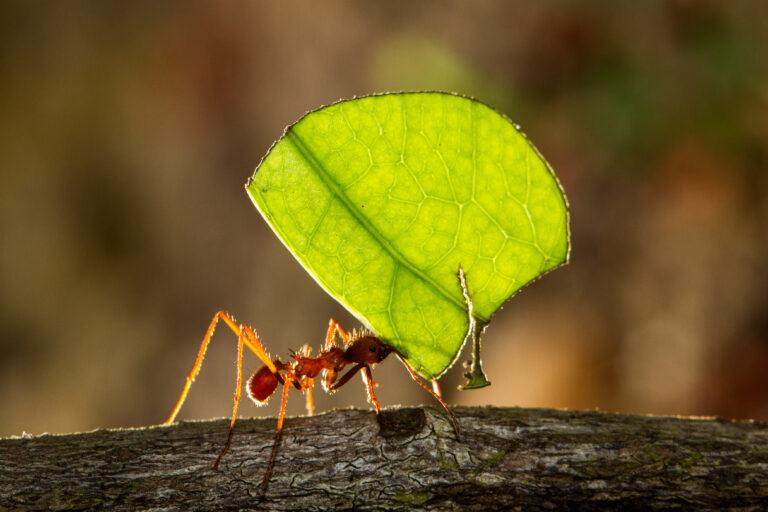
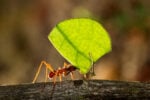
Leafcutter ants Atta spp. A well-known example of insect agriculture: an analogous mutualism in which the ants cultivate a fungus as a primary food source, despite very different habitats and life histories.

Types of Ambrosia Beetle

11

Explore 11 recognized types of ambrosia beetle

Black stem borer / European shot-hole borer Xylosandrus germanus
Granulate ambrosia beetle / Asian ambrosia beetle Xylosandrus crassiusculus
Polyphagous shot hole borer (complex member; taxonomy region-dependent) Euwallacea fornicatus
Kuroshio shot hole borer Euwallacea kuroshio
Tea shot-hole borer (complex member; often treated separately from E. fornicatus s.s.) Euwallacea perbrevis
Striped ambrosia beetle Trypodendron lineatum
Frut-tree pinhole borer Anisandrus dispar
Redbay ambrosia beetle Xyleborus glabratus
European ambrosia beetle Xyleborinus saxesenii
Oak pinhole borer Platypus cylindrus
Spruce beetle Dendroctonus rufipennis
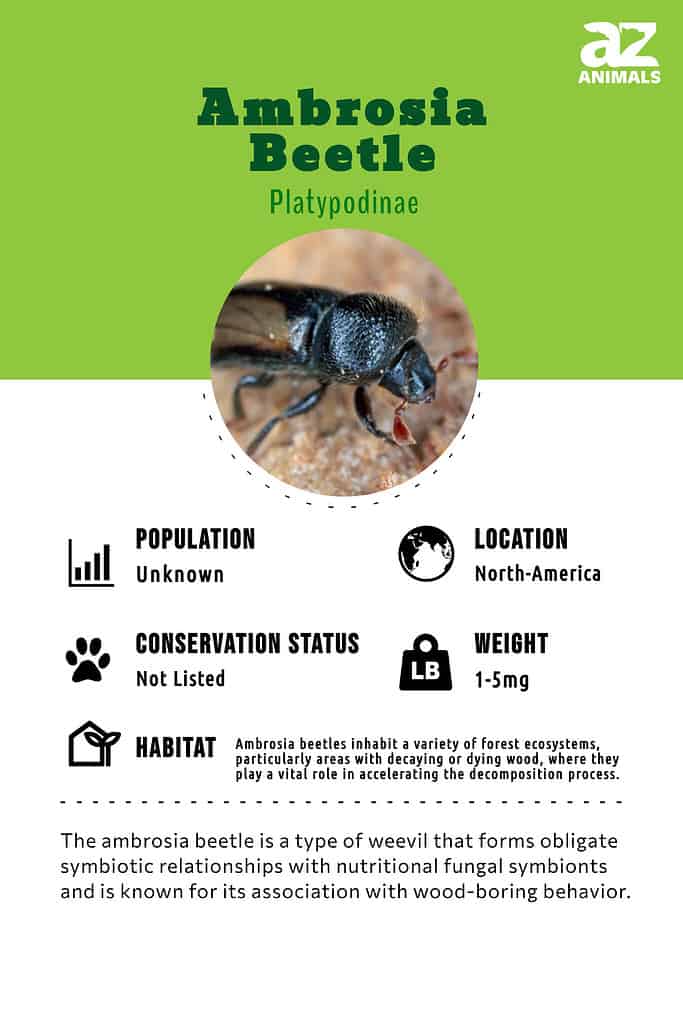
The ambrosia beetle is a type of weevil that forms obligate symbiotic relationships with nutritional fungal symbionts and is known for its association with wood-boring behavior.

“Some species of ambrosia beetle can fertilize eggs without a male.”

The ambrosia beetle is a loosely related group of weevils/beetles that form a symbiotic relationship with the ambrosia fungi. A symbiotic relationship benefits both parties. The ambrosia beetle can burrow through dead or dying trees.

Once it’s deep within the wood, they will then set up and cultivate a kind of fungal garden to feed their larvae. The beetles benefit by feeding directly on the cultivated fungus.

The fungus benefits by spreading into new habitats, even as it’s fed on by the beetle. This article will cover some interesting facts about the identification, diet, habitat, and life cycle of the ambrosia beetle.

Species, Types, and Scientific Names
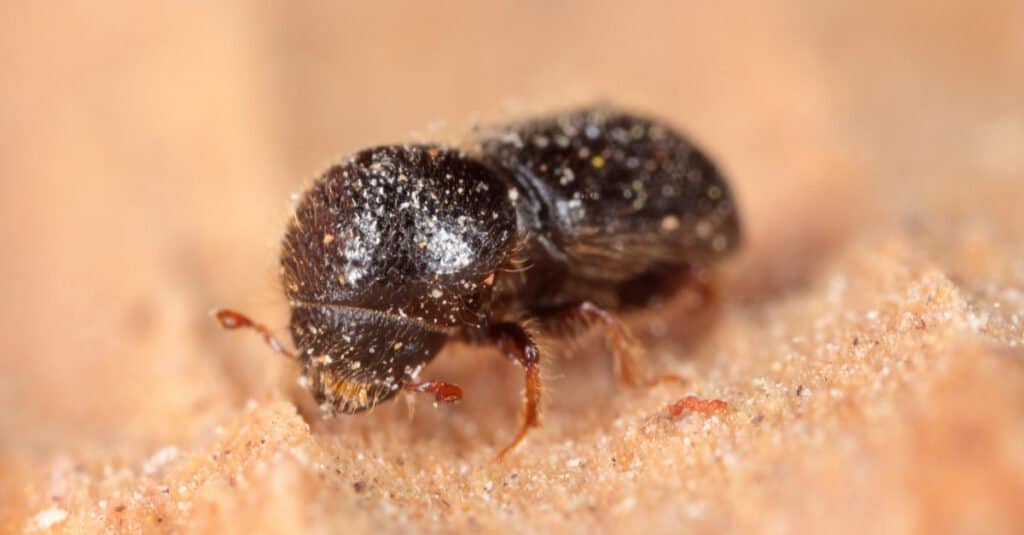
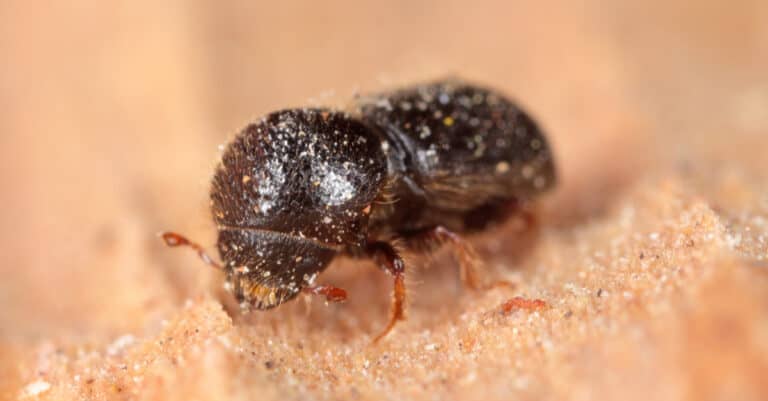
close up of an ambrosia beetle

The ambrosia beetle is not classified as a specific taxonomical group but rather encompasses over 3,000 species, forming a broad category.

The ambrosia beetle isn’t considered to be a specific taxonomical group, but rather a loose category that includes more than 3,000 species, spread across several different families, that feed on the ambrosia fungus.

Here are some of the most common species:

  • Xyleborus glabratus
  • Mountain pine beetle
  • Xyleborus dispar
  • Tomicus piniperda
  • Austroplatypus incompertus
  • Spruce wood engraver
  • Scolytus schevyrewi
  • Large Fruit Bark Beetle
  • Hylastes ater
  • Cryphalus piceae
  • Hylastes cunicularius
  • Xyleborus baculum
  • Xyleborus africanus

Most species generally belong to the bark beetle family (Scolytinae) or the pinhole borer family (Platypodinae). Both families may have evolved independently from each other. Likewise, the ambrosia fungus isn’t a specific taxonomical group, but merely any species that are fed upon by the ambrosia beetle.

Evolution and Origins

Xleborus glabratus is believed to have been brought into the United States through solid wood packing materials, posing challenges in detecting these cryptic ambrosia beetles in tree or wood product shipments.

The ambrosia beetle belongs to the weevil subfamilies Scolytinae or Platypodinae and is characterized by its obligate association with nutritional fungal symbionts. This obligate symbiosis with fungi is observed in at least 11 separate groups of scolytine and platypodine beetles.

Coleopsis, an ancient beetle species, holds the distinction of being the oldest known beetle, having existed during the earliest Permian period approximately 295 million years ago in Germany. These early beetles, collectively referred to as “Protocoleoptera,” are believed to have been xylophagous, meaning they fed on wood, and had the ability to bore into wood.

Appearance
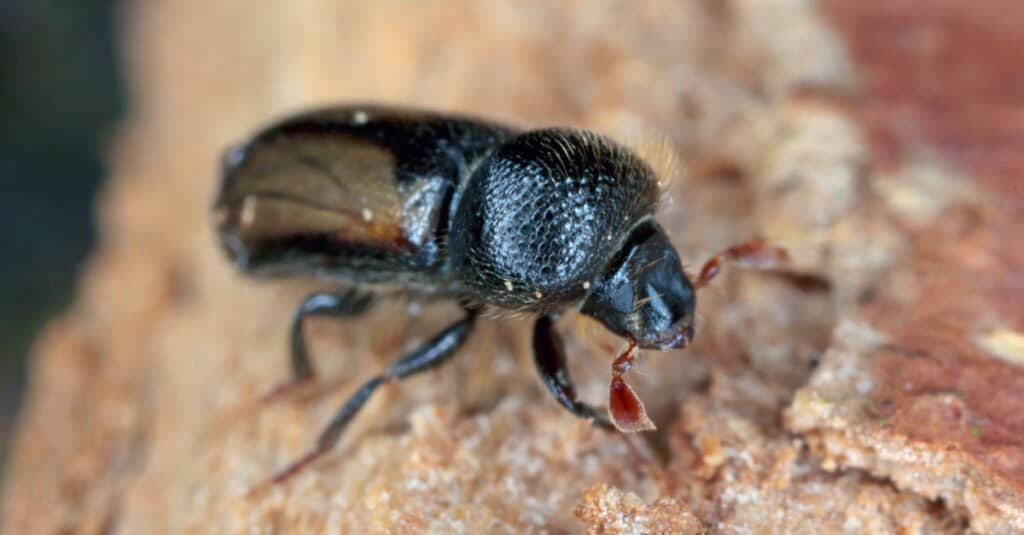
The ambrosia beetle displays a compact cylindrical body with hues ranging from reddish-brown to black.

The ambrosia beetle has a small cylindrical body with reddish-brown or black colorations. Their sharp jaws enable them to see through the decaying wood with ease. Some of them have oddly shaped shells that almost look like full plates of armor extending over the head.

The larvae, by contrast, are white legless grubs. They look nothing like the adults. However, identification can be quite difficult from appearance alone, because there is an enormous amount of diversity in this group.

Habitat

The ambrosia beetle is found all over the world, but the highest concentration and greatest diversity of species probably occur in the tropics. They live anywhere with a sufficient number of trees. All species attack dead, dying, and stressed trees (rarely young nursery trees).

A few species from Asia also attack healthy trees, which can become a huge problem if they invade other regions of the globe. Both the granulate ambrosia beetles and the red bay ambrosia beetle may feed on healthy trees.

Diet

The ambrosia beetle can be described as a fungivore. This means it feeds exclusively on fungi.

What eats the ambrosia beetle?

The ambrosia beetle is preyed upon by several different birds, mammals, spiders, insects, and other small predators. The deep “nursery” inside of the tree offers a degree of protection against potential threats, but otherwise, they have few defenses.

What does the ambrosia beetle eat?

The diet of the ambrosia beetle consists exclusively of the ambrosia fungus that it deliberately spreads and cultivates for food. They do not feed on the wood directly; this is in contrast to other wood-boring beetles, which do feed on wood.

Prevention
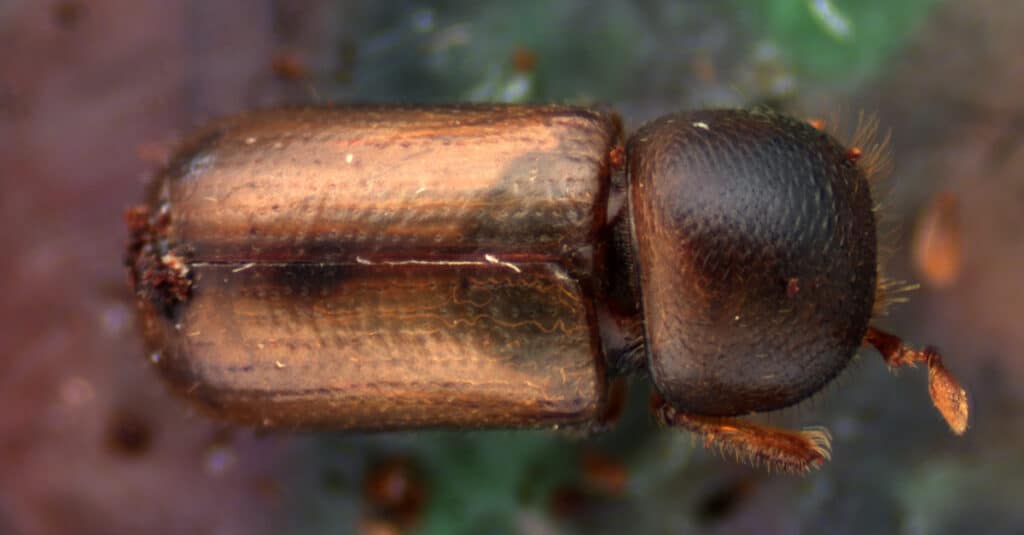
above view of an ambrosia beetle

In numerous instances, the ambrosia beetle is regarded as an environmental asset due to its role in expediting the decomposition process of decaying and dying wood.

In many cases, the ambrosia beetle is considered to be a net benefit to the environment, because they accelerate the decomposition of dead and dying wood. However, they can do real damage if you intend to use the wood for yourself. Infestations occur much more commonly with logging or agriculture than homes and buildings, but they can attack any lumber that’s recently been cut.

Prevention is usually focused on removing and processing wood quickly before the beetles have an opportunity to attack them. Wood should be properly stored in a safe area where the beetles cannot reach. They also need to be handled with care.

If you have trees on your property, then you should ensure they’re properly cared for and treated with mulching and water. Make sure construction or landscaping hasn’t damaged the root system that can cause stress to a tree. Once the beetle infests a plant, then the best option is to completely replace it.

The tree is unlikely to recover from that point forward because it was probably already dying or damaged in the first place. Insecticides can kill some adult beetles, but it’s difficult to apply the chemicals effectively over the entire tree. Ethanol traps are mostly intended to monitor infestations, not stop them. Fortunately, these beetles tend to do most of the damage in the wild and don’t bother people too much.

View all 326 animals that start with A

Sources

  1. fsusda / Accessed December 27, 2021
  2. Clemson / Accessed December 27, 2021
  3. US Forest Service https://www.fs.fed.us/research/invasive-species/insects/red-bay-ambrosia-beetle.php Jump to top / Accessed December 27, 2021
Rebecca Bales

About the Author

Rebecca Bales

Rebecca is an experienced Professional Freelancer with nearly a decade of expertise in writing SEO Content, Digital Illustrations, and Graphic Design. When not engrossed in her creative endeavors, Rebecca dedicates her time to cycling and filming her nature adventures. When not focused on her passion for creating and crafting optimized materials, she harbors a deep fascination and love for cats, jumping spiders, and pet rats.
Connect:

Thank you for reading! Have some feedback for us?


Ambrosia Beetle FAQs (Frequently Asked Questions)

Ambrosia beetles pose no danger to people, but they can do enormous damage to already decaying and dead wood.