F
Species Profile

Fruit flies

Drosophilidae

Small flies, big science.
nechaevkon/Shutterstock.com

Fruit flies Distribution

Click a location to explore more animals from that region

Invasive Species
Origin Location

This map shows the native origin of the Fruit flies. As a cosmopolitan species, they are now found worldwide.

Loading map...
Tropical Fruit Fly Drosophila Diptera Parasite Insect Pest on Vegetable Macro

At a Glance

Family Overview This page covers the Fruit flies family as a group. Stats below are general traits shared across the family.
Also Known As vinegar flies, pomace flies, Drosophila flies, lab fruit flies, small fruit flies
Activity Diurnal+
Weight 2.0E-5 lbs
Status Not Evaluated
Did You Know?

Drosophilidae includes 4,000+ described species, from backyard compost visitors to rainforest specialists.

Scientific Classification

Family Overview "Fruit flies" is not a single species but represents an entire family containing multiple species.

Fruit flies most commonly refer to drosophilids (family Drosophilidae): small dipteran insects whose larvae typically develop in yeasts and microbes associated with fermenting or decaying plant material. They are ubiquitous around ripe fruit and are foundational model organisms in genetics and developmental biology.

Kingdom
Animalia
Phylum
Arthropoda
Class
Insecta
Order
Diptera
Family
Drosophilidae

Distinguishing Features

  • Tiny flies with rapid life cycle
  • Often attracted to fermenting odors
  • Larvae develop in microbe-rich substrates
  • Key genetics model organisms (Drosophila)

Physical Measurements

Males and females differ in size

Weight
♂ 0 lbs (0 lbs – 0 lbs)
♀ 0 lbs (0 lbs – 0 lbs)
Top Speed
4 mph
flying

Appearance

Primary Colors
Secondary Colors
Skin Type Chitinous exoskeleton
Distinctive Features
  • Adults tiny: roughly 1.5-8 mm body length across family.
  • Usually tan/brown flies with a distinctly banded-looking abdomen.
  • One pair of clear wings; hindwings reduced to halteres.
  • Aristate antennae and conspicuous bristles on head and thorax.
  • Larvae develop in yeasts/microbes on fermenting or decaying plant material.
  • Often attracted to ripe fruit odors; typically not pests of intact fruit.
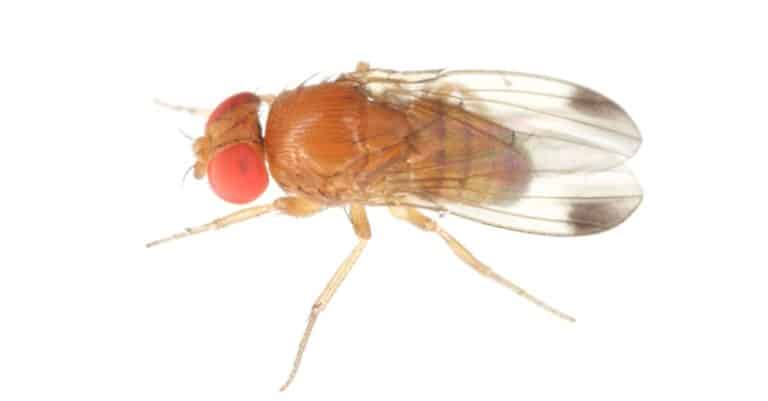
  • Not Tephritidae: generally lack the bold, patterned wings of "true fruit flies".
  • Fast life cycle: egg-larva-pupa-adult, often ~1-3 weeks depending temperature.
  • Adult lifespan commonly weeks to a few months, varying widely by species.
  • Household presence reduced by removing fermenting substrates and sealing waste.

Sexual Dimorphism

Dimorphism varies widely across Drosophilidae. Many species show male-specific leg "sex combs," darker or differently patterned abdominal tips, and distinct genitalia; females are often slightly larger, sometimes with specialized ovipositors in certain lineages.

♂
  • Foreleg sex combs present in many lineages.
  • Often darker posterior abdominal segments than females.
  • Terminalia shape differs markedly between sexes.
♀
  • Often slightly larger body size and longer abdomen.
  • Ovipositor may be enlarged/serrated in some species.
  • Abdomen tip typically lighter and less modified.

Did You Know?

Drosophilidae includes 4,000+ described species, from backyard compost visitors to rainforest specialists.

Adults are usually ~1-8 mm long across the family, with many species just a few millimeters.

Many larvae grow in yeasts on fermenting fruit, but others specialize on mushrooms, sap flows, flowers, or cacti.

They're often confused with Tephritidae "true fruit flies," many of which infest intact, marketable fruit.

Development can be very fast: egg-to-adult often ~1-4 weeks, depending strongly on species and temperature.

Adult lifespan varies widely; many live weeks, while some can persist for a few months in favorable conditions.

Drosophilids powered modern genetics: classic work on inheritance and development came from lab-reared Drosophila species.

Unique Adaptations

  • Highly tuned smell and taste receptors detect fermentation volatiles like ethanol and acetic acid from afar.
  • Rapid generation times and high fecundity let many species quickly exploit short-lived, patchy resources.
  • Larvae are efficient microbe-grazers, feeding on yeast and bacteria that pre-digest decaying plant material.
  • Many tolerate ethanol-rich substrates; tolerance levels vary greatly among species and host plants.
  • Male wing vibrations produce courtship "songs," aiding mate recognition between closely related species.
  • Some lineages evolved novel diets, including plant-feeding leaf miners, showing remarkable ecological flexibility.

Interesting Behaviors

  • Females choose egg-laying sites by odor, seeking active fermentation and specific yeast and bacterial communities.
  • Courtship is elaborate: many species use species-specific wing songs, dances, and pheromones to mate.
  • Some species partition habitats closely-different drosophilids specialize on different rots, fungi, or plant hosts.
  • Activity patterns vary: many are most active around dawn/dusk, but others track host availability and humidity.
  • Adults frequently aggregate on fermenting patches, where competition and predation risk shape feeding and mating.
  • In homes they exploit brief opportunities-overripe fruit, recycling bins, drains-then crash when sources disappear.

Cultural Significance

Fruit flies are icons of genetics and developmental biology, central to laboratories and classrooms. They're also a common household nuisance, shaping everyday advice about sanitation, food storage, and compost management.

Myths & Legends

The name "Drosophila" comes from Greek for "dew-loving," reflecting early naturalists' impressions of their moisture-seeking habits.

"Vinegar fly" is a traditional everyday name tied to their habit of gathering around souring wine, beer, cider, and kitchen vinegar.

In the early 1900s, Thomas Hunt Morgan's famed "Fly Room" made the fruit fly a scientific legend, inspiring generations of heredity stories.

You might be looking for:

True fruit flies

35%

Tephritidae

A different dipteran family whose larvae often infest living fruits; includes major agricultural pests like Mediterranean fruit fly.

Common fruit fly

30%

Drosophila melanogaster

The best-known single species called “fruit fly,” widely used in genetics and commonly found around fermenting fruit.

View Profile

Cherry fruit fly

20%

Rhagoletis cingulata

A tephritid species; ITIS returns this for the common name “fruit fly,” but it is not what most general articles mean.

View Profile

Spotted-wing drosophila

15%

Drosophila suzukii

A drosophilid that attacks ripening fruit (unlike many drosophilids), important as a soft-fruit pest.

Life Cycle

Birth 25 larvas

Lifespan

In the Wild
0 years
In Captivity
3–13 years

Reproduction

Mating System Polygynandry
Social Structure Aggregation Group
Breeding Season Year-round; peaks spring through autumn
Breeding Pattern Transient
Fertilization Internal Fertilization
Birth Type Internal_fertilization

Across drosophilids, adults often aggregate at fermenting resources where males court and compete; both sexes commonly mate with multiple partners, producing strong sperm competition and cryptic female choice. Pair bonds are brief, and eggs are laid on microbe-rich substrates without parental care.

Behavior & Ecology

Social Aggregation Group: 50
Activity Diurnal, Crepuscular, Cathemeral, Nocturnal
Diet Detritivore fermenting fruit
Seasonal Hibernates 3 mi

Temperament

Opportunistic
Gregarious
Skittish
Territorial

Communication

courtship song
wing buzzes
pheromones
cuticular hydrocarbons
species-specific odors
visual displays
tactile tapping
substrate vibrations

Habitat

Biomes:
Tropical Rainforest Tropical Dry Forest Savanna Desert Hot Desert Cold Mediterranean Temperate Grassland Temperate Forest Temperate Rainforest Boreal Forest (Taiga) Tundra Alpine Freshwater Wetland +8
Terrain:
Mountainous Hilly Plateau Plains Valley Coastal Island Riverine Rocky +3
Elevation: Up to 14763 ft 9 in

Ecological Role

Microbe-associated detritivores; some nectar/tear-feeders, occasional fruit-crop pests.

decomposition nutrient recycling microbe dispersal food-web support pollination (some)

Diet Details

Other Foods:
Fermenting and overripe fruit Yeasts Bacteria and microbial films Decaying plant sap and sap fluxes Rotting plant litter Fungi and mushrooms Cactus and other rotting succulent tissues Nectar and pollen Animal secretions (e.g., tears, sweat) +3

Human Interaction

Domestication Status

Semi domesticated

Mostly wild; some species are semi-domesticated as laboratory strains since the early 1900s worldwide for genetics/development research, mass-reared on yeast media. Family members are tiny (~1-6 mm) with life cycles roughly ~1-8+ weeks, varying widely.

Danger Level

Low
  • Food contamination and spoilage nuisance
  • Mechanical transfer of microbes
  • Allergy/irritation from indoor infestations

As a Pet

Not Suitable as Pet

Legality: Generally legal; transport of cultures may be regulated.

Care Level: Easy

Purchase Cost: Up to $25
Lifetime Cost: $10 - $150

Economic Value

Uses:
Research Agriculture Education Biotech
Products:
  • lab strains
  • genetic tools
  • assays

Relationships

Related Species 6

Drosophila (genus) Drosophila Shared Family
Scaptomyza (genus) Scaptomyza Shared Family
Zaprionus (genus) Zaprionus Shared Family
Chymomyza (genus) Chymomyza Shared Family
Hirtodrosophila (genus) Hirtodrosophila Shared Family
Amiota (genus) Amiota Shared Family

Ecological Equivalents 6

Animals that fill a similar ecological role in their ecosystem

True fruit flies Tephritidae Also oviposit in fruit/plant tissue; many are agricultural pests.
Scuttle flies Phoridae Small decomposer-associated flies breeding in decaying organic matter.
Shore flies Ephydridae Close ecological overlap in wet, microbe-rich decomposing substrates.
Skipper flies Piophilidae Larvae exploit fermenting/decaying substrates; common around food waste.
Blow flies Calliphoridae Exploit rich microbial decay; share predator/parasitoid communities.
Drain/moth flies
Drain/moth flies Psychodidae Breed in biofilms and rot; similar microbe-feeding larval niche.

Quick Take

  • A tiny kitchen pest has quietly earned multiple Nobel Prizes. Find out why scientists can't get enough of it.
  • Its larvae look nothing like the adult, and one hidden stage gives the transformation away early.
  • Males woo mates with a tune. What happens next is surprisingly specific.
  • Cleaning up food isn't always enough to banish them. The article reveals what else matters, and a homemade trap that might do the trick.

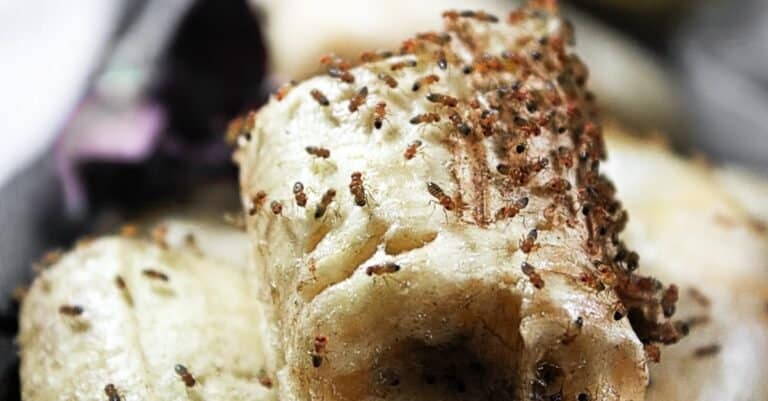
Fruit flies are among the most common household pests in the world. When they get into homes and feed on decomposing food, they can be a big annoyance to people. A few species are also agricultural pests and do immense damage to crops. But fruit flies do have their beneficial uses. They are considered to be among the most important “model organisms” in the world, extensively studied for their insights into biology.

An educational infographic about fruit flies with sections on their biology, habitat, and how to control infestations using various icons and illustrations.
They’re more than just kitchen nuisances—these tiny organisms are the unsung heroes of genetic breakthroughs and Nobel-winning research. © A-Z Animals

3 Incredible Fruit Fly Facts

  • Fruit flies are some of the most common research organisms in the world. They have played a pivotal role in genetic, evolutionary, and microbial research because of their short generational times and their interesting genetic properties. Multiple Nobel Prizes have been awarded for research done on fruit flies.
  • The fruit fly undergoes four different stages: the egg, the larva, the pupa, and the adult.
  • One of the most interesting facts is that fruit flies can beat their wings about 200 times a second.

Species, Types, and Scientific Name

Fruit flies can be defined as any number of fruit-eating species in the family Drosophilidae (which means dew-loving in Greek). The most well-known species is the common fruit fly, Drosophila melanogaster. Other common fruit flies, such as the Mexican, Mediterranean, olive, and citrus fruit flies, belong to a separate family, Tephritidae. There are altogether more than 4,000 species in the family. They are members of the fly order Diptera.

Appearance

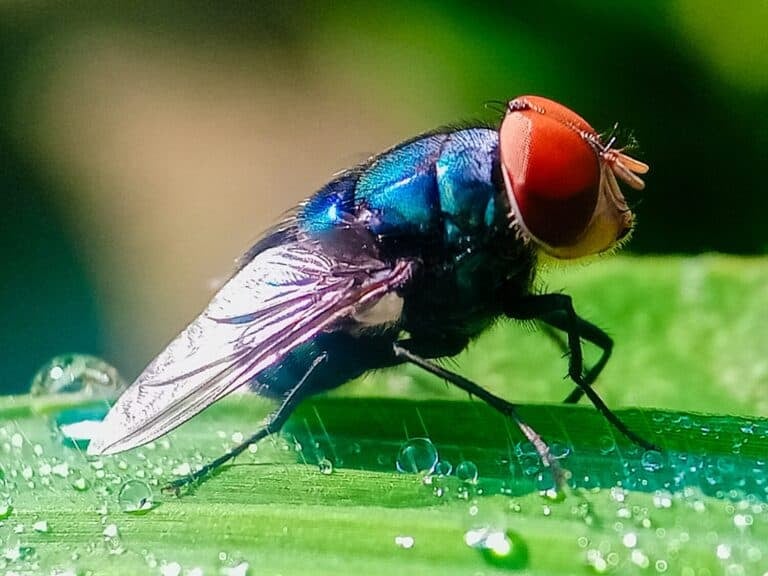
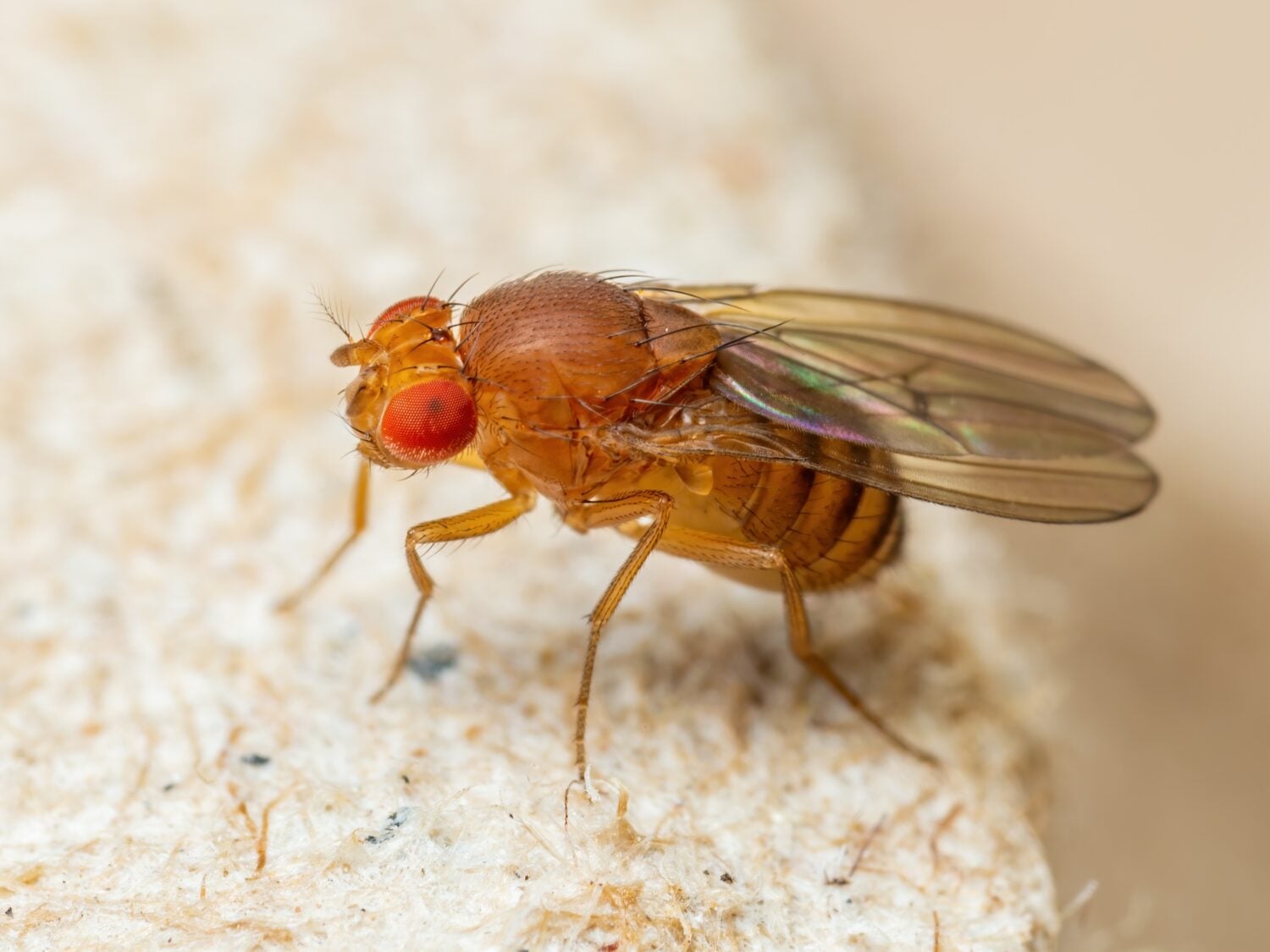
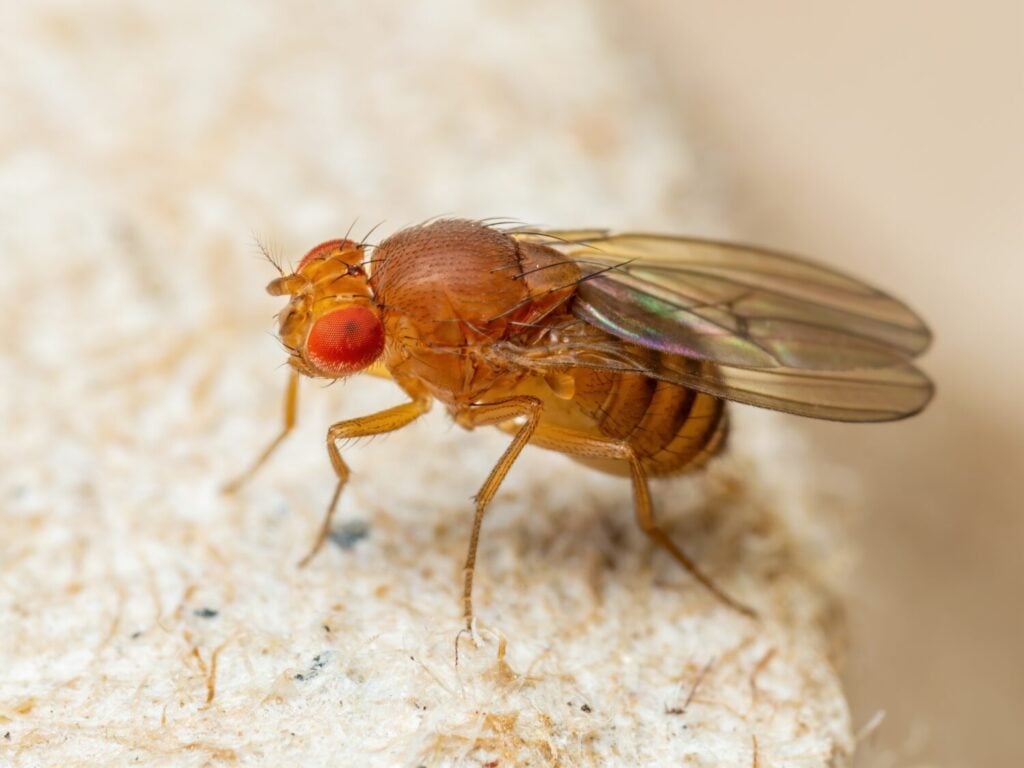
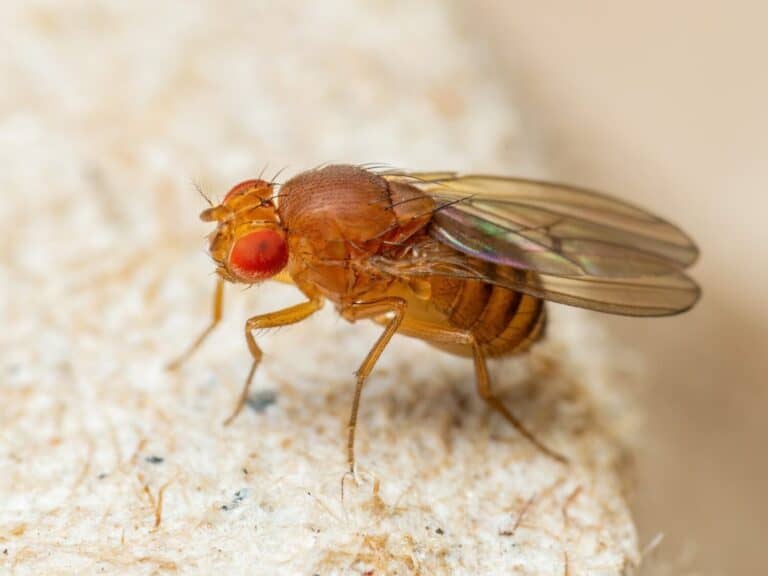
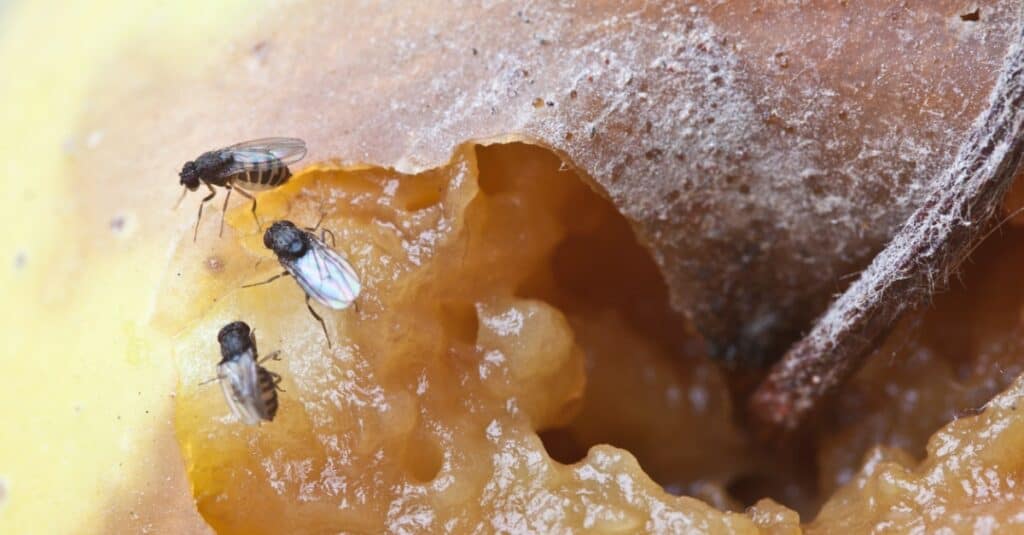
These insects are easy to mistake for the common housefly. Both feature the same relatively large head and eyes, the tube-shaped abdomen, and a pair of large wings. But there are a few distinctive features that should help with identification, including the bright red eyes (though some individuals sport darker eyes) and the tan or brown-colored body with black rings along the abdomen. Adults are generally no larger than a fraction of an inch in size and may be difficult to identify while in flight.

The larvae, by contrast, look nothing like the adults. These small worm-like creatures have no legs or wings and few other visible body parts anywhere. When it is ready to transform, the larva will find a secluded spot and encase itself in a hard shell. This is known as the pupa stage. A day before the fly emerges from the shell, the red eyes and wings can sometimes be seen through the surface.
Fruit flies are easily mistaken for the common housefly.

Fruit Flies vs. Gnats

Fruit flies are sometimes mistaken for common gnats because they both like to feed on some of the same overripe or rotting foods in the home. But while they’re both members of the fly order Diptera, the gnat is traditionally grouped with the mosquito rather than the fruit fly. It even looks quite a bit like a mosquito with a slender body and wings.

Habitat

Fruit flies are found all over the world except in the extreme cold of the north and south. They occupy grasslands, forests, swamps, coasts, and other locations, often hovering near plants. They become particularly abundant in the spring and summer months and spend the winter secluded in warm spots.

Diet

Fruit flies are generally omnivores. They will scavenge for whatever overripe or decomposing food bits they can find in the wild or human homes.

What eats the fruit fly?

Fruit flies are preyed upon by a diverse range of animals. They’re trapped in spider webs, foraged by birds, eaten by frogs, and targeted by other insects such as ants and beetles, especially in the larval stage. They are also preyed upon by numerous small reptiles and mammals.

What does the fruit fly eat?

As the name of this animal suggests, the fruit fly generally feeds on fruits, sweets, and other plant material. The eggs are laid directly on the surface of overripe fruit and other decaying material. They will continue to eat until they’ve gathered enough energy to complete the transformation into an adult. The adult fruit fly consumes a much wider range of different plant foods, but some species are specialized for a specific type of fruit or plant.

Reproduction

In order to attract a mate, males actually play a courtship song by vibrating their wings. If the female accepts, then they will spend about 15 or 20 minutes copulating. Females lay their eggs in rotting fruit, meat, and other organic material where standing water is present. After the larva passes through a few molts, it will surround itself with a hard shell and transform into an adult. The entire lifespan normally lasts some 25 to 50 days. The fruit fly undergoes four different stages: the egg, the larva, the pupa, and the adult.

Prevention: How to Get Rid of Fruit Flies

The most important step in prevention is to always make sure fruits, sweets, and other bits of food are cleaned up and put in their proper place where the flies cannot easily reach them. Once food begins to seriously decompose, it should be immediately thrown away in a responsible manner. Because they can still get into the trash bin and garbage, make sure the food is properly disposed of away from the house. Leaky or unclean drains should be fixed as soon as possible because they can serve as breeding grounds for fruit flies. You should also wipe counters regularly and clean any spills.

While removing all potential sources of food is sometimes sufficient to end the problem, they are very good at finding bits of food accidentally spilled or left out. If they don’t go away, then it may necessitate a more proactive approach. In order to kill individual flies, a simple swatter, trap, or spray will usually work quite well. You can create your own trap at home by placing some apple cider vinegar, sugar, and dish soap in a bowl of water to attract flies and trap them. But in order to deal with a wider infestation or breeding ground, you may need to make use of more powerful control methods such as insecticides, bleach, and other chemical treatments.

You should ideally pursue all of the above strategies at the same time to maximize the odds of removing an infestation. Expert pest control is only necessary as a last resort once all other methods have failed.

View all 178 animals that start with F

Sources

  1. Orkin / Accessed December 18, 2021
  2. Orkin / Accessed December 18, 2021
A-Z Animals Staff

About the Author

A-Z Animals Staff

AZ Animals is a growing team of animals experts, researchers, farmers, conservationists, writers, editors, and -- of course -- pet owners who have come together to help you better understand the animal kingdom and how we interact.
Connect:

Thank you for reading! Have some feedback for us?


Fruit flies FAQs (Frequently Asked Questions)

Fruit flies are not necessarily dangerous on their own, but they do have the potential to contaminate food with pathogens.