N S W E
Wildlife Expeditions

Wildlife of
Macao

Macao's wildlife appeal lies in its surprising pockets of coastal nature-mangroves, tidal flats, and green hills-where migratory birds on the East Asian-Australasian Flyway share space with a distinctive, city-adjacent subtropical biodiversity.
11 Species
≈33 km² Land Area
Overview

About Macao

Despite being one of the world's most densely developed places, Macao retains a small but meaningful natural heritage shaped by its subtropical coastal setting at the mouth of the Pearl River Delta. Wildlife here is defined less by large mammals and expansive wilderness and more by resilient urban-edge species, seasonal bird migration, and marine/coastal life that persists alongside a famously built-up skyline. For visitors, the charm is in how quickly you can move from historic streets and resorts to quiet green corners where egrets, kingfishers, and shorebirds can appear within minutes of the city.

The most significant ecosystems are Macao's remaining wetlands, mangroves, estuarine waters, and the greener, more natural slopes of Coloane and Taipa. These habitats support roosting and feeding sites for migratory waterbirds, as well as a mix of subtropical flora and fauna adapted to fragmented landscapes. Coastal margins and mudflat-like areas are particularly important as stopover habitat in a region under intense development pressure, while forested parks and hill trails offer refuge for common reptiles, butterflies, and woodland birds.

In global conservation terms, Macao's importance is localized but real: it sits within one of Asia's great coastal migration corridors and contributes to the broader Pearl River Delta conservation story through habitat protection, environmental education, and citizen-friendly nature access. The wildlife experience is uniquely "micro-scale"-best enjoyed through careful birding, tidal-timing walks, and short excursions to parks and shoreline viewpoints where conservation feels immediate and personal because nature is so tightly interwoven with daily urban life.

Physical Features

Geography

Macao's wildlife is shaped mainly by its tiny land area, intense urbanization, and coastal/estuarine setting at the mouth of the Pearl River. Most remaining biodiversity is concentrated in small hill forests and parks on Coloane and Taipa, plus limited coastal wetlands/mangroves and nearshore waters. Habitat patches are highly fragmented, so species distribution is strongly tied to the few remaining green uplands, shoreline edges, and the Pearl River estuary's tidal influence (important for waterbirds and coastal/marine life).

≈33 km² Land Area
Among the world's smallest territories; roughly about half the land area of Manhattan (NYC) Size Rank

Key Landscapes

  • Pearl River Delta estuary and nearshore waters (brackish, tidal influence; supports fish/invertebrates and waterbirds)
  • Rocky/granite uplands and hill forests of Coloane (e.g., Coloane high point/Coloane hills) and smaller wooded areas on Taipa (key refuges for terrestrial wildlife)
  • Coastline with pocket beaches, rocky shores, seawalls, and reclaimed land margins (shorebird and intertidal habitat where not hardened)
  • Small wetland/mangrove remnants and tidal flats (limited but disproportionately important for birds and nursery habitat)
  • Urban peninsula (Macao Peninsula) and extensive reclaimed areas (dominant land cover; creates strong habitat fragmentation and urban-adapted wildlife assemblages)

Ecoregions

  • South China-Vietnam Subtropical Evergreen Forests (WWF terrestrial ecoregion; regional context for Macao's remnant hill vegetation)
  • South China Sea (WWF marine ecoregion/province context; nearshore coastal and estuarine fauna influenced by Pearl River outflow)
  • Coastal mangrove/wetland systems of the northern South China Sea (regional ecological zone; occurs only in small remnants locally)
Parks & Reserves

Protected Areas

Macao has no national-park system comparable to larger countries; instead, conservation is implemented through a network of municipally managed nature parks, hill/forest green zones, reservoirs, and a purpose-built wetland "ecological zone" on reclaimed land. Because the SAR is extremely small and densely developed, protected areas are mostly compact (often a few square kilometers or less) and focus on safeguarding remaining subtropical woodland, freshwater catchments, and migratory-bird habitat while providing recreation and environmental education.

Protected Coverage

Approx. 10-15% of Macao's land area is under some form of formal municipal protection/management as nature parks, ecological zones, or reserved green areas (with additional land managed as public green space/urban parks that can provide habitat but is not always designated primarily for conservation).

Notable Parks & Reserves

Cotai Ecological Zone (Wetland Area)

Municipal ecological zone / managed wetland reserve

A created wetland on reclaimed Cotai land that has become one of Macao's best sites for watching migratory and wintering waterbirds, including waders and herons. Its open water, reedbeds, and mudflat-like edges provide scarce lowland wetland habitat in the SAR.

Little egret
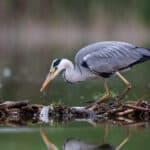
Grey heron
Grey heron
Black-winged stilt
Common sandpiper
Common moorhen
Common moorhen
White-breasted waterhen

Seac Pai Van Park (Nature Park)

Municipal nature park (with conservation/education facilities)

Macao's flagship nature-education area in Coloane, protecting patches of secondary woodland and streamside habitat that support forest-edge birds, butterflies, and small reptiles. It also hosts ex-situ conservation/education facilities (e.g., the Giant Panda Pavilion), making it a key public-facing conservation site.

Black kite
Black kite
Common kestrel
Oriental magpie-robin
Japanese white-eye
Chinese bulbul
Common kingfisher

Coloane Country Park / Coloane Hills Green Zone (including the Coloane High Point area)

Municipal country park / protected green zone

The largest continuous green area in Macao SAR, it protects native subtropical trees, buffers development, and supports the most woodland and edge species. Trails through mixed woodland and scrub make it a top place to see wildlife away from the city.

Black kite
Black kite
Common kestrel
Greater coucal
Spotted dove
Oriental magpie-robin
Chinese bulbul

Taipa Great Natural Park (Taipa Great Hill area)

Municipal natural park

A prominent hill park on Taipa that acts as a "green island" for resident birds and a stopover for migrants moving through the Pearl River Delta region. Its woodland/scrub mosaic and viewpoints make it popular for raptor-watching during migration periods.

Black kite
Black kite
Chinese sparrowhawk
Common kestrel
Barn swallow
Barn swallow
Brown shrike

Guia Hill Park (Guia Hill Green Area)

Municipal park / protected hill green space

A small but strategically located wooded hill in the peninsula that can concentrate migrants (especially passerines and raptors) during seasonal movements. Despite its urban setting, it is one of the best places in central Macao for bird observation.

Chinese sparrowhawk
Black kite
Black kite
Common kestrel
Barn swallow
Barn swallow
Oriental magpie-robin

Black Sand Reservoir and surrounding Coloane catchment green area

Municipal reservoir catchment protection area / managed green zone

Freshwater reservoir habitat is limited in Macao, making this area important for waterbirds, dragonflies, and wetland-edge species. The reservoir and adjacent greenery also function as a local refuge during dry seasons and heatwaves.

Little egret
Grey heron
Grey heron
Common moorhen
Common moorhen
White-breasted waterhen
Common kingfisher
Animals

Wildlife

Macao SAR is a very small, densely urbanized coastal territory on the Pearl River estuary. Its wildlife character is defined less by large terrestrial fauna and more by (1) migratory and wintering birds using the South China coast on the East Asian-Australasian Flyway, (2) estuarine and nearshore marine life (notably dolphins), and (3) pockets of secondary woodland, reservoirs, and landscaped green spaces on Coloane/ Taipa and hill areas (e.g., Guia Hill). Most species are shared with adjacent Guangdong and nearby Hong Kong; viewing is typically best in coastal wetlands, tidal edges, reservoirs, and remaining hillside woods rather than extensive "wild" landscapes.
~20-35 (mostly small mammals and bats; few large native terrestrial mammals persist) Mammals
~220-280 recorded (high for the land area due to migration and wintering shorebirds/waterbirds) Birds
~25-35 (turtles, lizards, and snakes in wooded pockets, ponds, and coastal edges) Reptiles
~8-12 (frogs/toads associated with reservoirs, streams, and wet season pools) Amphibians

Iconic Species

Indo-Pacific Humpback Dolphin (Chinese White Dolphin) The Pearl River Estuary population is the flagship marine wildlife near Macao. Sightings are most associated with outer harbor/estuary waters and nearby boat routes, though visibility and occurrence depend heavily on traffic, season, and water conditions.
Black-faced Spoonbill A globally threatened wintering waterbird and a prime target for visiting birders in the wider Pearl River Delta. In Macao, it may be encountered in suitable tidal/wetland roosting and feeding areas during the non-breeding season when conditions are favorable.
Saunders's Gull A range-restricted, conservation-listed gull of East Asian coasts that can occur in the Pearl River Delta in winter. Coastal mudflats and quiet shoreline areas are the most relevant habitats when present.
Chinese Pond Heron A signature South China wetland heron often seen around reservoirs, drainage channels, and wet edges on Taipa/Coloane; conspicuous in breeding plumage and typical of Macao's remaining freshwater-wetland habitat.
Pacific Reef Heron A classic coastal bird of rocky shorelines and seawalls; frequently encountered along Macao's coastal edges and is one of the most dependable 'coastal specialty' species for casual wildlife viewing.
Black-crowned Night Heron
Black-crowned Night Heron Common around ponds, reservoirs, and sheltered tidal margins, especially at dusk and night-well-suited to Macao's urban-water interface where feeding opportunities persist.
Collared Scops Owl A small owl of wooded patches and mature trees; a notable "urban-edge" woodland species that can occur in greener hillside areas (e.g., larger parks/woodland remnants) and is often detected by calls at night.
Masked Palm Civet
Masked Palm Civet A secretive nocturnal mammal that can persist in fragmented subtropical woodland and urban green edges in South China; where present in Macao, it represents one of the more charismatic native terrestrial mammals visitors may hope for (often via camera traps rather than direct viewing).

Notable Populations

  • Pearl River Estuary Indo-Pacific humpback dolphins (Sousa chinensis) form one of the best-known and historically largest populations globally, though it is under significant pressure from vessel traffic, habitat change, and coastal development.
  • Macao's coastal/wetland sites function as small but strategically located habitat patches on the East Asian-Australasian Flyway, supporting migratory shorebirds and wintering waterbirds disproportionate to the territory's size.
Protection

Conservation

Primary Threats

  • Urban density is among the world's highest and remaining natural areas are fragmented into small parcels (mainly on Coloane and parts of Taipa). Development for housing, transport, and tourism facilities limits habitat continuity, increases edge effects, and reduces space for native coastal and woodland communities.
  • Major transport and tourism infrastructure (roads through Coloane, port/terminal facilities, causeways, and large-scale visitor amenities) increases habitat fragmentation, light/noise, and runoff impacts, while creating barriers for wildlife movement in already small habitat blocks.
  • Historical and ongoing land reclamation and shoreline hardening have reduced intertidal flats and natural coastal edges, diminishing feeding/roosting areas for migratory birds and reducing nursery habitat for estuarine and nearshore species in the Pearl River mouth setting.
  • Marine and air pollution pressure is shaped by Macao's location in the Pearl River Delta: nutrient loading, turbidity, and contaminants from regional riverine inputs affect coastal waters; locally, dense traffic and energy use for tourism contribute to air emissions, and stormwater runoff carries oils/litter into nearshore waters.
  • Protected hillsides, trails, beaches, and urban parks receive heavy recreational use. High visitation leads to trampling, litter, off-trail erosion, disturbance of roosting/foraging birds along the coast, and increased fire risk in dry seasons.
  • Sea-level rise and stronger storm surges threaten low-lying reclaimed areas and remaining coastal habitats; warmer temperatures and altered rainfall intensify urban heat and can stress small, isolated green spaces. Increased extreme weather also raises erosion and landslide risk on steep, vegetated slopes.
  • Coastlines are extensively engineered (seawalls, revetments, reclaimed land). Channelization and hardened shorelines reduce natural sediment dynamics and intertidal complexity, limiting opportunities for coastal habitat recovery and reducing resilience to storms.
  • High trade/tourism connectivity and urban landscaping increase the likelihood of introduced plants and animals. In small, disturbed habitats, non-native ornamental plants and synanthropic species can outcompete native flora and alter understory structure.
  • Local capture fisheries are limited by Macao's small waters, but demand for seafood from the hospitality sector adds pressure regionally in the Pearl River estuary. Nearshore resources can be stressed by cumulative regional harvest and habitat degradation.
  • Although most fishing pressure is regional rather than purely local, the Pearl River estuary's fisheries (important for small pelagics, crustaceans, and estuarine species) face depletion risks, reducing biodiversity and ecological function in waters adjacent to Macao.
Visit

Wildlife Tourism

Macao's wildlife tourism is small-scale but surprisingly rewarding for birders and nature-minded travelers who want short, urban-adjacent outings. With very limited land area and heavily developed coastline, Macao does not offer classic "big game" wildlife tourism; instead, its strongest niche is migratory and coastal birdlife, intertidal nature, and managed green spaces. Economically, wildlife experiences are a minor complement to Macao's dominant gaming/hospitality sector, but they add value as half-day to day-trip activities that diversify itineraries and appeal to families, photographers, and visitors seeking a break from the city. Historically, Macao's role on the Pearl River Delta flyway means seasonal waves of migrants pass through, and local conservation/education efforts focus on wetlands, coastal edges, reservoirs, and parks. Accessibility is excellent: sites are close to hotels, reachable by taxi/bus, and suitable for short visits-ideal if you have only 1-3 days and want nature without long transfers.

Best Time to Visit
  • Best wildlife-viewing windows are driven by bird migration and wintering waterbirds rather than mammals.
  • September-November (Autumn migration peak): Best all-around birding. Expect passage migrants (warblers, flycatchers), raptors on favorable days, and increasing numbers of shorebirds at tidal flats. Great for photography and species variety.
  • December-February (Wintering season): Most reliable for waterbirds and wetland species-ducks, egrets, herons, gulls, and some waders. Cooler, less humid weather makes long observation sessions comfortable.
  • March-May (Spring migration): Another strong migration period with songbirds and shorebirds moving north. Look for fresh-plumaged migrants and busy feeding behavior.
  • June-August (Hot/humid, breeding season): Lower diversity overall, but still good for common urban/coastal species, egrets/herons around water, and night-time moth/insect activity in greener areas. Plan early-morning outings and short sessions. Tide note (important for shorebirds): For intertidal birding, time visits around falling tide to low tide for feeding shorebirds, then rising tide for birds concentrating closer to roosts.

Top Wildlife Experiences

  • Do a sunrise shorebird session timed to the falling tide: set up a scope/telephoto, scan for sandpipers and plovers, and practice identifying birds by feeding style and leg color as the mudflat "comes alive."
  • Join (or self-guided follow) an autumn migration birdwalk: focus on small passerines in park trees and coastal scrub; use a checklist app and spend time learning calls as birds move through in mixed flocks.
  • Photograph egrets and herons at golden hour around reservoirs/pond edges: work on slow, quiet approaches and capture hunting behavior (stalking, spearing fish) rather than only perched portraits.
  • Night nature walk for urban biodiversity: look for geckos, frogs, and insects around well-lit park edges and vegetated areas; bring a small flashlight and try macro photography of moths and beetles.
  • Family-friendly "wildlife scavenger hunt" in a large city park: search for common birds, butterflies, and lizards; keep a simple tally of behaviors (feeding, nesting material collection, bathing).
  • Try a seawall/coastal promenade birding circuit in winter: scan for gulls, terns, and cormorants; practice flight photography and learn to use wind direction to anticipate passes.
  • Do a "Delta ecology" half-day: combine a wetland edge viewpoint, a short coastal scan, and a park woodland loop to see how Macao's wildlife shifts across micro-habitats in just a few kilometers.
  • Responsible catch-and-release-style nature observation at rocky shorelines (where permitted): explore tide pools at very low tide to spot small crabs, snails, and other intertidal life-hands-off observation only, no collecting.
  • Birding-from-transport micro-adventure: take public buses between peninsula and island viewpoints, hopping off at 2-3 green/water stops; it's a practical way to cover multiple habitats quickly without a car.
  • Seasonal "raptor watch" on breezy migration days: spend an hour scanning open skies from an elevated, unobstructed viewpoint-ideal in October/November when conditions align.

Safari Types Available

  • Urban-wildlife walks (self-guided or guided) in parks, gardens, and green corridors-best for passerines, butterflies, reptiles, and general nature breaks.
  • Coastal and intertidal birdwatching sessions (shorebird-focused), typically done on foot with binoculars/scope and tide planning rather than vehicles.
  • Wetland/reservoir edge observation (hide-style or open-bank viewing): stationary wildlife watching and photography focused on herons/egrets, ducks, and winter waterbirds.
  • Seawall/promenade "scan safaris": slow walking circuits for gulls, terns, cormorants, and offshore scanning-good in cooler months.
  • Night walks for amphibians/reptiles/insects in greener pockets (seasonal, weather-dependent), often combined with macro photography.
Fun Facts

Did You Know?

A stopover for migratory birds exists between some of the highest-value urban real estate in Asia: the Cotai wetlands can host wintering and migrating waterbirds within sight of mega-resorts.

Despite having only ~33 km² of land and very limited natural habitat, Macao has recorded 200+ bird species-largely because it sits on the East Asian-Australasian Flyway and concentrates migrants into its few remaining green and wet areas.

You can sometimes spot globally threatened species (such as the Endangered black-faced spoonbill in the Pearl River estuary region) in Macao's coastal/wetland birding spots-rare wildlife sightings in an extremely urban setting.

Macao's most "wild" landscapes are not remote at all: short, steep hill trails in Taipa Grande and Coloane can transition from dense city blocks to forest-edge bird-and-butterfly habitat in minutes, making biodiversity unusually close to everyday life.

Macao's highest point is Coloane Alto (170.6 m), and the surrounding Coloane hills are the territory's largest remaining patch of semi-natural woodland-an outsized refuge for native trees, insects, and birds in one of the world's most densely built places.

Seac Pai Van Park (Coloane) is Macao's largest continuous green space and the core of its biggest terrestrial habitat block; it's also where Macao's only giant pandas live (at the Macao Giant Panda Pavilion).

The Cotai Ecological Zone is Macao's largest wetland habitat-and it's largely man-made, created as an ecological compensation area on reclaimed land in the middle of the Cotai development strip.

Hac Sa Beach (Coloane) is Macao's largest natural beach; its intertidal zone is one of the territory's most important accessible places to observe coastal wildlife (crabs, mollusks, shorebirds) without leaving the city.

Thank you for reading! Have some feedback for us?