N S W E
Wildlife Expeditions

Wildlife of
Hong Kong

Hong Kong is remarkable for delivering world-class wildlife-migratory bird spectacles, rare coastal dolphins, and rich subtropical forest biodiversity-within minutes of one of the planet's densest city skylines.
32 Species
1,106 km² Land Area
Overview

About Hong Kong

Hong Kong's wildlife character is defined by an unusual juxtaposition: an intensely urbanized harbor metropolis ringed by a surprisingly extensive network of protected country parks, outlying islands, and productive estuaries. Its subtropical climate supports evergreen forests, shrublands, freshwater streams, and a diverse mix of reptiles, amphibians, insects, and small mammals (including charismatic urban-edge species like macaques), making nature feel close and accessible year-round. This "city-to-wild" immediacy-where you can hike forested ridgelines, watch raptors, or explore mangroves on the same day as shopping and dining-has become a signature of Hong Kong's natural heritage.

Key ecosystems include the Deep Bay wetlands (including internationally important sites around Mai Po and Inner Deep Bay), which are a crucial stopover and wintering area for migratory waterbirds on the East Asian-Australasian Flyway. Mangroves, mudflats, and fishpond mosaics here support shorebirds, herons and egrets, and seasonal rarities, while also providing nursery habitat that underpins coastal food webs. Equally important are Hong Kong's country parks and forested hills-covering a large portion of the territory-where secondary forests are recovering, streams shelter native amphibians, and varied elevations create microhabitats that boost overall biodiversity. Offshore, the Pearl River Estuary's coastal waters and island-fringed seascapes are vital for marine life, including the iconic Chinese white dolphin.

Globally, Hong Kong's conservation significance is strongest through its role in protecting flyway wetlands, advancing urban-proximate protected area management, and contributing to regional marine conservation and wildlife trade enforcement in a major international hub. For visitors, the experience is uniquely high-reward and compact: internationally significant birding sites, dolphin-watching waters, and scenic trails are reachable by public transport, offering a rare chance to encounter meaningful biodiversity and conservation stories without traveling deep into remote wilderness.

Physical Features

Geography

Hong Kong's wildlife is shaped by a steep, coastal landscape where densely urbanized lowlands sit beside extensive protected hills and an island-dotted shoreline. Forested uplands, shrub/grass hillsides, streams and reservoirs provide refuges for terrestrial species, while the deeply indented coast, estuaries, and intertidal mudflats/mangroves (notably around Deep Bay) support migratory waterbirds and other wetland fauna. Surrounding subtropical marine waters add important habitats (reefs/rocky shores, sandy bays) that influence the distribution of coastal and marine species despite heavy development pressures.

1,106 km² (total area) Land Area
About the size of Los Angeles (city); not a sovereign country rank (Hong Kong is a Special Administrative Region). Size Rank

Key Landscapes

  • Steep forested hills and mountains (e.g., Tai Mo Shan) forming core habitat blocks in country parks
  • Dissected terrain with short, fast streams, valleys, and riparian corridors
  • Reservoirs and freshwater catchments (e.g., Plover Cove, High Island) that create freshwater and edge habitats
  • Extensive coastline with bays, headlands, and sheltered inlets; major natural harbor (Victoria Harbour) affecting coastal ecology
  • Outlying islands and peninsulas (e.g., Lantau Island, Hong Kong Island, Sai Kung) increasing habitat diversity and isolation effects
  • Estuarine and intertidal wetlands at Deep Bay/Mai Po: mudflats, mangroves, fishpond landscapes critical for migratory birds
  • Rocky shores, sandy beaches, and nearshore reefs/soft-bottom seabeds supporting coastal and marine biodiversity
  • Upland grassland/shrub mosaics and secondary forests shaped by historical land use and fire, important for edge and early-successional species

Ecoregions

  • South China-Vietnam subtropical evergreen forests (WWF terrestrial ecoregion)
  • South China Sea - Pearl River Delta / Hong Kong coastal waters (WWF MEOW marine ecoregion context)
  • Pearl River Delta estuarine wetland zone (regional ecological zone; key for migratory waterbirds)
Parks & Reserves

Protected Areas

Hong Kong's protected-area network is anchored by an extensive system of Country Parks and Special Areas established under the Country Parks Ordinance and managed by the Agriculture, Fisheries and Conservation Department (AFCD). These largely cover forested hills, reservoirs, and coastal fringes, complemented by Marine Parks/Reserves in territorial waters and a globally important wetland at Deep Bay (Mai Po/Inner Deep Bay) designated under the Ramsar Convention. Despite a highly urbanized core, the territory's mix of subtropical woodlands, streams, rocky shores, and intertidal mudflats supports rich birdlife (especially migratory waterbirds), diverse reptiles/amphibians, and nearshore marine biodiversity. Hong Kong has no UNESCO World Heritage natural sites (it does have a UNESCO Global Geopark, which is a separate UNESCO designation from World Heritage).

Protected Coverage

Approximately ~40% of Hong Kong's land area is under formal protection as Country Parks/Special Areas (with additional protection in designated Marine Parks/Reserves and restricted/protected sites such as the Deep Bay Ramsar wetland).

Notable Parks & Reserves

Mai Po Nature Reserve and Inner Deep Bay Ramsar Site

Ramsar Wetland of International Importance (Ramsar Site); core areas managed as nature reserve/restricted area

One of East Asia's most important coastal wetlands for migratory waterbirds, with extensive mudflats, traditional tidal shrimp ponds, and roosting/foraging habitat supporting large wintering and passage populations.

Black-faced spoonbill
Saunders's gull
Eurasian spoonbill
Great egret
Great egret
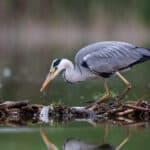
Grey heron
Grey heron
Eurasian otter

Long Valley Nature Park

Nature Park (AFCD-managed protected area)

A rare lowland freshwater wetland-farmland mosaic in Hong Kong that supports high bird diversity, especially wetland-dependent and wintering species; it is also a flagship site for habitat restoration alongside compatible agriculture.
Greater painted-snipe
Black-winged stilt
Yellow bittern
Chinese pond heron
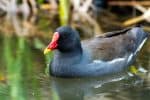
Common moorhen
Common moorhen
Eurasian kestrel

Tai Po Kau Nature Reserve (Special Area)

Special Area (under the Country Parks Ordinance)

A mature secondary forest and stream landscape known for forest birds, butterflies, and native amphibians; it is among the best places in Hong Kong to experience closed-canopy subtropical woodland biodiversity.
Japanese paradise-flycatcher
Great barbet
Blue whistling-thrush
Hong Kong newt
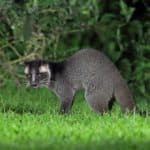
Masked palm civet
Masked palm civet
Common birdwing (butterfly)

Sai Kung East Country Park

Country Park

A rugged peninsula of coastal forest, streams, and remote bays that supports native mammals and herpetofauna, and provides relatively undisturbed habitat compared with much of urban Hong Kong.

Red muntjac
Wild boar
Wild boar
Crested serpent-eagle
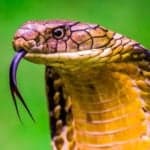
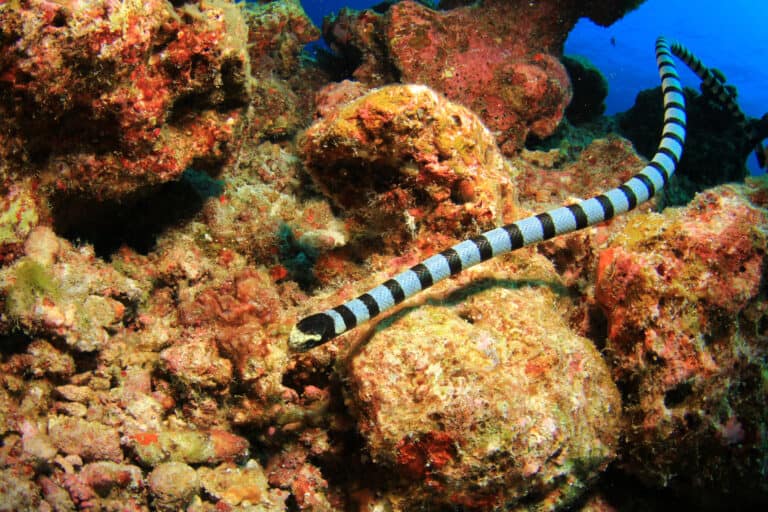
King cobra
King cobra
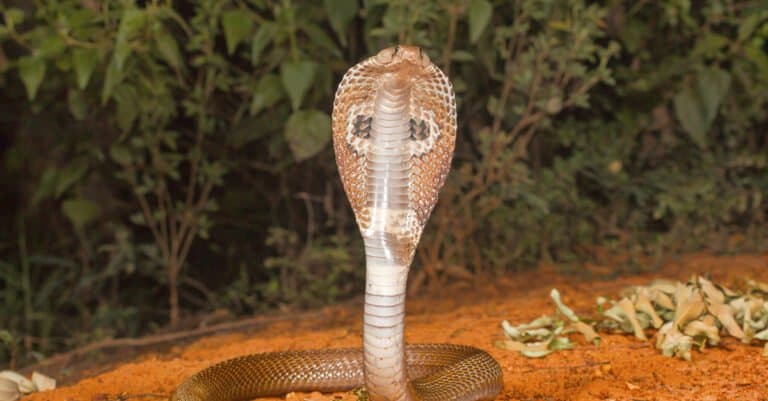
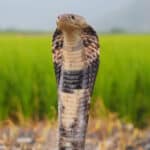
Chinese cobra
Chinese cobra
Hong Kong newt

Lantau South Country Park

Country Park

Hong Kong's largest island stronghold for wider-ranging wildlife, with extensive forested slopes and coastal habitats; it is important for threatened mammals and raptors and connects to other protected areas on Lantau.

Chinese pangolin
Leopard cat
Leopard cat
Eurasian otter
White-bellied sea-eagle
Black kite
Black kite
Red muntjac

Kam Shan Country Park

Country Park

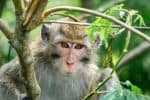
Famous for its highly visible macaque troops and a good example of accessible woodland biodiversity near the urban area; it is also important for ongoing human-wildlife management and conservation education.

Sha Chau and Lung Kwu Chau Marine Park

Marine Park

The best-known protected area for viewing Hong Kong's coastal cetaceans, safeguarding important habitat for dolphins and other marine fauna in western Hong Kong waters.
Indo-Pacific humpback dolphin (Chinese white dolphin)
Indo-Pacific finless porpoise
Chinese horseshoe crab
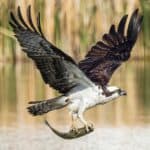
Osprey
Osprey

Hoi Ha Wan Marine Park

Marine Park

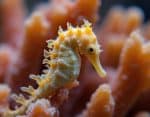
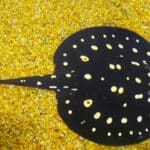
A sheltered bay with some of Hong Kong's best coral communities and diverse reef-associated fish, making it a key site for marine biodiversity conservation and low-impact snorkeling/diving.

Seahorse
Seahorse
Blue-spotted stingray
Orange-spotted grouper
Raccoon butterflyfish
Green turtle
Animals

Wildlife

Hong Kong packs unusually high biodiversity into a very small, heavily urbanized territory. A subtropical climate, steep forested hills, extensive coastlines and outlying islands, plus internationally important wetlands (especially Mai Po-Inner Deep Bay), create a wildlife experience defined by: (1) migratory birds on the East Asian-Australasian Flyway, (2) coastal/marine megafauna in the Pearl River Estuary, and (3) surprisingly rich herpetofauna and mid-sized mammals in protected country parks that cover a large portion of the land area.
≈60 terrestrial mammals recorded; plus ≈15-20 marine mammals (dolphins/whales) reported in surrounding waters Mammals
560+ species recorded (large seasonal turnover of migrants and wintering waterbirds) Birds
≈100 species (snakes, lizards, freshwater turtles and sea turtles) Reptiles
≈25 species (notable diversity of frogs/toads for the territory's size) Amphibians

Iconic Species

Chinese White Dolphin (Indo-Pacific Humpback Dolphin) The signature marine mammal of Hong Kong's waters and the Pearl River Estuary; best chances are around Lantau Island (e.g., West Lantau/near the airport and marine park areas), though the population is sensitive to vessel traffic and coastal development.
Black-faced Spoonbill A flagship wintering waterbird at Mai Po and Inner Deep Bay; visitors come specifically to see sizable flocks feeding on tidal flats and roosting in traditional shrimp ponds.
Green Sea Turtle Hong Kong hosts a rare, regionally important nesting site at Sham Wan, Lamma Island (seasonal, access-controlled for protection); sightings are a highlight of Hong Kong's marine conservation story.
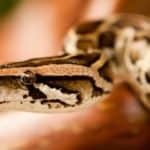
Burmese Python
Burmese Python One of Hong Kong's most famous reptiles and a protected native species; occasionally encountered in rural areas and country parks (more often detected by rescue teams than by casual hikers).
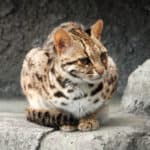
Leopard Cat
Leopard Cat Hong Kong's most notable wild felid; elusive but present in country parks and edge habitats, symbolizing how substantial wildlife persists close to the city.
Rhesus Macaque
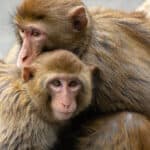
Rhesus Macaque Common and very visible in areas like Kam Shan (often called 'Monkey Hill'); iconic for visitors, but also central to Hong Kong's human-wildlife management due to provisioning conflicts.
Wild Boar
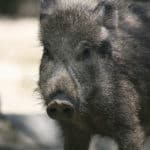
Wild Boar Now emblematic of Hong Kong's urban-wild interface, frequently seen near green edges and even built-up districts; management and public safety issues make it a defining local wildlife story.
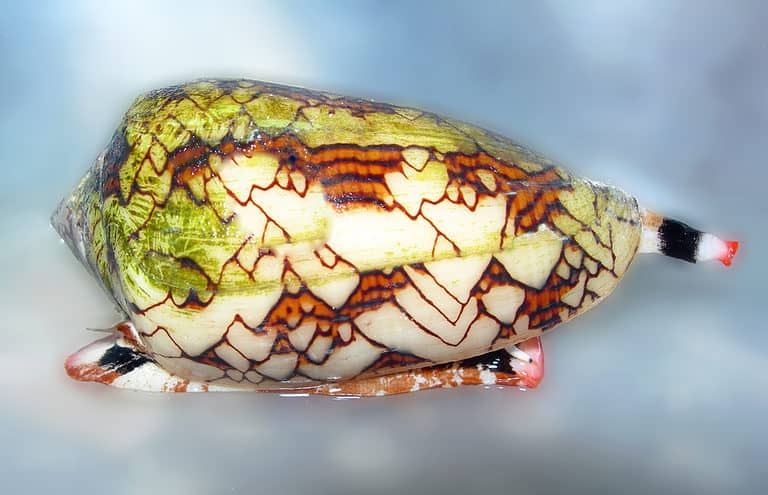
Tri-spine Horseshoe Crab A prehistoric-looking coastal species associated with Hong Kong's sandy/muddy shores and nursery beaches in the eastern New Territories and outlying areas; often highlighted in local conservation education and shoreline walks.
Red-billed Blue Magpie A striking, photogenic forest bird commonly seen in country parks and wooded hillsides; one of the most recognizable 'wild Hong Kong' birds for hikers and visitors.

Endemic Species

Romer's Tree Frog A Hong Kong-specialty amphibian strongly associated with protected hill-stream and island habitats; conservation attention is high because much of its natural range is within (or immediately adjacent to) Hong Kong. Endemic
Hong Kong Newt Near-endemic to the Hong Kong-Guangdong region and closely tied to clean forest streams; a sought-after species for local herpetofauna enthusiasts and a flagship for stream habitat protection. Endemic
Hong Kong Cascade Frog A near-endemic stream-breeding frog of fast-flowing hill streams in and around Hong Kong; notable for its specialization on well-oxygenated, rocky watercourses. Endemic
Hong Kong Paradise Fish A small labyrinth fish described from the Hong Kong region and largely confined to southern China; locally notable because remaining lowland freshwater habitats are fragmented and sensitive to development. Endemic

Notable Populations

  • Pearl River Estuary (including Hong Kong waters) supports one of the world's largest populations of Indo-Pacific humpback dolphins (Chinese white dolphins), though it is under significant pressure and declining in parts of its range.
  • Mai Po and Inner Deep Bay are internationally important wetlands on the East Asian-Australasian Flyway, hosting large concentrations of wintering and migratory waterbirds each year.
  • Hong Kong's Sham Wan (Lamma Island) is the only regularly recorded green turtle nesting site in Hong Kong, giving the territory outsized importance for local sea turtle conservation.
  • Deep Bay regularly supports a meaningful share of the global wintering Black-faced Spoonbill population, making Hong Kong a key site for this endangered species' annual cycle.
  • Coastal nursery areas in Hong Kong are regionally important for horseshoe crabs, which are of high conservation concern in East and Southeast Asia.
Protection

Conservation

Primary Threats

  • Strong, sustained demand for housing and commercial space drives reclamation proposals, redevelopment pressure, and conversion of lowland habitats in the New Territories. While uplands are largely protected as Country Parks, the most biodiverse and irreplaceable lowland mosaics (fishponds, marshes, reedbeds, agricultural fallows, and village-edge habitats) face incremental loss and fragmentation from rezoning, brownfield logistics yards, and peripheral urban expansion.
  • Net loss and degradation are concentrated in lowlands and along the coast: wetland/fishpond conversion, stream channelization, hillslope works, and coastal modification. Habitat fragmentation from roads/rail and scattered development isolates populations and reduces connectivity between Country Parks, wetlands, and coastal habitats.
  • Major transport and land formation projects (new roads, rail links, bridges/tunnels, and associated works areas) can directly remove habitat and create barriers for wildlife movement. Construction disturbance, night lighting, and hydrological changes are especially relevant near wetlands (e.g., Deep Bay) and along coastal/marine corridors.
  • Coastal and marine waters are pressured by sewage overflows during heavy rainfall, stormwater runoff from dense urban areas, and legacy contamination in sediments. Nutrient and chemical inputs contribute to algal blooms and degraded water quality in semi-enclosed bays and typhoon shelters, affecting corals, seagrass-associated fauna, and fisheries productivity.
  • Hong Kong's inshore waters are heavily fished, including by small-scale and recreational sectors; historical trawling and continued high effort have reduced biomass and altered community structure. Declines in larger predatory fish and reef-associated species are linked to habitat impacts and fishing pressure, with knock-on effects for marine food webs.
  • As a major transport and trading hub, Hong Kong has long been exposed to illegal wildlife trade risks (e.g., reptiles, ivory historically, and other high-value wildlife products). Even with strengthened laws and enforcement, demand and transit dynamics create ongoing pressure on globally threatened species and require continual interdiction and deterrence.
  • Ornamental releases and accidental introductions in a subtropical, highly connected port city support invasive plants and animals that outcompete natives. In freshwater systems and wetlands, non-native fish/turtles and invasive plants can alter habitat structure and food webs; in urban-edge areas, invasives can dominate disturbed ground and reduce native regeneration.
  • Sea-level rise and stronger storm surges increase flooding and erosion risks for low-lying coastal wetlands (notably Inner Deep Bay) and reclaimed shorelines. More frequent extreme rainfall events can trigger landslides, degrade stream habitats through sediment pulses, and increase sewage/stormwater overflow events that affect coastal water quality.
  • High recreational use of Country Parks (hiking, trail running, cycling, barbeque sites) leads to trail erosion, litter, noise, and wildlife disturbance, especially in easily accessible peri-urban park edges. Light pollution from extensive nighttime illumination affects nocturnal species and migratory birds, and boating activity can disturb marine mammals and seabirds.
  • Engineering of rivers and drainage channels for flood control and development has simplified stream morphology and disconnected floodplains. Coastal armoring, seawalls, and reclamation alter tidal flows and sediment dynamics, reducing intertidal habitat quality and resilience.
Visit

Wildlife Tourism

Hong Kong's wildlife tourism is a "big-nature-near-a-big-city" story: a dense global metropolis wrapped by protected country parks, outlying islands, and internationally significant wetlands. While not a classic big-game destination, nature-based travel is economically meaningful through domestic and regional visitation, guided boat tours, geopark cruises, birdwatching services, outdoor retail, transport, and food-and-lodging spend in gateways like Sai Kung, Tai O, and Mui Wo. Conservation and access have deep roots-much of the territory's uplands are protected as country parks, and sites like Mai Po wetlands are globally recognized for migratory birds. Accessibility is excellent: trailheads, beaches, wetlands, and boat piers are reachable by MTR/bus/ferry, with countless half-day and day-trip options and a strong safety/urban infrastructure backdrop. The most rewarding wildlife experiences are seasonal-especially migratory birds in winter/spring and marine life around island waters in calmer months.

Best Time to Visit
  • Nov-Mar (peak birding season): Migratory waterbirds and raptors in wetlands and fishpond landscapes (e.g., geese/ducks/shorebirds; raptors on passage). Cooler, drier weather also makes long hikes for butterflies, reptiles, and forest birds more comfortable.
  • Apr-May (spring migration + breeding start): Strong passage of shorebirds and songbirds; increasing activity of butterflies and dragonflies; forest birds more vocal.
  • Jun-Aug (summer breeding + marine season): Local breeding birds and coastal life; warmer seas for boat-based marine wildlife viewing; more insects and herpetofauna activity (best with rain-aware planning).
  • Sep-Oct (autumn migration + clearer seas): Excellent second migration wave for many birds; often good visibility for boat trips and coastal hikes; comfortable hiking temperatures return. What to see when (practical highlights):
  • Dec-Feb: Highest concentrations of wintering waterbirds in wetlands; good raptor watching on ridgelines; comfortable hiking.
  • Mar-Apr: Shorebird turnover and spring migrants; high diversity days at wetlands.
  • May-Jun: Peak insects (butterflies/dragonflies) and active forest edge wildlife.
  • Sep-Oct: Strong autumn bird migration; good season for island-hopping wildlife and coastal watching.

Top Wildlife Experiences

  • Join a guided dawn birdwatching session in the Deep Bay wetland/fishpond mosaic (e.g., hides and viewing platforms) to scan for wintering waterbirds, passage shorebirds, and raptors-timed to high tide for best concentrations.
  • Take a boat tour to spot Indo-Pacific humpback dolphins (the local "pink dolphins")-go in small groups, keep distance, and choose operators that follow wildlife-viewing codes of conduct.
  • Do a night-time guided walk in forested country park habitats to look for frogs, geckos, snakes (when conditions allow), and nocturnal insects-bring a red-light option and follow guide instructions to minimize disturbance.
  • Kayak quietly through sheltered coves in the Sai Kung area to watch coastal birds, intertidal life, and (in season) surface-feeding fish activity-combine with a snorkel stop where appropriate and permitted.
  • Join a geopark/island-hopping cruise that pairs sea birdwatching with coastal geology, stopping for shoreline walks to look for crabs, sea stars, and other intertidal species (check tide tables for the best shorelife).
  • Hike a ridge-to-coast route at sunrise for raptor and forest-bird watching-pause at viewpoints to scan thermals and listen for calls; finish at a beach or village for an easy return by ferry/bus.
  • Visit a traditional fishing village area and take a small-boat trip through mangroves and tidal channels to observe egrets/herons, mudskippers, and fiddler crabs at low tide.
  • Plan a dedicated butterfly-and-dragonfly day in spring/early summer on flower-rich trails: move slowly along sunny edges, photograph responsibly, and log sightings for a citizen-science style experience.
  • Book a catch-and-release style angling or eco-fishing trip (where legal and responsible) focused on learning local marine ecology-pair with onboard naturalist interpretation rather than harvest.
  • Join a guided coastal "bio-blitz" walk (often organized by local groups) to learn to identify common intertidal and woodland species, with emphasis on leave-no-trace techniques and respectful photography.

Safari Types Available

  • Boat-based wildlife watching (dolphin tours; seabird and island cruises)
  • Wetland hide/observation-platform birding (guided or self-guided)
  • Walking safaris / guided nature hikes in country parks
  • Night safaris (guided nocturnal herpetofauna and insect walks)
  • Kayak/canoe wildlife trips in sheltered bays and channels
  • Intertidal "rockpool"/shoreline safaris (tide-timed coastal ecology walks)
  • Snorkel-focused marine life outings (where suitable/allowed)
  • Citizen-science style wildlife walks (bio-blitzes, bird counts, butterfly surveys)
Fun Facts

Did You Know?

Despite its skyline, most of Hong Kong is not urban: roughly three-quarters of the land area is countryside (hills, forests, reservoirs, and wetlands), which is why substantial wildlife persists minutes from dense neighborhoods.

Hong Kong has real coral communities: more than 80 species of hard corals have been recorded in its waters, including in protected areas like Hoi Ha Wan and Tung Ping Chau-surprising for a heavily trafficked subtropical harbor region.

Each winter, Deep Bay/Mai Po regularly hosts hundreds of black-faced spoonbills (an endangered species), turning Hong Kong into one of the most reliable places on Earth to see this distinctive bird.

Two species of horseshoe crabs (ancient "living fossils") use Hong Kong's sheltered bays and mudflats as nursery habitat; finding juvenile horseshoe crabs in a world city is a genuinely unexpected intertidal encounter.

Wild mammals turn up in very urban-adjacent places: Hong Kong has native species such as leopard cats and Chinese porcupines in its countryside, while wild boars are notorious for venturing into developed districts-creating a rare overlap of big-city life and large, free-ranging mammals.

The Pearl River Estuary (which includes Hong Kong's western waters) supports the world's largest known population of Indo-Pacific humpback dolphins-often cited at around 2,000 individuals-making Hong Kong part of a globally important stronghold for the famous "pink dolphin."

Hong Kong is the only place on Earth where Romer's tree frog (Liuixalus romeri) occurs naturally-an endemic amphibian restricted to a handful of Hong Kong islands and hillsides.

Over 580 bird species have been recorded in Hong Kong-an exceptionally high total for a territory of about 1,100 km², putting its bird list in the same ballpark as much larger regions (e.g., the UK's total is roughly ~600).

About 40% of Hong Kong's land area is designated as country parks and special areas-an unusually high proportion of legally protected uplands for a city-region with a population exceeding 7 million.

Mai Po and Inner Deep Bay was designated a Ramsar Wetland of International Importance in 1995 and is Hong Kong's Ramsar site, recognized for supporting large numbers of migratory waterbirds on the East Asian-Australasian Flyway.

Thank you for reading! Have some feedback for us?