

Cyprus is located in the Mediterranean Sea, south of Turkey, north of Israel and Egypt, and east of Greece. It is the third-largest island there, after Sicily and Sardinia. Both its people and its native wildlife populations are diverse and unique.
The Official National Animal
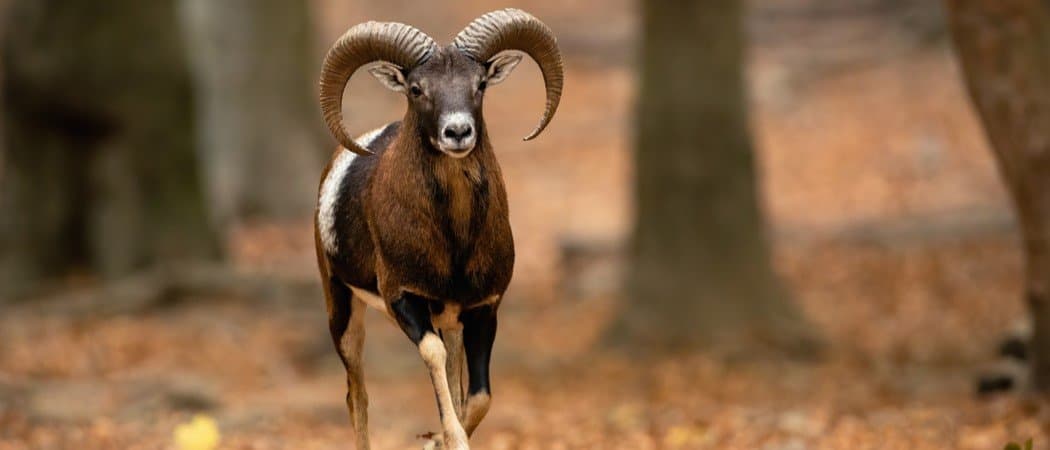
The National Animal of Cyprus is a type of sheep, and it is the largest mammal on the island.
©WildMedia/Shutterstock.com
The National Animal of Cyprus is the Cypriot Mouflon, also known as the Agrino or Cyprus Mountain Goat. The Mouflon is a unique species of sheep (scientific name Ovis gmelini ophion). Native to Cyprus, it may be the ancestor of all modern domestic sheep breeds.
Where To Find The Top Wild Animals in Cyprus
The best parts of Cyprus to find wildlife are on the hiking trails of Troodos and Paphos. There are many unique animals found in the forests and mountains, including several snakes and the native mammal the Mouflon.
Cyprus has the Municipal Zoo in Limassol, the Melios Zoo, and the Pafos Zoo, which is the oldest and largest. This zoo houses birds and animals from all over the world and has one of the largest colletions of parrots and venomous snakes in Europe.
Most Dangerous Animals
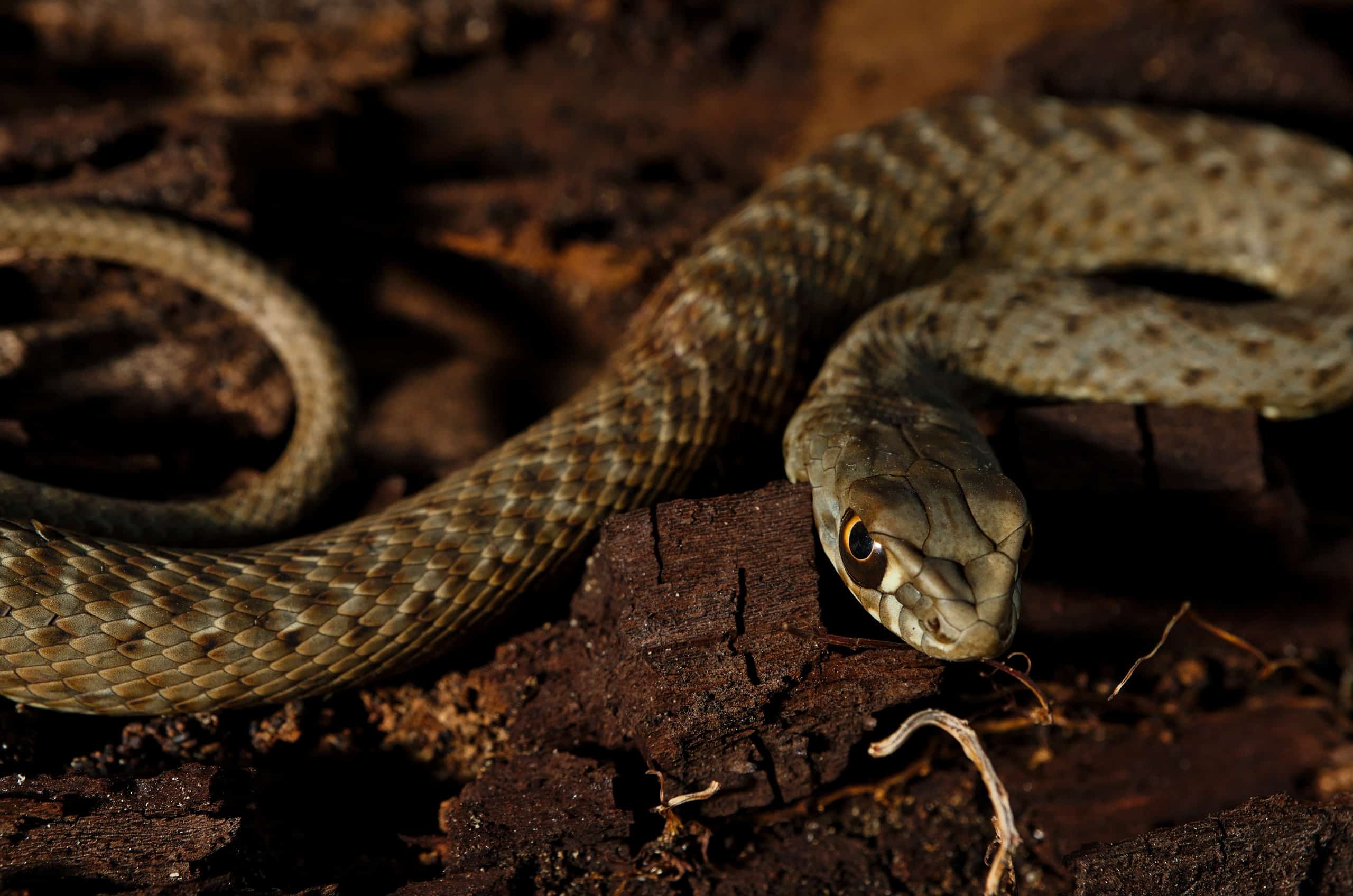
Although it looks incredibly fierce, the Montpellier Snake has a very nonthreatening nature.
©iStock.com/AngeloDeVal
The most dangerous wildlife in Cyprus are three of its eight species of snakes. A bite from either of the first two of the following may be fatal for adults, but recorded attacks on humans for any of the three are rare to nonexistent:
- Blunt Nosed Viper, also known as the Levantine viper, this snake is the largest venomous snake in Europe.
- Montpellier Snake grows up to 7 feet long and eats lizards. It is not really dangerous, but it has very fierce eyes that scare people.
- European Cat Snake whose name comes from its cat-like eyes. The cat snake’s pupils will change shape depending on the time of the day. When it is daytime, their pupils will contact into narrow slits that keep out most of the light. During the nighttime, the pupils will expand into a circle and let in more light.
Endangered Animals
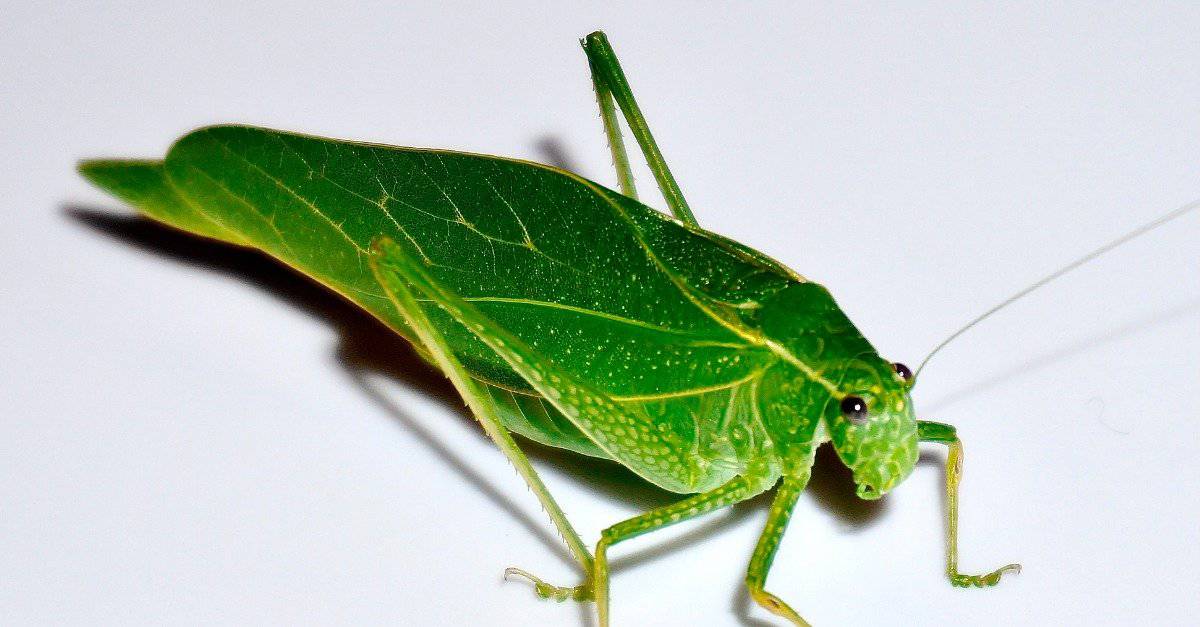
Katydids are also called bush-crickets. Two species of them on cyprus are endangered.
©iStock.com/Garrett Rymer
Of all the species found in Cyprus, nine percent are considered endangered. Though most people don’t think of insects when they consider animals on the verge of being extinct, they are near the top of the list for Cyprus. The endangered species include:
- Cyprus Whip Snakes is a non-poisonous gray or blake snake with white lines on half its body. It is a rare species that is endemic to only certain areas of Cyprus.
- Two species of Bush-Crickets, better known as Katydids. While resting during the day, the green Katydids disguise themselves as leaves to avoid predators.
- Slender Stone Grasshopper or Slender Burroughing Grasshopper is a species of bandwing grasshoppers that live in many dry open habitats with bare ground, such as Mediterranean shrubland.
Rarest
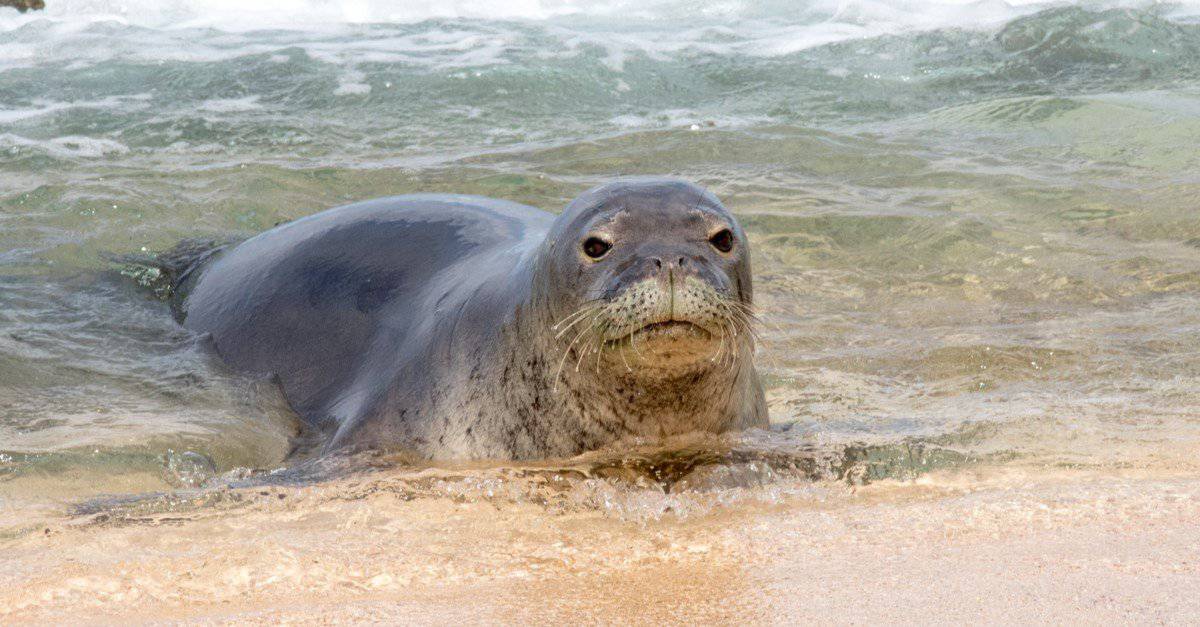
The endangered Hawaiian monk seal is a close relative of the endangered Mediterranean monk seal.
©Lorraine Logan/Shutterstock.com
The Monk Seal is the most endangered marine mammal species in the Mediterranean and one of the rarest species in the world! Fewer than 700 of them are in the Mediterrenean Sea, and 19 of them are currently living along the coast of Cyprus. There are three species of Monk Seals: the Mediterranean monk seal (Monachus monachus), the Hawaiian monk seal (Neomonachus schauinslandi), and the Caribbean monk seal (N. tropicalis), which became extinct in the 20th century.
Largest
The largest mammal in Cyprus is the same as the national animal of Cyrus: the Cypriot Mouflon. Cyprus is an island, after all, so there’s not much room for anything bigger. Mouflon relatives elsewhere are larger, but “island dwarfism” affected the species on Cyprus.
The Mouflon has short-haired coats of reddish-brown with some white patches. Males might have dark stripes in places. The males are horned; some females are, some aren’t. The horns of mature rams are curved almost one full revolution (up to 33 inches). Mouflon have shoulder heights of around 35 inches and body weights of 110 lbs. (males) and 77 lbs. (females).
Flag
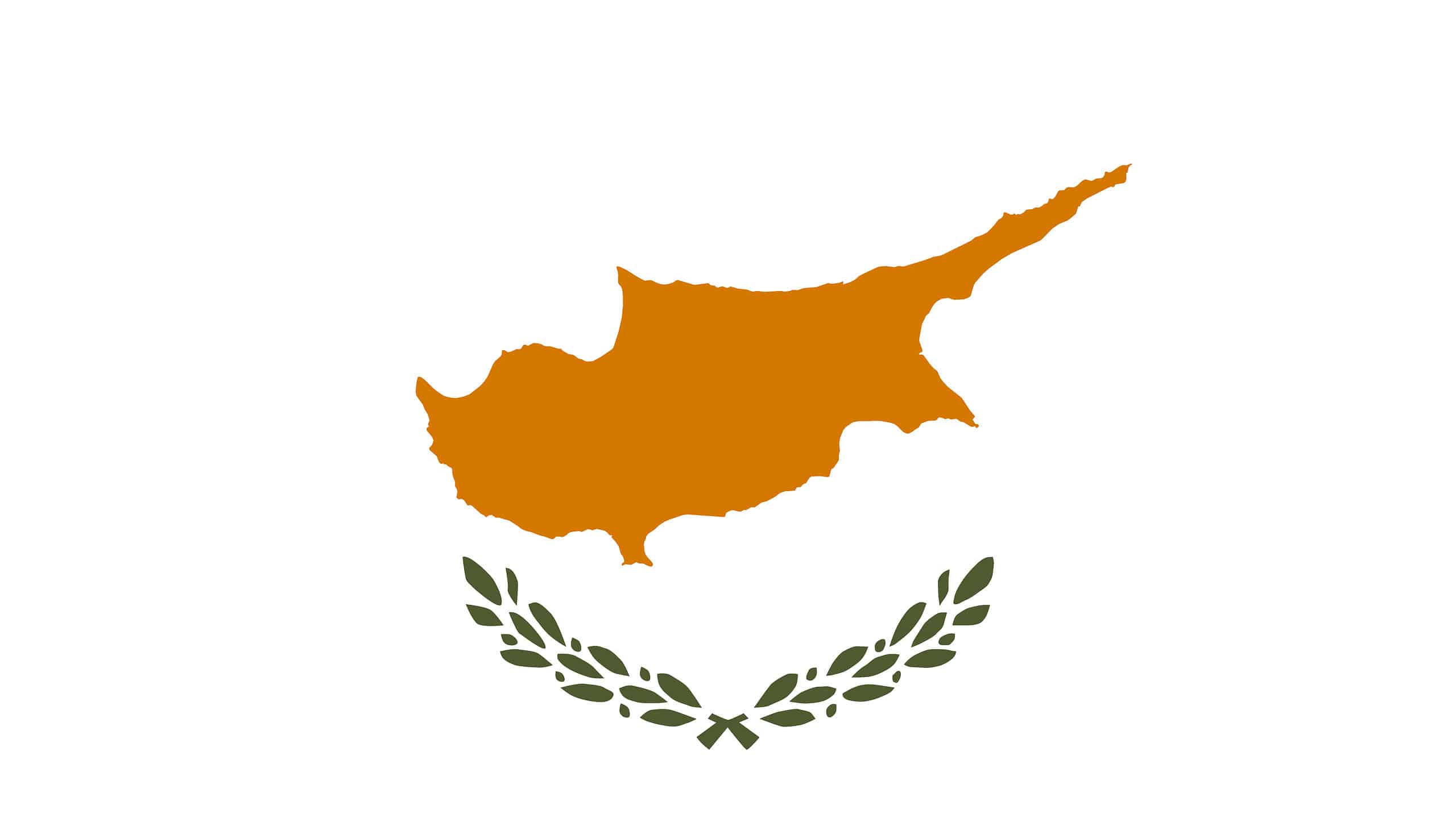
The Flag of Cyprus with the map of the whole island at its center..
©Jo Best/Shutterstock.com
The flag of Cyprus consists of a white field, with the map of the whole island at the center and two olive branches below the map. The white field on Cyprus’s flag represents the island’s tranquility and peace. The country’s map is a copper-orange color, which signifies the area’s huge deposits of copper ore. There are two green olive branches below the country’s map which symbolizes peace between the two communities on the island – Turkish Cypriots and Greek Cypriots.