N S W E
Wildlife Expeditions

Wildlife of
Azerbaijan

Azerbaijan stands out for its dramatic Caucasus-to-Caspian landscapes where snow-capped mountains, semi-deserts, and vast wetlands concentrate rare mammals and spectacular migratory birds along one of Eurasia's great flyways.
160 Species
86,600 km² Land Area
Overview

About Azerbaijan

Perched at the crossroads of Eastern Europe and Western Asia, Azerbaijan packs an exceptional range of habitats into a relatively compact area-from the Caspian Sea shoreline and reed-filled lagoons to steppe, semi-desert, and the alpine meadows and forests of the Greater and Lesser Caucasus. This variety supports a wildlife character that is distinctly "borderland": Palearctic mountain species meet arid-zone specialists, while coastal and inland wetlands become seasonal hubs for birds moving between Siberia, Central Asia, the Middle East, and Africa. For visitors, the appeal lies in how quickly the scenery (and species list) can shift-one day scanning Caspian wetlands for pelicans and flamingos, the next searching mountain valleys for chamois and raptors.

Azerbaijan's key ecosystems include the Caucasus mountain forests and highlands-important refuges for large mammals and birds of prey-alongside the Kura-Aras lowlands and Caspian coastal wetlands that act as vital stopover and wintering sites on major migratory routes. The Hyrcanian (Talysh) forests of the southeast are especially significant as a relict, humidity-loving ecosystem with high endemism and a "living museum" feel, shaped by ancient climatic stability. Together, these systems make the country a microcosm of wider Eurasian biodiversity, where conservation of wetlands, forests, and mountain corridors has outsized value for regional connectivity.

In global conservation terms, Azerbaijan's importance is strongly tied to the Caspian basin and the Caucasus biodiversity hotspot: protecting coastal wetlands and inland lakes supports migratory bird populations that span continents, while safeguarding mountain habitats helps maintain ecological corridors across national borders. The wildlife experience is uniquely rewarding for birders and naturalists-migration spectacles, winter waterfowl gatherings, and raptor watching can be outstanding-while patient observers may also be rewarded with elusive carnivores and high-mountain ungulates. Add in accessible viewing near Baku and the rapid transition from sea-level wetlands to alpine zones, and Azerbaijan becomes an unusually diverse destination for a single trip.

Physical Features

Geography

Azerbaijan's wildlife is shaped by steep elevation gradients and strong moisture contrasts between the Caucasus Mountains and the Caspian Sea lowlands. Alpine and subalpine habitats in the Greater and Lesser Caucasus support mountain-adapted mammals and raptors, while the broad Kura-Aras lowland and Absheron Peninsula hold semi-desert and steppe communities. The Caspian coastline, river deltas, and major wetlands (notably in the south) sit on a major Eurasian migratory flyway, concentrating waterbirds and providing critical stopover and wintering habitat. The humid Talysh Mountains and Lankaran lowlands in the southeast form a distinct forest refugium with many relict and endemic species tied to Hyrcanian-type forests.

86,600 km² Land Area
Mid-sized country; roughly comparable to Austria; approximately the 112th largest country by area Size Rank

Key Landscapes

  • Greater Caucasus (high peaks, deep valleys, alpine/subalpine meadows)
  • Lesser Caucasus uplands (montane forests, rocky slopes, high pastures)
  • Talysh Mountains and Lankaran lowlands (humid forest belt near the Iranian border)
  • Kura-Aras Lowland (semi-desert/steppe plains and salinized soils influencing dryland fauna)
  • Kura and Aras river systems (riparian corridors, floodplains, and deltas important for dispersal and breeding)
  • Caspian Sea coastline and Absheron Peninsula (coastal dunes, saline lagoons, nearshore habitats)
  • Major wetlands and coastal lagoons such as the Kizil-Agach area (key migratory bird habitat)

Ecoregions

  • Caspian Hyrcanian mixed forests (Hyrcanian forests of the Talysh-Lankaran region)
  • Caucasus mixed forests (montane forest belt of the Caucasus)
  • Caucasus alpine meadows (high-elevation alpine/subalpine grasslands)
  • Kura-Aras lowland semi-desert (semi-desert and steppe of central lowlands)
  • Azerbaijan shrub desert and steppe (arid lowland and foothill shrub-steppe habitats)
  • Eastern Anatolian montane steppe (montane steppe habitats, especially in Nakhchivan)
Parks & Reserves

Protected Areas

Azerbaijan's protected area network is built around a mix of strictly protected State Nature Reserves (strict nature reserves with limited access), multi-use State Nature Refuges/Sanctuaries (wildlife management and seasonal protections), and National Parks (larger landscapes that combine conservation with regulated recreation). Together these areas safeguard a high diversity of habitats-from Caspian coastal wetlands and semi-deserts to Hyrcanian relict forests and alpine Caucasus ecosystems-positioned on a major Eurasian migratory bird flyway.

Protected Coverage

Approximately 10-11% of Azerbaijan's land area is under formal state protection (national parks + state nature reserves + state refuges/sanctuaries; estimates vary by source and year as the system expands).

Notable Parks & Reserves

Shahdag National Park

National Park

A vast high-mountain park in the Greater Caucasus protecting alpine meadows, subalpine forests, and rugged cliffs that support large mammals and raptors. It is one of the country's strongest landscapes for conserving mountain ungulates and their predators.

Hirkan National Park

National Park

Protects the Hyrcanian (Talysh) relict broadleaf forests-an ancient ecosystem rich in endemics and a key refuge for rare large carnivores. It is among Azerbaijan's most important forest strongholds for biodiversity conservation.

Shirvan National Park

National Park

A flagship semi-desert and steppe conservation area famous for open-country wildlife viewing, especially gazelles. Its mosaic of plains, saline areas, and shallow wetlands also supports notable birdlife.

Goitered gazelle
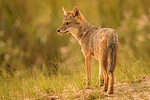
Golden jackal
Golden jackal
Jungle cat
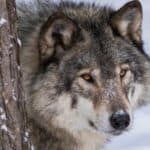
Grey wolf
Grey wolf
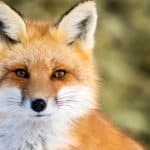
Red fox
Red fox
Greater flamingo

Absheron National Park

National Park

A coastal and semi-desert reserve on the Absheron Peninsula with strong opportunities for viewing gazelles and coastal birds. It helps protect fragile Caspian shoreline habitats used by migratory and wintering waterbirds.

Goitered gazelle
Golden jackal
Golden jackal
Red fox
Red fox
Caspian gull
Great cormorant
Kentish plover

Aghgol National Park

National Park; Ramsar Wetland

A major inland wetland complex important for mass gatherings of migratory and wintering waterbirds on the Afro-Eurasian flyway. It is one of the best sites in Azerbaijan for waterbird diversity and seasonal concentrations.

Greater flamingo
Dalmatian pelican
Great white pelican
Whooper swan
Glossy ibis
Pygmy cormorant

Gizil-Agach State Nature Reserve

State Nature Reserve; Ramsar Wetland

A premier Caspian coastal wetland and lagoon system renowned for huge seasonal numbers of waterfowl. It is among the country's most significant bird conservation sites, especially in migration and winter.

Greater flamingo
Dalmatian pelican
Great white pelican
Mute swan
Eurasian spoonbill
Common shelduck

Zaqatala State Nature Reserve

State Nature Reserve

A forested Greater Caucasus reserve protecting altitudinal gradients from broadleaf forests to montane habitats, supporting large mammals and forest birds. It is a key stronghold for intact mountain forest ecosystems in northwest Azerbaijan.

UNESCO World Heritage Sites

  • Hirkan Forests
Animals

Wildlife

Azerbaijan's wildlife diversity is shaped by its position between the Greater Caucasus Mountains and the Caspian Sea, with habitats ranging from semi-desert steppe and salt flats to broadleaf Hyrcanian (Talysh) forests, high alpine meadows, and vast coastal wetlands. This variety-plus the Caspian migratory flyway-makes the country especially notable for birds (waterbirds, raptors, and passage migrants), while mountain and forest zones hold charismatic large mammals that define the best wildlife experiences in places like Shahdag, Zaqatala, Hirkan, and the Kura-Araz lowlands.

~100-110 species Mammals
~350-400 species (very strong migration and wintering diversity) Birds
~50-60 species Reptiles
~10-15 species Amphibians

Iconic Species

Persian Leopard Azerbaijan is one of the key Caucasus range countries for this rare leopard; best chances are indirect (tracks/camera-trap images) in rugged forest-mountain mosaics such as Hirkan National Park (Talysh Mountains) and parts of the Greater Caucasus.
East Caucasian Tur A flagship mountain ungulate of the Greater Caucasus, seen on steep rocky slopes and alpine zones; best in protected highland areas around Shahdag National Park and remote ridgelines of the northern ranges.
Goitered Gazelle The classic species of Azerbaijan's semi-deserts and steppe; visitors look for it in open plains and foothills, especially in and around Shirvan National Park and other Kura-Araz lowland landscapes.
Caspian Seal The Caspian's only seal species and a major conservation icon; it uses Azerbaijani waters and coastal zones seasonally, and is sometimes observed from boats or along quieter stretches of the Absheron/Caspian coast (sightings vary by year and conditions).
Dalmatian Pelican A sought-after wetland giant; best viewed among large waterbird congregations in the Caspian coastal wetlands, notably the Kizil-Agach (Gizilaghaj) National Park and associated lagoons.
Greater Flamingo A signature species of Azerbaijan's coastal lagoons and salt-tinged wetlands, most reliably in winter and migration periods around Kizil-Agach and other Caspian shoreline wetland complexes.
Marbled Duck A globally threatened wetland duck that draws birders; Azerbaijan's reedbeds and coastal marshes can host it during migration/winter, with Kizil-Agach among the best-known areas for searching.
Caspian Snowcock A high-mountain specialty of the Greater Caucasus; typically encountered (often heard before seen) on rocky scree and alpine slopes in the north, including parts of the Shahdag region.
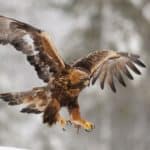
Golden Eagle
Golden Eagle An emblematic raptor of Azerbaijan's mountains and open uplands; seen soaring over high valleys and ridgelines in the Greater and Lesser Caucasus, especially where wild prey and low disturbance persist.

Endemic Species

Caspian Seal Endemic to the Caspian Sea basin (including Azerbaijan's waters); an ice-breeding seal whose entire global range is confined to one inland sea. Endemic
East Caucasian Tur A Greater Caucasus endemic (regional near-endemic) restricted to the Caucasus highlands; Azerbaijan's northern mountains form part of its core habitat. Endemic
Caspian Snowcock A Caucasus/Middle East high-mountain near-endemic strongly tied to the Greater Caucasus; localized, altitude-bound, and a prime target for specialist birders in Azerbaijan's north. Endemic
Caucasian Pit Viper A Caucasus-region near-endemic viper; occurs in parts of Azerbaijan and neighboring areas, associated with foothill/mountain habitats and valued by herpetology-focused visitors. Endemic
Radde's Mountain Viper A Near East/Caucasus near-endemic mountain viper with a fragmented range that includes Azerbaijan; typically linked to rocky slopes and highland steppe in the Lesser Caucasus/Talysh vicinity (site-dependent). Endemic

Notable Populations

  • Caspian coastal wetlands (especially Kizil-Agach/Gizilaghaj) are internationally important for migratory and wintering waterbirds on the Caspian flyway, with large seasonal concentrations of ducks, geese, waders, flamingos and pelicans.
  • Azerbaijan is a key Caucasus stronghold for the endangered Persian leopard, supporting connectivity between mountain-forest habitats in the region.
  • Shirvan National Park and surrounding semi-desert steppe landscapes are among the most reliable places in the South Caucasus to see wild goitered gazelles.
  • The Caspian Sea's biodiversity is globally distinctive (many basin endemics); Azerbaijan's coastline forms part of the habitat network used by the endemic Caspian seal and major waterbird assemblages.
Protection

Conservation

Primary Threats

  • Oil-and-gas extraction, refining, and legacy industrial contamination around the Absheron Peninsula and along the Caspian coast contribute to soil and water pollution, with knock-on effects for coastal wetlands, fish nurseries, and waterbirds. River-borne pollutants (including agricultural runoff and municipal wastewater) also enter the Caspian and lowland wetlands, degrading habitat quality and increasing eutrophication risks.
  • Caspian fisheries have been heavily pressured, historically including sturgeon targeted for caviar. Even where regulations exist, illegal catch and weak cross-border coordination can undermine recovery of long-lived species. Declines in fish stocks affect the broader food web, including piscivorous birds and marine mammals.
  • Illegal harvest and trade pressures are most acute for high-value taxa (notably sturgeon products such as caviar) and can also involve birds of prey and other wildlife. Azerbaijan's position on regional transit routes increases enforcement complexity.
  • Lowland wetlands and coastal lagoons face conversion and degradation from shoreline development, industrial zones, and land reclamation, reducing stopover and wintering sites for migratory birds. In semi-desert and steppe areas, habitat loss and fragmentation occur through land conversion, irrigation schemes, and expanding settlement footprints.
  • Transport corridors, pipelines, and associated facilities fragment habitats in lowlands and foothills, create barriers to movement, and increase collision/electrocution risks for birds on powerlines. Road access into mountain areas can also increase disturbance and poaching pressure.
  • Warming and altered precipitation patterns intensify drought risk in semi-arid regions and can reduce water availability for wetlands important to migratory birds. In the Caucasus, climate change shifts snowpack and alpine conditions, potentially contracting suitable habitat for cold-adapted species and increasing wildfire risk in dry periods.
  • In rural and mountain communities, carnivores (e.g., wolves and occasionally bears) can prey on livestock, leading to retaliatory killing and reduced tolerance. Conflicts are heightened where grazing expands into wildlife habitat or where natural prey is reduced.
  • Illegal or poorly controlled hunting affects waterbirds on wetlands and can impact large mammals in accessible areas. Poaching pressure tends to rise with improved access (roads) and during periods of economic stress.
  • Water regulation, drainage, and irrigation infrastructure modify wetland hydrology and river flows feeding lowland habitats. Changes in flow regimes can reduce seasonal flooding, simplify wetland structure, and diminish habitat suitability for breeding and staging birds.
  • Expansion and intensification of irrigated agriculture in lowlands can replace steppe and semi-desert habitats and increase water extraction from rivers feeding wetlands. Pesticide and fertilizer use also contributes to indirect biodiversity impacts.
  • Growth around Baku and other urban centers drives coastal development and increased demand for land and resources, putting pressure on nearby coastal and wetland habitats and increasing pollution loads.
  • In forested regions (including parts of the Caucasus and the Hirkan broadleaf forests), illegal or unsustainable wood cutting can degrade forest structure and increase fragmentation, affecting forest-dependent species and ecosystem resilience.
  • Non-native species in freshwater systems and along the Caspian coast (introduced intentionally or via transport pathways) can alter food webs and compete with native species; invasive plants can also change wetland and riparian habitat structure.
  • Localized mining and quarrying in mountain and foothill areas can cause habitat loss, erosion, sedimentation of streams, and disturbance that affects sensitive species and downstream aquatic ecosystems.
  • Recreation, unregulated tourism in mountain parks, and intensive use of coastal zones can disturb breeding colonies and roosting waterbirds, especially in key wetland sites, and increase off-road impacts in semi-desert landscapes.
  • Disease risk is notable in Caspian and wetland systems where stressed populations and pollution can increase susceptibility (e.g., among marine mammals and dense bird aggregations), and where transboundary movement of wildlife can facilitate pathogen spread.
  • Overuse of freshwater for irrigation and industry can reduce flows to wetlands and riparian habitats, intensifying habitat degradation during dry years. In rangelands, overgrazing can deplete vegetation cover and accelerate desertification processes.
  • Small or fragmented populations (e.g., isolated mountain or lowland mammal groups) can face reduced gene flow where infrastructure and land demonstrates barriers; long-lived, heavily exploited fish such as sturgeon are especially vulnerable to genetic erosion when breeding populations are depleted.
Visit

Wildlife Tourism

Azerbaijan is an underrated wildlife destination where Caspian Sea wetlands, semi-deserts, and the Greater Caucasus create a compact but diverse set of habitats. Wildlife tourism here is closely tied to birdwatching along major migration routes (Caspian flyway), nature photography, and guided hikes in mountain parks. Economically, it's smaller than Azerbaijan's cultural and energy sectors, but it is growing through ecotourism lodges, community guides in the Caucasus, and increasing interest in Ramsar wetlands and national parks. Historically, nature travel was limited and more local, but in the last 10-15 years improved roads, domestic flights, and private guiding companies have made trips far easier to arrange. Accessibility is practical: Baku is a strong hub with international connections; key wildlife areas like Absheron Peninsula, Gobustan's semi-desert, and the Caspian coastal wetlands can be done as day trips, while the Greater Caucasus (e.g., Shahdagh area) and Nakhchivan require multi-day planning (and in Nakhchivan's case, flight access).

Best Time to Visit

- March-May (spring migration & breeding start): Peak birding in coastal wetlands and lagoons. Look for large movements of waterfowl and shorebirds, plus raptors passing along the Caspian corridor; excellent time for photography in greened-up lowlands.
- June-August (high mountains & breeding season): Best for alpine hikes and mammal/raptor watching in the Greater Caucasus-look for mountain specialists, breeding birds, and chances of wild goats/ibex-type mountain ungulates on rocky slopes. Lowlands can be hot and hazy.
- September-November (autumn migration): Another prime birding window-big concentrations of waders, herons, and waterfowl returning through Caspian wetlands; good time for sea-watching on the coast.
- December-February (wintering waterbirds): Strong for Caspian coastal birding when wetlands host wintering ducks, geese, swans, and gulls; also good for quieter travel. Mountain areas can be snowbound, but winter landscapes around Shahdagh can be scenic if roads are open.

Top Wildlife Experiences

  • Caspian wetland birding day (early morning hide + scope session): Start before sunrise in coastal wetlands to watch mass waterbird movements, then track flocks across lagoons for close photography and behavior watching.
  • Raptor migration watch on the Caspian corridor: Spend a half-day scanning headlands/coastal vantage points during spring or autumn migration for passing eagles, hawks, and falcons-ideal with a local bird guide who knows flight lines.
  • Semi-desert wildlife walk + geology combo (Gobustan area): Do a guided morning walk for desert-adapted birds, reptiles, and tracks, paired with the region's dramatic landscapes-best in spring or autumn when temperatures are comfortable.
  • Absheron Peninsula coastal nature circuit: Combine shoreline scanning (seabirds and wintering gulls/ducks) with short walks in coastal scrub for passerines; easy logistics from Baku and great for a "wildlife + city" itinerary.
  • Mountain wildlife hike in the Greater Caucasus (Shahdagh region): Take a guided hike on quieter trails for high-altitude birds and mammal sign, with long glassing stops for cliff and ridge scanning.
  • Night spotlighting for small mammals (where permitted, with a licensed guide): A controlled evening outing in suitable habitats to look for nocturnal mammals and owls; best done as a private guided experience following local rules.
  • Caspian shoreline photography session: Plan a dedicated dawn or dusk shoot for silhouettes, flock patterns, and reflective water scenes-especially rewarding in winter when bird numbers are high.
  • Community-led nature walk in a Caucasus village landscape: Join a local guide for a slow walk through orchards, forest edges, and river corridors to find songbirds, woodpeckers, and seasonal butterflies-often paired with home-cooked meals.
  • Multi-day birding circuit linking wetlands + foothills: A practical 'best-of' itinerary that moves from coastal wetlands (waterbirds) to foothill scrub/woodland (passerines and raptors), maximizing species diversity in a short time.
  • (If traveling to Nakhchivan) Arid-mountain nature day for steppe and rocky-slope species: Explore the exclave's distinct landscapes with a specialist guide for a very different set of birds and scenery than the Caspian coast.

Safari Types Available

  • Guided birdwatching safaris (migration-focused, wetland hides, scope-based scanning)
  • Walking safaris / nature hikes (semi-desert walks, foothill rambles, alpine treks)
  • 4x4 wildlife drives (semi-desert and mountain access routes with frequent glassing stops)
  • Coastal sea-watching sessions (stationary 'sea watch' from headlands/shorelines)
  • Wildlife photography tours (dawn/dusk sessions, hide-based shoots where available)
  • Night wildlife outings (spotlighting/owling with licensed local guides where permitted)
  • Multi-day eco-tours combining habitats (wetlands + semi-desert + Caucasus mountains)
  • Community-based guiding experiences (village-based nature walks and local conservation storytelling)
Fun Facts

Did You Know?

You can see flamingos in Azerbaijan: Greater flamingos regularly winter on Caspian lagoons and bays (notably around Gizilaghaj), a counter-intuitive 'pink-birds-in-winter' scene at roughly the same latitude as northern Spain.

Azerbaijan has a 'time-capsule' forest linked to Ice Age refuges: the humid Hirkan (Hyrcanian) forests in the south (Lankaran-Talysh region) are relic broadleaf forests that survived past glaciations and still shelter rare, moisture-loving woodland communities in an otherwise dry/continental neighborhood.

Desert-to-alpine wildlife whiplash is real here: within a few hours' drive you can go from semi-desert gazelle country (e.g., Shirvan area) to alpine zones with mountain ungulates (tur/chamois) and eagle habitat in the Greater Caucasus-an extreme habitat compression for a country of Azerbaijan's size.

Caviar fish aren't 'ocean fish' here: Caspian sturgeons live in the Caspian's brackish water but depend on rivers (like the Kura system) for spawning migrations-so river health and dams directly determine the fate of a sea-based luxury food.

A landlocked sea still hosts a seal-and it breeds on ice: Caspian seals give birth on winter sea ice in the northern Caspian, yet individuals range widely and can appear along Azerbaijan's coast, connecting Azerbaijan's beaches to an Arctic-like life history happening hundreds of kilometers away.

Caspian Sea coastline wildlife, Azerbaijan included: the Caspian is the world's largest enclosed inland body of water (~371,000 km²), creating a unique 'inland-sea' ecosystem for sturgeons, seals, and mass migratory waterbirds.

Beluga sturgeon (Huso huso) in the Caspian basin (including Azerbaijan's waters and river deltas): the world's largest sturgeon-historic individuals reported at ~6 m and over 1,000 kg-making it one of the largest freshwater/brackish-water fishes on Earth.

Shahdag National Park (North Caucasus): Azerbaijan's largest national park (about 130,000+ hectares), protecting some of the country's biggest continuous high-mountain habitat for species like East Caucasian tur, chamois, and large raptors.

Gizilaghaj (Kyzylagach) State Reserve on the Caspian flyway: one of the region's biggest wintering/resting wetland complexes for migratory birds, with counts that can reach 200,000+ waterbirds in peak seasons (ducks, geese, swans, coots, and more).

Caspian seal (Pusa caspica) along Azerbaijan's Caspian coast: the Caspian is the only sea on Earth with its own endemic seal species-meaning this marine mammal exists nowhere else on the planet.

Situated at the crossroads of Europe and Asia, Azerbaijan is a small Caucasian country that became independent from the Soviet Union in 1991. The country shares a land border with Russia to the north, Iran to the south, and Armenia, Turkey, and Georgia to the west, while the entire eastern part of the country is surrounded by the Caspian Sea.

Azerbaijan is divided between extreme mountains and lowlands. The Greater Caucasus Mountains cut across the northern part of the country, carving out beautiful gorges and streams in the landscape. It contains the country’s highest peak, Mount Bazardyuzyu, at 14,652 feet. The Lesser Caucasus mountain range, which reaches a summit of almost 13,000 feet, runs parallel to the Greater Caucasus about 100 to 200 miles in the south, while the Talish Mountains also grace the southeast border with Iran. The rest of the country is comprised of lowland forests, plains, and wetlands.

The Official National (State) Animal of Azerbaijan

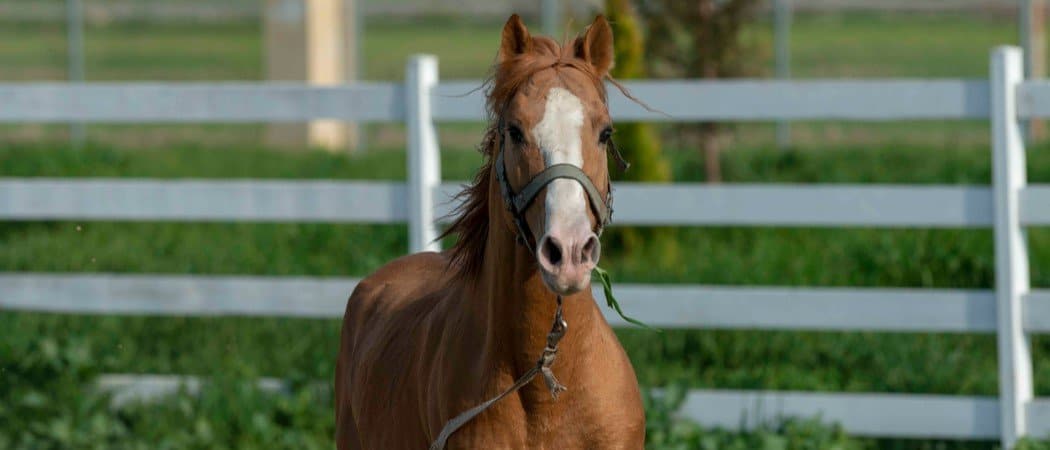
The Karabakh horse is the major national symbol of Azerbaijan. Historically it has been an important racing and riding horse of the Eurasian mountain-steppe areas.

Where to Find the Top Wild Animals in Azerbaijan

Since its independence, Azerbaijan has established around nine different national parks, 15 state reserves, and many more game reserves to protect its wildlife.

  • The Absheron National Park is the smallest of the parks, but it’s also the easiest wildlife area for tourists to reach, situated as it is to the immediate east of the capital, Baku. Amid the twisting dunes and semi-desert coastlines, visitors can find foxes, tortoises, jackals, ducks, sandpipers, and even the endangered Caspian seal in the summer.
  • The Shirvan National Park, located in the southeast Salyan Rayon District, features red foxes, gazelles, jungle cats, badgers, jackals, eagles, falcons, tree frogs, and marsh frogs, Caspian turtles, snakes, and even the elusive wolf.
  • The Ag-Gel National Park, which encompasses Lake Aggol in the Kur-Araz Lowland toward the west, has been deemed an important bird area. It is home to more than 140 unique species of birds, including the partridge, swan, spoonbill, teal, and pelican. It’s also an excellent source of freshwater fish and small mammals.
  • The Gizilaghaj Nature Reserve, located in the Lankaran District along the southeast Caspian coast, is the largest protected area in the entire country. Encompassing more than 300 square miles, it is home to some 270 species of birds, including swans, pelicans, ducks, herons, ibises, spoonbills, geese, and flamingos. It also contains some reptiles and mammals.

The Most Dangerous Animals in Azerbaijan Today

Azerbaijan is home to several species of venomous snakes and large carnivores, but only a few of them are highly dangerous.

  • Horned Viper – Also known as the long-nosed viper, nose-horned viper, or sand viper, it’s easily identified by the unique horn on the snout. As one of the more dangerous snakes in all of Europe, this species can cause pain, swelling, and discoloration. Fortunately, these reptiles are only found in a very small part of western Azerbaijan.
  • Caucasian Pit Viper – This subspecies of the Central Asian pit viper lives in the southeastern part of the country. When it strikes, the snake opens its mouth almost 180 degrees and uses specialized muscles to inject the venom, the amount of which it can control. Victims will likely experience pain, swelling, and an irregular heartbeat. In rare cases, paralysis may develop later.
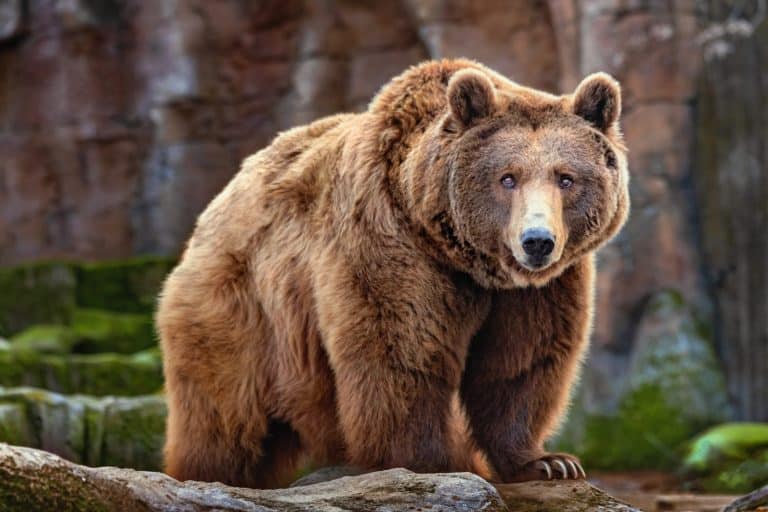
  • Brown Bear – Bears are not as aggressive as their reputation suggests. Attacks only occur in less than a percent of on-foot encounters, usually when the bear feels surprised or threatened. In fact, most attacks occur when a mother is protecting her young.

Endangered Animals in Azerbaijan

  • Caspian Seal – Native to the rocky shorelines and islands of the Caspian Sea, this small earless seal has become endangered from disease, pollution, habitat degradation, and overhunting. While about 100,000 still remain in the wild, numbers have declined from a peak of 1.5 million in the early 20th century. They continue to decline by a few percent per year.
  • Persian Leopard – Once common throughout the Caucasus and Western Asia, the Persian leopard is in danger of becoming extinct. About 1,000 of them remain in the wild, only a few of which actually reside in Azerbaijan. Protected by law, they can be found in the country’s wildlife refuges.
  • Persian Gazelle – This is an endangered subspecies of the goitered gazelle, which derives its name from the male’s enlarged neck and throat pouch in the breeding season. A million goitered gazelles once roamed the deserts and semi-deserts of the Middle East and Central Asia, but now only about 100,000 to 150,000 of them remain.
  • Persian Sturgeon – Among the largest fishes in the world, the Persian sturgeon is endemic to the Caspian Sea and some surrounding freshwater rivers. Since they mature so slowly, most sturgeons suffer greatly from overfishing. Both their flesh and their eggs are highly prized. As a result, they are now in danger of becoming extinct.

The Flag of Azerbaijan

The flag of Azerbaijan consists of blue, red and green horizontal bands with a white crescent and eight-pointed star at its center. The color blue signifies the Azerbaijan people and their Turkish origin, the red represents progress and the green symbolizes the Islamic religion. The octagonal star has eight points which stand for eight letters in the word Azerbaijan, written in Arabic. Overall, Azerbaijan’s flag symbolizes the country’s pride, heritage, independence, and identity.

Animals Found in Azerbaijan

160 species documented in our encyclopedia

Thank you for reading! Have some feedback for us?