N S W E
Wildlife Expeditions

Wildlife of
Qatar

Qatar is most notable for the dramatic contrast between its austere desert wildlife and the Persian Gulf's surprisingly rich marine life-especially wintering seabirds, coastal waders, and offshore dugongs and turtles.
40 Species
11,571 km² Land Area
Overview

About Qatar

Qatar's wildlife character is defined by extremes: scorching summers, scarce freshwater, and wide-open desert plains punctuated by rocky outcrops and salt flats. These conditions favor hardy, highly adapted species-reptiles, small mammals, and desert birds that survive with minimal water and make the most of brief pulses of productivity after rain. While large terrestrial megafauna is limited, the country's natural heritage shines in its specialized desert ecology and its position on major migratory flyways, bringing seasonal abundance to an otherwise minimalist landscape.

Key ecosystems include the interior desert and gravel plains; coastal salt flats and tidal mudflats; mangrove-lined inlets (notably around Al Thakira); and extensive seagrass beds and coral-associated habitats offshore. The coastal zone is particularly significant: mudflats and lagoons provide feeding and roosting areas for thousands of migratory waders and seabirds, while seagrass meadows support one of the world's largest aggregations of dugongs in the Arabian Gulf and serve as critical nursery habitat for fish and invertebrates. Beaches and nearshore waters also function as important areas for marine turtles, with nesting and foraging tied to the Gulf's seasonal rhythms.

In terms of broader conservation, Qatar's role is primarily regional and global-marine: protecting Gulf coastal wetlands, seagrass, and offshore habitats that sustain migratory birds moving between Eurasia and Africa and support threatened marine species. The wildlife experience here is unique because it rewards attention to subtlety-tracking desert life at dawn, watching vast numbers of birds concentrate on a narrow ribbon of coastline, and taking boat trips where the "big wildlife moment" may be a dugong surfacing over seagrass or a sea turtle cruising in clear, shallow water-an unexpectedly wild side of a nation best known for its cities.

Physical Features

Geography

Qatar's wildlife is strongly shaped by its low-lying, arid peninsula geography: extreme heat, minimal rainfall, and scarce permanent freshwater limit terrestrial habitats to hardy desert and salt-flat (sabkha) communities, while the long Persian Gulf coastline creates disproportionately important coastal and marine habitats. Wildlife concentrations tend to track microhabitats where moisture, vegetation, or shelter occur-coastal mangroves and tidal flats, dune systems, irrigated farms/greenspaces, and nearshore waters (seagrass beds, reefs/hardgrounds) that support fish, turtles, seabirds, and migratory shorebirds.

11,571 km² Land Area
Around the 160th largest country (about the size of Jamaica / roughly comparable to Connecticut) Size Rank

Key Landscapes

  • Arid desert plains and gravel/sandy deserts (dominant interior habitat for heat- and drought-adapted fauna)
  • Coastal sabkhas (salt flats) and saline depressions (specialized salt-tolerant plants; important for some invertebrates and foraging birds)
  • Sand dunes and interdunal flats (patchy vegetation, burrowing reptiles/small mammals)
  • Rocky outcrops/hamada areas (shelter and den sites; localized plant communities)
  • Shallow Persian Gulf coastline with extensive tidal flats and mudflats (major stopover and wintering habitat for migratory shorebirds)
  • Mangrove stands (notably Avicennia marina at Al Thakira and similar sites; nursery habitat for fish/crustaceans; roosting/feeding for birds)
  • Seagrass meadows and nearshore shallows (key feeding areas for marine turtles and dugong; fish nurseries)
  • Offshore islands, reefs/hardgrounds, and coastal waters (seabird nesting, marine biodiversity)
  • Wadis/ephemeral drainage lines and seasonal pools after rains (brief productivity pulses; amphibians/invertebrates when present)
  • Human-modified oases: irrigated farms, parks, and wastewater treatment wetlands (local refuges for birds and some mammals in an otherwise dry landscape)

Ecoregions

  • Arabian Desert and East Sahero-Arabian xeric shrublands (WWF; dominant terrestrial zone across Qatar's interior deserts)
  • Arabian Peninsula mangroves (WWF; patchy coastal mangrove habitats along sheltered shores)
  • Persian Gulf (marine ecoregion; MEOW-shallow, warm, saline waters supporting seagrass, coral/hardground communities, turtles, dugong, and diverse fisheries)
Parks & Reserves

Protected Areas

Qatar's protected area system is managed primarily through designated nature reserves and protected areas under national environmental authorities, with a strong emphasis on safeguarding key desert habitats, coastal wetlands (including mangroves and sabkhas), and nearshore marine ecosystems (seagrass, turtle nesting beaches, and seabird islands). While Qatar does not have a large "national park" network in the classic sense, it has several high-value reserves, including internationally recognized sites such as a UNESCO Man and the Biosphere (MAB) biosphere reserve and a Ramsar wetland.

Protected Coverage

Approximately ~10-15% of Qatar's land area is under formal protection (estimate), concentrated in large desert reserves and the Khor Al Adaid protected landscape, with additional smaller coastal/island sites; marine protection exists but is less comprehensively mapped and zoned than terrestrial coverage.

Notable Parks & Reserves

Khor Al Adaid (Inland Sea) Nature Reserve

Nature Reserve; Ramsar Wetland of International Importance

A globally distinctive site where tidal seawater penetrates deep into the desert, creating a mosaic of dunes, sabkhas, and shallow marine habitats that support migratory birds, seagrass-dependent fauna, and marine predators. It is among Qatar's most important areas for coastal biodiversity and wildlife viewing.

Hawksbill sea turtle
Green sea turtle
Dugong
Dugong
Indo-Pacific bottlenose dolphin
Greater flamingo
Osprey
Osprey

Al Reem Biosphere Reserve

UNESCO Man and the Biosphere (MAB) Biosphere Reserve; National Protected Area

Qatar's flagship large desert protected landscape, representing arid steppe, rocky plains, and wadis that shelter desert-adapted mammals, reptiles, and important migratory/overwintering birds. It is central to national efforts to conserve native ungulates and maintain intact desert ecosystems.

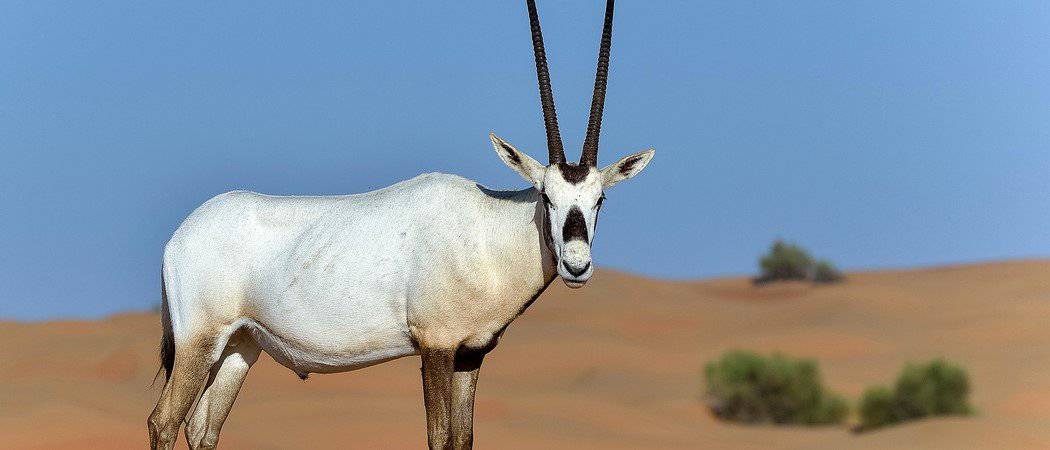
Arabian oryx
Sand gazelle
Ruppell's fox
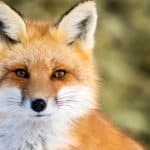
Red fox
Red fox
Houbara bustard
Spiny-tailed lizard

Al Thakira Mangroves and Al Khor Coastal Wetlands (incl. "Purple Island")

Coastal wetland/mangrove protected area (national designation)

One of Qatar's best mangrove systems, providing nursery habitat for fish and invertebrates and supporting dense concentrations of waders and waterbirds during migration and winter. The sheltered lagoons and mudflats make it a standout site for birdwatching and coastal ecosystem conservation.

Greater flamingo
Eurasian spoonbill
Western reef heron
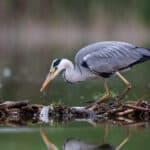
Grey heron
Grey heron
Black-winged stilt
Common kingfisher

Fuwairit Turtle Nesting Beach (Fuwairit Coast)

Protected turtle nesting beach / coastal protected area (national designation)

A nationally important nesting area for sea turtles, with seasonal protection measures used to reduce disturbance during breeding. The adjacent nearshore waters and beaches also support seabirds and coastal wildlife.

Hawksbill sea turtle
Green sea turtle
Lesser crested tern
Crab plover
Osprey
Osprey

Umm Tays (Umm Tais) Island Nature Reserve

Island Nature Reserve (national designation)

A key offshore refuge for breeding and roosting seabirds, with restricted access that helps maintain nesting success. The surrounding waters can also support turtles and other marine life typical of the southern Persian Gulf.

Socotra cormorant
Sooty gull
White-cheeked tern
Hawksbill sea turtle
Green sea turtle

Al Shahaniya Oryx Conservation Area (Oryx sanctuary/breeding & conservation site)

Wildlife sanctuary / conservation breeding and management area (national designation)

A focal site for conserving and managing Arabian oryx in Qatar, supporting captive breeding and conservation management linked to wider desert biodiversity goals. It is one of the best places in-country to reliably see Arabian oryx up close.

Arabian oryx
Sand gazelle
Arabian hare
Red fox
Red fox
Desert monitor
Animals

Wildlife

Qatar's wildlife is defined by an arid desert peninsula (sand and gravel plains, dunes, and rocky hammada) edged by highly productive Gulf waters. On land, species are heat- and drought-adapted, often nocturnal, and concentrated around wadis, farms, and protected reserves. Along the coast, tidal flats and sabkhas support large numbers of wintering and passage shorebirds, while seagrass meadows and offshore waters host globally important marine megafauna (notably dugongs and seasonal whale sharks). Overall diversity is moderate on land but high in coastal/marine habitats and in migratory bird use.

≈25-35 terrestrial species (small carnivores, rodents, bats) plus several regular marine mammals (dolphins and dugong) Mammals
≈300+ recorded (strongly influenced by migration); ~40-70 regular breeders Birds
≈35-50 (lizards, snakes, and marine turtles) Reptiles
≈1-3 (very limited due to aridity; mostly localized around irrigated/agricultural areas) Amphibians

Iconic Species

Arabian Oryx A flagship desert antelope of Arabia and a major conservation success story. In Qatar it is best encountered in managed reserves and protected desert areas, where reintroduced/managed herds represent the classic 'Arabian desert' wildlife experience.
Arabian Sand Gazelle The most characteristic small desert ungulate in the region. Visitors may see it in protected desert landscapes and wildlife-managed areas; it embodies Qatar's open, arid plains and dune-edge habitats.
Dugong
Dugong Qatar's surrounding waters include extensive seagrass beds that support dugongs-one of the Gulf's most celebrated marine mammals. Sightings are typically offshore in seagrass-rich areas, often via dedicated boat trips.
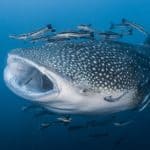
Whale Shark
Whale Shark Northeastern Qatar hosts a well-known seasonal aggregation of whale sharks associated with plankton-rich offshore waters (often cited around the Al Shaheen area). It is among the region's signature marine wildlife spectacles.
Hawksbill Sea Turtle A globally threatened turtle that nests in parts of the Arabian Gulf. Qatar's beaches and nearshore reefs can be seasonally important for nesting and foraging, making it a key marine conservation species for the country.
Greater Flamingo A highly visible wintering and passage species on Qatar's coastal lagoons, tidal flats, and sabkhas. Large flocks are a hallmark of birding around sites such as mangroves and sheltered inlets.
Socotra Cormorant A Gulf-specialty seabird with a restricted regional range. It is sought-after by birders in Qatar's offshore/island and nearshore waters, especially during movements and near regional breeding concentrations.
Ruppell's Fox A quintessential desert canid adapted to heat and sparse resources. In Qatar it is typically nocturnal and most likely to be detected in quieter desert areas (often by tracks, camera traps, or night drives where permitted).
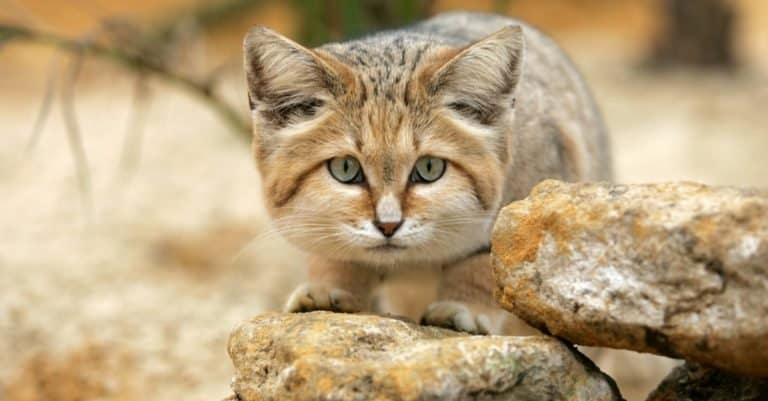
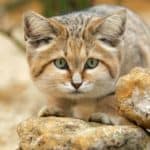
Sand Cat
Sand Cat A secretive, dune-adapted small cat that represents the 'rare desert predator' experience. Records in Qatar are localized and sightings are uncommon, but it is one of the most iconic potential desert mammals for the peninsula.

Notable Populations

  • Seasonal whale shark aggregation off northeastern Qatar (often associated with offshore oil-field waters), regarded as one of the largest known aggregations in the region and frequently cited among the world's notable whale shark gatherings.
  • Arabian Gulf dugongs form one of the world's largest dugong populations; Qatar's seagrass-rich waters are part of this key regional stronghold.
  • Internationally important coastal stopover/wintering habitat for migratory shorebirds and waterbirds (including flamingos and a wide variety of waders) using Gulf flyways and tidal-flat/sabkha systems.
Protection

Conservation

Primary Threats

  • Coastal habitat loss occurs through land reclamation, dredging, shoreline armoring, and conversion of tidal flats/salt flats and shallow nearshore areas for ports, marinas, artificial islands, and industrial zones. On land, localized loss and fragmentation happen around expanding urban/industrial footprints and road networks, reducing intact desert habitat patches and disturbing important bird and ungulate areas.
  • Extreme heat is intensifying and marine heatwaves in the shallow Gulf can stress corals, seagrasses, and associated fauna. Rising temperatures and aridity increase water demand and can reduce the viability of native desert vegetation. Sea-level rise and increased storminess threaten low-lying coastal salt flats, intertidal feeding grounds for migratory birds, and mangrove fringes.
  • Marine pollution risks are elevated due to dense shipping traffic, ports, offshore operations, and coastal industry. Chronic issues include oil/chemical spill risk, discharge and runoff affecting water quality, and marine debris (including plastics) accumulating along popular beaches and in nearshore habitats. On land, dust, waste, and localized contamination can occur near industrial areas and construction sites.
  • Non-native ornamental plants and introduced animals associated with landscaping, gardening, and trade can displace native flora and alter desert microhabitats. In marine and coastal areas, invasive species risk is linked to shipping (ballast water/biofouling) and coastal infrastructure that can facilitate new introductions.
  • Wildlife disease is not typically the dominant national driver but can affect stressed populations, especially where animals concentrate at limited resources (e.g., managed watering points for ungulates) or where rehabilitation/holding occurs. Warmer temperatures may increase pathogen/parasite persistence in some settings.
  • Historically and locally, hunting/poaching pressure can affect desert wildlife (e.g., birds and small game) and can be exacerbated by easy road access into remote areas. Strict controls exist, but enforcement and compliance remain important, especially during peak seasons.
  • Demand for certain species (notably falcons and other birds) and exotic pets can create pressures requiring permitting, veterinary oversight, and enforcement to prevent illegal collection or trafficking and to ensure sustainable, legal sourcing.
  • Fishing pressure in nearshore and offshore waters can reduce fish stocks and alter food webs. High demand for seafood and recreational fishing can increase pressure on key species and habitats (reefs/seagrass-associated fisheries), and bycatch can affect turtles and other non-target species if not well managed.
  • Recreational use of deserts (off-road driving, camping) can damage fragile desert vegetation and soil crusts and disturb wildlife. Along coasts, beach recreation, boating, and coastal lighting/noise can disturb nesting/roosting birds and turtles and degrade sensitive intertidal zones.
  • Conflict is relatively limited compared to larger, more rural countries, but can occur where wildlife interacts with managed landscapes (e.g., depredation or nuisance issues near farms/animal holdings) and where free-ranging animals (including feral cats/dogs) affect native fauna near settlements.
  • Small, fragmented terrestrial populations in a limited land area can face reduced genetic diversity, especially for species reliant on remaining protected or semi-protected desert tracts. Captive breeding or intensive management without genetic planning can also inadvertently reduce diversity.
  • Freshwater scarcity drives heavy reliance on desalination and groundwater management; limited natural freshwater constrains wetland persistence and increases sensitivity of habitats to any additional withdrawals. High material demand for construction can indirectly increase pressure through dredging and quarrying outside sensitive zones.
  • Rapid development of ports, roads, pipelines, power/water plants, and coastal defenses fragments desert habitats and directly alters coastal and seabed environments. Infrastructure also increases access, which can intensify disturbance (off-road use, fishing pressure) unless managed.
  • Shoreline stabilization, dredging, channelization, and creation of artificial lagoons modify currents, sediment transport, and salinity patterns, affecting seagrass beds, coral patches, and intertidal flats. Managed watering points and landscaping can also alter desert ecological dynamics by concentrating grazing and changing plant communities.
  • Agriculture is limited by aridity but expansion of irrigated farms/greenhouses increases water and fertilizer use, potentially contributing to localized soil salinization and runoff impacts. Agricultural areas can also increase human-wildlife interactions and facilitate invasive species establishment.
  • Urban growth around Doha and other centers drives coastal conversion, increased wastewater and stormwater loads, more artificial light (affecting seabirds/turtles), and greater recreational pressure on beaches and desert margins.
  • Logging is not a major national threat due to limited native tree cover; however, cutting or damage to mangroves and planted shelterbelts can occur if coastal works or unregulated access are not controlled.
  • Quarrying and extraction for construction materials can degrade desert habitats via surface disturbance, dust, and noise, and can fragment remaining natural areas when sites and haul routes expand.
Visit

Wildlife Tourism

Qatar's wildlife tourism is niche but rewarding, centered on desert-adapted species and globally important Gulf coastal/offshore habitats. Economically, it complements the country's broader tourism offering (culture, events, beaches) by adding nature-based excursions that fit short stays and day trips-especially around Khor Al Adaid (the Inland Sea), Al Thakira's mangroves, and key bird areas. Conservation and nature access have expanded in recent decades through protected areas, habitat restoration (notably mangroves), and growing interest in birding along the Afro-Eurasian flyway. Accessibility is a major advantage: most wildlife experiences are reachable within 30-90 minutes from Doha by road, often as half-day or full-day guided trips; marine trips depart from Doha-area marinas depending on operator and conditions. The main planning factors are heat, wind, and sea state-winter and shoulder seasons deliver the best comfort and wildlife activity.

Best Time to Visit

Overall best season: November-March (cooler temperatures, peak birdlife, better outdoor comfort).

Month-by-month highlights:
- October: Start of migration; increasing shorebirds and raptors along coasts/salt flats; comfortable evenings for desert nocturnal wildlife spotting.
- November-December: Prime birding (waders, gulls/terns, flamingos depending on sites/conditions); excellent mangrove kayaking; desert nights are ideal for guided spotlighting.
- January-February: Coolest months; best for long desert excursions, camping, and extended birding sessions; strong chances for mixed flocks of wintering waterbirds in wetlands and coastal areas.
- March: Spring migration begins-raptors and passerines move through; great for photography (clear air, mild temps).
- April: Late migration; wildlife viewing still good early/late day; heat ramps up by month's end.
- May-September: Extreme heat limits terrestrial activity to dawn/night; marine outings are possible but weather (heat/humidity, occasional winds) and animal activity vary-focus on short coastal trips, sunrise mangroves, and responsible night desert tours if available.

What to expect seasonally:
- Best for birds: Oct-Apr (peak Nov-Mar).
- Best for desert mammals/reptiles: Nov-Mar (especially nights/early mornings).
- Best for mangroves and calm-water paddling: Nov-Apr (avoid windy days year-round).

Top Wildlife Experiences

  • Sunrise mangrove kayak in Al Thakira to spot herons, egrets, kingfishers, and wintering waders (quiet paddling through channels for close-range photography).
  • High-tide shorebird and flamingo watch on coastal salt flats and lagoons (plan around tides to concentrate birds; bring scope/binoculars).
  • 4x4 dune drive to Khor Al Adaid (Inland Sea) with dedicated wildlife stops: scan for desert larks, wheatears, and raptors; finish with a short guided beach walk for tracks and signs.
  • Night desert 'spotlight' excursion (guided) for nocturnal desert wildlife behavior-look for foxes, hares, owls/nightjars, and fresh tracks on dune slipfaces (ethical, low-speed, no chasing).
  • Guided nature walk on firm desert gravel plains after winter rain (if it occurs): botanizing and tracking-identify hardy plants, insect activity, and reptile burrows; best in cool mornings.
  • Boat-based seabird and marine life photography trip offshore (season-dependent): search for feeding terns, gulls, and other pelagic visitors; combine with coastal skyline and reef-edge scanning where permitted.
  • Catch-and-release sportfishing charter focused on responsible practices and ecosystem education (learn about Gulf fish ecology; choose operators with clear release protocols).
  • Dusk birding session at a managed wetland/urban nature reserve setting (short, accessible trip from Doha; excellent for beginners to Gulf birdlife and photography at golden hour).
  • Family-friendly 'desert ecology' half-day: guided interpretive stops explaining salt flats, dune formation, and adaptations of desert fauna; include a short, low-impact walk and binocular time.
  • Seasonal raptor watch during migration (spring/fall): elevated viewpoints or coastal corridors with a guide to identify passing eagles, falcons, and harriers (timed to morning thermals).

Safari Types Available

  • 4x4 desert wildlife drives (daytime for birds/scenery; dusk/night for nocturnal species and tracks).
  • Guided night spotlighting/track-and-sign safaris (low-speed, ethical observation).
  • Birding-focused excursions (coastal/salt-flat scans, wetland hides/edges, migration watches).
  • Mangrove kayaking or SUP 'paddle safaris' (quiet, close-range bird viewing).
  • Coastal/nearshore boat safaris (seabird and marine scanning; conditions permitting).
  • Guided nature walks in desert plains/coastal margins (best in winter/shoulder seasons).
  • Photography-focused wildlife tours (golden-hour coastal sessions; winter desert nights for atmospheric scenes).
  • Educational eco-tours combining geology (salt flats/dunes) + wildlife interpretation (good for short-stay visitors).
Fun Facts

Did You Know?

Qatar's most famous "desert wildlife" spectacle is actually offshore: whale sharks come not to hunt fish, but to vacuum up clouds of microscopic tuna eggs near the surface-turning an arid country into a global hotspot for the planet's largest fish.

Despite minimal rainfall, Qatar has mangrove forests (not freshwater swamps): the dominant grey mangrove (Avicennia marina) is salt-tolerant and lives in seawater on sheltered coasts, creating green habitat pockets in a landscape dominated by sand and salt flats.

The Gulf's "sea cows" (dugongs) rely on seagrass meadows, not coral reefs; Qatar's shallow, sunlit waters support these underwater "pastures," which is why dugongs can be present in a region many people assume is too hot and salty for large marine herbivores.

Endangered hawksbill turtles still nest on Qatar's beaches (notably on the north coast, including sites like Fuwairit), meaning a country known for desert heat is also part of a critical life stage for a globally threatened ocean species.

Coastal sabkhas (salt flats) look lifeless, but after rare rains they can briefly erupt with invertebrates and algae that attract feeding flocks of waders-so some of Qatar's most 'empty' landscapes can become seasonal wildlife cafeterias.

One of the world's biggest seasonal whale-shark gatherings happens off Qatar at the Al Shaheen area (north-east offshore): aerial/boat surveys in peak summer have recorded 1,000+ whale sharks in a day-drawn in by spawning tuna eggs near the surface.

The Arabian/Persian Gulf holds the world's second-largest dugong ("sea cow") population after Australia (often estimated at ~6,000-7,000 animals), and Qatar's shallow north-west waters are one of the Gulf's best-known dugong strongholds because of extensive seagrass feeding grounds.

Al Reem Biosphere Reserve is Qatar's largest terrestrial protected area and the country's first UNESCO biosphere reserve (designated 2007), covering roughly ~1,190 km²-about a tenth of Qatar's land area-set aside for desert wildlife like gazelles, foxes, and reintroduced Arabian oryx.

Khor Al Adaid (the "Inland Sea") is one of only a handful of places globally where large desert dunes meet the sea to form a tidal embayment-an unusually tight desert-marine wildlife overlap where you can encounter shorebirds and marine life within the same landscape.

Al Thakira's mangroves are Qatar's largest natural mangrove stand, providing one of the country's most important nursery habitats for juvenile fish/crabs and a major bird-watching hotspot in an otherwise hyper-arid nation.

Of all of the animals in Qatar, many are endangered or extinct in the wild. Those include animals whose populations are dwindling to a degree that there may not exist at all in the coming years. There are also already extinct animals in Qatar. That means there are no more at all anywhere in the world.

Extinct Animals in Qatar

Aurochs are one of the types of Qatar animals that are extinct. They are relatives of every cow you see. Many hundreds of thousands of years ago, they were probably bigger than saber-toothed tigers. They were domesticated and became similar to cows today. They were very large. A six-foot-tall person today would only come up to their shoulder.

One of the endangered/near threatened animals in Qatar is the crane. They are not yet extinct, but there is a possibility of that happening if the current populations are not allowed to regenerate. There are 15 remaining species of cranes living around the world, and some are more at risk than others. Their demise is often due to climate change, agricultural development, and/or loss of habitat.

Animals Native to Qatar


One of the animals native to Qatar is the hamster. They are so gifted in running that they can go backwards just as fast as they can go forwards. They have very sharp teeth that they can use to bite an attacker. Mother hamsters are protective of their babies and these sharp incisors help to protect them.

Another of the animals native to this country the hedgehog. They don’t tend to live more than five years, but their species might be one of the longest living on Earth today. They are often kept as pets. They are speedy and can get up to 12 miles away in an hour.

Dangerous Animals in Qatar


Some of the animals in Qatar are dangerous. The black widow spider usually keeps to herself unless bothered. Then she can be dangerous to humans or other animals.

The tiger looks and acts ferocious, but they generally keep to themselves. As with other dangerous animals in this country, they are only dangerous under certain circumstances, like when they are angry or hungry. The male will hunt when necessary, and some of the animals that adult tigers like to eat are buffalo, wild boar, and antelope. A tiger has been known to attack an adult when being kept as a pet and mistreated.

Qatar Animals


Qatar is home to more than 125 animals of all sizes. They are in different classifications, species, and sizes. One of the smallest animals is the tiny woodlouse, which is a crustacean. One of the largest is the regal elephant, which is a mammal. There are many ways human beings can help keep these animals from being endangered or extinct.

Animals Found in Qatar

40 species documented in our encyclopedia

Thank you for reading! Have some feedback for us?