N S W E
Wildlife Expeditions

Wildlife of
Jordan

Jordan is notable for its dramatic desert-and-wadi landscapes where hardy, desert-adapted wildlife-especially the iconic Arabian oryx-has been restored in well-managed reserves such as Shaumari and Wadi Rum.
148 Species
89,342 km² Land Area
Overview

About Jordan

Jordan's wildlife character is defined by extremes: sun-baked deserts, cool highland ridges, steep sandstone wadis, and pockets of Mediterranean scrub. This varied natural heritage supports a surprisingly rich mix of species-from shy desert carnivores and fleet-footed ungulates to raptors riding thermals above cliffs and steppe. For visitors, the appeal is the sense of space and silence: wildlife viewing often unfolds against cinematic backdrops of red rock, star-filled skies, and vast open horizons.

Key ecosystems shape the experience. The Dana Biosphere Reserve is Jordan's flagship mosaic, spanning highlands down into arid valleys and holding exceptional plant diversity and many of the country's most sought-after mammals and birds. Wadi Rum's sandstone mountains and sand seas offer classic desert ecology and some of the best chances to encounter true desert specialists. Across Jordan's wetlands and river corridors-most notably around the Jordan Valley-seasonal water and vegetation create vital stopover and wintering habitat for migratory birds moving between Eurasia and Africa.

Conservation in Jordan is closely tied to its position on a major global flyway and to ambitious restoration of species lost from the wild. Through protected areas and reintroductions led by organizations such as the Royal Society for the Conservation of Nature (RSCN), Jordan has become a regional model for bringing back native desert wildlife and safeguarding migration hotspots. The wildlife experience is uniquely intimate: well-run reserves, knowledgeable local guides, and compact travel distances make it possible to see multiple ecosystems in a short trip-often combining desert mammals, highland biodiversity, and world-class birding in one itinerary.

Physical Features

Geography

Jordan's wildlife is strongly shaped by steep moisture and elevation gradients: from Mediterranean-influenced highlands in the northwest, down the Jordan Rift Valley (including the Dead Sea) and south through arid steppe into the hyper-arid deserts of the Badia and Wadi Rum. Limited surface water and highly seasonal rainfall concentrate animals in wadis, oases, springs, and along the Jordan River, while rugged escarpments and sandstone massifs create refuges for ibex and other cliff-adapted species. The Gulf of Aqaba provides Jordan's only marine coastline, supporting coral reef biodiversity distinct from inland desert and steppe fauna. Protected areas such as Dana Biosphere Reserve and Wadi Rum capture multiple habitat zones where species distributions shift rapidly over short distances.

89,342 km² Land Area
About the size of Portugal; roughly the 110th-largest country by land area Size Rank

Key Landscapes

  • Jordan Rift Valley (Jordan River corridor, Dead Sea basin, steep escarpments)
  • Ajloun and northern highlands (Mediterranean woodlands, higher rainfall pockets)
  • Central and southern highlands (rocky ridges and plateaus; Dana Biosphere Reserve spans major elevation gradients)
  • Eastern Badia desert (basalt and limestone desert/hamada; key for desert-adapted fauna and wide-ranging species)
  • Wadi systems and canyons (e.g., Wadi Mujib, Wadi Hasa-seasonal water, riparian vegetation, wildlife movement corridors)
  • Wadi Rum sandstone massif and dune fields (hyper-arid desert landscapes, cliff habitat, specialized desert wildlife)
  • Aqaba/Gulf of Aqaba coastline (narrow coastal plain; coral reefs and marine habitats)

Ecoregions

  • Arabian Desert and East Sahero-Arabian xeric shrublands
  • Syrian Desert
  • Middle East steppe
  • Eastern Mediterranean conifer-sclerophyllous-broadleaf forests
  • South Iran Nubo-Sindian desert and semi-desert
  • Gulf of Aqaba
Parks & Reserves

Protected Areas

Jordan's protected areas network is anchored by the Royal Society for the Conservation of Nature (RSCN), which manages most of the country's flagship wildlife reserves and reintroduction programs (notably for Arabian oryx and gazelles). Additional protection comes via sectoral authorities (e.g., Aqaba's marine management), cultural-landscape protection (e.g., Wadi Rum), and international designations such as UNESCO World Heritage and Ramsar wetlands. Protected areas span hyper-arid deserts, dramatic sandstone wadis, the Rift Valley escarpment, and remnant Mediterranean pine-oak forests in the north.

Protected Coverage

Approximately ~2-3% of Jordan's land area is under formal protected-area status (figure varies by definition and inclusion of large landscape designations such as Wadi Rum).

Notable Parks & Reserves

Dana Biosphere Reserve

Biosphere Reserve / National Nature Reserve (RSCN-managed)

One of Jordan's largest and most biodiverse reserves (and the largest RSCN-managed reserve), Dana compresses four biogeographic zones (Mediterranean highlands to arid Wadi Araba) into one landscape, supporting exceptional plant diversity and a strong assemblage of desert-mountain wildlife.

Nubian ibex
Caracal
Caracal
Syrian wolf
Striped hyena
Striped hyena
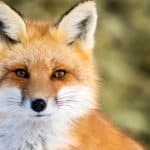
Red fox
Red fox
Eurasian griffon vulture

Wadi Rum Protected Area (Wadi Rum Desert)

UNESCO World Heritage Site (mixed cultural/natural) / Protected Area

A vast sandstone-and-granite desert wilderness important for desert-adapted mammals and wide-ranging raptors; it is also a key stronghold for reintroduced and recovering desert ungulates.

Arabian oryx
Nubian ibex
Arabian wolf
Arabian wolf
Sand cat
Sand cat
Blanford's fox
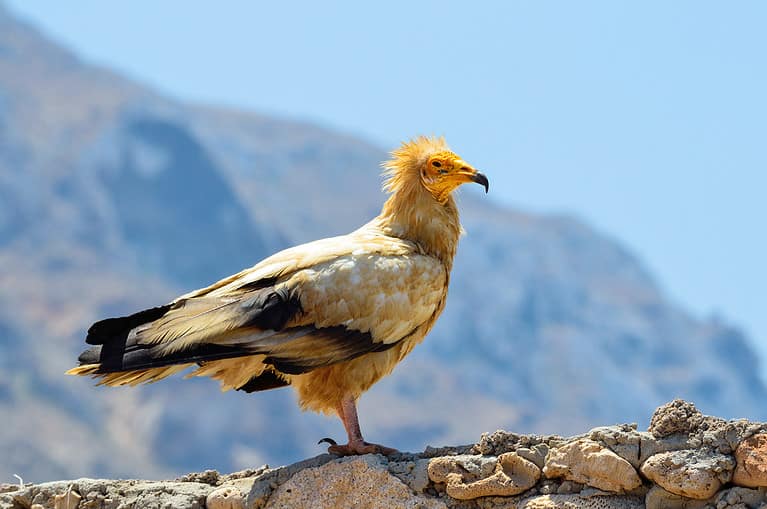
Egyptian vulture
Egyptian vulture

Mujib Biosphere Reserve

Biosphere Reserve / National Nature Reserve (RSCN-managed)

A dramatic Rift Valley canyon system dropping to the Dead Sea, Mujib is notable for rugged ibex habitat and a rich mix of Afrotropical and Palearctic birdlife along steep escarpments.

Nubian ibex
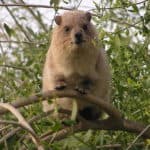
Rock hyrax
Rock hyrax
Blanford's fox
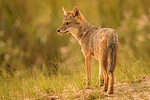
Golden jackal
Golden jackal
Eurasian griffon vulture
Bonelli's eagle

Azraq Wetland Reserve

Wetland Reserve (RSCN-managed) / Ramsar Wetland

A critical oasis for migratory birds on the African-Eurasian flyway; conservation here focuses on maintaining wetland habitats in an extremely water-stressed desert basin.

Greater flamingo
Marbled teal
Ferruginous duck
Black-winged stilt
Pied kingfisher
Little egret

Shaumari Wildlife Reserve

Wildlife Reserve (RSCN-managed) / Reintroduction site

Jordan's premier wildlife reintroduction and breeding site, best known for successful recovery efforts for iconic desert ungulates and for reliable viewing of reintroduced species.

Arabian oryx
Goitered gazelle
Persian onager (Asiatic wild ass)
Sand cat
Sand cat
Red fox
Red fox
Eurasian kestrel

Dibbeen Forest Reserve

Forest Reserve (RSCN-managed)

One of Jordan's best remaining patches of Mediterranean pine-oak forest, important for forest-dependent mammals and breeding woodland birds in the north.

Persian squirrel
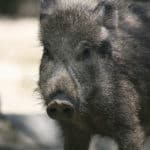
Wild boar
Wild boar
Stone marten
Red fox
Red fox
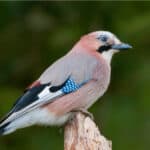
Eurasian jay
Eurasian jay
Short-toed snake eagle

Aqaba Marine Park / Aqaba Marine Reserve (Gulf of Aqaba)

Marine Protected Area (local/sectoral protection in Aqaba)

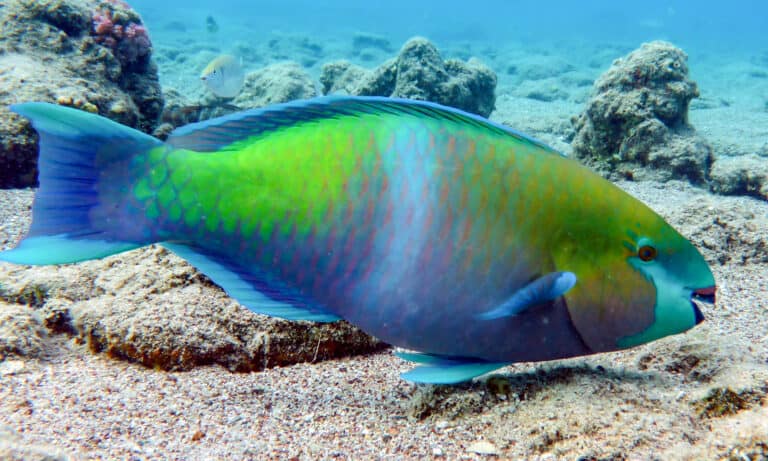
Fringing coral reefs and seagrass support high marine biodiversity at the northern end of the Red Sea, providing important habitat for reef fish and occasional sea turtle use.

Green sea turtle
Hawksbill sea turtle
Coral groupers
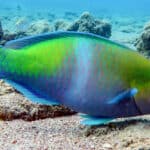
Parrotfish
Parrotfish
Butterflyfish
Blue-spotted stingray

UNESCO World Heritage Sites

  • Wadi Rum Protected Area (mixed cultural/natural World Heritage site; Jordan has no exclusively natural World Heritage sites)
Animals

Wildlife

Jordan's wildlife is defined by arid-land ecology at the junction of the Arabian Desert, the Levant, and the African-Eurasian flyway. Most signature experiences revolve around desert and wadi species (Wadi Rum, the Eastern Desert), rugged canyon and escarpment fauna (Dana Biosphere Reserve, Wadi Mujib), and migratory bird spectacles along the Jordan Rift Valley (Dead Sea basin, Jordan Valley). While large predators are scarce and many species are elusive, Jordan stands out for desert-adapted mammals (ibex, oryx, small cats), globally important bird migration, and a strong protected-area network that concentrates viewing opportunities.

≈80-90 species (mostly small desert mammals; a handful of notable ungulates and carnivores) Mammals
≈420-450 species recorded (high due to migration and varied habitats) Birds
≈90-100 species (especially geckos, agamids, skinks, snakes adapted to aridity) Reptiles
≈8-10 species (localized around springs, wadis, and wetlands) Amphibians

Iconic Species

Arabian Oryx A flagship conservation success in Jordan due to reintroduction and managed breeding. Best known from the Shaumari Wildlife Reserve (near Azraq) and desert landscapes where conservation releases have occurred; often the "must-see" large desert antelope for visitors.
Nubian Ibex The signature wild mountain ungulate of Jordan's cliffs and wadis. Dana Biosphere Reserve and Wadi Mujib are among the best places to look for ibex on rocky escarpments (often at dawn/dusk).
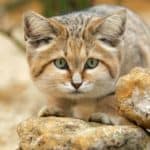
Sand Cat
Sand Cat A highly sought-after desert specialist that epitomizes Jordan's dune and gravel-desert fauna. It is difficult to see, but Wadi Rum and the Eastern Desert are the landscapes most associated with the species.
Caracal
Caracal An elusive medium-sized desert and steppe cat that draws wildlife enthusiasts. Potentially encountered (rarely) in larger protected landscapes such as Dana and desert-edge habitats; most records are from camera traps rather than direct sightings.
Arabian Wolf
Arabian Wolf A desert-adapted wolf representing Jordan's remaining native large carnivores. Mostly nocturnal and wary; associated with remote desert and steppe areas and occasionally detected in/around large protected regions.
Striped Hyena
Striped Hyena Jordan's best-known large scavenger, widespread but mainly nocturnal. It is a key species in desert and semi-desert food webs; sightings are uncommon but it is frequently discussed in Jordan's wildlife context.
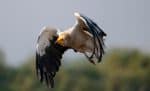
Egyptian Vulture
Egyptian Vulture A charismatic and threatened raptor of cliffs and open country. Dana Biosphere Reserve is one of the best-known sites for raptor watching in Jordan, including this species during suitable seasons.
Steppe Eagle A headline species for migration watching. Jordan's Rift Valley corridor concentrates migrating raptors in season, and Steppe Eagles are among the notable large eagles passing through.
Desert Monitor One of Jordan's most impressive reptiles, emblematic of true desert conditions. Most likely in open sandy/gravel desert and wadis (including the broader Wadi Rum/Eastern Desert landscapes), typically in warmer months.

Endemic Species

Dead Sea Sparrow A near-endemic bird of the Dead Sea basin and lower Jordan Rift Valley, strongly tied to tamarisk and arid riparian habitats. Jordan is one of its core range countries, making it a key specialty for regional birders. Endemic
Syrian Serin A Levant near-endemic finch associated with higher-elevation woodland and orchards. In Jordan it is a sought-after localized breeder in suitable upland habitats, forming part of the country's distinctive highland avifauna. Endemic
Tristram's Starling A Near East specialty closely linked to cliffs and desert wadis around the Dead Sea and adjacent arid escarpments. Jordan's canyon-and-wadi systems provide classic habitat and viewing opportunities. Endemic

Notable Populations

  • Jordan lies on a major African-Eurasian flyway bottleneck along the Rift Valley, with large seasonal movements of soaring birds (raptors, storks, pelicans) concentrated by geography.
  • Shaumari Wildlife Reserve is regionally important for managed breeding and reintroduction efforts of desert flagship species, especially Arabian oryx.
  • Jordan's rugged escarpments and protected wadis (notably Dana and Mujib) support some of the most reliable Nubian ibex strongholds in the Levant.
  • Azraq Wetland Reserve is a critical stopover/refuge site for migratory waterbirds in an otherwise arid landscape, making it disproportionately important for birds during migration and wintering periods.
Protection

Conservation

Primary Threats

  • Severe water scarcity and over-abstraction of aquifers and surface water reduce river flows and wetlands (notably affecting oasis and wetland systems such as Azraq), intensifying salinization and vegetation loss and increasing pressure on wildlife during drought years.
  • Rising temperatures and more frequent/intense droughts amplify desertification, reduce spring flows and wetland permanence, and shift vegetation communities upslope in the highlands; heat and drought stress also increase livestock pressure on remaining forage and water points used by wildlife.
  • Conversion and degradation occur in the highlands and Jordan Valley from settlement growth, agricultural development, and fragmentation of steppe/desert edge habitats; in arid landscapes, even small land-use changes around water sources can disproportionately impact wildlife.
  • Water diversion, dams, groundwater pumping, and wetland engineering alter natural hydrology and seasonal flooding regimes, undermining wetland function for migratory birds and native fish/amphibians; rangeland modification (track proliferation, unmanaged grazing) simplifies vegetation structure.
  • Irrigated agriculture in the Jordan Valley and parts of the highlands increases water demand and can replace native scrub/steppe; agrochemical use and runoff can affect nearby wadis and wetlands, while expanded fencing and land division fragment movement corridors.
  • Growth around Amman and other towns expands roads, housing, and industrial areas into surrounding rangelands, increases demand for water and aggregates, and drives recreation pressure in wadis and desert landscapes.
  • Road building, utility corridors, tourism facilities, and energy development in desert and highland areas fragment habitats and increase wildlife-vehicle collisions; in iconic landscapes (e.g., Wadi Rum), infrastructure can intensify disturbance and off-road access.
  • Quarrying and extractive industries (notably for construction aggregates and other minerals) cause direct habitat removal, dust, noise, and increased truck traffic; impacts can be significant in rugged highlands and steppe margins where endemic plants and raptor nesting areas occur.
  • Localized pollution from wastewater, solid waste dumping, and agricultural runoff affects wadis and wetlands; dust and emissions from quarrying and traffic can degrade nearby vegetation and sensitive habitats, while plastics and litter accumulate at popular desert sites.
  • Illegal hunting/poaching persists for certain birds and mammals (including in desert/steppe areas), sometimes facilitated by easy vehicle access; enforcement is challenging over large remote areas and can undermine reintroductions and small, recovering populations.
  • Illegal collection and trade of birds (including raptors and songbirds) and reptiles occurs opportunistically, with Jordan's location on regional trade routes increasing risk; confiscations require capacity for rehabilitation and release.
  • High visitation and off-road driving in desert destinations (especially in and around Wadi Rum and popular wadis) disturb nesting birds and sensitive desert crusts/vegetation, and can damage archaeological/natural features that underpin protected landscape values.
  • Predators and scavengers (e.g., wolves/jackals and other carnivores where present) can be involved in livestock depredation disputes, especially in rangelands during drought, leading to retaliatory killing or persecution; competition for water points also increases tensions.
  • In wetlands and disturbed sites, invasive plants and introduced species can outcompete natives and alter habitat structure; the risk increases where water regimes are modified and nutrient loads rise, complicating wetland restoration efforts.
Visit

Wildlife Tourism

Jordan's wildlife tourism is built around desert and highland ecosystems-dry riverbed canyons, stony desert plateaus, sand deserts, and rugged limestone uplands-plus a small but important slice of marine life in the Red Sea at Aqaba. While not a "Big Five" destination, Jordan is a standout for desert-adapted species (ibex, gazelles, foxes, hyrax), raptors on migration, and hands-on conservation tourism through organizations like the Royal Society for the Conservation of Nature (RSCN). Economically, wildlife travel supports local guiding, ecolodges, Bedouin-run camps, and community enterprises in reserves such as Dana and Ajloun; it also complements Jordan's strong cultural tourism (Petra, Jerash) by offering nature add-ons that lengthen stays. Historically, modern protected-area tourism expanded from the late 20th century onward with RSCN-led reserves, breeding/reintroduction efforts (notably Arabian oryx), and the growth of guided hiking and canyoning. Accessibility is practical: most key sites are reachable by road from Amman (often 1-4 hours), and many experiences are guided (a plus in remote desert terrain). Spring and autumn are the sweet spots for comfortable temperatures and peak bird activity; summer is best for early/late desert outings and Red Sea snorkeling/diving; winter brings dramatic landscapes and seasonal birding, with cooler conditions for longer hikes in low elevations.

Best Time to Visit
  • March-May (spring): Best overall conditions. Wildflowers in Dana's highlands, active mammals in cooler temps, and strong bird migration (raptors, passerines). Great for long hikes (Dana trails), dawn/dusk wildlife walks, and desert tracking in Wadi Rum.
  • September-November (autumn): Second-best window. Another major bird migration season; comfortable weather for multi-day trekking and canyon adventures. Good chances for ibex and gazelles in early morning/evening.
  • December-February (winter): Excellent for low-elevation hikes and desert photography with crisp air; good birding in wetlands and the Jordan Valley (where accessible). Nights in Wadi Rum can be very cold; occasional rain/snow in highlands.
  • June-August (summer): Hot inland; plan wildlife viewing at sunrise/sunset. Best for Aqaba marine life (snorkeling/diving), night walks, and higher-elevation forests (Ajloun) in early morning.

Top Wildlife Experiences

  • Track Nubian ibex at dawn on the Dana-to-Feynan hike (or shorter Dana trails) with a local guide-scan cliff faces and rocky ridgelines before the day warms up.
  • Join a guided desert wildlife drive in Wadi Rum timed for sunrise or sunset, focusing on tracks and signs (foxes, hares, reptiles) and raptor sightings along escarpments.
  • Do a night safari-style walk near a desert camp (Wadi Rum or similar) with spotlighting/ethics brief: look for foxes, hedgehogs, owls, geckos, and scorpions while learning desert adaptations.
  • Visit an Arabian oryx reintroduction/breeding area (where access is permitted via approved operators) and pair it with a conservation talk on how desert species are managed in Jordan's protected landscapes.
  • Take a guided birdwatching morning in Dana or the Rift-edge landscapes during migration (March-May or Sep-Nov): expect eagles, buzzards, kestrels, and diverse passerines on the move.
  • Hike Ajloun Forest Reserve trails for woodland birds and mammals-combine a quiet early walk with a picnic-style stop and interpretive guiding on Mediterranean forest ecology in Jordan.
  • Go canyoning and canyon trekking in a guided route (seasonal and safety-dependent), learning about riparian microhabitats-dragonflies, amphibians (where present), and desert plants concentrated around water.
  • Snorkel or dive in Aqaba's Red Sea to see coral reef fish, turtles (seasonally), and invertebrate life-choose morning water time for calmer conditions and better visibility.
  • Join a community-led nature walk and stargazing evening in/near a reserve (e.g., Dana/Wadi Rum outskirts): daytime ecology + nighttime skies with minimal light pollution.
  • Plan a "wildlife + culture" day that starts with Petra at opening time, then shifts to a late-afternoon nature walk in nearby desert/highland terrain to catch peak animal activity at dusk.

Safari Types Available

  • 4x4 desert game-style drives (sunrise/sunset) focused on scenery, tracks, and opportunistic wildlife viewing
  • Guided walking safaris/nature hikes (short interpretive loops to full-day treks)
  • Night walks/spotlighting experiences (low-impact, guide-led)
  • Birdwatching safaris (migration-focused, raptor watches, photography sessions)
  • Canyoning and valley trekking (seasonal, typically guided)
  • Community-based conservation tours (reserve visitor centers, reintroduction education, local guiding)
  • Marine safaris in Aqaba: snorkeling trips, scuba diving, glass-bottom boat rides (reef viewing)
  • Photography-focused excursions (golden-hour desert landscapes, long-lens raptor sessions, macro nightlife)
Fun Facts

Did You Know?

Jordan has only a tiny coastline (~26 km) on the Gulf of Aqaba, yet that short stretch supports coral reefs and rich reef-fish communities-making Aqaba one of the northernmost tropical coral reef areas on the planet.

In Dana, you can move from cool Mediterranean-type highlands to arid desert in the same reserve: its elevation range spans from mountain ridges (roughly 1,500 m) down to deep wadis approaching the Dead Sea basin-an extreme "habitat stack" in one day's travel.

Azraq is a wetland oasis set in a basalt desert, and birdwatching records there exceed 300 bird species-counter-intuitive biodiversity for a place surrounded by some of Jordan's driest terrain.

The Dead Sea is famous for being too salty for fish, but the wadis and springs that pour into it (including those in/near Mujib) create short, sharp freshwater corridors-so within a few kilometers you can go from stream wildlife to the most hypersaline major lake on Earth.

Jordan's "desert wildlife" isn't just small animals: camera-trap and field records from protected areas have documented elusive mid-sized carnivores (e.g., caracal and striped hyena) surviving in rugged wadis and rocky deserts-habitats many visitors assume are nearly lifeless.

Mujib Biosphere Reserve is widely described as the world's lowest nature reserve: its canyons start in the Jordanian highlands and drop to the Dead Sea shoreline (around 400+ meters below sea level), creating wildlife habitat at the lowest land elevation on Earth.

Wadi Rum Protected Area is Jordan's largest protected area (about 720 km²), safeguarding a huge continuous desert landscape where species like the sand cat, Arabian wolf, and desert-adapted reptiles persist.

Dana Biosphere Reserve is Jordan's largest biosphere reserve (about 308 km²) and is often cited for packing an outsized share of the country's biodiversity into a small area-around half of Jordan's species recorded within about 0.34% of Jordan's land area.

Jordan sits at a rare biological crossroads where four biogeographic zones meet (Mediterranean, Irano-Turanian, Saharo-Arabian, and Sudanian), allowing markedly different wildlife communities to occur within a relatively small country.

Shaumari Wildlife Reserve (established in 1975) is Jordan's oldest dedicated captive-breeding and reintroduction site for threatened desert wildlife-best known for Arabian oryx recovery efforts, alongside other reintroduction programs.

Jordan is a small nation in the Middle East. It has deserts and mountains, yet it is still home to many unique and exotic animal species. In fact, there are 150 native animal species and 220 types of birds that regularly migrate through Jordan. In fact, a total of 426 unique bird species – some of them very rare – have been observed in the region! These creatures are supported by over two thousand species of plants, many of which thrive in oases near rivers and other bodies of water.

What animals might you find on a visit to Jordan? Keep reading to learn about drought-tolerant gazelles, predatory hyenas, cats, foxes, badgers, mustelids, bats, rodents, and more.

The Official National Animal of Jordan

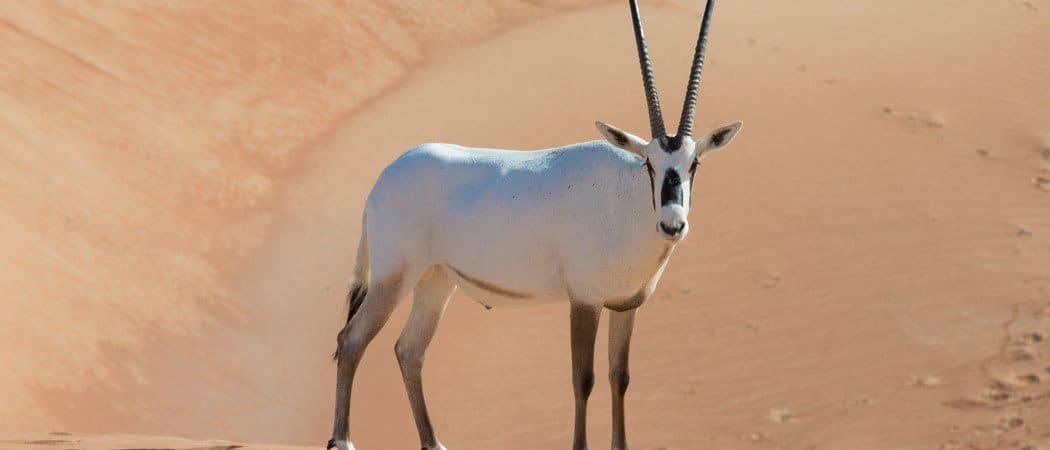
The Arabian Oryx is Jordan’s national animal. The oryx is an antelope with distinctive horns that curve backward from its head. Its body is mostly white or cream-colored, with dark brown or black markings on its head and legs.

Where To Find The Top Wild Animals in Jordan

Jordan’s national animal, the Arabian Oryx, can be seen roaming the deserts of the Wadi Rum. Oryx viewing tours are available through an organization called Wild Jordan. You can also view oryx at the Shaumari Wildlife Reserve. Other reserves include the Dana Biosphere Reserve and the Mujib Biosphere Reserve.

If you want to get up close and personal with rare and exotic Jordanian wildlife, pay a visit to the Al Mawa wildlife refuge. They take in animals that have been rescued from zoos, circuses, and private owners across the Middle East. There, you can see lions and Syrian brown bears, predatory species that are now extinct in the wild in Jordan.

The Gulf of Aqaba is home to upwards of 1,000 species of fish. A number of sharks live there, including the world’s largest fish, the whale shark. If you decide to snorkel or scuba dive, you may find clownfish, barracuda, groupers, frogfish, stingrays, and moray eels. Flamingos and pelicans also call this area home.

One place you will not find animals is within the Dead Sea. True to its name, the Dead Sea is too salty to support marine life. Due to evaporation, it is saltier than the ocean; even saltwater fish and plants cannot live there.

The Most Dangerous Animals in Jordan Today

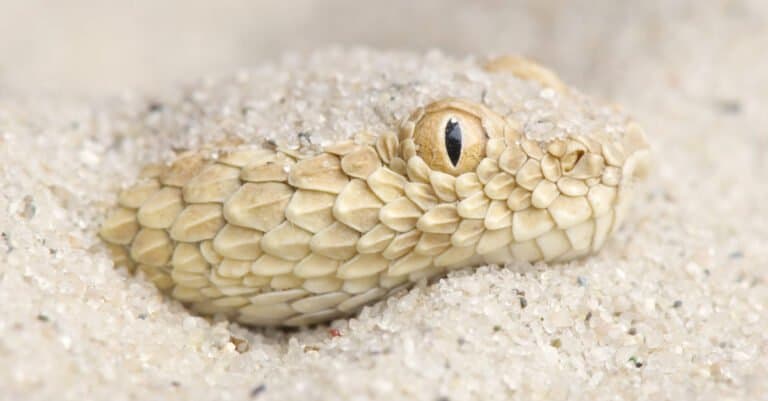
Perhaps the most dangerous animals in Jordan today are the vipers, a type of venomous snake. While snake bites are rare, you should seek medical care immediately if bitten. Viper bites cause pain, swelling, and sometimes even death.

Endangered Animals in Jordan

Birds make up the majority of Jordan’s endangered animals. A number of globally threatened bird species spend part of the year in Jordan as they migrate. These include the lesser kestrel, Syrian serin, aquatic warbler, marbled duck, saker falcon, sociable lapwing, Siberian crane, MacQueen’s bustard, eastern imperial eagle, greater spotted eagle, steppe eagle, golden eagle, Pharaoh eagle-owl, lappet-faced vulture, Griffon vulture, Egyptian vulture, northern bald ibis, Atlantic petrel, and white-headed duck.

The Flag of Jordan

Jordan’s flag can be traced back to the flag used during the Arab Revolt of World War I in 1917. This flag was reportedly created by Arabs from Istanbul and was also a significant part of the Ottoman Empire, which Jordan was once a part of.

The four colors on Jordan’s flag—black, white, green, and black—are the standard Pan-Arab colors used on other flags of Arab countries. This symbolizes the unity of Arab countries.

Animals Found in Jordan

148 species documented in our encyclopedia

Thank you for reading! Have some feedback for us?