N S W E
Wildlife Expeditions

Wildlife of
Bahrain

Bahrain's wildlife allure lies in its surprisingly rich coastal and marine biodiversity-seagrass meadows, reefs, and tidal flats that draw dugongs, sea turtles, and vast numbers of migratory shorebirds along the Arabian Gulf flyway.
29 Species
765 km² Land Area
Overview

About Bahrain

Bahrain is a small, arid island nation where wildlife is shaped less by forests and rivers and more by the sea: warm, shallow Gulf waters, saltmarshes, mudflats, and low desert landscapes. While terrestrial mammals are limited by the harsh climate and centuries of development, Bahrain's natural heritage remains closely tied to its coast-an interface of life where feeding grounds, nursery habitats, and migration stopovers create a concentrated wildlife experience. For visitors, this means that the most memorable encounters often happen at the water's edge or just offshore.

Key ecosystems include seagrass beds (among the most important habitats in the Gulf), coral and patch reefs, mangrove/saltmarsh-fringed shorelines, and extensive intertidal flats. Seagrass meadows underpin the food web and are vital for species such as dugongs and green turtles, while reefs and rocky substrates support diverse fish communities that attract larger predators and sustain traditional fisheries. Bahrain's mudflats and coastal wetlands are equally significant for birdlife, serving as a refueling station for migratory waders and seabirds moving between Africa, Eurasia, and the broader Indian Ocean region-making the country a compact but productive birding destination during migration and winter.

In global conservation terms, Bahrain's importance is strongest in marine and migratory-bird connectivity: protecting coastal habitats here contributes to the health of shared Gulf populations and internationally moving species that link multiple countries. Bahrain's wildlife experience is unique because it's highly accessible-short travel distances, quick transitions from city to shoreline, and clear seasonal peaks for birdwatching-yet it highlights conservation challenges common across the Gulf, such as coastal development, water quality, and habitat fragmentation. For wildlife enthusiasts, Bahrain offers an intimate look at Gulf ecology where small habitat patches can have outsized value for regional biodiversity.

Physical Features

Geography

Bahrain's wildlife is shaped by a very small, low-lying, arid island landscape with no permanent rivers or freshwater lakes. Terrestrial habitats are mostly sparsely vegetated desert plains and a low limestone plateau, so native land fauna is limited and concentrated around irrigated areas, groundwater-fed vegetation patches, and protected reserves. In contrast, the extensive coastline and shallow, warm Gulf waters create highly important habitats-tidal mudflats, mangroves, seagrass beds, and coral/patch reefs-that support rich marine biodiversity (including fish, turtles, and dugongs regionally) and make Bahrain a key stopover/wintering area for migratory shorebirds and seabirds along the Afro-Eurasian flyways.

765 km² Land Area
One of the world's smallest sovereign states by area (roughly bottom 10-15); slightly larger than Singapore Size Rank

Key Landscapes

  • Low desert plains and gravel/sand flats covering most of the main island (limited natural cover; wildlife tied to sparse shrubs and human-irrigated greenspaces)
  • Central limestone plateau and the country's highest point, Jabal ad Dukhan (~134 m), influencing local drainage, soil types, and vegetation patterns
  • Coastal sabkhas (salt flats) and saline soils-important for specialized halophytic plants and foraging areas for some birds
  • Extensive coastline with shallow nearshore waters, beaches, and rocky/sandy shores that support nesting/roosting seabirds and coastal invertebrates
  • Intertidal mudflats and tidal creeks, crucial feeding habitat for migratory waders (shorebirds)
  • Mangrove stands (notably Avicennia marina) providing nursery habitat for fish and shelter/forage for birds
  • Seagrass meadows (major productivity hotspots) that support invertebrates and act as feeding habitat for turtles and dugongs in the wider Gulf region
  • Coral and patch-reef areas/offshore shoals that support reef fish communities and broader marine food webs
  • Small offshore islands and islets used by breeding seabirds and as predator-reduced refuges
  • Highly modified reclaimed/artificial shorelines and causeway connections (e.g., King Fahd Causeway) that alter currents, sedimentation, and coastal habitat connectivity

Ecoregions

  • Arabian Desert and East Sahero-Arabian xeric shrublands (WWF terrestrial ecoregion)
  • Persian Gulf (marine ecoregion; MEOW framework-shallow, hypersaline Gulf waters with seagrass, mangroves, and coral/patch reefs)
Parks & Reserves

Protected Areas

Bahrain's protected-area system is relatively small and site-focused, reflecting the country's limited land area and high development pressure. Protection is concentrated in: (1) a flagship terrestrial wildlife reserve (Al Areen) used for conservation breeding and education, and (2) coastal/island wetlands and marine habitats (notably the Hawar Islands and Tubli Bay) important for migratory birds, seagrass-dependent megafauna (e.g., dugongs), and reef-associated species. Beyond legally designated reserves and Ramsar wetlands, biodiversity conservation also relies on fisheries regulations, environmental permitting, and locally managed/rehabilitated coastal habitats (mangroves, mudflats) where formal "park" status may be limited or evolving.

Protected Coverage

Approx. ~7-10% of Bahrain's land area is under some form of formal protection (driven largely by the protected Hawar Islands plus smaller terrestrial reserves such as Al Areen). Fully designated marine protected areas are more limited and tend to be site-based (wetlands/nearshore habitats) rather than a large national MPA network.

Notable Parks & Reserves

Al Areen Wildlife Park & Reserve (Al Areen Protected Area)

National Nature Reserve / Wildlife Reserve (protected area; includes wildlife park and restricted reserve core)

Bahrain's flagship terrestrial protected area, notable for conservation breeding and holding threatened desert ungulates; it also provides habitat for resident and migratory birds in an otherwise highly urbanized landscape.

Arabian oryx
Sand gazelle
Arabian gazelle
Houbara bustard
Greater flamingo
Steppe eagle

Hawar Islands Protected Area

Protected Area; widely recognized as an Important Bird Area (IBA); also reported as a Ramsar wetland site in many conservation listings

An arid island archipelago with extensive surrounding seagrass and shallow waters that support globally significant seabird colonies and marine megafauna; it is one of Bahrain's most important wildlife-viewing and conservation landscapes.
Socotra cormorant
Greater flamingo
Dugong
Dugong
Green sea turtle
Hawksbill sea turtle
Indo-Pacific bottlenose dolphin

Tubli Bay (Tubli Bay Wetland)

Ramsar Wetland of International Importance (site-based wetland protection)

A critical coastal wetland/mudflat and nursery area that supports large numbers of waders and waterbirds during migration and winter, and provides feeding habitat linked to adjacent seagrass/mangrove systems.

Black-winged stilt
Kentish plover
Grey heron
Grey heron
Western reef heron
Greater flamingo
Common greenshank

Arad Bay Coastal Wetland (Arad Bay Mangrove and Mudflat Area)

Locally managed/rehabilitated coastal conservation area (site protection/management status may vary by zone)

A restored/managed coastal wetland that attracts concentrations of shorebirds at high tide and functions as a small but valuable urban-adjacent refuge for intertidal biodiversity.

Little egret
Western reef heron
Common redshank
Kentish plover
Lesser sand plover
Gull-billed tern
Animals

Wildlife

Bahrain's wildlife diversity is shaped by a hot, arid island landscape with very limited natural freshwater, so terrestrial fauna is relatively sparse compared with its rich coastal and marine ecosystems. The country's most characteristic wildlife experiences center on shallow-water habitats-seagrass meadows, tidal flats, mangroves, reefs, and offshore islands-which support sea turtles, dugongs and dolphins offshore, and large numbers of resident and migratory waterbirds (especially around the Hawar Islands and other coastal wetlands). Many "headline" species are best seen on/around the islands and coastal mudflats rather than inland.
~25-35 species (most are small terrestrial mammals and bats, plus a few regular marine mammals such as dolphins and occasional dugongs) Mammals
~280-330 species recorded (highly migratory; Bahrain is notable for shorebirds and seabirds) Birds
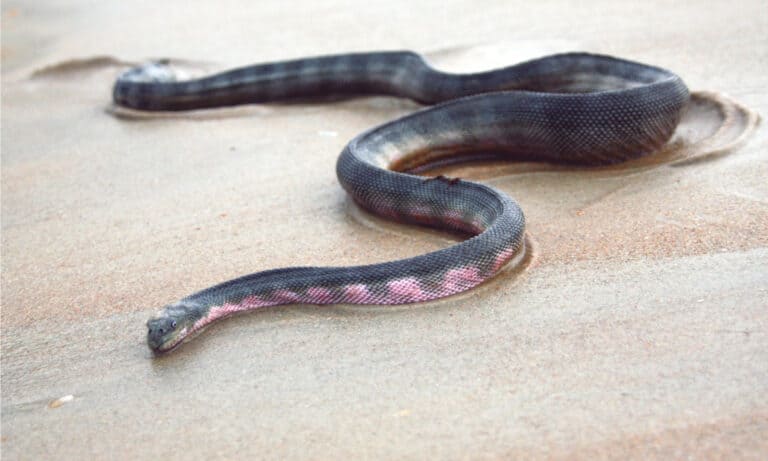
~25-35 species (lizards and snakes on land; plus marine turtles) Reptiles
~1-2 species (very limited due to aridity; often localized around irrigated or wet areas) Amphibians

Iconic Species

Dugong
Dugong Bahrain's extensive seagrass beds are part of the wider Arabian Gulf dugong range; dugongs are among the most emblematic marine mammals visitors hope to encounter on boat trips in suitable seasons/areas (sightings are not guaranteed and are best linked to seagrass-rich shallow waters).
Hawksbill Turtle A flagship reef-associated sea turtle in the Arabian Gulf. Bahrain's surrounding reefs and coastal waters are used for foraging; the species' regional nesting/foraging ecology makes it a key conservation focus and a sought-after marine sighting for divers and boaters.
Green Turtle Commonly associated with seagrass feeding grounds; Bahrain's shallow coastal waters provide habitat that can support foraging turtles, making it one of the more likely large marine animals to be encountered compared with many terrestrial species.
Socotra Cormorant An Arabian Gulf specialty seabird. The Hawar Islands are regionally important for this species and are among the best places in/near Bahrain to look for large congregations in the breeding season and adjacent periods.
Greater Flamingo A classic winter and passage bird in Bahrain, often seen feeding in shallow lagoons, salt pans, and mudflats. It is one of the most visible and photographed large waterbirds for visitors.
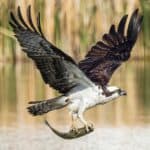
Osprey
Osprey A charismatic fish-eating raptor frequently associated with Bahrain's coasts and offshore structures; it is a reliable species for birdwatchers scanning shorelines and islands.
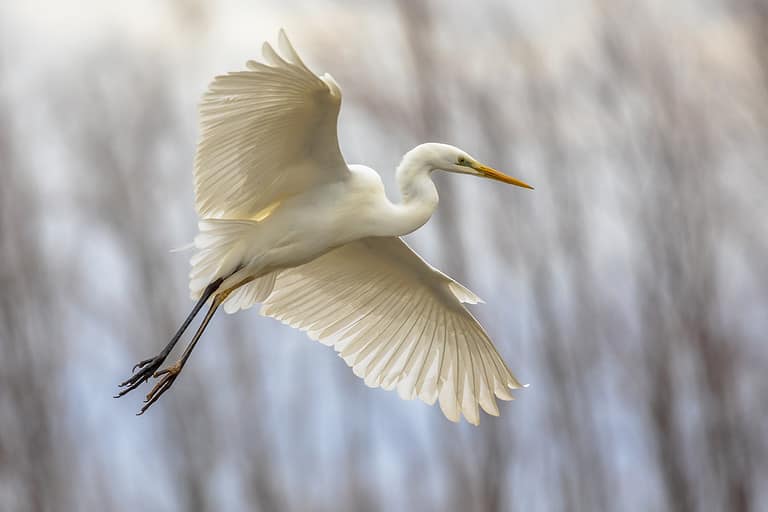
Western Reef Heron A common coastal heron in Bahrain, regularly seen along rocky shores, reefs, and tidal flats-an archetypal bird of Gulf coastlines and an easy "signature species" for visitors.
Arabian Gazelle Small gazelles are part of the managed wildlife experience on Bahrain's offshore islands and protected areas; where present, they represent one of the few conspicuous native-style terrestrial mammals visitors may encounter.
Spiny-tailed Lizard A distinctive desert herbivorous lizard of Arabia that reflects Bahrain's arid character; where habitat persists, it is one of the most iconic 'desert' reptiles people hope to see.

Notable Populations

  • Hawar Islands are a regionally important seabird area and are known for significant breeding concentrations of Socotra Cormorant (one of the Gulf's key strongholds for the species).
  • Bahrain's shallow coastal waters and seagrass meadows form part of the broader Arabian Gulf dugong feeding landscape, one of the most important dugong regions globally.
  • Coastal mudflats, lagoons, and salt works regularly support internationally significant numbers of migratory shorebirds and wintering waterbirds along the African-Eurasian flyway (importance varies by year and site).
Protection

Conservation

Primary Threats

  • Coastal development and land reclamation have reduced and fragmented shallow nearshore habitats (seagrass, reefs, tidal flats) and altered natural shorelines. Sensitive areas such as Tubli Bay's mangrove and intertidal habitats have faced long-term pressure from infilling and shoreline modification, diminishing nursery habitat for fish and feeding areas for migratory birds.
  • Dredging, coastal engineering, and hydrological changes (including altered tidal exchange in enclosed bays/creeks) modify sediment dynamics and water circulation. These changes can increase turbidity and siltation on reefs and seagrass beds and reduce the ecological function of intertidal flats and mangrove systems.
  • Marine water quality is impacted by wastewater inputs, urban runoff, and industrial activities, with localized eutrophication and contamination risks in semi-enclosed coastal waters. Oil and shipping-related pollution (spills, operational discharges) and marine litter also affect beaches, seabirds, and turtles, while increased turbidity from works at sea can stress corals and seagrass.
  • Bahrain's marine ecosystems face rising sea temperatures, more frequent marine heatwaves, and high baseline salinity typical of the Gulf, which together heighten coral bleaching and mortality risks. Sea-level rise threatens low-lying coasts and remaining intertidal habitats, while increasing heat and aridity exacerbate stress on limited terrestrial biodiversity and urban water demand.
  • Fishing pressure in Gulf waters can reduce key fish stocks and alter food webs, with knock-on effects for reef resilience and seabird prey availability. Coastal habitat loss compounds the issue by reducing fish nursery areas in seagrass and mangroves.
  • High freshwater scarcity drives reliance on desalination; intake/outfall operations and brine discharge can locally affect marine salinity/temperature regimes, while growing demand for coastal space and resources intensifies pressure on remaining natural habitats.
  • Major coastal infrastructure (ports, industrial zones, causeways, and shoreline protection works) increases habitat fragmentation, underwater noise, vessel traffic, and collision/entanglement risks. The King Fahd Causeway also concentrates transport and coastal development pressures in connected areas.
  • Very high urban density and ongoing coastal real-estate expansion intensify land take, shoreline hardening, light pollution (affecting seabirds and potentially nesting turtles where applicable), and stormwater runoff, increasing the ecological footprint on limited natural areas.
  • Recreation and boating in shallow coastal zones can disturb roosting/feeding migratory birds on tidal flats and increase anchor/propeller damage to seagrass. Increased visitation in sensitive island and coastal areas can also disturb seabird colonies if not well managed.
  • As a shipping and industrial hub, Bahrain has elevated risk of marine invasive species introductions via ballast water and hull fouling, which can alter local benthic communities and compete with native species in already-stressed Gulf ecosystems.
  • While not a dominant driver compared to habitat change, regional demand can contribute to pressure on certain species (e.g., birds, reptiles, marine curios), and enforcement capacity is important given Bahrain's trade connectivity.
Visit

Wildlife Tourism

Bahrain's wildlife tourism is small-scale but rewarding, centered on coastal and marine habitats (reefs, seagrass beds, mudflats and mangroves) and seasonal migratory birds. Economically, it complements Bahrain's broader tourism offer (culture, urban breaks, events) rather than being a primary driver; wildlife-focused visitors tend to add high-value activities like diving, boat trips, guided birding and nature photography to a short stay. Historically, nature appreciation in Bahrain has been tied to the sea (fishing, pearling heritage) and to winter bird migration across the Gulf, with protected areas and community interest growing alongside environmental awareness. Accessibility is a major advantage: as a compact island nation with good roads and services-and direct access from Saudi Arabia via the King Fahd Causeway-most wildlife outings can be done as half-day or day trips from Manama. Expect desert-edge birding, coastal viewpoints, and boat-based marine encounters rather than classic big-game safaris.

Best Time to Visit

Best wildlife-viewing windows by month (what to see and do):
- October-November: Peak autumn migration. Excellent for coastal birding (waders and passing raptors), sea-watching, and comfortable boat trips; visibility for snorkeling/diving often improves as summer heat eases.
- December-February: Prime season for birdwatching. Cooler temperatures bring wintering shorebirds to mudflats, plus waterbirds and gulls/terns along the coast. Best months for long birding sessions and photography without extreme heat.
- March-April: Strong spring migration. Great variety and activity-mixed flocks of waders, terns, and migrants moving through; good time for combining birding with boat trips before summer conditions return.
- May-September: Hot, humid summer. Wildlife viewing is still possible but best planned early morning or late afternoon. Marine activities (boat trips, diving) continue, but heat and sea conditions can be challenging; bird diversity is generally lower outside migration/wintering peaks.
Practical tip: For birds, plan around low tide for exposed mudflats (more feeding waders), and for diving/snorkeling choose calmer-weather days with good visibility forecasts.

Top Wildlife Experiences

  • 1) Guided mudflat and shoreline birding at low tide: Spend a morning with binoculars/scopes scanning feeding flocks of sandpipers, plovers, herons and terns; ideal for photographers looking for dense, active bird scenes in winter and migration months.
  • 2) Boat trip to reef and seagrass habitats for marine wildlife watching: Cruise over shallow banks and reef edges to look for marine life, seabirds, and signs of healthy seagrass ecosystems; combine with surface snorkeling where permitted/conditions allow.
  • 3) Snorkel or scuba dive Bahrain's reefs: Join a certified operator for a reef dive/snorkel session focused on fish life and coral/reef ecology-good for visitors who want a 'wildlife first' briefing rather than a purely recreational dive.
  • 4) Seagrass-spotting and eco-interpretation tour: Take a guided outing that explains why seagrass beds matter (nursery habitat, carbon storage) while you look for associated fauna and birdlife using shallow-water viewpoints or boat-based observation.
  • 5) Sunrise desert-edge bird and wildlife walk: Do an early walk in arid scrub/desert margins to look for larks, wheatears and other desert-adapted birds; pair with night-before stargazing or a pre-dawn start to avoid heat.
  • 6) Seabird and tern photography session during migration: Position along suitable coastal points for flight shots and feeding behavior; autumn and spring are best for dynamic action and mixed-species movement.
  • 7) Responsible sport-fishing or catch-and-release sea outing with wildlife observation: Choose an operator that follows local regulations and emphasizes bycatch avoidance; you'll often see seabirds, schooling fish behavior, and broader marine activity.
  • 8) Night-time urban/coastal nature scan: A gentle evening outing to spot geckos and other small nocturnal wildlife in appropriate areas, plus listening for night-active birds-best in warmer months when evenings are active.
  • 9) Family-friendly 'nature + heritage' day: Combine coastal nature viewing (birds and intertidal life) with Bahrain's maritime/pearling-related heritage stops to connect wildlife with human history.
  • 10) Citizen-science style birding: Join local birders (or schedule a guide) to contribute sightings and learn regional identification skills; best in December-April when diversity is highest.

Safari Types Available

  • Boat safaris / marine wildlife cruises (reef edges, seagrass banks, coastal waters)
  • Snorkeling safaris (shallow reefs and nearshore habitats, conditions permitting)
  • Scuba diving trips with a wildlife/ecology focus (operator-led briefings and species spotting)
  • Coastal birding walks (mudflats, beaches, roost sites; best timed with tides)
  • Desert-edge guided walks (early morning/late afternoon; arid-adapted birds and small fauna)
  • Seabird 'sea-watching' sessions from coastal viewpoints (migration seasons)
  • Nature photography outings (birds-in-flight, intertidal behavior, sunrise/sunset light)
  • Family-friendly short nature excursions (accessible stops, short walks, interpretation)
Fun Facts

Did You Know?

You can see "desert wildlife spectacle" scenes on a tiny island nation: during migration and winter, Bahrain's mudflats and lagoons can fill with waders and waterbirds (including Greater Flamingos), even with city skylines and highways close by.

Bahrain's famous pearling history is tied to ecology as much as culture: pearl oyster beds (Pinctada radiata) thrived on offshore banks, and historical accounts describe submarine freshwater seepage/springs that pearl divers knew and used-an unusual natural feature for such a salty, arid gulf.

The signature Hawar seabird is not a typical widespread cormorant: the Socotra cormorant is largely restricted to the Arabian Gulf region, so Bahrain's colonies represent a globally important slice of the species' entire breeding range.

Bahrain's nearby corals persist in some of the hottest seawater conditions on Earth (Arabian Gulf summer temperatures can exceed ~34-35°C), so reefs here are studied as potential "heat-tolerant" analogs for a warming ocean.

Hawar Islands host the world's largest known breeding colony of the Socotra cormorant (Phalacrocorax nigrogularis), a Gulf-endemic seabird that nests in huge, dense colonies on low islands.

Hawar Islands were designated as one of Bahrain's first Ramsar Wetlands of International Importance (1997), recognized largely for the scale and diversity of their waterbird populations (especially seabirds and wintering migrants).

Tubli Bay is Bahrain's largest remaining natural coastal wetland (mangrove-seagrass-mudflat mosaic), making it the country's most important nursery habitat for many nearshore fish and invertebrates.

Bahrain's shallow seagrass beds lie within the Arabian Gulf-home to the world's second-largest dugong (Dugong dugon) population after Australia-making Bahrain's nearby feeding grounds part of one of the planet's key strongholds for "sea cows."

Thank you for reading! Have some feedback for us?