




B
Species Profile

Bracco Italiano

Canis lupus familiaris

Italy's steady, elegant pointer
olgagorovenko/Shutterstock.com

Bracco Italiano Distribution

Click a location to explore more animals from that region

Origin Location

This map shows the native origin of the Bracco Italiano. As a domesticated species, they are now found worldwide.

Loading map...

Found in 1 country

Size Comparison

Human 5'8"
Bracco Italiano 2 ft

Bracco Italiano stands at 35% of average human height.

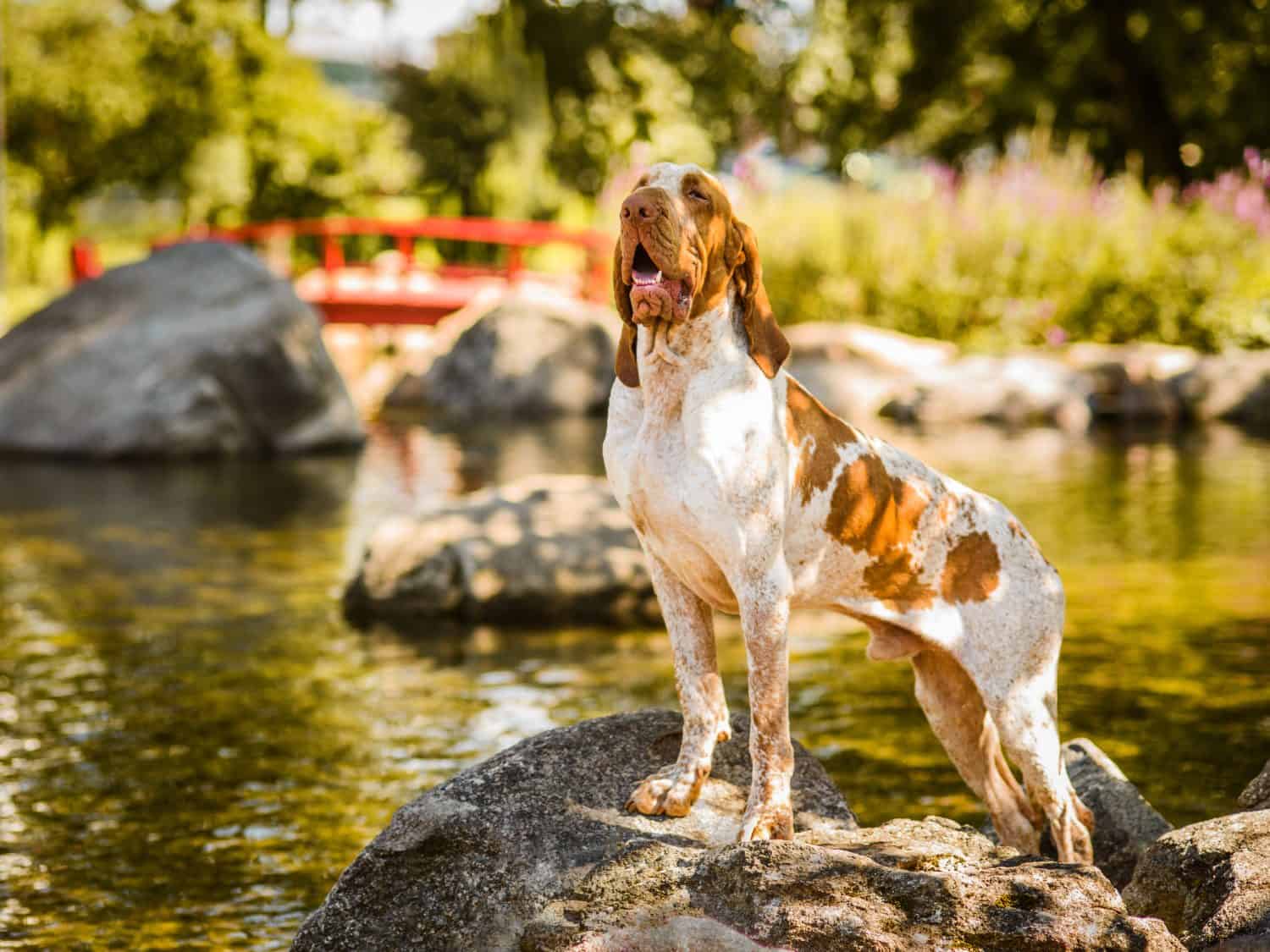
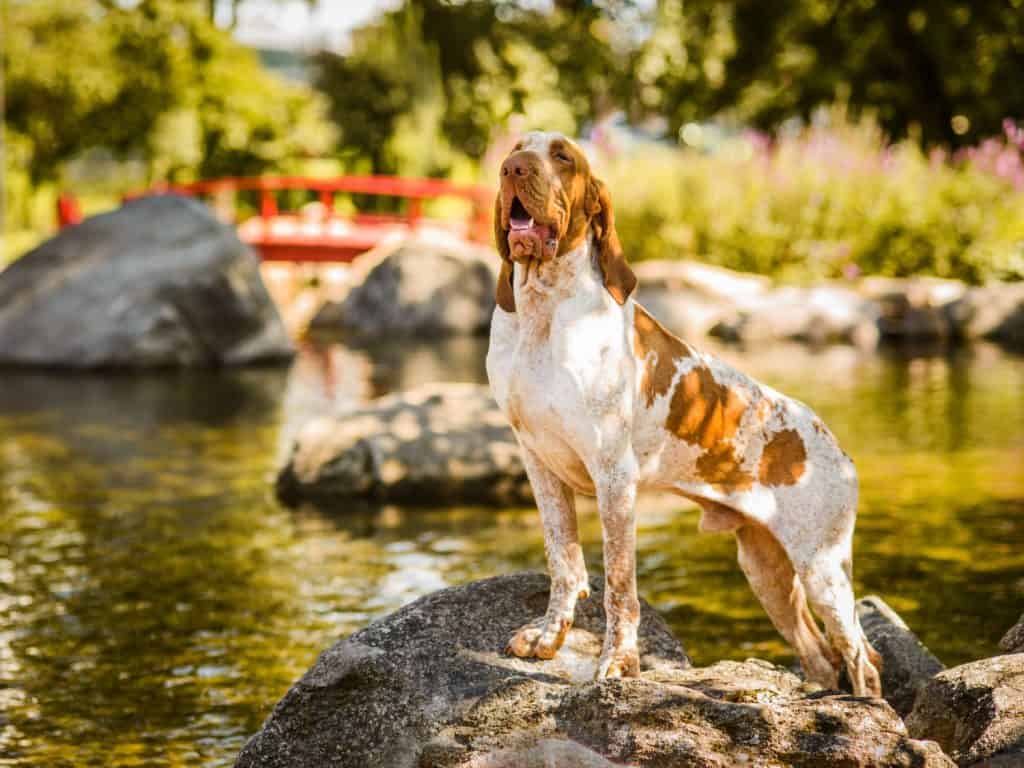
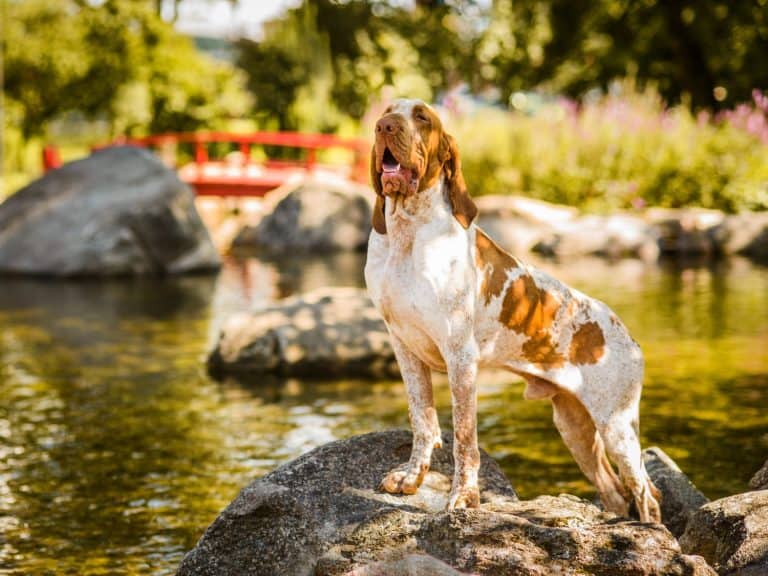
Beautiful Bracco Italiano pointer male standing on rock near water

At a Glance

Domesticated
Also Known As Bracco, Italian Pointer, Italian Pointing Dog, Italian Bracco
Diet Omnivore
Activity Diurnal+
Lifespan 12 years
Weight 40 lbs
Status Not Evaluated
Did You Know?

The Bracco Italiano is considered one of Italy's oldest gundog breeds, developed for versatile upland and water work.

Scientific Classification

The Bracco Italiano is a large, ancient Italian gundog breed developed for pointing and versatile hunting work, known for a distinctive head profile (pronounced stop and long ears) and steady, cooperative field style.

Kingdom
Animalia
Phylum
Chordata
Class
Mammalia
Order
Carnivora
Family
Canidae
Genus
Canis
Species
Canis lupus

Distinguishing Features

  • Large, athletic pointer-type gundog with a characteristic noble head and long, pendant ears
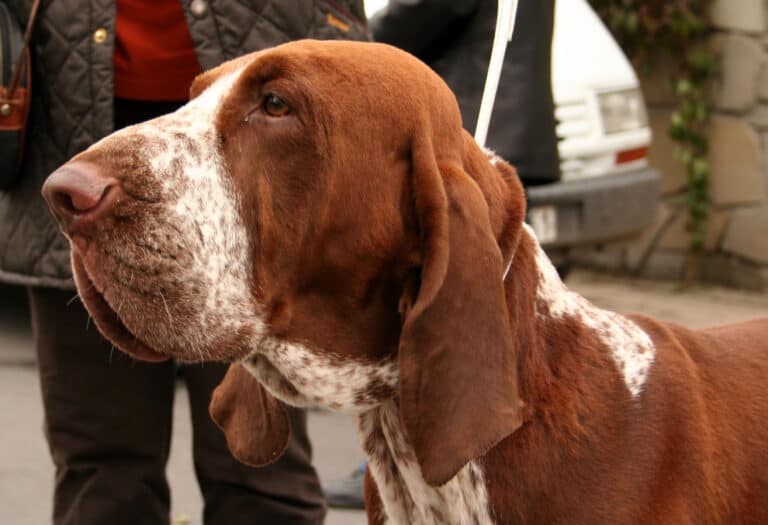
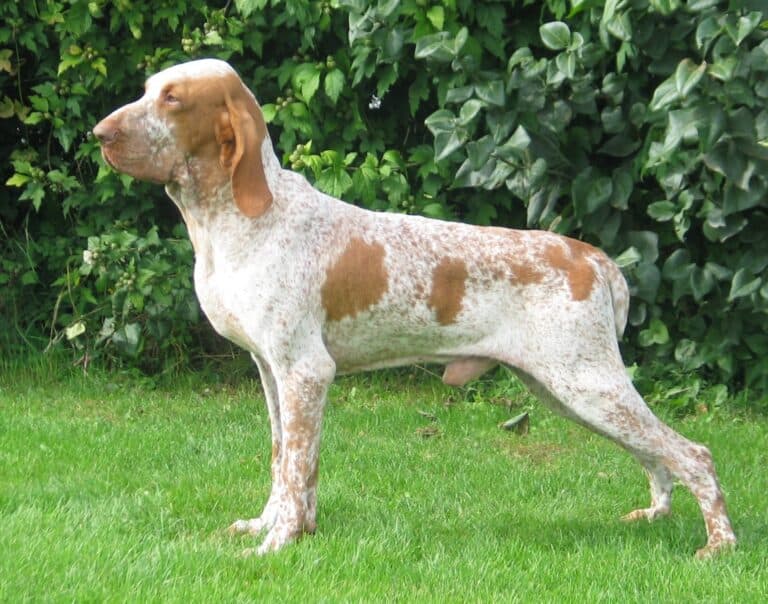
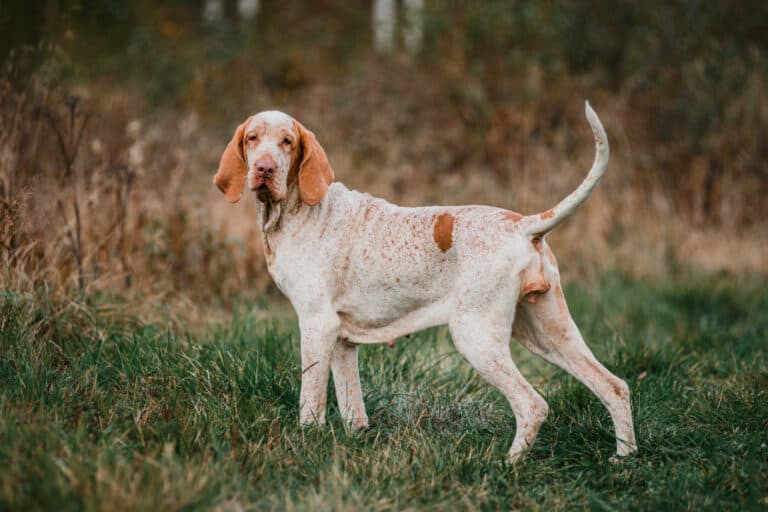
  • Short, dense coat commonly white with orange or chestnut (roan patterns also occur)
  • Bred for pointing and tracking/scent work; generally biddable and people-oriented

Physical Measurements

Males and females differ in size

Height
♂ 2 ft 1 in (1 ft 11 in – 2 ft 2 in)
♀ 1 ft 11 in (1 ft 10 in – 2 ft)
Length
♂ 2 ft 11 in (2 ft 6 in – 3 ft 3 in)
Weight
♂ 71 lbs (55 lbs – 88 lbs)
♀ 66 lbs (55 lbs – 77 lbs)
Tail Length
♂ 11 in (9 in – 1 ft 1 in)
Top Speed
30 mph
Not a fast sprinter

Appearance

Primary Colors
Secondary Colors
Skin Type Mammalian skin with a short, dense, glossy coat; notably loose, pliable skin (especially at the throat/neck forming a modest dewlap) and well-pigmented nose/eye rims corresponding to marking color.
Distinctive Features
  • Large, athletic pointing dog with long, pendulous ears and noticeably loose skin, often forming a pronounced dewlap and flews.
  • Large, rectangular, powerful yet athletic build; developed in Italy as an ancient versatile hunting/pointing dog.
  • Distinctive head profile: long, sculpted head with a pronounced stop, slightly arched nasal bridge, and heavy lips (flews) giving a serious, hound-like expression (not a wiry-faced Spinone).
  • Very long, low-set ears with soft leather; ears hang close to the head and are a key breed identifier.
  • Short, smooth, close coat (not wirehaired); low grooming demand but sheds seasonally-regular brushing helps control hair and maintain coat sheen.
  • Pigmentation typically matches markings: orange-marked dogs tend to have lighter (orange/brownish) nose pigmentation; chestnut-marked dogs tend toward deeper brown pigmentation.
  • Watch for hip and elbow dysplasia, ear infections from long hanging ears, bloat (gastric dilatation-volvulus) in deep-chested dogs, and inherited eye problems; screening and careful breeding are important.
  • Bracco Italiano needs regular ear checks and cleaning, weight control to protect joints, daily physical and mental exercise, careful feeding with slow feeders to lower bloat risk, and clean, dry lip/neck folds.

Sexual Dimorphism

Males are typically larger and heavier-boned with a more massive head and neck; females are slightly lighter and more refined while retaining the same breed outline and head type.

♂
  • Greater overall height/weight; heavier bone and broader chest.
  • More pronounced head breadth with thicker neck and slightly more obvious flews/dewlap.
♀
  • Slightly smaller, lighter frame; more refined head and neck while keeping the long-ear, pronounced-stop profile.
  • Often a slightly cleaner underline and less bulk through the forechest.

Did You Know?

The Bracco Italiano is considered one of Italy's oldest gundog breeds, developed for versatile upland and water work.

Its hallmark look is a pronounced head profile (notable stop, long muzzle) paired with long, pendulous ears.

Traditional colors include white with orange or chestnut, and roan patterns (orange roan/chestnut roan).

Compared with many pointing breeds, Bracchi are known for a methodical, deliberate field pace and strong cooperation with the handler.

Historically, the breed was used in noble estates and court hunting traditions in Italy.

Bracchi are often described as "soft-mouthed" retrievers by tradition-valued for bringing game back without excessive damage.

As a domestic dog (Canis lupus familiaris), it showcases how selective breeding can shape wolf-descended instincts into specialized human-partnered work.

Unique Adaptations

  • Olfactory specialization within a domestic canid: like all dogs, it retains extremely powerful scent capability compared with humans, but the Bracco has been selectively shaped for finding and indicating game rather than chasing it down.
  • Body plan for endurance over speed: substantial frame and balanced angulation support long days afield at a sustainable pace.
  • Long, pendulous ears and ample nasal architecture: while not unique to the breed, these features are associated with scent hound/pointer-type design and may help funnel and retain scent near the nose during searching.
  • Coat suited to field conditions: short, dense coat offers practical coverage for brush and variable weather without heavy grooming burden; roan/white patterning also increases visibility to hunters.
  • Temperament "tuning": selection favored steadiness, biddability, and controlled prey drive-contrasting with the base species (gray wolf) which relies on high-intensity pursuit and pack take-down.

Interesting Behaviors

  • Classic "point" stance: freezing with intense focus to indicate game location-an inherited, reinforced hunting behavior distinct from wild wolf hunting tactics.
  • Close-working, cooperative quartering: tends to hunt with frequent check-ins, reflecting selection for handler partnership rather than independent pursuit.
  • Deliberate tracking style: often uses nose thoughtfully on ground scent and air scent, switching depending on conditions.
  • Expressive ear-and-face communication: the long ears and loose facial skin accentuate signals during attention, uncertainty, and social interaction.
  • Retrieving drive with gentleness: many individuals naturally carry objects carefully, a trait favored in versatile hunting dogs.
  • Strong social attachment: typically thrives on human contact and routine, showing "follow-me" tendencies more than many primitive or spitz-type breeds.
  • Scent investigation rituals: prolonged sniffing and "cataloging" scents on walks-an amplified domestic expression of canid olfaction.

Cultural Significance

The Bracco Italiano (Canis lupus familiaris) is part of Italy's gundog history, tied to noble estate hunts and modern sport. It shows Italian dog craft: a versatile pointing breed that searches, points, and retrieves under control instead of chasing and killing.

Myths & Legends

Italian sporting tradition preserves an origin narrative that Bracco-type dogs were favored in Renaissance-era courts, where their steady pointing and elegant outline made them prized companions on noble hunts.

Old Italian stories say the Bracco Italiano grew from northern stocks (often Piedmont and Lombardy) mixed with southern dogs, with old hunting lines shaped over centuries into one 'Italian pointer' type.

In some rural Europe hunting beliefs, a steady dog that 'honored' another dog's point was said to bring good luck on a hunt. Stories are often told about pointing breeds like the Bracco Italiano.

In Italian country stories, people said long-eared gundogs "carry the scent in their ears." This old idea explained why these dogs often find birds where people cannot, part of hunting tales.

Historical accounts and kennel histories often portray the Bracco as a symbol of patient, methodical hunting-celebrated in hunting literature as the dog that prefers wisdom over haste, a character archetype repeated in regional sporting stories.

Conservation Status

NE Not Evaluated

Has not yet been evaluated against the criteria.

Population Stable

Life Cycle

Birth 7 pups
Lifespan 12 years

Lifespan

In the Wild
10–14 years
In Captivity
10–14 years

Reproduction

Mating System Polygyny
Social Structure Managed Domestic
Breeding Pattern Transient
Fertilization Managed Selective
Birth Type Managed_selective

Bracco Italiano mating is human-managed selective breeding. Males may sire many litters (polygynous). Owners pick mates and timing; pairs are temporary. Breeding is by internal fertilization. Non-parents don't help raise pups; humans provide care.

Behavior & Ecology

Social Pack Group: 4
Activity Diurnal, Crepuscular, Cathemeral
Diet Omnivore Meat-forward meals (especially poultry or other lean animal proteins), with some individuals strongly motivated by organ meats/training treats

Temperament

Steady, cooperative gundog temperament; generally sociable with familiar people and dogs when well socialized.
Breed-distinguishing field style: methodical, close-working pointer with frequent handler check-ins; less 'wide-ranging' than some pointing breeds, often making it easier for novice handlers.
Sensitive and responsive: does best with calm, consistent, reward-based training; can shut down or become stressed with harsh corrections.
Moderate-to-high exercise need with a strong scent/foraging drive; needs daily aerobic outlet plus sniffing/field-style enrichment to reduce frustration behaviors.
HUBS variation: working-line individuals commonly show higher stamina, stronger prey drive, and greater need for structured outlets than show/pet lines.
Health issues affecting behavior: hip and elbow dysplasia can lower tolerance for hard exercise; long floppy ears cause ear infections and less head handling tolerance; deep-chested dogs risk gastric dilatation-volvulus (bloat)—give smaller meals.
Care requirements tied to behavior: early socialization, ongoing training, and off-leash opportunities in safe areas (or long-line work) are important; regular ear care and grooming support comfort and reduce irritability from chronic discomfort.

Communication

Barks for alerting and excitement; typically not an incessant barker but may vocalize when under-stimulated or isolated.
Whines/whimpers to solicit attention, express anticipation (e.g., pre-walk), or signal mild stress.
Howls are less common but can appear with separation, environmental triggers, or social contagion.
Play growls/grumbles during rough-and-tumble play; usually accompanied by loose body language.
Scent-based communication: intense sniffing and scent-marking tendencies consistent with hunting heritage; uses olfactory investigation to 'read' environments and other dogs.
Body language: expressive ear and head carriage (long ears and pronounced head profile can make signals visually salient); uses soft eyes, loose posture, and leaning/close contact for affiliation.
Pointing and freeze behavior: classic gundog signal-stiffened posture, focused stare, and tail carriage to indicate game/scent source; in pet contexts may 'point' at wildlife or interesting odors.
Tactile social contact: often seeks proximity (leaning, resting against people) as an affiliative signal; can be a key indicator of comfort and bonding.
Stress signals: pacing, increased vocalization, displacement sniffing, and avoidance can occur if social needs/exercise needs are unmet; responds best to predictable routines and positive reinforcement.

Habitat

Biomes:
Temperate Forest Mediterranean Temperate Grassland Boreal Forest (Taiga) Tundra Desert Hot Desert Cold Savanna Freshwater Wetland Marine Tropical Rainforest Tropical Dry Forest Alpine Temperate Rainforest +9
Terrain:
Plains Hilly Valley Riverine Coastal
Elevation: Up to 16404 ft 3 in

Ecological Role

Human-associated omnivorous mesopredator/forager selectively bred for hunting assistance rather than independent predation

Assists humans in locating and retrieving game (pointing/versatile hunting role) Can contribute to localized pest control (rodents/small mammals) when managed Companion animal role with indirect ecosystem impacts via human-managed feeding and movement

Diet Details

Main Prey:
Game birds Rabbits and hares Small mammals Small terrestrial wildlife
Other Foods:
Plant matter in formulated diets Vegetables Fruits and berries Grasses and leafy plant material

Human Interaction

Domestication Status

Domesticated

Dogs (Canis lupus familiaris) came from gray wolves (Canis lupus) through a long process of domestication and human breeding for tameness, social skills, and work. The Bracco Italiano is an old Italian pointing gun dog bred in Italy to hunt with people, refined for close teamwork, scenting and pointing, and kept by kennel clubs.

Danger Level

Low
  • Accidental injury from size/strength (knocking over people during play or greetings)
  • Bites possible if poorly socialized, in pain, or handled improperly (as with any dog)
  • Prey drive may lead to chasing behavior, creating risk around small pets or running children if not trained
  • Protective or fearful reactions can occur without adequate socialization and responsible management

As a Pet

Suitable as Pet

Legality: Generally legal to own as a domestic dog in most jurisdictions; subject to standard local animal-control rules (licensing, leash laws) and any housing/insurance restrictions that may apply to large dogs. Breed-specific bans rarely target this breed, but local policies vary.

Care Level: Moderate

Purchase Cost: $800 - $2,500
Lifetime Cost: $20,000 - $50,000

Economic Value

Uses:
Companion animal industry Sporting and hunting services Breeding and showing Veterinary and preventive care Training and behavior services Pet supplies (food, crates, collars, tracking gear)
Products:
  • purpose-bred hunting/field trial dogs
  • stud services and registered puppies
  • hunting guiding/handler services (where applicable)
  • training services (obedience, field work, nose work)
  • pet food, supplements, and veterinary services
  • equipment: crates, leads, e-collars/GPS trackers (for field use), grooming/ear-care supplies

Relationships

Quick Take

Few dogs have a history like the Bracco Italiano. An ancient Italian hunting breed dating back to images from the 4th and 5th centuries BC, this member of the sporting group is known for its tireless gait and excellent nose. Its hunting role evolved from assisting net hunters to assisting falconers, to hundreds of years of gun hunting. It now points and retrieves, and can even retrieve waterfowl thanks to its strong swimming ability.

The Bracco also loves people. A good family dog, the Bracco Italiano loves to play, is reliable, intelligent, gentle, and easy to train. It also does well with children and pets. Its primary drive is to please its family.

Infographic about the Bracco Italiano dog breed, showing an illustration of the pointer, its pros and cons, size statistics, and care requirements.
From hunting alongside Renaissance royalty to protecting your backyard, discover why this 2,000-year-old breed is the ultimate versatile companion. © A-Z Animals

The 2 Different Types of Bracchi Italiani

There were actually two types of Bracco Italiano a hundred years ago or so: the Piedmontese and the Lombard pointers. These two breeds were combined to unify the traits of the breed.

Bracco Italiano Fun Fact 

It is considered the oldest European pointer. It was a popular hunting dog during the Renaissance, bred by both the Medici and Gonzaga families.

3 Pros and Cons of Owning a Bracco Italiano 

ProsCons
The Bracco Italiano is good with kids. They are especially good if they are raised around them. Italianos are gentle, tolerant, and protective of them.The Italiano has a large snout, and the jowls hang loosely from it. This causes the dog to drool, though it’s not excessive.
Nothing makes the Italiano happier than to know that it pleased the person in its life! The Bracco Italiano is an active dog that requires lots of exercise and activity. Sometimes this is more than the average family can handle.
Because of its people-pleasing nature, this dog is easy to train. Occasionally, the Italiano can be stubborn. When it is on task, it can be preoccupied and freeze out any commands from the owner.

Size and Weight

The Italiano is a large-breed dog, with males and females standing about 21 to 27 inches at the shoulder and weighing 55 to 88 pounds.

Common Health Issues

This is a relatively healthy dog, apart from conditions that many large breeds are susceptible to, such as hip and elbow dysplasia. They also tend to develop eye conditions such as entropion (where the eyelid curls inward, causing irritation and possibly ulcers) and ectropion (where the lid curls outward, allowing irritants and debris to enter the eye and possibly cause infection). Other health concerns in the breed include kidney issues (such as amyloidosis), skin conditions, and sensitivity to anesthesia.

Temperament

The Bracco is a gentle, playful dog that gets along with small animals and other dogs. It loves to play and is good with children. Bracchi Italiani are happy with their families and need to be close to people.

They are also very active and need to work. They are highly trainable, though they can become stubborn when their minds are set on something else.

How To Take Care of a Bracco Italiano  
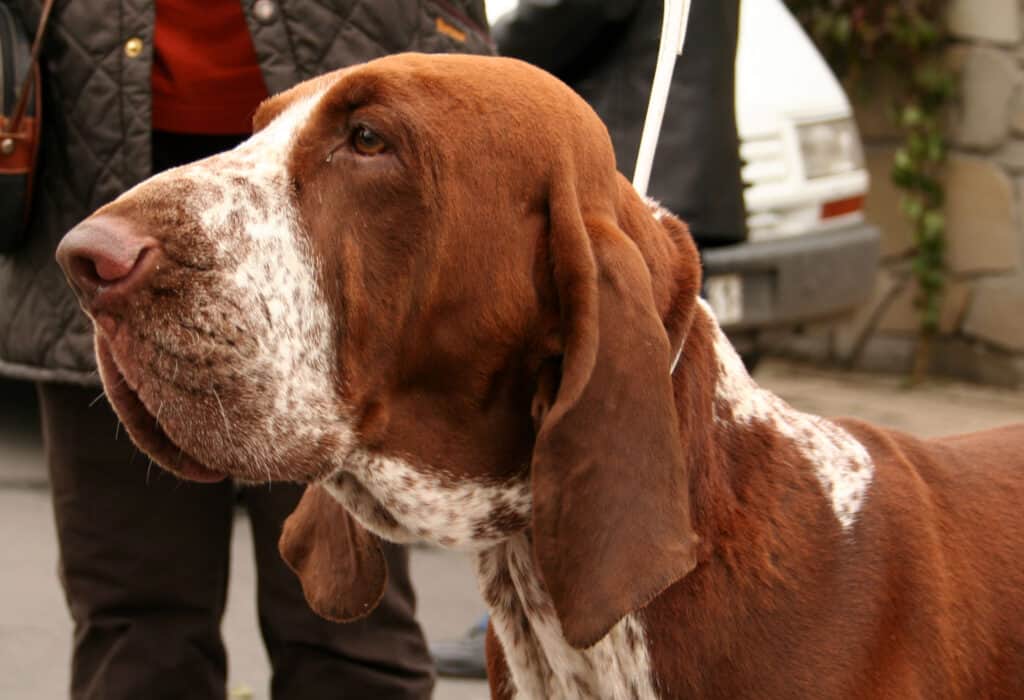
Bracco Italiano

The Italiano has a large snout, and the jowls hang loosely from it. This causes the dog to drool, though it’s not excessive.

The Best Dog Food

Vets recommend a nutritionally balanced, high-quality dog food appropriate for the Bracco Italiano’s age, size, and activity level, with adequate protein and healthy fats.

Maintenance And Grooming 

The Bracco Italiano has a thick, short coat, which requires minimal care. Brushing it weekly with a hound glove should be enough for periodic care. The long floppy ears tend to get dirty, so you should periodically use a cloth and some shampoo or soap to clean them. The occasional bath will keep them clean.

Keep the interior of the ears free of wax and debris to prevent infection. Also, brush the dog’s teeth a few times a week and trim the nails periodically.

Training 

The Bracco Italiano is a very trainable dog, but it can also be stubborn. Training requires patience and calmness. It is eager to please, but tends to get absorbed in its own tasks. Don’t be harsh with it, because it is very sensitive, and will be heartbroken to know it has let you down. If you want to combine training with exercise, try enlisting it in obedience, agility, or rally work.

Exercise 

Bracchi Italiani have high energy levels, so they require at least 1 to 2 hours of physical and mental activity daily, such as long walks, hunting, swimming, or scent work. When hunting, they have a long, loping gait that eats up the miles, making them good jogging companions. They also enjoy swimming. Be careful to avoid high-impact activities that might hurt their bones or joints.

Puppies

Like many puppies, Bracco Italiani tend to chew, though they are not excessive about it if kept busy. The puppy stage is a good time to start socializing and training them. When exercising the puppies, avoid letting them run or jump on hard surfaces. This can cause damage to their developing joints and bones. Finally, be sure to purchase them from a reputable breeder and get their health history.

Bracco Italiano And Children

The Bracco Italiano is very good with children. As a matter of fact, in many households, the Bracco and the kids are inseparable playmates! The dog is gentle with kids and protective of them as well. They can tolerate a lot of tugging and pulling that would cause many dogs to snap. They are incredibly patient animals.

Dogs Similar to the Bracco Italiano

  • Spinone Italiano: This Italian pointer has much in common with the Bracco Italiano. Like the Bracco, it is affectionate and energetic. It is also one of the world’s oldest hunting breeds.
  • English Setter: The English Setter is also a high-energy, affectionate European hunting breed. While not as ancient as the Bracco or Spinone, a history of 400 to 500 years is still quite respectable.
  • English Pointer: A European hunting breed, the English Pointer is also a lovable family dog. It has high energy needs, but it makes a wonderful addition to an active and responsible family.

View all 453 animals that start with B

Sources

  1. American Kennel Club / Accessed October 17, 2022
  2. Wikipedia / Accessed October 17, 2022
  3. Dog Pregnancy Calendar / Accessed October 17, 2022
  4. Wag! / Accessed October 17, 2022
  5. Bracco Italiano Club of America / Accessed October 17, 2022
  6. Pet Keen / Accessed October 17, 2022
  7. Collins Dictionary / Accessed October 17, 2022
  8. Smart Pet Decisions / Charles Fawole / Accessed October 17, 2022
Rob Amend

About the Author

Rob Amend

Rob Amend is a writer at A-Z Animals, primarily covering meteorology, geology, geography, and animal oddities. He attained a Master's Degree in Library Science in 2000 and served as reference librarian in an urban public library for 22 years. Rob lives in Cincinnati, Ohio, and enjoys spending time with his family, hiking, photography, woodworking, listening to classic rock, and watching classic films—his favorite animal is a six-foot-tall rabbit named Harvey.

Thank you for reading! Have some feedback for us?


Bracco Italiano FAQs (Frequently Asked Questions)

It’s a good dog for an attentive and active family. Bracci Italiani love people and want nothing more than to be near them and interact with them. The dog is good with children, too. The only thing is that they require a lot of attention and a job, or they can get noisy and destructive.