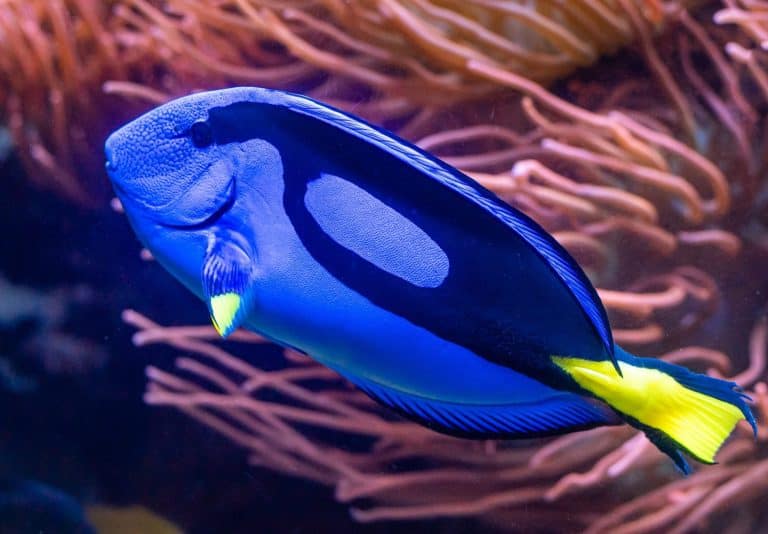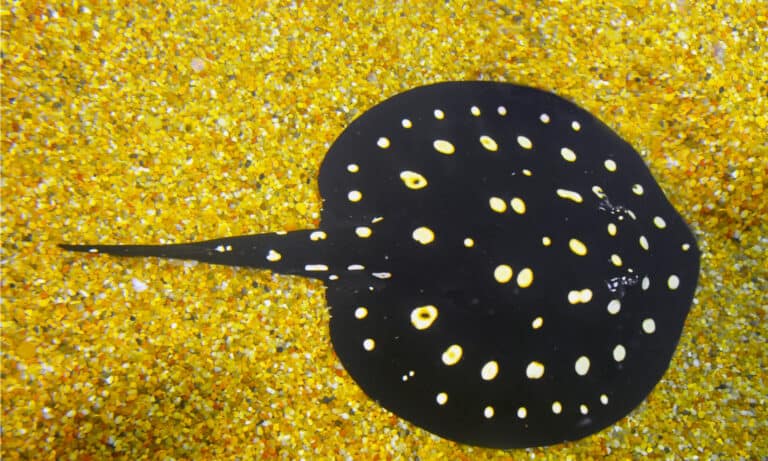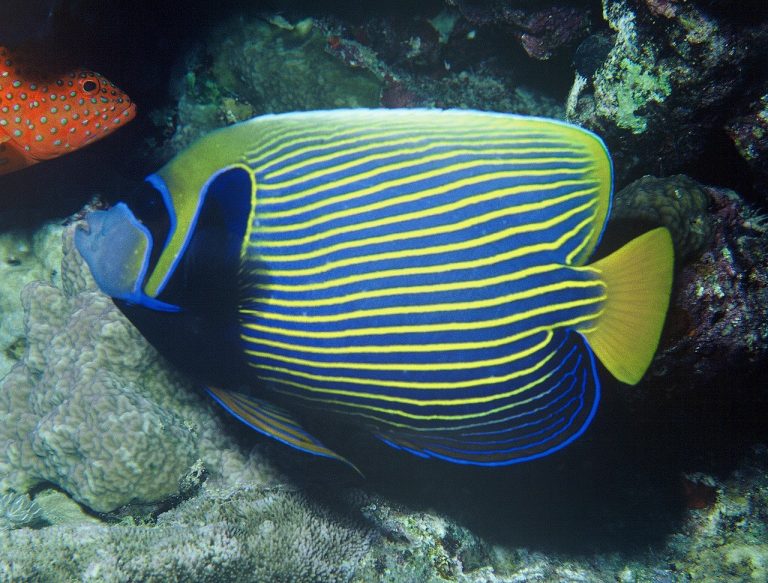
Emperor Angelfish
Reef royalty in stripes and rings

Lakshadweep's wildlife is mostly marine. It is a small chain of low coral atolls and reef-fringed islands where most life lives in clear, warm lagoons and along steep outer reef slopes. There is little land but large reef habitat, so the natural heritage is reef-building corals, bright reef fish, and pelagic visitors that pass in deep water. On land the islands are mostly coconut and sand, but some islets are important resting and nesting sites for seabirds.
Key ecosystems are coral reefs, sheltered lagoons, and seagrass patches that act as nurseries and feeding grounds for turtles, young fish, and invertebrates. Reef flats and channels host parrotfish, butterflyfish, groupers, rays, and reef sharks. Drop-offs lead quickly to offshore life, including seasonal visits by larger oceanic species. Unlike Kerala and the Western Ghats, Lakshadweep feels like classic Indo-Pacific atolls rather than continental India.
Lakshadweep's wildlife is shaped by its ocean setting: tiny, low coral atolls and reef-fringed islands with shallow lagoons. Land habitats are small—narrow beaches, dunes, scrub, and coconut groves—so most life depends on reefs, lagoon depth, currents, and seagrass/coral cover. Isolation favors seabird roosting and nesting and makes freshwater species scarce.
Sea level to ~10 m (very low-relief islands)
Archipelago in the Arabian Sea (northern Indian Ocean), west of Kerala; extensive reef-and-lagoon shoreline relative to land area, with beaches backed by shallow lagoons and fringing reefs.
Lakshadweep's conservation is mostly marine, focused on coral atolls, lagoons, and reef flats. The territory has little officially protected land (tiny Pitti/Bird Island sanctuary); most biodiversity is offshore and managed by fishing rules, access limits, coastal rules, and local plans for reefs, seabird islets, and turtle‑nesting beaches. Wildlife viewing focuses on corals, reef fish, turtles, dolphins, and tern colonies.
≈0.03% of land (formal, notified protection is extremely small; most conservation priority is in lagoons/reefs rather than on land).
A tiny, uninhabited coral islet that is one of the most important seabird nesting sites in Lakshadweep, supporting large breeding colonies and acting as a key roosting site in the Arabian Sea flyway.
Lakshadweep's wildlife is overwhelmingly marine: coral atolls, reef flats, and sheltered lagoons support high coral-reef fish diversity, sea turtles, reef sharks and rays, and regular dolphin/whale sightings offshore. On land, fauna is comparatively limited (small, low-lying islands with heavy human use), but a few uninhabited islets-most notably Pitti-are nationally important seabird nesting sites. The defining wildlife experience is snorkeling/diving over coral gardens and observing pelagic megafauna in clear tropical waters, plus seasonal seabird breeding colonies.
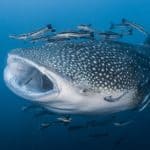

Lakshadweep's coral atolls, shallow lagoons, and reef drop-offs are a top place in India to see marine wildlife: turtles, reef fish, rays, reef sharks, and seasonal dolphins and pelagic species. On land, look for seabirds, coastal waders, and nesting sites on some islands. Activities focus on snorkeling, glass-bottom boats, kayaking, and responsible scuba in clear water and coral gardens.
Best overall conditions: calmer seas, high underwater visibility, comfortable temperatures for long snorkel sessions, and reliable reef-life encounters (turtles, rays, reef fish). Great for first-time visitors, families, and photographers seeking clear water.
Warmer water and air; excellent visibility continues. Good time for longer boat trips and deeper/outer-reef dives where larger fish, rays, and occasional pelagic visitors are more likely. Midday heat can be intense-plan early-morning and late-afternoon wildlife time.
Many operations scale back due to wind, swell, and variable visibility. Wildlife is still present, but conditions can reduce time on the water. Best for experienced travelers who prioritize solitude and are flexible with plans (and who confirm island-by-island operational status).
Conditions start improving after monsoon with progressively better seas and visibility. Good value window: fewer crowds, warming water, and increasing chances for relaxed lagoon activities as services ramp up.
Lakshadweep is a tropical coral-atoll archipelago in the Arabian Sea. Ecosystems are marine and coastal: coral reefs, shallow lagoons, seagrass beds and beaches. Land areas are tiny, shaped by salt spray, storms, erosion and human use (coconut groves, settlements). Freshwater is scarce—brackish ponds and groundwater lenses; wetlands are small but vital for coastal plants, shorebirds and seabirds.
Warm tropical waters surrounding the atolls support coral reefs, lagoon ecosystems, reef-associated fish, invertebrates, and pelagic species; includes reef slopes, reef flats, lagoons, and nearshore seabed habitats.
Dominant; the vast majority of the territory's area is surrounding ocean, reefs, and lagoons.
Some islands have small coastal wetlands: brackish ponds, seasonally waterlogged low spots, and small mangrove patches. They give shelter and food for birds and serve as nurseries for some marine animals.
Very limited and patchy, confined to low-lying coastal pockets and lagoonal edges.
Freshwater is minimal; mainly groundwater (freshwater lens) and a few small ponds/tanks that can become brackish. There are no true rivers and only very small standing-water features where present.
Tiny, scattered; negligible compared with marine/coastal systems.
Fringing reefs around atolls and reef passes support high reef-fish diversity, corals, sponges, and reef invertebrates; key habitat underpinning fisheries and shoreline protection.
Shallow sandy and rubble bottoms in lagoons and around reef flats, plus deeper sandy/muddy substrates offshore; important for benthic invertebrates and demersal fishes.
Pelagic waters around the archipelago used by tuna and other large migratory fishes, dolphins, and seabirds commuting between feeding areas and nesting/roosting sites.
Steep drop-offs beyond the atoll slopes lead to deeper oceanic habitats supporting pelagic and deepwater fauna (ecologically connected to reef systems via nutrient flows and migrations).
Narrow coastal fringes subject to salt spray, storm surges, and erosion/accretion; includes dune-like sandy ridges and coastal strand vegetation.
Sandy beaches around the islands are key for seabird roosting and coastal dynamics; locally important for turtle nesting where undisturbed (varies by island).
Very limited mangrove occurrence; where present, small stands in sheltered, low-energy coastal pockets provide nursery/refuge habitat and stabilize shorelines.
Small brackish ponds and seasonally waterlogged depressions on low-lying islands; important microhabitats for birds and coastal plants despite limited extent.
Coconut-dominated plantations/agroforestry are widespread on inhabited islands, forming a semi-natural canopy with understory gardens; a major terrestrial land cover.
Home gardens and mixed cropping in small plots (often intercropped under coconut) contribute to terrestrial habitat heterogeneity but are highly managed.
Compact settlement areas, ports/landing sites, and infrastructure concentrated on inhabited islands; influences adjacent beaches, lagoons, and nearshore waters via runoff and disturbance.
The "white sand" story is partly parrotfish: much of the fine sand on atoll beaches is biogenic-ground-up coral and shells processed by reef grazers such as parrotfish that scrape algae and excrete carbonate sand.
Atolls are 'reef rings' on sunken volcanoes: Lakshadweep's wildlife-rich lagoons exist because the original volcanic islands subsided; corals kept building upward, leaving a circular reef rim and a calm lagoon nursery inside.
Seabirds fertilize islands from the sky: on low coral islands with naturally poor soils, seabird guano is a major nutrient source that can noticeably boost coastal vegetation growth-linking offshore fish abundance to onshore plant life.
Reef fish can change sex-and that matters for the catch: many common reef families found around Lakshadweep (e.g., wrasses/parrotfishes) include species that switch sex as they grow; removing the largest individuals can disproportionately remove breeding males and alter population recovery.
India's only coral-atoll archipelago: Lakshadweep is the country's only chain of true coral atolls (ring reefs with central lagoons), making it India's most "atoll-specialist" wildlife habitat for lagoon and reef-edge species.
A huge habitat-to-land ratio: about ~32 km² of land is surrounded by roughly ~4,200 km² of lagoon and reef waters-one of the most extreme "ocean habitat per square kilometer of land" situations under Indian administration.
Pitti (Bird) Island is a tiny uninhabited islet with a huge breeding colony of tropical seabirds, especially sooty terns and brown noddies, nesting in tens of thousands—one of India's densest seabird sites.
India's pole-and-line tuna stronghold: Lakshadweep accounts for virtually all of India's traditional pole-and-line tuna fishery, targeting fast-swimming pelagics like skipjack tuna with minimal longline-style bycatch.
4 species documented in our encyclopedia
Thank you for reading! Have some feedback for us?
We appreciate your help in improving our content.
Our editorial team will review your suggestions and make any necessary updates.
There was an error submitting your feedback. Please try again.