N S W E
Wildlife Expeditions

Wildlife of
Madhya Pradesh

India's "Tiger State," Madhya Pradesh blends vast dry-deciduous forests and river valleys into one of the country's richest, most reliable big-cat landscapes.
34 Species
308,252 km² Land Area
Overview

About Madhya Pradesh

Madhya Pradesh lies at the heart of India’s wild lands, with large tropical dry deciduous forests, teak and sal patches, and rolling plateaus that form a classic central-Indian wildlife area. This nature is shown by a network of protected areas — Kanha, Bandhavgarh, Pench and others — that support tigers, leopards, sloth bears, dholes, and many deer and antelope. The state’s habitats join together: forested highlands, grassy meadows, bamboo thickets, rocky outcrops, and river valleys of the Narmada and Chambal. This mix of habitats brings rich birdlife (raptors, waterbirds, forest specialists) and many kinds of mammals. The monsoon and dry season drive animal movements and make sightings easier. Because many top reserves are close together, visitors can see different tiger landscapes — Kanha’s meadows and forest, Bandhavgarh’s prey-rich woods and cliffs, and Pench’s teak and rivers — in one trip.

Physical Features

Geography

Madhya Pradesh is in central India with broad plateaus and large river basins. It has tropical dry deciduous forests, teak and sal woodlands, grasslands, scrub, and river corridors. These linked forests and valleys shape wildlife, supporting tigers, leopards, gaur, sambar, chital, sloth bears, and many birds, especially in the Satpura-Maikal and Vindhyan areas.

308,252 km² Land Area
2nd largest state in India (by area) Size Rank
India Country
State Type
Elevation Range

~100 m to ~1,350 m (river plains and valleys up to Satpura/Maikal highlands)

Key Landscapes

Satpura Range and Satpura Plateau (forested hills; major tiger/central Indian biodiversity landscape) Maikal Hills (linking Satpuras to eastern highlands; key for forest connectivity around Kanha region) Vindhya Range and Vindhyan Plateau (dry deciduous forests and rocky outcrops; important for leopard and ungulates) Malwa Plateau (open woodlands, ravines, agro-forest mosaics influencing edge species and grassland birds) Narmada River valley (east-west riparian corridor with riverine forests and wetlands) Tapi (Tapti) basin in the south (seasonal river systems and associated forest belts)
State Symbols

Official Wildlife Symbols

animal

Barasingha (swamp deer)

bird

Indian paradise flycatcher

wildflower

Palash (Flame of the Forest)

tree

Banyan

Parks & Reserves

Protected Areas

Madhya Pradesh has a strong network of National Parks and Wildlife Sanctuaries in tropical dry deciduous forests (teak-sal-mixed), river valleys (Narmada, Ken, Son, Chambal) and the Satpura‑Maikal and Vindhyan hills. Project Tiger areas (Kanha, Pench, Satpura, Bandhavgarh, Panna) and corridors help big carnivores, herbivores and birds. Many sites are tiger reserves with core and buffer zones to protect animal movement.

Protected Coverage

≈7-8% of the state's land area is under formal protected areas (National Parks, Wildlife Sanctuaries, Conservation/Community Reserves), with additional forest reserves and tiger-reserve buffers increasing landscape-level protection beyond that figure.

National Parks & Preserves

Kanha National Park

~940 km² (National Park core)

Flagship central-India tiger landscape with large meadows and sal-dominated forests; globally notable for recovery of hard-ground barasingha and consistently strong tiger and dhole sightings.

Bengal tiger Dhole (Indian wild dog) Hard-ground barasingha (swamp deer) Gaur (Indian bison) Leopard

Bandhavgarh National Park

~448 km² (National Park)

High tiger density in a compact park with mixed forest, grasslands and rocky hills; excellent for tiger viewing and supports diverse ungulates and scavengers.

Bengal tiger Leopard Sloth bear Sambar deer Chital (spotted deer)

Pench National Park (Madhya Pradesh)

~292 km² (National Park)

Dry teak forests and undulating terrain famous for tiger safaris and strong predator-prey dynamics; forms a major corridor-linked landscape toward Maharashtra.

Bengal tiger Leopard Dhole (Indian wild dog) Gaur (Indian bison) Indian pangolin

Satpura National Park

~524 km² (National Park)

Large, rugged hill-and-valley wilderness in the Satpura Range with high habitat diversity; known for more "forest-walk/river" oriented wildlife experiences and strong populations of sloth bear and leopard alongside tigers.

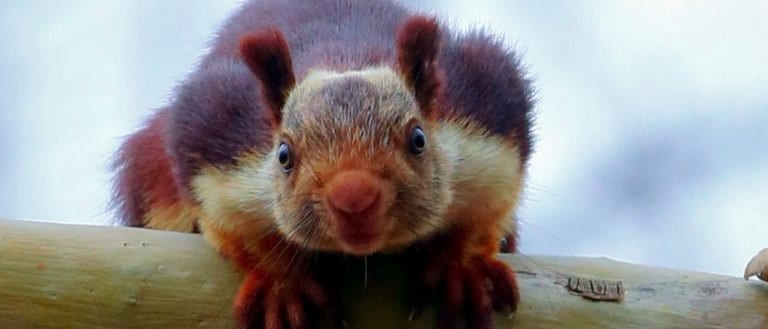
Bengal tiger Leopard Sloth bear Gaur (Indian bison) Giant squirrel

Panna National Park

~542 km² (National Park)

Ken River gorges and plateaus supporting a successfully re-established tiger population; important for riparian biodiversity and vulture habitat in the wider landscape.

Bengal tiger Leopard Sloth bear Gharial (in Ken River stretches nearby) Indian wolf (in surrounding grassland/ravine mosaics)

State & Provincial Parks

Nauradehi Wildlife Sanctuary

~1,200 km² (Sanctuary)

One of the largest protected blocks in MP outside the best-known tiger cores; important as a landscape linkage with dry forests, scrub and grassland patches supporting wide-ranging species.

Leopard Sloth bear Chital (spotted deer) Sambar deer Indian wolf

Gandhi Sagar Wildlife Sanctuary

~368 km² (Sanctuary)

Dry deciduous forests around the Chambal basin and reservoir edges; notable for landscape-scale conservation values and carnivore movement in the broader Chambal-Malwa region.

Leopard Sloth bear Chinkara (Indian gazelle) Striped hyena Mugger crocodile

Kuno Wildlife Sanctuary (Kuno landscape)

~345 km² (Wildlife Sanctuary; the notified Kuno National Park is ~748.8 km²)

A key conservation landscape in the north of the state with mosaic dry deciduous forests and riverine habitat; the sanctuary area was later notified within the larger Kuno National Park landscape used for large-carnivore conservation and reintroductions.

Leopard Sloth bear Chital (spotted deer) Sambar deer Striped hyena

Wildlife Refuges

Kanha Tiger Reserve

~2,000+ km² (tiger reserve: core + buffer; commonly cited ~2,050-2,100 km² depending on notifications)

Core-and-buffer tiger-reserve system supporting long-term tiger genetics and prey recovery, with major corridor relevance across the Satpura-Maikal landscape.

Bengal tiger Dhole (Indian wild dog) Hard-ground barasingha (swamp deer) Gaur (Indian bison) Leopard

Bandhavgarh Tiger Reserve

~1,500+ km² (tiger reserve: core + buffer; commonly cited ~1,530 km²)

Tiger-reserve landscape extending beyond the National Park into buffer forests, important for dispersal and reducing edge pressures in a high-demand tourism region.

Bengal tiger Leopard Sloth bear Sambar deer Chital (spotted deer)

Satpura Tiger Reserve

~2,100+ km² (tiger reserve: core + buffer; commonly cited ~2,130 km²)

Large, relatively contiguous central-India forest block integrating Satpura NP and surrounding protected forests/sanctuaries, valued for connectivity, rugged terrain refugia, and lower-density tourism zones.

Bengal tiger Leopard Sloth bear Gaur (Indian bison) Giant squirrel

Wilderness Areas

  • Satpura-Maikal landscape corridors linking Kanha-Pench-Satpura forests (critical dispersal routes for tigers and dholes)
  • Pachmarhi Biosphere Reserve (Satpura highlands and surrounding forest matrix)
  • Upper Narmada valley and gorge forests (riparian belts, ravines and adjoining dry deciduous blocks)
  • Ken River gorge and ravine systems around Panna (riverine cliffs, islands and associated wildlife habitat)
  • Chambal ravines (badlands and river edges supporting reptiles, raptors and grassland/ravine fauna)
  • Vindhyan escarpments and plateau forest mosaics (rocky outcrops, scrub-forest transitions and seasonal streams)
Animals

Wildlife

Madhya Pradesh ("the heart of India") is dominated by tropical dry deciduous forests (teak-sal and mixed woodland), river valleys (Narmada, Chambal, Son, Tapti), and plateau/grassland mosaics. This variety-plus a large protected-area network (Kanha, Bandhavgarh, Pench, Satpura, Panna, Kuno, etc.)-supports one of India's strongest big-cat landscapes, high ungulate diversity, and rich raptor/wetland birdlife. The wildlife experience is defined by tiger-and-leopard safaris in forested reserves, robust populations of sloth bear and wild dog, and riverine specialists (gharial, skimmers, turtles) along major rivers.
≈140-160 species (statewide; includes bats and small mammals) Mammals
≈480-520 species (forests, wetlands, riverine habitats, and grasslands) Birds
≈110-130 species (snakes, lizards, turtles, crocodilians) Reptiles
≈35-50 species Amphibians
≈180-250 species (major river systems and reservoirs; varies by basin) Fish
Examples

Iconic Species

Bengal Tiger
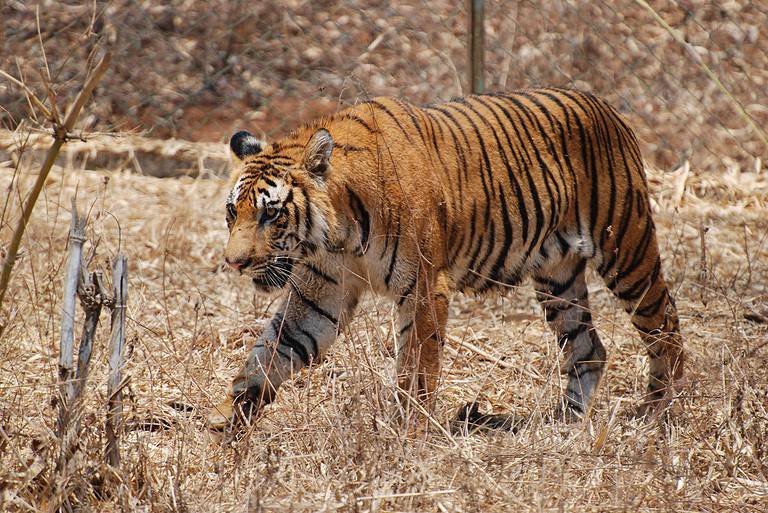
Bengal Tiger Madhya Pradesh is among India's premier tiger-viewing regions, with high-profile reserves like Bandhavgarh, Kanha, Pench, Satpura, and Panna supporting strong populations and frequent sightings in some tourism zones.
Indian Leopard Widespread across MP's forests and rugged hills; often seen in the same landscapes as tigers, especially where rocky cover and abundant deer support stable leopard densities.
Dhole (Asiatic Wild Dog) A flagship pack-hunting carnivore of central India; notable in Kanha-Pench-Satpura landscapes where packs are still regularly recorded.
Sloth Bear A defining species of dry deciduous forests; MP's protected areas are strongholds where sightings are relatively common compared with many other states.
Gaur (Indian Bison) India's largest wild bovine; prominent in Satpura-Pench-Kanha forest blocks where grassy meadows and woodland edges support herds.
Barasingha (Swamp Deer) Kanha is famous for its distinctive hard-ground form of barasingha and for successful conservation management that made this deer a key visitor target.
Mugger Crocodile Common in reservoirs, rivers, and larger waterbodies across MP; frequently encountered on riverbanks and around wetlands.
Indian Grey Hornbill A characteristic woodland hornbill of central India; its calls and canopy flight are part of the everyday forest birding experience in MP.
Sambar Deer The main large deer prey for tigers and leopards in many MP reserves; commonly seen in forest clearings and near water.

Endemic & Rare Species

Hard-ground Barasingha (Kanha population)

Rucervus duvaucelii branderi

Endangered (as a population/subspecies); globally significant conservation recovery centered on Kanha

This distinctive central-Indian barasingha form is strongly associated with Kanha's meadows; it represents one of India's most celebrated large-herbivore recoveries and remains a key conservation priority.

Forest Owlet

Athene blewitti

Endangered

A highly range-restricted owl endemic to central India; MP is one of the core states where it has been recorded since its rediscovery, making it a high-value species for specialist birders.

Gharial

Gavialis gangeticus

Critically Endangered

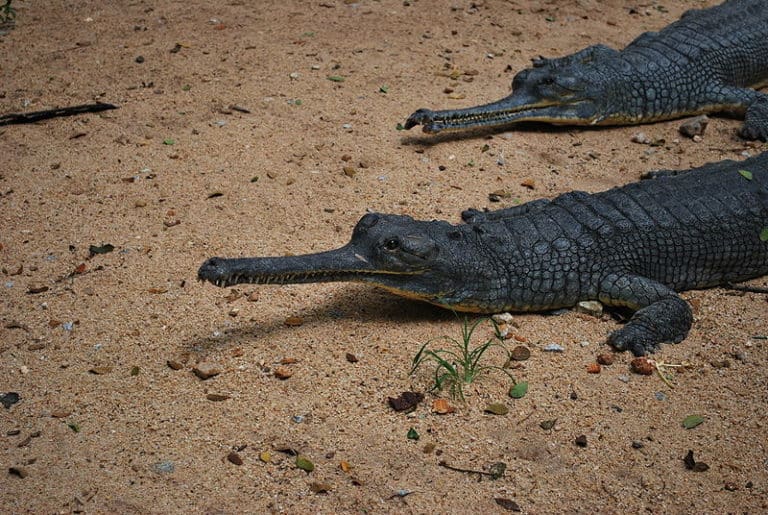
A river specialist dependent on clean, flowing rivers with sandbanks; the Chambal system (including stretches bordering MP) supports an important breeding landscape for this species.

Indian Pangolin

Manis crassicaudata

Endangered

Secretive and heavily threatened by trafficking; MP's forests still retain populations, and protection efforts focus on reducing poaching and safeguarding habitat.

Lesser Florican

Sypheotides indicus

Critically Endangered

A grassland bustard with a rapidly declining population; seasonal occurrences in suitable grassland/agro-grass mosaics make it a flagship for threatened open-country habitats.

Indian Vulture

Gyps indicus

Critically Endangered

Once abundant across central India, now severely reduced; remaining colonies and foraging areas in MP are important for any long-term recovery of Gyps vultures.

Slender-billed Vulture

Gyps tenuirostris

Critically Endangered

A highly threatened scavenger; remnant breeding and roosting groups persist in parts of central India where suitable cliffs/large trees and safe foraging landscapes remain, but populations are severely reduced by poisoning, food scarcity, and disturbance.

Notable Populations

  • One of India's strongest tiger landscapes, with multiple high-density reserves (notably Bandhavgarh, Kanha, Pench, Satpura, and Panna) contributing substantially to national tiger numbers and dispersal.
  • Kanha's hard-ground barasingha population is globally significant and central to the taxon's persistence and recovery.
  • The Chambal river system (including MP-adjacent stretches) is a nationally important stronghold for gharial and other riverine fauna dependent on sandbanks and clean flows.
  • Central-Indian dhole populations in MP's large connected forest blocks remain among the more reliable areas in India to detect this declining carnivore.

Recent Changes

  • Cheetah reintroduction: African cheetahs were introduced to Kuno National Park beginning in 2022; the program has seen both births and mortalities, and remains an active, closely monitored reintroduction effort.
  • Tiger recovery and range dynamics: tiger numbers have generally increased in key reserves over the last decade, with ongoing dispersal into buffer forests and human-dominated edges increasing management and conflict-mitigation needs.
  • Panna tiger restoration (continuing legacy): following local extinction in the past, reintroductions rebuilt a breeding population; it is now managed as a functioning tiger source area with continued monitoring.
  • Barasingha management gains: habitat and population management in Kanha has maintained and expanded barasingha numbers compared to historical lows, though dependence on meadow/wetland quality keeps it conservation-sensitive.
  • Vulture trends: Gyps vulture populations remain far below historical levels; some areas show stabilization/slow improvement after veterinary diclofenac restrictions, but poisoning, food scarcity, and disturbance continue to limit recovery.
  • Riverine pressure: sand mining, altered flows, and fishing-related impacts continue to threaten gharial/skimmer habitat in river systems, requiring sustained enforcement and habitat protection.
Visit

Wildlife Viewing

Madhya Pradesh is India's classic 'tiger state' with rich dry deciduous forests and many protected areas. Reserves like Kanha, Bandhavgarh, Pench, Satpura and Panna offer good chances to see Bengal tigers, leopards, sloth bears, dholes, gaur, sambar, barasingha, and many birds. Safaris are by jeep, with boat trips, night drives, and bird watching or tracking trips.

Best Seasons

Winter (Nov-Feb)

Cool, comfortable safari weather and excellent birding. Migratory waterfowl and raptors increase around wetlands and rivers (e.g., Chambal River, Narmada corridors). Big-cat sightings can be steady, especially on sunny mornings when animals bask. Great for photography with softer light and less heat haze.

Late winter to pre-summer (Mar-Apr)

Vegetation thins and visibility improves. Water sources start concentrating wildlife, boosting chances of tiger/leopard encounters on forest roads near ponds and streams. Bird activity remains strong; flowering trees can add color and pollinator activity.

Peak summer (May-mid Jun)

Often the best big-cat viewing conditions in many parks: scarce water draws tigers, leopards, and prey to predictable hotspots. Expect hot, dusty rides and earlier starts; carry sun protection and hydrate. Heat shimmer can affect long-lens photography but close sightings can be outstanding.

Monsoon / park closures (mid Jun-Sep)

Most core zones of tiger reserves close. This is a good time for nature travel outside closed cores: lush landscapes, waterfalls, and fewer crowds. Some buffer zones, peripheral sanctuaries, and select experiences may operate (varies by reserve and year). Excellent for herps (frogs, reptiles) and green-season photography where access is permitted.

Post-monsoon (Oct-early Nov)

Many parks reopen with fresh greenery and dramatic scenery. Wildlife disperses with abundant water, so sightings can be more variable, but the forests are beautiful and birds are active. A strong choice for travelers prioritizing landscapes, comfort, and lower heat.

Top Wildlife Experiences

  • Jeep safari in Bandhavgarh Tiger Reserve (Tala/Maghadi/Khitauli zones): renowned for high tiger density and dramatic forested hills-plan multiple drives for best odds.
  • Kanha Tiger Reserve: classic sal forest + meadows safari with a chance to see hard-ground barasingha (swamp deer) and large herds of gaur; combine dawn and dusk drives for varied activity.
  • Pench Tiger Reserve (inspiration for "Jungle Book" landscapes): track tigers, leopards, and dhole; prioritize morning safaris for cooler temperatures and active predators.
  • Satpura Tiger Reserve (near Pachmarhi): choose a more immersive itinerary-walking safari with trained guides (where permitted), plus boat/canoe safari on the Denwa/Tawa waters for birds, otters, and crocodiles.
  • Panna Tiger Reserve + Ken River: pair jeep safaris with river-based wildlife viewing (crocodiles, waterbirds) and explore the rugged plateau-and-gorge habitat; good for combining wildlife with nearby heritage stops.
  • Chambal River wildlife trip (National Chambal Sanctuary): boat safari for gharial, mugger crocodile, river dolphins (Ganges river dolphin in some stretches), and exceptional winter waterbird diversity.
  • Night safari in buffer zones (where permitted, e.g., around Pench/Kanha buffers): search for nocturnal mammals such as civets, jackals, porcupines, owls, and occasional leopard movement.
  • Photography-focused safari planning: target waterholes in late season, use dedicated naturalists, and build in 3-5 safaris per park to maximize predator encounters and behavior shots.

Wildlife Watching Types

Tiger-focused jeep safaris (core and buffer zones of major reserves) Leopard and sloth bear tracking (often stronger in rocky/rugged habitats and during hotter months) Dhole (wild dog) viewing opportunities (not guaranteed, but present in several reserves like Kanha and Pench) Birding hotspots (forest birds + winter migrants near rivers/wetlands; excellent raptors) River and wetland wildlife viewing (boat safaris on Ken/Chambal; waterbirds, crocodilians, occasional dolphins) Walking safaris and nature trails (notably in Satpura and select buffer areas, subject to permissions) Night drives in permitted buffer areas (nocturnal mammals, owls, nightjars) Herpetofauna and "green season" nature watching (monsoon reptiles/amphibians where access is allowed)

Guided Options

  • Forest Department-authorized jeep safari packages with registered guides/naturalists (all major tiger reserves; book zones/permits in advance, especially for Bandhavgarh/Kanha)
  • Multi-park tiger circuits run by specialist wildlife operators (common combinations: Kanha-Bandhavgarh, Kanha-Pench, Satpura-Pench, or adding Panna)
  • Satpura specialized experiences via licensed lodges/operators: guided walking safaris, canoe/boat safaris, and full-day safaris (where permitted)
  • Chambal River guided boat safaris (licensed local boatmen + naturalists) focusing on gharial, dolphins, and winter bird concentrations
  • Birding-led departures with expert ornithologists (winter-focused itineraries linking tiger reserves with wetlands/river corridors)
  • Responsible photography workshops with dedicated naturalists and vehicle allocations (ideal in Apr-Jun for waterhole-based behavior)
Habitats

Ecosystems

Madhya Pradesh in central India has one of the country's largest areas of tropical dry deciduous forest, mixed with teak-sal woodlands, river corridors (Narmada, Tapti, Chambal), plateaus (Malwa, Bundelkhand) and the Satpura-Maikal hills. This mix of forests, meadows, scrub, and wetlands supports tigers, leopards, dhole, sloth bear, gaur, and many birds.

Biomes

Tropical Dry Forest

Dominant biome across most districts: teak- and mixed dry deciduous forests with pronounced dry-season leaf fall; includes many tiger-reserve landscapes (e.g., Kanha, Bandhavgarh, Pench, Satpura).

Widespread and continuous over large central and eastern tracts; the principal natural vegetation across the state.

Savanna

Open woodland-grass mosaics and dry grassy glades within/around deciduous forests (including managed meadows and naturally open areas), important for herbivores and associated predators.

Patchy; concentrated as forest openings, plateau grasslands, and along forest-agriculture edges (not a continuous savanna belt).

Freshwater

Large river systems and tributary networks (Narmada, Tapti, Chambal, Betwa, Ken, Son headwaters) with reservoirs and oxbow/seasonal waterbodies supporting fish, turtles/crocodilians in suitable reaches, and waterbirds.

Linear corridors statewide; locally extensive where major reservoirs and river valleys occur.

Wetland

Seasonal floodplain wetlands, marshy depressions, village tanks, and reservoir fringes that expand in monsoon and contract in summer; critical for migratory and resident waterbirds.

Scattered statewide; highest density along river valleys, low-lying basins, and around major dams/reservoirs.

Habitats

Forest

Large protected forest blocks and production forests forming core wildlife landscapes (e.g., Kanha-Pench-Satpura complexes).

Deciduous Forest

Teak-dominated and mixed dry deciduous stands; sal occurs more in the east/southeast, creating teak-sal transition mosaics.

Woodland

More open, degraded, or edge woodlands around villages and field margins, often with grazing and fuelwood extraction pressure.

Grassland

Natural and managed meadows/open glades within reserves (notably in Kanha's grasslands) and plateau grass patches supporting ungulates and ground-nesting/foraging birds.

Shrubland

Dry scrub and thorny secondary growth on poorer soils, rocky outcrops, and heavily used buffer areas; provides cover for small mammals and birds.

Mountain

Satpura and Maikal hill ranges with rugged terrain, forested slopes, and cooler microclimates compared with surrounding plains.

Cliff/Rocky Outcrop

Rocky escarpments and ravines (notably Chambal ravine systems and local sandstone/limestone scarps) used by raptors and cliff-nesting birds.

Cave

Local limestone/sandstone cave systems and rock shelters (including areas with notable bat roosts and archaeological sites).

River/Stream

Major river corridors (Narmada, Chambal, Betwa, Ken, Tapti) with riparian vegetation, sandbars, and seasonal flow variation shaping aquatic/riparian biodiversity.

Lake

Natural lakes and large reservoirs (e.g., dam-created lakes) supporting fisheries and wintering waterfowl.

Pond

Village tanks and small seasonal ponds that become critical dry-season water sources for wildlife and amphibians.

Wetland

Marshy reservoir edges, floodplain depressions, and monsoon-fed wetlands with emergent vegetation used by waterbirds and reptiles.

Marsh

Reed/sedge-dominated shallow-water zones around tanks and floodplain pockets; strong seasonal expansion in monsoon.

Agricultural/Farmland

Extensive croplands (soybean, wheat, pulses, rice in wetter pockets) forming a matrix around forest blocks; important for human-wildlife interface and some open-country birds.

Plantation

Teak plantations and other forestry/agroforestry plantings in managed landscapes; structurally simpler than native forest.

Urban

Urban nodes (e.g., Bhopal, Indore, Jabalpur, Gwalior) with fragmented greenspaces, lakes, and peri-urban wetlands used by adaptable species.

Suburban

Peri-urban expansion zones with mixed gardens, small farms, and remnant woodlots that function as secondary habitat and movement areas.

Ecoregions

Central Deccan Plateau dry deciduous forests Eastern Highlands moist deciduous forests Narmada Valley dry deciduous forests Deccan thorn scrub forests
Protection

Conservation

Primary Threats

  • Forest-agriculture edge expansion and degradation in the state's dry deciduous belt reduce prey base and cover for carnivores; small forest patches outside reserves are being converted or heavily used, weakening connectivity between tiger reserves (e.g., Pench-Kanha, Kanha-Achanakmar, Satpura-Melghat linkages).
  • Highways, rail lines, canals, and power transmission corridors dissect forests and corridors; vehicle strikes and barrier effects are recurring around tourism and transit routes near reserves (e.g., approaches to Bandhavgarh/Kanha/Pench) and in corridor tracts where mitigation structures are limited or incomplete.
  • Coal and mineral extraction footprints (notably in the Singrauli region and other mineral belts) drive deforestation, pollution, and heavy truck traffic; associated settlements and ash/overburden dumps create long-term habitat loss and human pressure on surrounding forests.
  • Although large-scale illegal timber extraction is less visible inside core protected areas, illicit felling and fuelwood pressure persist in some territorial divisions and buffer zones, especially where dependence on wood energy remains high; this simplifies forest structure and reduces denning/roosting sites.
  • Conversion of scrub/grassland and forest margins to crops reduces habitat for grassland specialists (e.g., lesser florican) and increases interface conflict (crop raiding by herbivores; retaliatory risk to carnivores).
  • Leopard, sloth bear, and occasionally tiger incidents occur in fringe villages and sugarcane/irrigated pockets that provide cover; livestock depredation in buffer/corridor areas fuels retaliatory poisoning/trapping risks and complicates tolerance for dispersing tigers.
  • High tourism density in flagship reserves (especially peak seasons in Bandhavgarh/Kanha/Pench) increases noise, off-road pressure, and traffic on safari routes; pilgrimage and local collection activities also raise disturbance in some forested landscapes.
  • Pangolin poaching for scales and occasional trade in skins/claws (and live birds) persists in parts of central India; MP's road connectivity and proximity to multiple state borders can facilitate movement of contraband if enforcement is uneven.
  • Local subsistence hunting and opportunistic snaring (often targeting ungulates) occurs in some peripheral and non-protected forests; this can depress prey populations and indirectly affect large carnivores.
  • Industrial and urban effluents in river stretches (and runoff from agriculture) degrade aquatic habitats; in heavily industrial zones (e.g., around thermal power clusters), air/ash deposition and contaminated water bodies can affect downstream biodiversity and human health.
  • Intensive fishing pressure and gill-net use in rivers/reservoirs can deplete fish prey and cause bycatch/entanglement risks for gharial and river turtles, especially in multi-use stretches of the Chambal and reservoir systems.
  • Dams, barrages, sand extraction, and altered flow regimes change river morphology and nesting banks for gharial and turtles; in forests, changed fire regimes (more frequent, hotter fires) simplify understory and hinder regeneration in dry deciduous systems.
  • Lantana camara and other invasives proliferate in many MP forests, forming dense thickets that suppress native understory, impede grass recovery for ungulates, and complicate habitat management and fire control.
  • Rising heat extremes and more erratic monsoon patterns increase drought stress and fire intensity, reduce water availability in smaller streams/seasonal pools, and can shift prey distribution-raising conflict and concentrating wildlife around few water sources.
  • High grazing pressure and heavy collection of fuelwood/NTFPs in some buffer and territorial forests reduce regeneration, compact soils, and lower forage availability for wild herbivores, indirectly affecting carnivore carrying capacity.
  • Disease spillover risks (e.g., canine distemper in wild canids, and livestock-borne diseases such as FMD) rise where feral/free-ranging dogs and livestock overlap with wildlife in village fringes and corridors.
  • Expansion of major cities (e.g., Bhopal-Indore-Jabalpur growth corridors) and peri-urban development increases demand for land, water, and stone/aggregate, pushing extraction and fragmentation into nearby forest divisions and wetlands.
Fun Facts

Did You Know?

"Swamp deer" that thrives on dry meadows: Kanha's barasingha are called swamp deer, but this hard-ground subspecies is adapted to firm, open grasslands-one reason Kanha's meadow management is so critical to its survival.

You can legally walk in tiger country here: Satpura Tiger Reserve is among the few tiger reserves in India that officially allow guided walking safaris (typically in buffer zones), offering a very different way to experience a tiger landscape.

The '12-horned' deer often has more (or fewer): Barasingha literally means "twelve-horned," but individuals commonly grow antlers with a variable number of tines (often around 10-14), making the name a memorable exaggeration rather than a rule.

In Madhya Pradesh's National Chambal Sanctuary, a river is a bird nursery: threatened Indian skimmers and river terns nest on exposed sandbars that disappear if flows or sandbars change.

India's #1 tiger state (latest national estimate): The All-India Tiger Estimation 2022 (NTCA/WII) reported Madhya Pradesh with 785 wild tigers-the highest of any Indian state.

Global stronghold of a unique deer: Kanha Tiger Reserve is the only wild landscape on Earth that still holds the hard-ground swamp deer (barasingha) subspecies Rucervus duvaucelii branderi.

One of India's highest tiger densities: Bandhavgarh Tiger Reserve is repeatedly cited by managers and researchers as having among the highest tiger densities recorded in the country, helped by its relatively small, prey-rich core.

A rare "from-zero" big-cat recovery: Panna Tiger Reserve became one of India's best-known restoration successes after its tiger population crashed to local extinction (2009) and was rebuilt through translocations, leading to a breeding population again within a few years.

Thank you for reading! Have some feedback for us?