N S W E
Wildlife Expeditions

Wildlife of
Uttar Pradesh

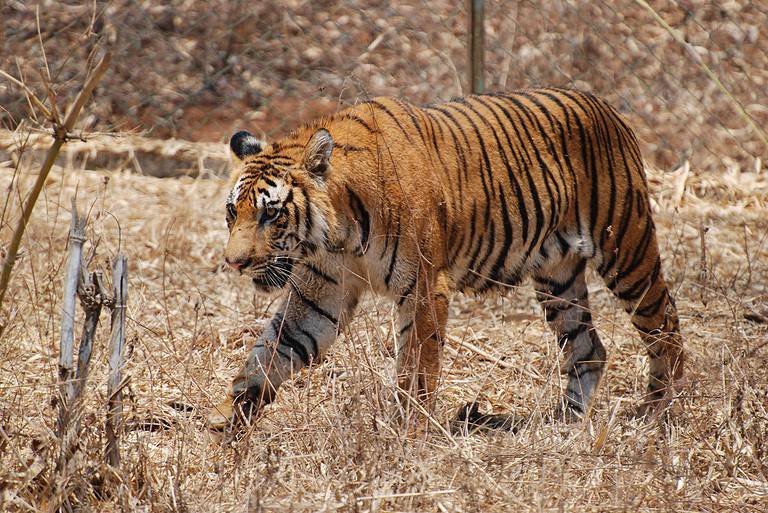
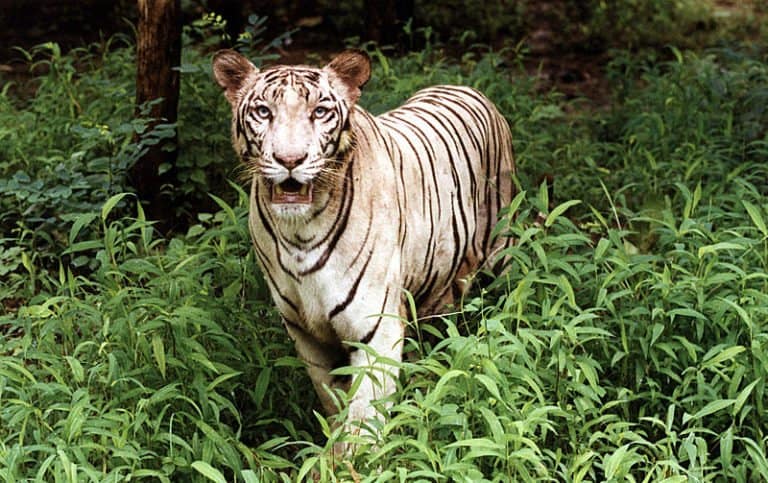
From the Himalayan foothill sal-tree forests of Dudhwa to the Ganges river system, Uttar Pradesh supports Bengal tigers, Asian elephants, and the endangered Ganges river dolphin across one of the most
34 Species
240,928 km² Land Area
Overview

About Uttar Pradesh

Uttar Pradesh shows a strong contrast: very crowded people on the fertile Gangetic Plain and small, tough natural places. Key habitats are the Ganges floodplains, river channels, sandbars and oxbow lakes that support the Ganges river dolphin, gharial, turtles and many migratory birds. Remnant grasslands and wetlands host thousands of wintering ducks, geese and waders. In the north, Himalayan foothill lowlands with Shorea robusta forests, tall grasslands and swampy clearings support big animals and connect to protected areas in Nepal. Conservation often means protecting and linking small safe spots, corridors and breeding sites in land used by people. Wildlife here is close to people: dolphins near river steps, raptors over farms, and mammals in forest islands, with strong changes each monsoon and winter.

Physical Features

Geography

Uttar Pradesh lies on the flat Indo-Gangetic alluvial plain with a big river network that makes floodplains, wetlands, sandbars, and riverine forests. The Terai belt by Nepal has moist grasslands and sal foothill forests. Rivers, seasonal floods, and a north–south moisture change shape habitats, while dense people cut wild areas into small protected pockets and wetland refuges.

240,928 km² Land Area
4th largest state in India (by area) Size Rank
India Country
State Type
Elevation Range

≈60 m (Gangetic plains) to ≈300 m (southern uplands/plateau areas in Bundelkhand-Vindhyan region)

Coastline

None (landlocked). Key aquatic habitats are inland-large rivers, floodplains, oxbow lakes, and marshes/wetlands.

Key Landscapes

Indo-Gangetic Plain: extensive alluvial flats supporting agricultural mosaics with remnant grasslands, scrub, and village woodlots Ganga-Yamuna Doab: broad interfluve with riverine corridors and floodplain wetlands critical for birds and small mammals Major rivers and tributary networks: Ganga, Yamuna, Ghaghara (Saryu), Rapti, Gomti, Sharda (Mahakali), Ramganga, Betwa, Ken, Son-creating oxbow lakes, marshes, sandbars, and riparian forests Terai belt along the Nepal border: moist tall-grass floodplains and sal/foothill forests (key for large mammals and grassland specialists) Shivalik/foothill fringes (limited extent in the north): low hills and forested foothill habitats transitioning from plains to Himalayan ecosystems Southern uplands (Bundelkhand-Vindhyan/Vindhya fringe and Sonbhadra region): rocky plateaus, dry deciduous forests, ravines, and scrub providing contrasting dry habitats
State Symbols

Official Wildlife Symbols

animal

Swamp deer (Barasingha)

bird

Sarus crane

tree

Ashoka tree

wildflower

Palash (Flame of the forest)

Parks & Reserves

Protected Areas

Uttar Pradesh has a small but important protected-area network despite intense farming and many people. Protection centers on two areas: Terai-Arc foothill forests and riverine grasslands along the Nepal border (home to tigers, elephants and swamp deer), and Gangetic rivers and wetlands (key for migratory waterbirds, gharial and Gangetic river dolphin). Strongholds are Dudhwa, Pilibhit-Terai, Chambal ravines and wetland sanctuaries.

Protected Coverage

≈3% (order-of-magnitude estimate of land under notified protected areas; exact share varies by definition and recent notifications)

National Parks & Preserves

Dudhwa National Park

≈490 km²

The flagship Terai protected area in Uttar Pradesh, known for tall alluvial grasslands, sal forests, and high-density prey base that supports large carnivores; also notable for conservation of swamp deer and reintroduced greater one-horned rhinoceros in the broader Dudhwa landscape.

Bengal tiger swamp deer Asian elephant greater one-horned rhinoceros leopard

State & Provincial Parks

Hastinapur Wildlife Sanctuary

≈2,073 km²

A large protected landscape in western Uttar Pradesh with mosaics of forest, riverine tracts, and floodplain habitats; important for large-mammal and bird diversity close to the Upper Ganga plain.

leopard sambar chital (spotted deer) nilgai wild boar

National Chambal Sanctuary (Uttar Pradesh stretch)

Total sanctuary ≈5,400 km² (shared river sanctuary; Uttar Pradesh covers a stretch)

A protected Chambal River corridor shared by Uttar Pradesh, Madhya Pradesh, and Rajasthan; nationally important for threatened river fauna and sandbar-nesting birds.

gharial Gangetic river dolphin Indian skimmer mugger crocodile smooth-coated otter

Wildlife Refuges

Okhla Bird Sanctuary

≈4 km²

A highly accessible Yamuna wetland at the Delhi-Noida edge, important for wintering waterfowl and as an urban-adjacent refuge for birds despite heavy surrounding development.

painted stork black-necked stork garganey northern pintail marsh harrier

Sur Sarovar (Keetham) Bird Sanctuary

≈8 km² (approximate)

A managed lake-and-marsh system near Agra that supports large seasonal waterbird numbers and provides a significant wetland refuge within an otherwise intensively used landscape.

painted stork spot-billed pelican ruddy shelduck common coot darter

Sandi Bird Sanctuary

≈3 km² (approximate)

A small but important wintering wetland known for reliable sightings of migratory ducks and geese; valuable for local wetland conservation and birdwatching.

northern shoveler gadwall common teal greylag goose Eurasian wigeon

Haiderpur Wetland (within the Hastinapur landscape)

≈69 km² (approximate)

A Ganga-linked wetland complex that is significant for migratory waterbirds and overall river-wetland ecosystem integrity in the Upper Ganga plain; functions as a key wetland refuge within a larger protected landscape.

sarus crane black-headed ibis bar-headed goose Indian spot-billed duck smooth-coated otter

Wilderness Areas

  • Terai-Arc foothill forest/grassland belt along the Nepal border (the broader Dudhwa-Pilibhit landscape of corridors, riverine grasslands, and sal forests)
  • Girwa (Kauriala) river corridor in the Katerniaghat landscape (important, relatively low-road riverine habitat for dolphins and gharial)
  • Chambal ravines and sandbar islands (semi-remote badland terrain supporting rare river fauna and nesting birds)
  • Vindhyan forested hills and rocky tracts in southern UP (around Ranipur-Chandra Prabha), with comparatively lower road density than the Gangetic plain
  • Upper Ganga floodplain wetland mosaics (patchwork of seasonally inundated areas that function as de facto refuges for waterbirds where disturbance is limited)
Animals

Wildlife

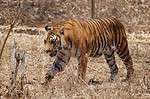
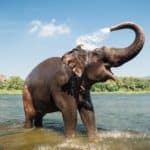
Uttar Pradesh's wildlife is shaped by three areas: the Terai arc along Nepal (sal forest, tall grasslands, floodplain wetlands; Dudhwa, Kishanpur, Katarniaghat); the Gangetic Plain river-wetland mosaic of the Ganga, Yamuna, Ghaghara and Rapti with oxbow lakes and shallow wetlands that host many waterbirds and cranes; and the southern ravines and rocky Vindhyans like the Chambal river and Sonbhadra. Despite high human numbers the state still has tigers, elephants, cranes, dolphins, gharials and rare river turtles.
~90-110 species (Terai forests, Gangetic wetlands, Vindhyan/ravine landscapes) Mammals
~450-550 species (very strong wetland and winter migrant diversity) Birds
~70-90 species (including major river reptiles in the Ganga/Chambal systems) Reptiles
~18-25 species (under-recorded in many districts) Amphibians
~200-250+ species (Ganga-Yamuna-Ghaghara basins; exact totals vary by source) Fish

Endemic & Rare Species

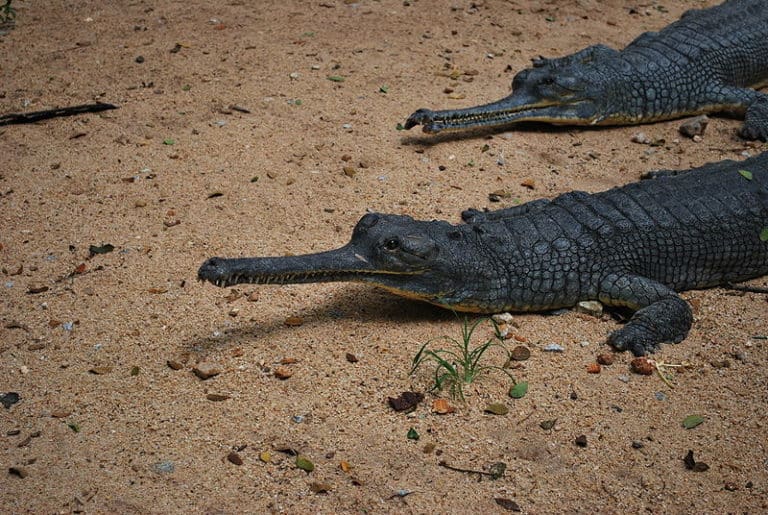
Gharial

Gavialis gangeticus

Critically Endangered (global)

The Chambal system (shared with neighboring states) remains one of the species' most important strongholds; survival depends on protected sandbanks and fish-rich, low-disturbance river reaches.

Ganges River Dolphin

Platanista gangetica

Endangered (global)

A flagship for cleaner, flowing rivers in the Ganga basin; threatened by entanglement, reduced flows, pollution, and disturbance.

Bengal Florican

Houbaropsis bengalensis

Critically Endangered (global)

A vanishing tall-grassland specialist; the Terai grasslands (including parts of the Dudhwa landscape) are among the last suitable habitats in northern India.

Hispid Hare

Caprolagus hispidus

Endangered (global)

A rare, grassland-dependent mammal associated with Terai alluvial grasslands; presence indicates high-quality, well-managed tall-grass habitats.

Indian Skimmer

Rynchops albicollis

Endangered (global)

A sandbar-nesting river bird recorded from major north Indian rivers; highly sensitive to sand mining, altered flows, and human disturbance on nesting beaches.

Red-crowned Roofed Turtle

Batagur kachuga

Critically Endangered (global)

One of the world's rarest river turtles; persists in the Chambal basin where protected sandbanks support nesting and recovery efforts.

Three-striped Roofed Turtle

Batagur dhongoka

Critically Endangered (global)

Another threatened Chambal river turtle; depends on undisturbed basking and nesting sites and low bycatch pressure.

Indian Narrow-headed Softshell Turtle

Chitra indica

Endangered (global)

A large, specialized river turtle of deep channels and sandy substrates; threatened by river modification and fishing-related mortality.

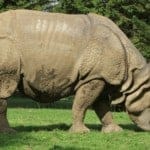
Greater One-horned Rhinoceros

Rhinoceros unicornis

Vulnerable (global)

The Dudhwa population is conservation-significant because it represents a restored Terai rhino presence in Uttar Pradesh.

Notable Populations

  • Dudhwa Tiger Reserve landscape: Uttar Pradesh's core stronghold for Terai megafauna (tiger, elephant) and tall-grass specialists (including swamp deer and rare grassland fauna).
  • Reintroduced Greater One-horned Rhinoceros in Dudhwa: the only free-ranging rhino population in Uttar Pradesh, of high state-level conservation importance.
  • National Chambal Sanctuary (UP sector, shared river system): among the most important remaining breeding landscapes for gharial and a suite of highly threatened river turtles.
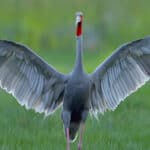
  • Sarus Crane: Uttar Pradesh supports one of the world's largest and most visible populations, strongly defining the state's wetland-farmland birdlife.
  • Gangetic river fauna (Ganga and major tributaries): nationally important habitat for Ganges river dolphin and other large-river biodiversity.

Recent Changes

  • Gharial and threatened river turtles: continued conservation actions in the Chambal system, including protection of nesting sandbanks and periodic reinforcement/recovery efforts in the wider basin.
  • Rhino conservation in Dudhwa: establishment and ongoing management of the reintroduced population (originating from translocations), maintaining UP's only wild rhino presence.
  • Elephants in northern/western UP: increasing reports of elephant movement and corridor use outside traditional Terai strongholds, reflecting wider landscape connectivity and pressure-driven dispersal.
  • Raptors and vultures: historically severe declines (notably Gyps vultures) with partial stabilization/recovery in some areas following reduced veterinary diclofenac use, though threats persist.
  • River and wetland specialists (e.g., skimmers, some turtles, dolphins): localized declines or fluctuating success linked to sand mining, river regulation, fishing pressure, and wetland loss-alongside improved monitoring and protection in select sites (e.g., protected stretches and sanctuaries).
Visit

Wildlife Viewing

Uttar Pradesh (UP) offers wildlife watchers a mix of Terai sal forests, grasslands, Gangetic river systems, and scattered wetlands. See big animals—tigers, elephants, swamp deer—in well-run protected areas, plus thousands of winter waterbirds and raptors. River trips can show the endangered Ganges river dolphin. Best viewing is in a few main reserves and wetlands; good timing and local guides help.

Best Seasons

Winter (Nov-Feb)

Best overall season: cool weather, excellent visibility, peak migratory birding at wetlands and rivers (ducks, geese, waders, raptors). Good mammal viewing in Terai reserves as animals move more in daylight. Ideal for boat-based dolphin searches on calmer river stretches.

Spring (Mar-Apr)

Warming temperatures; strong mix of resident and late-staying migrants. Forests begin to thin before monsoon, improving sightings on safari tracks. Good time for tiger/large mammal chances in Terai parks before peak heat.

Summer (May-Jun)

Hottest but can deliver the best big-cat and large-mammal odds near waterholes and along forest edges, especially in Dudhwa landscape. Early mornings are crucial; heat haze can affect photography midday.

Monsoon (Jul-Sep)

Lush landscapes and dramatic river scenes; many park zones/safari routes can be restricted or closed due to flooding and road conditions. Birding shifts toward breeding residents; fewer migratory waterfowl. Better for cultural + nature combos than dedicated wildlife safaris.

Post-monsoon / Autumn (Oct-early Nov)

Fresh, green habitats; improving road access and comfortable temperatures. Early migrants begin arriving at wetlands; good time for photography with clear light and greener backdrops. Tiger reserves typically ramp up operations as conditions stabilize.

Top Wildlife Experiences

  • Jeep safari for tiger, swamp deer (barasingha) and elephant in the Dudhwa landscape (Dudhwa National Park, Kishanpur Wildlife Sanctuary, Katarniaghat Wildlife Sanctuary) along the Terai belt
  • Boat safari/river cruise in Katarniaghat Wildlife Sanctuary on the Girwa River for gharial, mugger crocodile, river birds and occasional river dolphin sightings (season and water level dependent)
  • Targeted birding day at Nawabganj Bird Sanctuary / Shaheed Chandra Shekhar Azad Bird Sanctuary (Unnao) for winter waterfowl concentrations, raptors and wetland specials close to Lucknow-Kanpur
  • Dawn-to-midday birding circuit at Sur Sarovar Bird Sanctuary / Keetham Lake (Agra) for wetland birds plus chance encounters with nilgai and other plains fauna-excellent add-on to Agra visits
  • Riverfront birding and dolphin-focused excursion on the Ganga (notably around river stretches near Varanasi/Prayagraj where feasible with local operators) for riverine birds, turtles and the possibility of Ganges river dolphin
  • Wetland-hopping on the NCR edge at Okhla Bird Sanctuary (near Noida/Delhi) or at local oxbow lakes/river confluences around Prayagraj (seasonal) for dense winter birdlife and photography from hides/embankments
  • Forest-edge birding and mammal tracking in Pilibhit Tiger Reserve (Terai) for tiger signs, hog deer and grassland birds-best in cooler months or early summer mornings
  • Guided nature walks and interpretation at Sarnath/Varanasi outskirts and select community wetlands for beginner-friendly birding and learning India's common raptors, kingfishers and herons (best Nov-Feb)

Wildlife Watching Types

Tiger and large-mammal safaris (jeep/gypsy) in Terai reserves River wildlife watching (gharial/crocodiles, turtles, river birds) via boat safaris where permitted Ganges river dolphin searching on suitable Ganga/Girwa stretches with responsible operators Birding hotspots at wetlands, river confluences and reservoirs (winter migration peak) Raptor watching (eagles, harriers, kites) over grasslands and agricultural mosaics Herpetofauna and reptile-focused outings (crocodilians, turtles; seasonal snakes/amphibians) with trained guides Nature photography trips (golden-hour wetland birds; Terai forest mammals; river scenes) Family-friendly short nature trails and interpretation programs at accessible sanctuaries near major cities

Guided Options

  • Forest Department gypsy safaris and official guides in Dudhwa National Park, Kishanpur WLS and Katarniaghat WLS (bookable via park/authorized channels; choose morning drives for best sightings)
  • Pilibhit Tiger Reserve official safari program with local naturalists (request Terai grassland-focused routes for birding + tiger sign)
  • Authorized boat services/forest-guided boat safaris in Katarniaghat (Girwa River) when operating conditions allow
  • Local birding guides around Lucknow-Kanpur for Nawabganj/Unnao wetlands (half-day and full-day winter bird photography trips)
  • Agra-based naturalist-led excursions to Sur Sarovar/Keetham Lake (sunrise birding and hide-based photography options)
  • Varanasi/Prayagraj river-naturalist outings focused on river ecology (combine early-morning boat ride + riverside birding; confirm dolphin-focused ethics and wildlife-friendly distances)
  • Community-run or lodge-based naturalist programs in the Dudhwa buffer zone (night drives where permitted, village nature walks, conservation interpretation)
Habitats

Ecosystems

Uttar Pradesh lies on the fertile Indo-Gangetic alluvial plain and the Terai belt by Nepal. Rivers like the Ganga, Yamuna, Ghaghara and Gomti shape floodplains, oxbow lakes, and seasonal wetlands. Though much land is farmed and crowded, pockets of Terai sal forest, dry deciduous forest and tall riverine grassland remain, home to swamp deer, gharial, otters and many waterbirds.

Biomes

Tropical Dry Forest

Subtropical to tropical dry deciduous and dry/moist deciduous forest mosaics, including sal (Shorea robusta) dominated Terai forests and drier teak/terminalia/anogeissus-dominated tracts toward the Vindhyan-Bundelkhand zone; now highly fragmented by agriculture and settlements.

Patchy remnants: larger blocks in the Terai (e.g., Dudhwa landscape) and smaller, fragmented tracts in southern/vindhyan districts; overall a small fraction of the state compared to cropland.

Savanna

Alluvial tall grasslands and grass-shrub mosaics on river floodplains and in the Terai (often maintained by flooding, grazing, and fire), including open grasslands important for ungulates and ground-nesting birds.

Localized and fragmented, mainly in the Terai belt and along major river floodplains; very limited extent outside protected areas and active floodplain corridors.

Freshwater

Major perennial rivers, braided channels, tributary networks, oxbow lakes, floodplain ponds, and irrigation canals supporting freshwater fish diversity, river dolphins in connected Ganga segments (where conditions allow), turtles, and large waterbird assemblages.

Statewide linear network with highest ecological prominence along the Ganga-Yamuna system and Terai-fed rivers; ubiquitous but narrow relative to land area.

Wetland

Monsoon-driven floodplain wetlands, floodplain lakes, marshes, seasonally inundated lowlands, and riparian backwaters that provide critical habitat for migratory waterfowl and resident wetland fauna; many are modified for fisheries, agriculture, and water storage.

Scattered across the Gangetic plain (notably in low-lying floodplain districts) and in the Terai; extent fluctuates strongly with monsoon and water management.

Habitats

Deciduous Forest

Sal-dominated Terai forests (Pilibhit-Kheri-Bahraich belt) and mixed dry deciduous forests in southern districts; key strongholds occur in and around Dudhwa Tiger Reserve landscape and other forest divisions.

Forest

Fragmented forest patches, community forests, and protected blocks embedded in an agricultural matrix; important for connectivity of wildlife between Terai reserves and riparian corridors.

Woodland

Open-canopy tree cover and scrubby woodlands on drier soils and degraded forest edges, often transitioning into agroforestry and grazing areas.

Grassland

Terai open grasslands and floodplain grasslands dominated by tall grasses (e.g., Saccharum, Imperata) that support deer, hog deer (where present), grassland birds, and raptors.

Shrubland

Riverine scrub on sandy bars and degraded lands, plus thorny scrub in drier western/southern tracts; provides cover for small mammals, reptiles, and birds.

River/Stream

Large river systems (Ganga, Yamuna, Ghaghara, Rapti, Gomti, Gandak and others) with sandbars, islands, and eroding banks; crucial for fisheries, turtles, and waterbirds.

Lake

Oxbow lakes and large jheels in the floodplain landscape (natural and semi-managed) that serve as key wintering sites for migratory waterfowl.

Wetland

Floodplain wetlands, seasonally inundated basins, and lowland marshy tracts; many are partly converted or managed for agriculture and fisheries.

Marsh

Reedbeds and sedge marshes along floodplain lakes and river backwaters, especially in monsoon and post-monsoon periods; important for nesting/roosting waterbirds.

Swamp

Terai swampy lowlands and waterlogged forest-grassland edges (where drainage is limited), supporting specialized wetland vegetation and fauna.

Agricultural/Farmland

Extensive croplands (wheat-rice, sugarcane, pulses, oilseeds) dominate the plains; field margins, canals, and fallows can provide secondary habitat but also intensify human-wildlife conflict.

Plantation

Social forestry, eucalyptus/poplar blocks, and agroforestry plantations (notably poplar in western UP) that alter local hydrology and habitat structure compared to native forests.

Urban

Large urban centers and expanding peri-urban areas (e.g., Lucknow, Kanpur, Varanasi, Agra, Prayagraj) with heavily modified riverfronts and wetlands.

Suburban

Rapidly expanding settlement fringes and transport corridors fragmenting remaining natural habitats, particularly around major cities and along key highways.

Ecoregions

Upper Gangetic Plains moist deciduous forests Terai-Duar savanna and grasslands Gangetic Plain thorn forests
Protection

Conservation

Primary Threats

  • In the Gangetic Plain, small wetlands, riverbanks, ravines, and forest patches remain after long conversion to farming and settlement. In the Terai, tall grasslands and floodplain wetlands used by swamp deer, hog deer, and hispid hare face people and development, drainage, and edge damage near Dudhwa and Pilibhit.
  • UP's very high cultivation intensity drives drainage of seasonal wetlands, conversion of floodplain grasslands, and removal of hedgerows/woodlots. Pesticide and fertilizer runoff from sugarcane, paddy, and wheat belts affects wetland birds and aquatic food webs; field-to-forest edges in the Terai increase crop-raiding conflict with deer, wild pig, and occasionally elephants.
  • Rapid growth around NCR districts (Noida-Ghaziabad), Lucknow, Kanpur, Prayagraj, Varanasi and peri-urban corridors converts wetlands and floodplain buffers into built-up land, increases light/noise disturbance for roosting birds, and sharply raises sewage loads entering the Ganga-Yamuna systems (notably around major confluences and drains).
  • City sewage and factory waste (like tanneries) pollute the Ganga basin, cutting fish numbers and harming Ganges river dolphins and gharials. Farm chemicals cause weedy wetlands; carcass dumps and vet drugs hurt vultures.
  • Flood-control embankments, barrages, canalization, and bank 'protection' works simplify river channels and disconnect floodplains-reducing sandbar nesting for gharials, skimmers/terns, and altering dolphin prey dynamics. In the Terai, river regulation and drainage change seasonal flooding regimes that maintain tall grassland succession inside and outside protected areas.
  • Highways, rail lines, canals, and power infrastructure fragment Terai forests/grasslands and create mortality risk (vehicle/train collisions) for elephants, deer, and carnivores. Linear infrastructure also pinches movement corridors linking Pilibhit-Dudhwa-Katarniaghat and across the Nepal border, increasing conflict and isolating subpopulations.
  • Unregulated sand and gravel digging in rivers like the Chambal and parts of the Ganga destroys nesting sandbars, raises water cloudiness, and wears away banks. This harms gharial nests, river bird colonies, and dolphin habitat and food areas.
  • Heavy religious/tourism footfall along the Ganga-Yamuna, intense riverbank use (washing, boating, noise), and high visitation pressure in accessible sanctuaries (e.g., Okhla Bird Sanctuary near Delhi-NCR) disturb breeding/roosting waterbirds and can disrupt dolphin behavior. Livestock grazing and fuelwood collection on PA edges add chronic disturbance in the Terai.
  • In the Terai mosaic, tigers and leopards (and occasionally elephants moving through corridors) come into close contact with dense rural settlements and livestock. Retaliation risk rises after livestock depredation and crop damage; conflict is also reported around sugarcane fields that provide cover for leopards, increasing encounters in western/central UP districts.
  • While large-scale hunting is reduced in key protected areas, opportunistic killing and snaring still occur around forest-agriculture edges (deer, wild pig) and along river stretches (turtles/fish), sometimes as retaliation or for local consumption, undermining prey bases and riverine biodiversity.
  • Trade pressures manifest through poaching of high-value species (tiger/leopard parts), capture/trafficking of turtles and other aquatic fauna from rivers and wetlands, and illegal bird trapping. UP's dense road network and proximity to inter-state trade routes can facilitate movement of contraband unless enforcement is sustained.
  • Intensive fishing pressure and harmful gears in sections of the Ganga and its tributaries reduce prey availability for dolphins and gharials and increase bycatch risk. Competition for fish also heightens conflict between fishing communities and conservation measures in key dolphin/gharial reaches.
  • Aquatic invasives like water hyacinth choke many UP wetlands (reducing open-water habitat for waterfowl and fish), while terrestrial invasives such as lantana can degrade understory and grassland edges in forested landscapes. These invasions are amplified by nutrient enrichment and disturbance, especially in peri-urban wetlands and Terai buffer zones.
  • High livestock densities around Terai protected areas elevate risks of disease spillover (e.g., canine distemper in carnivores via feral/owned dogs; foot-and-mouth and other livestock diseases affecting wild ungulates). Disease risk is compounded by shared water points and grazing pressure along PA boundaries.
  • More frequent heat extremes, erratic monsoon patterns, and intense flood pulses can destabilize river sandbars (affecting gharial nesting success), shift wetland hydroperiods, and increase drought-like drawdowns that concentrate pollutants. In the Terai, altered flooding can change grassland regeneration dynamics and push wildlife closer to farms during scarcity periods.
  • Commercial logging is restricted in protected areas, but illegal felling and timber extraction pressures can persist in some Terai landscapes and buffer areas, reducing mature sal forest structure and increasing edge access for other threats (grazing, firewood collection, encroachment).
  • Dependence on fuelwood, fodder, and grazing in forest fringes-especially around Terai reserves-degrades habitat quality and regeneration, increases human presence inside wildlife habitats, and can reduce prey availability for large carnivores.
  • Fragmentation in the plains and pinch points in the Terai corridor network can isolate small subpopulations (e.g., swamp deer/hog deer in specialized grasslands; carnivore subunits between reserve blocks), raising long-term risks from reduced gene flow if connectivity is not maintained.
Fun Facts

Did You Know?

Terai tigers in Pilibhit and Dudhwa don't use only forests. They often hide in tall sugarcane and move through farms, villages, and forest patches, making this area key to the Terai Arc corridor between India and Nepal.

Sarus cranes in UP often nest in farm areas like paddy fields, farm ponds, and marsh edges. Many farmers protect nests, even leaving an unharvested island around eggs so birds can breed.

Ganges river dolphins (Platanista gangetica) are not only downstream in UP. They are regularly seen in the Upper Ganga Ramsar site (Brijghat-Narora stretch, designated 2005), showing they can live far upriver when river flow and food are good.

Okhla Bird Sanctuary can host high-profile migrants (including large raptors and wintering waterfowl) despite being surrounded by expressways and dense development-an example of how a barrage-created wetland can become a major bird refuge when left undrained.

The Chambal ravines, often called wasteland, form a natural fortress: gullies and cliffs shelter Indian wolf and striped hyena, while river sandbanks are nurseries for gharials, turtles, and ground-nesting Indian skimmers.

Uttar Pradesh is the main home in India for the Sarus Crane (Grus antigone), the world's tallest flying bird. The highest numbers are in the Gangetic plain districts, especially Etawah‑Mainpuri‑Firozabad.

The Uttar Pradesh part of the Chambal River is in the National Chambal Sanctuary (notified in 1979). It is home to the world's largest breeding group of the critically endangered gharial (Gavialis gangeticus), a key nesting river.

Dudhwa Tiger Reserve (Dudhwa NP + Kishanpur WLS + Katarniaghat WLS) holds the most important wild population of the northern swamp deer/barasingha (Rucervus duvaucelii duvaucelii). This Terai grassland deer is now largely restricted to this landscape in northern India.

Okhla Bird Sanctuary (notified 1990) is one of India's most species-rich 'city-edge' wetlands: checklists exceed 300 bird species within a protected area embedded in the Delhi-Noida urban-industrial matrix.

Uttar Pradesh's Varanasi Turtle Sanctuary (established 1989) is a rare example of a dedicated freshwater turtle sanctuary running through a major, densely populated riverfront on the Ganges-an unusually urban setting for a reptile protected area in India.

Thank you for reading! Have some feedback for us?