
Wildlife of
Dādra and Nagar Haveli and Damān and Diu
About Dādra and Nagar Haveli and Damān and Diu
Dadra and Nagar Haveli and Daman and Diu is a small union territory made of parts that are not joined together, with lots of nature. Around Silvassa and the Daman Ganga basin you find moist-to-dry deciduous forests, teak stands, bamboo and riparian corridors. These habitats support deer, wild boar, small carnivores and many birds. Protected places like Dadra & Nagar Haveli Wildlife Sanctuary and nearby forest patches keep this green space near growing towns. On the coast in Daman and Diu the land changes to estuaries, tidal mudflats, mangroves, beaches and rocky headlands. These areas are nurseries for fish and crustaceans and feeding grounds for waders and seabirds. Creeks and backwaters make good spots for birdwatching and walks, so you can see forest life in the morning and coastal life in the evening.
Geography
This union territory has split geography: inland Dadra and Nagar Haveli (around Silvassa) has forested, river-cut hills and a humid tropical climate; coastal Daman and Diu on the Arabian Sea have beaches, rocky shores, estuaries and salty wetlands. Inland areas support deciduous woodland and riparian habitats; coasts support shorebird, estuarine and marine habitats. Development fragments habitats and limits movement.
Elevation Range
Sea level to ~300 m (low forested hill tracts in the inland enclave)
Coastline
Arabian Sea coastline (non-contiguous coastal stretches at Daman and Diu) with sandy beaches, estuarine mouths, tidal creeks and rocky shore sections
Key Landscapes
Protected Areas
Dadra and Nagar Haveli and Daman and Diu (UT) has a small protected network of inland dry-deciduous and riverine forests near Silvassa and scattered coastal, mangrove, and wetland areas in Daman and Diu, regulated by India's Coastal Regulation Zone (CRZ). No National Parks exist; protection relies on Dadra & Nagar Haveli Wildlife Sanctuary and a few small nature parks.
≈15% of the UT's land area (mostly from Dadra & Nagar Haveli Wildlife Sanctuary; coastal CRZ/mangrove buffers add small, fragmented protection but are not always counted as separate 'protected areas').
State & Provincial Parks
Satmaliya Deer Park (Silvassa, Dadra & Nagar Haveli)
Small, fenced nature park (sub-km² scale; exact area varies by enclosure).A managed deer- and herbivore-viewing park used for conservation education and local wildlife interpretation; good for easy sightings of common ungulates and forest birds in a semi-natural setting.
Vasona Lion Safari Park (near Silvassa, Dadra & Nagar Haveli)
Very small, managed safari enclosure (sub-km² scale).A compact safari-style enclosure focused on interpretation and viewing of large carnivores; complements the broader sanctuary by drawing visitors to regulated wildlife experiences.
Dudhni Reservoir Eco-recreation / Forest Fringe Zone (Dadra & Nagar Haveli)
Large waterbody with forested fringes (tens of km² of reservoir and surrounding forest mosaic).Forest-water edge habitat around the reservoir that can be productive for birdwatching and general wildlife viewing, especially early mornings; functions as a semi-protected buffer/eco-tourism zone rather than a strict reserve.
Wildlife Refuges
Dadra and Nagar Haveli Wildlife Sanctuary
≈91 km² (about 9,100 ha).The UT's flagship protected area: a dry-deciduous and riverine forest mosaic that supports a strong ungulate base and associated predators, and is the best location in the UT for forest wildlife viewing and conservation.
Fudam (Diu) Wetland / Bird Habitat (local protected wetland area)
Small wetland (tens of hectares; limited extent).A small wetland on Diu that can hold wintering and resident waterbirds; notable because Diu otherwise has limited freshwater habitat and much of its wildlife value is coastal/intertidal.
Daman Ganga Estuary & Mangrove Patches (CRZ-regulated coastal habitat, Daman)
Fragmented patches (small, discontinuous coastal strips).Fragmented mangrove and estuarine edges that act as nurseries for fish/crustaceans and support coastal birds; protection is typically via CRZ/mangrove regulations and local management rather than a large sanctuary boundary.
Wilderness Areas
- Khanvel-Dudhni forest belt (contiguous interior forest/riparian mosaic in Dadra & Nagar Haveli; best 'roadless-feeling' habitat in the UT).
- Daman Ganga riverine corridors (gallery forests and ravines that function as movement routes for wildlife within a human-dominated landscape).
- Diu coastal scrub and intertidal stretches (rocky shorelines, dunes, and mudflat pockets-limited in size but valuable for shorebirds during migration and winter).
Wildlife
Dadra and Nagar Haveli and Daman and Diu (DNHDD) has two main wildlife areas. Inland around Silvassa and the Damanganga basin are tropical moist-dry deciduous forests with river-edge patches and small reservoirs. Coastal enclaves at Daman and Diu have estuaries, small mangrove patches, creeks, beaches, rocky intertidal zones and nearshore Arabian Sea waters. Wildlife includes common deciduous-forest mammals (deer, langurs, small carnivores), many forest and wintering waterbirds, and a mix of freshwater, estuarine and marine fish and reptiles.
Iconic Species
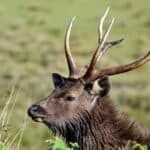
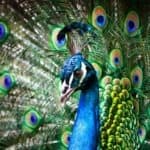
Endemic & Rare Species
Notable Populations
- Seasonal congregations of wintering and passage waterbirds (waders, herons, storks, ducks) at small reservoirs/creeks (e.g., Diu's Fudam wetland and Damanganga-linked waterbodies), important locally despite modest wetland size.
- Locally prominent Indian flying fox day-roosts (tree colonies) that are regionally meaningful ecosystem-service providers (pollination/seed dispersal).
- Managed/contained flagship mammal displays (notably Asiatic lion and deer parks around Silvassa) that shape the territory's mainstream wildlife tourism footprint.
- Coastal fish and invertebrate nursery function in estuarine/creek habitats (mangrove-associated zones), supporting nearshore fisheries biodiversity.
Recent Changes
- Increasing human-wildlife interface in inland enclaves (settlement expansion, roads) has coincided with more frequent reports of leopard movement near forest edges in parts of western India; in DNHDD this typically manifests as occasional conflict-risk rather than consistent viewing.
- Wetland quality and bird use can fluctuate strongly year-to-year with monsoon intensity, water retention in small reservoirs, and local disturbance (sand mining, encroachment, waste inputs).
- Coastal development pressures (shoreline hardening, lighting, recreational beach use) are growing concerns for coastal birds and sea-turtle conservation, alongside fisheries bycatch risk.
- Localized habitat improvement efforts (plantation, roadside greening, small-scale mangrove/creek-edge cleanups where implemented) can quickly increase visibility of common birds and small mammals, but benefits depend on sustained protection and reduced disturbance.
- Continued scarcity of resident Gyps vultures in western India persists decades after major declines; any recovery is slow and closely tied to veterinary-drug compliance and food availability.
Wildlife Viewing
Dadra and Nagar Haveli and Daman and Diu (DNHDD) offers varied wildlife across small, separate areas: inland forests near Silvassa/Khanvel and coastal estuaries by Daman and Diu. You can easily see deer, big cats in parks, many birds, butterflies, reptiles, shorebirds, and intertidal life. Best for short half- to full-day trips.
Best Seasons
Winter (Nov-Feb)
Best overall visibility and comfort. Peak birding: migratory waterfowl and waders on rivers, estuaries and lakes around Daman and Diu; pleasant temperatures for walking trails around Silvassa/Khanvel. Great time for dawn-and-dusk wildlife drives in the managed parks.
Post-monsoon / Early winter (Oct-Nov)
Fresh greenery, active butterflies and insects, many birds still around, and forest edges are lively. Trails are scenic and humidity begins to ease-excellent for photography and short nature walks.
Monsoon (Jun-Sep)
Lushest landscapes inland (Silvassa-Khanvel belt) with frogs, reptiles, and big bursts of butterflies and flowering plants. Birding is still rewarding but rain can limit access and visibility; coastal conditions can be windy/rough. Choose short forest walks between showers and focus on herps, insects, and rainforest-like ambience.
Summer (Mar-May)
Hot and humid on the coast; inland heat builds too. Wildlife concentrates near water sources (helpful for sightings in parks and along rivers), and early-morning birding can still be productive. Plan very early starts, shaded trails, and midday breaks.
Top Wildlife Experiences
- Vasona Lion Safari Park (near Silvassa): take the scheduled safari/drive to look for Asiatic lions (in a managed setting), spotted deer, and peafowl-go at opening time for the best activity and light.
- Satmaliya Deer Park (Dadra & Nagar Haveli): combine a calm morning visit for close-up deer viewing with nearby forest-edge birding; bring binoculars for drongos, barbets, and raptors overhead.
- Khanvel-Dudhani nature day: do an early river/reservoir watch for kingfishers, egrets and raptors, then a late-afternoon forest walk on quieter village roads for butterflies and reptiles after rains.
- Daman Ganga river & estuary birding (Daman): scan mudflats/riverbanks at low tide for herons, egrets, sandpipers and other shorebirds; dawn is best and tides strongly influence what you'll see.
- Devka/Jampore coastal bird walk (Daman): explore beach and nearshore habitats for gulls, terns and waders-pair it with a sunset scan for seabirds when winds pick up.
- Fudam area birding (Diu): visit freshwater/green patches near Fudam and nearby low-lying areas for resident and seasonal birds; combine with a relaxed cycle/scooter loop to cover multiple viewpoints.
- Rocky-shore intertidal exploration (Diu coast, e.g., around rocky stretches): at low tide, look for crabs, molluscs and tidepool life; a simple field guide and careful footing turn this into a memorable mini 'marine safari'.
- Sunrise raptor watch from open countryside edges (Silvassa/Khanvel): pick a quiet roadside viewpoint near forest-agriculture edges and scan for kites, eagles, and harriers (seasonal), especially in winter.
Wildlife Watching Types
Guided Options
- Forest Department/park-run safaris and entry programs at Vasona Lion Safari Park (near Silvassa) and Satmaliya Deer Park-check on-site for current safari timings and rules.
- Local naturalist-led birding walks in Daman (estuary + beach circuits): ideal for visitors who want help with tides, ID, and best dawn viewpoints.
- Diu nature circuits with local guides (cycle/scooter-based): combine coastal birding, freshwater-green patches (Fudam area), and low-tide intertidal stops in a single half-day.
- Eco-stay and resort-arranged nature walks around Khanvel/Dudhani: many properties can connect you with local guides for forest-edge birding, butterfly walks, and monsoon night-herp etiquette (observe only, no handling).
- Community-guided village-edge walks near Silvassa: simple, practical outings focused on birds, butterflies, and plant life-best booked via local homestays or tour operators based in Silvassa.
Ecosystems
Dadra and Nagar Haveli and Daman and Diu has two main ecosystems. Around Silvassa are low hills and river valleys with tropical deciduous forest, river-edge corridors, and farms. Daman and Diu are altered coastal islands with sandy beaches, rocky shores, estuaries, and small mangrove–saltmarsh patches. Monsoon, the Damanganga, and heavy urban, tourist and industrial use shape biodiversity.
Biomes
Monsoon-driven tropical deciduous forests (often teak- and mixed-deciduous dominated) in the inland enclave around Silvassa, grading into scrub/secondary woodland in disturbed areas.
Primary terrestrial biome in Dadra & Nagar Haveli; patchy to limited in Daman/Diu where settlement and agriculture dominate.
Rivers, streams, and impounded waters associated with the Damanganga system and local drainage-supporting riparian vegetation, sand/gravel bars, and freshwater fisheries.
Linear networks throughout Dadra & Nagar Haveli; smaller, localized presence in Daman and Diu.
Estuarine creeks, tidal flats, saltmarsh-like margins, and small mangrove stands near river mouths and protected inlets; seasonal inundation is common during monsoon.
Small but ecologically important pockets, concentrated around Daman's coastal creeks/estuary and limited sites near Diu.
Nearshore Arabian Sea waters around Daman and Diu, including surf zones, nearshore reefs/rocky bottoms, and soft-sediment seabeds supporting coastal fisheries.
Dominant natural biome for the Daman and Diu enclaves; absent from inland Dadra & Nagar Haveli.
Habitats
Teak/mixed deciduous forest tracts and regenerating secondary stands in Dadra & Nagar Haveli; canopy seasonally open in the dry period.
Degraded forest edges, scrubby woodland, and tree-dominated fallows around villages/roads in the inland enclave.
Small open patches, riverine openings, and human-created clearings/fallows that function as seasonal grasslands within the inland mosaic.
Damanganga River corridor and tributaries: riparian strips, pools/runs, and monsoon spate dynamics; key freshwater habitat connectivity axis.
Small reservoirs/impoundments and quarry/borrow pits that hold water seasonally or perennially, used by waterbirds and local fisheries at times.
Tidal creeks and low-lying backwaters near the coast; seasonally flooded fringes and brackish-water habitats.
Brackish-to-saline marshy margins along creeks/estuaries and behind beaches, expanding in monsoon and contracting in the dry season.
Sparse to locally dense mangrove patches in sheltered tidal sections (where substrate and salinity allow), providing nursery habitat for fish and crustaceans.
Damanganga estuarine zone near Daman: mixing of fresh and salt water, mudflats, and high productivity supporting fisheries and bird use.
Highly modified coastal strip with dunes/berms, coastal vegetation remnants, engineered shorelines, and port/harbor influences.
Sandy beaches in Daman and Diu (tourism-heavy), with dynamic erosion/accretion and limited natural dune vegetation in many stretches.
Rocky intertidal platforms and boulder shores, especially around Diu, with tidepool communities and algal growth on exposed rock.
Low coastal cliffs/bluffs and rock faces along parts of Diu's shoreline, supporting crevice flora and seabird perching/roosting micro-sites.
Nearshore soft sediments (sand/mud) and rocky bottoms around Daman/Diu supporting demersal fauna and coastal fisheries.
Immediately offshore Arabian Sea waters used by pelagic fish and influenced by seasonal monsoon-driven currents and productivity.
Dense built-up areas in Daman town, Diu town, Silvassa and industrial estates; fragmented green spaces and modified drainage.
Cropland mosaics (paddy in wetter pockets, horticulture and field crops elsewhere), interspersed with villages and irrigation features.
Orchards and planted tree crops (and some production forestry/plantings) within the inland agricultural-forest matrix.
Ecoregions
Conservation
Primary Threats
- In DNH, forest and scrub mosaics near Silvassa are fragmented by industrial estates, quarrying pockets, and settlement expansion; in Daman and Diu, coastal habitats are squeezed by tourism facilities, shoreline development, and conversion of open land to built-up areas.
- Road widening and higher traffic between Silvassa-Vapi-Valsad and local connector roads increase wildlife mortality and barrier effects; in Daman/Diu, seawalls, promenades, and coastal protection works can reduce beach width and alter natural sediment movement, affecting shore-dependent fauna.
- Industrial effluents and urban sewage pressures can degrade riverine/estuarine water quality (notably in the Daman Ganga estuary and connected creeks), while beach litter and marine plastics affect intertidal habitats and increase entanglement/ingestion risks for marine fauna.
- Leopard presence in and around the forest-village interface in DNH leads to occasional livestock depredation and accidental encounters; crop raiding by wild boar and nuisance macaques around orchards/fields also drives negative perceptions of wildlife.
- High footfall on beaches and coastal recreation in Daman/Diu (night lighting, noise, vehicles near shore) can disturb roosting/foraging birds and degrade sensitive dune/intertidal zones; in DNH, unregulated visitation to forest recreation spots increases disturbance and waste.
- The inland enclave is within a broader western-India trafficking landscape where pangolins and other small fauna can be targeted; opportunistic capture and transit are risks given proximity to major transport corridors in Gujarat-Maharashtra.
- While large-scale hunting is not typical, occasional snaring/poaching of small ungulates and wild boar can occur in fragmented forest patches, often linked to subsistence or retaliatory motives.
- Localized fuelwood collection and selective felling in accessible forest edges in DNH can simplify understory structure and reduce habitat quality, especially where enforcement is stretched.
- Stone quarrying and riverbed material extraction in/around the inland enclave and adjacent regions can remove hillock/scrub habitats, increase sedimentation, and create hazardous pits; coastal sand removal pressures (where occurring) exacerbate erosion.
- Nearshore fishing around Daman/Diu faces risks from high effort, juvenile catch, and bycatch in gillnets; seasonal peaks and tourism-driven demand can increase pressure on local stocks and sensitive species.
- Embankments, creek filling, drainage alteration, and hard coastal protection structures can reduce mangrove recruitment and disconnect wetlands from tidal exchange; upstream water abstraction can alter estuarine salinity regimes important for mangroves and fish nurseries.
- Sea-level rise, stronger storm surges, and changing monsoon patterns heighten coastal erosion and saline intrusion risks in Daman/Diu; in DNH, hotter summers and rainfall variability can increase fire risk and stress on riparian vegetation and small water bodies.
- In DNH forest edges, invasive plants such as Lantana camara and Prosopis juliflora can outcompete native regeneration and reduce forage quality; in wetlands/creeks, invasive aquatic weeds (e.g., water hyacinth where present) can choke waterways.
- Groundwater extraction to meet urban/industrial demand around Silvassa and tourism peaks in coastal enclaves can reduce baseflows and small wetland persistence; unsustainable harvest of minor forest produce in localized areas can reduce regeneration.
- Rapid densification around Silvassa and expansion of urban services in Daman/Diu increase edge effects (lights, dogs, waste) that degrade habitat quality and increase wildlife-human contact and roadkill.
Did You Know?
You can see Asiatic lions in this union territory: the Vasona Lion Safari near Silvassa keeps lions even though the species' only wild Indian population lives in and around Gir (Gujarat).
The UT packs two very different wildlife worlds into one administration: teak-dominated inland deciduous forest around Silvassa and salty mangrove-mudflat ecosystems around Daman-habitats that support entirely different bird and mammal communities.
Diu is best known for beaches, yet its most reliable birdwatching hotspot is inland: the Fudam Reservoir regularly draws wintering ducks and waders because it's one of the few consistent freshwater edges on the island.
Naida Caves in Diu-large, human-excavated cavern networks (linked locally to stone quarrying for Portuguese-era construction)-now function as cool, shaded micro-habitats that are commonly used as roosting/nesting space by small fauna (especially bats).
The mangroves around Daman aren't just "trees in salt water": at low tide you can often spot specialized mudflat life (such as mudskippers and fiddler crabs) that survives by breathing/foraging on exposed, oxygen-poor coastal sludge.
The Dadra & Nagar Haveli Wildlife Sanctuary (near Silvassa) is the union territory's largest protected wild area at about 92 km²-by itself, it's more than twice the land area of the entire island-district of Diu (~40 km²).
Roughly one-fifth of Dadra & Nagar Haveli district's land area falls inside that single sanctuary (about 92 km² out of ~491 km²), giving the UT an unusually high share of protected forest for its size.
Diu's Fudam Reservoir is the island's biggest freshwater wetland; on a small sea-island with limited natural freshwater, that makes it the key "magnet" site for wintering waterbirds.
The Daman Ganga estuary holds the UT's largest mangrove-and-mudflat habitat patch, making it the territory's most important coastal nursery ground for estuarine fish and crabs.