N S W E
Wildlife Expeditions

Wildlife of
Tripura

Tripura packs Indo-Burma hotspot forests, bamboo thickets, and wetland refuges into a compact borderland-ideal for primate, bird, and herp watching.
20 Species
10,486 km² Land Area
Overview

About Tripura

Tripura has lush, rain-fed hills and valleys where plants and animals from South and Southeast Asia meet. In the Indo-Burma biodiversity hotspot and bordered by Bangladesh on three sides, its small forests hold a rich mix of mammals, birds, reptiles, and amphibians, so every short drive can feel like a new habitat. Key habitats are moist deciduous and semi-evergreen hill forests with bamboo and cane, river corridors, and wetland complexes. Protected areas such as Sepahijala and Gumti Wildlife Sanctuaries, and wetlands like Rudrasagar, protect woodland, lake, and reservoir edges and support waterbirds and seasonal movements. The close mosaic of forest patches, bamboo, wetlands, and villages lets visitors see primates, forest birds, and wetland species in a small area, making rewarding “forest-to-water” wildlife days.

Physical Features

Geography

Tripura, in the Indo-Burma biodiversity hotspot, has low hills, river valleys, and tropical forests. North–south hill ranges and valleys create habitat changes among evergreen, semi‑evergreen and moist deciduous forests, bamboo stands, riparian corridors and wetlands that shape where species live. Western lowlands and rivers support floodplain and wetland animals. Bordered by Bangladesh on three sides allows cross‑border movement.

10,486 km² Land Area
3rd smallest state in India (by area) Size Rank
India Country
State Type
Elevation Range

~10 m (western lowlands) to 939 m (Betlingchhip, Jampui Hills)

Coastline

None-landlocked (no ocean coastline; freshwater wetlands and rivers are the main aquatic habitats)

Key Landscapes

North-south hill ranges (e.g., Jampui Hills/Longtharai, Atharamura, Baramura) with forested slopes and ridge-top habitats Intermontane valleys and western plains around Agartala that support agriculture-forest mosaics and remnant woodland patches Major river systems and riparian corridors: Gumti, Manu, Khowai, Haora, Feni, Muhuri (seasonal flow variation influences wetlands and riverine forest) Wetlands, oxbow-like depressions, and lakes/reservoirs (notably Rudrasagar Lake and the Gumti Reservoir) important for waterbirds, amphibians, and aquatic fauna Extensive bamboo-dominated forests and secondary growth (key cover and forage for many forest species) Protected forest landscapes such as Sepahijala and Gumti that represent lowland-hill forest and wetland habitat complexes
State Symbols

Official Wildlife Symbols

animal

Phayre's langur

bird

Green imperial pigeon

tree

Agarwood (agar tree)

wildflower

Nagkesar (Ceylon ironwood)

Parks & Reserves

Protected Areas

Tripura's protected areas are a small but important part of the Indo-Burma biodiversity hotspot. They protect lowland semi-evergreen forests, bamboo brakes and key wetlands. Protection comes from a few National Parks and several state Wildlife Sanctuaries. Ramsar wetlands and elephant reserve and corridor work help keep habitats connected to Bangladesh, Assam and Mizoram.

Protected Coverage

≈6-7% of Tripura's land area (by notified National Parks + Wildlife Sanctuaries; approximate)

National Parks & Preserves

Clouded Leopard National Park

≈5.1 km²

A small but high-value forest block created specifically to safeguard clouded leopard habitat; notable for dense, humid forest structure that also supports rich primate and bird diversity.

Clouded leopard Bengal slow loris Capped langur Hoolock gibbon Great hornbill

Bison (Rajbari) National Park

≈31.6 km²

One of Tripura's best landscapes for large herbivores and associated predators; valued for gaur conservation and as part of a broader forested belt important for elephant movement.

Gaur (Indian bison) Asian elephant Sambar Leopard Hoolock gibbon

State & Provincial Parks

Gumti Wildlife Sanctuary

≈389.5 km²

Tripura's largest sanctuary and a flagship conservation area with extensive forest and the Gumti/Dumboor wetland system nearby; important for elephants, large ungulates, hornbills, and overall landscape connectivity.

Asian elephant Gaur (Indian bison) Leopard Hoolock gibbon Great hornbill

Trishna Wildlife Sanctuary

≈194.7 km²

Well-known for gaur and mixed evergreen/bamboo habitats; also supports primates and functions as an important refuge in the south of the state for forest wildlife viewing and conservation.

Gaur (Indian bison) Asian elephant Hoolock gibbon Capped langur Leopard

Sepahijala Wildlife Sanctuary

≈18.5 km²

A highly accessible sanctuary close to Agartala, notable for primate diversity, rich birdlife around waterbodies, and strong education/interpretation value (including managed facilities).

Phayre's leaf monkey Capped langur Hoolock gibbon Indian python Oriental pied hornbill

Rowa Wildlife Sanctuary

≈0.85 km²

A very small but locally important forest patch for birds and arboreal mammals; valuable as a micro-refuge and for monitoring species persistence in fragmented landscapes.

Bengal slow loris Capped langur Leopard cat Indian python Oriental pied hornbill

Wildlife Refuges

Rudrasagar Lake (Ramsar Site)

≈2.4 km² (Ramsar wetland area; approximate)

Internationally recognized wetland supporting wintering and resident waterbirds; important for maintaining aquatic biodiversity and wetland-dependent livelihoods in a highly human-dominated landscape.

Lesser whistling-duck Purple swamphen Pheasant-tailed jacana Little cormorant Bronze-winged jacana

Tripura Elephant Reserve (Project Elephant landscape)

≈500-600 km² (landscape designation; approximate)

A landscape-scale designation aimed at conserving elephants and maintaining movement corridors through reserve forests and protected areas; critical in reducing fragmentation impacts and supporting long-term connectivity.

Asian elephant Leopard Gaur (Indian bison) Hoolock gibbon Capped langur

Dumboor (Gumti) Reservoir / Wetland Complex

Seasonally variable; typically tens of km² of open water and associated marsh habitat

A seasonally varying reservoir-wetland system associated with the Gumti basin that concentrates waterbirds and supports fish/reptile biodiversity; complements surrounding forest protection by adding key aquatic habitat.

Little egret Indian pond heron Lesser whistling-duck Osprey Water monitor lizard

Wilderness Areas

  • Jampui Hills ridge forests (north Tripura) - relatively remote hill forests with high value for birds and primates
  • Longtharai Valley / Chawmanu forest belt (Dhalai) - large reserve-forest landscapes supporting connectivity toward Mizoram
  • Atharamura-Baramura hill ranges - extensive interior forest blocks with limited road penetration in parts
  • Upper Gumti river catchment and gorges - rugged terrain and forest-water interfaces supporting corridor function
  • South Tripura forest belt adjoining Trishna-Gumti landscapes - remaining roadless patches important for elephant movement
Animals

Wildlife

Tripura lies in the Indo-Burma biodiversity hotspot and is dominated by low, forested hill ranges, bamboo brakes, evergreen/semi-evergreen forest patches, river valleys and wetlands. This mix-plus strong biogeographic links to Bangladesh, Assam and Mizoram-supports a Northeast-India fauna with primates, forest cats, Asian megafauna (elephant, gaur) and high bird diversity, alongside rich freshwater fish and amphibians tied to monsoon-fed streams, lakes and reservoirs (e.g., Gumti). Wildlife viewing is typically centered on protected areas such as Sepahijala Wildlife Sanctuary, Gumti Wildlife Sanctuary and Trishna Wildlife Sanctuary, plus community forests and forest reserves.
≈70-90 species recorded (state-level checklists vary by survey coverage) Mammals
≈250-320 species recorded (including forest, wetland and migratory species) Birds
≈45-65 species recorded (snakes, lizards, turtles/terrapins) Reptiles
≈20-35 species recorded (stream- and forest-associated frogs/toads) Amphibians
≈150-220+ freshwater fish species reported from rivers, lakes and reservoirs (taxonomy and counts vary among sources) Fish
Examples

Iconic Species

Western Hoolock Gibbon India's only ape; Tripura's forest fragments and protected areas hold important populations, and gibbons are a flagship for canopy forest health.
Phayre's Leaf Monkey A charismatic, leaf-eating primate of Northeast India; Tripura is within its Indian range, making it a sought-after primate for visitors and researchers.
Capped Langur One of the most frequently encountered primates in Tripura's forests; its presence is a hallmark of intact forest patches and bamboo-rich landscapes.
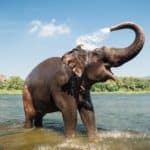
Asian Elephant
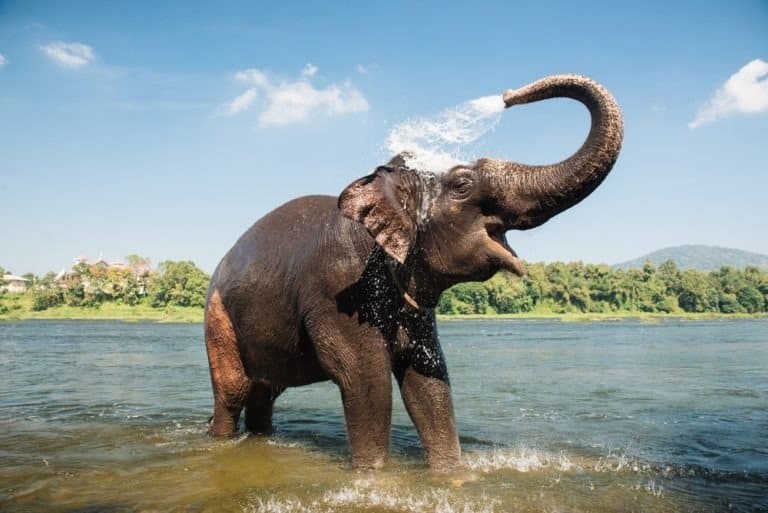
Asian Elephant Seen in forested landscapes (notably where corridors persist); elephants define the state's large-mammal conservation story and human-wildlife interface.
Gaur The largest wild bovine; Tripura's protected forests (e.g., Trishna landscape) are known for gaur, a premier species for forest safaris.
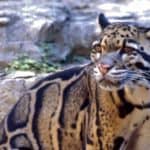
Clouded Leopard
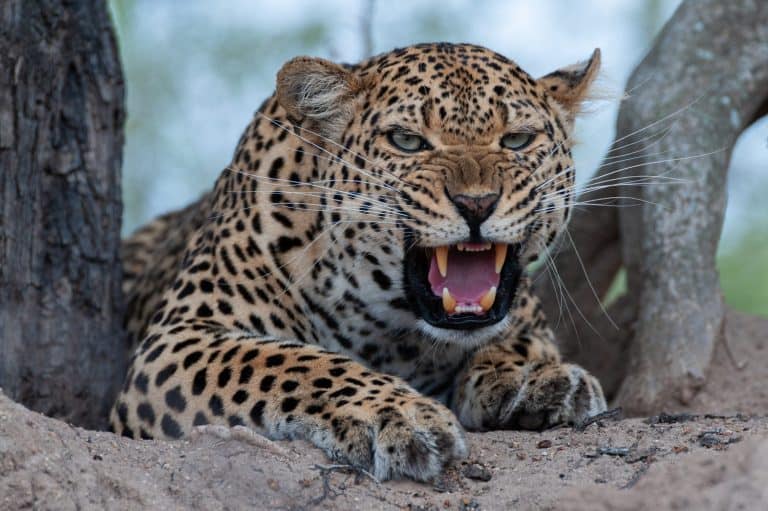
Clouded Leopard A secretive forest cat of the Indo-Burma region; rarely seen but a key draw for camera-trapping and a symbol of healthy evergreen/semi-evergreen forests.
Great Hornbill A flagship forest bird dependent on large trees for nesting; sightings indicate relatively mature forest structure.
Oriental Pied Hornbill More adaptable than the great hornbill and often encountered along forest edges and riverine habitats-an iconic 'forest soundscape' species.
King Cobra
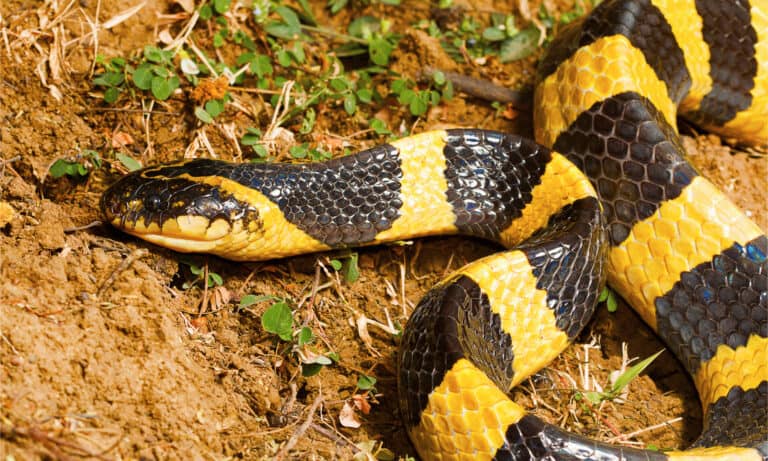
King Cobra An apex reptile in Northeast Indian forests; Tripura's humid, wooded habitats can support this species, prized by herpetology-focused visitors.
Fishing Cat
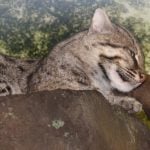
Fishing Cat Strongly tied to wetlands and marshy edges; where present, it represents Tripura's wetland biodiversity value beyond forests.

Endemic & Rare Species

Phayre's Leaf Monkey

Trachypithecus phayrei

Endangered (IUCN); locally vulnerable due to forest loss and fragmentation

Tripura is part of the species' limited Indian distribution; conserving it protects contiguous canopy and reduces isolation of small primate groups.

Western Hoolock Gibbon

Hoolock hoolock

Endangered (IUCN); declining in many fragmented landscapes

As a canopy specialist that avoids ground travel, it is highly sensitive to broken forest; Tripura's remaining blocks and corridors are critical.

Clouded Leopard

Neofelis nebulosa

Vulnerable (IUCN); rare and heavily dependent on forest cover

A key indicator of intact forest food webs; protection benefits a wide guild of prey and smaller carnivores.

Bengal Slow Loris

Nycticebus bengalensis

Vulnerable (IUCN); threatened by habitat loss and capture for illegal trade

A nocturnal primate that is easily missed and often under-reported; its persistence signals relatively undisturbed nocturnal forest structure.

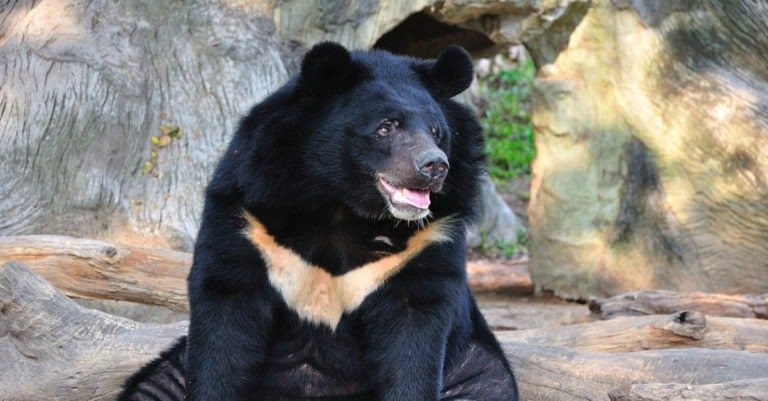
Asiatic Black Bear

Ursus thibetanus

Vulnerable (IUCN); increasingly pressured by habitat fragmentation and conflict

Now uncommon in many parts of the region; where it persists in Tripura's hill forests, it underscores the need for large, connected habitats.

Dhole (Asiatic Wild Dog)

Cuon alpinus

Endangered (IUCN); sensitive to prey depletion and disturbance

A wide-ranging pack predator that requires extensive forest and prey base; records are often from indirect signs/camera traps rather than direct sightings.

White-rumped Vulture

Gyps bengalensis

Critically Endangered (IUCN); recovering slowly in parts of India after veterinary diclofenac restrictions

Where present, it reflects the broader North-East's scavenger conservation challenge and the importance of safe food sources and roost sites.

Notable Populations

  • Important primate landscapes within Northeast India for Western Hoolock Gibbon (Hoolock hoolock) and leaf monkeys (Trachypithecus spp.), especially where canopy connectivity remains.
  • Regionally significant gaur (Bos gaurus) presence associated with protected forests (notably the Trishna landscape).
  • Transboundary relevance for wide-ranging species (e.g., Asian elephant) due to Tripura's proximity to Bangladesh and reliance on cross-border/edge-of-range movement corridors.

Recent Changes

  • Ongoing habitat fragmentation from development, shifting cultivation legacies and linear infrastructure has increased isolation risks for canopy-dependent primates (notably hoolock gibbons and leaf monkeys).
  • Human-elephant conflict has remained a major conservation and social challenge in parts of the state, reflecting pressure on movement corridors and forage availability.
  • Improved use of camera traps and biodiversity surveys in protected areas has increased confirmations of elusive carnivores (e.g., clouded leopard) even when direct sightings remain rare.
  • Wetland and river-edge habitat alteration (siltation, encroachment, fishing pressure) has likely reduced suitability for wetland specialists in some localities, while protected reservoirs/lakes can still act as refuges.
Visit

Wildlife Viewing

Tripura offers compact wildlife viewing in the Indo-Burma hotspot, with evergreen and semi-evergreen forests, wetlands, and reservoir edges near towns like Agartala. It is known for primates (capped langur, slow loris), rich lake and forest-edge birds, deer, wild boar, and occasional big-cat signs. Sepahijala and Gumti offer short walks, lake birding, and overnight stays to catch dawn and dusk activity.

Best Seasons

Winter (Nov-Feb)

Best overall conditions: cool, dry air improves visibility and comfort for forest walks and lake birding. Migratory waterbirds and wintering forest birds peak around wetlands and reservoirs. Mammal sightings improve along edges and tracks; mornings are especially productive.

Spring / Pre-monsoon (Mar-May)

Warmer and more humid, but excellent for dawn birding and vocal activity (breeding season). Forest fruiting/flowering can draw birds and primates to canopy edges. Expect heat buildup by late morning; plan early starts and shaded trails.

Monsoon (Jun-Sep)

Lush landscapes and amphibian/reptile activity increase; forests feel at their most 'tropical'. Rain can limit access on some forest roads and reduce visibility, but short bursts can still allow rewarding walks between showers. Leeches and slippery trails are common-bring proper gear.

Post-monsoon (Oct-early Nov)

Fresh greenery with improving access and pleasant temperatures. Good mix of resident bird activity and the beginning of winter arrivals at wetlands. Great time for photography: cleaner air, vivid foliage, and active wildlife after rains.

Top Wildlife Experiences

  • Sepahijala Wildlife Sanctuary: early-morning birding circuits around the lake edges and forest trails-look for kingfishers, barbets, woodpeckers, and mixed-species feeding flocks.
  • Gumti Wildlife Sanctuary (Dumboor/Dumboor Lake fringes): reservoir-side scanning for waterbirds and raptors, plus forest-edge walks for primates and deer at dawn and late afternoon.
  • Trishna Wildlife Sanctuary: guided forest walk and watchtower-style scanning for gaur (Indian bison), sambar, and other ungulates-best at first light in drier months.
  • Rowa Wildlife Sanctuary (near Dharmanagar): short, focused bird-and-butterfly session in dense green forest-ideal for travelers wanting a half-day 'micro-safari' in North Tripura.
  • Clouded Leopard National Park: quiet forest drives/walks to learn about carnivore habitat and sign (tracks, scat, scratch marks); sightings are rare, but the experience is a strong 'wild Indo-Burma' immersion.
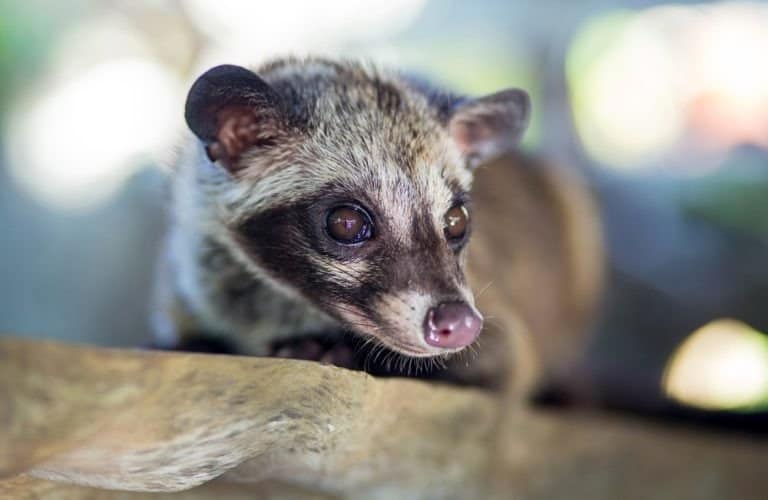
  • Night wildlife outing (where permitted) near forest fringes: spotlighting for nocturnal life such as civets, owls, and potentially slow loris-only with an authorized guide and within legal/ethical limits.
  • Wetland birding day trip: combine multiple lakes/ponds around Agartala and Sepahijala for a full checklist day-best in winter for ducks, herons, egrets, and waders.

Wildlife Watching Types

Birding hotspots (wetlands, reservoir edges, forest trails) Primate watching (langurs and other canopy species in select reserves) Mammal tracking and forest-edge scanning (deer, wild boar, gaur in suitable habitats) Nocturnal wildlife observation (owls/civets/loris where permitted and guided) Butterfly and dragonfly watching (especially post-monsoon through pre-monsoon) Herping (frogs, lizards, snakes) during and just after monsoon-guided and safety-first Wildlife photography (dawn/dusk soft light, wetland reflections in winter)

Guided Options

  • Forest Department-authorized guides at major protected areas (Sepahijala, Gumti, Trishna): hire on-site for timed entry walks, birding loops, and habitat interpretation.
  • Community/local naturalist birding days around wetlands near Agartala: practical for short itineraries and winter migratory bird periods.
  • Multi-reserve circuit with a dedicated naturalist driver-guide (3-5 days): typically links Sepahijala + Gumti + Trishna (and optionally Rowa/Clouded Leopard NP) with early-start birding and late-afternoon mammal sessions.
  • Night-walk/spotlighting program (limited, permission-dependent): arrange in advance through park authorities or authorized operators; emphasizes ethical distance, low light use, and strict adherence to rules.
  • Student/interpretation programs at sanctuary interpretation centers (where available): short talks and guided nature trails that are good for families and first-time visitors.
Habitats

Ecosystems

Tripura is a small, hilly state in northeast India in the Indo-Burma biodiversity hotspot. Its lands are mostly tropical moist deciduous and semi-evergreen forests on hill ranges and valleys, mixed with regrowth from shifting farming, bamboo, rubber plantations, and paddy mosaics. Rivers, Gumti reservoir, wetlands, ponds, and seasonally flooded lowlands support rich birds and wildlife in areas like Sepahijala, Gumti.

Biomes

Tropical Rainforest

Semi-evergreen to evergreen hill forests and moist upland patches with tall, multi-layered canopies, many lianas and epiphytes, and bamboo-rich understories typical of Indo-Burma hill systems.

Patchy but significant in the hill ranges, best retained inside and around protected areas and less-accessible slopes; generally a minority compared with moist deciduous/secondary forests.

Tropical Dry Forest

Represented chiefly by tropical moist deciduous forests (often grouped under seasonal tropical forests) and extensive secondary forests/regrowth following shifting-cultivation cycles; canopy seasonality is pronounced in drier months, and many landscapes form a forest-agriculture mosaic.

Widespread and dominant across much of the state outside the wettest evergreen patches; extensive in valleys, lower slopes, and human-modified hill tracts.

Freshwater

Rivers (e.g., Gumti and other tributary networks), reservoirs, forest streams, village ponds, and beels provide flowing and standing-water habitats supporting fish, amphibians, otters, and waterbirds.

Statewide along drainage lines and in valley bottoms; locally extensive around major reservoirs and large pond/beel complexes.

Wetland

Seasonally inundated lowlands, riparian marshes, swampy depressions, and wet grass/edge habitats around lakes, reservoirs, and river floodplains; important for migratory and resident waterbirds.

Scattered but recurrent across low-lying areas and around major waterbodies; most prominent in valley bottoms and flood-prone plains near Bangladesh-facing lowlands.

Habitats

Forest

Predominantly tropical forest cover forming the ecological backbone of Tripura; includes intact blocks in protected areas (e.g., Sepahijala, Gumti) and extensive secondary forests elsewhere.

Rainforest

Semi-evergreen/evergreen hill-forest patches with dense, humid structure and high plant diversity; often persists on wetter slopes and protected interiors.

Deciduous Forest

Moist deciduous forests and their secondary stages are widespread; common along lower slopes and valleys and often intergrade with bamboo-dominated regrowth after shifting-cultivation cycles.

Woodland

Open, degraded forest and scrubby woodland forms occur near settlements and along repeatedly cultivated or burned slopes, forming transitional habitat between closed forest and agriculture.

Grassland

Small, fragmented grasslands occur as riverine edges, reservoir drawdown zones, fallows, and open patches created by cultivation/clearing; typically not extensive or continuous.

Shrubland

Early-successional shrub and bamboo-rich regrowth on abandoned shifting-cultivation fields and disturbed slopes; important for edge-adapted birds and small mammals.

Mountain

Low to moderate hill ranges (parallel ridges) with steep slopes, narrow valleys, and forested watersheds; these topographic gradients drive strong local habitat variation.

River/Stream

Numerous short, rainfall-fed rivers and forest streams with riparian corridors; key for connectivity and aquatic biodiversity.

Lake

Natural and managed lakes within forest landscapes (notably in/near Sepahijala) that support waterbirds and amphibians.

Pond

Village ponds and floodplain wetlands (including oxbow lakes) are ubiquitous in settled valleys; they provide critical dry-season water, fish culture areas, and wetland microhabitats.

Wetland

Marshy edges of floodplain lakes and wetlands, riparian flats, and seasonally flooded depressions; important breeding/foraging grounds for birds and herpetofauna.

Swamp

Localized swampy depressions and saturated forest-edge areas, especially in low-lying zones and around flood-retaining basins.

Marsh

Emergent-vegetation marshes around reservoirs, lakes, and slow-moving river sections, expanding seasonally with monsoon inundation.

Agricultural/Farmland

A dominant human land use in valleys and gentler slopes: paddy fields, mixed smallholder crops, and jhum/fallow mosaics that create strong edge effects with adjacent forests.

Urban

Urban ecosystems concentrated around Agartala and district towns; includes built-up areas, urban lakes/ponds, and remnant tree cover.

Suburban

Peri-urban village-town fringes with home gardens, orchards, small wetlands, and mixed tree cover forming a patchwork with agriculture and secondary woodland.

Ecoregions

Mizoram-Manipur-Kachin Rain Forests (WWF) Lower Gangetic Plains Moist Deciduous Forests (WWF)
Protection

Conservation

Primary Threats

  • Fragmentation of hill forests into small patches due to settlement expansion, village roads, and conversion of mixed native forests into simplified stands (including plantations) reduces contiguous habitat needed by hoolock gibbons, Phayre's langurs, hornbills, and wide-ranging mammals.
  • Shifting cultivation and expansion of horticulture on hill slopes create a rotating mosaic of cleared plots and early successional growth; where fallow cycles shorten, regeneration is poorer and forest specialists decline, especially in the Jampui Hills-Longtharai landscape.
  • Local extraction of bamboo, fuelwood, and timber (including selective felling) degrades canopy continuity-critical for arboreal primates-around sanctuary buffers and community forests, and can open access routes that increase hunting.
  • Road widening, new link roads, rail expansion, and power/telecom corridors increase edge effects and wildlife mortality, while also splitting elephant movement routes between forest blocks (notably in south and central Tripura).
  • Asian elephants moving between fragmented forest patches raid paddy and other crops, leading to property damage, occasional human injury, and retaliatory actions; conflict hotspots occur near forest edges and traditional movement routes around Gumti and other southern/central forest blocks.
  • Opportunistic and customary hunting for bushmeat (birds, small mammals, ungulates) persists in some areas, particularly where access improves; it disproportionately impacts slow-breeding species and can empty forests even where tree cover remains.
  • Tripura's long border with Bangladesh and multiple transit routes increase risk of illegal trade in high-value species and derivatives (e.g., pangolins and other small mammals), requiring coordinated enforcement and intelligence-led patrols.
  • Runoff of fertilizers/pesticides from paddy and horticulture, plus untreated sewage/solid waste around towns and popular wetlands, contributes to eutrophication and degraded water quality in lakes and marshes that support waterbirds and fisheries (e.g., Rudrasagar and other valley wetlands).
  • Aquatic invasives (notably water hyacinth) choke wetlands and slow-flowing channels, while invasive shrubs/lianas in disturbed forests can suppress native regeneration-worsening habitat quality in already fragmented landscapes.
  • Greater rainfall variability and more intense downpours increase erosion and landslide risk on hill slopes, disrupt wetland hydrology, and can intensify seasonal water stress-affecting forest regeneration, prey availability, and the reliability of water sources used by elephants and other wildlife.
  • Altered river/wetland hydrology from embankments, siltation, and water regulation affects floodplain lakes and marshes; this can reduce habitat for aquatic plants, fish, and waterbirds and increase human pressure on remaining productive wetlands.
Fun Facts

Did You Know?

Tripura has a protected area named after a wild cat: Clouded Leopard National Park (in Sepahijala district). Even though it's small, the name reflects the clouded leopard's association with this corner of India's Indo-Burma forests.

Wild elephants in Tripura are part of a transboundary population: herds move along forest corridors that run right up to-and across-the India-Bangladesh border, so conservation and conflict management can't be solved by one country alone.

Sepahijala Wildlife Sanctuary's best-known waterbird habitat is centered on a man-made lake system; a landscape shaped by water storage and recreation ended up becoming one of Tripura's most reliable wildlife-watching sites.

Tripura sits at the western edge of several Southeast Asian forest lineages; primates like Phayre's leaf monkey (an endangered species) occur here at a range limit, meaning a small shift in forest cover can erase them from "westernmost India" locations.

Some of Tripura's most visible wildlife is concentrated in very small protected patches (like Rowa), showing how "micro-sanctuaries" can matter disproportionately in a heavily settled border state.

Rowa Wildlife Sanctuary in North Tripura is tiny-about 0.85 km²-making it one of the smallest wildlife sanctuaries in India, yet it still shelters full-fledged lowland-forest bird and primate communities.

Gumti Wildlife Sanctuary (~389 km²) is Tripura's largest wildlife sanctuary, protecting a large, connected block of Indo-Burma hotspot forest around the Gumti reservoir.

Rudrasagar Lake is Tripura's only Ramsar (internationally recognized) wetland site (designated 2005), highlighting its importance for waterbirds in a small state.

Tripura's forests support the western hoolock gibbon (Hoolock hoolock)-the only ape found in India-so the state is part of the country's entire "ape range."

Trishna Wildlife Sanctuary is a key refuge for gaur (Indian bison), the world's largest wild cattle species, in Tripura's low hill forests.

Thank you for reading! Have some feedback for us?