N S W E
Wildlife Expeditions

Wildlife of
Karnātaka

From Western Ghats rainforests to Deccan scrub and an Arabian Sea coast, Karnataka packs India's best chances for tigers, elephants, and endemics into one state.
43 Species
191,791 km² Land Area
Overview

About Karnātaka

Karnataka has many wild places: the misty Western Ghats in the west, dry deciduous forests and scrubby plateaus inland, and mangroves, estuaries, and beaches along the Arabian Sea. These areas host big animals—tigers, Asian elephants, leopards, dholes, and gaurs—and many frogs, snakes, and birds that live in the Ghats' rain-soaked valleys. The Western Ghats are the main home for much of the state's wildlife, with evergreen and semi-evergreen forests, shola-grassland patches, and fast streams that support species that live in small areas. Eastward, the Deccan Plateau's dry woodlands and open land help predators that roam far and large herbivores. Rivers like the Kabini, Cauvery, Tungabhadra, and Sharavathi are lifelines in dry months. Coastal estuaries and nearshore waters add seabirds and marine life. What is special about Karnataka is how quickly you can move between these habitats and still be in big-cat and elephant country, often within the same protected areas.

Physical Features

Geography

Karnataka's wildlife follows a west–east pattern: the humid Western Ghats and coast have tropical evergreen and semi-evergreen forests with many unique species, while the interior Deccan Plateau and rain‑shadow zones have dry deciduous forests, scrub and grasslands. Rivers and wetlands link habitats, and the Arabian Sea coast has mangroves, estuaries and nearshore marine areas important for birds, turtles and fish.

191,791 km² Land Area
8th largest state in India Size Rank
India Country
State Type
Elevation Range

Sea level to ~1,930 m (Mullayanagiri, Western Ghats)

Coastline

Arabian Sea coastline (Karavali) with estuaries/backwaters and mangrove patches; extensive nearshore marine habitat along the west coast

Key Landscapes

Western Ghats (Sahyadri) mountain chain along the western edge-core rainforest/evergreen and montane habitats, high endemism Malnad (Ghats and foothills)-moist deciduous to evergreen forest continuum and major elephant/tiger landscapes Deccan Plateau (east and central Karnataka)-dry deciduous forests, scrub, grasslands, rocky outcrops supporting open-country species Coastal plain (Karavali)-humid lowlands with estuaries, backwaters, mangroves, and beach/dune systems Cauvery (Kaveri) River basin-riparian forests, gorges, and reservoirs shaping movement corridors and dry-season refuges Krishna River basin (incl. Tungabhadra)-riverine habitats, wetlands, and irrigated mosaics influencing bird and mammal distributions (incl. downstream delta influences outside the state)
State Symbols

Official Wildlife Symbols

animal

Indian elephant

bird

Indian roller

tree

Sandalwood

wildflower

Lotus

Parks & Reserves

Protected Areas

Karnataka's protected areas cover the Western Ghats (evergreen and shola‑grassland with many endemic species), the Mysuru‑Kodagu deciduous forests (a key tiger–elephant area), river habitats (Cauvery, Kabini, Kali, Sharavathi), and coastal mangroves and bird wetlands. The network—National Parks, Wildlife/Bird Sanctuaries, Tiger Reserves, and Conservation/Community Reserves—is linked to Kerala and Tamil Nadu.

Protected Coverage

≈8-10% of Karnataka's land area is under formal protection (National Parks + Wildlife Sanctuaries/Bird Sanctuaries + Conservation/Community Reserves; approximate, varies by source and boundary updates).

National Parks & Preserves

Bandipur National Park (part of Bandipur Tiger Reserve)

≈874 km²

Flagship tiger-elephant landscape in the Nilgiri Biosphere region; extensive dry deciduous forests and grasslands support high densities of large mammals and excellent wildlife viewing along forest tracks.

Bengal tiger Asian elephant Indian leopard Gaur

Nagarahole National Park (Rajiv Gandhi National Park; part of Nagarahole Tiger Reserve)

≈643 km²

Renowned for tiger and leopard sightings, especially around the Kabini backwaters; rich riverine habitat and teak-bamboo forests support diverse mammals and birds.

Bengal tiger Indian leopard Asian elephant Dhole (Asiatic wild dog) Gaur

Bannerghatta National Park

≈104 km²

Important wildlife refuge on Bengaluru's edge, linking scrub-deciduous habitats and elephant movement corridors; notable for conservation value near a major metropolis.

Asian elephant Indian leopard Sloth bear Sambar deer

Kudremukh National Park

≈600 km²

Western Ghats shola-grassland and evergreen forest complex with high endemism; crucial watershed for multiple rivers and a stronghold for primates and forest specialists.

Lion-tailed macaque Nilgiri langur Malabar giant squirrel Gaur

Kali (Anshi) National Park

≈340 km²

Part of the Kali Tiger Reserve; rugged evergreen/semi-evergreen forests and river gorges with carnivores, hornbills, and diverse amphibians typical of the central Western Ghats.

Bengal tiger Indian leopard Great hornbill Gaur

State & Provincial Parks

Bhadra Wildlife Sanctuary & Tiger Reserve

≈492 km²

Mosaic of moist deciduous and evergreen patches around the Bhadra Reservoir; supports big cats, elephants, and rich birdlife, with boat/edge habitats increasing viewing opportunities.

Bengal tiger Asian elephant Indian leopard Gaur Malabar giant squirrel

Biligiri Ranganatha Temple (BRT) Tiger Reserve

≈574.82 km²

Ecotone reserve bridging Eastern and Western Ghats biota; varied habitats (scrub to evergreen) make it important for connectivity and diverse mammal communities.

Bengal tiger Asian elephant Dhole (Asiatic wild dog) Gaur

Dandeli Wildlife Sanctuary (core landscape within Kali Tiger Reserve)

≈866 km²

Western Ghats riverine forests along the Kali and tributaries; especially notable for hornbills and large mammals in a rugged, forested landscape.

Great hornbill Bengal tiger Indian leopard Gaur Asian elephant

Cauvery Wildlife Sanctuary

≈510 km²

Dry deciduous and riparian habitats along the Cauvery corridor; important for elephants, leopards, and river-associated biodiversity and connectivity with adjacent forests.

Asian elephant Indian leopard Sloth bear Gaur

Wildlife Refuges

Ranganathittu Bird Sanctuary

≈0.67 km²

Iconic river-island rookery on the Cauvery near Srirangapatna; one of South India's best-known waterbird breeding and congregation sites.

Painted stork Asian openbill Black-headed ibis Oriental darter Spot-billed pelican

Gudavi Bird Sanctuary

≈0.74 km²

Wetland and forest-edge habitat supporting seasonal nesting colonies and migratory waterbirds, valued for birdwatching in the Malnad region.

Little cormorant Indian pond heron Egrets (mixed) Darters (seasonal)

Attiveri Bird Sanctuary

≈0.73 km²

Reservoir-centered bird refuge in North Karnataka with wintering waterbirds and breeding heronries; important stopover/feeding habitat.

Painted stork Woolly-necked stork Little egret Black-headed ibis

Magadi Bird Sanctuary (Magadi Kere)

Small lake-based sanctuary (area varies with water spread)

Shallow lake system supporting large congregations of waterbirds in season; notable regional refuge for wetland-dependent species.

Bar-headed goose (seasonal) Northern shoveler (seasonal) Black-winged stilt Pintail (seasonal)

Wilderness Areas

  • Nilgiri Biosphere interface landscape: Bandipur-Nagarahole-Wayanad-Mudumalai forest block (large, relatively roadless core habitats and corridors)
  • Kabini backwaters and riparian forest mosaics (key dry-season wildlife concentrations for elephants and predators)
  • Sharavathi Valley and surrounding Western Ghats forests (steep, relatively less-fragmented valleys with evergreen cover)
  • Agumbe-Someshwara belt (rainforest ridges/valleys with high amphibian and reptile diversity; important connectivity)
  • Kudremukh shola-grassland plateau and high-elevation ridges (watershed wilderness with endemic-rich habitats)
  • Kali River gorge and Anshi-Dandeli interior forests (rugged, road-sparse evergreen/semi-evergreen tracts)
  • Talacauvery-Pushpagiri high rainfall forests (headwaters and cloud-forest-like habitats supporting endemics)
Animals

Wildlife

Karnataka's wildlife experience is defined by the Western Ghats biodiversity hotspot (evergreen and moist-deciduous forests with high endemism), the drier Deccan Plateau (scrub, grasslands, rocky outcrops), and a long Arabian Sea coastline with estuaries and nearshore marine life. The state holds some of India's best-known tiger-elephant landscapes (Bandipur-Nagarahole-BRT-MM Hills and adjoining Nilgiri forests) while also supporting Ghats endemics (amphibians, reptiles, and small mammals), big river systems (Cauvery, Kali, Sharavathi, Tungabhadra) and notable freshwater fish diversity (including globally threatened mahseer).
~180-200 species (statewide; includes Western Ghats endemics and widespread Indian mammals) Mammals
~500-550 species (Western Ghats forest birds + Deccan and coastal/estuarine migrants) Birds
~160-190 species (notably rich in Western Ghats snakes, lizards, and turtles) Reptiles
~80-100 species (high Western Ghats endemism; many stream- and leaf-litter specialists) Amphibians
~250-320 freshwater species (riverine + Western Ghats hill-stream fish; coastal/brackish species add further diversity) Fish
Examples

Iconic Species

Bengal Tiger
Bengal Tiger A flagship for Karnataka's protected landscapes; Bandipur-Nagarahole and adjacent forests are among India's most reliable tiger-viewing regions.
Asian Elephant
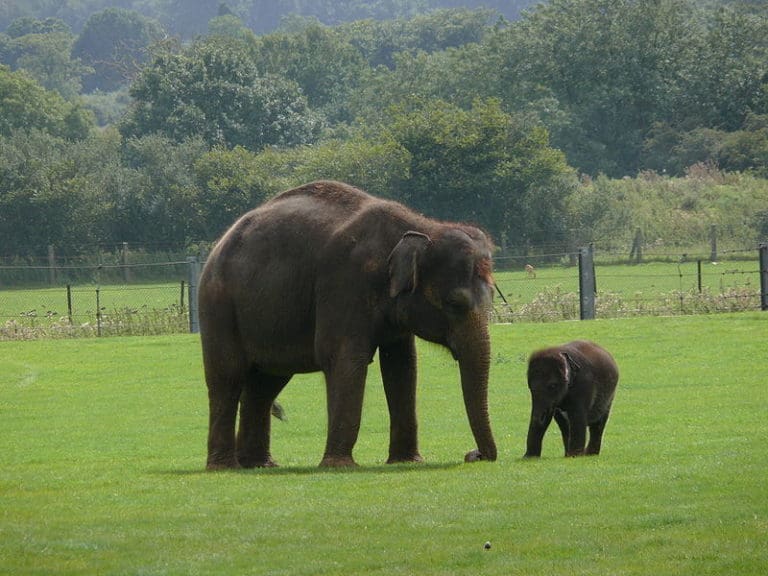
Asian Elephant Karnataka is a major stronghold for wild Asian elephants in India, especially across the Nilgiri-Eastern Ghats interface and connected forest mosaics.
Indian Leopard Widely distributed from Ghats forests to rocky scrub and agricultural edges; often the most commonly seen big cat in many reserves.
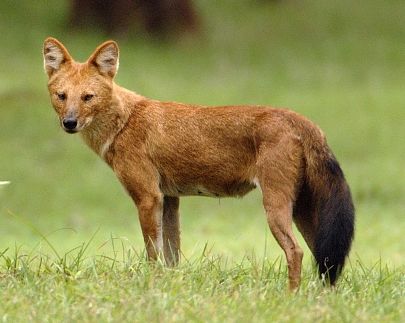
Dhole (Asiatic Wild Dog) Pack-hunting predator frequently recorded in the Bandipur-Nagarahole landscape and other large forest blocks, shaping the classic 'carnivore guild' experience.
Gaur (Indian Bison) A hallmark of moist-deciduous and evergreen-edge habitats; large herds are a signature sight in several Karnataka reserves.
Sloth Bear Strongly associated with drier forests and rocky terrain (also present in parts of the Ghats); a sought-after species on safaris and night/edge sightings.
Lion-tailed Macaque A Western Ghats endemic primate of evergreen rainforest; Karnataka's Ghats forests include important habitat for this globally threatened species.
Great Hornbill Iconic canopy bird of mature forests in the Western Ghats; its presence signals intact, large-tree forest structure.
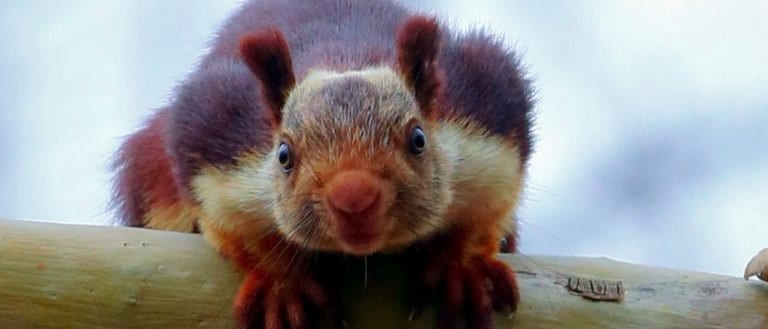
Indian Giant Squirrel (Malabar Giant Squirrel) A charismatic, often-seen arboreal mammal in tall forests and riverine stretches-one of the most distinctive mammals for visitors.
Hump-backed Mahseer A legendary large river fish of the Cauvery system; notable both for angling history and for being one of the world's most threatened mahseer.

Endemic & Rare Species

Lion-tailed Macaque

Macaca silenus

Endangered (IUCN) | Western Ghats endemic

Depends on contiguous evergreen rainforest; Karnataka's Ghats fragments and protected areas are important for its long-term viability.

Salim Ali's Fruit Bat

Latidens salimalii

Endangered (IUCN) | Western Ghats endemic

A rare bat with a restricted range in the Western Ghats; conservation depends on protecting roosting/foraging forest habitats.

Cane Turtle

Vijayachelys silvatica

Endangered (IUCN) | Western Ghats endemic

A secretive forest-floor turtle tied to evergreen and moist forests; Karnataka's Ghats are part of its limited global distribution.

Purple Frog

Nasikabatrachus sahyadrensis

Endangered (IUCN) | Western Ghats endemic

Highly specialized, fossorial amphibian with brief monsoon breeding; a flagship for Western Ghats amphibian endemism and habitat sensitivity.

Malabar Large-spotted Civet

Viverra civettina

Critically Endangered (IUCN) | extremely rare/possibly locally extinct in many areas

Historically linked to lowland coastal/foothill habitats of the Western Ghats; any verified occurrence in Karnataka would be of major conservation importance.

White-rumped Vulture

Gyps bengalensis

Critically Endangered (IUCN)

Once widespread; now very scarce due to historical diclofenac poisoning. Karnataka hosts key roosting/nesting pockets and dedicated protection in some areas.

Nilgiri Flycatcher

Eumyias albicaudatus

Near Threatened (IUCN) | Western Ghats endemic

A high-elevation shola/evergreen forest specialist; Karnataka's upper Ghats contribute to its restricted range.

Olive Ridley Sea Turtle

Lepidochelys olivacea

Vulnerable (IUCN)

Nests sporadically along parts of Karnataka's coast; sensitive to beachfront disturbance, artificial lighting, and fisheries bycatch.

Hump-backed Mahseer

Tor remadevii

Critically Endangered (IUCN)

The Cauvery basin (including stretches in Karnataka) is central to the species' remaining wild strongholds; threatened by habitat alteration, barriers, and overextraction.

Notable Populations

  • One of India's most important connected tiger landscapes: Bandipur-Nagarahole-BRT-MM Hills and adjoining forests form part of the larger Nilgiri biosphere complex with high tiger occupancy and strong prey bases.
  • Nationally significant Asian elephant stronghold: large, connected elephant populations persist across southern Karnataka forests, with key migratory routes and corridor needs.
  • Globally important river-fish conservation area in the Cauvery system: remaining wild populations of the Critically Endangered hump-backed mahseer depend on basin-scale protection and flow/habitat management.
  • Notable raptor/vulture conservation value: parts of Karnataka retain remnant Gyps vulture populations and protected roosting/nesting sites of national importance.

Recent Changes

  • Tiger populations have generally shown recovery/increases in well-protected landscapes over the last two decades (supported by stricter protection and improved prey bases), making sightings more reliable in core reserves.
  • Human-elephant conflict has increased or shifted in several forest-edge districts due to land-use change, crop patterns, and corridor constriction, prompting more emphasis on corridor protection and mitigation.
  • Leopards have expanded their visible footprint in peri-urban/agricultural mosaics in parts of the state (a pattern seen across India), increasing both sightings and conflict incidents.
  • Gyps vultures remain far below historical numbers; local stabilization has occurred where veterinary diclofenac control improved, but threats persist from poisoning, carcass management issues, and habitat disturbance.
  • Freshwater biodiversity faces growing pressure from river regulation, sand mining, pollution, and invasive species-factors implicated in declines of sensitive Western Ghats amphibians and riverine fish in some catchments.
Visit

Wildlife Viewing

Karnataka spans the Western Ghats, the Deccan Plateau, rivers (Cauvery, Kabini, Sharavathi) and an Arabian Sea coast. Expect big-mammal safaris (tiger, elephant, gaur, dhole), top birding (hornbills, raptors, Western Ghats endemics), lion-tailed macaque in some Ghats forests, and seasonal marine/turtle trips. Main wildlife areas: Nagarahole–Bandipur–Mudumalai–Wayanad, Bhadra and Kali (Dandeli–Anshi), and Kudremukh.

Best Seasons

Winter (Nov-Feb)

Most comfortable weather for long drives, boat rides, and multiple safaris. Clearer visibility and higher daytime animal activity make it ideal for Kabini/Nagarahole river-edge viewing, Bandipur/BRT big-mammal safaris, and Western Ghats birding. Great time for raptors and mixed bird flocks; leech pressure is low in most Ghats forests.

Summer / Dry season (Mar-May)

Peak season for big-game viewing as animals concentrate near remaining water sources and open patches. Best chance for elephants, gaur, and predators around Kabini backwaters and in Bandipur/Nagarahole/Bhadra. Expect hotter afternoons-plan early-morning and late-afternoon safaris. Forest fire risk can increase and some areas may feel dry/hazy late season.

Monsoon (Jun-Sep)

Lush, dramatic landscapes-excellent for rainforest ambience, frogs, insects, and plant life; rivers are full and waterfalls spectacular (especially in the Western Ghats). Some parks reduce safari frequency or close specific tracks for safety; leeches are common on Ghats trails. Birding can still be rewarding (endemic species in evergreen forests), but mammal spotting can be harder due to dense vegetation.

Post-monsoon / Early winter (Oct-early Nov)

Fresh greenery and active waterways; good balance between scenic value and improving wildlife visibility as vegetation begins to thin. Excellent for photography, forest walks in permitted zones, and combining safaris with Ghats birding before peak crowds arrive.

Top Wildlife Experiences

  • Jeep safari in Nagarahole (Rajiv Gandhi National Park) with a focus on the Kabini range: prime for elephants, gaur, deer, and occasional tiger/leopard; pair with an evening backwater view for animal crossings.
  • Boat safari or coracle-style river experience on the Kabini backwaters (near the Nagarahole/Kabini area): exceptional for elephants at the water's edge, otters, mugger crocodiles, and a wide range of waterbirds at dawn/dusk.
  • Classic tiger-country drives in Bandipur National Park (Bandipur TR): do consecutive morning+evening safaris to increase chances of tiger/leopard and to see dhole packs and large gaur herds in open forest.
  • Bhadra Tiger Reserve safari (near Chikkamagaluru/Tarikere): combine jeep safaris with the reservoir edge for birds, smooth-coated otter chances, and excellent "Western Ghats meets dry-deciduous" species variety.
  • Dandeli-Kali (Kali Tiger Reserve / Dandeli-Anshi landscape) for hornbills and river wildlife: target Malabar pied hornbill and Great hornbill on forest outings and watch for crocodiles and kingfishers along the Kali River (choose low-impact, wildlife-focused river trips).
  • Western Ghats endemic birding in and around Kudremukh and nearby ranges (with permitted routes and local guides): seek Malabar trogon, Nilgiri wood-pigeon, laughingthrushes (where applicable by range), and mixed canopy flocks in evergreen forest mosaics.
  • Grassland-and-forest edge safari in Biligiri Rangaswamy Temple (BRT) Tiger Reserve: a quieter alternative for large mammals (elephants, gaur) and strong raptor viewing, with a distinct Ghats-plateau transition habitat.
  • Coastal turtle-watching opportunities on Karnataka's Arabian Sea beaches (seasonal, site-dependent): join responsible, conservation-led night walks where permitted for nesting/track interpretation rather than intrusive viewing.

Wildlife Watching Types

Big-mammal jeep safaris (tiger, elephant, gaur, dhole, sambar, chital) in tiger reserves and national parks Boat safaris/backwater wildlife viewing (especially Kabini and select reservoirs) Birding hotspots: Western Ghats endemics and rainforest birds; wetland and riverine birding for kingfishers, storks, egrets, raptors Primates and arboreal wildlife viewing (macaques, langurs; specialized searches in evergreen forests) Herpetology and night-walk style nature experiences (seasonal; more productive in monsoon/post-monsoon, subject to local rules) River and riparian wildlife watching (crocodiles, otters, waterbirds) Marine/coastal nature experiences (sea-watching, seasonal turtle-related programs) Wildlife photography-focused trips (hides/viewpoints in some lodges and forest-edge areas, always following park regulations)

Guided Options

  • Karnataka Forest Department safaris (jeep/bus) in Bandipur, Nagarahole, Bhadra, Kali (Dandeli-Anshi), and BRT: book official safari slots where available for regulated access and trained naturalists/drivers.
  • Kabini/Nagarahole lodge naturalist programs: guided jeep safaris and boat outings with resident naturalists; many offer focused bird walks and interpretation sessions.
  • Community/local naturalist birding guides in Western Ghats hubs (e.g., around Chikkamagaluru-Bhadra approaches, Kudremukh region, and Dandeli): best for endemics, dawn chorus walks, and locating canopy species.
  • Responsible river wildlife trips on the Kali River (Dandeli area) with wildlife-first operators: choose quieter time windows and guides who prioritize sightings/interpretation over speed/adrenaline activities.
  • Turtle conservation-linked beach walks (seasonal, where permitted) with NGOs/local programs along the Karnataka coast: prioritize non-invasive protocols (red light/no flash, distance rules, no handling).
  • Specialized multi-park circuits with private naturalists (Bandipur-Nagarahole-Bhadra or Kabini-focused itineraries): useful for photographers and first-time visitors who want logistics, permits, and species-targeting handled.
Habitats

Ecosystems

Karnataka ranges west to east: Western Ghats hotspot with evergreen to montane forests and many species found only here; humid Konkan-Malabar coast with estuaries and mangroves; and the Deccan Plateau with dry deciduous forests, thorn scrub, and savanna-like grasslands. Rivers (Cauvery, Krishna-Tungabhadra) and reservoirs link habitats supporting elephants, tigers, gaur, and endemic amphibians, reptiles, and plants.

Biomes

Tropical Rainforest

Evergreen and semi-evergreen forests of the Western Ghats (e.g., Uttara Kannada, Shivamogga, Chikkamagaluru, Kodagu), including very wet windward slopes, riparian evergreen belts, and shola-like montane patches at higher elevations; high endemism and rich epiphyte/understory diversity.

Patchy but regionally significant along the Western Ghats escarpment and upper catchments; highest continuity in the central/southern Ghats of Karnataka.

Tropical Dry Forest

Moist to dry deciduous forests are the main plants on much of the Ghats' leeward side and interior plateau, including teak-bearing and mixed deciduous tracts that change into thorn-scrub as dryness increases.

Widespread across interior districts and Ghats foothills; constitutes a large share of remaining natural forest outside the wettest Ghats belt.

Savanna

Open, dry grassy and scrub areas on the Deccan Plateau and rain-shadow zones. Savanna-like grasslands with scattered trees, rocks, and thorny plants. Important for ground-nesting birds and large herbivore feeding.

Scattered to extensive in plateau regions, especially where forests transition to scrub/grassland mosaics and around rocky hill systems.

Freshwater

Large river networks (Cauvery, Krishna, Tungabhadra, Sharavathi, Netravathi, Kali) with riparian corridors, floodplain features, and many reservoirs/tanks supporting fish diversity, riverine birds, otters, and freshwater wetlands.

Statewide; densest river network and highest-flow systems in the Western Ghats and coastal drainages, with major impoundments across the plateau.

Marine

Arabian Sea coastal and nearshore waters including sandy and rocky seabeds, nearshore fisheries grounds, and offshore islands/reefs (e.g., Netrani area) supporting diverse marine life and migratory seabirds.

Continuous along Karnataka's entire west coast; nearshore to offshore waters within the state's coastal zone.

Wetland

Estuaries, backwaters, mangrove fringes, salt-influenced tidal creeks, freshwater marshes around tanks/reservoir margins, and specialized swamp forests (e.g., Myristica swamp remnants) in the Western Ghats.

Concentrated along the coast/estuaries and around major river valleys and tank systems; generally fragmented but locally important.

Habitats

Forest

Large protected and managed forest blocks across the Western Ghats and interior (e.g., Nagarahole-Bandipur landscape, Kali-Dandeli, Bhadra, Kudremukh), supporting tiger-elephant-gaur assemblages.

Rainforest

Wet evergreen/semi-evergreen Ghats tracts with dense canopy, lianas, epiphytes, and high amphibian/endemic plant diversity (notably in Kodagu, Uttara Kannada, parts of Kudremukh region).

Deciduous Forest

Moist/dry deciduous mosaics across the plateau and Ghats foothills; seasonal leaf-fall forests that provide key ungulate prey base for large carnivores.

Woodland

Open-canopy tree-shrub systems in drier interiors and transitional zones, often shaped by fire, grazing, and rain-shadow climates.

Grassland

Plateau grasslands and hilltop/rolling grass patches, including openings within forest matrices and rocky-grass mosaics important for raptors and grassland birds.

Shrubland

Deccan thorn-scrub and degraded scrub habitats on dry soils and rocky terrain; important for drought-adapted flora and small mammals/reptiles.

Mountain

Western Ghats escarpments and high-rainfall massifs (e.g., Kudremukh) with steep terrain, landslide-prone slopes, and sharp microclimatic gradients.

Cave

Limestone/rock shelters and lateritic cave-like formations in parts of the Ghats and plateau margins; used by bats and cave-adapted invertebrates in localized sites.

Cliff/Rocky Outcrop

Rocky escarpments and hill cliffs across the Ghats and Deccan outcrops; nesting/roosting sites for raptors and swifts, and refugia for specialized plants.

Lake

Natural and man-made lakes including large reservoirs (e.g., Linganamakki, Supa, Tungabhadra, Kabini, Hemavathi) supporting waterbirds and fisheries.

River/Stream

Major basins and west-flowing rivers with rapids, waterfalls, and riparian forests (e.g., Sharavathi/Kali systems), critical for aquatic fauna and watershed services.

Pond

Thousands of traditional tanks/ponds across the plateau used for irrigation and as seasonal wetland habitat for amphibians and waterbirds.

Wetland

Tank-chain wetlands, reservoir fringes, floodplain marshes, and coastal wetland complexes that function as key stopover/feeding grounds for birds.

Swamp

Freshwater swamp forests and saturated-valley remnants in the Western Ghats (including Myristica swamp patches) with highly specialized plant communities.

Marsh

Seasonally inundated margins of tanks/reservoirs and low-lying floodplain areas with emergent vegetation supporting herons, storks, and amphibians.

Mangrove

Fringing mangroves in estuaries and tidal creeks along the coast (notably Uttara Kannada and Dakshina Kannada), providing fish nursery habitat and shoreline stabilization.

Estuary

River mouths and brackish-water systems (e.g., Kali, Sharavathi, Netravathi, Gurupura) with strong salinity gradients and productive fisheries.

Coastal

Narrow coastal plain with dunes, tidal flats, estuarine complexes, and coastal agriculture/settlements shaped by monsoon rainfall and cyclonic/erosion processes.

Beach

Sandy beaches along the Arabian Sea coast; some stretches serve as nesting/foraging habitat for coastal birds and support nearshore turtle occurrences (site-dependent).

Rocky Shore

Rocky headlands, lateritic platforms, and intertidal zones (common in parts of Uttara Kannada) rich in intertidal invertebrates and algae.

Coral Reef

Localized coral and reef-like communities on offshore rocky substrates (e.g., around Netrani Island), small in extent compared with major Indian reef systems.

Open Ocean

Offshore Arabian Sea waters used by pelagic fish, dolphins, and seabirds; supports significant coastal fisheries linked to monsoonal upwelling.

Seabed/Benthic

Nearshore sandy/muddy bottoms and rocky patches supporting benthic fauna and demersal fisheries; includes trawl and non-trawl grounds.

Urban

Major urban ecosystems (notably Bengaluru, Mysuru, Mangaluru, Hubballi-Dharwad) with remnant lakes, urban trees, and heat/island and water-quality pressures.

Agricultural/Farmland

Extensive croplands on the plateau and coastal plain (millets, paddy, sugarcane, pulses, oilseeds), interspersed with tanks and hedgerows.

Plantation

Coffee and arecanut (Kodagu/Chikkamagaluru), coconut and cashew along the coast, and other plantation mosaics that can retain partial canopy and corridor value when shade-grown.

Ecoregions

North Western Ghats moist deciduous forests South Western Ghats moist deciduous forests South Western Ghats montane rain forests Deccan dry deciduous forests Deccan thorn scrub forests Malabar Coast moist forests Cauvery freshwater ecoregion Krishna freshwater ecoregion Western Ghats west-flowing rivers freshwater ecoregion Malabar Coast (Arabian Sea) marine ecoregion
Protection

Conservation

Primary Threats

  • Conversion and degradation of forests and grasslands from expansion of coffee/arecanut/cashew plantations in the Ghats fringes, agricultural encroachment in the plateau, and loss of native grasslands/scrub that historically supported species like the Great Indian bustard in northern Karnataka.
  • Highways, rail lines, transmission corridors, and associated fencing cut across the Bandipur-Nagarahole-Brahmagiri-BRT connectivity region and other corridor zones, increasing fragmentation, roadkill risk, and barrier effects for elephants, carnivores, and arboreal endemics.
  • Elephant crop-raiding and property damage are acute along the forest-farm interfaces of Kodagu, Hassan, Mysuru, Chamarajanagar, and the Dandeli-Anshi/Kali landscape; leopard conflict (attacks on livestock and occasional human injury) occurs near peri-urban fringes and sugarcane/arecanut belts that provide cover.
  • Intensification (e.g., sugarcane, paddy, arecanut) and irrigation expansion in river basins increases pressure on riparian buffers, reduces corridor permeability, and raises retaliatory killing risk when wildlife uses croplands as movement routes.
  • Although large-scale legal logging in reserved forests has reduced compared to historical periods, illicit felling, fuelwood extraction, and removal of key habitat trees (e.g., for nest/roost sites) persist locally, especially in fragmented forest edges and around settlements.
  • Iron ore and other mineral extraction (and associated roads, dust, and spoil) in parts of the Deccan and near Ghats foothills degrades catchments, increases sediment loads in streams, and can drive rapid land-use change and human influx around mines/quarries.
  • Hydropower and irrigation dams, river channel alterations, sand mining, and flow regulation in systems like the Kali, Sharavathi, and Cauvery sub-basins reduce habitat quality for endemic fish (including mahseers), alter floodplain dynamics, and fragment aquatic connectivity.
  • Agrochemical runoff, untreated sewage around fast-growing cities (e.g., Bengaluru region impacting downstream waters), industrial effluents, and plastic waste affect wetlands, rivers, and coastal habitats; this can depress prey bases and increase toxin exposure in aquatic and scavenging species.
  • Lantana camara and Chromolaena odorata proliferate in moist and dry deciduous forests (including parts of Bandipur/Nagarahole fringes), suppressing native understory regeneration and altering fire regimes; aquatic invasives like water hyacinth degrade tanks and wetlands.
  • Shifts in monsoon timing/intensity and rising temperatures increase drought stress and fire risk in dry forests/grasslands, amplify extreme rainfall/landslide impacts in the Ghats, and threaten climate-sensitive endemics (amphibians, montane flora) with range contraction.
  • High tourist visitation in flagship reserves, pilgrimage traffic, unregulated off-road use in some forest fringes, and frequent human presence near nesting/denning sites elevate stress, disrupt movement, and can concentrate wildlife along quieter but riskier edges.
  • Local hunting persists in pockets (including small game and occasionally larger species) and can reduce populations of ground-dwelling birds and mammals; it also increases snaring risk for non-target wildlife.
  • Illegal trade pressures include pangolin poaching, capture of birds and reptiles, and trafficking of animal parts; Karnataka's road connectivity and urban markets can facilitate movement of contraband despite enforcement gains.
  • Along the Arabian Sea coast, high fishing intensity and bycatch affect marine megafauna (notably sea turtles), while inland overharvest in rivers/reservoirs can depress native fish populations including large-bodied mahseers.
  • Chronic extraction of fuelwood, fodder, non-timber forest products, and groundwater in some regions reduces habitat quality and resilience, especially where forest patches are small and surrounded by agriculture.
  • Spillover risks from free-ranging dogs and livestock (e.g., canine distemper, rabies, bovine diseases) threaten wild carnivores and ungulates near settlements; disease risk can increase where waste attracts feral animals into forest edges.
  • Fragmentation of elephant and carnivore corridors (Western Ghats-plateau interfaces and Ghats linkages) can isolate sub-populations, raising long-term inbreeding risk and reducing resilience, especially for smaller, range-restricted endemics.
Fun Facts

Did You Know?

Karnataka is one of India's most reliable places to see a "black panther": melanistic leopards are repeatedly camera-trapped and photographed around Kabini-Nagarahole, making the region nationally famous for this rare color form.

You can see three hornbill species in one Karnataka forest landscape: the Dandeli-Kali region is a standout place to encounter Great Hornbill, Malabar Pied Hornbill, and Malabar Grey Hornbill within the same broad habitat mosaic.

A major bird-nesting spectacle happens on tiny river islets, not remote marshes: at Ranganathittu (on the Cauvery), large waterbirds such as painted storks, Asian openbills, and black-headed ibis nest on small islands that visitors can approach by boat.

Karnataka hosts the northern edge of an icon of rainforest health: the endangered lion-tailed macaque reaches some of its northernmost Western Ghats populations in Karnataka's evergreen forests (e.g., Kudremukh-Someshwara belt).

The state's wildlife isn't only forest-based: on the Deccan Plateau, Ranebennur Blackbuck Sanctuary protects open grassland fauna-where adult male blackbuck can darken to an almost black coat, a dramatic shift from the females' tan coloring.

India's highest state total of wild Asian elephants: Karnataka topped the 2017 All-India synchronized elephant population estimation with about 6,049 elephants (more than any other Indian state).

One of India's top tiger strongholds by numbers: the 2022 All-India Tiger Estimation reported 563 tigers in Karnataka-2nd highest among Indian states.

First tiger reserve in India to earn global CA|TS accreditation: Bhadra Tiger Reserve became the country's first CA|TS (Conservation Assured | Tiger Standards) approved reserve in 2019.

Kabini (Nagarahole) is famous for huge dry-season elephant gatherings. Along the Kabini backwaters in late summer, many herds can join, with 100+ wild Asian elephants in one sighting, one of India's most crowded wild elephant views.

Thank you for reading! Have some feedback for us?