Russel's Viper
Spots, hiss, and high-stakes venom

Telangana sits on the Deccan Plateau, with dry deciduous forest, thorn scrub, rocky outcrops, and long river valleys. These areas support many large mammals such as tiger, leopard, sloth bear, gaur, dhole, and four-horned antelope, plus herbivores like chital, sambar, and nilgai. The state’s main habitats are teak- and bamboo-rich dry forests in the north and the Godavari and Krishna basin corridors with riparian woodland, backwaters, and seasonal wetlands. These corridors connect larger wilderness blocks in central India and the eastern Deccan, helping wide-ranging species move and bringing animals to water in the dry season—good for tracking mammals and watching raptors, waterbirds, and forest birds. Reserves such as Kawal and Amrabad tiger reserves offer a less-crowded, raw Deccan wilderness and good chances to learn about dry-forest ecology and corridor conservation.
Telangana is in south-central India on the Deccan Plateau. Broad plains, rocky hills and the Godavari and Krishna river basins make a mix of dry deciduous forest, scrub, riparian woodland and wetlands. Animal ranges follow seasonal water, river corridors and large forest blocks north and south; reservoirs and tanks gather waterbirds in the dry season.
≈90-965 m (low river valleys to plateau highs; highest point commonly cited around Doli Gutta ~965 m)
Designated 2014
Designated 2014
Designated 2014
Designated 2014
Telangana's protected areas are mainly Deccan dry deciduous and scrub forests in the Godavari basin and Nallamala hills, plus reservoir and river sanctuaries for waterbirds and crocodilians. The Telangana Forest Department manages them, built around two Tiger Reserves (Amrabad and Kawal) and wildlife sanctuaries that protect teak-bamboo forests, riparian corridors, and wetlands for migratory birds.
Approximately ~7% of Telangana's land area is under some form of notified protected area (national parks, tiger reserves, and wildlife sanctuaries), depending on boundaries and buffer-area accounting.
A rare urban dry-forest refuge in the middle of Hyderabad, notable for surprisingly high bird diversity and small-mammal/reptile sightings in a protected patch of Deccan scrub and woodland.
Compact but wildlife-rich scrub-forest national park on the city's outskirts, good for easy viewing of common ungulates, peafowl, and reptiles in a typical Deccan habitat mosaic.
Best known for blackbuck conservation in an open woodland-grassland setting, with additional value as an urban-edge refuge for birds, small carnivores, and reptiles.
Telangana's largest protected forest block, forming the state's core part of the wider Nallamala landscape; important for tiger recovery, large carnivore conservation, and intact dry deciduous forest with deep valleys and plateaus.
A key northern Telangana forest landscape near the Godavari system, important for tiger corridor function, prey-base conservation, and large contiguous teak-mixed deciduous forests.
One of the oldest protected areas in the region, known for large, relatively continuous dry deciduous forest and good chances of seeing ungulates and signs of large carnivores.
A forest-and-reservoir complex that supports both woodland wildlife and wetland biodiversity; notable for birdlife around the lake and mammals in surrounding teak forests.
Reservoir-island and shoreline habitat near Hyderabad that serves as a stronghold for waterbirds and supports crocodilians; particularly good for winter migratory bird viewing.
River-reservoir and teak-forest sanctuary in the Godavari basin, notable for wetland biodiversity plus a forested backdrop that can hold larger mammals and riparian species.
Reservoir-centered sanctuary valued for migratory and resident waterbirds, with surrounding scrub/woodland that supports small mammals and raptors.
Riparian sanctuary along the Pranahita river system, important for riverine birds and as a habitat link within northern Telangana's forest-river mosaic.
Telangana's wildlife is shaped by the Deccan Plateau: broad tracts of dry deciduous forest, thorn-scrub, rocky hill systems, and large river/reservoir wetlands in the Godavari and Krishna basins. The flagship experience is classic peninsular-India forest fauna (big cats, bears, wild dogs, gaur and deer) in landscapes such as Amrabad (Nallamala) and Kawal, complemented by strong wetland birding around major tanks and reservoirs (e.g., Manjeera, Pocharam, Kinnerasani and other irrigation lakes).
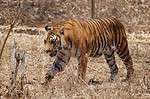
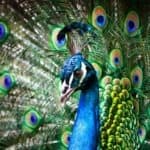
Telangana's wildlife is around the Deccan Plateau's dry deciduous forests, scrub, rocky outcrops and Godavari and Krishna basins. Expect central Indian mammals like tiger, leopard, sloth bear, sambar and wild boar; good raptor and waterbird watching and strong herpetology after the monsoon. Best sites: Kawal and Amrabad Tiger Reserves (Nallamala Hills), Eturnagaram, Pakhal, and near Hyderabad: Pocharam, Manjeera, KBR/Mrugavani.
Best all-around season: cool days, clear visibility, and high bird diversity. Wetlands and reservoirs fill with winter migrants (ducks, waders, gulls/terns), and mammals are easier to spot on open tracks and around water. Ideal for safaris in Amrabad/Kawal and dedicated birding at Pocharam, Manjeera, and Pakhal/Laknavaram.
Best for big game visibility despite the heat: animals concentrate near waterholes and river edges, increasing chances of deer, gaur (in some landscapes), wild boar, and predators following prey. Early-morning/late-afternoon drives are essential; pair safaris with lake birding at dawn.
Lush forests, peak breeding season for many resident birds, butterflies, and frogs; great for nature walks, photography of greenery, and herpetology. Safari access can be limited by weather/road conditions; leech/insect protection and flexible plans help. River and reservoir edges are scenic, but visibility for mammals is lower in dense foliage.
Forests are green, streams and tanks are full, and bird activity rises as migrants begin arriving. This is a sweet spot for landscape photography plus mixed wildlife: decent mammal chances before leaf-fall opens up visibility fully, and fresh water attracts birds.
Telangana, on the Deccan Plateau in south-central India, has a seasonal monsoon climate and much human-modified land. Main ecosystems are tropical dry deciduous forests, thorny scrub/woodland and savanna-like grass-shrub mosaics, with large rivers (Godavari, Krishna) and many reservoirs/tanks making important freshwater and wetland habitats. No coast; biodiversity centers in forest blocks and riparian/wetland networks near farms and Hyderabad.
Most of Telangana has tropical dry deciduous forests, including teak and mixed stands that lose leaves in the dry season; these forests, especially near the Godavari basin, are key wildlife habitats and protected areas.
Widespread; the dominant natural terrestrial biome where forests remain (large patches in the north/east and scattered reserves elsewhere).
Savanna-like Deccan plateau mosaics of open woodland, scrub and grass-dominated areas, often maintained/expanded by grazing, firewood extraction and historical land use; includes open scrub-grass complexes around forest edges and degraded dry deciduous zones.
Patchy but extensive in a fragmented belt across the plateau, especially in drier districts and around agricultural frontiers.
Major river systems (Godavari and Krishna and their tributaries), reservoirs (e.g., large irrigation and hydropower impoundments), and thousands of village tanks/ponds; supports fisheries, riparian forests, and waterbird habitat.
Linear along rivers and widespread as scattered tanks/reservoirs across most districts; locally dominant around major impoundments.
Seasonal and perennial wetlands associated with tanks, floodplains, irrigation canals and low-lying basins; important for migratory and resident waterbirds and amphibians, with strong monsoon-driven seasonality.
Scattered statewide; highest density around tank networks and major river floodplains.
Dry deciduous forest blocks in protected areas and reserve forests, including teak-bearing and mixed-deciduous formations; key wildlife habitat and corridor areas in the Godavari belt.
Tropical dry deciduous stands with pronounced dry-season leaf drop; common tree assemblages include teak and mixed broadleaf species, with bamboo locally in some tracts.
Open-canopy woodland and degraded forest margins transitioning to scrub and grazing lands; often forms buffers around denser forest patches.
Thorny scrub and secondary regrowth on shallow soils and rocky terrain; common in drier tracts and around heavily used forest edges.
Open grassy patches within the forest-scrub matrix, along tank bunds and fallows; often seasonal and influenced by grazing and fire.
Park-like open tree-grass mosaics typical of parts of the Deccan interior, especially where canopy has been thinned by disturbance or where soils favor open structure.
Godavari and Krishna river corridors and tributaries, with riparian vegetation, sandbars/islands in places, and high aquatic biodiversity relative to surrounding drylands.
Large reservoirs and natural/seminal lake-like water bodies (including prominent urban lakes around Hyderabad) supporting fisheries and waterbirds.
Thousands of irrigation tanks and village ponds that act as critical local biodiversity nodes, especially during/after the monsoon.
Tank wetlands, seasonal inundation zones and floodplain-associated marshy margins; key habitat for herons, storks, ducks and waders.
Reedy/shallow marsh fringes around tanks and reservoirs, expanding in monsoon and contracting in the dry season.
Extensive croplands (rainfed and irrigated) that dominate much of the matrix between forest patches; includes paddy in irrigated zones and a variety of dryland crops elsewhere.
Localized plantations (e.g., commercial tree crops and managed woodlots) and horticulture; generally less biodiverse than native dry deciduous systems but can provide secondary habitat.
Large urban footprint centered on Hyderabad and other cities, with urban lakes, parks and peri-urban scrub remnants.
Rapidly expanding peri-urban zones around major cities, mixing built-up areas with small farms, scrub patches and tank chains.
Scattered cave/rock-shelter features in rocky Deccan terrain (limited extent), used by bats and other cave-associated fauna in some locations.
Rocky escarpments and inselberg-like outcrops in parts of the plateau, providing nesting/roosting sites and specialized dry-rock flora.
Low hill ranges and rugged plateau uplands (not alpine), creating local habitat heterogeneity and refugia for dry-forest biodiversity.
Hyderabad isn't "too urban" for big cats: leopards have been recorded within the city's green pockets (notably KBR National Park and nearby forest patches), showing large predators can persist in a major metro when habitat fragments remain connected.
Manjeera Wildlife Sanctuary protects a bird habitat built around reservoir backwaters-its tree-covered islets are used by colonial waterbirds such as spot-billed pelicans, painted storks, and other large nesters, surprisingly close to human settlements and drinking-water infrastructure.
Telangana's flagship tiger landscapes (Kawal-Pranahita belt and the Nallamala/Amrabad block) sit on the Deccan Plateau rather than in the Himalaya or Western Ghats-proof that "dry" forests can still be top-tier big-cat country.
The Godavari basin forests of northern Telangana function as a movement zone in the wider Central Indian landscape: camera-trapped dispersers and periodic tiger presence have been used by managers to argue that connectivity (not just isolated reserves) is crucial here.
Several of Telangana's best wildlife-viewing areas are "scrub-and-rock" habitats (Deccan thorn scrub, boulder fields, and dry deciduous forest edges), which can look barren in summer but support high reptile, raptor, and small-cat diversity compared with more visually lush habitats.
Amrabad Tiger Reserve is Telangana's largest protected area and one of India's largest tiger reserves (about 2,611 km²), protecting a huge, contiguous block of Nallamala dry deciduous forest.
Eturnagaram Wildlife Sanctuary (notified in 1952) is the oldest wildlife sanctuary in present-day Telangana-older than the state itself by over six decades.
Kasu Brahmananda Reddy (KBR) National Park in Hyderabad is tiny by national-park standards (about 390 acres ≈ 1.6 km²), making it one of the smallest national parks in India.
Telangana has two notified tiger reserves-Kawal and Amrabad-despite being formed only in 2014, giving the young state an unusually large share of high-priority big-cat habitat in the Deccan. (Kawal was notified as a tiger reserve in 2012; Amrabad in 2014.)
5 species documented in our encyclopedia
Thank you for reading! Have some feedback for us?
We appreciate your help in improving our content.
Our editorial team will review your suggestions and make any necessary updates.
There was an error submitting your feedback. Please try again.