N S W E
Wildlife Expeditions

Wildlife of
Haryāna

Haryana's wildlife shines in its bird-rich wetlands and scrubby Aravalli outcrops, where migratory waterfowl thrive amid the Indo-Gangetic plains.
10 Species
44,212 km² Land Area
Overview

About Haryāna

Haryana's natural areas mix Indo-Gangetic plains, semi-arid scrub, and Aravalli hill remnants. These worked landscapes still support wildlife. You often see blue bull antelope and jackals near fields at dusk, raptors over open land, and many birds using hedgerows, canal banks, and small woods. The state's best places are wetlands—natural and managed—like Sultanpur and Bhindawas. These lakes and reservoirs are key wintering and stopover sites on the Central Asian Flyway. Reeds, mudflats, and shallow water attract ducks, geese, waders, and herons, while nearby grass and scrub hold songbirds and birds of prey. In the south, Aravalli scrub-woodland gives habitat for dry-country species, reptiles, and small carnivores. Haryana is notable for easy access to rich birding and wildlife near cities and on working farmland, especially in winter.

Physical Features

Geography

Haryana sits on the Indo-Gangetic alluvial plains, changing from wetter river belts along the Yamuna to semi-arid lands in the southwest, with small hills at the edges. The landscape is a wildlife mix of intensive farms with scrub and woodland and important wetlands, natural and fed by canals and reservoirs, that support many mammals and waterbirds.

44,212 km² Land Area
21st largest state in India Size Rank
India Country
State Type
Elevation Range

~150 m to ~1,467 m (Karoh Peak, Morni Hills)

Key Landscapes

Indo-Gangetic alluvial plains (extensive flat agricultural matrix with field edges, tree lines, village commons, and fallows) Yamuna River floodplain and associated riparian corridors (key for riverine wetlands, floodplain grass/scrub patches, and movement pathways) Ghaggar-Hakra (seasonal) system and associated drainage lines in the northwest (ephemeral channels supporting seasonal wetlands and scrub habitats) Shivalik foothills / Morni Hills in the northeast (Panchkula area; more rugged terrain with sal-khair type dry deciduous woodland patches and higher habitat heterogeneity) Aravalli outcrops and ridges in the south (Gurugram-Faridabad belt, including Mangar Bani area; dry thorn scrub/woodland and rocky habitat refuges) Semi-arid southwestern plains (Hisar-Bhiwani-Mahendragarh belt; thorn scrub, sandy patches/dunes locally, and drought-adapted fauna)
State Symbols

Official Wildlife Symbols

animal

Blackbuck

bird

Black Francolin

tree

Peepal (Sacred fig)

wildflower

Lotus

Parks & Reserves

Protected Areas

Haryana has a small, broken protected area network because most land is farmed in the Indo-Gangetic plain. Conservation focuses on Shivalik foothill forests (home to larger mammals and forest birds) and a chain of man-made and natural wetlands that help migratory waterbirds on the Central Asian Flyway. The state has two National Parks and several Wildlife Sanctuaries, many of them wetlands.

Protected Coverage

≈0.8-1.2% of Haryana's land area is under formal wildlife-protected-area designations (National Parks + Wildlife Sanctuaries), with additional forested/restricted areas outside the notified PA network.

National Parks & Preserves

Kalesar National Park

≈46.8 km²

Shivalik foothill forest at the Yamuna's upper catchment, forming the core of the larger Kalesar protected landscape and an important habitat block for forest mammals in northeast Haryana. Notable for dry deciduous/sal-associated forests, rugged terrain, and corridor value toward adjoining hill forests.

Indian leopard Sambar (sambar deer) Barking deer (muntjac) Indian peafowl Asian elephant (occasional/seasonal use in the broader landscape)

Sultanpur National Park

≈1.4 km²

A compact but internationally important wetland near Gurugram that supports large congregations of wintering and passage migratory waterbirds; one of the best birdwatching sites in the NCR region due to easy access and high seasonal bird diversity.

Bar-headed goose Northern shoveler Northern pintail Common teal Eurasian spoonbill

State & Provincial Parks

Aravalli Biodiversity Park, Gurugram

≈1.5-1.6 km² (about 150-160 ha)

Restored Aravalli scrub/woodland mosaic that functions as an urban-proximate refuge for birds, butterflies, reptiles, and small mammals; valuable for native habitat restoration in a heavily built-up corridor.

Indian peafowl Indian grey hornbill Black kite Golden jackal Nilgai

Tau Devi Lal Biodiversity Park, Gurugram

≈0.6 km² (about 60 ha)

City-edge biodiversity park with restored native plant communities and water features that attract resident and seasonal birds; important for environmental education and urban wildlife viewing.

Coppersmith barbet Rose-ringed parakeet Black drongo Oriental garden lizard Five-striped palm squirrel

Wildlife Refuges

Bhindawas Wildlife Sanctuary (Ramsar Site)

≈10.7 km²

Haryana's largest wetland sanctuary; a major wintering and stopover site for migratory ducks, geese, waders, and other waterbirds in the agricultural plains, often used in tandem with nearby wetlands.

Bar-headed goose Gadwall Northern pintail Black-winged stilt Marsh harrier

Khaparwas Wildlife Sanctuary (Ramsar Site)

≈0.8-1.0 km² (reported as ~80-100 ha in many sources)

A small but high-value wetland/bird sanctuary close to Bhindawas, supporting dense seasonal waterbird use; important as part of a regional wetland network in Jhajjar district and designated as a Ramsar Wetland of International Importance.

Northern shoveler Common teal Little egret Red-wattled lapwing Glossy ibis (seasonal)

Khol Hi-Raitan Wildlife Sanctuary

≈48 km²

Shivalik foothill forests and scrub in Panchkula district; notable for mammal diversity and as a forest refuge near rapidly urbanizing areas, with strong potential for nature trails and monitoring-based conservation.

Indian leopard Striped hyena Sambar (sambar deer) Barking deer (muntjac) Indian pangolin (rare)

Kalesar Wildlife Sanctuary

≈130+ km² (commonly cited ~132 km²)

The larger buffer/supporting protected area around Kalesar National Park, expanding habitat availability for wide-ranging mammals and improving landscape connectivity across the Shivalik belt.

Indian leopard Sambar (sambar deer) Wild boar Barking deer (muntjac) Indian grey hornbill

Wilderness Areas

  • Kalesar-Morni Shivalik foothill forest belt (northeast Haryana): the state's most extensive semi-roadless hill-forest landscape and key mammal habitat
  • Aravalli ridge scrub-forest remnants in Gurugram-Faridabad (including community-protected groves such as Mangar Bani): crucial native woodland patches amid rapid development
  • Yamuna riverine corridor (ravines, floodplain edges, and seasonal wetlands): supports raptors, waterbirds, and riparian wildlife outside notified parks
  • Ghaggar seasonal river corridor and surrounding scrub/grass mosaics: episodic wetland formation and open-country habitat for birds and small mammals
Animals

Wildlife

Haryana's wildlife is shaped by a largely Indo-Gangetic agricultural matrix punctuated by remnant Aravalli scrub-woodlands, Shivalik foothill forests (notably around Kalesar), and a standout network of wetlands and canal-fed lakes (e.g., Sultanpur, Bhindawas, Khaparwas). The state's defining wildlife experience is winter birding-large mixed flocks of migratory waterfowl and raptors-alongside adaptable plains mammals (nilgai, jackal, hyena) and a smaller but important foothill assemblage (leopard, sambar, goral in suitable tracts).
~40-55 species (higher in Shivalik/Aravalli remnants and riparian belts) Mammals
~430-500 species recorded statewide; peak diversity at wetlands in winter Birds
~35-45 species (typical north Indian plains + foothill elements) Reptiles
~10-15 species (mostly widespread Indo-Gangetic frogs and toads) Amphibians
~70-100 species across Yamuna system, canals, and wetlands (composition varies by water quality and connectivity) Fish
Examples

Iconic Species

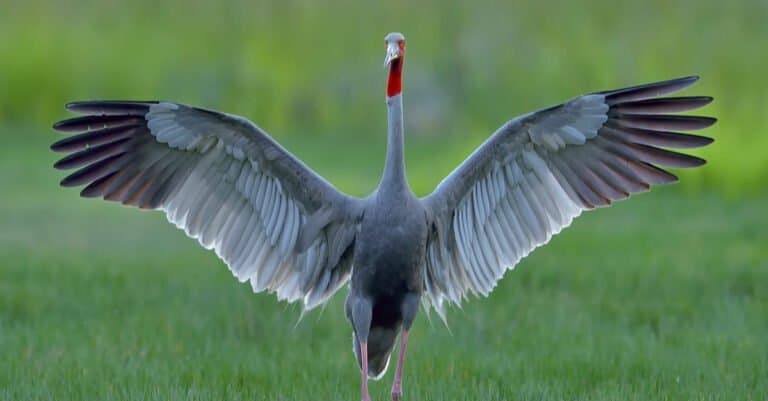
Sarus Crane
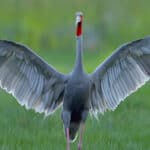
Sarus Crane A flagship wetland/agriscape crane of north India; Haryana's jheels and surrounding fields are among the most sought-after places locally to see it, especially in the non-breeding season.
Bar-headed Goose One of the most conspicuous winter migrants; large flocks use Bhindawas-Khaparwas-Sultanpur wetlands, creating classic 'north India winter wetland' scenes.
Northern Shoveler A characteristic winter duck at Haryana wetlands; often abundant and easy to observe closely at managed sites like Sultanpur.
Painted Stork A photogenic large waterbird that draws visitors when present; wetlands and fish-rich shallows can host feeding groups and seasonal concentrations.
Black-necked Stork A prized sighting in the plains; scattered records around large wetlands make it a 'special' bird for Haryana birders.
Indian Peafowl
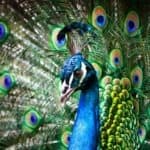
Indian Peafowl Widespread and culturally iconic; commonly seen around scrub patches, village edges, and protected areas.
Golden Jackal
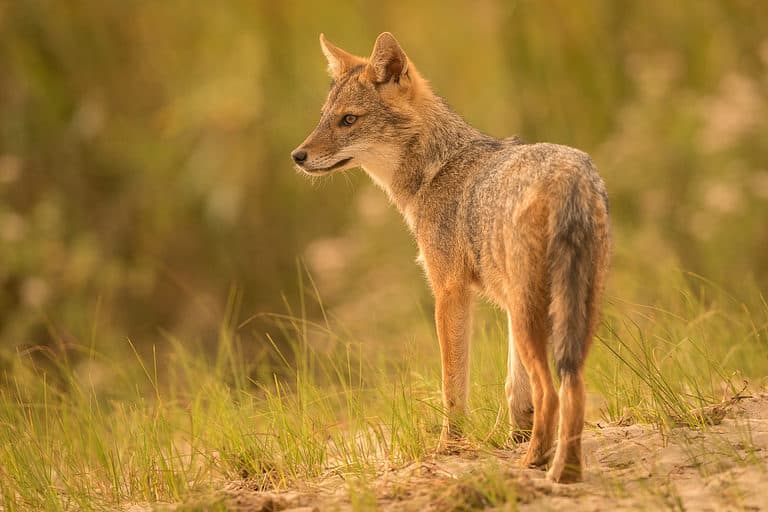
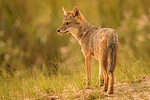
Golden Jackal A defining mammal of Haryana's rural mosaic; frequently encountered around scrub, fields, and wetland fringes, especially at dawn/dusk.
Striped Hyena
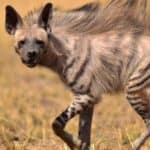
Striped Hyena A secretive but emblematic carnivore of semi-arid scrub and ravines; persists in parts of the Aravalli and adjoining dry landscapes.
Nilgai (Blue Bull) The most visible large ungulate in many districts; thriving in field-scrub mosaics and often seen near protected forests and canal networks.
Indian Leopard Most reliably associated with the Shivalik foothill forests (e.g., Kalesar landscape); an aspirational sighting that represents Haryana's remaining large-carnivore wilderness.

Endemic & Rare Species

Indian Pangolin

Manis crassicaudata

Endangered (IUCN); highly threatened by illegal trade

Occurs at very low densities in scrub/forest mosaics; its presence indicates remnant natural habitat and ongoing conservation challenges.

Sarus Crane

Antigone antigone

Vulnerable (IUCN)

A flagship species for north Indian wetlands and farmed floodplains; local persistence depends on wetland condition and low disturbance.

Steppe Eagle

Aquila nipalensis

Endangered (IUCN)

A regular wintering migrant in open country; Haryana's plains can host individuals and small groups during migration/winter.

Greater Spotted Eagle

Clanga clanga

Vulnerable (IUCN)

A wetland-associated winter raptor; seen irregularly, making it a high-value birding target at major jheels.

Egyptian Vulture

Neophron percnopterus

Endangered (IUCN)

Once far more common; now scarce in many north Indian landscapes. Survivors around open country and dumps are important remnants of a collapsed guild.

White-rumped Vulture

Gyps bengalensis

Critically Endangered (IUCN)

Historically widespread; now very rare locally. Any remaining or visiting individuals are significant given catastrophic regional declines.

Black-bellied Tern

Sterna acuticauda

Endangered (IUCN)

A riverine tern associated with larger rivers and sandbars; occasional occurrence along major river stretches (e.g., Yamuna) makes records notable.

Indian Wolf

Canis lupus pallipes

Regionally very rare in much of north India; nationally protected

If present, it is exceptional and tied to open semi-arid tracts; reports are sporadic and reflect the wider contraction of India's grassland carnivores.

Notable Populations

  • Bhindawas Wetland (Ramsar Site) is a major wintering and staging area for migratory waterbirds in north India, supporting large mixed congregations of ducks, geese, coots, and waders.
  • The Sultanpur-Bhindawas-Khaparwas wetland cluster functions as a key regional network for winter waterfowl and wetland raptors, boosting bird diversity and seasonal abundance.
  • Kalesar landscape (Shivalik foothills) holds some of Haryana's best remaining habitat for larger forest mammals (e.g., leopard, sambar) and foothill bird communities.

Recent Changes

  • Wetland recognition and management attention has increased (e.g., Ramsar designation for Bhindawas), improving monitoring and awareness, though water quality and hydrology pressures persist.
  • Vulture guilds (Gyps vultures and Egyptian Vulture) remain far below historical levels across north India due to legacy veterinary-drug impacts and ongoing threats; Haryana reflects this broader decline.
  • Human-associated and edge-tolerant mammals (notably nilgai, wild boar in some areas, and jackal) have expanded or become more conspicuous in agricultural mosaics, increasing human-wildlife interactions.
  • Grassland and open-country specialists have generally faced habitat fragmentation and intensification; locally this is reflected in reduced suitability for sensitive ground-nesters and some raptors where fallows and scrub are lost.
  • Leopard presence in the Shivalik/Aravalli interfaces is increasingly reported in some pockets (often via camera traps and conflict records), reflecting both better detection and shifting use of fragmented habitats.
Visit

Wildlife Viewing

Haryana has rich wildlife in the Indo-Gangetic plains: big seasonal shows of migratory waterbirds at protected wetlands, good raptor and steppe/scrub bird watching near Aravalli outcrops, and small forests near Delhi where you can see nilgai, sambar, wild boar, jackal, and many peafowl. Best sites: Sultanpur, Bhindawas, Khaparwas, Kalesar, Morni Hills/Tikkar Taal, and the Aravalli–Gurugram belt.

Best Seasons

Winter (Nov-Feb)

Peak wildlife season. Migratory waterbirds (geese, ducks, waders) arrive in large numbers at Sultanpur National Park and Bhindawas/Khaparwas wetlands; raptors (eagles, harriers, kites) are frequent over farmlands and marsh edges. Cool temperatures make dawn-dusk safaris comfortable; visibility is generally good.

Spring (Mar-early Apr)

Excellent light and active birding as winter migrants linger and resident species begin breeding. Look for courtship displays, nesting activity, and mixed flocks. Water levels may start dropping in some wetlands, concentrating birds near remaining pools.

Summer (late Apr-Jun)

Hot and dry; wildlife activity concentrates near water. Practical for early-morning birding, photographing heat-haze silhouettes, and scanning waterholes/streams in forested areas (notably Kalesar). Fewer waterbirds overall, but good for resident species and raptors on thermals.

Monsoon (Jul-Sep)

Greening of scrub and forest; best for lush landscapes, amphibians, butterflies, and breeding waterbirds where wetlands fill. Birding shifts to resident and monsoon visitors; some tracks/forest routes can be muddy or restricted. Leeches aren't typical in plains but insects increase-plan accordingly.

Post-monsoon (Oct-early Nov)

Transitional shoulder season with improving weather and refilling wetlands. Early arrivals of migrants begin; photography is strong with clear skies. A good time to combine wetlands plus a short forest stay before peak winter crowds.

Top Wildlife Experiences

  • Sultanpur National Park (near Gurugram): sunrise birding walk/drive on the loop track and hides to photograph wintering ducks, geese, and waders; stay for late-afternoon raptor activity.
  • Bhindawas Bird Sanctuary (Jhajjar) + Khaparwas Bird Sanctuary (nearby): do a full-day 'wetland circuit' scanning open water and reedbeds for large congregations of waterfowl, herons/egrets, and winter raptors; best with a local bird guide and a spotting scope.
  • Kalesar National Park & Wildlife Sanctuary (Yamunanagar): early-morning forest safari/drive and river-edge watching along the Yamuna/seasonal streams for sambar, nilgai, wild boar, jackal, and rich woodland birdlife; add an evening listen for owls and nightjars where permitted.
  • Morni Hills & Tikkar Taal (Panchkula): combine hill-forest birding with lake-edge scanning-good for woodland birds, peafowl, and seasonal waterbirds; ideal as a cooler summer or monsoon-green escape.
  • Aravalli-Gurugram scrub/woodland patches (e.g., around Mangar/Aravalli biodiversity areas): guided early-morning 'scrub & raptor' birding for wheatears, larks, shrikes, parakeets, and soaring eagles/kites; great for photographers seeking semi-arid textures close to the city.
  • Slow drives and short walks along farmland and canal banks across Haryana: spot lapwings, larks, pipits, wagtails, winter harriers, and large flocks of granivores—best at dawn; get permission where needed.
  • Winter raptor watch at wetland edges and harvested fields (Nov-Feb): set up at a quiet vantage near Bhindawas/Sultanpur periphery to track harriers, buzzards, and eagles commuting to roosts; a rewarding half-day session with a guide and scope.

Wildlife Watching Types

Wetland birding (migratory waterfowl, waders, herons, cranes where present) Raptor watching over marshes, fields, and scrub (winter particularly strong) Forest wildlife drives/safaris (ungulates, wild boar, jackal; occasional sightings vary) Scrub/grassland birding (larks, wheatears, shrikes, chats; seasonal variation) Butterfly and dragonfly watching (monsoon and post-monsoon) Night wildlife listening/watching (owls, nightjars-site rules dependent) Nature photography with hides/vantage points (wetlands and forest edges)

Guided Options

  • Forest Department-led entry/safari arrangements and local guide services at Kalesar National Park/Wildlife Sanctuary (check current routes, timings, and vehicle rules).
  • Sultanpur National Park: hire a local bird guide at the gate (or pre-book through local naturalist networks) for a targeted winter-migrant and raptor-focused circuit.
  • Bhindawas-Khaparwas: book a private birding guide (Delhi-NCR/Haryana birding specialists commonly run day tours) for logistics, best vantage points, and species identification.
  • Morni Hills/Tikkar Taal: local naturalist-led bird walks (often arranged via resorts/hotels in Morni or Panchkula) focusing on hill-forest species and seasonal lake birds.
  • Aravalli-Gurugram scrub: guided nature walks with conservation groups/experienced naturalists (often weekend programs) emphasizing habitat interpretation, tracks, and bird ID.
  • University/NGO bird monitoring events and wetland counts (seasonal, especially winter): join public bird walks or citizen-science days when announced locally for a social, educational experience.
Habitats

Ecosystems

Haryana sits in the northwestern Indo-Gangetic plains, dominated by intensive agricultural mosaics interspersed with remnant thorn-scrub/woodland, floodplain rivers and canals, and a network of natural and man-made wetlands. The state's biodiversity is strongly shaped by semi-arid climate gradients (drier toward the southwest near Rajasthan, slightly wetter toward the northeast), high human land use, and wetland stopover/overwintering value for migratory waterbirds.

Biomes

Tropical Dry Forest

Remnant dry deciduous to thorny woodland/scrub formations (often highly fragmented) in the plains and Aravalli/foothill pockets; includes native thorn species and open-canopy dry forests where not converted to farms.

Low and highly fragmented; most persistent in protected forests, village commons, and Aravalli/Shivalik fringe areas.

Savanna

Open scrub-grass mosaics and grazing lands with scattered trees/shrubs, including fallows, commons, and degraded forest edges that function ecologically like savanna grass-shrub systems.

Patchy; occurs as small to moderate fragments within the agricultural matrix, especially in drier tracts and around forest remnants.

Hot Desert

Semi-arid landscapes with sparse shrub cover and sandy/loamy soils toward the southwest (transition toward the Thar Desert), with strong seasonality and frequent open, low-vegetation areas.

Localized to southwestern districts and dry pockets; not true dune desert statewide but a notable semi-arid influence.

Freshwater

Rivers (notably the Yamuna system), seasonal streams, canals, reservoirs, and village ponds that provide critical water and riparian habitat in an otherwise intensively used landscape.

Widespread but linear/discrete; concentrated along major river corridors and irrigation networks.

Wetland

Natural and man-made wetlands (e.g., oxbow-like basins, jheels, barrage-associated wetlands, and protected bird wetlands) supporting large congregations of resident and migratory waterbirds.

Scattered statewide; a small area proportionally, but very high ecological importance (notably around key protected wetlands).

Habitats

Agricultural/Farmland

Dominant land cover: irrigated croplands (wheat-rice and other rotations), field margins, orchards, and agroforestry; forms the main matrix connecting/isolating natural patches.

Woodland

Thorny/open woodlands and scrubby tree cover on commons and reserve forests; often heavily grazed and fuelwood-impacted but important for small fauna and birds.

Shrubland

Thorn scrub and low shrub communities in semi-arid tracts and degraded forest edges, including saline/alkaline patches and fallows.

Grassland

Open grazing areas, fallow fields, and grassy patches along canals/river embankments; provides habitat for ground-nesting birds and small mammals where not heavily disturbed.

Forest

Small, fragmented forest blocks (reserve/protected forests and plantation-mixed areas) in the Aravalli remnants and Shivalik foothill zone, acting as biodiversity refugia.

Deciduous Forest

Dry to slightly moister deciduous patches (often secondary) in foothill/forest blocks; canopy and understorey vary with protection and grazing pressure.

River/Stream

Yamuna and associated floodplain channels with riparian strips, sandbars/embankments, and adjacent wetlands; key for waterbirds and corridor connectivity.

Lake

Large managed waterbodies and jheels (including protected bird wetlands such as Sultanpur and Bhindawas) supporting wintering migratory ducks, geese, waders, and raptors.

Pond

Village ponds and small tanks used for irrigation/livestock; can be important for amphibians, reptiles, and local birdlife where water quality is retained.

Wetland

Seasonally inundated basins, marshy edges of lakes, and canal-side wet patches; critical stopover/roosting and foraging habitat for migratory waterbirds.

Marsh

Reedbed and emergent-vegetation zones on wetland margins (often with fluctuating water levels), providing nesting/cover habitat for birds.

Urban

Major urban/industrial areas (e.g., Gurugram-Faridabad corridor and other cities) with fragmented green spaces, urban lakes, and strong pressure on nearby natural habitats.

Suburban

Expanding peri-urban fringes with mixed housing, roads, small farms, and remnant scrub patches; often a transition zone affecting wetlands and forest fragments.

Ecoregions

Upper Gangetic Plains moist deciduous forests Northwestern thorn scrub forests Himalayan subtropical pine forests
Protection

Conservation

Primary Threats

  • Conversion of remnant scrub, grassland-like fallows, and small woodland patches into built-up areas or intensified farming reduces habitat for blackbuck, ground-nesting birds, reptiles, and small mammals. In the Shivalik-Yamuna belt, edge encroachment and fragmentation around Kalesar reduces effective core habitat and movement routes.
  • High cropping intensity (including paddy-wheat systems) simplifies the landscape, removes hedgerows and fallows, and increases pesticide/fertilizer loads. This reduces prey and nesting habitat for raptors and farmland birds and increases conflict where wildlife uses crop fields (e.g., nilgai and wild boar).
  • Rapid growth around Gurugram-Faridabad-Sonipat-Panipat increases land take, traffic, lighting, and disturbance. Urban expansion also puts chronic pressure on nearby wetlands like Sultanpur through water diversion, sewage inflow risks, and recreational disturbance.
  • Sewage and industrial effluents entering drains and rivers (notably the Yamuna system and local drains feeding wetlands) elevate nutrient and contaminant loads, promoting eutrophication and degrading waterbird habitat quality. Agricultural runoff further increases pesticide exposure for aquatic biota and birds.
  • Groundwater over-extraction in the Indo-Gangetic plains portion of Haryana lowers water tables and reduces reliable inflows that sustain seasonal wetlands, increasing the frequency of dry-outs during critical wintering periods for migratory birds.
  • Canalization, embankments, and water-control structures alter wetland hydroperiods at sites like Bhindawas/Khaparwas and reduce the natural flood-dry cycles that maintain diverse aquatic vegetation and invertebrate communities essential for waterbirds.
  • Dense road networks, expressways, rail corridors, and expanding power infrastructure increase mortality risk (vehicle collisions, electrocution), fragment movement corridors (notably in the Aravallis and Kalesar landscape), and increase disturbance near sanctuaries and forest edges.
  • High visitor pressure, photography, and noise near flagship bird sites (e.g., Sultanpur) and widespread grazing/wood collection near forest fringes reduce breeding success, push birds away from optimal foraging zones, and increase stress for sensitive species.
  • Crop depredation by nilgai and wild boar in agricultural belts and occasional leopard presence near the Shivalik foothills and Aravalli fringes lead to retaliatory actions, demands for culling, and reduced tolerance for wildlife.
  • Illegal trade affects high-value, secretive species such as Indian pangolin (sought for scales) and can also impact reptiles and birds; Haryana's proximity to major transport corridors increases the risk of trafficking and rapid movement of contraband.
  • Despite legal protection, localized poaching persists for meat or perceived pest control in some rural areas, and opportunistic hunting can affect blackbuck and wetland birds, especially outside protected area boundaries.
  • Increasing heatwaves, more erratic monsoon patterns, and drought years intensify wetland drying, reduce waterbird food availability, and exacerbate fire risk in dry scrub/forest patches. Shifts in winter conditions can also alter timing and composition of migratory waterbird assemblages.
  • Stone quarrying pressure in the Aravalli belt (including legacy/illegal extraction concerns) degrades ridge and scrub habitats, increases dust, and fragments remaining wildlife refuges along the Haryana-Delhi ridge landscape.
  • Congregations of waterbirds in a limited number of wetlands raise the risk of disease outbreaks (e.g., avian influenza events), especially where water quality is poor and birds are concentrated into smaller water areas during dry periods.
Fun Facts

Did You Know?

Two of Haryana's most famous bird wetlands-Bhindawas and nearby Khaparwas-are largely man-made, created through irrigation-canal engineering, yet they've become key wintering/refuelling stations on the Central Asian Flyway.

Bar-headed geese (the high-altitude Himalayan migrants famous for crossing the Himalaya) routinely winter at Haryana wetlands such as Sultanpur/Bhindawas-meaning birds that breed around Tibetan lakes can end up within the Delhi-NCR commuter belt.

Sultanpur's birding peak happens in the "least green-looking" season: mid-winter, when the surrounding landscape is heavily farmed and semi-arid, but the wetland concentrates food and shelter and can suddenly fill with ducks, geese, and waders.

Haryana still has a "sacred-grove" style wildlife refuge in the Aravallis: Mangar Bani (Faridabad district) persists largely due to community protection traditions, and it's noted for holding native dry-forest biodiversity unusually close to dense urban development.

Kalesar sits at a biogeographic crossroads (plains meeting Shivaliks), so you can see a mix of habitat specialists-riverine species along the Yamuna catchment, sal-forest birds, and dry scrub fauna-within a short drive in one protected landscape.

Sultanpur National Park is among India's smallest national parks-about 1.43 km²-yet it supports a disproportionately high bird list for its size (well over 200 species recorded).

Bhindawas Wildlife Sanctuary (Jhajjar) is Haryana's largest wetland sanctuary (about 4 km²) and is widely cited as the state's biggest naturalized waterbird habitat.

The Kalesar National Park-Kalesar Wildlife Sanctuary complex (Yamunanagar) is Haryana's largest contiguous protected forest block (together ~160+ km²), forming the state's biggest stronghold for Shivalik-foothill wildlife.

Kalesar lies near the western edge of sal (Shorea robusta) forests' natural range in north India-making it one of the westernmost places where you still get a sal-dominated forest landscape.

Haryana's first Ramsar Sites (Wetlands of International Importance) were notified in 2021-and both are in the state: Sultanpur National Park and Bhindawas Wildlife Sanctuary.

Thank you for reading! Have some feedback for us?