N S W E
Wildlife Expeditions

Wildlife of
Manipur

Manipur's forested hills and floating lake meadows create one of India's most distinctive wildlife landscapes, home to the endangered brow-antlered deer.
17 Species
22,327 km² Land Area
Overview

About Manipur

Manipur, in the Indo-Burma biodiversity hotspot, mixes wet hill forests with the wide Imphal Valley to make a small but very rich wildlife area. Steep heights, heavy rain, and a meeting of Indian and Southeast Asian life create many kinds of plants and animals, including rare orchids and bamboos, and a home for threatened mammals and birds. The state's most famous place is Loktak Lake and its floating mats, protected by Keibul Lamjao National Park—a rare wetland where land animals live on buoyant vegetation. Around the lake are subtropical broadleaf and pine forests, river corridors, and mountain habitats that give refuge and routes for wildlife, and support many birds. Unlike nearby lands of long hills or big plains, Manipur brings wetlands and hill forests very close, so one can go from floating marshes to forest trails with hornbills and laughingthrushes in a single day.

Physical Features

Geography

Manipur has a bowl-like shape: the low Imphal Valley is ringed by steep, forested hills. Elevation change and heavy monsoon rain create habitats—tropical and subtropical broadleaf forests, bamboo, river corridors and wetlands—supporting many species and part of the Indo-Burma biodiversity hotspot. Loktak Lake’s floating phumdi mats attract waterbirds and special mammals; the hills connect to Northeast India and Myanmar.

22,327 km² Land Area
23rd largest state in India by area Size Rank
India Country
State Type
Elevation Range

≈40 m to 2,994 m (Mt. Iso/Iso Peak), driving strong habitat turnover from lowland valleys and wetlands to montane forests

Key Landscapes

Imphal Valley (central alluvial plain; dense human use but key wetlands and riparian strips) Manipur Hills / surrounding hill ranges (steep forested slopes forming most of the state; major wildlife strongholds) Loktak Lake and associated wetlands (including floating phumdis; core of Keibul Lamjao National Park habitat) Barak River basin (western/southwestern drainage; lowland riverine forests and floodplain habitats, especially toward Jiribam) Major river systems and corridors (Imphal, Iril, Thoubal, Sekmai, Nambul, and Barak tributaries) that link forests to wetlands and support aquatic/semiaquatic fauna Monsoonal forest mosaic (evergreen to semi-evergreen and moist deciduous forests, bamboo-dominated areas, and secondary regrowth influencing species distribution)
State Symbols

Official Wildlife Symbols

animal

Brow-antlered deer

bird

Mrs. Hume's pheasant

wildflower

Shirui lily

tree

Uningthou

Parks & Reserves

Protected Areas

Manipur's protected areas are run by the state under India's Wildlife (Protection) Act. They include two national parks and several wildlife sanctuaries that protect Indo-Burma hotspot habitats: Loktak Lake's floating marshes and open water, plus subtropical to temperate hill forests around the Imphal Valley. Sites shelter threatened mammals (notably brow-antlered deer), forest primates, hornbills, and help connect to Myanmar.

Protected Coverage

≈3-4% of Manipur's land area (rough estimate from notified parks + major sanctuaries; actual protected/managed forest area is larger if reserve forests and community-conserved areas are included)

National Parks & Preserves

Keibul Lamjao National Park

~40 km²

World-famous for protecting the only natural population of the brow-antlered deer and for its unique floating vegetation-mat wetland ecosystem within Loktak Lake-exceptional for wetland biodiversity and birding.

Brow-antlered deer (Rucervus eldii eldii) Fishing cat (Prionailurus viverrinus) Smooth-coated otter (Lutrogale perspicillata) Burmese python (Python bivittatus) Migratory waterfowl (e.g., ducks and geese in winter)

Shirui (Shirui Kashong) National Park

~41 km²

High-elevation hill forests and grasslands around Shirui peak; notable for endemic plant diversity (incl. the Shirui lily) and intact montane habitat supporting a mix of Indo-Malayan and Himalayan fauna.

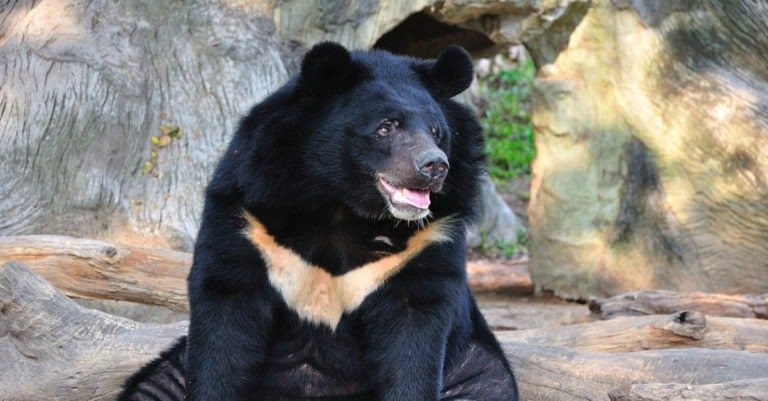
Clouded leopard (Neofelis nebulosa) Asiatic black bear (Ursus thibetanus) Red serow (Capricornis rubidus) Western hoolock gibbon (Hoolock hoolock) Blyth's tragopan (Tragopan blythii)

State & Provincial Parks

Yangoupokpi-Lokchao Wildlife Sanctuary

~184 km²

Large, relatively remote hill-forest sanctuary near the Indo-Myanmar border; important for wide-ranging mammals and as a connectivity landscape, with strong potential for primate and hornbill viewing.

Asian elephant (Elephas maximus) Clouded leopard (Neofelis nebulosa) Western hoolock gibbon (Hoolock hoolock) Sambar (Rusa unicolor) Great hornbill (Buceros bicornis)

Jiri-Makru Wildlife Sanctuary

~198 km² (commonly cited; figures vary by source)

Extensive forested river-valley landscape with rugged terrain; valuable as a watershed and for conserving large mammal assemblages in western Manipur.

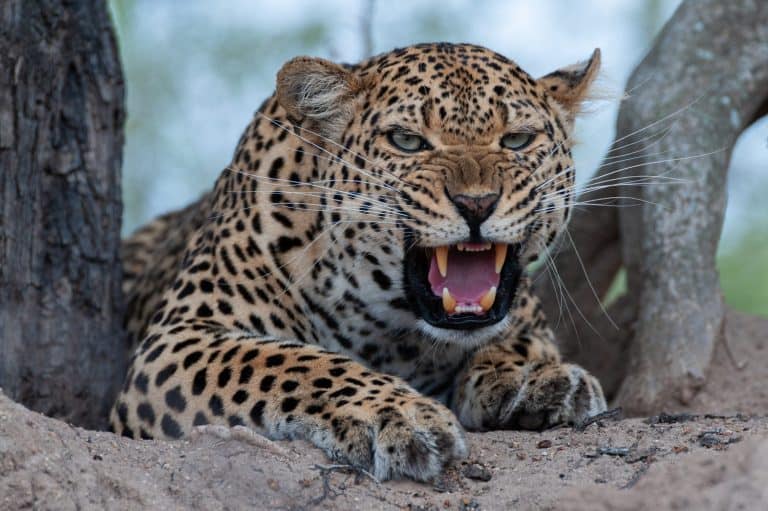
Leopard (Panthera pardus) Dhole / Asiatic wild dog (Cuon alpinus) Gaur (Bos gaurus) Asian elephant (Elephas maximus) Himalayan crestless porcupine (Hystrix brachyura)

Bunning Wildlife Sanctuary

~124 km²

Broadleaf hill forests with high habitat heterogeneity; notable for primates, forest birds, and as a refuge for elusive small-to-mid carnivores.

Western hoolock gibbon (Hoolock hoolock) Red serow (Capricornis rubidus) Malayan pangolin (Manis javanica) Marbled cat (Pardofelis marmorata) Wreathed hornbill (Rhyticeros undulatus)

Zeilad Lake Wildlife Sanctuary

~21 km² (commonly cited; figures vary by source)

Wetland-forest mosaic centered on Zeilad (Zeilad/Zeilad Pat) Lake; important for waterbirds, reptiles, and wetland-dependent mammals, especially seasonally.

Smooth-coated otter (Lutrogale perspicillata) Waterbirds (herons, egrets, ducks) Burmese python (Python bivittatus) Monitor lizards (Varanus spp.) Freshwater turtles (various species)

Wildlife Refuges

Kailam Wildlife Sanctuary

~10 km² (commonly cited; figures vary by source)

Small but locally important protected forest patch; functions as a stepping-stone habitat and refuge for forest birds, primates, and small carnivores in a human-dominated landscape.

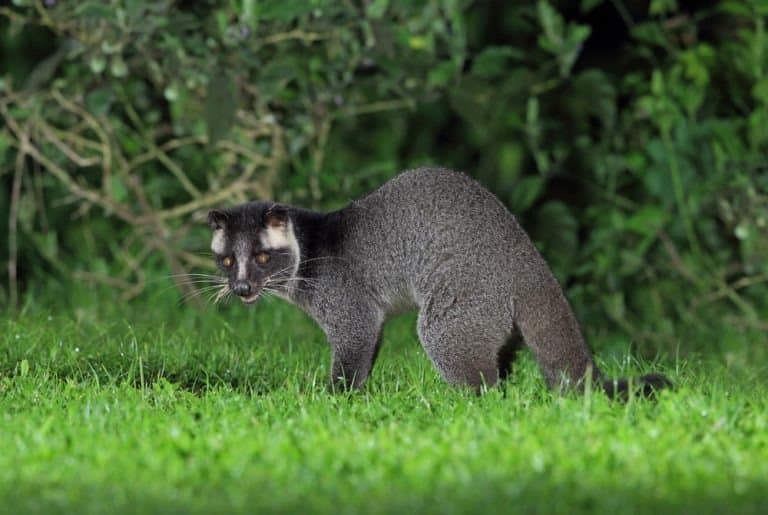
Western hoolock gibbon (Hoolock hoolock) Capped langur (Trachypithecus pileatus) Leopard cat (Prionailurus bengalensis) Himalayan palm civet (Paguma larvata) Hornbills (Bucerotidae)

Khongjaingamba Ching Wildlife Sanctuary

~21 km² (commonly cited; figures vary by source)

Compact hill sanctuary valued for protecting remnant forest on steep terrain; notable for bird diversity and as a local refuge for mammals sensitive to fragmentation.

Capped langur (Trachypithecus pileatus) Asiatic black bear (Ursus thibetanus) Leopard (Panthera pardus) Yellow-throated marten (Martes flavigula) Rufous-necked hornbill (Aceros nipalensis)

Loktak Lake (Ramsar Site) - broader wetland landscape around Keibul Lamjao

~286 km² (Loktak Lake surface area; protected/managed extents vary by zone)

Beyond the national park boundary, the larger Loktak wetland complex is recognized internationally (Ramsar) and remains crucial for migratory birds, fisheries, and wetland mammals; conservation here strongly influences Keibul Lamjao's ecology.

Migratory ducks and geese (wintering assemblages) Fishing cat (Prionailurus viverrinus) Smooth-coated otter (Lutrogale perspicillata) Water snakes and freshwater turtles Wetland-dependent raptors (e.g., kites, harriers seasonally)

Wilderness Areas

  • Remote hill-forest blocks along the Indo-Myanmar border in Chandel/Tengnoupal districts (connectivity landscape adjoining Yangoupokpi-Lokchao)
  • Upper Barak river and Tamenglong hill forests (large, rugged tracts with limited road access in places)
  • Shirui-Kashong highland ridge system (montane habitats around Shirui peak, including adjoining community-managed forest patches)
  • Jiri-Makru river catchment forests (steep valleys and ridge-top forests with comparatively low accessibility)
  • Loktak Lake catchment hill forests surrounding the Imphal Valley (critical watershed forests affecting wetland health)
Animals

Wildlife

Manipur lies in the Indo-Burma biodiversity hotspot. Steep, forested hills (subtropical broadleaf to montane) surround the Imphal Valley, and major wetlands like Loktak Lake add lowland habitat. The rise and monsoon climate plus links to India and Myanmar support many kinds of wildlife: primates and forest carnivores in the hills, elephants and gaur on eastern ranges, and important wetland species in Loktak-Keibul Lamjao, the world’s only floating national park. The state is known for rare local species, especially the Sangai, and a mix of Himalayan and Southeast Asian fauna.
~110-140 species (state checklists vary; includes primates, small carnivores, and large herbivores) Mammals
~450-550 species (rich Indo-Malayan forest bird community plus wetland migrants at Loktak) Birds
~70-100 species (forest snakes, lizards, and turtles; records still increasing) Reptiles
~25-45 species (monsoon-driven diversity; taxonomy and coverage still incomplete) Amphibians
~180-250 species (valley rivers and wetlands plus hill streams; local endemics/near-endemics present) Fish
Examples

Iconic Species

Sangai (Brow-antlered Deer) Manipur's flagship animal and cultural symbol; the last wild population survives on the floating phumdi (vegetation mats) of Keibul Lamjao National Park on Loktak Lake.
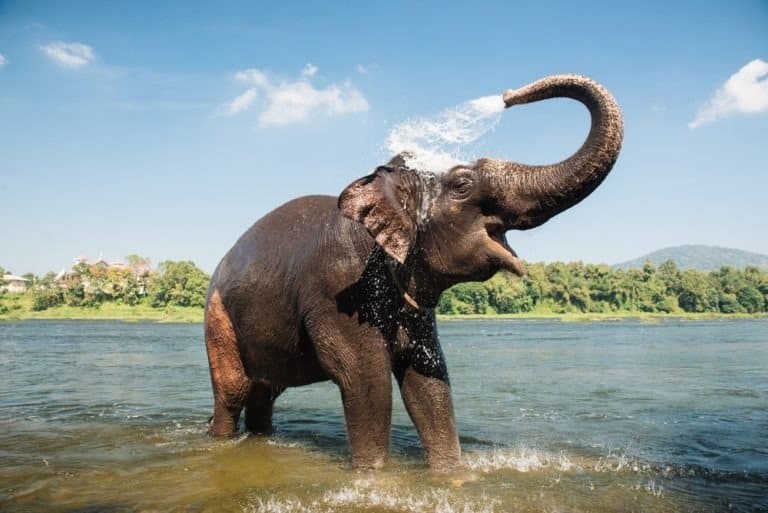
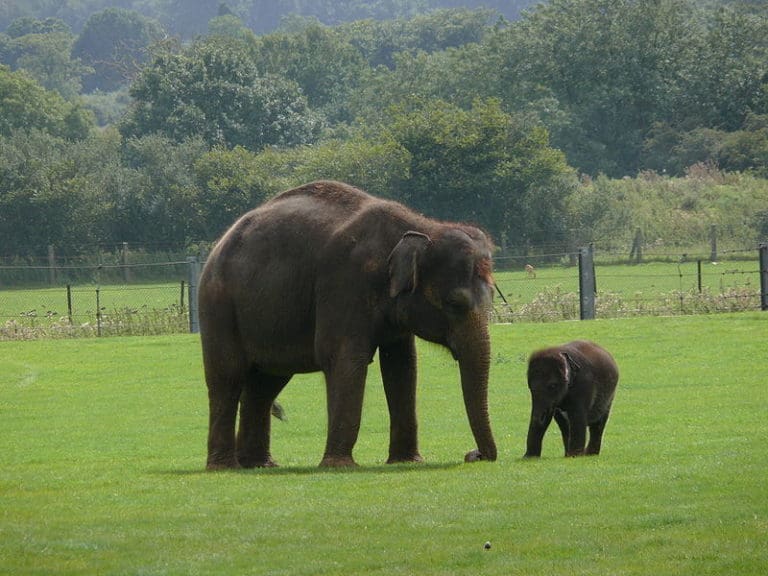
Asian Elephant
Asian Elephant Seasonally wide-ranging herds use forest corridors near the India-Myanmar border; sightings and signs are a hallmark of eastern hill forests and a major driver of conservation attention.
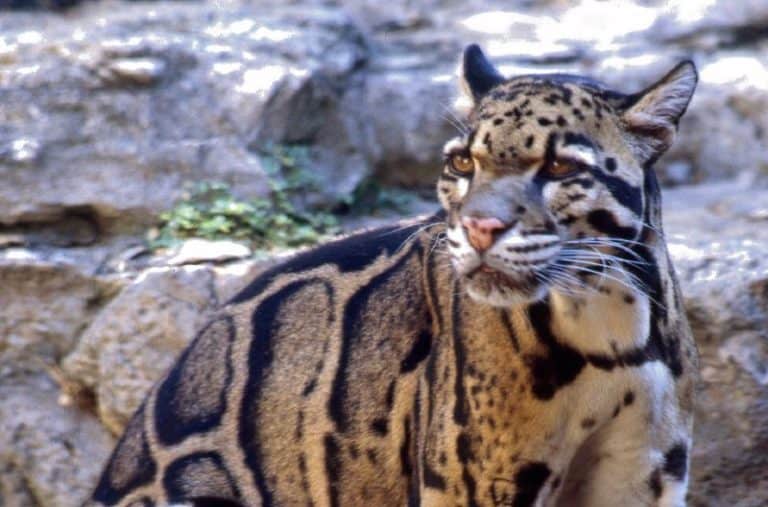
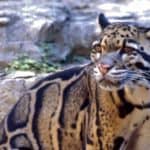
Clouded Leopard
Clouded Leopard A secretive, forest-dependent cat of Indo-Malayan hills; Manipur's intact hill forests are part of its northeastern Indian stronghold.
Western Hoolock Gibbon India's only ape; heard more often than seen in evergreen/semi-evergreen hill forests, where it depends on continuous canopy.
Great Hornbill A charismatic forest bird tied to mature trees for nesting; presence indicates relatively intact old-growth patches and healthy fruiting-tree networks.
Blyth's Tragopan A spectacular, shy pheasant of montane forests; sought by birders in higher-elevation habitats where hunting pressure is controlled.
Gaur (Indian Bison) The largest wild bovine; occurs in forested hills and transboundary landscapes, reflecting Manipur's connection to the Indo-Myanmar fauna.
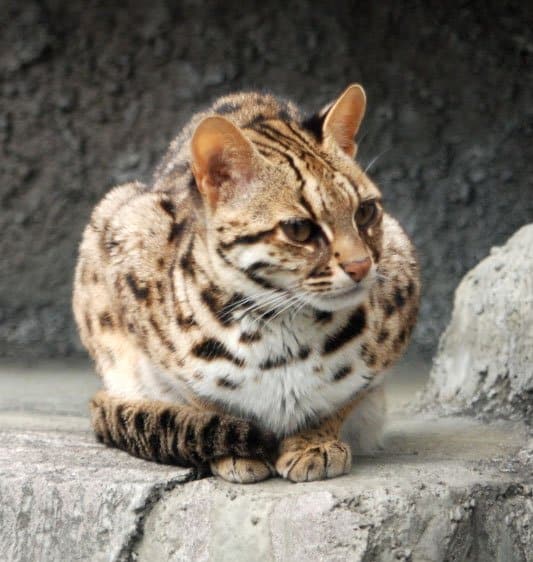
Leopard Cat
Leopard Cat Frequently recorded by camera traps across forest edges and secondary growth; a representative small cat of Manipur's hill-valley mosaics.

Endemic & Rare Species

Sangai (Brow-antlered Deer)

Rucervus eldii eldii

Endangered (range-restricted subspecies); the only wild population is in Manipur

Globally unique conservation responsibility for Manipur; survival depends on managing Loktak water levels, phumdi thickness, and disturbance in Keibul Lamjao.

Western Hoolock Gibbon

Hoolock hoolock

Endangered (IUCN)

Highly sensitive to canopy breaks; local persistence depends on protecting and reconnecting forest fragments in the hill districts.

Clouded Leopard

Neofelis nebulosa

Vulnerable (IUCN)

A key indicator of healthy Indo-Malayan hill forests; threatened by habitat loss, prey depletion, and snaring.

Chinese Pangolin

Manis pentadactyla

Critically Endangered (IUCN)

Occurs in Manipur's forested landscapes but is heavily threatened by illegal hunting and trade; protection is a high priority in Northeast India.

Blyth's Tragopan

Tragopan blythii

Vulnerable (IUCN)

Rare and local in India; Manipur's higher forests contribute to its fragmented global range and are important for long-term persistence.

Notable Populations

  • World's only wild population of the Sangai (Rucervus eldii eldii) confined to Keibul Lamjao National Park on Loktak Lake.
  • Keibul Lamjao National Park is the world's only 'floating' national park (phumdi ecosystem), a globally unusual wetland-grassland habitat supporting specialized wildlife.
  • Loktak wetland complex is a major regional site for waterbirds (resident and winter migrants) and supports fisheries and wetland-dependent biodiversity central to Manipur's ecology.
  • Transboundary forest landscapes along the India-Myanmar border support wide-ranging megafauna (notably Asian elephants and gaur) and maintain Indo-Malayan species connectivity.

Recent Changes

  • Sangai numbers have generally improved from historical lows due to focused protection, but the population remains highly vulnerable to habitat quality changes in phumdi and lake hydrology; conservation emphasis has shifted increasingly toward habitat restoration and disturbance control.
  • Increased reports of elephant movement and human-elephant conflict in some hill/foothill areas, consistent with changing land use, corridor pressures, and cross-border ranging.
  • Ongoing concerns about snaring and illegal hunting impacting forest mammals and ground birds (e.g., pheasants), with local recoveries where community protection and enforcement strengthen.
  • Wetland habitat pressures (water regulation, phumdi dynamics, and shoreline disturbance) continue to affect waterbird use of Loktak and the suitability of Keibul's floating meadows.
  • Greater documentation via camera traps and citizen reporting has expanded confirmed distributions for several forest carnivores (e.g., small cats), though this reflects improved detection as much as true expansion.
Visit

Wildlife Viewing

Manipur has wildlife across forested hills, bamboo and broadleaf woods, river valleys, and Loktak Lake’s floating phumdi wetlands. In the Indo‑Burma biodiversity hotspot it is rich for bird watching, primates, mammals and seasonal butterflies. Keibul Lamjao National Park is the best place to find the endangered Sangai; hill sanctuaries and guided walks reveal hornbills, barbets, laughingthrushes and macaques.

Best Seasons

Winter (Nov-Feb)

Best overall visibility and comfort: cool, dry days with clear views. Peak time for Loktak Lake and Keibul Lamjao wildlife viewing-excellent chances for Sangai sightings from watchtowers, plus strong wetland birding (migrants and residents). Hill forests are more accessible and leech-free, ideal for birding walks and camera work.

Spring (Mar-Apr)

Excellent for forest bird activity (breeding calls, mixed-species flocks) and butterflies as temperatures rise. Wildflowers and orchids begin to appear in some areas. Water levels are often still good at wetlands; mornings and late afternoons are productive for mammals and primates.

Early monsoon & peak monsoon (May-Sep)

Lush, green landscapes and peak plant diversity; best for amphibians, reptiles, and macro/nature photography (fungi, orchids, insects). Expect heavy rain, limited road access in some hill areas, leeches on trails, and fewer long wildlife drives. Short, flexible outings around Loktak/Imphal Valley edges work best between showers.

Post-monsoon (Oct-early Nov)

A strong "shoulder season" as forests are fresh and waterways are full. Birding improves quickly, butterflies linger, and accessibility rebounds. Great time for combined wetland + hill-forest trips before winter crowds and with comfortable temperatures.

Top Wildlife Experiences

  • Keibul Lamjao National Park (Loktak Lake): sunrise and late-afternoon watchtower sessions to spot the endangered Sangai on floating phumdi; bring binoculars and plan for multiple sits for best odds.
  • Loktak Lake wetland birding by boat: slow boat rides along lake edges and marshy inlets to scan for herons, egrets, cormorants, jacanas, kingfishers, and wintering waterbirds; combine with shoreline walks for close photography.
  • Hill-forest birding and primate walks at Zeilad Lake/Zeilad Wildlife Sanctuary (Tamenglong district): guided morning hikes for hornbills, barbets, laughingthrushes, drongos, and chances of macaques/other primates; best in dry months.
  • Shirui (Shirui Kashong) area nature walk + birding (Ukhrul district): forest-edge and hill trails for highland birds and seasonal wildflowers; pair with early starts and quiet, slow-paced scanning at clearings and fruiting trees.
  • Dzukou Valley day hike (from nearby routes, check current access/permits): landscape-and-wildlife trek with opportunities for high-altitude birding, butterflies in season, and superb habitat photography; go with a local guide for route safety and minimal impact.
  • Manipur Zoological Garden & nearby nature interpretation (Imphal): a practical add-on for families or short stays-good for learning about regional fauna, then use the insights to improve field ID at Keibul/Loktak.
  • Butterfly and macro-photography circuits around Imphal Valley fringes (spring to post-monsoon): guided short walks to look for swallowtails, skippers, and rich insect life; ideal when weather limits longer travel.

Wildlife Watching Types

Wetland wildlife viewing (floating marshes, lake-edge hides/watchtowers) Birding hotspots (wetlands and hill forests; strong winter waterbirding) Mammal watching (notably Sangai at Keibul Lamjao; occasional primates in hill forests) Primate tracking/observation walks (forest-edge and hill sanctuaries) Butterfly watching and macro/nature photography (especially spring to post-monsoon) Orchid, wildflower, and fungi-focused nature walks (monsoon to post-monsoon) Night walks/spotlighting where permitted (for frogs, insects, and nocturnal mammals-best arranged with authorized guides) Responsible boating/slow cruising for wildlife (Loktak and connected wetlands)

Guided Options

  • Keibul Lamjao National Park: hire authorized local guides/park staff for Sangai-focused watchtower sessions and interpretive walks (permits/timings set by the park).
  • Loktak Lake community-guided boat trips: engage local boat operators familiar with wildlife-friendly routes and low-disturbance viewing etiquette in marshy inlets.
  • District-level forest department-approved guides in hill areas (e.g., Tamenglong/Ukhrul sectors): useful for safe trail access, bird calls, and navigating seasonal conditions.
  • Local birding guides based around Imphal: day trips that combine Loktak/Keibul with valley-edge birding and photography-focused pacing.
  • Trekking guides for Dzukou/Shirui sectors (seasonal): best for route safety, weather awareness, and aligning hiking plans with wildlife and birding windows.
  • Wildlife viewing with responsible homestays/community ecotourism hosts near Loktak and hill districts: often the easiest way to arrange dawn starts, boats, packed breakfasts, and local natural-history interpretation.
Habitats

Ecosystems

Manipur, in northeastern India and part of the Indo-Burma biodiversity hotspot, has forested hills around the Imphal Valley. Heavy monsoon rains, warm humid lowlands, and cooler mid and high ridges make a mix of evergreen and deciduous forests, areas regrowing after shifting farming, rivers, and important wetlands like Loktak Lake and Keibul Lamjao National Park with floating meadows.

Biomes

Tropical Rainforest

Moist evergreen and semi-evergreen broadleaf forests on the windward hill slopes and sheltered valleys, with high plant diversity (lianas, epiphytes, evergreen canopy) typical of Indo-Burma's humid tropics.

Widespread across the surrounding hill districts; most continuous in higher-rainfall southern/eastern hill tracts.

Tropical Dry Forest

Moist-to-dry deciduous forest patches and more seasonal woodland on relatively drier slopes, valley fringes, and disturbed areas; often grades into secondary forest after shifting cultivation.

Scattered and patchy, more common in lower hills/valley margins and in areas with higher disturbance.

Temperate Forest

Cooler montane broadleaf and mixed forests on higher ridges (oak-laurel type assemblages in places), with increased mosses/ferns and seasonal temperature variation.

Limited to higher elevations on the hill ranges; discontinuous bands along upper slopes/ridgetops.

Freshwater

Rivers (e.g., Barak basin headwaters and Imphal-Thoubal system), streams, ponds, and floodplain waters supporting rich fish, amphibian, and riparian biodiversity.

Statewide network; concentrated along valley floors and major drainage lines.

Wetland

Lake and marsh complexes including Loktak Lake with floating mats of vegetation, soil, and organic matter (a unique wetland habitat), reedbeds, and seasonally inundated lowlands important for waterbirds and aquatic flora/fauna.

Localized but ecologically prominent-especially around Loktak Lake and associated marshlands in/near the Imphal Valley.

Habitats

Forest

Extensive hill forests forming the state's dominant natural cover, including protected areas and community-managed forests.

Rainforest

Humid evergreen/semi-evergreen stands in high-rainfall hill zones with dense understorey, climbers, and epiphytes.

Deciduous Forest

Seasonal broadleaf forests and degraded deciduous mosaics on drier slopes and in repeatedly disturbed landscapes.

Coniferous Forest

Small, localized patches of montane pine/needle-leaf elements on higher ridges where conditions favor conifers (often mixed with broadleaf species).

Woodland

Open-canopy tree cover and scrubby woodland in transitional or regenerating areas, including fallow stages after shifting cultivation.

Grassland

Valley grasslands, marsh-edge grass/reed communities, and small hill grass openings maintained by disturbance and seasonal moisture variation.

Shrubland

Secondary shrub-dominated vegetation in frequently disturbed hill areas and along forest edges.

Mountain

Steep hill ranges and ridgelines surrounding the Imphal Valley, creating strong elevation-driven habitat turnover and many microclimates.

Cliff/Rocky Outcrop

Rocky escarpments and road-cut cliffs in the hills providing nesting/roosting niches and specialized crevice flora.

Lake

Loktak Lake (largest in NE India) and smaller natural/artificial lakes/impoundments supporting aquatic plants and waterbirds.

River/Stream

Fast hill streams and larger rivers with riparian corridors, gravel bars, and floodplain reaches in valley areas.

Pond

Village ponds, oxbow-like depressions, and small impoundments important for amphibians and local fisheries.

Wetland

Floating meadow systems, reedbeds, and seasonally flooded lowlands-key habitats for wetland specialists (e.g., the Keibul Lamjao landscape).

Swamp

Waterlogged lowland pockets and backwaters with dense emergent vegetation, especially near lake margins and floodplain areas.

Marsh

Extensive marsh and reed habitats around Loktak and other lowland wetlands; includes floating and semi-floating vegetated mats.

Agricultural/Farmland

Imphal Valley paddy fields and mixed croplands; also shifting cultivation (jhum) mosaics in hill areas creating patchwork fallows.

Urban

Built-up areas centered on Imphal and district towns, with fragmented green spaces and peri-urban wetlands under pressure.

Ecoregions

Mizoram-Manipur-Kachin Rain Forests Northern Triangle Subtropical Forests Northeast India-Myanmar Pine Forests
Protection

Conservation

Primary Threats

  • Forest loss and fragmentation in hill districts due to shifting cultivation (slash-and-burn agriculture), conversion to plantations (e.g., teak/other commercial species), fuelwood extraction, and settlement expansion; this reduces connectivity among hill forests and isolates wildlife populations around protected areas such as Shirui/Koubru landscapes and the KLNP catchment.
  • Expansion/intensification of paddy cultivation in the Imphal Valley and horticulture/plantations in surrounding hills increases edge effects, pesticide/fertilizer runoff into rivers feeding Loktak, and encroachment pressure on community forests.
  • Illegal and unsustainable timber extraction (often along new/old forest tracks) degrades hill forests, increases landslide risk in monsoon season, and reduces availability of large trees and bamboo structure critical for hornbills, primates, and other forest specialists.
  • Wetland and river modification in the Loktak system (water level regulation, altered flow/sediment dynamics, channel changes) affects floating vegetation mat thickness/quality and the seasonal exposure of grazing grounds needed by Sangai; catchment degradation accelerates siltation and changes aquatic habitat for fish and waterbirds.
  • Road widening, new hill roads, and linear infrastructure create barriers and facilitate access for hunting/logging; hydropower and water-control structures in the Loktak basin and tributaries can alter aquatic connectivity and flood pulses that sustain wetland productivity.
  • Nutrient and pesticide runoff from valley agriculture, untreated sewage/solid waste around Imphal and lakeshore settlements, and localized industrial effluents contribute to eutrophication and water quality decline in Loktak Lake and connected wetlands, impacting fish, aquatic plants, and waterbirds.
  • Hunting for bushmeat and traditional use persists in parts of the hills and along forest-village interfaces; snaring and opportunistic shooting disproportionately affect ground-dwelling mammals and large birds, weakening already small populations.
  • Trafficking pressure on high-value species (e.g., pangolins and their scales; songbirds; occasional live animal trade) is enabled by road connectivity and proximity to international trade routes in the broader Northeast region.
  • Crop raiding (wild boar, macaques, elephants in some corridors) and occasional livestock depredation increase retaliation risks; conflict hotspots often occur where forest edges meet paddy fields and horticulture, and near protected-area boundaries and community forests.
  • Shifts in monsoon timing/intensity and more extreme rainfall events raise landslide and flood risks in hill catchments and can destabilize phumdi dynamics in Loktak; warmer temperatures may shift suitable ranges for montane endemics (e.g., Shirui-area flora) and increase dry-season fire risk in degraded forests.
  • Aquatic weeds and invasive plants in and around Loktak and other wetlands can outcompete native macrophytes, alter fish habitat, and complicate phumdi management; in disturbed hill areas, invasive shrubs can impede forest regeneration.
  • High dependence on fuelwood, bamboo, and non-timber forest products in rural areas can exceed regeneration in accessible forests; overharvest of fish and aquatic plants in Loktak can reduce food-web resilience when combined with pollution and hydrological change.
Fun Facts

Did You Know?

The "land" under the Sangai can drift: floating vegetation mats can shift with wind and currents, so parts of Keibul Lamjao's habitat literally move across the lake surface.

Sangai are adapted to a floating world-their long, splayed hooves help distribute weight on springy floating vegetation mats, which is why they're nicknamed the "dancing deer."

Counter-intuitively, keeping Loktak's water level artificially high can harm the floating vegetation mats: when the mats don't seasonally touch the lakebed, they absorb fewer nutrients and can thin/degenerate over time-bad news for the deer that depend on firm mats.

Keibul Lamjao isn't just marshy shoreline: it's effectively a living, layered "raft" of vegetation, roots, and peat thick enough in places to support large mammals-an ecosystem form that most visitors don't expect to exist at national-park scale.

Keibul Lamjao National Park (on Loktak Lake) is widely cited as the world's only "floating" national park-its surface is made of floating mats of vegetation, soil, and decomposing organic matter.

Manipur holds the only wild, natural population on Earth of the Sangai (brow-antlered deer subspecies *Rucervus eldii eldii*), now restricted to the floating vegetation mats of Keibul Lamjao National Park.

Loktak Lake-Manipur's signature wetland-is the largest freshwater lake in Northeast India and the ecological base for the floating vegetation-mat ecosystem that supports the Sangai and large wintering waterbird assemblages.

Shirui Lily (*Lilium mackliniae*), Manipur's state flower, is a true narrow endemic-naturally found only on the Shirui (Siroi) Hills near Ukhrul, making it one of India's most geographically restricted iconic plants.

Thank you for reading! Have some feedback for us?