N S W E
Wildlife Expeditions

Wildlife of
Tamil Nādu

From Western Ghats rainforests to Coromandel wetlands, Tamil Nadu packs elephants, tigers, sea turtles, and vast migratory bird spectacles into one coastal state.
61 Species
130,058 km² Land Area
Overview

About Tamil Nādu

Tamil Nadu has very different habitats packed into a small area: lush Western Ghats slopes and shola-grassland in the Nilgiris, dry deciduous and thorn forests inland, and a band of lagoons, estuaries, mangroves, and sandy shores along the Bay of Bengal and Indian Ocean. This mix supports big animals like the Asian elephant and tiger, many birds, reptiles, and endemic species of the Ghats. Important areas are the Western Ghats highlands, dry forests and scrub of the Eastern Ghats and rain‑shadow plains, and wetlands such as Pulicat and Point Calimere that are key stopovers for migratory waterbirds. Coastal seagrass beds, mangroves, and nesting beaches also support shorebirds and sea turtles. You can move from cool Nilgiri mountains to dry elephant country and end at major birding wetlands and turtle beaches. Seasonal rains, wetland cycles, and coastal migrations make wildlife viewing very dynamic.

Physical Features

Geography

Tamil Nadu shows a steep west-east change: the Western Ghats and hills have moist forests and mountain homes sheltering elephants, tigers and endemic species. Central and eastern rain-shadow areas have dry thorn and dry-deciduous forests. Long coastal plains, estuaries, lagoons and deltas form rich wetlands for resident and migratory waterbirds, plus mangroves, sandy beaches and seagrass.

130,058 km² Land Area
10th largest state in India (by area) Size Rank
India Country
State Type
Elevation Range

Sea level to ~2,637 m (Doddabetta, Nilgiri Hills)

Coastline

~1,076 km coastline along the Bay of Bengal in the northeast/east and the Indian Ocean (including the Gulf of Mannar) to the southeast/south, with numerous estuaries, lagoons, and nearshore island/reef systems influencing coastal and marine wildlife

Key Landscapes

Western Ghats (Nilgiri-Anamalai-Palani hill systems) with evergreen, moist deciduous, and shola-grassland mosaics Eastern Ghats hill ranges and broken uplands (scrub/dry forests, rocky outcrops) Major river systems and catchments: Cauvery (Kaveri) basin and delta; also Vaigai, Thamirabarani, Palar, Pennar, and associated riparian corridors Coastal plains of the Coromandel Coast with sandy beaches, dunes, and coastal scrub Deltas, estuaries, backwaters, and lagoons (notably the Cauvery delta wetlands and the Pulicat Lagoon complex) supporting large waterbird concentrations Coastal and deltaic wetlands including salt pans, marshes, and seasonal tanks/irrigation reservoirs that function as a wetland network for birds and amphibians/reptiles
State Symbols

Official Wildlife Symbols

animal

Nilgiri tahr

bird

Emerald dove

insect

Tamil yeoman (butterfly)

Designated 2019

wildflower

Flame lily (Gloriosa superba)

tree

Palmyra palm

Parks & Reserves

Protected Areas

Tamil Nadu's protected areas cover the Western Ghats, Eastern Ghats, and important coastal, marine, and wetland habitats. They include National Parks, Tiger Reserves, Wildlife Sanctuaries, and bird sanctuaries/Ramsar wetlands that host migratory waterbirds. Main priorities are elephant and tiger landscapes (Western Ghats–Nilgiris, Sathyamangalam), Nilgiri–Anamalai montane endemics, and coastal species like dugong, sea turtles, and reef communities.

Protected Coverage

≈7-8% of the state's land area (rough approximation; varies by accounting method and whether buffer/reserve forests are included)

National Parks & Preserves

Gulf of Mannar Marine National Park

~560 km² (marine park area)

India's first marine national park, protecting fringing reefs, seagrass meadows, and islands that are critical for marine biodiversity and threatened species like the dugong; excellent for conservation-focused marine wildlife values (viewing is often via boat-based, regulated access).

Dugong (sea cow) Green sea turtle Olive ridley sea turtle Spinner dolphin Reef-building corals and reef fishes

Indira Gandhi National Park (Anamalai / within Anamalai Tiger Reserve)

~117 km² (national park core; larger landscape protected as tiger reserve)

A flagship Western Ghats forest landscape (evergreen to moist deciduous) supporting high densities of large mammals and primates; important for corridor-level conservation with adjacent Kerala protected areas.

Asian elephant Bengal tiger Gaur (Indian bison) Lion-tailed macaque Great hornbill

Mukurthi National Park

~78 km²

High-altitude shola forests and montane grasslands of the Nilgiri plateau-one of the best places in the state to conserve and (with luck) observe endemic Western Ghats montane fauna.

Nilgiri tahr Sambar deer Gaur (Indian bison) Nilgiri marten Nilgiri pipit

Guindy National Park

~2.7 km²

A rare, small urban national park embedded within Chennai, protecting remnant dry evergreen/scrub habitats and serving as a key environmental refuge with easy wildlife viewing relative to its size.

Blackbuck Spotted deer (chital) Golden jackal Indian palm civet Black-naped hare

State & Provincial Parks

Mudumalai Tiger Reserve (Mudumalai Wildlife Sanctuary)

~321 km² (sanctuary core; management landscape includes larger tiger-reserve area)

One of South India's classic wildlife-viewing landscapes at the Nilgiri foothills, forming a vital part of the Nilgiri Biosphere Reserve and a major elephant-tiger habitat and corridor complex.

Asian elephant Bengal tiger Leopard Dhole (Indian wild dog) Gaur (Indian bison)

Sathyamangalam Tiger Reserve

~1,411 km²

A crucial link between the Western and Eastern Ghats, with extensive dry deciduous forests that support wide-ranging carnivores and one of Tamil Nadu's most important elephant and tiger movement corridors.

Bengal tiger Asian elephant Leopard Striped hyena Gaur (Indian bison)

Kalakkad Mundanthurai Tiger Reserve (KMTR)

~1,601 km²

A large, rugged Western Ghats stronghold with evergreen forests and river catchments; exceptionally important for endemism and for sustaining viable populations of large mammals across a connected landscape.

Bengal tiger Asian elephant Leopard Lion-tailed macaque Nilgiri langur

Srivilliputhur-Megamalai Tiger Reserve

~1,016 km²

A major recent addition to the protected-area network, securing megafauna habitat and elevational gradients (from lower dry forests to wetter hill forests) that improve connectivity in the southern Western Ghats.

Asian elephant Bengal tiger Leopard Dhole (Indian wild dog) Gaur (Indian bison)

Wildlife Refuges

Vedanthangal Bird Sanctuary

~0.30 km² (≈30 ha)

One of India's oldest bird sanctuaries, famed for large nesting colonies of waterbirds that breed here during the season, making it a high-reliability site for close-range birdwatching.

Painted stork Eurasian spoonbill Black-headed ibis Little egret Spot-billed pelican

Point Calimere Wildlife and Bird Sanctuary

~17 km² (sanctuary; part of a larger wetland complex in the region)

A coastal mosaic of dry evergreen forests, salt pans, tidal flats, and wetlands supporting major shorebird and flamingo assemblages and notable coastal wildlife.

Greater flamingo Blackbuck Black-winged stilt Eurasian spoonbill Painted stork

Pulicat Lake Bird Sanctuary (Tamil Nadu portion)

~150-160 km² (approx., Tamil Nadu sanctuary area; the wider lake spans two states)

A large brackish lagoon system critical for wintering and passage migrants; supports impressive congregations of flamingos, pelicans, terns, and shorebirds across mudflats and shallow waters.

Greater flamingo Spot-billed pelican Gull-billed tern Black-tailed godwit Pied avocet

Vettangudi Bird Sanctuary

~0.38 km² (≈38 ha)

A compact but productive wetland sanctuary known for breeding/roosting colonial waterbirds-excellent for concentrated viewing in a small area when water conditions are good.

Painted stork Asian openbill Little cormorant Little egret Black-crowned night heron

Wilderness Areas

  • Nilgiri Biosphere Reserve (Tamil Nadu sections around the Nilgiris-Mudumalai landscape)
  • Agasthyamalai Biosphere Reserve (Tamil Nadu sections around KMTR and adjoining hills)
  • Megamalai-High Wavy Mountains landscape (now largely encompassed by Srivilliputhur-Megamalai TR, with remaining roadless hill blocks)
  • Palani Hills/Kodaikanal highlands (montane forest-grassland remnants and shola valleys with relatively roadless pockets)
  • Eastern Ghats hill blocks (Javadi, Kalrayan, Shevaroy ranges) with extensive dry-forest tracts and lower road density compared to plains
  • Pichavaram mangroves and nearby backwater complexes (wilderness-like tidal channels; sensitive coastal habitat)
Animals

Wildlife

Tamil Nadu's wildlife is defined by a sharp ecological gradient: wet evergreen and shola-grassland mosaics in the Western Ghats (Nilgiris-Anamalai-Agasthyamalai), extensive dry deciduous and thorn forests across the Eastern Ghats and rain-shadow plains, and a long coastline with mangroves, seagrass beds, coral/island systems (Gulf of Mannar), lagoons, and major bird wetlands. This mix supports flagship megafauna (tiger, elephant, gaur), Western Ghats endemics (e.g., Nilgiri tahr, lion-tailed macaque), and large seasonal concentrations of migratory waterbirds along the coast and inland tanks.
≈170-190 species (including Western Ghats endemics and wide-ranging dry-forest mammals) Mammals
≈500-560 species (raptors, Western Ghats forest birds, and large numbers of wintering shorebirds/waterfowl) Birds
≈170-200 species (ghat endemics, dryland lizards/snakes, and sea turtles along the coast) Reptiles
≈90-120 species (strong Western Ghats endemic component; diversity highest in wet hill ranges) Amphibians
≈600+ species when combining marine and freshwater (very high marine diversity along Gulf of Mannar and the open coast; inland rivers/reservoirs add many more) Fish
Examples

Iconic Species

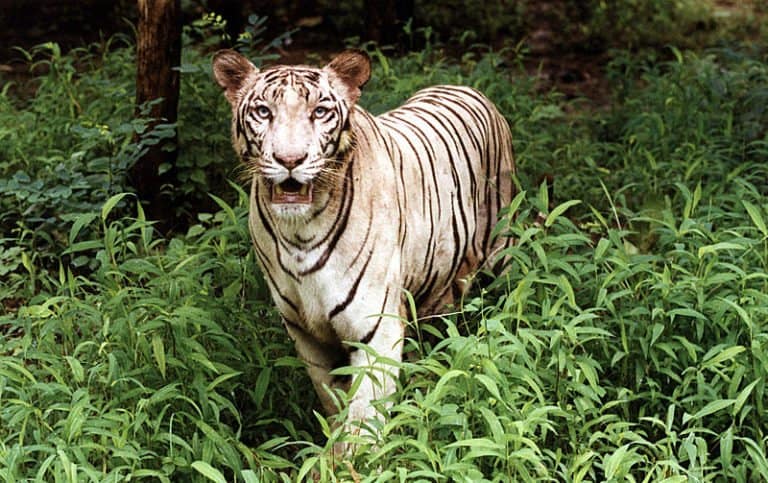
Bengal Tiger
Bengal Tiger A key draw in Mudumalai-Sathyamangalam-Anamalai landscapes; Tamil Nadu forms an important stronghold for South Indian tigers across connected reserves.
Asian Elephant
Asian Elephant Large, frequently encountered herds occur in the Nilgiri Biosphere region and adjoining Eastern Ghats corridors; elephant safaris and river-edge sightings define many visits.
Gaur India's largest wild cattle, commonly seen in moist and dry deciduous forests (Mudumalai, Anamalai, Sathyamangalam), especially near forest edges and grasslands.
Nilgiri Tahr An iconic Western Ghats mountain ungulate associated with steep cliffs and shola-grassland systems (notably Mukurthi and high Nilgiri plateaus).
Lion-tailed Macaque A flagship rainforest primate of the Western Ghats; sought by visitors in the Anamalai and Agasthyamalai hill complexes where mature evergreen forest persists.
Dhole (Asiatic Wild Dog) Seen in packs in larger forest blocks; a top predator that signals intact prey bases in reserves like Mudumalai and Anamalai.
Indian Leopard Widespread across Ghats and drier reserves; often more adaptable than tigers and an important part of the 'big cat' experience.
Dugong (Sea Cow) A rare marine mammal closely tied to seagrass meadows; Tamil Nadu's Palk Bay-Gulf of Mannar region is among India's most important remaining areas for the species.
Olive Ridley Sea Turtle Known for seasonal nesting along the Tamil Nadu coast (including urban-adjacent beaches); conservation work and night patrols have made it emblematic of coastal wildlife.
Greater Flamingo A marquee winter waterbird in coastal wetlands and saltpans (e.g., Point Calimere/Vedaranyam region), drawing birders for large feeding flocks.

Endemic & Rare Species

Nilgiri Tahr

Nilgiritragus hylocrius

Endangered (IUCN)

Endemic to the Western Ghats; Tamil Nadu's high-elevation grassland-cliff habitats support important subpopulations and are central to long-term recovery.

Lion-tailed Macaque

Macaca silenus

Endangered (IUCN)

A Western Ghats endemic dependent on contiguous evergreen rainforest; habitat fragmentation makes Tamil Nadu's remaining rainforest blocks especially valuable.

Nilgiri Langur

Semnopithecus johnii

Vulnerable (IUCN)

A Western Ghats endemic leaf-monkey; regularly encountered in Ghats forests and a strong indicator of mid-elevation forest integrity.

Nilgiri Marten

Martes gwatkinsii

Vulnerable (IUCN)

A rare Western Ghats endemic carnivore of upper-elevation evergreen/shola systems; sightings are uncommon, making it a prized species for serious naturalists.

Travancore Tortoise

Indotestudo travancorica

Vulnerable (IUCN)

A Western Ghats endemic tortoise associated with moist forests and leaf litter; persists in the southern Ghats ranges of Tamil Nadu.

Indian Pangolin

Manis crassicaudata

Endangered (IUCN); heavily threatened by illegal trade

Occurs in dry forests and scrub; poaching pressure makes secure protected areas and enforcement in Tamil Nadu important for its persistence.

White-rumped Vulture

Gyps bengalensis

Critically Endangered (IUCN)

Historically widespread, now scarce; remnant and recovering vulture presence in parts of southern India heightens the importance of safe food sources and reduced poisoning risks.

Dugong (Sea Cow)

Dugong dugon

Vulnerable (IUCN); nationally very rare in India

Seagrass loss and bycatch have driven severe declines; Tamil Nadu's seagrass landscapes are central to India's remaining dugong conservation efforts.

Notable Populations

  • South India's major connected tiger-elephant landscape spans the Nilgiri Biosphere region into Sathyamangalam and adjacent reserves, supporting significant large-mammal densities and corridor-dependent movement.
  • Gulf of Mannar and Palk Bay seagrass ecosystems represent one of India's most important remaining dugong strongholds and a national priority for recovery.
  • Point Calimere (Vedaranyam) and associated coastal wetlands/saltpans host nationally significant wintering congregations of flamingos, shorebirds, and other migratory waterbirds.
  • Seasonal olive ridley nesting along the Tamil Nadu coastline is among the key sea-turtle nesting regions on India's southeast coast.

Recent Changes

  • Tiger numbers and occupancy have increased in parts of the Sathyamangalam-Mudumalai-Nilgiri landscape over the last decade-plus, aided by protection and landscape connectivity, though pressures persist at edges.
  • Greater emphasis on elephant corridor protection and habitat connectivity has improved movement security in some areas, while human-elephant conflict has also risen in several fringe landscapes due to land-use change.
  • Dugong conservation has intensified (seagrass protection, community engagement, and bycatch-risk reduction), but the population remains fragile and slow to recover.
  • Olive ridley nesting success has improved on some monitored beaches through nest protection and hatchery programs, though coastal lighting, erosion, and fisheries interactions continue to affect outcomes.
  • Invasive plants (notably Lantana in dry forests and other invasives in wetlands) have altered understorey structure and forage availability in some reserves, impacting prey dynamics and habitat quality.
Visit

Wildlife Viewing

Tamil Nadu has varied wildlife: tiger and elephant forests in the Western Ghats (Mudumalai–Anamalai), dry forests and scrub (Sathyamangalam–Ariyalur), high shola–grassland (Nilgiris), and coastal wetlands (Pulicat, Point Calimere, Vedanthangal). Shorebird beaches, sea-turtle nesting, and pelagic trips for dolphins and occasional whales are possible. Visitors often combine a Ghats reserve with a wetland and a canopy walk or night safari.

Best Seasons

Cool & dry (Nov-Feb)

Best all-round season: comfortable temperatures, clear mornings for safaris, and peak migratory bird action in wetlands and saltpans. Great visibility for bird photography at Vedanthangal, Point Calimere, Pulicat, and Karikili; strong chances for elephants, gaur, deer, and big-cat sign in Mudumalai/Anamalai. Ideal time to combine forest safaris with coastal birding.

Hot & dry (Mar-May)

Best for mammal viewing in forests: animals concentrate around waterholes and river edges, improving sightings of elephants, gaur, sambar, and sometimes predators (tiger/leopard) on early drives. Expect heat in the plains; plan dawn-and-dusk activities and midday downtime. Coastal birding tapers as migrants depart, but resident raptors and shorebirds remain.

Southwest monsoon (Jun-Sep)

Western Ghats turn lush and dramatic; excellent for landscapes, amphibians, butterflies, and rainforest nature walks. Safari routes can be limited by weather; leech precautions may be needed in wetter zones. Birding shifts toward residents; wetlands are quieter than winter but still rewarding for local species and breeding behavior in some sites.

Northeast monsoon (Oct-early Dec)

Rains recharge wetlands; early migrants begin arriving. Conditions can be humid with intermittent heavy showers in coastal districts. Great time for wetland revival, fresh greenery, and fewer crowds; timing-dependent birding improves through late Nov. Check local advisories for flooding/road conditions, especially to low-lying bird sanctuaries.

Top Wildlife Experiences

  • Tiger-country jeep safari in Mudumalai Tiger Reserve (Theppakadu-Masinagudi sector): dawn and dusk drives for elephant herds, gaur, wild dog, and a real chance of tiger/leopard with patience.
  • Elephant-rich forest safari in Anamalai (Indira Gandhi) Tiger Reserve-Topslip: combine a vehicle safari with a guided nature walk in buffer areas for birds, primates, and rainforest ecology.
  • Dry-forest big-mammal circuit in Sathyamangalam Tiger Reserve: look for elephants in open country, striped hyena signs, and strong raptor activity along ridgelines-excellent for photographers who like wide, cinematic habitats.
  • Classic winter waterbird day at Vedanthangal Bird Sanctuary (near Chennai): early morning hides/viewpoints for painted storks, spoonbills, pelicans, egrets, and nesting activity when conditions are right.
  • Flamingos and shorebirds at Point Calimere Wildlife & Bird Sanctuary (Kodiakkarai): explore the coastal mosaic of salt marsh, mudflat, and dry evergreen forest for flamingos (seasonal), waders, and blackbuck in nearby open areas.
  • Pulicat Lake sunrise birding and boat exploration (Tamil Nadu-Andhra border): scan for flamingos (seasonal), terns, sandpipers, and raptors; pair with a visit to nearby beaches for shorebird walks.
  • Nilgiris high-altitude wildlife day: Ooty-Coonoor-Avalanche/Upper Bhavani area for shola-grassland birds (including endemics), plus chances of Nilgiri tahr on suitable routes (often best arranged with local naturalists).
  • Seasonal olive ridley turtle nesting watch near Chennai (e.g., Besant Nagar-Neelankarai-Kovalam stretches) with conservation volunteers: quiet night walks during nesting months (timing varies year to year); follow ethical, no-flash protocols. (Confirm current nesting activity locally before planning.)

Wildlife Watching Types

Jeep/vehicle safaris in tiger reserves and wildlife sanctuaries (mammals, big cats, elephants) Guided nature walks and forest interpretation trails (rainforest, shola, dry deciduous) Wetland birding at lakes, marshes, saltpans, and estuaries (migratory waterbirds, flamingos, shorebirds) Raptor watching and open-country scanning (kites, eagles, harriers; best in dry forests and wetlands) Nocturnal wildlife viewing (night drives where permitted; owls, civets, nocturnal mammals) Butterfly, dragonfly, and amphibian-focused monsoon walks (Western Ghats) Marine wildlife trips (dolphins; occasional whale sightings with offshore boat charters-highly weather- and operator-dependent) Sea turtle nesting observation with conservation groups (seasonal, strict ethics)

Guided Options

  • Tamil Nadu Forest Department guided safari programs in major reserves (Mudumalai, Anamalai/Topslip, Sathyamangalam): book official jeep/van safaris and inquire about authorized guides/naturalists at entry gates or official portals where available.
  • Government-run interpretation and eco-tourism activities at select sites (nature education centers, guided trails) - ask at sanctuary offices for current schedules and permitted routes.
  • Local naturalist-led birding days around Chennai wetlands: Vedanthangal-Karikili-Pallikaranai marsh circuits (excellent for short trips and photography).
  • Point Calimere local guide services (Kodiakkarai area): helpful for navigating access restrictions, tides, and best birding windows; arrange through local operators in Nagapattinam/Velankanni region.
  • Pulicat Lake guided boat birding (seasonal): small-boat outings with experienced boatmen/naturalists; confirm safe-weather windows and bird concentrations before committing.
  • Nilgiris specialist birding and shola ecology walks (Ooty/Coonoor/Upper Bhavani side): best arranged with locally based naturalists who know access permissions and current conditions.
  • Chennai Coast olive ridley turtle patrols (seasonal): join recognized conservation volunteer groups for ethical night walks; they provide protocols and current nesting updates.
  • Photography-focused safaris (private vehicles where permitted, or dedicated seats with operators) in Mudumalai/Anamalai: choose operators emphasizing ethical driving, limited disturbance, and naturalist interpretation.
Habitats

Ecosystems

Tamil Nadu has a big wet-to-dry and mountain-to-coast change. Evergreen and moist-deciduous forests in the Western Ghats (Nilgiri, Anamalai, Agasthyamalai) turn east into dry deciduous and thorn-scrub. The Coromandel coastal plain has river deltas, lagoons, mangroves, and nearshore seas (Gulf of Mannar, Palk Bay). This mix supports elephants, tigers, gaur, and key wetlands for migratory waterbirds.

Biomes

Tropical Rainforest

Evergreen to semi-evergreen rainforest patches and shola-forest components in the wettest Western Ghats sectors (Agasthyamalai/Anamalai ranges), typically in steep, high-rainfall catchments and well-protected reserves.

Small, fragmented; mostly confined to the Western Ghats belt in the far west/southwest (generally a few percent of the state).

Tropical Dry Forest

Dry deciduous forests and dry evergreen patches cover interior hills, foothills, and parts of eastern lowlands around the wetter Ghats. They include teak and bamboo deciduous tracts and Coromandel dry evergreen formations.

Widespread across interior districts, Eastern Ghats fragments, and some coastal plain woodlands; a major share of remaining natural vegetation.

Savanna

Open thorn-scrub and grass-shrub mosaics in rain-shadow zones (leeward of the Western Ghats) and degraded/managed landscapes where frequent fire, grazing, and drought favor grassy openings with scattered trees.

Patchy but extensive in drier interiors and foothills, intergrading with dry deciduous forest and agricultural land.

Freshwater

River networks and reservoirs supporting riparian corridors, irrigation-fed wetlands, and major bird habitats-especially in the Cauvery system and southern rivers (Tamiraparani, Vaigai).

Statewide along river basins, tanks, and reservoirs; concentrated in deltaic and irrigated plains.

Wetland

Coastal lagoons, marshes, floodplain tanks, and mangrove-associated wetlands that host large congregations of resident and migratory waterbirds (e.g., Vedanthangal region, Point Calimere complex, Pallikaranai).

Scattered but locally extensive in the Cauvery delta and coastal lowlands; numerous small 'tank' wetlands inland.

Marine

Bay of Bengal/Indian Ocean coastal waters including productive nearshore fisheries, seagrass beds, and coral-associated systems in the Gulf of Mannar and Palk Bay.

Along the full coastline (~1,000+ km) and adjacent shelf waters; highest reef/seagrass expression in the southeast (Ramanathapuram-Thoothukudi).

Habitats

Forest

Protected forest landscapes in the Western Ghats (e.g., Anamalai/Indira Gandhi, Mudumalai, Kalakad-Mundanthurai) and fragmented Eastern Ghats hill forests supporting elephant and tiger corridors.

Rainforest

Evergreen/semi-evergreen tracts and shola forest patches in high-rainfall Ghats catchments (Agasthyamalai and parts of Anamalai), with high endemism.

Deciduous Forest

Dry to moist deciduous forests (notably in Mudumalai-Sathyamangalam landscapes and Ghats foothills), often forming key large-mammal habitat and movement corridors.

Woodland

Open dry woodlands and dry evergreen woodland remnants on the Coromandel plain, including sacred groves and reserve patches amid agriculture.

Grassland

Montane grasslands/shola-grassland mosaics in the Nilgiris and high Ghats plateaus, plus lowland grassy openings in rain-shadow interiors.

Shrubland

Thorn scrub and scrubby fallows in semi-arid interiors and coastal hinterlands, important for drought-adapted fauna and as buffer habitat around reserves.

Mountain

Western Ghats massifs (Nilgiris, Anamalai, Palani, Agasthyamalai) and Eastern Ghats outcrops (e.g., Javadi/Kolli/Pachamalai hills) creating steep climate and habitat gradients.

Cliff/Rocky Outcrop

Rock escarpments and steep valley walls in the Ghats and Eastern Ghats hill complexes, providing raptor nesting sites and refugia for cliff-adapted flora.

Cave

Rock shelters and cave systems in hill/karst and rocky terrains of the Eastern Ghats and southern hill ranges, used by bats and other cave fauna (distribution localized).

River/Stream

Major rivers and riparian corridors: Cauvery and its delta distributaries, Palar, Vaigai, and Tamiraparani-supporting irrigation wetlands and floodplain biodiversity.

Lake

Large lagoonal lakes and brackish systems such as Pulicat Lake (shared with Andhra Pradesh) and other coastal backwaters supporting waterbirds and fisheries.

Pond

Dense network of traditional irrigation tanks/ponds across the plains (especially in the Cauvery basin), many functioning as seasonal wetlands.

Wetland

Inland marshes and floodplain wetlands including Pallikaranai marsh (Chennai) and bird-focused wetlands around Vedanthangal and Koonthankulam (nearby regional complex).

Marsh

Fresh to brackish marshes in coastal lowlands and urban/peri-urban settings (notably around Chennai), critical for migratory birds and flood buffering.

Mangrove

Mangrove forests such as Pichavaram and Muthupet (Cauvery delta region), forming nursery habitat for fish/crustaceans and protecting shorelines.

Estuary

Estuaries and river mouths along the Coromandel and Gulf of Mannar coasts (e.g., Cauvery delta outlets, Vellar/Coleroon systems), mixing freshwater and marine productivity.

Coastal

Long sandy coastal plains and dune-backwater systems along the Bay of Bengal, plus the more biodiverse reef-seagrass coast of the southeast.

Beach

Extensive sandy beaches along the Coromandel coast and around Kanyakumari, with nesting/foraging areas for coastal fauna (pressure from development varies).

Rocky Shore

Rocky headlands and shore platforms (notably near Kanyakumari and select stretches of the southeast), supporting intertidal communities.

Coral Reef

Fringing and patch reef systems and coral-associated habitats in the Gulf of Mannar and parts of Palk Bay, closely linked with seagrass beds and island chains.

Open Ocean

Pelagic waters off the continental shelf supporting tuna-like fisheries and migratory megafauna movements.

Deep Sea

Deeper offshore waters beyond the shelf in the Bay of Bengal/Indian Ocean margin, with limited direct observation but ecologically important for regional oceanography.

Seabed/Benthic

Continental shelf seabeds including sandy/muddy bottoms and seagrass-associated substrates, especially in the Gulf of Mannar-Palk Bay region.

Urban

Major metros and cities (Chennai, Coimbatore, Madurai, Tiruchirappalli, Salem) with fragmented wetlands/green spaces and strong land-use pressure.

Suburban

Rapidly expanding peri-urban belts around Chennai and western cities, often overlapping with remnant wetlands, scrub, and agricultural mosaics.

Agricultural/Farmland

Intensively cultivated plains-rice-dominant Cauvery delta, sugarcane/banana belts, cotton/groundnut in drier zones-interspersed with tanks and field margins used by birds.

Plantation

Tea and eucalyptus/wattle mosaics in the Nilgiris and tea/coffee estates in parts of the Western Ghats, creating managed habitat adjacent to native forest blocks.

Ecoregions

South Western Ghats moist deciduous forests (WWF) South Western Ghats montane rain forests (WWF) South Western Ghats montane grasslands (WWF) East Deccan dry evergreen forests (WWF) South Deccan Plateau dry deciduous forests (WWF) Deccan thorn scrub forests (WWF)
Protection

Conservation

Primary Threats

  • Natural habitats in Western Ghats foothills and dry forests are broken up and turned into settlements and plantations; urban and near-city wetlands (marshes, Chennai floodplains) are lost, and mangroves, sand dunes, and seagrass beds that support fisheries, dugongs, and migratory waterbirds are degraded.
  • Sea-level rise, coastal erosion, and stronger cyclones/storm surges affect low-lying coasts and estuaries (Bay of Bengal) and threaten turtle nesting beaches and mangroves; warming and altered rainfall increase drought/fire risk in dry deciduous landscapes (Sathyamangalam-Erode belt) and can shift montane grassland-shola dynamics in the Nilgiris/Anamalai.
  • Untreated/partly treated sewage and industrial effluents impact rivers, estuaries and wetlands (including Chennai's wetlands and major river mouths), causing eutrophication and fish kills; plastic leakage and ghost gear affect coastal wildlife; nearshore oil/chemical contamination risk is elevated around ports and industrial coastal zones (e.g., Chennai-Ennore-Thoothukudi corridors).
  • Prosopis juliflora and Lantana camara alter dry forests/grasslands, suppress native regeneration, and reduce forage quality for ungulates; water hyacinth invades tanks and wetlands, reducing open-water habitat used by waterbirds; invasive/feral animals (free-ranging dogs, cats) increase predation pressure near human interfaces.
  • Spillover from domestic animals (cattle, goats, dogs) at forest edges raises risks of diseases such as canine distemper (threat to wild carnivores) and livestock-borne pathogens that can affect wild ungulates and indirectly predator health; disease risk is amplified where grazing and village-forest interfaces are intense.
  • Localized poaching/snaring for meat and opportunistic killing persists in some fringe areas of dry forests and hill tracts; retaliatory killing can occur following crop/livestock losses (particularly affecting leopards and occasionally elephants).
  • Illegal trade pressures include pangolin poaching, collection of star tortoises, and occasional trade in birds/reptiles; high-connectivity transport corridors and coastal trading routes can facilitate movement of contraband wildlife products.
  • Intensive trawling and nearshore overfishing reduce fish biomass and damage seabed habitats; bycatch affects sea turtles and other megafauna; competition between mechanized and small-scale fisheries in the Palk Bay-Gulf of Mannar region can intensify pressure on seagrass/reef-associated fisheries critical to dugong habitat quality.
  • High visitation in hill stations, wildlife tourism pressure around popular reserves, and pilgrimage/traffic along forest roads increase disturbance and roadkill risk; coastal lighting and beach use disturb turtle nesting; boat traffic and unregulated tourism can stress reef and seagrass habitats in the Gulf of Mannar region.
  • Elephant crop-raiding and movement through fragmented corridors in Coimbatore-Erode-Nilgiris interfaces drive injury, property loss, and occasional fatalities; leopard conflict (including attacks on livestock) occurs in peri-urban and plantation mosaics; wild boar and deer cause chronic crop depredation around forest boundaries.
  • Linear infrastructure (highways, rail lines, canals, powerlines) intersects elephant and carnivore movement routes, especially in the Nilgiris-Coimbatore-Sathyamangalam landscape; port expansion, coastal roads, and industrial infrastructure increase fragmentation and pollution risk along the coast; poorly planned mitigation can exacerbate barrier effects and collision mortality.
  • Groundwater over-extraction and reduced environmental flows stress wetlands and riverine habitats; unsustainable fuelwood/fodder removal at forest edges degrades understorey; coastal sand extraction and depletion of nearshore resources reduce resilience of beaches, dunes, and estuarine systems.
  • Dams, diversions, and channelization alter seasonal flows in river basins (e.g., Cauvery and Tamiraparani systems), affecting floodplain wetlands and estuaries; conversion of natural coastal vegetation and alteration of tidal creeks reduce mangrove recruitment and nursery habitat for fish and crustaceans.
  • Expansion/intensification of agriculture and plantations (tea/coffee in hills; paddy/sugarcane/banana and other crops in plains) increases pesticide runoff, reduces habitat heterogeneity, and increases conflict at forest edges; plantation-driven habitat simplification can reduce connectivity between protected blocks.
  • Rapid growth of Chennai and other cities drives wetland infill, increased waste loads, and fragmentation of remaining peri-urban habitats (notably marshes and floodplains), amplifying flood risk and degrading key bird and fish habitats.
  • While large-scale legal logging is curtailed in many areas, historical extraction legacies persist (simplified forests, plantations), and sporadic illegal felling/fuelwood collection continues around some reserve boundaries; monoculture plantations can reduce native biodiversity compared to natural forest mosaics.
  • Quarrying for granite/limestone and associated road building can degrade scrub and dry forest landscapes; coastal sand/beach mineral extraction pressure (where it occurs) can destabilize dunes and nesting beaches, increasing erosion and impacts to coastal wildlife.
Fun Facts

Did You Know?

Chennai's city beaches, especially Marina-Besant Nagar, are still nesting sites for Olive ridley turtles in Dec–Mar. Conservation teams move eggs to hatcheries to reduce losses from lights, traffic, and predators.

Tamil Nadu is one of India's last places where you can still (rarely) find dugongs ("sea cows"): in the Palk Bay-Gulf of Mannar seascape they graze almost entirely on seagrass-an underwater flowering plant, not seaweed.

Sathyamangalam's tigers don't live in the rainforest people imagine: many use dry thorn and scrub forests, showing that viable tiger landscapes in Tamil Nadu include much drier habitats than the postcard Western Ghats evergreen forests.

Vedanthangal's most famous bird spectacle happens over a village irrigation tank: thousands of nesting herons, ibises, storks, and cormorants breed right above a working waterbody-so close that farmers historically treated the birds as allies because their droppings enriched fields.

In the Nilgiris (Mukurthi-Avalanche region), winter nights can be cold enough for frost-an unexpected "near-temperate" microclimate within tropical Tamil Nadu that shapes the unique shola-grassland wildlife community.

Sathyamangalam Tiger Reserve is Tamil Nadu's largest tiger reserve at about 1,411.6 km²-big enough to function as a crucial wildlife corridor linking the Western Ghats and Eastern Ghats for elephants and tigers.

The Gulf of Mannar Biosphere Reserve (notified in 1989) is India's first marine biosphere reserve, spanning roughly 10,500 km² and including a chain of 21 islands with coral reefs, seagrass beds, and mangroves.

Muthupet's mangroves at the Cauvery delta form the largest mangrove wetland complex in Tamil Nadu (about 13,500 hectares), a major nursery ground for fish and prawns and a key coastal bird habitat.

Pulicat Lake (shared with Andhra Pradesh) is India's second-largest brackish-water lagoon (seasonally varying, up to ~759 km²) and one of the most important winter wetlands on the Tamil Nadu coast for congregating waterbirds, including large flamingo flocks.

Mukurthi National Park in the Nilgiris protects some of Tamil Nadu's highest-elevation wildlife habitats (largely above ~2,000 m), safeguarding rare shola-grassland ecosystems and high-altitude specialists like the Nilgiri tahr.

Thank you for reading! Have some feedback for us?