N S W E
Wildlife Expeditions

Wildlife of
Bihār

Bihar's Gangetic wetlands and remnant forests make it a standout for riverine birds, floodplain mammals, and freshwater wildlife along one of India's great rivers.
27 Species
94,163 km² Land Area
Overview

About Bihār

Bihar's wildlife is shaped by the Ganges and its braided tributaries, oxbow lakes, and seasonally flooded floodplains. Much of the state is farmed, but waterlogged fields, village ponds, reedbeds, and riparian groves still support many plants and animals, especially birds. These wet places act as stepping-stones for resident and migratory species. Key ecosystems are the Gangetic river corridor and its wetlands, which are vital for wintering waterfowl, waders, raptors, and freshwater animals in channels and backwaters. In the south, the Kaimur range has forested hills and valleys with dry deciduous woodland, rocky escarpments, and streams that shelter mammals, reptiles, and forest birds. What makes Bihar special is that rich river-and-wetland life survives inside a crowded farming landscape. Birdwatching can be excellent at the edge of farms and towns, and the Ganges’ monsoon flood followed by winter drawdown creates changing habitats that gather wildlife.

Physical Features

Geography

Bihar's wildlife is shaped by the low-lying Gangetic alluvial plains and many large, flood-prone rivers. Seasonal floods make riverine wetlands, oxbow lakes, floodplain marshes, and sandbar/island habitats that support waterbirds and freshwater animals. The northwest edge becomes Terai-Shivalik foothill forests around Valmiki, adding a small belt of higher woodland amid farmed floodplains.

94,163 km² Land Area
12th largest state in India (by area) Size Rank
India Country
State Type
Elevation Range

Approx. 50-880 m (Gangetic floodplains up to the Someshwar/Siwalik foothills in West Champaran)

Coastline

None (landlocked; aquatic habitats are primarily river- and floodplain-wetland systems)

Key Landscapes

Gangetic alluvial plains (fertile floodplain landscapes dominating the state) Ganges River mainstem and active floodplain (sandbars and river islands, riparian belts) Major tributary rivers and basins: Kosi, Gandak, Son, Bagmati, Punpun, Mahananda (highly dynamic channels and floodplains) Riverine wetlands: seasonal floodplain marshes, oxbow lakes, backwaters, and inundation zones Terai-Shivalik foothill zone in the northwest (Someshwar/Siwalik hills and adjoining Terai grass-woodland mosaic) Remnant forest blocks and riverine woodlands (notably around Valmiki Tiger Reserve and scattered community/plantation forests)
State Symbols

Official Wildlife Symbols

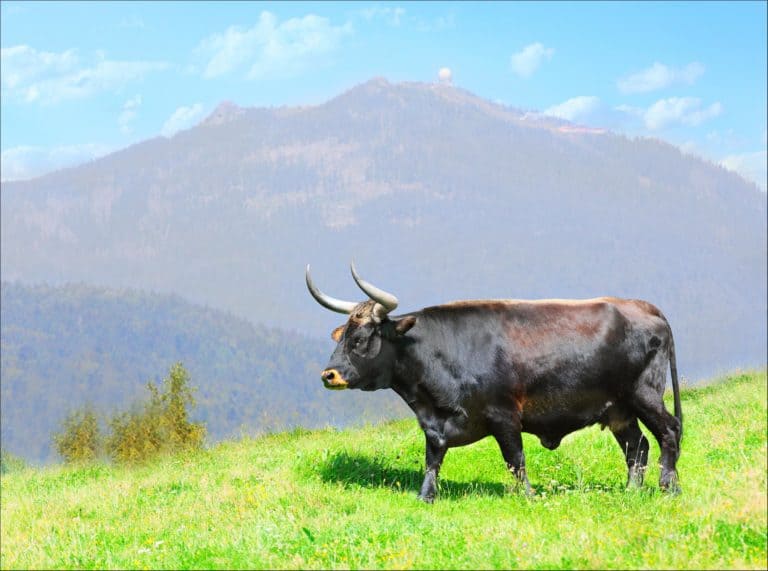
animal

Gaur (Indian bison)

bird

House sparrow

wildflower

Marigold

tree

Peepal (Sacred fig)

Parks & Reserves

Protected Areas

Bihar's protected-area network is small but important. It protects the last large Himalayan-foothill/terai forest (Valmiki), big Vindhyan hill-and-plateau forests (Kaimur-Rohtas), and key Gangetic wetlands and river stretches that host migratory waterbirds and the endangered Ganges river dolphin. Areas are set as National Park, Tiger Reserve, Wildlife/Bird Sanctuaries, plus Ramsar wetlands and eco-sensitive buffers.

Protected Coverage

~3-4% of Bihar's land area is under formal wildlife protection (National Park/Wildlife Sanctuaries), with additional conservation value in Ramsar wetlands, river corridors, and notified/managed buffers.

National Parks & Preserves

Valmiki National Park (within Valmiki Tiger Reserve)

≈335 km²

Bihar's only National Park and the core of the state's most intact terai forest landscape; notable for tiger conservation and a strong mix of forest and riverine habitats that also make it one of Bihar's best wildlife-viewing areas.

Bengal tiger Leopard Dhole (Indian wild dog) Sloth bear Great hornbill

State & Provincial Parks

Rajgir Wildlife Sanctuary

≈36 km²

Compact but accessible hill forest around the Rajgir range; notable for dry deciduous biodiversity, primates, and a good chance of seeing common forest wildlife near a major tourist hub.

Leopard Sloth bear Sambar Rhesus macaque Indian peafowl

Gautam Buddha Wildlife Sanctuary (partly in Bihar)

≈259 km² total (Bihar portion is smaller)

Forest and hill terrain on the Bihar-Jharkhand side of the Chotanagpur edge; important as a regional refuge for carnivores and ungulates and for maintaining forest cover in a fragmented landscape.

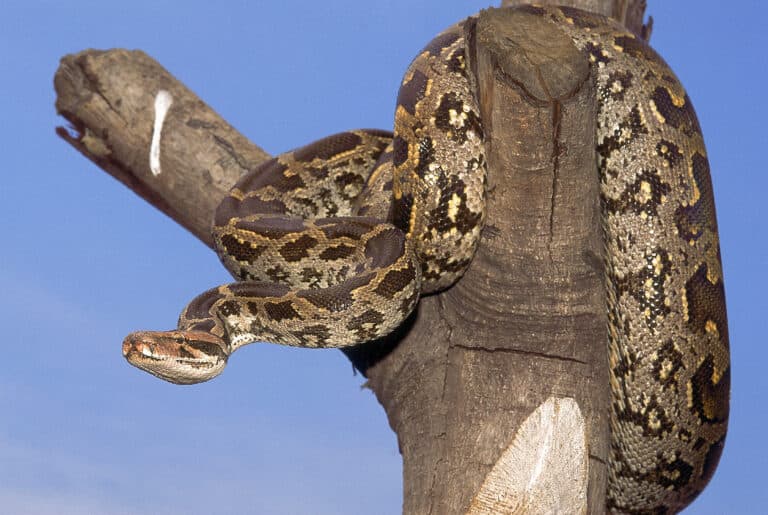
Leopard Sloth bear Chital (spotted deer) Wild boar Indian rock python

Udaypur Wildlife Sanctuary (West Champaran)

≈9 km² (approx.)

A small wetland-focused sanctuary valued for wintering waterfowl and local wetland biodiversity in the terai-Gangetic plains interface.

Bar-headed goose Northern pintail Common coot Gadwall Grey heron

Valmiki Tiger Reserve (TR)

≈899 km² (tiger reserve landscape; includes the National Park core and surrounding protected forests/sanctuary areas)

A larger, connected forest-and-grassland mosaic along the India-Nepal border, critical as the state's flagship large-mammal landscape and for maintaining connectivity with neighboring terai habitats; supports both forest wildlife and riverine/floodplain species.

Bengal tiger Asian elephant (occasional/seasonal use) Leopard Hog deer Gaur (Indian bison)

Kaimur Wildlife Sanctuary (Kaimur-Rohtas landscape)

≈1,340 km²

One of the largest protected forest tracts in Bihar, spanning rugged escarpments, dry deciduous forest, grass patches, and seasonal streams; important for wide-ranging carnivores and healthy ungulate populations.

Leopard Sloth bear Sambar Chital (spotted deer) Wild boar

Bhimbandh Wildlife Sanctuary

≈682 km²

A large hill-and-forest sanctuary known for its rugged terrain and relatively low road density in places; significant for forest mammals and as a refuge for biodiversity in an otherwise human-dominated region.

Leopard Sloth bear Sambar Chital (spotted deer) Indian pangolin

Wildlife Refuges

Vikramshila Gangetic Dolphin Sanctuary (Bhagalpur)

≈60 km protected river stretch (Sultanganj-Kahalgaon reach of the Ganga)

India's key protected stretch of the Ganges for the endangered Ganges river dolphin; also important for turtles and other river fauna and for conserving the ecological integrity of a major river corridor.

Ganges river dolphin Gharial (occasional/river corridor use) Mugger crocodile Indian softshell turtle Smooth-coated otter

Kanwar (Kabar Tal) Bird Sanctuary / Ramsar Wetland (Begusarai)

≈26.2 km² (2,620 ha; extent can vary with seasonal flooding)

One of north Bihar's most important floodplain wetlands for large congregations of migratory and resident waterbirds; highly significant for wetland conservation in an agricultural landscape.

Bar-headed goose Ruddy shelduck Northern shoveler Purple swamphen Sarus crane

Kusheshwar Asthan Bird Sanctuary (Darbhanga)

≈29 km² (approx.; seasonal inundation influences usable habitat)

A major floodplain wetland complex that supports large seasonal bird assemblages, especially in winter; important for storks, ibis, and mixed duck/flock species.

Lesser adjutant stork Asian openbill stork Black-headed ibis Northern shoveler Sarus crane

Nagi Dam Bird Sanctuary & Nakti Dam Bird Sanctuary (Jamui)

Nagi Dam Bird Sanctuary ≈3.33 km² (333 ha) and Nakti Dam Bird Sanctuary ≈3.32 km² (332 ha); combined ≈6.65 km² (665 ha)

Reservoir habitats that act as key wintering and stopover sites for migratory waterfowl in south Bihar; best known for mass congregations during peak migration months.

Bar-headed goose Greylag goose Common teal Northern pintail Gadwall

Wilderness Areas

  • Shivalik-terai foothill forests and riverine grasslands of the Valmiki-Someshwar landscape (least-fragmented wilderness in Bihar)
  • Gandak-Ganga riverine corridor elements (sandbars, islands, and floodplain patches) that function as semi-wild habitat for waterbirds and river fauna
  • Kaimur escarpment and plateau forest interior (large road-sparse blocks, ravines, and seasonal streams)
  • Bhimbandh hill forests around the hot-spring zone and adjoining sal/dry-deciduous tracts
  • Rajgir hill range forest interiors and rocky slopes (small but relatively roadless pockets within a densely settled region)
Animals

Wildlife

Bihar's wildlife is shaped by the Gangetic plains: a dense network of large rivers (Ganga, Gandak, Kosi, Son), oxbow lakes and floodplain wetlands, plus remnant sal (Shorea robusta) and mixed deciduous forests along the Nepal border (Valmiki landscape) and southern hill-forest tracts. The signature experience is river-and-wetland biodiversity-waterbirds, freshwater turtles, and river mammals-supplemented by Terai-arc forest fauna (tiger-deer assemblages) in the northwest. Agricultural mosaics also support cranes, raptors, and wintering migratory birds where wetlands persist.
~80-95 species (statewide; includes bats and small mammals) Mammals
~430-520 species recorded (high due to migratory waterbirds and riverine specialists) Birds
~45-60 species (notably freshwater turtles and river snakes) Reptiles
~18-30 species Amphibians
~160-220 species (Gangetic river-fish assemblage; varies by drainage and survey effort) Fish
Examples

Iconic Species

Ganges River Dolphin Flagship of the Ganga; regularly seen in the Vikramshila Gangetic Dolphin Sanctuary and other river stretches, representing Bihar's strongest river-wildlife identity.
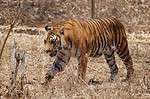
Bengal Tiger
Bengal Tiger Bihar's premier big-cat attraction, centered in Valmiki Tiger Reserve, which links to Nepal's Terai Arc forests.
Indian Leopard A key predator in Valmiki and adjoining forests; often the most wide-ranging large carnivore encountered in forest-edge landscapes.
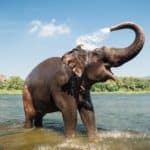
Asian Elephant
Asian Elephant Occurs as a wide-ranging visitor in the Valmiki-Terai Arc landscape; sightings are sporadic but highly prized when herds move through corridors.
Smooth-coated Otter A charismatic river-and-wetland mammal that reflects healthy fish stocks and riverine habitat; sometimes seen along quieter channels and wetlands.
Sarus Crane
Sarus Crane An iconic wetland-and-farmland crane of the Gangetic plains; pairs and small groups are a hallmark of Bihar's rural wetland edges.
Indian Skimmer A threatened river specialist associated with broad sandbars and braided channels; when present, it's a sought-after species for river birding.
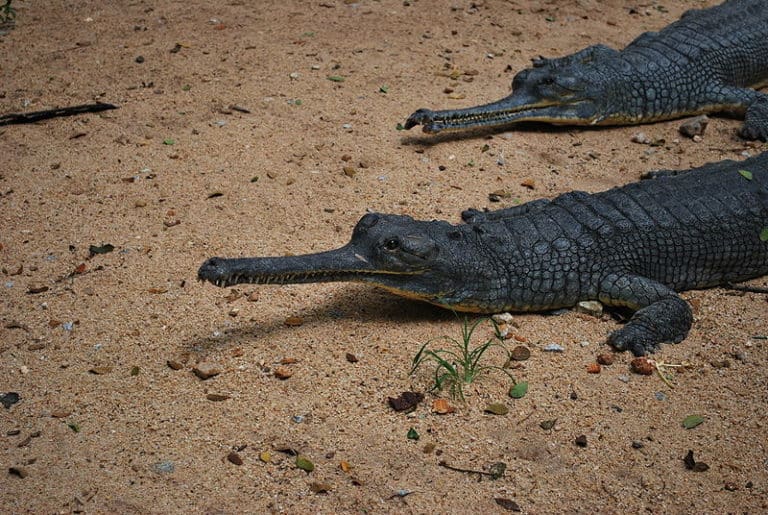
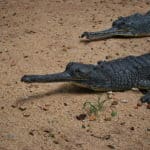
Gharial
Gharial A critically endangered fish-eating crocodilian of north Indian rivers; in Bihar it is rare/local, but remains emblematic of large-river conservation.

Endemic & Rare Species

Ganges River Dolphin

Platanista gangetica

Endangered (IUCN)

Bihar's Ganga mainstem refuges (notably the Vikramshila sanctuary reach) are nationally important for sustaining viable subpopulations in the species' core range.

Indian Skimmer

Rynchops albicollis

Endangered (IUCN)

Dependent on undisturbed river sandbars; sensitive to flow regulation, sand mining, and disturbance-making suitable Bihar river stretches conservation priorities.

Black-bellied Tern

Sterna acuticauda

Endangered (IUCN)

A declining large-river tern that nests on sandbars; its presence signals relatively intact riverine breeding habitat.

Gharial

Gavialis gangeticus

Critically Endangered (IUCN)

Historically widespread in the Ganga system; any remaining or recolonizing individuals in Bihar represent high conservation value for basin-wide recovery.

Red-crowned Roofed Turtle

Batagur kachuga

Critically Endangered (IUCN)

A flagship Gangetic turtle threatened by river alteration and harvest; Bihar's Ganga stretches are within its historical/native basin where protection and head-starting efforts matter.

Indian Pangolin

Manis crassicaudata

Endangered (IUCN)

Heavily impacted by illegal trade; persists in forest-farmland mosaics and scrub/woodland pockets, making enforcement and community reporting important.

White-rumped Vulture

Gyps bengalensis

Critically Endangered (IUCN)

Once common across the plains; now scarce and localized. Any surviving or returning groups in Bihar are significant indicators of recovery post veterinary-diclofenac restrictions.

Fishing Cat

Prionailurus viverrinus

Vulnerable (IUCN)

A wetland-dependent small felid that can occur in floodplain marshes and reedbeds; threatened by wetland loss and persecution near fisheries.

Notable Populations

  • Vikramshila Gangetic Dolphin Sanctuary (Bhagalpur-Sultanganj stretch) is among India's key protected river reaches for the Ganges river dolphin.
  • Kanwar (Kabartal) Lake area is a nationally important floodplain wetland complex for wintering and migratory waterbirds (and is recognized internationally as a Ramsar site).
  • Valmiki Tiger Reserve is Bihar's only tiger reserve and a critical part of the Terai Arc Landscape connectivity with Nepal, supporting tigers, leopards, and diverse prey populations.
  • The Ganga and major tributaries in Bihar support significant assemblages of threatened Gangetic turtles and river-breeding birds where sandbar habitat persists.

Recent Changes

  • Ramsar recognition of key wetlands (notably Kabartal/Kanwar Lake) increased attention to migratory-bird habitat, though pressures from encroachment, eutrophication, and altered flooding regimes remain major concerns.
  • River-dolphin monitoring and protection efforts (including awareness, patrols, and bycatch risk reduction where implemented) have improved reporting and may be stabilizing local dolphin use in some protected reaches, while heavy boat traffic and fishing pressures continue elsewhere.
  • Large-river sandbar breeders (e.g., skimmers/terns) show localized declines where sand mining, disturbance, and flow changes intensify; breeding success can vary strongly year-to-year with flood timing.
  • Vulture populations remain far below historical levels; gradual, patchy recovery is reported in parts of north India after diclofenac regulation, but food availability and poisoning risks still limit resurgence.
  • Forest-edge wildlife in the Valmiki landscape is increasingly influenced by corridor functionality and human-wildlife interactions, with periodic movement of wide-ranging species (e.g., elephants) and ongoing emphasis on maintaining connectivity with Nepal's protected areas.
Visit

Wildlife Viewing

Bihar's wildlife viewing centers on the Ganges River system: channels, oxbow lakes, wetlands, sandbars, and small sal and mixed forests in the south. It is great for birders—winter migrants and local wetland and grassland species—and for large freshwater animals like the endangered Ganges river dolphin. Many easy sites near towns and pilgrim routes.

Best Seasons

Winter (Nov-Feb)

Peak wildlife season. Clearer days and comfortable temperatures bring large numbers of migratory waterbirds to wetlands (ducks, geese, waders), and river visibility improves for spotting Ganges river dolphins and gharials in select stretches. Forest trails in Valmiki Tiger Reserve and Rajgir are most pleasant now.

Spring (Mar-Apr)

Good for bird activity (breeding displays, calls, nesting) and late migrant stragglers. Days warm up; dawn and late afternoon are best. River levels begin to drop, sometimes concentrating aquatic wildlife into deeper channels-helpful for dolphin scanning-though heat haze can reduce long-distance viewing mid-day.

Monsoon (May-Sep)

Lush landscapes and dramatic riverine scenery, but wildlife viewing is harder: high water spreads birds out, access to wetland edges can be limited, and some forest routes may be disrupted. Still rewarding for photographers seeking green backdrops, frogs/reptiles, and monsoon birding in accessible areas during breaks in rain.

Post-monsoon (Oct-early Nov)

Waters recede and wetlands reform, attracting early wintering birds. Vegetation is fresh and visibility improves quickly. A sweet-spot for mixed trips (culture + nature) before peak tourist crowds, with improving chances of dolphins and congregating waterbirds.

Top Wildlife Experiences

  • Boat-based Ganges river dolphin watching on the Ganges near Bhagalpur/Vikramshila Gangetic Dolphin Sanctuary (early morning, slow drift, lots of scanning for surfacing blows and rolling backs).
  • Wetland birding at Kanwar Lake (Kabar Tal) Bird Sanctuary, Begusarai-India's largest freshwater oxbow lake-best in winter for dense flocks of ducks, geese, herons, egrets, and raptors along the reedbeds and lake margins.
  • Jeep safari and grassland/river edge birding in Valmiki Tiger Reserve (West Champaran): look for deer, wild boar, primates, and rich birdlife; combine with riverine viewpoints for crocodilians and winter waterbirds.
  • Forest-and-hill birding plus nature walks in Rajgir Wildlife Sanctuary and the surrounding hills: excellent for dry deciduous species, raptors, and dawn chorus; pair with scenic overlooks for wide-area scanning.
  • Wetland and riparian bird photography around the Ganges floodplain near Patna (seasonal wetlands, sandbars, and riverbanks): focus on terns, gulls, waders, kingfishers, and winter congregations where access permits.
  • Early-morning birding and interpretation at Sanjay Gandhi Biological Park (Patna Zoo) and nearby green spaces for beginner-friendly bird lists and a practical warm-up before heading to larger wetlands (best Oct-Mar).

Wildlife Watching Types

Freshwater dolphin watching (Ganges river dolphin) Wetland birding (migratory waterfowl, waders, herons, storks) Riverbank/sandbar birding (terns, gulls, pratincoles, skimmers where present) Forest wildlife safaris (deer, wild boar, primates; chance-based large mammal tracking in Valmiki landscape) Raptor watching over grasslands and open country (eagles, kites, harriers in season) Herpetofauna spotting in monsoon and post-monsoon (frogs, lizards, snakes-best with a guide) Nature photography focused on riverine landscapes, wetlands, and bird behavior

Guided Options

  • Vikramshila Gangetic Dolphin Sanctuary (Bhagalpur) local boat services and forest/river guardians-ask for dolphin-focused morning rides with a naturalist/experienced boatman; prioritize low-noise, slow-speed viewing.
  • Valmiki Tiger Reserve official safari program (Bihar Forest Department): book authorized jeep safaris and request a guide with strong bird knowledge; add nature trails where permitted.
  • Kanwar Lake (Kabar Tal) birding with local bird guides/photographers in Begusarai region-ideal for locating roosts, best light angles, and seasonal hotspots around the oxbow lake.
  • Rajgir Wildlife Sanctuary guided nature walks (local guides/eco-guides when available): useful for identifying forest birds and planning safe hill routes at dawn.
  • Community-based birding guides along key Ganges floodplain stretches near Patna/Bhagalpur (seasonal): arrange half-day birding and sandbar scanning trips, especially in winter when bird concentrations are highest.
Habitats

Ecosystems

Bihar's alluvial Gangetic plains, shaped by the Ganges and tributaries Gandak, Kosi, Son and Punpun, are covered by farming, rivers, oxbow lakes, floodplain wetlands and seasonally flooded lowlands that support rich freshwater life and migratory waterbirds. Natural forests remain as small moist and dry deciduous patches (Valmiki Tiger Reserve) and grasslands and river sandbars in the Kosi basin.

Biomes

Tropical Dry Forest

Mostly tropical moist and dry deciduous forest types in remnant blocks and corridors-Sal-dominated forests in the Terai-influenced north-west (Valmiki landscape) and mixed deciduous forests on the southern upland margins (Kaimur/Rohtas hills and adjoining areas).

Small, fragmented coverage overall; largest contiguous block in the Valmiki Tiger Reserve area, with additional scattered patches in southern districts.

Savanna

Tropical to subtropical floodplain grasslands and riverine sandbar vegetation associated with the Ganga and its tributaries; seasonally reshaped by monsoon flooding and sediment deposition (ecologically comparable to Indo-Gangetic floodplain and Terai-style grassland-woodland mosaics).

Patchy but widespread along major rivers (Ganga, Kosi, Gandak, Son) and on floodplain margins; extent fluctuates strongly with monsoon floods and river migration.

Freshwater

Large river systems, tributary networks, oxbow lakes (chaurs/mauns/tals), irrigation canals, and perennial/seasonal ponds supporting freshwater fish, turtles, gharial-associated river reaches (locally), and extensive waterbird use.

Statewide; densest along the Ganga corridor and in the north Bihar floodplains (Kosi-Gandak basin).

Wetland

Floodplain wetlands including chaurs (seasonal waterlogged basins), marshes, riparian backwaters, and inundated agricultural lowlands that serve as key wintering and stopover sites for migratory birds.

Widespread in the Gangetic plains, especially north and central Bihar; highly seasonal with peak extent during/after the monsoon.

Habitats

River/Stream

Ganges mainstem and major tributaries (Kosi, Gandak, Son, Punpun) with braided reaches, sandbars, cutbanks, and deep pools supporting riverine fish, dolphins (Ganga channel), and waterbirds.

Wetland

Chaurs/mauns/tals (floodplain wetlands), backwaters, and inundation basins; critical for wintering ducks, geese, waders, and resident marsh birds.

Marsh

Shallow, vegetated wetlands with emergent macrophytes (reeds/sedges) in floodplain depressions and along lake/river margins.

Swamp

Waterlogged lowlands and riparian swampy patches, often with dense aquatic/semiaquatic vegetation; expands during monsoon flooding.

Lake

Oxbow lakes and permanent floodplain lakes (locally called mauns/tals), many connected seasonally to river channels.

Pond

Village ponds, tanks, and small impoundments used for fisheries, irrigation, and livestock; important micro-wetlands for amphibians and birds.

Grassland

Riverine grasslands on sandbars and floodplain edges; also open grassy commons and embankment slopes used by ground-nesting birds where disturbance is low.

Deciduous Forest

Moist/dry deciduous forests-Sal and mixed deciduous stands in the Valmiki landscape; mixed deciduous patches toward the southern uplands (Kaimur/Rohtas).

Forest

Remnant natural forest blocks and degraded secondary woodland mosaics, often fragmented by agriculture and settlements.

Agricultural/Farmland

Extensive rice-wheat and maize-based croplands across the plains; forms a dominant matrix interspersed with wetlands, canals, and tree-lined field boundaries.

Plantation

Orchards and tree plantations (e.g., mango, litchi, poplar/eucalyptus in places) that provide semi-wooded habitat structure within agricultural landscapes.

Urban

Dense urban and peri-urban habitat around major cities (e.g., Patna, Gaya, Bhagalpur), with riverfronts, drains, and constructed wetlands influencing local biodiversity.

Ecoregions

Lower Gangetic Plains moist deciduous forests Terai-Duar savanna and grasslands Chota Nagpur dry deciduous forests
Protection

Conservation

Primary Threats

  • Untreated/partly treated sewage, industrial effluents, and agricultural runoff enter the Ganges River and tributaries near major towns (e.g., Patna-Barauni-Bhagalpur corridor), degrading water quality and prey fish populations; this directly affects Gangetic river dolphins, otters, turtles, and wetland birds.
  • Embankments, flood-control works, river training, dredging, and altered flow regimes simplify channels and reduce habitat complexity (deep pools, confluences, sandbars) needed by dolphins and breeding turtles; wetland hydrology is altered when floodplain connectivity is cut off.
  • Drainage/infilling of floodplain wetlands and oxbow wetlands for settlements and farming, conversion of riparian vegetation, and shrinkage of seasonal wetlands reduce feeding and nesting habitat for waterbirds (storks, vultures' scavenging base via livestock changes, and migratory species).
  • Intensive cultivation up to wetland edges, pesticide use, and removal of natural buffers increase silt and chemical loads in wetlands/rivers; mechanized farming also reduces fallow patches and tall grass mosaics used by several bird species.
  • Road widening, rail lines, riverfront development, new bridges and associated construction disturb riparian zones; linear infrastructure near Valmiki can fragment forest edges and increase access for illegal extraction/poaching.
  • In-stream and floodplain sand mining along the Ganges River, Son, and Gandak disturbs sandbars and deep pools, increases turbidity, destabilizes banks, and can destroy nesting sites of turtles and ground-nesting riverine birds.
  • In the Valmiki landscape and adjoining agrarian belt, elephants and occasionally tigers/leopards can raid crops or depredate livestock; in riverine areas, fishers sometimes view dolphins/otters as competitors or net-damagers, increasing retaliation risk.
  • Opportunistic hunting and trapping of waterbirds and small mammals can occur in remote wetland belts; incidental harm also occurs through targeting of aquatic fauna (turtles/fish) where enforcement is weak.
  • Illegal trade pressures persist for pangolins (scales), freshwater turtles (meat/pet trade), and occasionally birds; Bihar's river corridors and transport routes can facilitate movement of contraband.
  • High fishing pressure in rivers/wetlands, including intensive netting in dolphin stretches, reduces prey availability and increases bycatch risk; extraction of fuelwood and non-timber forest products around forest fringes adds pressure on remaining habitat.
  • While large-scale logging is limited in protected forests, local illicit felling and lopping for timber/fuelwood around forest fringes (including the Valmiki periphery) can degrade habitat structure and increase human access.
  • Greater variability in monsoon timing/intensity and more extreme floods/droughts affect wetland persistence, nesting success on sandbars, and river flow conditions; heat stress and altered water availability can intensify human-wildlife interactions during dry seasons.
Fun Facts

Did You Know?

Bihar has "river dolphins" in a working, boat-used river: Ganges river dolphins in the Bhagalpur stretch are functionally blind and navigate by echolocation, often revealing themselves only by a brief roll and exhale at the surface.

Kanwar (Kabar) Tal behaves like a living, seasonal wetland: in monsoon it spreads widely across low-lying fields, then contracts in the dry season-so the "lake" you see in winter is often only part of its full rainy-season footprint.

Valmiki's tigers are part of a cross-border landscape: the forest connects with Nepal's protected Terai (Parsa/Chitwan side), allowing wide-ranging animals like tigers to disperse across an international boundary.

Some of Bihar's most visible large birds aren't confined to forests or parks: sarus cranes and other wetland birds often use paddy fields and irrigation-fed lowlands as feeding and (in some places) breeding habitat.

In winter, Bihar's wetlands can host birds that have crossed multiple countries to get there-waterfowl such as bar-headed geese and northern pintails use the Gangetic plains as a major cold-season refuge, turning farm-country ponds and oxbow lakes into migration hubs.

Vikramshila Gangetic Dolphin Sanctuary (Bhagalpur) is India's only protected area notified specifically for the endangered Ganges river dolphin, safeguarding about a 60 km stretch of the Ganga.

Valmiki Tiger Reserve (West Champaran) is Bihar's only tiger reserve-and the state's largest protected area complex (about 900 km² including the national park and wildlife sanctuary).

Kanwar (Kabar) Tal in Begusarai is Bihar's largest freshwater wetland/oxbow-lake system and was the state's first site designated under the Ramsar Convention (listed in 2022).

Bihar is one of the rare places in India where two flagship, river-linked megafauna are regularly found in the same state-wild tigers (Valmiki) and river dolphins (Ganga around Bhagalpur-Sultanganj).

Thank you for reading! Have some feedback for us?