

















Quick Take
- One of Hollywood's most beloved dog actors was secretly a Mastador, and you've almost certainly seen the film. Meet the famous Mastador →
- The Mastador's diet has a hidden link to a serious health risk that most large-breed owners never think to check. See the feeding details →
- Despite weighing up to 160 pounds, this breed has one trait that completely defies what you'd expect from a dog its size. Discover the surprising trait →
- There's a narrow window to socialize a Mastador puppy, and missing it may leave the adult dog unrecoverable. Learn about socialization timing →
The Mastador is a large and powerful cross between the gentle giant Mastiff (usually the English Mastiff) and the intelligent, loyal Labrador Retriever. Both types of purebred dogs are very popular in the United States. These dogs are protective yet affectionate family companions with big personalities and even bigger hearts.
Mastadors are usually gentle, loyal, and eager to please. This makes them wonderful guard dogs as well as family pets.

Pros and Cons of Owning a Mastador
| Pros | Cons |
|---|---|
| Good-natured The Mastador is sweet and affectionate. | Mischievous The Mastador’s playful behavior can sometimes become a little rambunctious and annoying. |
| Intelligent and Trainable The Mastador excels at following human commands and rules. | Requires Early Socialization Otherwise, this hybrid may become shy or aggressive, particularly around strangers. |
| Protective Due to its size and protective nature, the Mastador makes for a good guard dog. | Big Size The Mastador requires a lot of space, food, and attention. Its massive size also means some stressful physical activity could cause problems. |
Origin and History
As with other hybrid dogs, there is limited information about the Mastador’s origins and history. It’s believed this breed was first introduced in the U.S. likely around the 1990s, when many designer dog breeds were being developed. The Mastador’s parent breeds have long and interesting histories, however. When these two breeds are crossed, the Mastador inherits the Mastiff’s strength and protective instincts along with the Labrador’s intelligence and friendliness.
The Mastador’s parent breed, the Mastiff, is a massive dog with a wrinkled face that possibly has ancestors who were featured animals in ancient Roman gladiatorial arenas. They are thought to have been used as war dogs and for hunting game, with the modern-day breed established in the 1880s. Thanks to its protective nature and physical size, the Mastiff excels as a guard dog. Typically, only the English Mastiff, and not other Mastiff variations such as the Boerboel, Bordeaux, Bullmastiff, Cane Corso, or Neapolitan, is used for breeding the Mastador due to its less aggressive temperament and greater suitability as a companion.
The Labrador Retriever, the Mastador’s other parent breed, is a medium-sized breed that originated in Newfoundland around the 1800s or even a few hundred years earlier, used to retrieve fish from the water that had fallen from fishermen’s hooks, as well as pull in nets. It’s thought that the dogs were first seen in England in the 1830s on ships coming to trade goods from Canada. The English Kennel Club recognized Labradors as a breed by 1903. Labs gained more fans in the U.S. when the American Kennel Club did the same in 1917. The Labrador Retriever was America’s most popular dog breed for over 30 years, but was surpassed by the French Bulldog in 2023, according to the American Kennel Club.
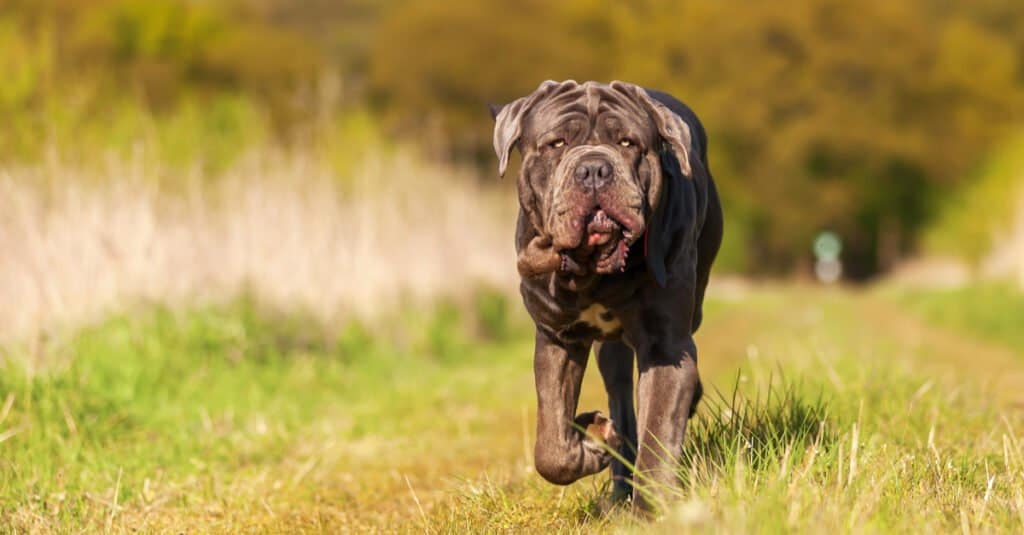
The Mastiff, one of the Mastador’s parent breeds, is known for its large size and wrinkled face.
©Christian Mueller/Shutterstock.com
Size and Appearance
The Mastador is a large dog with a big, muscular frame. Females will be slightly smaller than males on average.
| Height (Male) | 26 to 30 inches |
| Height (Female) | 24 to 28 inches |
| Weight (Male) | 105 to 160 pounds |
| Weight (Female) | 85 to 140 pounds |
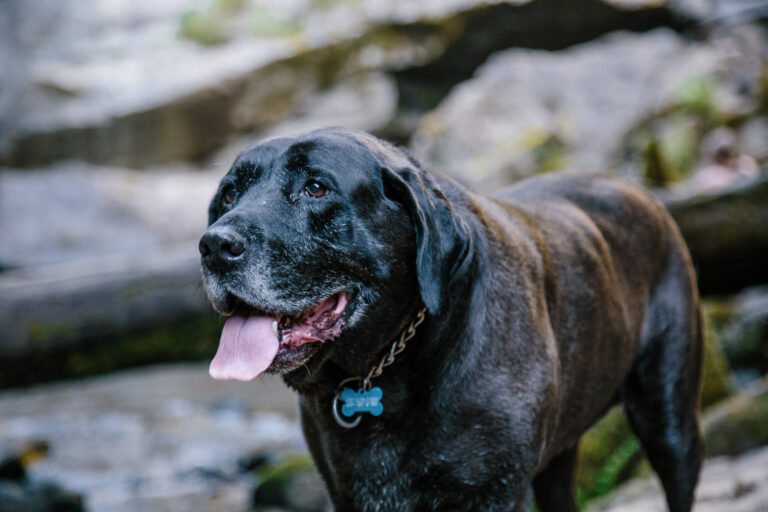
The Mastador can be black, brown, yellow, brindle, or mixed patterns, with a short, double-layered, sometimes slightly wavy coat. It has a square muzzle, expressive eyes, and slight facial wrinkles. Mastadors often have the soft, kind expression of a Labrador.
Temperament and Personality
The Mastador is a sweet, friendly dog that should integrate well into a family unit. Many people keep it as a guard dog since it tends to become very protective of its owner in the presence of unfamiliar people. The Mastador should ideally receive proper socialization and training from an early age to familiarize it with strangers. If it’s mishandled by its owner at all, then the dog can easily develop aggressive, fearful, or antisocial behavior as a full-grown adult. The Mastador is quick to learn commands, but can be stubborn at times.
Despite its large size, one of its more appealing traits is that the Mastador can do very well in indoor settings. However, it is never a good idea to keep this dog cooped up in small apartments for long periods of time, since it needs a large yard or open space to exercise and explore for at least part of the day. Another issue is that the Mastador does have the tendency to find its own entertainment if it’s ignored by its owner for long periods of time. This can result in some annoying or unwanted behavior. Make sure you are able to satisfy its desire for physical and mental stimulation before purchasing this dog.

The Mastador is a sweet and loyal breed that makes a great guard dog.
©Corrie Mick/Shutterstock.com
Mastadors and Children (and Other Pets)
The Mastador is a good family dog that should develop loving, protective relationships with children. However, parents should be careful about introducing this dog into a home with younger children, since the dog’s enormous size could easily overwhelm them. With proper introductions, they typically coexist peacefully with other pets.
Health and Lifespan
As a designer dog, the Mastador has a chance to inherit some of the health problems from either purebred parent. These can include obesity, cataracts, pulmonary stenosis (a narrow or stiff pulmonary valve in the heart), hip or elbow dysplasia (which causes the joint to become temporarily dislocated), retinal dysplasia (folds, lesions, or even the outright detachment of the retina), and general bloating (which might not sound serious but can put significant pressure on the dog’s organs).
The Mastador is also prone to developing cancer, epilepsy, diabetes, and additional heart problems later in life. Unfortunately, since the odds of these conditions are a bit unpredictable, it is extra important that you choose a healthy dog from a good breeder whom you can trust. A healthy dog without any serious conditions stands a good chance of living between 10 and 15 years old.
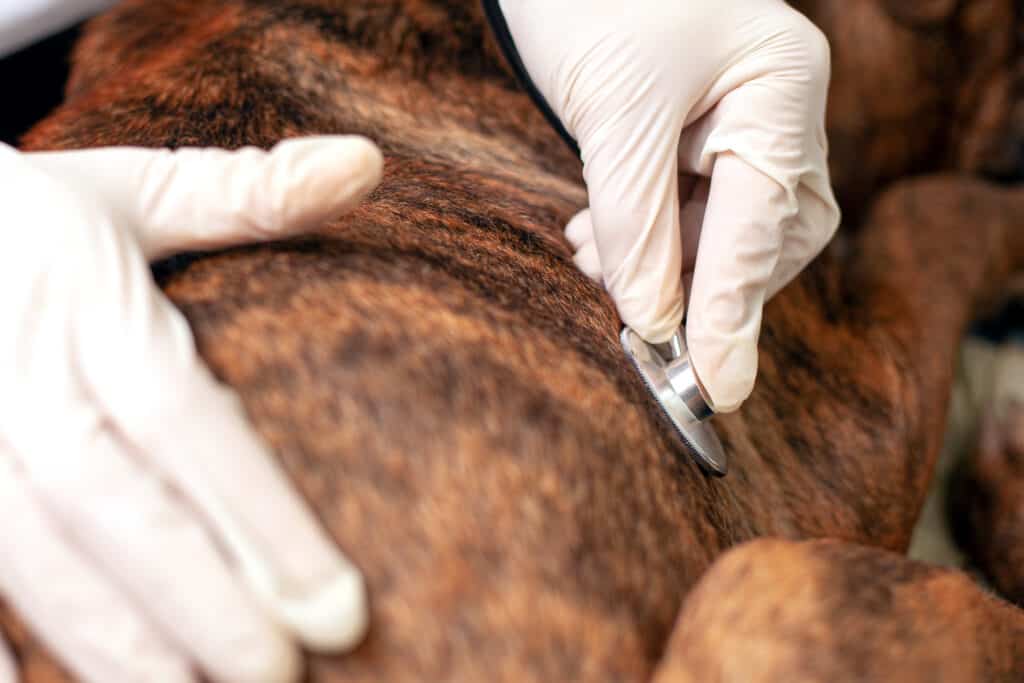
The Mastador is prone to developing heart problems later in life.
©fukume/Shutterstock.com
Care Guide
Feeding
Depending on its size, age, and activity level, the Mastador may need as much as 3 cups of high-quality dog food every single day, preferably formulated for a large, energetic dog and divided into several meals to prevent bloating. This mix tends to gain weight, so you should be extra careful about its calorie intake. It is never a good idea to overfeed your dog, even if it’s begging for food.
The Mastador is a lot of dog, and it obviously eats a lot of food. So owners need to put a lot of care into selecting the optimum dog food with adequate nutrition. Mastadors’ big hearts can unfortunately be prone to succumbing to heart problems, so read up on legume-free dog food and the link between legumes and heart failure.
Grooming
Despite its tendency to shed, the Mastador’s short and stiff coat should stay clean naturally and does not require a lot of grooming or bathing. Weekly brushes should suffice to keep it clean. Other aspects of the dog’s maintenance will require more care, however. The Mastador will absolutely need regular ear cleanings to prevent infections. You should also brush its teeth a few times every week to reduce the chances of gum disease and bad breath.
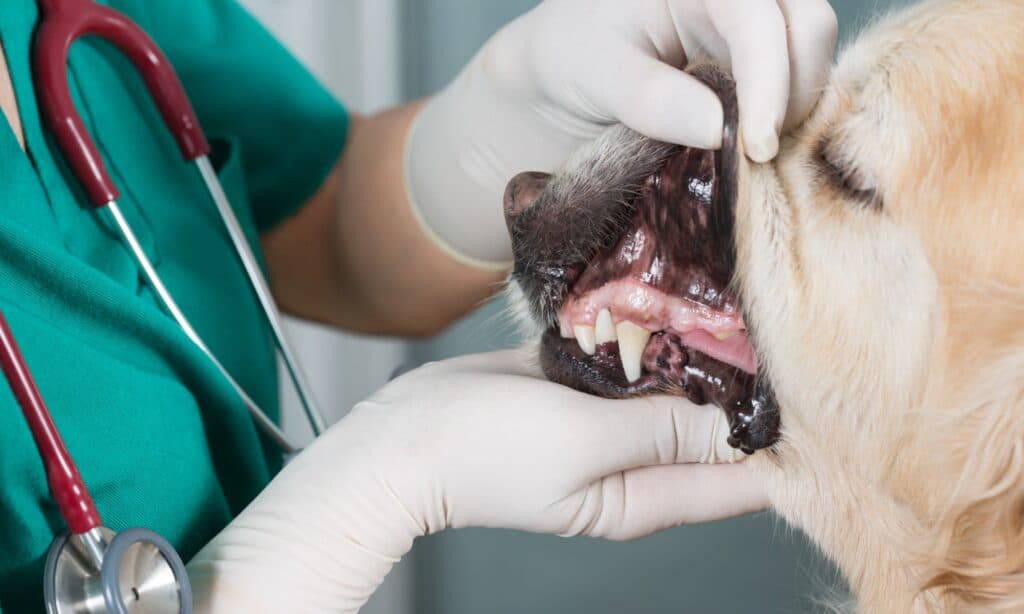
Like most dogs, the Mastador needs regular dental care to reduce the chances of gum disease.
©iStock.com/fotoedu
Training
The Mastador is a quick and eager learner that takes well to human commands. Since it has a slight stubborn streak, this dog does best with a firm leader who will take control and provide clear guidance. But owners should not be too aggressive, since this dog might respond poorly to overly harsh training methods. Ideally, puppies should receive early socialization and behavioral training between the ages of six and 18 weeks. This should hopefully break some of the bad behavioral tendencies that may develop as a full-grown adult.

The Mastador is a fast and eager learner.
©Corrie Mick/Shutterstock.com
Exercise Needs
The Mastador is a very active mix that requires about an hour of exercise every day, preferably in the form of walks, fetch, playtime, or even swimming. But because of the enormous size, it may not do so well with high-impact or strenuous activities. This dog does have the ability to scale small fences, so if you want to leave it alone in your yard, then the fence should be at least 6 feet high. It also should not be left outside in very hot or cold weather for prolonged periods of time.

Mastadors need around an hour of exercise each day in the form of walks or even swimming.
©Corrie Mick/Shutterstock.com
Mastador Puppies
Potential owners should be very careful about where they buy their puppies. High-quality breeders are ideal since they tend to select only the healthiest parents to breed from. Low-quality breeders and puppy mills, on the other hand, might not have the well-being of the dog in mind. So it’s worth paying a little extra for the guarantee of better care. You can expect to pay $800–$1,500 from a reputable breeder. Adoption may be possible through Mastiff or Labrador rescues.
More than most types of dogs, Mastador puppies are full of energy and curiosity, so they need steady guidance during their socialization and training in order to prevent them from misbehaving and developing bad behavioral habits as a full-grown adult.

More than most dogs, Mastador puppies require steady guidance during their socialization and training.
©Laura S G/Shutterstock.com
Famous Mastador
Perhaps the most famous Mastador of all time was a dog named Spike. Rescued from a shelter as a puppy, Spike went on to play the title character in the popular 1957 film “Old Yeller,” which is about a boy and his dog growing up in Texas after the Civil War. Spike also appeared in “The Micky Mouse Club,” “Lassie,” “The Westerner,” “The Silent Call,” “The She-Creature,” and “A Dog of Flanders” before passing away in 1962. His owner was actor and dog trainer Frank Weatherwax.
Dogs Similar to the Mastadors
The Mastador is obviously most closely related to its parent breeds, the Labrador Retriever and the Mastiff. It also bears several similarities to the following hybrids:
- Aussiedor: As a cross between a Labrador Retriever and an Australian Shepherd, the Aussidor is a medium-sized dog with a real motor. This makes it a very good companion for owners who love to exercise and play. Another appealing trait is a large number of coat colors and patterns that can arise, including a sort of brindle pattern.
- Borador: This mixture between a Labrador Retriever and a Border Collie is high on energy and sweetness. Its intelligence, athleticism, and affectionate nature should endear it to owners who are seeking a close canine companion. It tends to have a black-and-white color.
- Spanador: This is a cross between the two most popular breeds in the United States: the Labrador Retriever and the Cocker Spaniel. Like its parents, this dog is intelligent, sweet-natured, and very lovable.

The Aussidor, another hybrid crossed with a Labrador, sometimes has a brindle-patterned coat.
©Sylvie Bouchard/Shutterstock.com
Fun Facts
- Some Mastadors are used as therapy dogs thanks to their calm, steady temperament.
- Mastadors may look intimidating, but many act like lap dogs.
- Their deep, booming bark makes them natural watchdogs.
Mastador (Mastiff × Labrador Retriever mix) Pictures
View all of our Mastador (Mastiff × Labrador Retriever mix) pictures in the gallery.

Corrie Mick/Shutterstock.com
Sources
- Pet Guide / Accessed March 22, 2021
- Wag Walking / Accessed March 22, 2021
- K9 Of Mine / Accessed March 22, 2021