N S W E
Wildlife Expeditions

Wildlife of
Holy See

Vatican City's wildlife appeal lies in its surprising pocket-sized green refuge-the Vatican Gardens-where Mediterranean birds, butterflies, and urban-adapted species thrive amid historic landscapes at the heart of Rome.
12 Species
0.44 km² Land Area
Overview

About Holy See

As the world's smallest sovereign state, Vatican City has no wilderness in the conventional sense; its natural heritage is defined by carefully managed urban green space, especially the Vatican Gardens. These gardens function as a miniature Mediterranean habitat mosaic-ornamental groves, hedges, lawns, fountains, and mature trees-supporting a modest but rewarding cast of wildlife typical of central Italy's cities: songbirds, swifts, pigeons and doves, small reptiles, pollinating insects, and other urban-tolerant species. For wildlife enthusiasts, the interest is less about big fauna and more about observing biodiversity persisting in a highly built environment.

The key "ecosystem" here is an intensively tended cultural landscape that still provides real ecological value: tree canopy for nesting and roosting, flowering plants for butterflies and bees, and water features that attract birds and insects. In the broader Rome area, seasonal movements of birds mean that migration periods can bring variety overhead and in nearby green corridors, making the Vatican's gardens and adjoining urban habitats a small but meaningful stepping-stone in an otherwise dense city matrix.

While Vatican City does not play an African conservation role geographically, the Holy See's influence is significant globally: it can elevate biodiversity and climate stewardship through teaching, diplomacy, and convening power. Papal encyclicals and Vatican-backed initiatives have helped frame protection of nature-habitats, species, and ecological integrity-as a moral and social priority, shaping conversations among millions of people worldwide. The wildlife experience is unique precisely because it blends nature observation with heritage: spotting birds and pollinators in a secluded garden landscape enclosed within one of the most iconic urban and cultural centers on Earth.

Physical Features

Geography

Vatican City is an entirely urban, walled microstate within Rome, so wildlife habitat is limited to managed green spaces (notably the Vatican Gardens), ornamental plantings, trees, and small built-structure niches. Wildlife distribution is therefore driven less by natural landforms and more by urban habitat features-tree canopy, hedges, lawns, water features, building cavities, and connectivity to Rome's broader green network-supporting mostly urban-tolerant birds, insects, and small vertebrates.

0.44 km² Land Area
World's smallest sovereign state by area (a little over half the size of Vatican City's neighbor urban blocks; ~0.17 sq mi) Size Rank

Key Landscapes

  • Dense urban/built environment (historic buildings, courtyards, roofs, walls-nesting/roosting sites for urban birds and bats)
  • Vatican Gardens (formal and informal gardens, tree groves, hedgerows-primary habitat for birds and pollinators)
  • Ornamental water features (fountains/pond-like basins-microhabitats for insects and drinking/bathing sites for birds)
  • Walled enclosure and limited habitat connectivity (wildlife movement largely via flight; terrestrial connectivity depends on gates/adjacent city green spaces)
  • No natural coastline, rivers, lakes, or mountains within the state (habitat variety is created almost entirely through landscaping)

Ecoregions

  • Mediterranean Forests, Woodlands & Scrub biome (urbanized remnant context)
  • WWF: Italian sclerophyllous and semi-deciduous forests (the surrounding natural vegetation context for Rome/Lazio, though Vatican City itself is predominantly urban)
Parks & Reserves

Protected Areas

Vatican City is an extremely small, fully urban city-state (≈44 ha) with no national-park or nature-reserve system comparable to larger countries. Biodiversity conservation occurs mainly through state-managed green spaces-especially the Vatican Gardens-and strict access control that limits disturbance. These landscaped habitats (wooded patches, lawns, ornamental ponds/fountains, hedges, and mature trees) function as a small urban refuge for common Mediterranean/European birds, reptiles, and invertebrates, plus migratory stopovers during spring/autumn passage over Rome.

Protected Coverage

Approximate land under formal, legally designated nature protection: ~0% (no national parks/nature reserves recorded). De facto protected/managed green space (primarily the Vatican Gardens and associated grounds with restricted access): roughly ~40-60% of Vatican City's area (commonly cited around half), though this is not a formal protected-area designation.

Notable Parks & Reserves

Vatican Gardens (Giardini Vaticani)

State-managed urban gardens / restricted-access green space (not a formal national protected area)

The Vatican Gardens are the primary biodiversity refuge within the city-state: mature trees, dense shrubbery, and water features support a surprisingly rich assemblage of urban and migratory birds and provide shelter for small reptiles and abundant pollinating insects.
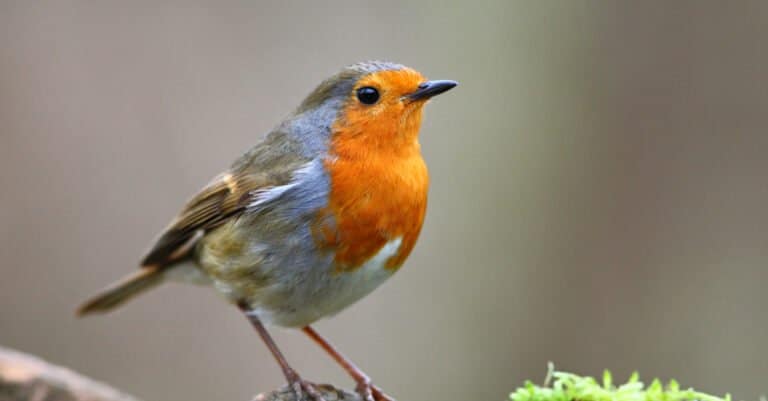
European robin
European robin
Common blackbird
Eurasian jay
Eurasian jay
Common swift
European greenfinch
Italian wall lizard
Italian wall lizard
Mediterranean house gecko

Vatican Gardens - Woodland & Grove Patches (within the Giardini Vaticani)

Managed habitat within the Vatican Gardens (not formally designated as a protected area)

The densest tree-and-shrub sections act as nesting and roosting habitat in an otherwise heavily built landscape, making them the best areas for bird activity (songbirds, corvids) and seasonal migrants.

Vatican Gardens - Water Features (fountains/pond-like basins and irrigated lawns)

Managed habitat within the Vatican Gardens (not formally designated as a protected area)

Where water and irrigated lawns occur, insect abundance rises and birds concentrate to forage and drink-often the most reliable micro-sites for observing urban wildlife behavior.

House sparrow
House sparrow
European starling
European starling
Common swift
Rock dove (feral pigeon)
European greenfinch

Leonine Wall Green Margins and Courtyard Plantings (within Vatican City)

Urban green infrastructure (not a formal protected area)

Vegetated edges along walls and planted courtyards provide stepping-stone habitat for city-tolerant species, especially birds and reptiles that use sunlit stonework and adjacent shrubs for basking and cover.

Italian wall lizard
Italian wall lizard
Mediterranean house gecko
Common swift
Eurasian magpie
Eurasian magpie
European robin
European robin

Papal Villas and Gardens of Castel Gandolfo (Extraterritorial property of the Holy See, outside Vatican City)

Extraterritorial Holy See property / historic gardens (not a national park; not a Vatican City protected area)

Although not inside Vatican City proper, these extensive gardens and adjacent habitats near Lake Albano provide far greater ecological value than the Vatican's core territory, supporting a broader bird community and richer insect fauna.

Common kestrel
Eurasian jay
Eurasian jay
Great spotted woodpecker
Common blackbird
European robin
European robin
European hedgehog

UNESCO World Heritage Sites

  • Vatican City
Animals

Wildlife

Vatican City is an intensely urban, micro-sized state embedded within Rome, so its wildlife is dominated by adaptable urban species rather than large or habitat-specialist fauna. The main "nature" areas are the Vatican Gardens, landscaped courtyards, stone facades, and rooftops, which support common Mediterranean city birds, a few small mammals (notably bats and synanthropic rodents), and a very limited reptile/amphibian presence. Most wildlife observations are of birds passing overhead, nesting on buildings, or foraging in gardens, reflecting the broader urban ecology of Rome rather than a distinct national fauna.
≈5-10 species (mostly bats and urban-adapted small mammals; no large wild mammals) Mammals
≈40-70 species recorded/possible (urban breeders plus seasonal migrants overhead) Birds
≈1-3 species (primarily common wall lizards in warm, planted areas) Reptiles
0-1 species (sporadic/occasional; limited suitable freshwater habitat) Amphibians

Iconic Species

Peregrine Falcon
Peregrine Falcon A signature urban raptor in Rome that may be seen hunting pigeons and starlings over open plazas and along high stone architecture; in the Vatican area it is most likely encountered as a flyover around St. Peter's and nearby rooftops.
Common Swift One of the most conspicuous summer birds, screaming in fast aerial flocks above basilicas and historic buildings; the Vatican's tall structures and surrounding Rome provide classic swift airspace and nesting opportunities.
Eurasian Blackbird A common, approachable garden bird often heard singing from shrubs and trees; it typifies the more 'green' pockets such as the Vatican Gardens and quieter courtyards.
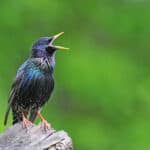
European Starling
European Starling Abundant in city parks and lawns and frequently seen probing turf and gathering in noisy flocks; visitors often notice starlings in open landscaped areas and along nearby streets.
Hooded Crow A bold, intelligent scavenger and forager that has become emblematic of modern Roman city wildlife; commonly seen moving between green spaces, rooftops, and plazas in and around Vatican City.
Italian Sparrow A familiar 'city sparrow' of central Italy, typically encountered around outdoor seating, hedges, and building edges; it is among the most likely birds a visitor will notice at close range.
Ring-necked Parakeet An introduced but increasingly characteristic bird of Rome's urban canopy; small flocks may pass over or feed in mature trees in the wider Vatican/Rome area, adding a surprising splash of color and calls.
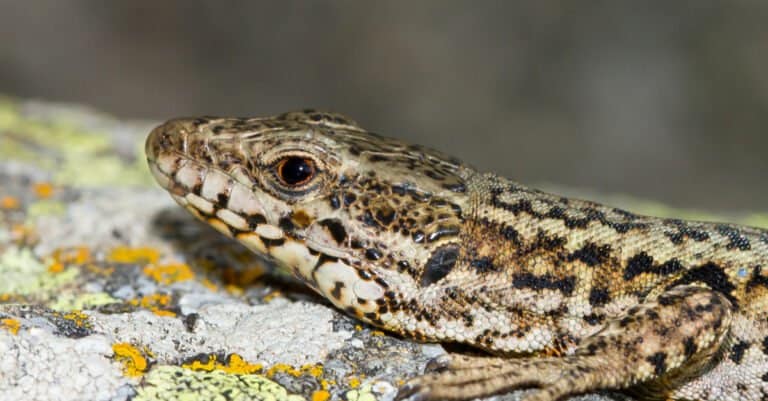
Italian Wall Lizard
Italian Wall Lizard The most likely reptile to be encountered, basking on sunlit stonework, garden walls, and planted edges; it represents the limited but visible reptile life in warm, sheltered urban microhabitats.
Kuhl's Pipistrelle A small, urban-tolerant bat common across Mediterranean cities; most likely noticed at dusk as fast silhouettes feeding on insects above gardens and lit walkways.

Notable Populations

  • No known globally significant wildlife populations occur within Vatican City due to its extremely small, highly urbanized area and limited natural habitat.
  • Wildlife presence largely reflects Rome's broader urban ecosystem (notably migratory bird passage and common city-breeding species) rather than a distinct national fauna.
Protection

Conservation

Primary Threats

  • With nearly the entire territory built up, the main habitat is fragmented landscaped green space (Vatican Gardens, courtyards, terraces). Any redevelopment, security-driven changes, or maintenance that replaces vegetated areas with hardscape reduces already-scarce habitat for urban birds, invertebrates, and soil biota.
  • Rising temperatures and more frequent heatwaves/drought in central Italy increase irrigation demand and stress historic trees and curated plantings in the Vatican Gardens. Extreme rainfall events can also affect drainage and soil stability in terraced garden areas and courtyards.
  • Air pollution (e.g., NOx and particulates) and noise from the surrounding Rome metropolitan area can affect vegetation health and urban wildlife. Within Vatican City, high visitor flows and service logistics also drive localized waste generation and emissions if not managed with low-impact systems.
  • Because much of the vegetation is ornamental and horticulturally managed, there is continual risk of introducing non-native plants, pests, or pathogens through landscaping materials, imported plant stock, and garden trade pathways. In a tiny, enclosed area, an outbreak can quickly affect a large share of the tree and plant collection.
  • Plant health is a key vulnerability: pests and diseases affecting Mediterranean and ornamental species (including those common in Rome) can threaten the Vatican Gardens' trees and shrubs. The limited size of the green areas reduces redundancy-losses are proportionally significant.
  • Intense tourism and event-driven crowding around major sites can disturb urban wildlife (especially birds using courtyards and garden edges), increase litter risk, and constrain habitat-friendly management (e.g., timing of pruning or quiet periods) due to safety and visitor-access requirements.
  • The city-state's primary mission involves security, cultural heritage preservation, and visitor services; infrastructure upgrades (access controls, pathways, lighting, utilities, restoration works) can unintentionally reduce green cover or increase night lighting that alters behavior of insects and birds unless designed with biodiversity sensitivity.
  • Vatican City is inherently urban, and its ecological baseline is that of a micro-city. The conservation challenge is not preventing sprawl internally but mitigating the ecological consequences of total urban land cover-heat island effects, limited soil volume for trees, and minimal ecological connectivity to Rome's broader green network.
  • Most green space is intensively managed (irrigation, pruning, ornamental planting, pest control). Such management can reduce native species value if it prioritizes aesthetics over ecological function, though it can also be leveraged to create pollinator habitat and structurally diverse plantings.
Visit

Wildlife Tourism

Wildlife tourism in Vatican City is highly niche because the country is a densely built, walled microstate with very limited natural habitat (mostly ornamental gardens and courtyards). There is no conventional "safari" economy; tourism revenue is dominated by cultural and religious travel (museums, basilicas, papal events), with nature/wildlife as a small, incidental add-on-primarily birdlife, insects (notably butterflies), and urban-adapted species found in the Vatican Gardens and along the city walls. Historically, the Vatican Gardens (laid out from the Renaissance onward and expanded in the 19th-20th centuries) are the main green refuge, supporting seasonal bird migration through Rome and small pockets of Mediterranean plantings. Accessibility for wildlife viewing is straightforward but controlled: the best nature area (Vatican Gardens) is only visitable via guided tour with advance booking and ID/security screening. For a richer "wildlife trip," most visitors should pair Vatican City with nearby urban nature in Rome (e.g., Villa Borghese, Tiber River corridors) or day trips into Lazio's reserves-while keeping the Vatican as a unique, tranquil micro-habitat experience inside a city-state.

Best Time to Visit
  • Overall best wildlife viewing: March-May and September-October (migration and peak bird activity).
  • March-May (spring migration + breeding): Expect the highest variety of birds using the gardens and airspace over the walls-swifts, swallows, assorted passerines; butterflies and pollinators increase as gardens bloom. Early morning tours (when available) are best for birdsong and activity.
  • June-August (hot, quieter mid-day): Resident/urban-adapted birds remain (pigeons/doves, sparrows, corvids). Insects (bees, butterflies) are most active around flowering beds; aim for cooler hours.
  • September-October (autumn migration): A second peak for migrating birds moving through Rome's green pockets; good for scanning tree canopies and listening for calls.
  • November-February (winter): Fewer species overall, but you may see overwintering urban birds; gardens are calm and less crowded, making it pleasant for slow, observant walks (though wildlife diversity is lower).

Top Wildlife Experiences

  • Guided Vatican Gardens "micro-safari": join an official gardens tour and focus on birdlife in hedges, tree canopies, and around fountains-bring compact binoculars and practice quiet, slow observation.
  • Dawn/early-hour birding around St. Peter's Square perimeter: arrive early and scan rooftops, ledges, and the airspace above the colonnade for swifts/swallows (in season) and typical urban birds; best with a small field guide app for calls.
  • Butterfly-and-pollinator walk inside the Vatican Gardens: time your visit for spring/early summer blooms and look for butterflies, bees, and other pollinators on flowering borders; a macro lens (phone clip-on works) is ideal.
  • Wall-and-courtyard urban nature spotting: walk the Vatican perimeter routes (where accessible) and look for nesting/roosting behavior on stonework-pigeons, doves, and other city birds using architectural niches.
  • Birdsong focus session during spring: on a gardens tour, pause in quieter sections to identify species by sound; record short clips to ID later using an app (while respecting tour rules).
  • Night-sound stroll nearby (Rome-adjacent): after Vatican visits, do a short evening walk in nearby green pockets (e.g., along the Tiber corridor) to listen for nocturnal urban wildlife; pair with a local guide for a dedicated "urban wildlife" experience.
  • Urban ecology photo challenge: build a mini "species list" (birds, insects, plants) during a single gardens tour-aim for 15-25 observations using a citizen-science app, turning a short visit into a purposeful wildlife activity.
  • Seasonal migration watch from open viewpoints: from accessible nearby viewpoints in Rome close to the Vatican (e.g., elevated terraces), scan the sky during peak migration weeks for movement and feeding swifts and swallows.
  • Mindful nature walk in the gardens (slow tourism): use the gardens tour as a tranquil, structured nature walk-focus on textures, scents, and small wildlife (insects, birds) rather than big animals-an unusual contrast to typical city-state sightseeing.

Safari Types Available

  • Guided garden walks (the primary 'wildlife' format in Vatican City)
  • Urban birding / city-wildlife walks (Vatican perimeter + nearby Rome)
  • Birdwatching-by-sound and migration watching (seasonal)
  • Pollinator and macro-wildlife observation (butterflies/insects in ornamental habitats)
  • Urban ecology / citizen-science style 'mini-bioblitz' (short, focused species-spotting)
  • Wildlife photography walks (macro + urban birds; best with small lenses and binoculars)
Fun Facts

Did You Know?

Ecologically, Vatican City is less an "island nation" than a walled neighborhood of Rome: birds and insects move in and out freely, so its wildlife community is essentially a slice of Rome's urban biodiversity compressed into 44 hectares.

Because access to the Vatican Gardens is controlled (generally by guided tours rather than free daily entry like a city park), parts of the gardens can be quieter and less disturbed than nearby public parks-an advantage for nesting and feeding wildlife.

With no natural streams or lakes, even small habitat features matter disproportionately: a single fountain, pond, hedge, or line of mature trees can function as a key drinking/foraging spot for birds and insects inside the walls.

The entire country is a UNESCO World Heritage Site (inscribed in 1984). That cultural-protection status indirectly affects wildlife too, because major changes to the gardens' layout, trees, and built features are managed under strict heritage rules.

Night lighting around St. Peter's Square and surrounding buildings can concentrate flying insects, which in turn attracts aerial insect-eaters (commonly swifts and bats in Rome). In a microstate this small, that "streetlight food web" can play an outsized role in where wildlife chooses to forage.

World's smallest sovereign state by area (about 0.44 km² / 44 hectares) - so any wild bird, lizard, or butterfly seen inside its borders is living in one of the tiniest "national habitats" on Earth.

World's smallest sovereign state by population (roughly 800 residents), yet it still contains a functioning green refuge (the Vatican Gardens) that supports everyday urban wildlife.

Shortest international border of any country: Vatican City's land border with Italy is only about 3.2 km long - meaning wildlife can cross "countries" in minutes without ever encountering countryside.

A remarkably high share of the country is green space: the Vatican Gardens cover roughly 23 hectares (around half of Vatican City), making the gardens the dominant habitat patch in the entire state.

One of the few countries with no natural rivers or lakes - any water-dependent plants and animals in Vatican City rely on artificial features (fountains, ponds, irrigation) rather than natural waterways.

Thank you for reading! Have some feedback for us?