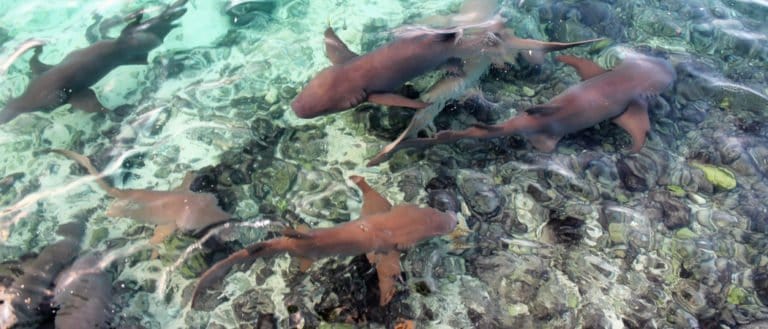
Sleeper Shark
Slow swimmers, deep-sea survivors

Slow swimmers, deep-sea survivors
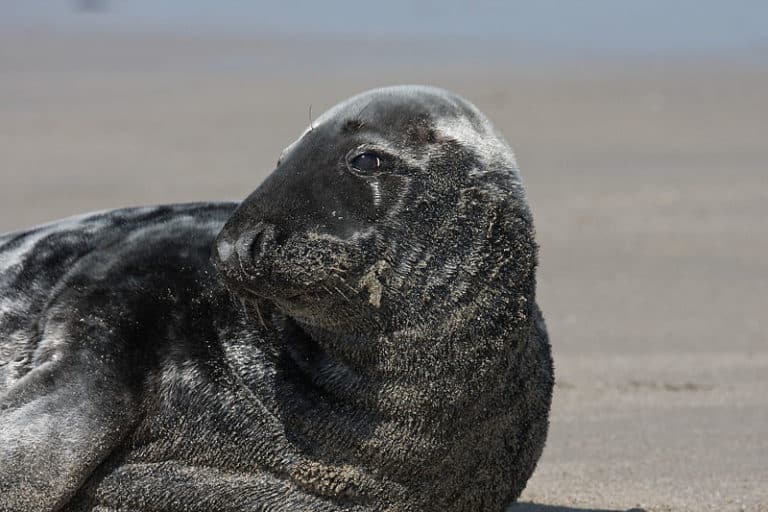
Horse-head seal of the North Atlantic
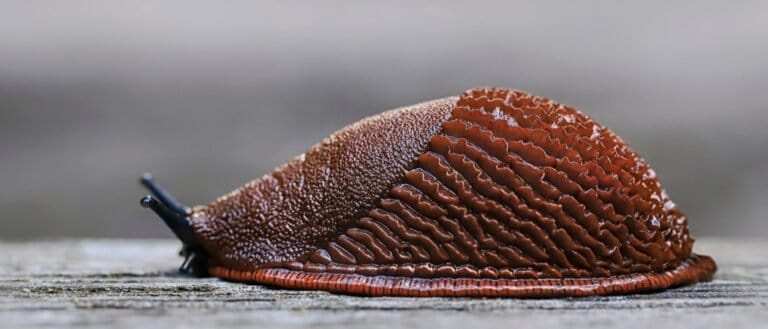
Mucus-powered recyclers of the land
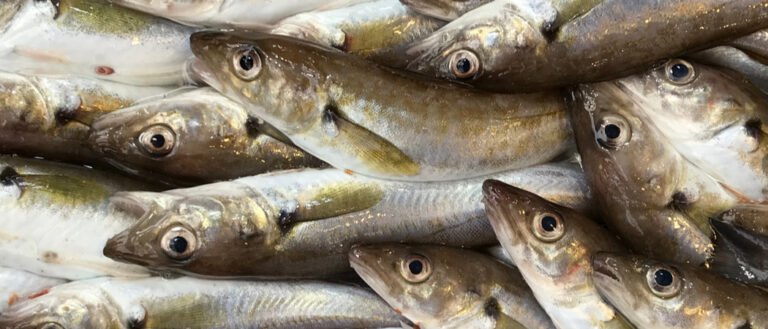
Thumbprint of the North Atlantic
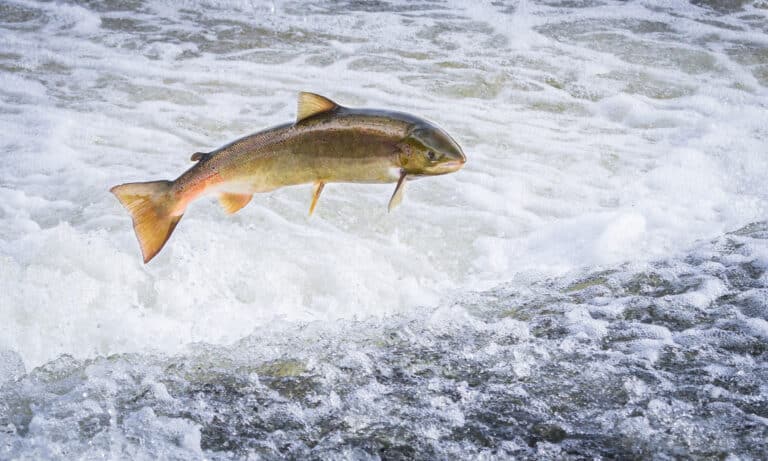
Born in rivers, grown at sea, home again
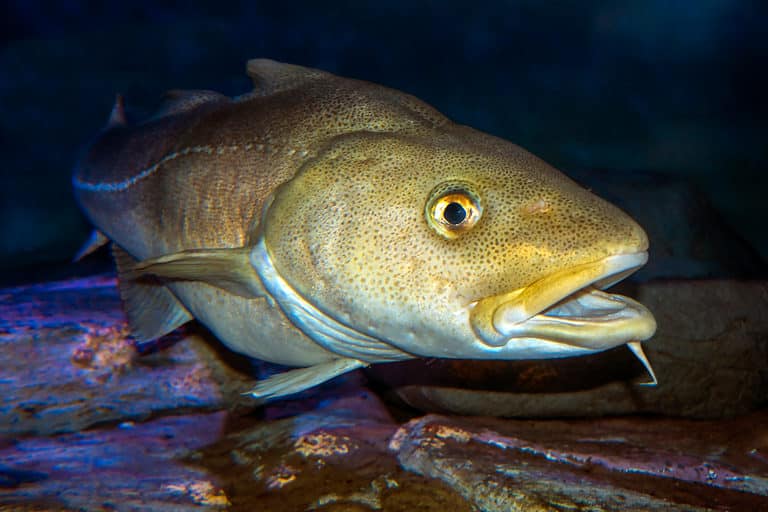
The barbel-chinned backbone of the Atlantic
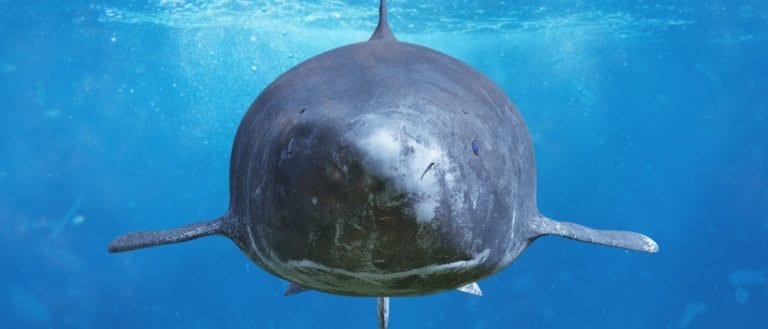
Ancient shark of the Arctic depths
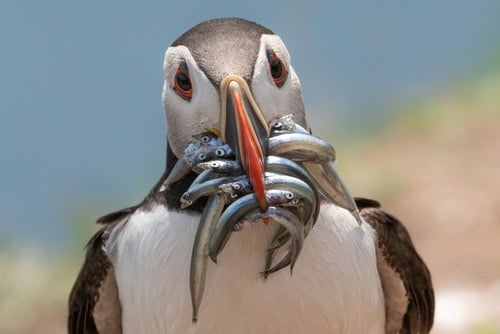
Wing-powered divers of the cold seas
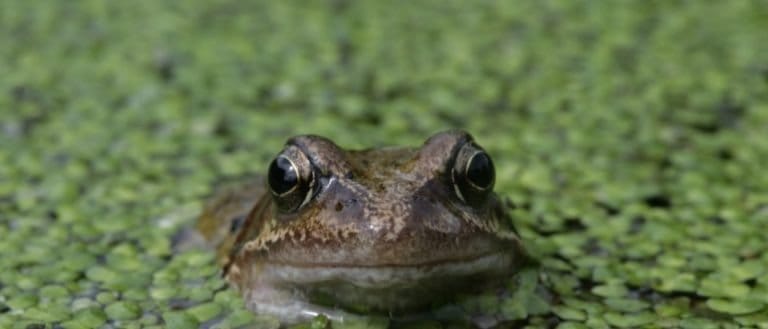
Spring's frogspawn maker
Wildlife in the Faroe Islands is defined by ocean, wind, and cliffs: a treeless archipelago where life concentrates along steep sea stacks, grassy ledges, and productive coastal waters. The islands' natural heritage is overwhelmingly marine, with seabirds using narrow cliff shelves as murres (guillemots), gannets and kittiwakes wheel over surf lines, and puffins and storm-petrels nesting where they can. On land, the mood is quieter-open moorland, heather and grass, and freshwater lochans support hardy plant communities and a smaller set of birds and invertebrates adapted to the cool, oceanic climate.
Key ecosystems include towering seabird cliffs (among the most important in the North Atlantic for breeding and migratory birds), fjords and sheltered sounds that provide feeding corridors, and the surrounding shelf and deep waters where cold and warm currents mix to create exceptionally rich feeding grounds. This ocean productivity supports not only seabirds but also a high diversity of cetaceans-dolphins and porpoises, seasonal baleen whales, and occasionally orcas-making boat-based wildlife watching a signature experience.
In global conservation terms, the Faroes sit on a major North Atlantic flyway and contribute to the broader picture of seabird and marine-mammal health in a rapidly changing ocean. Monitoring of breeding colonies and migratory patterns, along with ongoing attention to fisheries impacts and climate-driven shifts in prey availability, helps inform regional conservation across the wider North Atlantic. What makes the wildlife experience uniquely Faroese is the immediacy: enormous colonies and open-ocean wildlife can be reached quickly from small villages, often with spectacular viewing from clifftop paths or short boat crossings.
The Faroe Islands' wildlife is shaped by steep, glaciated basalt terrain, an oceanic (cool, wet, windy) climate, and an exceptionally productive surrounding sea. Limited lowland area, thin soils, and frequent storms keep most islands treeless, concentrating terrestrial habitats into moorland/grassland mosaics and freshwater pockets, while the dramatic cliffed coastline and fjorded inlets create extensive nesting and roosting habitat for seabirds. Marine distribution (fish, seabirds, cetaceans) is strongly influenced by the Faroe Plateau, shelf breaks, strong currents, and mixing of Atlantic waters that drive high plankton productivity and prey availability.
The Faroe Islands do not have a national-park system comparable to many countries. Instead, nature protection is implemented through site-specific statutory protections (nature reserves/bird sanctuaries and protected landscapes), seasonal access restrictions on sensitive seabird cliffs, and species-level protections (especially for breeding seabirds and marine mammals), alongside land-use planning. Conservation priorities strongly reflect the Faroes' global importance for seabird colonies and the surrounding productive North Atlantic waters (seabirds, cetaceans, seals). Many of the best wildlife sites are steep coastal cliffs and offshore islets; some are formally protected while others are managed through local rules, access controls, and wildlife protection regulations rather than large, contiguous park units.
Formal, site-based protection covers only a small share of Faroese land-roughly on the order of a few percent (about ~1-3%). Much of the wider biodiversity value is safeguarded via species protections, seasonal closures at colonies, and management of key bird cliffs rather than extensive strictly protected landscapes.
Mykines is the Faroes' most famous seabird stronghold, with dense nesting colonies on dramatic cliffs and grassy slopes; management and seasonal restrictions help reduce disturbance during breeding. It is one of the best places in the Faroes for close-view seabird watching on land.
Nolsoy is internationally important for burrow- and crevice-nesting seabirds, with careful protection focused on breeding success and minimizing disturbance. Night-time activity and predator sensitivity make it especially notable for conservation-focused visits.
Skuvoy is recognized by BirdLife International as an Important Bird and Biodiversity Area due to its internationally important breeding seabird colonies on coastal cliffs and surrounding waters. It is noted in particular for great skua and other cliff-nesting seabirds, and is used for tracking seabird population trends.
These towering cliffs host large mixed seabird colonies and are among the most reliable viewing locations by boat, reducing disturbance to nesting ledges. The site is widely used for conservation awareness and seabird interpretation.
A rare Faroese wetland-lagoon complex, Saksun is important for waders and waterbirds during breeding and migration, complementing the archipelago's predominantly cliff-based seabird habitats. Its mix of lagoon edges, streams, and grasslands supports diverse bird life.
One of Europe's highest sea cliffs, Enniberg provides extensive ledges and updrafts that support cliff-nesting seabirds and offers spectacular (often distant) viewing opportunities. The remoteness helps keep disturbance relatively low, making it valuable for seabird breeding.
The Faroe Islands' wildlife is defined far more by ocean and cliffs than by land. Treeless moorlands and a cool, windy oceanic climate support relatively few terrestrial species, but the surrounding productive North Atlantic waters and sheer sea cliffs host spectacular seabird colonies and a rich community of marine mammals. For visitors, the signature experiences are close-range seabird viewing (puffins, guillemots, kittiwakes, fulmars) on bird cliffs and pelagic trips for dolphins, porpoises, and whales in fjords and offshore waters.
Wildlife tourism in the Faroe Islands is shaped by the archipelago's dramatic ocean cliffs and highly productive North Atlantic waters, making it a standout destination for seabirds and marine life rather than large terrestrial mammals. Economically, nature-based travel-especially birdwatching, whale/dolphin trips, and hiking to cliff viewpoints-supports local guides, boat operators, accommodation providers, and transport services, and it helps extend the visitor season beyond summer city breaks. Historically, Faroese relationships with wildlife are deep and practical (seabirds, fish, and marine resources have long been part of island life); modern wildlife tourism is increasingly focused on viewing, photography, and interpretation with an emphasis on safety and responsible conduct in exposed coastal environments. Accessibility is good for a remote archipelago: regular flights via Vágar Airport and ferries between islands, plus tunnels/bridges connecting many key areas. That said, wildlife planning is weather-dependent (wind, fog, swell), many prime viewpoints are on steep terrain, and some iconic islands/landings require advance booking and flexible timing.
Almost no native land mammals: there are no native foxes, hedgehogs, squirrels, deer, etc.; in fact, there are no native terrestrial mammals-land mammals (including the house mouse) arrived with people.
No frogs, newts, or snakes: the Faroe Islands have essentially no native reptiles or amphibians, a counter-intuitive gap in biodiversity for a green, wet North Atlantic landscape.
A seabird that lives "underground" and comes home only at night: European storm petrels on Nólsoy nest in burrows/rock crevices and typically return after dark, so peak activity is heard more than seen-eerie purring calls from the ground on summer nights.
A brand-new seabird colony within living memory: northern gannets only began breeding in the Faroe Islands in the 21st century (Mykineshólmur), a striking example of how quickly seabird ranges and colonies can shift in the North Atlantic.
Treeless islands, cliff-forest ecology: with virtually no native trees, many Faroese "forest birds" are absent-yet the archipelago supports huge bird biomass by concentrating life on cliffs and in the surrounding sea, not on land (a land/sea inversion compared with most countries).
One of the world's largest European storm-petrel colonies: Nólsoy is widely cited as holding tens of thousands of breeding pairs (often reported in the ~50,000-100,000+ range), making it a global stronghold for this tiny nocturnal seabird.
"Island-giant" house mice: the Faroese house mouse (Mus musculus domesticus, often referred to as the Faroese form/subspecies) is famous for being among the largest house mice recorded-individuals can exceed ~50 g (roughly double a typical mainland house mouse).
Seabirds outweigh people (by a lot): national seabird monitoring has estimated on the order of ~1-2 million breeding pairs across the archipelago in good years-an unusually high breeding-seabird-to-human ratio for a populated country/territory (~54,000 residents).
A nationally significant gannet super-colony on a single sea stack: Mykineshólmur hosts the Faroes' largest northern gannet colony (around a few thousand breeding pairs in recent counts), concentrating a major top predator into a very small area.
9 species documented in our encyclopedia
Thank you for reading! Have some feedback for us?
We appreciate your help in improving our content.
Our editorial team will review your suggestions and make any necessary updates.
There was an error submitting your feedback. Please try again.