N S W E
Wildlife Expeditions

Wildlife of
Luxembourg

Luxembourg is a compact wildlife destination where visitors can move from Ardennes upland forests to vineyard-lined river valleys and wetland reserves in a single day-spotting emblematic European mammals, forest birds, and migrating waterfowl along the way.
112 Species
2,586 km² Land Area
Overview

About Luxembourg

Luxembourg's wildlife character is shaped by a surprisingly varied patchwork of temperate habitats: broadleaf and mixed forests, steep sandstone gorges, meandering rivers, and traditional farmland. This mosaic supports classic Central European fauna-red deer, roe deer, wild boar, fox, badger, and pine marten-alongside a strong assemblage of woodland and river birds. Because the country is small and well connected by trails and viewpoints, wildlife watching often feels intimate and accessible: dawn in the northern woods can be followed by an afternoon of raptor-watching over river cliffs or birding at a wetland hide.

Key ecosystems cluster in two broad regions. In the north, the Ardennes (Oesling) brings cooler, higher ground with extensive forests and quiet valleys-excellent for large mammals, owls, and forest specialists, especially around the Our and Upper-Sure landscapes. In the east and south, river corridors such as the Moselle, Sure, and Alzette create riparian woods, floodplain meadows, and reedbeds that act as wildlife highways for migratory birds and support kingfishers, herons, and dragonflies; wetland sites like Haff Reimech are particularly significant stopovers in the wider European flyway network.

On conservation, Luxembourg's influence is less about vast wilderness and more about connectivity and stewardship in the heart of Europe. Natura 2000 sites, regional nature parks, and cross-border habitat initiatives help link Luxembourg's forests and river systems with those of Belgium, Germany, and France-vital for wide-ranging species and climate-driven range shifts. The wildlife experience is unique for its "big nature in a small place" feel: short travel times, well-managed reserves, and transboundary landscapes let enthusiasts build a diverse sightings list quickly while learning how conservation works in a densely populated, highly coordinated European setting.

Physical Features

Geography

Luxembourg's small size is offset by sharp north-south contrasts that shape wildlife habitats: the cooler, higher, more rugged and forested Ardennes/Oesling in the north supports extensive woodland and stream habitats, while the lower, warmer Gutland in the south has more open farmland, limestone/sandstone valleys, and broadleaf forests. Major river corridors (Moselle, Sauer, Our, Alzette) act as dispersal routes and concentrate wetlands, riparian forests, and cliff/slope habitats, creating strong habitat mosaics that influence where temperate European mammals, forest birds, bats, amphibians, and riverine fish occur.

2,586 km² Land Area
One of Europe's smallest countries; slightly smaller than Rhode Island (USA) Size Rank

Key Landscapes

  • Ardennes (Oesling) uplands in the north: rugged plateau, mixed forests, cooler microclimates
  • Gutland (southern Luxembourg): lower rolling hills, farmland-forest mosaic, limestone and sandstone areas with varied soils
  • Major river systems and valleys: Moselle (SE border), Sauer (E), Our (NE), Alzette (central) with riparian woods, wetlands, floodplains
  • Deeply incised river valleys and gorges (notably along the Sauer and Our): steep slopes, microhabitats, woodland refugia
  • Forested massifs (beech/oak and mixed deciduous-conifer stands) interspersed with meadows and hedgerows that function as movement corridors
  • Reservoir and lake habitats: Lake of the Upper Sûre (Upper Sûre Reservoir) supporting aquatic and wetland wildlife
  • Vineyard slopes along the Moselle valley: warm, sunny exposures and edge habitats
  • Karst/limestone and rocky outcrops in parts of the south: caves/crevices and specialized flora-fauna niches

Ecoregions

  • Western European broadleaf forests (temperate broadleaf & mixed forests)
Parks & Reserves

Protected Areas

Luxembourg has no national parks in the strict National Park sense; instead, its protected-area system is built around (1) three large regional Nature Parks that combine landscape protection with sustainable land use, (2) a network of National Nature Reserves protecting wetlands, river valleys, forests, and species-rich grasslands, and (3) extensive EU Natura 2000 sites (Habitats and Birds Directives) that underpin much of the country's legally protected biodiversity. Conservation priorities include river and reservoir wetlands (for migratory and breeding birds), broadleaf forests (for raptors, woodpeckers, and bats), and calcareous grasslands and former iron-mining landscapes (for orchids, butterflies, reptiles, and amphibians).

Protected Coverage

Approximately ~27% of Luxembourg's land area is under formal protection, driven largely by the Natura 2000 network and complemented by National Nature Reserves and the three Nature Parks (boundaries and overlap mean estimates vary by source and method).

Notable Parks & Reserves

Our Nature Park

Nature Park; includes multiple Natura 2000 sites

A large Ardennes landscape of forested ridges and the Our river valley near the German border, important for wide-ranging forest mammals and sensitive forest birds. It's one of the best areas in Luxembourg for quiet, continuous habitat and raptor/forest bird conservation.

Upper-Sure Nature Park

Nature Park; Natura 2000; parts overlap the Upper Sure Valley Ramsar wetland

Centered on the Upper Sure reservoir and surrounding forests, this is Luxembourg's standout freshwater landscape for waterbirds, otter-friendly river sections, and mixed woodland wildlife. Reservoir edges and river corridors can be productive for birdwatching, especially during migration.

Eurasian otter
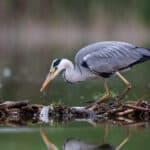
Grey heron
Grey heron
Great crested grebe
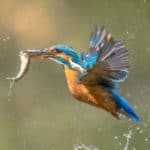
Kingfisher
Kingfisher
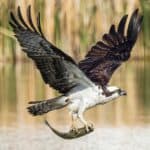
Osprey
Osprey
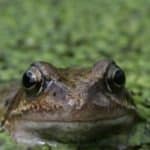
Common frog
Common frog

Mullerthal Nature Park

Nature Park; includes Natura 2000 sites

Sandstone gorges, caves, and beech-oak forests create cool, humid microhabitats that support amphibians and forest specialists. The park is especially notable for woodland bird diversity (including multiple woodpeckers) and high-quality stream habitats.

Haff Reimech National Nature Reserve (Remerschen)

National Nature Reserve; Ramsar wetland; Natura 2000

Luxembourg's flagship wetland reserve on the Moselle, with shallow lakes, reedbeds, and riparian habitats that attract migratory waterfowl and breeding marsh birds. It is among the country's top sites for wildlife viewing, particularly birds.

Great reed warbler
Little egret
Common pochard
Great crested grebe
Kingfisher
Kingfisher
Grey heron
Grey heron

Manternacher Fiels National Nature Reserve

National Nature Reserve; Natura 2000

A steep, sunny Moselle-valley slope with species-rich calcareous grasslands, scrub, and woodland edges-excellent for orchids, butterflies, and warm-adapted reptiles. Its mosaic habitat supports a high density of insects and the birds that feed on them.

Red-backed shrike
European green lizard
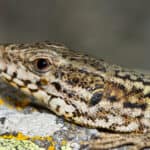
Wall lizard
Wall lizard
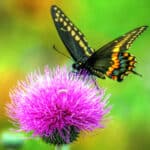
Swallowtail butterfly
Common kestrel

Prenzebierg National Nature Reserve (former iron-mining region)

National Nature Reserve; Natura 2000 (former iron-mining biodiversity sites)

A restored former mining landscape with grasslands, scrub, ponds, and rocky features that provide breeding habitat for amphibians and refuges for bats and reptiles. It is notable as a conservation success where industrial land has been turned into biodiversity-rich habitat.

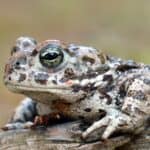
Natterjack toad
Natterjack toad
Great crested newt
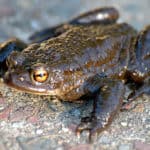
Common toad
Common toad
Common pipistrelle
European hare
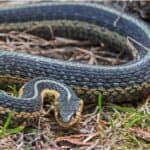
Grass snake
Grass snake

Ellergronn Nature Reserve (Esch-sur-Alzette, southern Luxembourg)

Nature reserve; part of the Natura 2000 network

Woodland, meadow, and old industrial features form a compact but diverse reserve that supports bats, woodland birds, and amphibians, while also showcasing ecological restoration. It's a reliable urban-adjacent site for seeing common forest wildlife and seasonal birds.

Great spotted woodpecker
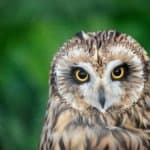
Tawny owl
Tawny owl
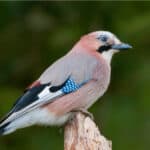
Eurasian jay
Eurasian jay
Common frog
Common frog
Brown long-eared bat
Animals

Wildlife

Luxembourg's wildlife is characteristically temperate-European and strongly shaped by forests, river valleys, wetlands, and traditional farmland. The northern Ardennes/Oesling (cooler, more rugged, forested) supports classic woodland mammals and raptors, while the central and southern river systems (Sure/Sauer, Our, Alzette, Moselle) add riparian habitats with beavers, kingfishers, amphibians, and migrant waterbirds. Although the country is small, its dense network of protected areas and cross-border landscapes (especially the Greater Ardennes) helps maintain a notably diverse assemblage of forest and river species for its size.

≈60-70 native wild mammal species (including ~20 bat species); large mammals are mostly recovering/managed forest species rather than true wilderness megafauna Mammals
≈200-250 bird species recorded annually across seasons; roughly ≈140-170 regular breeders (varies by year and taxonomy) Birds
≈6-8 native reptile species (small but regionally typical Central/Western European set) Reptiles
≈12-14 amphibian species (strong representation in forest springs, ponds, and river valleys) Amphibians

Iconic Species

European Wildcat
European Wildcat A flagship forest carnivore in the Greater Ardennes landscape; Luxembourg is part of a regional stronghold where mature, connected woodlands in the north (Oesling/Ardennes) give the best chance of detection (often via tracks/camera traps rather than direct sightings).
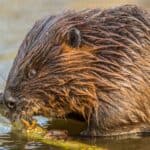
Eurasian Beaver
Eurasian Beaver A major conservation comeback story; now established on multiple rivers and tributaries (e.g., Sure/Sauer, Our, Alzette catchments). Visitors most often notice dams, gnawed trees, and lodges along quiet stretches at dawn/dusk.
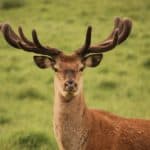
Red Deer
Red Deer Luxembourg's most iconic large wild herbivore, strongly associated with northern forests. Autumn rutting (September-October) is the most memorable wildlife experience, especially in large woodland blocks of the Oesling.
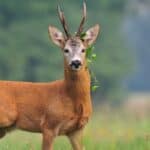
Roe Deer
Roe Deer Widespread and commonly encountered at forest edges, meadows, and agricultural mosaics throughout the country; often the deer species most visitors actually see.
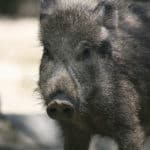
Wild Boar
Wild Boar Common in forest-farmland mosaics; signs such as rooting and tracks are widespread, and sightings are possible in quieter wooded areas (especially at dawn/dusk).
Black Stork A scarce, secretive forest-and-stream specialist that breeds in remote wooded valleys in the Ardennes region. It is one of the most sought-after birds for experienced birders due to its rarity and sensitivity to disturbance.
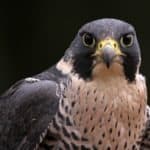
Peregrine Falcon
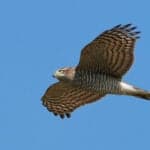
Peregrine Falcon Notable as a cliff- and quarry-nesting raptor that can be seen hunting over river valleys and rocky outcrops (including parts of the Mullerthal/Little Switzerland area and steep valley sections).
Common Kingfisher A signature species of Luxembourg's clean rivers and streams; best searched along slow to moderate-flowing valley waters with natural banks, where its bright plumage and fast, low flight stand out.
European Badger A classic nocturnal woodland mammal; while rarely seen in daylight, it is a defining part of the country's forest ecosystem, with setts often located on well-drained slopes and woodland edges.
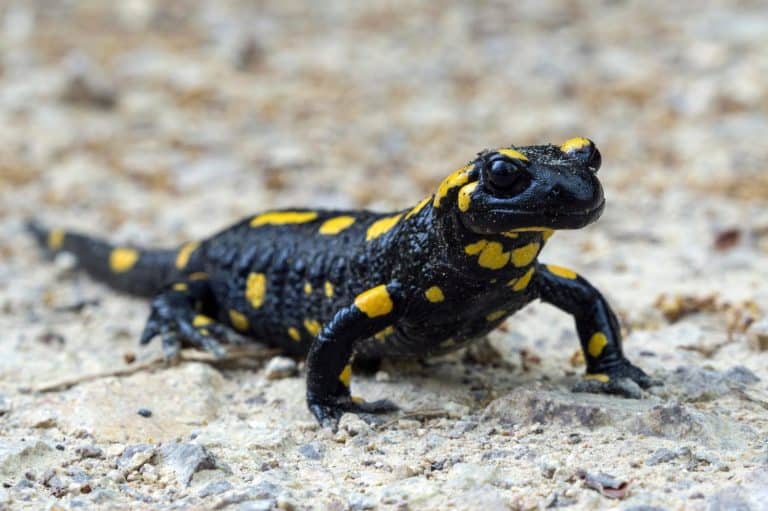
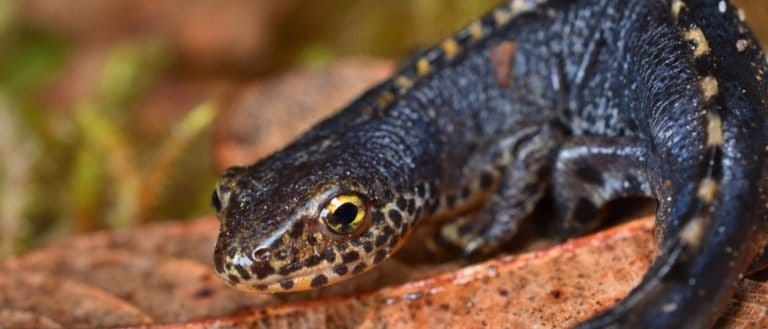
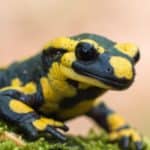
Fire Salamander
Fire Salamander A charismatic amphibian of shady forests and clean springs/streams, especially in the north and in moist valleys. Most often encountered on damp nights or after rain along woodland paths.

Endemic Species

None (no true endemics) Luxembourg has no widely recognized endemic or near-endemic vertebrate species; its fauna is shared with surrounding Western and Central Europe. Conservation focus is therefore on habitat quality, connectivity, and regional strongholds rather than country-only endemics. Endemic

Notable Populations

  • Regionally important forest connectivity: Luxembourg forms part of the Greater Ardennes woodland complex, benefiting wide-ranging species such as European Wildcat, Red Deer, and forest raptors.
  • Riparian restoration and recolonization: Eurasian Beaver has re-established across multiple river systems, creating wetlands that benefit fish, amphibians, and waterbirds.
  • Sensitive forest-breeding birds: Black Stork occurs as a scarce breeder in remote wooded valleys, making undisturbed forest-stream habitats a key conservation priority.
  • Bat diversity is high for the country's size, with multiple species using old buildings, caves/fortifications, and forest roost sites (important locally, though not globally dominant).
Protection

Conservation

Primary Threats

  • Ongoing land take and conversion reduce semi-natural habitats, especially species-rich grasslands, wetlands, and riparian zones. Drainage, land consolidation, and the decline of extensive grazing/mowing in some areas lead to loss of traditional meadow and calcareous grassland habitats, while valley bottoms are pressured by development and transport corridors.
  • Dense road networks, new housing estates, rail upgrades, and associated works fragment habitats and create barriers for wildlife movement in a country already constrained by limited space. Transport corridors along river valleys can pinch remaining habitat strips, while roads increase mortality for amphibians, bats, and medium-sized mammals.
  • Strong population growth and high housing demand drive expansion around Luxembourg City and other communes, increasing impervious surfaces, light pollution, and disturbance. Urban sprawl also reduces ecological connectivity between forest blocks and river corridors, making Natura 2000 sites more isolated.
  • While total farmland area may not expand dramatically, intensification acts similarly to expansion by simplifying landscapes: larger fields, fewer hedgerows, earlier and more frequent mowing, and reduced fallow. This diminishes breeding and foraging habitat for farmland birds and pollinators and reduces structural diversity in the countryside.
  • Nutrient runoff (nitrates and phosphates) from agriculture and sewage overflows can degrade water quality in rivers and streams (eutrophication), affecting aquatic invertebrates, fish, and riparian habitats. Pesticide use can reduce insect biomass, with knock-on effects for bats and insectivorous birds. Local air pollution and noise near major roads also affect sensitive fauna.
  • Warmer temperatures and more frequent summer droughts stress headwater streams and wetlands in the Oesling and reduce summer baseflows in river systems, increasing pressure on aquatic species. Phenology shifts and heat/drought events can alter forest composition and increase vulnerability to pests, while extreme rainfall increases erosion and sediment loads in waterways.
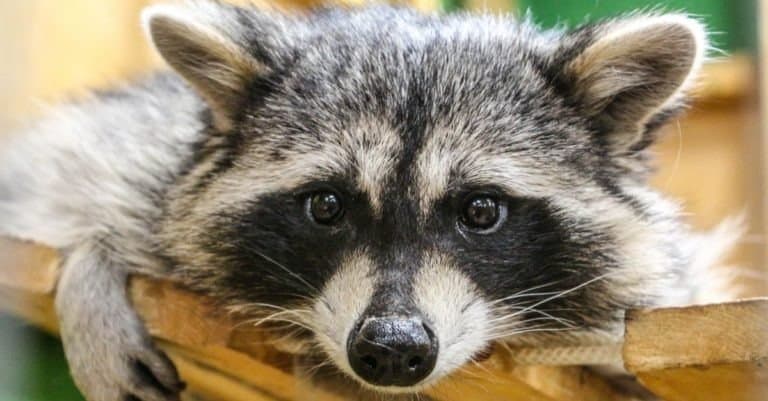
  • Non-native plants (notably invasive knotweeds along riverbanks) and aquatic invaders can outcompete native riparian vegetation and alter bank stability. Invasive mammals such as raccoon and raccoon dog (spreading in the region) pose risks to ground-nesting birds and amphibians; invasive crayfish and fish can affect native aquatic communities where present.
  • River channelization, bank reinforcement, and historical weirs/culverts modify flow and habitat structure, limiting floodplain function and blocking fish migration. Forestry practices that favor uniform stands or reduce deadwood can simplify forest structure, impacting saproxylic insects, bats, and cavity-nesting birds.
  • High recreational pressure (hiking, mountain biking, dog walking) in popular forests and river valleys can disturb breeding birds and sensitive species, especially in small protected areas with limited buffers. Light pollution is significant around urban areas and transport corridors, affecting nocturnal wildlife such as bats and moths.
  • Although Luxembourg maintains substantial forest cover, harvesting and short rotation cycles in some stands can reduce old-growth attributes (large trees, deadwood, multi-layer structure). This impacts species reliant on mature deciduous forest and deadwood, and can exacerbate erosion if not carefully managed on steep slopes.
  • Regulated hunting is widespread; while not typically a primary biodiversity driver, high ungulate densities (where hunting pressure and management are imbalanced) can suppress forest regeneration and understorey diversity, indirectly affecting woodland habitat quality. Disturbance from hunting activities can also affect wildlife in small forest patches.
Visit

Wildlife Tourism

Luxembourg's wildlife tourism is small-scale but high-quality, focused on forests, river valleys, wetlands, and quiet hill country rather than "big game." It complements the country's broader outdoor tourism (hiking, cycling, kayaking) and helps support rural businesses (local guides, nature centers, eco-lodges, transport, and hospitality) especially in the Ardennes/Oesling and the Müllerthal. Conservation-led destinations (nature parks, Natura 2000 sites, and well-managed forest landscapes) shape the experience: you're typically wildlife watching on foot, by bike, from hides, or on the water. Accessibility is a major advantage-Luxembourg is compact, has strong public transport coverage, and offers easy cross-border add-ons (Eifel, Ardennes, Lorraine) for longer wildlife itineraries. Historically, much of today's wildlife viewing grew from post-war forest recovery, river corridor protection, and European conservation frameworks; over recent decades, rewilding-friendly land management and wetland restoration have improved bird and mammal viewing in several valleys and reservoirs.

Best Time to Visit

March-May (spring migration + breeding season): best all-round months for birds and fresh forest activity. Look for migratory waterfowl and waders at reservoirs and river flats, raptors over ridgelines, and early amphibian movement on warm, wet evenings.

June-August (long days, insects, bats): great for dawn/dusk mammal chances (roe deer, wild boar), dragonflies around ponds, and organized bat walks. Midday wildlife can be quiet; focus on wetlands, shaded forest edges, and evening sessions.

September-October (rut + autumn passage): peak for forest mammals and dramatic seasonal behavior. Red deer rutting is a highlight in the north (listen at dawn/dusk). Bird migration continues over rivers and open high points; forests are photogenic and visibility improves as leaves thin.

November-February (winter birds + tracking): best for wintering waterbirds (ducks, geese, grebes) on larger waters and quiet river stretches; crisp mornings are good for tracks, and hides can be productive. Short days mean planning around light and weather; choose sheltered valleys and reservoirs.

Top Wildlife Experiences

  • Dawn 'forest edge' wildlife stakeout: start before sunrise on a quiet woodland edge in the Ardennes/Oesling to scan for roe deer and (with luck) wild boar moving between cover and fields; bring binoculars and stay still for 60-90 minutes.
  • Red deer rut listening walk (late Sep-early Oct): join a guided dusk-to-dark walk in northern forests to hear stags roaring; combine with thermals and a red-light/low-light etiquette briefing to minimize disturbance.
  • Reservoir hide session for waterbirds (Nov-Feb and Mar-Apr): spend a morning in or near a bird hide overlooking larger waterbodies to watch wintering ducks/grebes and spring migrants; practice slow scanning and note mixed-species flocks.
  • Kayak/canoe wildlife float on a calm river section (late spring-summer): paddle quietly at first light for chances of kingfishers, herons, and riparian mammals; prioritize low-noise drifting and keep distance from nesting banks.
  • Evening bat walk in a historic town/valley (Jun-Aug): use an ultrasonic bat detector with a local guide to identify species by call, watching hunting routes along rivers, bridges, and forest edges.
  • Night wildlife photography session (year-round, best in autumn/winter): with a guide and proper permissions, practice low-impact nocturnal techniques (no baiting; controlled lighting) to photograph forest textures, tracks, and occasional mammals near clearings.
  • Amphibian spotting after rain (Mar-May): on mild wet evenings, visit ponds and woodland pools with a guide to observe frogs/newts and learn identification; follow strict biosecurity (clean footwear) to protect habitats.
  • Raptor and migration watch from a ridge or open plateau (Mar-May and Sep-Oct): set up a scope on a breezy viewpoint to track passing raptors and corvid movements; combine with a picnic and map-based route planning.
  • Guided 'tracks and signs' walk (Dec-Feb): learn to read footprints, feeding signs, and scat in muddy/snowy patches along forest tracks-an engaging way to experience wildlife even when animals stay hidden.
  • Nature-park e-bike wildlife loop (Apr-Oct): ride a low-traffic circuit linking wetlands, forest edges, and viewpoints; stop at dawn-friendly pullouts and interpretive panels to maximize sightings with minimal effort.

Safari Types Available

  • Self-guided wildlife walks and hikes (trail-based viewing, dawn/dusk focused)
  • Guided wildlife walks (mammals, birds, tracking, seasonal rut walks)
  • Birdwatching from hides/observation points (reservoirs, wetlands, river corridors)
  • Water-based wildlife experiences (kayak/canoe floats; quiet shoreline watching)
  • Night safaris on foot (bat walks, nocturnal nature interpretation; low-impact)
  • Cycling/e-bike wildlife routes (linking habitats efficiently, with frequent stops)
  • Wildlife photography outings (ethical fieldcraft, hide use, seasonal sessions)
  • Cross-border add-on 'regional safaris' (day trips into neighboring Ardennes/Eifel/Lorraine for extended habitat variety)
Fun Facts

Did You Know?

Industrial past to biodiversity hotspot: the Minett region's abandoned iron-ore pits, slag heaps, and rail corridors now form warm, dry 'urban-wild' habitats where you can find Mediterranean-leaning species (notably many orchids and thermophilous insects) that are scarce in Luxembourg's cooler forests and valleys.

Landlocked, but a migration bottleneck: the Moselle valley is a major north-south corridor for migratory birds, and wetland complexes like Haff Reimech are used as stopover/resting habitat, so peak migration can feel like a coastal flyway site despite Luxembourg having no sea.

Two large nature parks in a tiny country: Luxembourg has two extensive regional nature parks, Our Nature Park (north-east) and Upper Sûre Nature Park (north-west), together covering roughly ~18% of the country, which is strikingly big when the whole nation is only 2,586 km².

Wildlife is actively coming back in real time: species that were heavily reduced by historic hunting and river engineering are now reappearing along restored rivers and quieter valleys (notably the Eurasian beaver in parts of the Sûre/Alzette catchments), so you can see fresh dams and gnawed trunks within commuting distance of towns.

Largest nature reserve: Haard-Hesselsbierg-Staebierg Nature Reserve in the south (around 600+ hectares) is Luxembourg's biggest officially protected nature reserve, known for dry grasslands and former mining habitats packed with orchids and sun-loving reptiles.

Largest lake (and biggest open-water wildlife magnet): the Upper Sûre Reservoir is Luxembourg's largest body of water (about 3.8 km²), drawing concentrations of wintering and migrating waterbirds rare elsewhere in the country.

Biggest continuous woodland near the capital: the Gréngewald Forest is Luxembourg's largest forest block close to Luxembourg City (about 4,500 hectares), providing one of the country's most important large-forest habitats for deer, wild boar, forest bats, and woodland birds.

A very high share of EU-level protected habitats for its size: Luxembourg has designated about 27% of its national territory as Natura 2000 sites (Special Areas of Conservation and Special Protection Areas), a notably large proportion for a country of 2,586 square kilometers, meaning protected wildlife areas are a major part of the map, not an afterthought.

Luxembourg is a small landlocked country in Western Europe. Its official name is the Grand Duchy of Luxembourg. It borders Belgium to the west, Germany to the east, and France to the south. Luxembourg has been called the “green heart of Europe.” It is famous for its rich farmland and its wine-producing region. Outside its major cities, the country is sparsely populated and rural. It is a hilly country with craggy mountains marked by many rivers and streams.

Wildlife in Luxembourg

Luxembourg has several unique animals. These include the American beaver, Eurasian beaver, common vole, European pine vole, greater white-toothed shrew, Brandt’s bat, Natterer’s bat, European wild cat, and European otter. You can spot red foxes, bears, rodents, and a huge variety of insects in the woodland areas.

Luxembourg’s native birds include the barnacle goose, mute swan, red-legged partridge, European turtle dove, and the spotted crake. Its rivers and streams are home to curlews, sandpipers, gulls, loons, and other aquatic birds. Its unique native reptiles include the European toad and the smooth newt.

What Is the National Animal of Luxembourg?

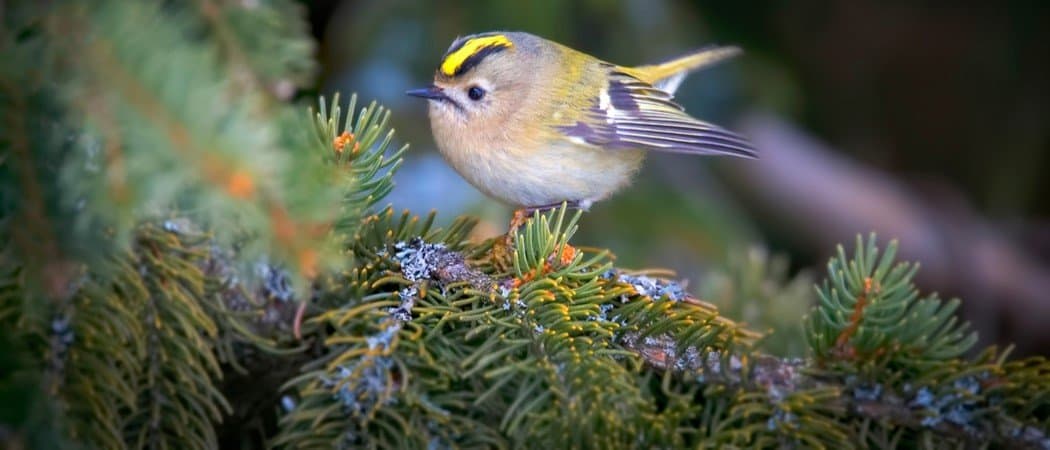
Luxembourg’s national animal is the Goldcrest (Regulus regulus), a small bird that is a member of the kinglet family. This beautiful yellow bird sports a patch of bright gold on its head, which is where it gets its nickname, “king of the birds.”

This small, lovely bird lives in forests but can often be found in backyard gardens. Goldcrests live in many parts of Europe and Asia. Luxembourg’s national bird is listed as “least concern” for conservation status.

What Animals Are Endangered or Extinct in Luxembourg?

Luxembourg’s endangered species include the European eel, sociable plover bird, freshwater pearl mussel, and the thick-shelled river mussel. Spengler’s freshwater mussels are believed to be extinct in Luxembourg, but it has been spotted in France.

Where To See the Top Wild Animals in Luxembourg

There are many places to see animals in this scenic country. Hiking and canoeing are popular sports, and there are many protected nature areas.

  • The Nature Park of the Upper Sure is home to the country’s largest drinking water reservoir. This scenic lake provides water and shelter to a large variety of animals.
  • The Beetebuerger Bech Nature Reserve in Bettembourg is home to unspoiled forests and streams. Among the native birds, you may see are the ashen woodpecker, black woodpecker, sea woodpecker, Natterer’s bat, and Bechstein’s bat.
  • Nature Reserve Pettenerbesch is another deeply forested area that’s right in the geographical center of the country. Here, you can spot a vast variety of wildlife, including foxes, owls, pheasants, voles, and beavers while you walk the trails.
  • The Nature Reserve Haff Reimech is home to the Biodiversum, a unique indoor conservation area. This popular learning center was built on an artificial island at the foot of the region’s famous vineyards. The first floor of this multilevel center focuses on Luxembourg’s water conservation efforts. The second floor focuses on the country’s unique flora and fauna. In the surrounding nature reserve, you can spot great-crested grebes, frogs, geese, and mallards.

A Scenic Setting for Wildlife

Luxembourg has many scenic regions, and its government has made a commitment to preserve its native fauna. Waterfowl and reptiles live in its waters, and its forests contain foxes, bears, owls, rodents, and wild cats. Visiting a nature park is a wonderful way to see these unique animals.

Animals Found in Luxembourg

112 species documented in our encyclopedia

Thank you for reading! Have some feedback for us?