
Wildlife of
Åland Islands
About Åland Islands
The Aland Islands' wildlife character is shaped by the meeting of sea and land: a vast, low-lying archipelago of rocky islets, sheltered bays, reed-fringed lagoons, and traditional coastal villages. This maritime landscape supports a distinctly Baltic mix of species - waterbirds, raptors, and marine mammals - alongside hemiboreal forests and flower-rich meadows that owe much of their diversity to centuries of grazing and small-scale land use. For visitors, Aland feels intimate and immersive: wildlife encounters often happen close to shore, from a bicycle route, a cabin shoreline, or a kayak slipping between skerries.
Key ecosystems include outer-archipelago skerries (important resting and breeding sites for seabirds and a haul-out realm for seals), shallow coastal waters and bays (nursery areas for fish and feeding grounds for diving ducks and grebes), and mosaic landscapes inland - coniferous and mixed forests, wetlands, and semi-natural meadows. These habitats are significant not only locally but also as part of the wider Baltic Sea flyway, where millions of birds move between Arctic breeding grounds and wintering areas further south and west. The archipelago's high edge-to-water ratio makes it exceptionally productive for birdlife, especially during migration peaks.
In global conservation terms, Aland contributes to safeguarding Baltic Sea biodiversity through protected coastal areas and management that keeps traditional meadows open - supporting pollinators, orchids, and meadow birds - while helping maintain breeding and stopover sites for migratory waterfowl and raptors. The wildlife experience is unique for its seasonality and accessibility: dramatic migration days, quiet seal-watching from rocky headlands, and the chance to explore remote islands with minimal light pollution and a strong culture of living alongside the sea.
Geography
Aland's wildlife is shaped by its highly fragmented Baltic Sea archipelago geography: thousands of low, rocky islands and skerries create extensive shoreline, sheltered bays, and shallow brackish waters that support seabird colonies, waterfowl stopovers, coastal meadow flora, and nursery habitat for fish. Inland habitats are a fine-grained mosaic of boreal and hemiboreal woodland, small wetlands, and traditional farmland, so many species distributions follow the land-sea interface and the availability of island nesting sites, reedbeds, and semi-open cultural landscapes rather than elevation or large river systems.
Key Landscapes
- Brackish-water archipelago (thousands of islands, islets, and skerries) with extremely long, indented coastline
- Sheltered bays, lagoons, and shallow nearshore waters (important feeding and nursery areas)
- Rocky shores and outer skerries (key nesting/roosting sites for seabirds)
- Coastal meadows, shore pastures, and salt-influenced grasslands maintained by grazing/mowing (high plant and insect value)
- Reedbeds and coastal wetlands (breeding habitat for waterbirds; amphibian refuges)
- Boreal/hemiboreal mixed forests and conifer stands on thin soils over bedrock
- Small mires, fens, and freshwater ponds/lakes (localized but important for wetland species)
- Agricultural fields, orchards, and traditional rural landscapes (support open-country birds and edge species)
Ecoregions
- Scandinavian and Russian taiga (WWF terrestrial ecoregion)
- Baltic Sea (brackish) marine ecoregion/province (MEOW framework)
Protected Areas
Aland's protected-area network is managed by the Aland Government under its own nature conservation legislation. Instead of large mainland-style national parks, protection is typically delivered through numerous small-to-medium nature reserves, bird protection areas (often with seasonal landing/access restrictions on outer skerries), and EU Natura 2000 sites. Because Aland is a low-lying archipelago, many of the most conservation-significant areas are coastal and marine: breeding seabird skerries, seal haul-outs, shallow bays, and traditional coastal meadows shaped by grazing and haymaking.
Statutory nature reserves and similar formally protected areas cover about 10% of the Aland Islands' land area. The share is higher when including surrounding marine areas designated under Natura 2000 (most of that additional coverage is at sea).
Notable Parks & Reserves
Salskar Nature Reserve
Nature reserve (protected area designated by the Government of Aland)A remote outer-archipelago lighthouse island in the Aland Islands that is protected as a nature reserve and is especially known for seabird colonies and bird migration; nearby waters are also used by seals.
Signilskar Nature Reserve
Aland Islands nature reserve / bird protection area (outer skerries; seasonal access restrictions)One of the Aland Islands' most important outer-skerry bird areas, noted for seabird breeding and bird migration monitoring. The remote offshore location supports nesting seabirds and has seasonal access restrictions to protect breeding birds.
Lagskar Nature Reserve (bird sanctuary)
Nature reserve / bird sanctuary; included in the EU Natura 2000 site for the Lagskar (Lågskär) areaA remote outer-skerry island group in the southern Aland archipelago, best known for its lighthouse and as a protected seabird breeding area. Access is typically restricted during the nesting season to protect colonies.
Nato Nature Reserve, Lemland
Aland Islands nature reserve (coastal meadows and woodland; popular nature trail area)A well-known reserve close to Mariehamn that combines sheltered bays, coastal meadows, and herb-rich woodland, making it a popular place to observe spring and early-summer birdlife. Traditional landscapes and shoreline habitats support a high diversity of breeding birds.
Ramsholmen Nature Reserve, Mariehamn
Nature reserveA small protected deciduous woodland and shoreline area near central Mariehamn, known as an easy-to-access nature site and a popular place for outdoor recreation and nature observation.
Aland Sea / Outer Archipelago Natura 2000 areas
Natura 2000 (EU protected site network; complemented by species protection and local access/landing rules)The broader Aland Sea and outer skerry zones are critical for Baltic marine biodiversity: seal foraging and haul-out areas, seabird feeding grounds, and migration corridors. These waters underpin Aland's most important conservation values even where sites are not strictly no-take.
Wildlife
The Aland Islands' wildlife is defined by an intricate Baltic Sea archipelago of skerries, sheltered bays, reedbeds, boreal woodland patches, and traditional coastal meadows. The wildlife experience is strongly maritime: seabirds and waterfowl dominate in spring-autumn migration periods; seals are a signature mammal group; and large terrestrial mammals occur mainly on the bigger islands. Because of the northern, island setting, reptile and amphibian diversity is low, while bird diversity is seasonally very high.
Iconic Species

Endemic Species
Notable Populations
- Part of the key Baltic Sea archipelago belt supporting major seabird and waterfowl migration stopovers (especially eiders, geese, swans and other waterbirds).
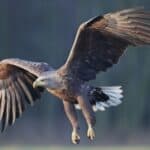
- Aland sits within the Baltic stronghold of White-tailed Eagles, a globally important recovery area for the species after historical declines.
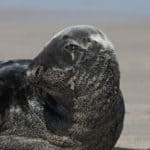
- Outer-skerry habitats provide important haul-out and foraging areas for Grey Seals in the northern Baltic region.
- Aland waters occur within the restricted global range of the Baltic ringed seal subspecies (Pusa hispida botnica), a Baltic Sea endemic.
Conservation
Primary Threats
- Eutrophication is a dominant pressure in Aland's sheltered bays and inner archipelago: nutrient inputs from agriculture (fertilizer/manure runoff) and scattered coastal settlements/cottages can elevate nitrogen and phosphorus locally, while large background loads arrive from the wider Baltic. This drives algal blooms, oxygen depletion in bottom waters, and reed overgrowth that degrades fish spawning/nursery areas and shore meadows. Marine litter and microplastics also accumulate along shorelines, and maritime traffic brings chronic risks of oil/chemical spills.
- Warming and reduced winter ice cover in the Baltic affect ice-dependent and cold-adapted ecology: ringed/seals and coastal food webs can be impacted by poorer ice conditions, and changing temperature/salinity alters fish distributions (affecting pike/perch/pikeperch and herring dynamics). Longer warm seasons can intensify cyanobacterial blooms, while sea-level rise and stormier conditions increase shoreline erosion and flood risk for low-lying coastal habitats and infrastructure.
- Coastal habitat loss and fragmentation occur through shoreline development (new housing/summer cottages), marina/harbor expansion, dredging of shallow bays, and shoreline hardening. These changes disproportionately affect the shallow, sheltered inlets that function as key spawning and nursery habitats for coastal fish and as feeding areas for waterbirds.
- Recreational boating, kayaking, shoreline visitation, and tourism can disturb sensitive nesting and moulting birds on small islets (common in the outer archipelago). Disturbance is especially acute during breeding season when repeated landings near colonies reduce breeding success and increase predation exposure.
- Coastal fisheries (commercial and recreational) can pressure local stocks and age structure of key species (e.g., perch, pike, pikeperch, and herring), particularly in enclosed bays where populations are more localized. Baltic-wide stock fluctuations and ecosystem changes (driven by climate and eutrophication) can compound local harvest impacts.
- Invasive predators and competitors are a major concern on islands: American mink (and locally also raccoon dog where present/arrives) can devastate ground-nesting seabird colonies. Invasive plants (e.g., garden escapes along shores and roadsides) can alter coastal meadow composition. Marine invasives carried by shipping/boat traffic (and changing salinity/temperature) pose ongoing risks to brackish communities.
- Historically managed coastal meadows and wooded pastures can degrade when traditional grazing/mowing declines, leading to scrub encroachment and loss of open-habitat biodiversity. Conversely, eutrophication-driven reed expansion modifies shallow bays, reducing open-water mosaics crucial for fish and birds. Small-scale drainage/ditch maintenance can also alter wetland hydrology.
- Maritime infrastructure and transport corridors (shipping lanes, ports, dredged fairways, undersea cables) can disturb seabed habitats and increase underwater noise and spill risk. Onshore, road access, causeways, and coastal engineering can fragment habitats on larger islands. Renewable energy development (e.g., wind power planning) can create collision/displacement risks for birds if poorly sited in migration and feeding areas.
- Waterfowl hunting and seal management/culls (where permitted/implemented) can add mortality to populations already stressed by food-web changes and disturbance. The impact is context-dependent but can be significant for localized or declining seabird/waterfowl groups if not tightly regulated and monitored.
- Outbreaks such as avian influenza periodically affect seabird and waterfowl colonies in the Baltic region; Aland's dense nesting aggregations on islets can enable rapid spread and high mortality in some seasons.
- While Aland's agriculture is not large-scale by continental standards, intensification or expansion of production on limited arable land can increase nutrient runoff and reduce semi-natural habitats (field margins, meadows) that support pollinators and farmland biodiversity.
- Urban growth is concentrated (notably around Mariehamn), but even modest expansion in an island context can disproportionately increase coastal development pressure, traffic, and wastewater/stormwater loads into nearby bays.
- Forestry operations on the larger islands can simplify forest structure and reduce deadwood-dependent species if management favors uniform stands. Fragmentation from forest roads also increases edge effects and can facilitate the spread of invasive plants.
Wildlife Tourism
Wildlife tourism in the Aland Islands is centered on the archipelago's Baltic Sea coastlines - thousands of islands, skerries, reedbeds, and sheltered bays that make it one of Northern Europe's most accessible 'soft adventure' wildlife destinations. The economic value is largely local and seasonal: guided boat trips, kayaking and SUP rentals, birdwatching guides, accommodation in guesthouses/cottages, and nature-focused dining all benefit from visitors who come for birds, seals, and coastal landscapes. Historically, Aland's maritime culture (pilotage, fishing, seafaring, lighthouse life) shaped today's nature travel: many wildlife outings follow traditional sea routes and use small craft suited to shallow bays. Accessibility is strong for independent travelers - regular ferries from Finland and Sweden connect Mariehamn and other ports, roads and bridges link several main islands, and a dense network of ferries reaches outer islands. Most wildlife viewing is non-fenced and low-impact: you'll succeed by timing tides/light, choosing calm-weather days, and using local guides who know roosting/haul-out areas and sensitive nesting zones.
Late April-June for peak birdlife and breeding displays; July-August for long daylight, paddling, and reliable seal outings (dolphins are not a regular feature here; the Baltic Sea's only cetacean regularly present is the harbor porpoise); September-October for migration and dramatic coastal light; January-March for quiet winters, sea ice (when it forms), and tracking/photography.
Month-by-month (practical highlights):
- April: Arrival of seabirds and waterfowl; early migration at wetlands and bays; excellent raptor movement on good weather days.
- May: Prime breeding season - tern colonies, waders, eiders; dawn chorus in mixed forests; best overall month for birders.
- June: Longest days; breeding activity continues; night birding and "golden hour" photography almost all night.
- July: Family wildlife - seal spotting by boat/kayak (with distance), juvenile birds, warm-water paddling in sheltered bays.
- August: Calm seas often continue; good for kayaking safaris; shorebird movement starts; berry season adds a foraging angle.
- September: Strong migration (geese, waders, passerines); fewer insects; crisp visibility for photography.
- October: Late migration, sea ducks gathering offshore; storm-watching and seabird movement after fronts.
- November-March: Quiet nature travel; chances for white-tailed eagles and wintering sea ducks; occasional sea-ice conditions enable unique coastal walks (only when officially safe).
Top Wildlife Experiences
- Boat-based seal watching among the outer skerries (with a local skipper who knows haul-out rocks and keeps respectful distances); combine with low-noise drifting and a long lens for photography.
- Guided spring bird migration day: dawn at a sheltered bay for waterfowl, midday raptor watch from coastal viewpoints, and evening at reedbeds for roosting flocks - planned around wind direction.
- Sea-kayak 'skerry safari' through protected bays and narrow sounds to watch eiders, terns, and waders at water level; include a shore lunch on a designated rest island.
- Ethical seabird colony viewing by boat: observe terns and other colonial nesters from outside buffer zones while learning about Baltic breeding ecology and local conservation practices.
- Sunset wildlife-and-lighthouse cruise: combine maritime heritage with chances of sea eagles, sea ducks, and seals, timed for golden-hour light.
- Self-guided eider and coastal bird photography loop: early-morning drives/cycling between bays, harbors, and causeways, using portable hides/vehicle-as-hide techniques.
- Autumn migration kayak/SUP session in reed-fringed lagoons: quiet paddling for close (non-intrusive) views of staging ducks and waders, finishing with a shoreline thermos break.
- Forest-edge mammal tracking walk (winter or shoulder season): look for hare, fox, and deer signs, plus owl listening stops; best done with a guide who knows fresh tracks and quiet routes.
- Wild food + nature outing: guided foraging for seasonal berries and edible coastal plants (where permitted), paired with a discussion of island ecology and a simple outdoor cook-up.
- Citizen-science birding: join a local-guided outing that logs sightings (migration counts or coastal bird surveys), ideal for visitors who want purposeful travel.
Safari Types Available
- Boat safaris/cruises (seal watching, seabird skerries, lighthouse-and-wildlife trips)
- Sea-kayaking safaris (half-day to multi-day island-hopping with wildlife focus)
- SUP and canoe wildlife paddles (quiet lagoon and bay exploration)
- Guided birdwatching walks and migration watches (spring and autumn)
- Wildlife photography tours (golden-hour coastal sessions, bird hides/vehicle-based viewing)
- Cycling-based wildlife touring (low-noise routes linking bays, wetlands, and forest edges)
- Winter tracking/nature walks (mammal tracks, owls, sea-eagle watching)
- Foraging-and-nature experiences (seasonal, permit/ethics-led)
Did You Know?
Brackish-water "species mashup": in Aland's sheltered bays you can encounter freshwater-leaning fish (like pike and perch) alongside more marine species (like flounder), because the Baltic here is so low-salinity it mixes ecosystems in a way that's rare globally.
A bird you 'farm' without domesticating: many islanders traditionally protect nesting common eiders near homes and boathouses and then collect the molted eiderdown-an unusual, wildlife-friendly harvest tied specifically to Baltic archipelago culture.
Big mammals can arrive by swimming: moose are strong swimmers and are reported to occasionally reach the Aland Islands by swimming between nearby islands and across narrow sea channels in the surrounding Finnish archipelago.
World-famous butterfly metapopulation record: the Aland Islands' Glanville fritillary system is one of the most intensively mapped and monitored wild insect metapopulations on Earth, with thousands of habitat patches tracked by researchers (a cornerstone dataset in metapopulation ecology).
White-tailed sea eagle stronghold in the northern Baltic: the Aland Islands are a key breeding area for the white-tailed sea eagle in Finland and the Baltic Sea region, and its recovery has been closely documented there from near-collapse to widespread nesting on outer skerries.
Long-running migration-monitoring hotspot: Lagskar (in Aland's outer archipelago) is among Finland's longest-running standardized bird-ringing and migration monitoring sites (operating since the early 1960s), generating a decades-long record for Baltic migration timing and population trends.
Ice-dependent seal at the edge of its world: the Baltic ringed seal lives in the northern Baltic Sea, including waters around the Aland Islands, and must give birth and nurse pups in snow lairs on seasonal sea ice in brackish water, making it highly climate-sensitive.