
N S W E
Wildlife Expeditions

Wildlife of
Czech Republic

Czechia stands out for its living tapestry of temperate forests, river wetlands, and rugged border mountains where visitors can track red deer and boar, seek elusive Eurasian lynx, and watch rare birds over floodplain lagoons and fishpond landscapes.
219 Species
77,240 km² Land Area
Overview

About Czech Republic

Czechia's wildlife character is defined by Central Europe's temperate heartland: beech and spruce forests, oak woodlands, meadow mosaics, and clean headwater rivers shaped by centuries of traditional land use. A strong protected-area network - including national parks and large landscape protected areas - safeguards some of the region's best-preserved forest cores and lowland wetlands, while ongoing species recoveries (from large carnivores to raptors) reflect a modern conservation story layered atop a deep cultural landscape.

Key ecosystems range from the sandstone gorges and near-natural forests of Bohemian Switzerland and the old-growth remnants of Sumava (Bohemian Forest), to the alpine-like ridgelines of the Krkonose (Giant Mountains), where hardy montane species persist in harsh conditions. Equally significant are the floodplain forests and wetlands of South Moravia (notably along the Thaya-Morava confluence) and the famed Trebon Basin fishpond systems - human-made waters that have become internationally important refuges for breeding and migrating birds, amphibians, and freshwater life. These places offer exceptional birding and a chance to see how working landscapes can still support high biodiversity.

In global conservation terms, Czechia's greatest contribution is as a well-managed piece of the wider European ecological network: protecting migration corridors, maintaining wetland stopovers, and supporting EU-level initiatives such as Natura 2000 and cross-border cooperation with Germany, Austria, Poland, and Slovakia. The wildlife experience is uniquely close to cities yet genuinely wild - easy access to forests, hides, and trails means visitors can combine cultural travel with dawn deer rutting in misty valleys, beaver-engineered wetlands, and spring choruses of frogs and songbirds, all without traveling far from historic towns.

Physical Features

Geography

Czechia's wildlife is shaped by a basin-and-upland setting: extensive temperate forests on the Bohemian Massif and surrounding mountain rims provide core habitat and connectivity for forest mammals (for example, red deer, wild boar, and locally Eurasian lynx), while major river valleys (the Elbe, Vltava, and Morava rivers) and pond and wetland systems concentrate freshwater biodiversity and migratory birds. Elevation gradients in the border mountains create cooler, wetter montane habitats distinct from the warmer, drier lowlands and steppe-like sites of South Moravia, producing strong regional differences in species distribution.

77,240 km² Land Area
About the size of South Carolina (USA) and slightly smaller than Austria; roughly the 115th largest country by area. Size Rank

Key Landscapes

  • Bohemian Massif uplands and broad forest blocks (core habitat and movement corridors)
  • Border mountain ranges: Bohemian Forest (Sumava Mountains), Giant Mountains (Sudetes), and the Jeseniky Mountains (montane forests, peat bogs, alpine and subalpine zones)
  • Western Carpathians in the east (Beskid Mountains and White Carpathians) with species-rich montane and meadow habitats
  • Czech-Moravian Highlands as a central upland bridge between Bohemia and Moravia
  • Major river corridors: the Elbe-Vltava system and the Morava River (riparian forests, floodplains, dispersal routes, fish habitat)
  • Lowlands and basins: the Elbe lowland and South Moravian lowlands (warmer climates, intensive agriculture, remnant grasslands)
  • Trebon Basin fishpond and wetland complexes (internationally important for waterbirds and amphibians)
  • Karst landscapes: Moravian Karst caves and limestone valleys (specialized cave fauna, bat roosts, dry slopes)
  • Palava Hills and adjacent Thaya-Morava floodplain (dry calcareous grasslands, floodplain forests, bird hotspots)

Ecoregions

  • Central European mixed forests (WWF)
  • Carpathian montane conifer forests (WWF)
  • Pannonian mixed forests (WWF, mainly in southeastern Moravia)
Parks & Reserves

Protected Areas

Czechia's protected area system is built around four National Parks (the strictest, large-scale units) plus a much larger network of Protected Landscape Areas that combine landscape-scale habitat protection with traditional land use. These are complemented by many smaller sites (National Nature Reserves, Nature Reserves, National Nature Monuments, etc.) protecting specific habitats such as peat bogs, steppe grasslands, old-growth forest fragments, karst, and key wetlands. As an EU member, Czechia also relies heavily on the Natura 2000 network (Special Areas of Conservation and Special Protection Areas), which overlaps with many nationally designated sites and is especially important for birds, bats, and freshwater habitats.

Protected Coverage

Large-scale protected areas (National Parks and Protected Landscape Areas) cover about 16% of Czechia's land (National Parks about 1.5% and Protected Landscape Areas about 14-15%). Adding small-scale specially protected areas (nature reserves and nature monuments) brings the total area under national legal protection to roughly 17% (figures vary slightly by dataset and overlap).

Notable Parks & Reserves

Sumava National Park

National Park (overlaps the Natura 2000 network; part of the Sumava/Bohemian Forest transboundary conservation landscape)

The country's largest national park protects extensive montane spruce forests, raised bogs, and headwaters-one of Central Europe's best landscapes for forest wildlife and wetland species. It is a key area for large carnivore conservation and for bog- and forest-dependent birds.

Eurasian lynx
Eurasian lynx
Red deer
Red deer
Western capercaillie
Black grouse
Eurasian beaver
Eurasian beaver
European otter

Krkonose National Park (KRNAP)

National Park (overlaps the Natura 2000 network)

Czechia's highest mountains include alpine tundra-like habitats, subalpine meadows, and glacial cirques-rare ecosystems in the country that support specialized mountain birds and mammals. The park is especially important for high-elevation biodiversity and watershed protection.

Alpine chamois
Black grouse
Peregrine falcon
Peregrine falcon
Red deer
Red deer
Eurasian pygmy owl

Podyji National Park

National Park (transboundary with Thayatal National Park; overlaps the Natura 2000 network)

A well-preserved river-valley mosaic of hardwood forests, rocky slopes, and species-rich grasslands along the Dyje (Thaya) River, offering outstanding birdlife and riparian mammals. It forms a major transboundary conservation area with Austria's Thayatal National Park.

Black stork
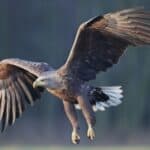
White-tailed eagle
White-tailed eagle
Common kingfisher
European otter
Eurasian beaver
Eurasian beaver
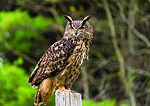
Eagle owl
Eagle owl

Bohemian Switzerland National Park

National Park (adjacent to Germany's Saxon Switzerland National Park; overlaps the Natura 2000 network)

Famous for sandstone gorges and cliffs, the park combines mature forests with dramatic rock habitats that provide nesting sites for raptors and refuges for forest mammals. It is one of Czechia's most important areas for cliff-nesting birds and large forest species.

Trebon Basin Protected Landscape Area

Protected Landscape Area; includes Ramsar wetlands in the Trebon Basin; overlaps the Natura 2000 network

A globally significant wetland-fishpond landscape with extensive reedbeds, wet meadows, and peatlands that supports high densities of breeding and migrating waterbirds. It is among the country's best regions for wetland wildlife viewing.

White-tailed eagle
White-tailed eagle
Great crested grebe
Black tern
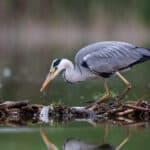
Grey heron
Grey heron
Eurasian beaver
Eurasian beaver
European otter
European pond turtle

Beskydy Protected Landscape Area

Protected Landscape Area; UNESCO Biosphere Reserve; part of the Natura 2000 network

A large Carpathian mountain landscape of forests and meadows important for wide-ranging mammals and forest birds; it is a key Czech stronghold for maintaining connectivity for large carnivores. Seasonal movements of deer and the return of predators make it significant for conservation.

Eurasian lynx
Eurasian lynx
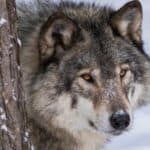
Grey wolf
Grey wolf
Red deer
Red deer
Brown bear (occasional)
Western capercaillie
Ural owl
Ural owl

White Carpathians Protected Landscape Area

Protected Landscape Area; UNESCO Biosphere Reserve; overlaps the Natura 2000 network

Renowned for exceptionally species-rich flower meadows and traditional orchards that support diverse pollinators and farmland birds. It is one of Central Europe's standout landscapes for meadow biodiversity and associated birdlife.

Corncrake
Red-backed shrike
European tree frog
European hare
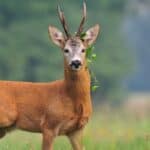
Roe deer
Roe deer
Large blue butterflies (group)
Animals

Wildlife

Czechia's wildlife is shaped by a temperate Central European landscape: broadleaf-conifer forests, river floodplains (the Elbe, Morava, and Thaya rivers), fishpond and wetland systems (notably in South Bohemia), and upland/mountain habitats (the Bohemian Forest, Giant Mountains, Jeseniky Mountains, and Beskid Mountains). The country is best known for forest and freshwater biodiversity-large ungulates and carnivore recolonization (especially lynx locally), thriving beaver and otter populations, and a strong birding scene tied to wetlands, traditional farmland, and extensive protected areas.

~90 native/regularly occurring species (incl. ~25-30 bats); larger mammals are relatively easy to encounter in forested regions. Mammals
~400+ species recorded; ~200-220 breed regularly (wetlands, farmland, and forest raptors/owls are highlights). Birds
~10-12 species (small but notable, including several rare snakes and lizards). Reptiles
~13-15 species (strong representation in ponds, floodplains, and montane wetlands). Amphibians

Iconic Species

Eurasian Lynx
Eurasian Lynx The flagship large carnivore of Czech forests. Best chances are in the Bohemian Forest region linked to Bavaria and Austria and in parts of the Beskid Mountains; sightings are difficult, but tracks and camera-trap records are a key draw for wildlife-focused visitors.
European Beaver
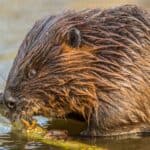
European Beaver A major conservation success, now widespread along lowland rivers and smaller streams. Evening walks along quiet waterways often reveal lodges, gnawed willows, and occasional animals at dusk.
Eurasian Otter Closely tied to Czechia's extensive river networks and fishpond landscapes (especially South Bohemia). More often detected by spraints and tracks than seen, but it strongly defines the country's freshwater wildlife experience.
Red Deer
Red Deer The most iconic large ungulate in Czech upland forests. Autumn rut (September-October) in large forest complexes (e.g., the Bohemian Forest and other highland areas) is a standout seasonal wildlife spectacle.
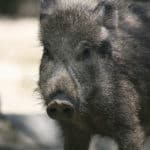
Wild Boar
Wild Boar Common across forests and agricultural edges; frequently encountered sign (rooting) and occasional direct sightings, especially near dusk in mixed landscapes.
White Stork A classic rural species associated with villages, meadows, and wetlands. Nest platforms and chimneys in lowland/farmland regions make it one of the most recognizable birds for visitors in spring and summer.
Black Stork Shy forest-and-river stork that breeds in quieter wooded valleys and forages along streams. It's a prized sighting in larger, less disturbed forest landscapes and protected river corridors.
Western Capercaillie A symbol of old conifer and mixed mountain forests, with remnant populations that are conservation priorities. The Bohemian Forest highlands are among the best-known areas where the species remains (viewing is sensitive and often regulated).
Peregrine Falcon
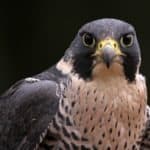
Peregrine Falcon Notably associated with sandstone cliff landscapes (e.g., Bohemian Switzerland/Elbe Sandstone area) and other rock faces; a celebrated raptor recovery story with dramatic nesting habitats.
Ural Owl
Ural Owl A flagship forest owl of mature woodlands, valued by birders for its association with large, structurally diverse forests. Best searched for in extensive forest reserves and quieter upland woods.

Endemic Species

Bohemian whitebeam A whitebeam tree species endemic to Czechia (occurs naturally only within the Czech Republic). It is a localized, nationally endemic plant and is a clearer fit for an "endemic species" entry than the Alpine salamander, which is an Alpine species found in multiple countries. Endemic
European Ground Squirrel (northern stronghold colonies) Not endemic to Czechia, but the country holds important northern and highly managed colonies in steppe-like grasslands, airfields, and reserves-making it a notable "near-endemic experience" species in a Central European context. Endemic
Carpathian Goldenring (regional specialty in the east) A Carpathian-region dragonfly rather than a Czech endemic; in Czechia it is largely confined to the country's eastern Carpathian-influenced uplands and clean forest streams, making it a localized regional specialty where present. Endemic

Notable Populations

  • Jeseniky Mountains: a small, isolated (relict) Czech population of Alpine salamander (Salamandra atra), unusual for its disjunct location from the main Alpine range.
  • Bohemian Forest-Bavarian Forest borderland: one of Central Europe's key connected forest landscapes supporting Eurasian lynx presence and other large-forest biodiversity.
  • South Bohemia fishpond and wetland systems: nationally important concentrations of wetland birds (including storks, herons, ducks, and migratory passage species) and strong freshwater mammal habitat (otter, beaver).
  • Elbe Sandstone/Bohemian Switzerland cliffs: prominent Central European nesting habitat for cliff-breeding raptors, especially peregrine falcon, tied to large protected sandstone landscapes.
  • Milovice rewilding area (Central Bohemia): a well-known site with free-ranging European bison as part of large-herbivore conservation grazing and habitat restoration (site-based significance rather than global dominance).
Protection

Conservation

Primary Threats

  • Most habitat loss and degradation occurs in intensively farmed and urbanizing lowlands, where wetlands, species-rich meadows, and small landscape features (hedgerows, field margins) have declined; river floodplains have been constrained by flood defenses and development, reducing habitat for floodplain birds, amphibians, and invertebrates.
  • Rising temperatures and more frequent droughts are stressing forests and headwater catchments, reducing summer low flows and warming rivers, which harms cold-water fish and aquatic invertebrates. Mountain ecosystems such as the Giant Mountains and the Bohemian Forest are expected to see changes in snow cover and seasonal timing, altering alpine and subalpine communities.
  • Nutrient runoff (nitrogen/phosphorus) from agriculture contributes to eutrophication in ponds, reservoirs, and slower river reaches; legacy and ongoing industrial pollution in some basins and urban wastewater overflows can affect riverine biodiversity, while road runoff adds contaminants in peri-urban streams.
  • Non-native plants and aquatic organisms spread along rivers, canals, and disturbed sites (e.g., riparian invasives and introduced fish), displacing native riparian communities and complicating floodplain restoration; invasive predators and competitors can pressure amphibians and freshwater fauna in pond landscapes.
  • Forest pest and pathogen dynamics-most visibly bark beetle outbreaks-are amplified by drought and uniform spruce plantations, causing large-scale tree mortality and cascading habitat changes; wildlife diseases (e.g., in wild boar) can influence management pressure and disturbance.
  • High ungulate densities and hunting/feeding practices in some regions can hinder forest regeneration (browsing pressure) and alter understory structure; illegal persecution risks persist for returning large carnivores in remote border areas despite legal protections.
  • EU-wide wildlife trade pressures can manifest through occasional illegal collection/keeping of protected birds or reptiles and demand for trophy specimens; while not the dominant threat nationally, enforcement is relevant along transit routes and online markets.
  • Recreation pressure is concentrated in iconic protected areas (Sumava, Krkonose, Bohemian Paradise), where off-trail hiking, cycling, skiing infrastructure use, and visitor density disturb sensitive birds and alpine habitats, especially during breeding and wintering periods.
  • Returning large carnivores (lynx, occasional wolf presence near borders) can trigger conflicts with livestock owners and hunting interests; wild boar and deer cause crop damage and traffic collisions, creating pressure for intensive control that may affect ecosystem balance.
  • Dense road and rail networks fragment habitats and create barriers to movement, especially for amphibians and medium/large mammals; river infrastructure (weirs, small hydropower, channelization) interrupts fish migration and reduces natural sediment dynamics.
  • Historical river regulation, drainage of wetlands, pond management intensification, and forestry simplification (spruce monocultures) have modified natural processes; current management debates in national parks (non-intervention vs active salvage/logging) reflect tensions around restoring natural dynamics.
  • While outright expansion is limited, agricultural intensification (large fields, reduced fallows, pesticide and fertilizer inputs) functions similarly to expansion by reducing habitat heterogeneity; this is particularly impactful for farmland birds, pollinators, and small wetlands in arable landscapes.
  • Suburban growth around Prague, Brno, and regional centers consumes open habitats, increases light/noise pollution, and raises recreation and pet predation pressures at the urban-wildland edge; development in valleys can pinch migration and dispersal corridors.
  • Salvage logging after bark beetle outbreaks and storms can simplify stand structure and remove deadwood important for saproxylic insects and cavity nesters if not managed carefully; in some production forests, short rotations and conifer dominance reduce native forest resilience.
  • Localized impacts from coal and mineral extraction (including legacy sites) include habitat loss, groundwater changes, and contamination risks; post-mining landscapes can also provide restoration opportunities if reclaimed for biodiversity (grasslands, wetlands).
Visit

Wildlife Tourism

Wildlife tourism in Czechia is a practical add-on to city breaks (Prague, Brno, Cesky Krumlov) and an increasingly strong standalone draw in forested national parks, protected landscape areas, river wetlands, and mountain uplands. Economically, it tends to be part of broader nature and outdoor tourism (hiking, cycling, paddling, birding) rather than classic big-game travel, but it supports local guiding, rural accommodation, equipment rentals, and visitor centers in regions like Sumava National Park (Bohemian Forest), Krkonose National Park (Giant Mountains), and South Bohemia's fishpond landscapes. Historically, wildlife viewing has grown alongside conservation and recreation: Czechia has a long tradition of forestry and game management (deer and wild boar), while modern ecotourism is tied to protected-area networks, rewilding-style projects (for example, large-grazer reserves), and birdwatching at wetlands. Accessibility is a major advantage: most prime habitats are reachable in 1 to 3 hours by train, bus, or car from major cities, trail networks are well-marked, and many sites have hides and boardwalks and year-round infrastructure (visitor centers, rentals). Expect best wildlife viewing at dawn and dusk, with guided tracking and birding delivering the highest success, especially for elusive species like the Eurasian lynx.

Best Time to Visit

Seasonal guide (what to see when):
- January-February: Best tracking season. Look for footprints and signs of red deer, roe deer, wild boar, fox, and hare in snow in Sumava National Park (Bohemian Forest), the foothills of Krkonose National Park (Giant Mountains), and forest protected landscape areas. Great for wintering waterfowl on larger rivers and reservoirs; raptor watching (buzzards, eagles in some areas) improves in open country.
- March-April: Spring migration ramps up. Wetlands and fishpond systems in South Bohemia come alive with ducks, geese, waders, and early songbirds. Amphibians begin moving to breeding ponds (frogs and newts) on mild, wet nights.
- May-June: Peak birdsong and breeding displays. Prime months for forest birding (woodpeckers, owls with guides, passerines) and for watching black grouse display in limited, sensitive areas where access is regulated. Mammal viewing improves in meadows and forest edges at dawn.
- July-August: Best for butterflies, dragonflies, and general biodiversity walks; also beaver activity is often easiest to spot at dusk along calmer rivers. Warm-weather paddling and boat-based wildlife outings are at their best.
- September: Red deer rut begins (often strongest mid to late September depending on locality). This is one of Czechia's most memorable wildlife spectacles: listening for roaring stags at dawn and dusk in forested valleys.
- October: Continued rut activity early in the month, plus excellent autumn colors and easier visibility as leaves drop. Bird migration continues; watch raptors on ridgelines and open landscapes.
- November-December: Quiet forests, fewer crowds, and good chances for large mammals in open fields at dusk. Wintering birds return to rivers; photography conditions can be superb in frosty mornings.

Top Wildlife Experiences

  • Red deer rut listening and stakeout at dawn/dusk (late September-early October): join a local guide for a quiet, low-impact session from forest edges or ridgeline viewpoints to hear roaring stags and photograph rut behavior without disturbance.
  • Dusk beaver-watching walk along a slow river or oxbow: visit known beaver stretches (common in South Bohemia and other river valleys) with a guide to spot swimming beavers, feeding signs, and lodges/dams, timed for sunset.
  • Birding from hides in South Bohemia's fishpond wetlands (spring and autumn): spend a morning rotating between observation towers and hides to watch migrating waterfowl, waders, herons/egrets, and marshland songbirds; great for photographers.
  • Large-grazer "rewilding" reserve visit on foot or by bicycle: take a guided interpretive walk to observe free-ranging herbivores (often European bison, wild horses, or taurochs-type cattle depending on the site) and learn how grazing restores open habitats and boosts bird/insect diversity.
  • Night-time amphibian migration and pond-breeding safari (March-April, rainy evenings): accompany a naturalist to breeding ponds to observe frogs and newts (and responsible conservation measures like temporary road barriers), ideal for families and macro photography.
  • Wildlife tracking and interpretation hike in winter (January-February): learn to identify tracks, scat, feeding signs, and bedding sites of deer and boar; combine with landscape photography in snow-covered spruce and mixed forests.
  • Owl-focused evening outing in spring (March-May): with an expert using ethical methods (no baiting; minimal playback), listen for calling owls, learn habitat cues, and practice low-light observation at forest edges and old orchards.
  • Quiet canoe/kayak wildlife float on a lowland river (late spring-summer): paddle early morning or evening to see waterbirds, beavers, and dragonflies; stop at sandbanks and reedbeds to scan with binoculars.
  • Lynx-sign search and camera-trap style "story of the predator" walk (year-round, best in snow): while actual lynx sightings are rare, guided trips can focus on corridors, tracks, scrapes, and conservation monitoring-highly rewarding for people who like detective-style wildlife travel.
  • Butterfly-and-orchid meadow walk (June-August): join a botanist/entomologist-led walk in species-rich calcareous grasslands to spot rare butterflies, burnet moths, and flowering plants, with practical tips for macro photography and ID.

Safari Types Available

  • Guided walking safaris / wildlife hikes (tracking, birding, mammal dusk walks)
  • Birdwatching safaris from hides, towers, and boardwalk trails (wetlands/fishpond systems)
  • Dawn/dusk "stakeout" sessions for mammals (red deer rut, boar/deer at forest edges)
  • Boat-based wildlife experiences (canoe/kayak floats on rivers; occasional lake/reservoir scanning)
  • Night safaris (owl listening walks; amphibian evenings; seasonal bat walks in some areas)
  • Cycling-based nature safaris (rewilding reserves, river corridors, mosaic farmland habitats)
  • Photography-focused wildlife tours (rut photography, wetland bird photography, winter minimal-crowd shoots)
  • Educational conservation/rewilding excursions (large-grazer reserves, habitat restoration sites, visitor-center led programs)
Fun Facts

Did You Know?

Despite being landlocked, Czechia has a "wetland culture" built around carp ponds: many families still buy live carp for Christmas and keep it temporarily in a bathtub-an unusual tradition tied directly to the centuries-old fishpond landscape of South Bohemia.

You can encounter large wild mammals inside the capital: wild boar are frequent enough in Prague's parks and suburbs that the city regularly issues public warnings and guidance about avoiding close contact.

Czech "Switzerland" isn't a mistake on the map: Bohemian Switzerland got its name from Swiss artists who compared the Elbe sandstone landscape to their homeland-yet it's also a hotspot for cliff-nesting birds and specialized rock-and-gorge ecosystems.

Some of Czechia's rarest grassland animals now survive in unexpected places: critically endangered steppe habitats are maintained by targeted grazing and "wilding-style" reserves (e.g., around former military areas like Milovice), where large grazers are used to keep open-country species from disappearing.

Czechia's lynx population is famously hard to prove without technology: in border mountains like Å umava and the Beskydy, many confirmed records come from camera traps and genetic samples, and individual lynx routinely range across Czech-German-Austrian/Slovak borders as if the borders didn't exist.

Rozmberk Pond (Trebon Basin) is the largest fishpond in Czechia at about 489 hectares-part of a landscape of hundreds of carp ponds that also functions as a major man-made wetland for herons, egrets, grebes, and migratory ducks.

Pravcicka Gate in Bohemian Switzerland National Park (Czech Switzerland) is the largest natural sandstone arch in Europe (about 26.5 m span and 16 m high); its cliffs and ledges are important nesting habitat for birds such as peregrine falcons.

Sumava National Park together with Germany's adjacent Bavarian Forest National Park forms one of the largest contiguous protected forest landscapes in Central Europe (roughly 923 km² combined), supporting wide-ranging species like Eurasian lynx and capercaillie.

Macocha Abyss in the Moravian Karst is the deepest sinkhole/gorge in Czechia (about 138.5 m deep) and sits within one of the country's most important cave systems for bats (key winter roosting/hibernation habitat).

Prague Zoo is widely regarded as a world-leading center for Przewalski's horse conservation; since 2011 it has repeatedly transported zoo-bred horses to Mongolia for reintroduction under its "Return of the Wild Horses" program.

The Czech Republic is a landlocked country located in the center of the European continent. With its relatively cool summers and somewhat cold and severe winters, there is a limited selection of wildlife types that are suited for this type of terrain. These tend to be hardy creatures capable of withstanding the cold central European climate. Therefore, many species of furred animals tend to predominate among the local fauna.

The Official National Animal Of The Czech Republic

There is no official National Animal of the Czech Republic. The coat of arms of the Czech Republic does feature two sets of animals on its four quarters. Two quarters, those representing the ancient lands of Silesia and Moravia, feature eagles. The other two-quarters of the coat of arms shows the rampant Lion of Bohemia, although the actual Lion of Bohemia is a person, King Vladislaus II. Despite it not being an official animal of the Czech Republic, the Lion of Bohemia still represents the most well-known animal symbol of the nation.

Where To Find The Top Wild Animals Of The Czech Republic

The Czech Republic is heavily treed, with about 1/3rd of its area being covered in dense forest. Some open grassland remains in the eastern part of the Czech Republic, known as Moravia, although more of the former steppe has been given over to human cultivation.

While the mountainous west and forested central part of the country offer many spectacular opportunities for wildlife viewing, the most unique one is further east at an abandoned Soviet Army base near Milovice. Here, the government has embarked on a very unusual and ambitious wildlife sanctuary program. This is not intended to protect animals that are already there but to reintroduce several species of wild animals that were effectively driven extinct in the area over time.

In particular, the Czech Republic was selected as the first location outside of the Netherlands for the reintroduction of a near-match to the extinct European Aurochs, a type of very large wild cattle. This rare breeding program is coupled with the introduction of a satellite herd of wild horses transferred over from a wild horse recovery program in Britain. The result is a unique window into a time when these wild creatures roamed free across the European heartland.

The Most Dangerous Animals In The Czech Republic Today

  • Brown Bear – The list of most dangerous animals in the Czech Republic needs to start with the reputedly fearsome Brown Bear. This bear is actually rather careful to avoid humans except under specific circumstances such as a perceived threat to their cubs.
  • Wild Boar – Probably the most truly dangerous creature in the Czech Republic is the large Wild Boar, which is a species of a feral pig with poor eyesight, a fearsome temper, and large, dirty tusks to infect those unfortunate enough to run afoul of it. As if this weren’t enough, there is now ample evidence that many of the region’s numerous bands of Wild Boar are also surprisingly radioactive as well as ill-tempered.
  • Arctic Wolves – A small number of Arctic Wolves are also found in the area. Like the Brown Bear, wolves also have a large reputation for being dangerous that is mostly but not entirely undeserved. They can indeed be truly menacing, but their intelligence and long experience with humans has led them to prefer keeping their distance whenever possible. Yet there are few sounds in life spookier than a sudden howl of a wolf at close quarters.

Endangered Animals In The Czech Republic

Apart from the above-mentioned and technically extinct European Aurochs, which is being reintroduced via scientific genetics, the major animal of the Czech Republic which is listed as an endangered species is the once-common but now increasingly rare European Mink.

Animals Found in Czech Republic

219 species documented in our encyclopedia

Thank you for reading! Have some feedback for us?