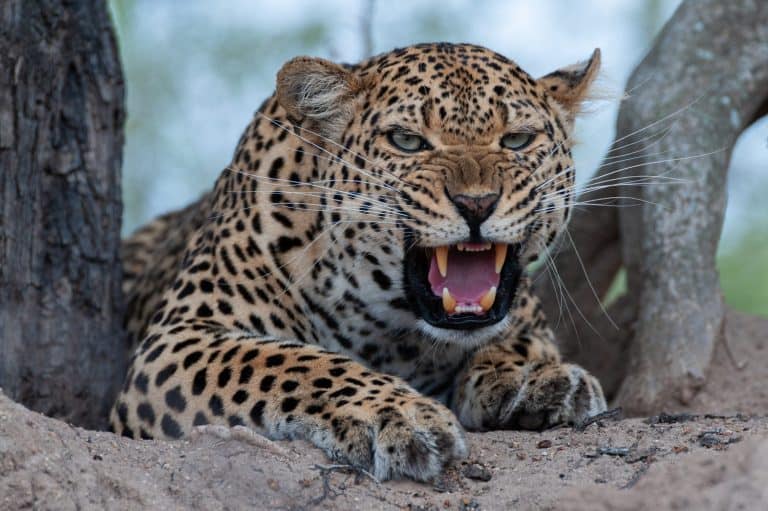
Leopard
Rosettes in the shadows.

Ningxia Hui Autonomous Region has strong ecological contrasts in a small area. Dry steppe and desert edges sit next to the irrigated Yellow River corridor, and the Helan Mountains rise to cooler, rockier places. Water from the river and irrigation makes green belts that support wildlife in a mostly dry landscape. Key ecosystems are the Helan Mountains (mountain woodlands, shrublands, cliffs, high valleys), the Yellow River wetlands and floodplain lakes, and wide desert-steppe and sandy areas. Mountains offer denning and breeding sites for predators and cliff-nesting birds. Wetlands are key stopover and wintering areas for migratory waterbirds, with shallow marshes and reedbeds for food and shelter. Desert-steppe hosts special mammals, reptiles, and hardy birds. Habitats change quickly here, so river, steppe, and mountain wildlife can all be seen on one trip.
Ningxia's wildlife is split by dry Loess Plateau steppe and desert edges versus the wetter, irrigated upper Yellow River corridor. The Helan Mountains make cooler, wetter refuges with forests and shrubs. Lowland wetlands and lakes on the Yellow River are key stopover, breeding, and wintering sites for waterbirds. Dunes, stony plains, and farm woodlots support other species.
Approx. 1,000 m (Yellow River plain/Yinchuan basin) to 3,556 m (Helan Mountains high peaks)
Ningxia's protected areas center on national reserves and parks protecting three habitats: Helan Mountains' rocky slopes and montane steppe (a refuge at the desert edge), Liupan Mountains' cool forest headwaters (a biodiversity island), and Yellow River valleys, reservoirs, and wetlands for migratory waterbirds. Local reserves restore wetlands, protect grasslands, and plant shelterbelts along the Tengger Desert.
≈12-15% of land area (approximate; varies by accounting method and designation level)
Protects rugged montane steppe, cliffs, and dry woodlands on the Helan Mountains-an important wildlife refuge and movement corridor along the desert-steppe boundary; notable for raptors and arid-adapted mountain mammals.
A forested mountain reserve in southern Ningxia with higher rainfall and complex terrain, supporting comparatively rich temperate biodiversity; important for forest mammals and breeding birds.
Montane forests, shrublands, and headwater valleys in the Liupan range; valued for conserving intact upland habitat and for its role in watershed protection and connectivity between forest blocks.
Safeguards a semi-arid mountain 'island' surrounded by steppe and desert margins; notable for steppe-and-montane bird assemblages and carnivores typical of dry North China landscapes.
Protects dune fields, desert shrublands, and Yellow River riparian habitat at the Tengger Desert edge; important for desert-adapted mammals and as a migratory/resting area for birds using the river corridor.
Foothill forests and rocky valleys on the Helan Mountains that can be good for raptor watching and for observing montane-steppe wildlife close to accessible trails and overlooks.
A lake-reedbed-dune mosaic north of Yinchuan that concentrates waterbirds during migration and in the breeding season; one of the most reliable wildlife-viewing sites in Ningxia for wetland birds.
Accessible temperate forest and meadow habitats on the Liupan Mountains' Ningxia side; complements nearby strict nature-reserve zones by providing managed visitation and broader landscape protection.
A chain of riparian wetlands, reedbeds, and floodplain habitats along the upper Yellow River around Yinchuan; critical for migratory waterfowl and waders in an otherwise dry region.
Reservoir shorelines, mudflats, and backwater wetlands that provide feeding and roosting habitat for gulls, ducks, and migrating shorebirds; especially valuable during spring and autumn passage.
Urban-adjacent lakes and restored wetland patches that support breeding and stopover waterbirds; important as stepping-stone habitat along the river corridor.
Ningxia's wildlife is defined by a sharp habitat contrast: arid steppe and desert margins (including the Helan Mountains' dry slopes and foothills) meet the irrigated Yellow River valley and its lakes, reedbeds, and floodplain wetlands. This creates a distinctive mix of desert/grassland-adapted mammals (gazelles, foxes, small cats) and a strong wetland bird assemblage (swans, cranes, geese, gulls, and raptors) concentrated along the upper Yellow River corridor. Southern Ningxia's higher, cooler mountains and forest patches add temperate woodland species and stream fauna to an otherwise semi-arid regional biota.
Ningxia Hui Autonomous Region offers varied wildlife for a small, semi-arid area: desert-edge mammals and reptiles by the Tengger Desert, mountain birds and hoofed animals in the Helan Mountains, and rich wetland bird life along the upper Yellow River. Birding—especially migrating water birds and birds of prey—is the main draw, with quiet places, short hikes, hides, and river walks.
Peak migration builds through April-May: cranes, geese, ducks, gulls/terns, and shorebirds concentrate on Yellow River wetlands and reservoirs. Raptors move along ridgelines (Helan Mountains) on clear, breezy days. Expect cool mornings, variable winds, and big day-to-day changes in bird numbers; bring layers and a scope for long wetland views.
Breeding season in wetlands and irrigated landscapes: herons/egrets, reedbed passerines, and many local breeders are active at dawn and dusk. Helan Mountains offer cooler temperatures and better daytime hiking for forest-edge and mountain birds; desert margins can be very hot with limited mid-day activity-plan early starts and shaded breaks.
Second migration peak and often the most comfortable weather. Waterbird numbers rebound on wetlands and reservoirs; raptors can be excellent with crisp visibility. Late October-November can bring large mixed flocks of geese/ducks and strong photography opportunities in golden reedbeds; nights turn cold quickly.
Best season for hardy waterbirds and wintering flocks where water stays open on the Yellow River and managed wetlands. Expect fewer species but impressive concentrations (ducks, gulls, some geese) and clean air/clear light on calm days. Helan and desert-edge viewing is more weather-dependent; focus on river corridors and lower elevations.
Ningxia Hui Autonomous Region lies on the upper Yellow River between the Loess Plateau, desert margins, and steppe. It has dry grasslands and desert shrublands in the north and west and cool mountain forests in the Helan and Liupan ranges. The Yellow River and irrigation create wetlands—reservoirs, floodplain marshes, reedbeds—that support many plants, animals, and migratory birds.
Semi-arid steppe and steppe-like grasslands dominate much of the plains and foothills, with drought-tolerant grasses and forbs and strong grazing/land-use influence.
Widespread across central and northern parts; a major matrix biome outside irrigated corridors and deserts.
Cold-winter desert and semi-desert on desert margins (sandy areas, gravelly fans, dune fields) with sparse shrubs and ephemeral plants after rain; strong wind erosion and shifting sands in places.
Prominent in the north and west, especially toward the Tengger/Ordos desert edges and sandy lands.
Montane forests and mixed woodlands on higher, cooler mountains (notably Helan and Liupan), including conifer stands and mixed broadleaf patches in more mesic sites.
Patchy, mainly restricted to mountain slopes and higher elevations; small proportion of total area but high ecological importance.
High-elevation, cold, windswept summit and ridge communities (subalpine/alpine-like meadows and shrublands) above the main forest belt on the highest peaks.
Very limited and localized to the highest parts of mountain ranges (especially Helan and Liupan summits).
The Yellow River mainstem and tributaries, reservoirs, irrigation canals, and associated riparian zones; supports fish, amphibians, and water-dependent birds.
Concentrated along the Yellow River corridor and major water infrastructure; locally extensive where irrigation networks are dense.
Floodplain wetlands, reedbeds, marshes, and shallow lakes/reservoir margins along the Yellow River and in irrigated lowlands; critical for migratory and breeding waterbirds.
Scattered but significant along the Yellow River valley and around reservoirs; small in area relative to drylands but biodiversity-rich.
Semi-arid temperate steppe on plains and rolling hills; often a mosaic with grazing lands and restoration/anti-desertification plantings.
Open grasslands and herb-dominated communities in lowlands and foothills, including disturbed and recovering grassland around settlements and rangelands.
Dry shrublands on loess slopes, alluvial fans, and desert margins with drought- and salt-tolerant shrubs; common in transition zones between steppe and desert.
Sandy and gravel deserts and dune fields at the western/northern margins (notably around Zhongwei-Shapotou and toward the Tengger/Ordos systems), with sparse vegetation and strong aeolian processes.
Helan Mountains and Liupan Mountains create steep elevational gradients, rain-shadow effects, and refugia for montane biodiversity.
Montane conifer forests/woodlands on cooler slopes and higher elevations (especially in Helan and Liupan), providing key habitat for forest fauna and watershed protection.
Broadleaf and mixed forests in relatively wetter mountain zones and sheltered valleys (more common toward the Liupan range and higher-precipitation southern Ningxia).
Rocky escarpments and canyon walls in mountain areas (notably Helan) that provide raptor nesting sites and refuges for cliff-adapted plants.
Rock shelters and small caves in mountainous terrain, used by bats and other cave-associated fauna; also occur in eroded rock/loess landscapes.
The Yellow River and tributary channels with riparian belts, braided sections, and engineered banks; central to regional hydrology and biodiversity.
Reservoirs and natural/managed shallow lakes in the Yellow River valley and irrigation districts, important for waterbirds and fisheries.
Floodplain wetlands, reedbeds, and seasonally inundated areas along the Yellow River and around reservoirs; key stopover habitat on migratory routes.
Reed- and sedge-dominated marshes in low-lying floodplain pockets and reservoir margins, often influenced by water-level management.
Intensively irrigated cropland and orchards in the Yellow River valley (a strong human-shaped habitat that also supports some farmland and edge species).
Urban/industrial land in and around Yinchuan and other cities, creating heat-island and fragmentation effects but also supporting urban-adapted birds and riparian parklands.
Ningxia has desert and swan areas close together: Tengger Desert dunes have special animals like toad-headed agamas (Phrynocephalus spp.), while nearby Yellow River wetlands hold large winter flocks of whooper swans in reedbeds and open water.
The Helan Mountains act like a climate wall: the west falls into the Alxa Desert, while the east becomes steppe and irrigated valleys. This sharp change over short distances causes rapid shifts in plants and animals.
Snow leopards in Ningxia survive in a much drier, lower-elevation setting than the classic 'high Himalayan' image-using rocky gullies above desert margins and relying on mountain ungulates (not alpine meadows) as their main prey base.
Irrigation in the Yinchuan Plain doesn't just grow crops-it creates a lattice of canals, ponds, and reedbeds that become feeding corridors for wetland predators like herons and egrets in a region that is otherwise naturally short on standing water.
Even when parts of the Yellow River freeze in Ningxia, nearby managed waters—lakes, reservoirs, and reed-fringed ponds—often stay open, letting waterbirds overwinter unusually far inland and far north in China.
China's easternmost verified snow leopard records come from the Helan Mountains: camera-trap images from Helan Mountain National Nature Reserve have been widely reported as pushing the species' confirmed range farther east than any other site in China.
The Helan Mountains hold one of the easternmost natural populations of the Himalayan blue sheep (bharal, *Pseudois nayaur*)-a species most people associate with the high Himalaya, not the desert-margin mountains of north-central China.
Zhongwei's Shapotou sand-control zone, begun mid-20th century, is one of the world's largest dune-stabilization experiments with straw-checkerboard grids. Its fixed dunes support different desert wildlife like burrowing rodents and dune reptiles.
Ningxia sits on the big north bend of the Yellow River (the Ordos Loop), making a long north-flowing wetland corridor through dry steppe. This funnels migratory waterbirds into narrow habitats like Yinchuan Plain lakes, Shahu (Sand Lake), and city wetlands.
3 species documented in our encyclopedia
Thank you for reading! Have some feedback for us?
We appreciate your help in improving our content.
Our editorial team will review your suggestions and make any necessary updates.
There was an error submitting your feedback. Please try again.