N S W E
Wildlife Expeditions

Wildlife of
Guizhou Sheng

Guizhou's rugged karst mountains and cave-laced forests harbor rare endemics-most famously the Guizhou snub-nosed monkey-making it a hidden biodiversity stronghold in Southwest China.
12 Species
176,167 km² Land Area
Overview

About Guizhou Sheng

Guizhou is a landlocked karst kingdom where warm, humid air feeds lush evergreen broadleaf forests on limestone towers, sinkholes, and deep river valleys. The rough land makes many small habitats — cool mountain ridges, shaded ravines, and cave entrances — that hold many species and some found nowhere else. Local ethnic groups shape the land with mosaic farming, sacred groves, and forested headwaters that help protect wildlife in a human region. Key ecosystems include subtropical evergreen and mixed mountain forests (safe homes for rare primates, pheasants, and many amphibians), karst cave systems (home to large bat colonies and special cave animals), and clear fast streams in steep valleys (vital for salamanders and other stream-breeding amphibians). Short distances can take you from warm valleys to cool, cloud-covered peaks. Fanjingshan and the wide limestone terrain make cave trips, bat watching, and karst forest birding a special Guizhou experience.

Physical Features

Geography

Guizhou's wildlife is shaped by rugged karst on the Yunnan-Guizhou Plateau: steep limestone mountains, sinkholes, and caves create broken habitats and small microclimates. Deep river valleys like the Wu River serve as corridors and barriers. The humid subtropical climate supports evergreen broadleaf and mixed mountain forests, wetlands, farms, and many local species, especially in karst forests, caves, and upland refuges.

176,167 km² Land Area
Mid-sized within China (approximately the 18th largest provincial-level unit by area) Size Rank
China Country
Province Type
Elevation Range

Approximately ~150 m to 2,900 m (Jiucaiping), creating strong climatic and vegetation zonation from warm river valleys to cool uplands

Coastline

Landlocked; no ocean coastline. Key inland waters influencing habitats include large rivers (Wu and tributaries), karst springs/subterranean streams, and plateau wetlands/lakes such as Caohai (Weining).

Key Landscapes

Yunnan-Guizhou Plateau (dissected karst uplands and basins) Karst limestone mountains and plateaus (sinkholes/dolines, natural bridges, limestone pavements) Extensive cave systems and subterranean rivers (important for bats and cave-adapted fauna) Deep river valleys and gorges, especially the Wu River system (including tributaries such as the Wuyang River) Major rivers and tributaries: Wu River, Chishui River, Nanpan River, Beipan River, Qingshui River, Duliu River Mountain ranges and highlands: Wumeng Mountains, Dalou Mountains, Miaoling Mountains (habitat gradients and refugia for forest wildlife)
Parks & Reserves

Protected Areas

Guizhou's protected areas — national and provincial nature reserves, forest parks, scenic areas, and geoparks — protect subtropical evergreen broadleaf forests, karst forests, caves and rivers, and high mountains. Main goals are the Guizhou snub‑nosed monkey, karst forests that help regulate water, and Yunnan‑Guizhou Plateau wetlands for wintering waterbirds. Many sites include buffer zones and areas used by local communities.

Protected Coverage

≈15% of provincial land area (rough estimate across nature reserves, forest parks/scenic areas, and other designated protected lands; boundaries and categories overlap).

National Parks & Preserves

Fanjingshan National Nature Reserve (Mount Fanjing)

≈56,000 ha (≈560 km²; reserve landscape with core + buffer zones)

UNESCO-recognized montane biodiversity hotspot with strong elevational zonation (evergreen broadleaf forests to cloud-forest ridgelines). It is the flagship site for conserving and viewing endemic primates and montane forest birds in Guizhou.

Guizhou snub-nosed monkey (Rhinopithecus brelichi) Asiatic black bear (Ursus thibetanus) Chinese serow (Capricornis milneedwardsii) Golden pheasant (Chrysolophus pictus) Temminck's tragopan (Tragopan temminckii)

Maolan National Nature Reserve (Libo Karst Forest)

≈21,000 ha (≈210 km²)

One of China's best-preserved subtropical karst evergreen broadleaf forests, with sinkholes, subterranean drainage, and limestone forests that harbor high plant diversity and important habitat for karst-adapted mammals and birds.

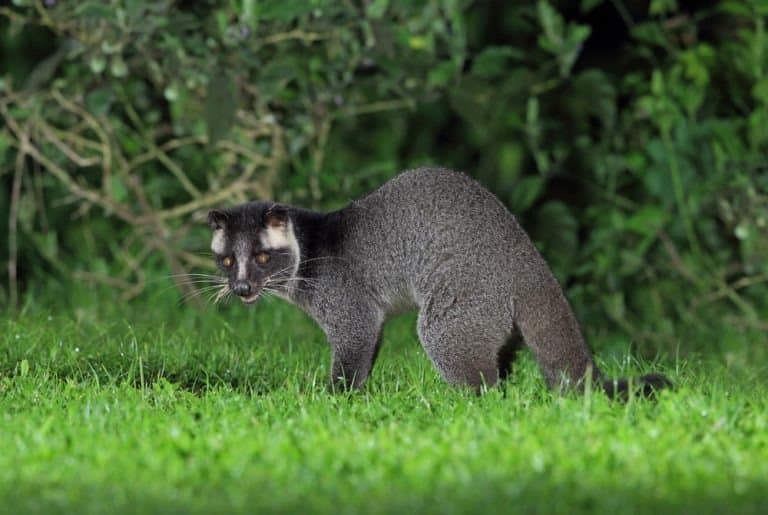
François' langur (Trachypithecus francoisi) Leopard cat (Prionailurus bengalensis) Masked palm civet (Paguma larvata) Silver pheasant (Lophura nycthemera) Chinese pangolin (Manis pentadactyla)

Leigongshan National Nature Reserve

≈47,000 ha (≈470 km²)

Large, rugged massif with extensive mid- to high-elevation forests and strong seasonal bird activity; a key site for forest bird conservation and for maintaining connectivity among upland habitats in eastern Guizhou.

Asiatic black bear (Ursus thibetanus) Chinese serow (Capricornis milneedwardsii) Golden cat (Catopuma temminckii) Temminck's tragopan (Tragopan temminckii) Stump-tailed macaque (Macaca arctoides)

Kuankuoshui National Nature Reserve

≈52,000 ha (≈520 km²)

Moist subtropical forest reserve noted for relatively intact evergreen broadleaf forest, rich amphibian diversity in clean headwater streams, and good opportunities to detect forest mammals via signs and camera traps.

Chinese giant salamander (Andrias davidianus) Asiatic black bear (Ursus thibetanus) Chinese goral (Naemorhedus griseus) Hog badger (Arctonyx collaris) Silver pheasant (Lophura nycthemera)

Weining Caohai National Nature Reserve (Caohai Wetland)

≈12,000 ha (≈120 km²)

High-elevation plateau wetland that is among Southwest China's most important wintering and stopover sites for cranes, geese, and ducks-one of Guizhou's premier wildlife-viewing locations.

Black-necked crane (Grus nigricollis) Common crane (Grus grus) Bar-headed goose (Anser indicus) Ruddy shelduck (Tadorna ferruginea) Eurasian coot (Fulica atra)

Chishui Alsophila (Tree Fern) National Nature Reserve

≈13,000 ha (≈130 km²)

Warm, humid river-valley forests famous for relict tree ferns and lush subtropical vegetation; supports diverse forest bird communities and provides refugia for mammals in the Chishui River landscape.

Reeves's muntjac (Muntiacus reevesi) Wild boar (Sus scrofa) Asiatic black bear (Ursus thibetanus) Rhesus macaque (Macaca mulatta) Silver pheasant (Lophura nycthemera)

State & Provincial Parks

Baili Rhododendron (Baili Dujuan) National Forest Park (Bijie area)

≈100-150 km² (park landscape; exact managed area varies by zoning)

Large forest-park landscape best known for extensive rhododendron communities; also protects mixed forests that support woodland birds and small mammals and functions as a regionally important habitat block in northwestern Guizhou.

Silver pheasant (Lophura nycthemera) Rufous-faced warbler (Abroscopus albogularis) Temminck's tragopan (Tragopan temminckii) Reeves's muntjac (Muntiacus reevesi)

Qianlingshan (Qianling Mountain) Park / Provincial Scenic Area (Guiyang)

≈4-5 km² (core park; adjacent greenbelts extend habitat)

Urban-edge forested hill and lake system that offers reliable public wildlife viewing (especially macaques and common forest birds) and serves as a local biodiversity refuge amid rapid urbanization.

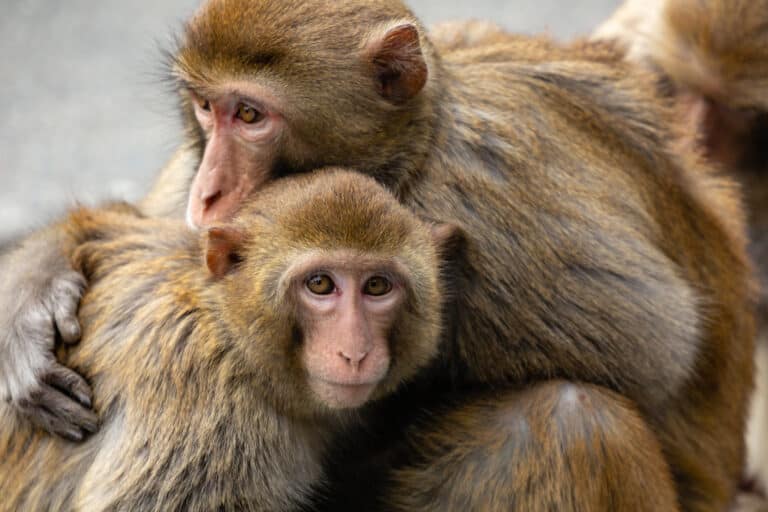
Rhesus macaque (Macaca mulatta) Swinhoe's white-eye (Zosterops simplex) Light-vented bulbul (Pycnonotus sinensis) Eurasian sparrowhawk (Accipiter nisus)

Wanfenglin Scenic Area (Xingyi karst cone forest landscape)

≈100-200 km² (scenic-area footprint varies by designation)

Iconic cone-karst 'forest of peaks' with remnant woodlands, rivers, and agricultural mosaics; supports karst-associated birds and bats and highlights the conservation value of cultural karst landscapes.

Chinese horseshoe bats (Rhinolophus spp.) Peregrine falcon (Falco peregrinus) Crested goshawk (Accipiter trivirgatus) Masked palm civet (Paguma larvata)

Wildlife Refuges

Chishui River Rare and Endemic Fish Protected Area (Guizhou section; basin-wide conservation zone)

Linear river corridor (multi-county reach; area reported by river-km rather than km²)

Riverine conservation zone focused on protecting spawning runs and tributary habitats for rare/endemic upper-Yangtze fish assemblages in one of the region's best-known free-flowing river corridors.

Chinese sucker (Myxocyprinus asiaticus) Endemic schizothoracine fishes (Schizothoracinae spp.) Freshwater gobies (Rhinogobius spp.) Freshwater mussels (Unionidae spp.)

Hongfeng Lake National Wetland Park (Guiyang area)

≈50-100 km² (wetland park + managed shoreline; varies by zoning)

Reservoir-and-wetland complex important for wintering and migratory waterbirds near the provincial capital; also functions as an education and monitoring site for wetland conservation in Guizhou.

Common pochard (Aythya ferina) Tufted duck (Aythya fuligula) Grey heron (Ardea cinerea) Great cormorant (Phalacrocorax carbo)

Caohai Wetland Bird Habitat Management Zones (within and around Weining Caohai)

Sub-areas within ≈120 km² wetland complex

Community- and reserve-managed roosting/foraging zones that reduce disturbance and protect reedbeds, shallow bays, and mudflats used by cranes and geese during winter and migration.

Black-necked crane (Grus nigricollis) Bar-headed goose (Anser indicus) Northern pintail (Anas acuta) Eurasian wigeon (Mareca penelope)

Wilderness Areas

  • Fanjingshan core high-elevation ridgelines and cloud-forest belts (road-sparse interior)
  • Maolan karst forest interior (sinkhole/limestone tower forest with limited access)
  • Leigongshan summit-to-slope forest continuum (upper catchments and remote valleys)
  • Kuankuoshui headwater stream basins and old-growth evergreen broadleaf stands
  • Chishui River gorge-and-tributary corridors (steep slopes, dense subtropical forest patches)
  • Weining Caohai reedbeds and shallow-lake margins (seasonally restricted access for birds)
Animals

Wildlife

Guizhou's rugged karst mountains, deep river gorges, humid subtropical forests, and extensive cave systems create a highly varied set of habitats over short distances. The province sits near the crossroads of the Sichuan Basin, Yunnan-Guizhou Plateau, and South China, so its wildlife mixes montane East Asian forest species with subtropical southern lineages. Its limestone landscapes are especially important for cave-adapted and karst-stream fauna (notably endemic fish and amphibians), while large forest blocks in reserves such as Fanjingshan support rare primates, pheasants, and carnivores.
~160-200 species (forest and karst-edge mammals plus a rich bat fauna) Mammals
~500-550 species (strong diversity of forest birds and passage/wintering migrants) Birds
~90-120 species (many subtropical snakes and forest lizards) Reptiles
~80-110 species (notably high, including salamanders and stream-breeding frogs) Amphibians
~200-260 freshwater species (river and karst-stream specialists; includes cave-adapted taxa) Fish
Examples

Iconic Species

Guizhou snub-nosed monkey (Brelich's snub-nosed monkey) A flagship primate of Fanjingshan's montane forests; Guizhou is the core (and effectively the only) stronghold for this highly localized species.
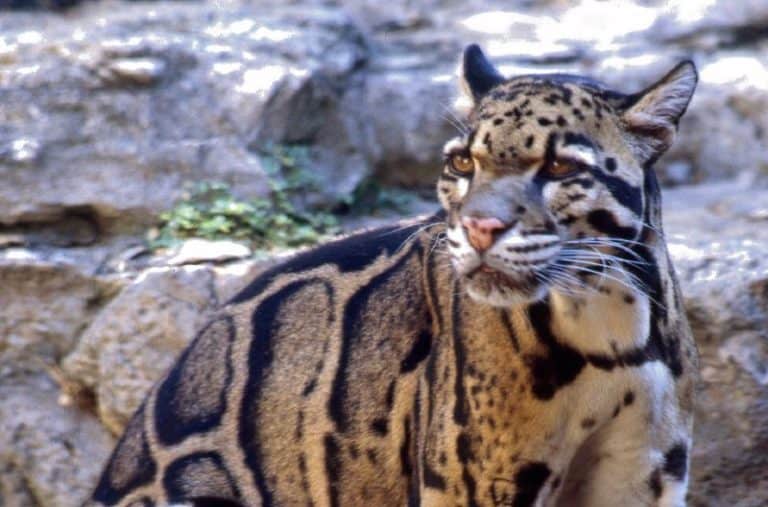
Clouded leopard
Clouded leopard A secretive top predator of subtropical forests; camera-trap records in South China's forest reserves make it a sought-after species for wildlife enthusiasts.
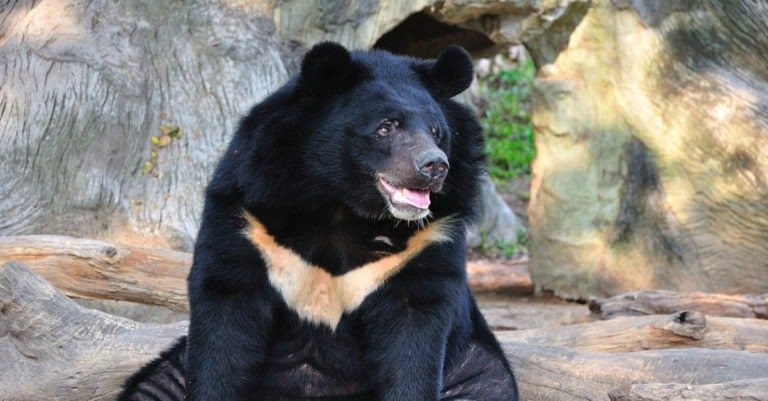
Asiatic black bear
Asiatic black bear A wide-ranging forest omnivore that symbolizes Guizhou's remaining larger forest ecosystems, though typically encountered via signs or camera traps rather than direct sightings.
Chinese pangolin A culturally and conservation-significant mammal of forest edges and farmland mosaics; now very difficult to see due to steep declines.
Golden pheasant One of Southwest China's most celebrated forest pheasants; occurs in wooded hills and forest edges and defines the "classic" South China upland birding experience.
Chinese giant salamander
Chinese giant salamander The world's largest amphibian, historically associated with clear, cool streams and rivers in Southwest/Central China; emblematic of Guizhou's intact headwaters and karst rivers.
Pere David's rock squirrel A conspicuous small mammal of rocky slopes and forest edges, frequently encountered in upland nature areas and karst landscapes.

Endemic & Rare Species

Guizhou snub-nosed monkey (Brelich's snub-nosed monkey)

Rhinopithecus brelichi

Endangered (IUCN); extremely restricted range

Endemic to a small area centered on Fanjingshan; habitat quality and connectivity are critical because the global population is concentrated in one landscape.

Guizhou knobby newt (Kweichow warty newt)

Tylototriton kweichowensis

Threatened/declining (often assessed as Near Threatened to Vulnerable depending on source); pressure from habitat loss and collection

A signature Guizhou salamander associated with forested hills and breeding ponds/ditches; represents the province's high amphibian endemism.

Longli warty newt

Paramesotriton longliensis

Endangered (IUCN) / very range-restricted

A localized newt known from Guizhou; sensitive to stream degradation and small-range impacts, making it a key conservation indicator for clean headwaters.

Libo leopard gecko

Goniurosaurus liboensis

Rare, micro-endemic; threatened by habitat disturbance and illegal collection (genus widely targeted)

A karst-associated, range-restricted gecko from the Libo karst region; highlights Guizhou's limestone endemism and vulnerability to exploitation.

Guizhou cavefish

Sinocyclocheilus guizhouensis

Rare/karst-endemic; vulnerable to groundwater pollution, quarrying, and hydrological change

Representative of Guizhou's remarkable cave-adapted fish diversity; dependent on stable karst aquifers and cave streams.

Chinese giant salamander

Andrias davidianus

Critically Endangered (IUCN); severe historical decline from overharvest and habitat degradation

Guizhou's mountain streams historically supported this species; its current conservation value is tied to protecting and restoring clean, connected river systems.

Notable Populations

  • Fanjingshan (and surrounding habitats) supports the world's most important-and effectively entire-wild stronghold of the Guizhou snub-nosed monkey (Rhinopithecus brelichi).
  • Guizhou's karst landscapes (e.g., Libo and other limestone regions) are nationally significant for concentrations of karst endemics, including cave-adapted fishes (Sinocyclocheilus spp.) and micro-endemic reptiles/amphibians.
  • Mountain headwaters and karst rivers in Guizhou are important (though heavily impacted) parts of the historical range for Chinese giant salamander, making remaining high-quality sites conservation-priority habitats in China.

Recent Changes

  • Large-bodied and high-value species such as Chinese pangolin have continued to decline across South China (including Guizhou) due to historical poaching and slow recovery despite stronger protection.
  • Chinese giant salamander populations have crashed across much of their range; conservation responses increasingly emphasize habitat protection and more cautious, scientifically guided release/restocking efforts (to avoid disease/genetic issues) in suitable watersheds.
  • Forest recovery and expanding protected-area management in parts of Guizhou have improved habitat continuity in some landscapes, benefiting forest birds and medium-sized mammals; however, fragmentation from roads, tourism infrastructure, and development remains a key pressure in karst regions.
  • Karst groundwater and cave-stream fauna face growing risk from quarrying, altered hydrology, and pollution; localized cavefish populations are especially sensitive, with declines possible where springs/caves are disturbed or water quality drops.
Visit

Wildlife Viewing

Guizhou's rugged karst mountains, humid subtropical forests, limestone caves, and highland wetlands make it a top inland wildlife spot in Southwest China. Great for bird watching (wintering waterbirds to special forest birds), primate trips around Fanjingshan, and summer night walks for amphibians and insects. Many habitats sit beside Miao and Dong villages, with village stays and local guides.

Best Seasons

Spring (Mar-May)

Fresh leaf-out in subtropical broadleaf forests, active songbirds, and good visibility before peak summer rains. Excellent time for forest hikes in Fanjingshan and Libo/Maolan; expect cool-to-mild temperatures at elevation and occasional mist on ridgelines.

Summer (Jun-Aug)

Peak greenery and the best season for amphibians, insects, and night wildlife activity (frog choruses, fireflies in suitable areas). This is also the rainiest period-plan for slippery trails, leeches in some forests, and weather buffers; mornings can still be productive for birds.

Autumn (Sep-Nov)

Clearer skies, comfortable hiking conditions, and strong all-round wildlife viewing. Forest birds remain active, raptors can be seen over ridges and river valleys, and trails are generally safer than in summer. This is often the best season for multi-site itineraries across the province.

Winter (Dec-Feb)

Best time for highland wetland birding-especially at Caohai in Weining-when wintering cranes, geese, ducks, and waders concentrate. Expect cold mornings and possible frost at higher elevations; forest areas are quieter but still scenic and less crowded.

Top Wildlife Experiences

  • Dawn wildlife hike in Fanjingshan National Nature Reserve (Tongren) for Guizhou's signature primate-the Guizhou snub-nosed monkey-plus mixed forest bird flocks; go early, keep expectations flexible, and follow reserve rules on routes and viewing distances.
  • Winter birdwatching at Weining Caohai National Nature Reserve: use boardwalks and viewing points to scan for wintering cranes and large gatherings of ducks/geese; plan for sunrise/sunset light and bring a scope if possible.
  • Karst-forest day trek in Libo's Maolan National Nature Reserve (South China Karst area): look for forest birds, pheasants, and rich understory biodiversity along limestone valleys and evergreen broadleaf forest trails; add a quiet afternoon sit to catch shy species.
  • Night walk (with a guide) in Leigongshan National Nature Reserve (Qiandongnan): summer evenings can be outstanding for frogs, insects, and other nocturnal life; pair with daytime ridge/forest birding and community homestays in nearby minority villages.
  • Bat emergence and cave-ecology outing in karst around Libo/Anshun: with a licensed local guide at dusk, watch bat flights and nearby predators at cave mouths or forest edges where viewing is allowed and disturbance is kept low.
  • River-valley birding along scenic waterways such as the Wuyang River/Zhenyuan area: scan calm stretches for kingfishers, herons/egrets, and forest-edge species; early mornings on quieter banks are typically best.
  • Bamboo forest and Danxia cliff birding in the Chishui area: combine bamboo habitat walks (good for woodland birding) with raptor watching from open viewpoints; shoulder seasons often provide the most comfortable conditions.

Wildlife Watching Types

Highland wetland birding (wintering cranes, geese, ducks, waders) Montane and subtropical forest birding (mixed flocks, pheasants, forest specialists) Primate-focused wildlife viewing (endemic snub-nosed monkey habitat around Fanjingshan) Night walks for amphibians and insects (frogs, fireflies, moths, other nocturnal invertebrates) Karst cave wildlife viewing (bat emergence, cave-adapted fauna where appropriate) Raptor watching from ridges, cliff viewpoints, and river valleys Butterfly and pollinator watching in warm months (flower-rich forest edges and valleys)

Guided Options

  • Fanjingshan National Nature Reserve: use official visitor services and reserve-approved guiding/interpretation for wildlife-friendly routes, seasonal access rules, and the best timing for primate/forest-bird activity.
  • Weining Caohai National Nature Reserve: local birdwatching programs/visitor center support (seasonal) can point visitors to active roosting/feeding areas and the most reliable viewing platforms during winter.
  • Libo-Maolan National Nature Reserve: hire local eco-guides (often arranged at the reserve entrance/visitor services) for karst-forest trails, species spotting, and low-impact route choices.
  • Leigongshan (Qiandongnan): community-based guiding and homestay-linked nature walks-useful for arranging safe, ethical night herping and early-morning birding without getting lost on minor forest paths.
  • Specialist birding tour operators in China: multi-day Guizhou itineraries commonly combine Caohai (winter), Fanjingshan, and Libo/Maolan; choose operators that emphasize distance rules, small groups, and habitat-respectful practices.
  • Local nature photographers'/birding clubs in Guiyang and regional hubs: can be a practical way to hire a field-savvy guide/driver and time visits to seasonal hotspots (especially winter wetlands and spring forest bird activity).
Habitats

Ecosystems

Guizhou has a humid subtropical climate, steep elevation changes on the Yunnan-Guizhou Plateau, and complex karst landforms (tower karst, sinkholes, dolines, caves). It supports subtropical evergreen broadleaf and mixed montane forests, river-valley and karst communities on thin limestone soils. High habitat mix boosts biodiversity and endemism; long-term farming made secondary forests, terraces, and plantations.

Biomes

Temperate Forest

Dominant terrestrial biome expressed mainly as humid subtropical evergreen broadleaf forests, mixed broadleaf-conifer montane forests, and widespread secondary forests on karst hills and plateau uplands (e.g., around Fanjingshan, Libo/Maolan, and Chishui).

Widespread and dominant across most mountains, karst uplands, and mid-elevation landscapes.

Freshwater

Major river networks and deep valleys (Wujiang and tributaries; Nanpan-Beipan systems feeding the Pearl River basin), reservoirs, and karst springs/underground rivers; supports riparian forests and aquatic communities.

Linear but extensive; present province-wide along valleys, dams/reservoirs, and karst drainage systems.

Wetland

Highland lakes and marshes, riverine floodplain pockets, and karst depressions with seasonal inundation; includes important bird habitat such as the Caohai wetlands in Weining.

Localized and patchy; concentrated in basins, plateau depressions, and around larger lakes/reservoir margins.

Alpine

Very limited high-elevation subalpine conditions on the highest peaks/ridges (cooler, wind-exposed zones with stunted vegetation and meadow-like openings).

Very small and restricted to the highest summits and ridgelines (e.g., upper slopes of major mountains).

Temperate Grassland

Small areas of upland grassland and herbaceous openings, often maintained or expanded by grazing, fire, or repeated disturbance on plateau tops and karst slopes with shallow soils.

Minor; scattered patches embedded within forest-agriculture mosaics.

Habitats

Forest

Subtropical evergreen broadleaf forests and mixed montane forests; biodiversity hotspots occur in protected areas and relatively intact karst forest blocks (e.g., Maolan/Libo and Fanjingshan regions).

Deciduous Forest

Secondary deciduous broadleaf stands and mixed broadleaf communities, often on disturbed slopes and in seasonal or cooler upland settings; commonly intergrades with evergreen elements.

Coniferous Forest

Montane conifer and mixed conifer-broadleaf forests on higher, cooler slopes; also includes planted conifers in some managed landscapes.

Woodland

Open-canopy karst woodlands and scrubby tree cover on thin limestone soils, frequently forming transitions between forest, shrubland, and agricultural clearings.

Grassland

Upland grasslands on plateau surfaces and karst hills where soil is shallow; often shaped by grazing and land-use history and interspersed with shrub/woodland regeneration.

Shrubland

Karst shrublands and regenerating thickets on rocky slopes and abandoned fields; important for erosion control and as successional habitat between cropland and forest.

Mountain

Rugged karst mountains and dissected plateaus with strong microclimatic gradients; includes notable massifs such as Fanjingshan and many steep, forested ridges and valleys.

Cliff/Rocky Outcrop

Limestone cliffs, canyon walls, and steep escarpments with specialized cliff flora and nesting/roosting sites; common in karst scenic areas and river gorges.

Cave

Extensive karst cave systems (e.g., Zhijin Cave; large cave networks such as Shuanghedong) with subterranean rivers, cave-adapted invertebrates, and important bat roosts.

River/Stream

Fast-flowing rivers and tributaries carving deep valleys (notably the Wujiang system), with riparian corridors, gravel bars, and hydropower-influenced reaches.

Lake

Natural and artificial lakes in basins/depressions; key examples include Caohai (Weining) and other plateau waterbodies important for waterbirds.

Pond

Farm ponds, small impoundments, and karst depression ponds supporting amphibians and local irrigation networks, especially in agricultural areas.

Wetland

Marshy basin wetlands, reservoir-edge wetlands, and seasonally flooded karst depressions; high value for migratory and wintering birds in select sites.

Marsh

Emergent-vegetation marshes around highland lakes and slow-water margins (e.g., Caohai marsh complexes), with reeds/sedges and shallow-water habitat.

Bog

Small, localized peat-forming or peat-influenced wetlands in cool upland depressions where drainage is impeded; limited in extent but ecologically distinctive.

Agricultural/Farmland

Terraced fields and valley-bottom agriculture (rice, maize, rapeseed, vegetables) forming a fine-grained mosaic with woodlands and secondary forests, strongly influenced by ethnic minority land management.

Plantation

Managed tree and cash-crop plantings (e.g., tea, bamboo, timber species) interspersed with secondary forest; often concentrated near settlements and accessible slopes.

Urban

Dense built-up areas in basins and along transport corridors (e.g., Guiyang and prefectural centers), with fragmented green space and urban waterways.

Suburban

Peri-urban expansion zones around cities and county seats, including mixed residential-industrial land and remnant hills/streams with patchy vegetation.

Ecoregions

Guizhou Plateau broadleaf and mixed forests Nanling Mountains evergreen broadleaf forests Sichuan Basin evergreen broadleaf forests Yunnan Plateau subtropical evergreen forests
Protection

Conservation

Primary Threats

  • Native evergreen broadleaf forests and karst shrub-forest mosaics are broken by clearing for cropland (maize, tobacco), plantation trees, village growth in valleys, and making fields on gentle slopes. In karst areas, small clearings sever links among ridge forests, limestone outcrops, and cave entrances used by bats and cave animals.
  • Cultivation on steep karst slopes accelerates soil loss and 'rocky desertification' (exposed bedrock), degrading understory habitat and increasing sediment loads in streams. Agrochemical runoff can rapidly enter karst groundwater and springs, affecting subterranean biodiversity and downstream drinking-water sources.
  • While commercial natural-forest logging has been curtailed compared with past decades, localized illegal cutting and fuelwood collection persist in some remote mountain areas. Selective removal of large trees reduces old-growth structure important for forest birds and canopy-dependent mammals and increases edge effects in already fragmented patches.
  • Guizhou's heavy mining (coal, phosphate, and other metals) causes habitat loss from pits, waste dumps, and roads, and pollutes rivers and karst aquifers with acid mine drainage, heavy metals, and tailings. Karst's fast underground flow spreads pollution quickly and is hard to clean.
  • Beyond mining, nutrient and pesticide pollution from agriculture and effluent from urban/industrial corridors in river valleys can degrade aquatic habitats. In karst basins, groundwater contamination can impact cave-adapted fish and invertebrates and reduce water quality at springs used by rural communities and wildlife.
  • Highway/rail expansion across rugged mountains increases forest fragmentation and wildlife mortality and opens remote habitats to extraction and hunting pressure. Hydropower and river engineering in deep valleys can alter flow regimes and block movement for aquatic species in tributaries of the Wujiang and other regional river systems.
  • River regulation (dams, channel hardening) and intensive cave/scenic-area development (lighting, walkways, altered airflow) can disrupt cave microclimates, bat roosting conditions, and subterranean food webs. Afforestation with single-species plantations can also simplify habitat compared with native mixed forests.
  • Opportunistic hunting for meat and traditional use persists in some rural areas, affecting pheasants, small ungulates, and primates where accessible. Hunting pressure can be amplified near new roads and during periods of economic stress.
  • Illegal trade demand for high-value species (e.g., pangolins) and for large amphibians used as food or for perceived medicinal value remains a major driver of declines. Trade networks can link remote mountain communities to regional markets, complicating enforcement.
  • Rapid growth of nature-based tourism in karst scenic areas (caves, gorges, peak forests) increases noise, light, trampling, and waste. Disturbance near sensitive sites-such as primate ranges, bird breeding areas, and bat caves-can reduce reproductive success and cause roost abandonment if visitor management is weak.
  • Crop raiding by macaques and wild boar around forest edges and valley agriculture can lead to retaliatory harm or pressure to remove animals. Conflict risks increase where reforestation brings wildlife closer to farms and where tourism food provisioning alters animal behavior.
  • More frequent heatwaves, variable rainfall, and drought episodes can intensify karst water stress (reduced spring flows) and increase wildfire risk on degraded slopes. Shifts in humidity and temperature are also a concern for montane endemics and moisture-dependent amphibians in headwater streams.
  • Amphibian populations face risks from pathogens (including chytrid fungi and ranaviruses) and from disease amplification linked to farming and translocation. This is particularly relevant for giant salamanders, where captive breeding, releases, and mixing lineages can spread pathogens into wild watersheds.
  • Introductions of non-native fish into reservoirs and altered rivers can increase predation/competition pressure on native stream fauna. In some aquatic systems, invasive crayfish and other introduced taxa can degrade habitat and prey on eggs/larvae of native amphibians.
  • Several Guizhou endemics occur in naturally isolated 'islands' of habitat (mountain blocks and separate karst basins). Small, fragmented populations-such as the Guizhou snub-nosed monkey-face reduced gene flow and higher vulnerability to stochastic events without managed connectivity and strict protection.
Fun Facts

Did You Know?

Despite Guizhou's "humid subtropical" label, Fanjingshan's higher elevations regularly see freezing conditions; the Guizhou snub-nosed monkey survives snowy winters by relying heavily on lichens and other tough fallback foods when fruit is scarce.

Some Guizhou karst cavefishes (Sinocyclocheilus spp.) can look almost "mythical": living in total darkness drives evolution toward reduced or absent eyes, pale coloration, and heightened non-visual sensing-proof that losing an organ can be an advantage in the right environment.

Karst landscapes in Guizhou create "habitat islands" separated by cliffs, sinkholes, and deep valleys; these natural barriers can isolate populations for long periods, helping drive the province's notable local endemism (especially among cave-associated animals and mountain amphibians).

In places like Fanjingshan and Libo, many of the most wildlife-rich forests persist on steep, rocky limestone terrain that is hard to farm-so the same geology that makes agriculture difficult also inadvertently protects biodiversity.

Guizhou's caves don't just shelter a few animals-they often function as whole nutrient systems: bat colonies import energy from the outside (insects) and export it as guano, which supports specialized cave invertebrates and microbes adapted to a low-light, low-food world.

Guizhou is the only place on Earth where the Guizhou snub-nosed monkey (Rhinopithecus brelichi) lives in the wild-its entire natural range is confined to the Fanjingshan (Mount Fanjing) area, making it one of the most range-restricted primates on the planet.

Guizhou's mountain streams historically supported the Chinese giant salamander (Andrias davidianus)-the world's largest amphibian, capable of reaching well over 1.5 m in length.

Libo's Maolan National Nature Reserve (part of the UNESCO "South China Karst" World Heritage property) protects what is widely cited as China's largest remaining, best-preserved block of subtropical karst forest-an unusually intact habitat type in a heavily populated region.

Guizhou's karst cave systems are part of the center of diversity for Sinocyclocheilus (Chinese cavefishes), the world's most species-rich genus of cavefish-famous for extreme cave adaptations, including eyeless forms and, in some species, a distinctive forehead "horn."

Thank you for reading! Have some feedback for us?