N S W E
Wildlife Expeditions

Wildlife of
Yunnan Sheng

China's biodiversity powerhouse, Yunnan compresses tropical jungles and Himalayan-edge peaks into one province, hosting exceptional species richness and endemism.
57 Species
394,000 km² Land Area
Overview

About Yunnan Sheng

Yunnan's wildlife is shaped by steep mountains, deep river gorges, and a climate that changes quickly with height. Sitting where the Eastern Himalaya, Indo-Burma, and the mountains of southwest China meet, it has some of China's highest species diversity and many species found only there. It is a top place for bird watching, plant study, and mammal tracking. Key habitats include tropical and subtropical evergreen forests in the south, notably Xishuangbanna, with figs, bamboo, and broadleaf canopies that support many monkeys, hoofed animals, and birds. North and northwest rise into temperate broadleaf and conifer forests, rhododendron thickets, and alpine meadows along the Himalaya. Big rivers cut deep gorges that make isolated cool spots for rare plants and cold-loving animals. Yunnan is special because high and low habitats sit close together so you can see both tropical and high-mountain species in one trip.

Physical Features

Geography

Yunnan's rugged topography and sharp elevation/climate gradients create tightly packed habitat zones-from tropical monsoon forests in the south to temperate conifer forests and alpine scree/meadows on the Himalayan fringe. Deep river gorges and isolated mountain ranges promote high endemism and distinct wildlife communities, while warm lowland valleys and plateau lakes/wetlands act as biodiversity refuges and migration/stopover habitat for waterbirds.

394,000 km² Land Area
~8th largest province-level division in China Size Rank
China Country
Province Type
Elevation Range

~76 m (low river valleys) to 6,740 m (Kawagebo/Kagebo Peak, Meili Snow Mountains)

Coastline

No ocean coastline; notable inland waters include major plateau lakes and wetlands such as Dianchi (Kunming), Erhai (Dali), Fuxian Lake, Lugu Lake, and Napahai wetland (Shangri-La area)

Key Landscapes

Hengduan Mountains complex (NW Yunnan) with high-relief ridges and alpine zones Meili Snow Mountains / Kawagebo area (Himalayan fringe) supporting alpine and subalpine habitats Gaoligong Mountains along the Myanmar border-major montane biodiversity corridor Ailao and Wuliang mountain ranges in central-southern Yunnan (evergreen broadleaf and mixed forests) Three Parallel Rivers region: Nu (Salween), Lancang (Mekong), and Jinsha (upper Yangtze) running through steep gorges that partition habitats Red River (Yuanjiang/Honghe) and other hot, dry valley systems creating subtropical-savanna-like microclimates and unique assemblages within otherwise montane terrain (e.g., dry valley shrublands)
State Symbols

Official Wildlife Symbols

wildflower

Yunnan camellia (Camellia reticulata)

tree

Yunnan pine (Pinus yunnanensis)

Parks & Reserves

Protected Areas

Yunnan has one of China’s densest, most diverse protected-area networks, led by National Nature Reserves (NNRs) and provincial reserves plus forest and wetland parks. Key habitats are montane conifer-broadleaf mosaics (north), subtropical evergreen broadleaf forests (central), and lowland tropical forests (south) that house pheasants, gibbons, and the last wild Asian elephants. Major threats are hydropower, roads, and human–wildlife conflict.

Protected Coverage

≈14% of Yunnan's land area under formally designated protection (nature reserves/parks and closely related categories; approximate and dependent on classification).

National Parks & Preserves

Gaoligongshan National Nature Reserve (Gaoligong Mountains)

≈4,000 km² (order-of-magnitude; reserve complex varies by zonation/sector)

A flagship Hengduan Mountains refuge spanning steep elevational gradients and exceptionally rich plant and bird diversity; notable for intact temperate-to-subtropical forests that support rare mammals and a high concentration of endemic and range-restricted species.

Skywalker hoolock gibbon (Hoolock tianxing) Red panda (Ailurus fulgens) Takin (Budorcas taxicolor) Clouded leopard (Neofelis nebulosa) Temminck's tragopan (Tragopan temminckii)

Xishuangbanna National Nature Reserve

≈2,400 km²

China's most important lowland tropical forest protection in Yunnan, critical for maintaining the country's remaining Asian elephant range and a suite of Indo-Malayan species; strong value for rainforest birding and mammal conservation.

Asian elephant (Elephas maximus) Gaur (Bos gaurus) Clouded leopard (Neofelis nebulosa) Dhole (Cuon alpinus) Green peafowl (Pavo muticus)

Pudacuo National Park (Shangri-La / Diqing)

≈1,300 km²

High-elevation lakes, peatlands, and conifer forests on the Himalayan fringe; strong for alpine and montane wildlife viewing (especially birds) and as part of the broader Three Parallel Rivers conservation landscape.

Black-necked crane (Grus nigricollis) Yunnan snub-nosed monkey / black snub-nosed monkey (Rhinopithecus bieti) Musk deer (Moschus spp.) Himalayan black bear (Ursus thibetanus) Blood pheasant (Ithaginis cruentus)

Baimaxueshan (Baima Snow Mountain) National Nature Reserve

≈1,900 km²

A key stronghold for high-elevation Hengduan fauna and a core landscape for the endangered Yunnan snub-nosed monkey; rugged terrain supports altitudinal migrations and diverse pheasants and ungulates.

Yunnan snub-nosed monkey / black snub-nosed monkey (Rhinopithecus bieti) Red panda (Ailurus fulgens) Takin (Budorcas taxicolor) Himalayan serow (Capricornis sumatraensis) Himalayan monal (Lophophorus impejanus)

Ailao Mountain National Nature Reserve (Ailaoshan)

≈500-700 km² (commonly cited in this range)

One of China's best-protected subtropical montane evergreen broadleaf forests, important for watershed protection and as a refuge for highly threatened primates; noted for dense canopy forests and rich amphibian/bird communities.

Western black crested gibbon (Nomascus concolor) Stump-tailed macaque (Macaca arctoides) Asiatic black bear (Ursus thibetanus) Clouded leopard (Neofelis nebulosa) Silver pheasant (Lophura nycthemera)

State & Provincial Parks

Lashi Lake Provincial Nature Reserve (Lashihai Wetland, Lijiang)

≈30-70 km² (wetland/reserve figures vary by boundary definition)

A major high-plateau wetland for wintering and migratory waterbirds; among Yunnan's most accessible birding sites with strong conservation value for wetland species.

Black-necked crane (Grus nigricollis) Bar-headed goose (Anser indicus) Common pochard (Aythya ferina) Eurasian wigeon (Mareca penelope) Eurasian otter (Lutra lutra)

Napa Lake (Napahai) Provincial Nature Reserve (Shangri-La)

≈200-300 km² (lake basin plus surrounding wet meadow; varies seasonally and by zoning)

Seasonally flooded meadow-wetland complex important for cranes and geese on the eastern Himalayan flyway; also supports raptors and grassland-associated fauna.

Black-necked crane (Grus nigricollis) Bar-headed goose (Anser indicus) Ruddy shelduck (Tadorna ferruginea) Hen harrier (Circus cyaneus) Himalayan marmot (Marmota himalayana)

Bita Lake (Bitahai) Provincial Nature Reserve (near Shangri-La)

≈100-200 km² (commonly cited in this range)

Cold-water lake and spruce-fir forest habitat that complements nearby national-level protections; notable for forest birds and intact montane lake ecology.

Blood pheasant (Ithaginis cruentus) Himalayan black bear (Ursus thibetanus) Forest musk deer (Moschus berezovskii) Eurasian sparrowhawk (Accipiter nisus) White-throated dipper (Cinclus cinclus)

Wildlife Refuges

Dashanbao Black-necked Crane National Nature Reserve (Zhaotong)

≈190-200 km²

One of the most important wintering sites for black-necked cranes in China; open plateau wetlands/grasslands offer reliable crane viewing and protect a suite of steppe and wetland birds.

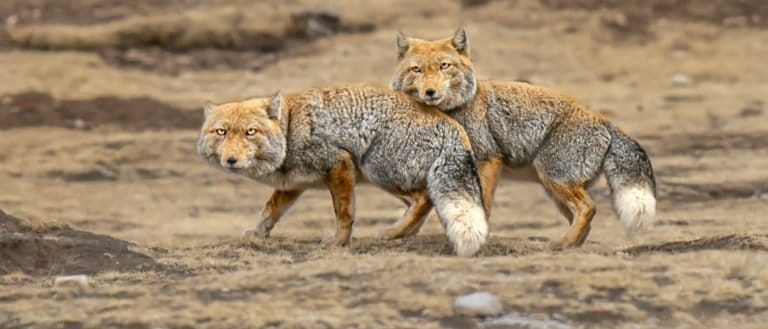
Black-necked crane (Grus nigricollis) Common crane (Grus grus) Hen harrier (Circus cyaneus) Eurasian skylark (Alauda arvensis) Tibetan fox (Vulpes ferrilata)

Nanbanhe National Nature Reserve (Pu'er / southern Yunnan)

≈300-500 km² (commonly reported in this range)

Tropical-to-subtropical forest reserve functioning as an important refuge and corridor area for Asian elephants and other large mammals; conservation is closely tied to mitigating human-elephant conflict.

Asian elephant (Elephas maximus) Gaur (Bos gaurus) Dhole (Cuon alpinus) Clouded leopard (Neofelis nebulosa) Malayan porcupine (Hystrix brachyura)

Wuliang Mountain National Nature Reserve (Wuliangshan)

≈500-800 km² (order-of-magnitude)

A critical stronghold for gibbons and intact mid-montane forests in central/southern Yunnan; important for primate conservation and maintaining forest connectivity between protected blocks.

Western black crested gibbon (Nomascus concolor) Asiatic black bear (Ursus thibetanus) Leopard cat (Prionailurus bengalensis) Sambar (Rusa unicolor) Silver pheasant (Lophura nycthemera)

Wilderness Areas

  • Three Parallel Rivers (Nujiang-Lancang-Jinsha) great-river gorges and associated roadless side valleys (UNESCO landscape-scale complex)
  • Nujiang (Salween) Grand Canyon corridor and adjacent high ridgelines (comparatively low-road density in many sections)
  • Meili Snow Mountains / Khawa Karpo massif backcountry (glaciated high alpine terrain with limited road penetration outside valley bottoms)
  • Hengduan Mountains ridgeline country between Deqin-Weixi-Gongshan (large contiguous montane forest blocks and steep, hard-to-access watersheds)
  • Border mountain forests along the China-Myanmar-Laos frontier in parts of Xishuangbanna and Pu'er (remaining tropical forest roadless patches and elephant movement areas)
Animals

Wildlife

Yunnan is China's most biologically diverse province, sitting at the crossroads of the eastern Himalaya, Indo-Burma, and subtropical East Asia. Steep elevation gradients (tropical valleys to alpine fir-rhododendron belts), monsoon climates, and deep river gorges (e.g., the Three Parallel Rivers region) create many habitat types in a compact area. The wildlife experience ranges from Asian elephants and tropical birds in Xishuangbanna's lowland forests to high-elevation endemics such as Yunnan snub-nosed monkeys and alpine pheasants in the northwest.

≈300-350+ recorded species Mammals
≈850-900+ recorded species (among the highest in China) Birds
≈150-170+ recorded species Reptiles
≈110-140+ recorded species Amphibians
≈600+ recorded species (including many localized endemics in lakes and headwater rivers) Fish
Examples

Iconic Species

Yunnan snub-nosed monkey A flagship high-altitude primate of northwest Yunnan's fir forests; one of the world's rarest monkeys and a defining species of the Himalayan-fringe ecosystems.
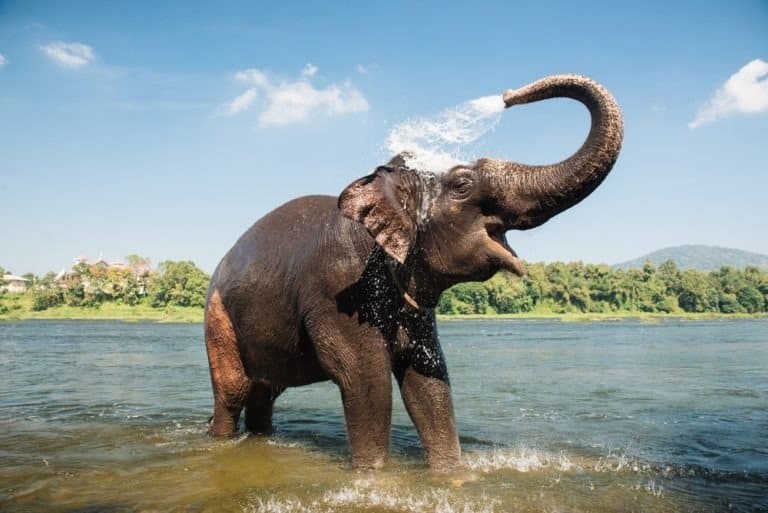
Asian elephant
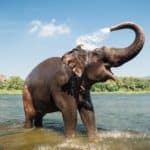
Asian elephant Yunnan holds China's only wild Asian elephants, most often encountered (via tracks/sign, camera traps, or guided viewing) in and around Xishuangbanna and Pu'er.
Red panda
Red panda A charismatic bamboo-forest specialist of Yunnan's temperate mountains; emblematic of the province's Himalayan biodiversity influence.
Clouded leopard
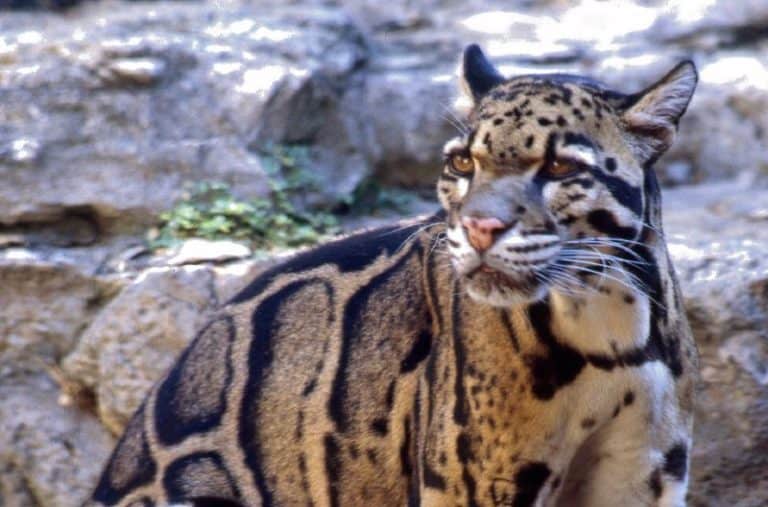
Clouded leopard An elusive top predator of subtropical forests in southern and western Yunnan, often recorded by camera traps in well-protected reserves.
Black-necked crane A celebrated wintering species on Yunnan's highland wetlands and meadows (notably in the northeast), drawing birders each winter.
Green peafowl China's last stronghold for this spectacular peafowl is in Yunnan; sightings are a marquee goal for birdwatchers in suitable lowland riverine habitats.
Hoolock gibbon (Eastern hoolock gibbon) China's only hoolock gibbon occurs in far western Yunnan; its loud dawn calls and extreme rarity make it a premier (and challenging) primate target.
Takin
Takin A massive, goat-antelope of rugged montane forests; a signature mammal of Yunnan's northern highlands where Himalayan fauna mixes with Chinese temperate species.
Lady Amherst's pheasant A striking forest pheasant of Yunnan's mid- to high-elevation habitats, widely associated with the province's rich montane birdlife.

Endemic & Rare Species

Yunnan snub-nosed monkey

Rhinopithecus bieti

Endangered (IUCN)

Endemic to a small region of southwest China with its global core distribution in northwest Yunnan; a conservation icon for high-elevation forest protection.

Hoolock gibbon (Eastern hoolock gibbon)

Hoolock leuconedys

Endangered (IUCN); extremely small population in China

Yunnan contains the only Chinese population; protecting remaining forest blocks and connectivity is critical for the species' persistence in the country.

Green peafowl

Pavo muticus

Endangered (IUCN)

Yunnan supports the last viable wild populations in China; threatened by habitat loss and fragmentation along lowland rivers and agricultural frontiers.

Asian elephant

Elephas maximus

Endangered (IUCN)

China's entire wild elephant population is confined to Yunnan, making the province nationally decisive for the species and for human-elephant coexistence policy.

Black-necked crane

Grus nigricollis

Near Threatened (IUCN)

Yunnan's plateau wetlands and farmland mosaics are important wintering areas, making local wetland stewardship and disturbance control especially important.

Kunming lake newt

Cynops wolterstorffi

Extinct (IUCN)

Formerly endemic to the Kunming lake/wetland region; widely cited as a cautionary example of how rapid lake degradation and invasive species can erase unique Yunnan endemics.

Giant nuthatch

Sitta magna

Vulnerable (IUCN)

A rare, range-restricted bird tied to mature pine forests in parts of Yunnan; sensitive to forest conversion and degradation.

Western hoolock gibbon (China occurrence context)

Hoolock hoolock

Not confirmed as a resident in China; regional rarity context

Included as a cautionary note for field identification: gibbon records near borders require careful verification; Yunnan's border forests are biogeographically complex and misidentifications occur.

Notable Populations

  • China's only wild Asian elephant population occurs in Yunnan (primarily Xishuangbanna-Pu'er landscapes).
  • Yunnan is widely regarded as China's key stronghold for the endangered green peafowl, with remaining viable wild populations concentrated in the province.
  • The global range of the Yunnan snub-nosed monkey is extremely restricted, with major populations in northwest Yunnan (Himalayan-fringe conifer forests).
  • Yunnan holds China's only population of the eastern hoolock gibbon (Hoolock leuconedys), making it nationally irreplaceable.
  • Highland wetlands and agricultural mosaics in Yunnan support significant wintering concentrations of black-necked cranes.

Recent Changes

  • Asian elephants in Yunnan have shown notable movements and local range shifts in recent years (including widely reported long-distance wandering), intensifying human-elephant conflict management and corridor planning.
  • Ongoing habitat fragmentation in lowland valleys has continued to pressure green peafowl in some landscapes, even where local strongholds persist.
  • Camera-trap networks have improved detection of elusive carnivores (e.g., clouded leopard) in several reserves, refining knowledge of distributions rather than necessarily indicating rapid population increases.
  • Some plateau wetland restoration and protection measures have improved conditions for wintering waterbirds in certain sites, though disturbance and land-use change remain chronic issues.
  • Historically present large carnivores (notably tigers in parts of southern Yunnan) remain functionally absent in most areas; recovery would depend on large-scale connectivity, prey restoration, and cross-border source populations.
Visit

Wildlife Viewing

Yunnan has rich wildlife close together: tropical river valleys, misty subtropical forests, alpine meadows and snowy Himalayan peaks. See wintering waterbirds and cranes on plateau lakes, rare pheasants and laughingthrushes in mountain forests, gibbons, hornbills, Asian elephants (south), black snub-nosed monkeys (northwest) and red panda. Trips often combine Xishuangbanna/Pu'er, Gaoligongshan–Nujiang–Shangri-La/Deqin and central plateau lakes.

Best Seasons

Spring (Mar-May)

Peak forest bird activity and breeding displays in montane areas (Gaoligongshan, Ailao, Wuliang). Rhododendron blooms in the northwest; clearer mornings in highlands for scanning slopes. Good all-round time for mixed birding and mammal tracks, though late-spring showers begin.

Summer / Monsoon (Jun-Aug)

Lush forests and high insect activity-excellent for butterflies, amphibians, and dragonflies, especially in Xishuangbanna and along mid-elevation forests. However, heavy rain, leeches, and cloud/fog can reduce visibility; some mountain roads may have landslides. Best for natural history-focused trips rather than long-distance scenic viewing.

Autumn (Sep-Nov)

Often the most comfortable weather: post-monsoon clarity, stable temperatures, and strong birding in montane forests and alpine zones. Great time for high-elevation trips (Shangri-La/Deqin) and for photographing landscapes plus wildlife. Many migrants pass through; forest bird flocks are active.

Winter (Dec-Feb)

Signature season for plateau-lake birding: large concentrations of wintering waterbirds at places like Dashanbao (Zhaotong) and Napahai (Shangri-La). Clearer air in many areas and fewer insects. Best chance for cold-weather specialties and for pairing birding with cultural/photography travel; high mountains can be very cold and some passes may be snowy.

Top Wildlife Experiences

  • Winter waterbird safari at Napahai Wetland (Shangri-La): scan for wintering ducks, geese, and raptors; combine with early-morning hides or lakeshore walks for photography.
  • Black snub-nosed monkey tracking in the Baima Snow Mountain / Tacheng area (near Deqin): join a local-guided hike to known troops in fir-oak forests at high elevation; best in clear autumn/winter weather.
  • Tropical rainforest birding and night walks in Xishuangbanna (Mengla/Menglun area, near the botanical garden): look for hornbills, barbets, trogons, and nocturnal wildlife (civets, flying squirrels) on guided spotlight walks.
  • Asian elephant landscape viewing around Xishuangbanna-Pu'er corridor: visit responsible viewing areas and learning centers (no feeding/handling), focusing on safe, distant observation from designated viewpoints where available.
  • Gaoligongshan (Tengchong or Lushui access) montane birding: spend dawn-to-midday on forest trails for laughingthrushes, pheasants, and mixed-species flocks; add evening moth-lighting or owling with permits/guides.
  • Black-necked crane viewing at Dashanbao Black-necked Crane National Nature Reserve (Zhaotong): prime winter destination for cranes and large waterbird gatherings; ideal for a dedicated 1-2 day bird photography loop.
  • High-altitude raptor and pheasant watch in the Shangri-La-Deqin corridor: drive-and-scan routes at treeline/alpine edges for soaring raptors and elusive ground birds, timed to morning thermals and quiet roads.
  • Butterfly and herpetology-focused hikes in the south (Xishuangbanna/Pu'er) during early summer: target streamside habitats and forest edges for peak diversity after rains, with a naturalist guide for ethical handling-free observation.

Wildlife Watching Types

Birding hotspots (plateau lakes in winter; montane forests in spring/autumn) Tropical rainforest wildlife walks (daytime birding; guided night walks for nocturnal mammals) Primate watching (gibbons in the south; snub-nosed monkeys in the northwest, where accessible) Large mammal landscape viewing (Asian elephants in the south; highland ungulates/meso-mammals where present) Butterfly and insect watching (strong in monsoon/early post-monsoon, especially southern Yunnan) Herping (frogs, salamanders, reptiles) in warm/wet months with local guides Raptor watching and high-elevation scanning (alpine edges, mountain passes, and valleys in clearer seasons) Wildlife photography trips (winter wetlands; autumn clarity in the northwest; rainforest macro/nights in the south)

Guided Options

  • Local birding/nature guiding networks in northwest Yunnan (Shangri-La/Deqin/Gaoligongshan gateways): arrange early starts, site access, and species-targeting for high-elevation specialties.
  • Xishuangbanna rainforest naturalist guides (Mengla/Menglun area): structured day birding plus ethical night-walk programs focusing on nocturnal mammals, owls, and herpetofauna without disturbance.
  • Nature reserve visitor programs (where available) at key wetlands such as Napahai and Caohai: seasonal bird monitoring/interpretation walks and photography-friendly viewpoints-confirm opening rules and permits in advance.
  • Community-based eco-guiding in mountain villages near Gaoligongshan and Ailao/Wuliang ranges: local trail access, hide placement (where permitted), and cultural homestays that support conservation-friendly livelihoods.
  • University/NGO-linked interpretation at major botanical and nature education sites in Xishuangbanna: guided walks emphasizing rainforest ecology, plant-animal interactions, and responsible wildlife viewing principles.
Habitats

Ecosystems

Yunnan runs from humid tropical lowlands near Laos and Myanmar to the cold Hengduan‑Himalayan highlands in the northwest. That makes many ecosystems: Southeast Asian evergreen and seasonal forests in the south; subtropical evergreen broadleaf forests and pine‑oak woodlands mid-elevation; hot, dry river gorges; montane to alpine conifer forests, shrublands, and meadows. Major rivers and plateau lakes add wetlands.

Biomes

Tropical Rainforest

Lowland to lower-montane evergreen broadleaf rainforest in the far south (e.g., Xishuangbanna and border areas), with high humidity, multi-layered canopies, lianas, epiphytes, and strong Indo-Burma floristic influence.

Localized but significant in the far southern prefectures and river valleys; most continuous near Xishuangbanna and the Laos/Myanmar frontier.

Tropical Dry Forest

Seasonal tropical forests and semi-evergreen forests in the warm southern valleys where a pronounced dry season occurs; often forms mosaics with bamboo, mixed deciduous elements, and secondary regrowth on disturbed slopes.

Patchy in southern Yunnan and rain-shadowed valley bottoms; often fragmented by agriculture and plantations.

Savanna

Savanna-like shrub-woodland and open dry forest in hot, dry river valleys (notably parts of the Jinsha, Yuan/Red River, and other gorge systems), driven by strong seasonality, steep terrain, and local rain shadows.

Narrow bands along select gorges and dry-hot valleys; ecologically distinctive but limited in area.

Temperate Forest

Subtropical-to-temperate evergreen broadleaf forests, mixed broadleaf-conifer forests, and montane pine/oak forests across the central plateau and mid-elevations; transitions upslope into cooler mixed forests.

Widespread across mid-elevation mountains and plateaus; a major component of Yunnan's land cover outside the far south and highest northwest.

Temperate Rainforest

Very wet montane forests on windward ranges (e.g., parts of western Yunnan such as Gaoligongshan) with high cloud immersion, dense moss/fern understories, and rich epiphyte communities.

Localized on high-precipitation mountain slopes in western Yunnan; limited but biodiversity-rich.

Temperate Grassland

Cool-season grasslands and meadow systems on upland plateaus and open slopes, including grazing- and fire-influenced grasslands and montane meadow patches between forest zones.

Scattered on plateaus and upland basins; more common where forests are naturally open or have been cleared/maintained.

Alpine

High-elevation subalpine-alpine belts in the northwest (Hengduan Mountains): subalpine conifer forests grading into alpine shrublands, scree, and alpine meadows under cold, snowy winters and short growing seasons.

Concentrated in northwestern Yunnan at the highest elevations; increases with altitude and ruggedness.

Freshwater

Major headwaters and river corridors (upper Mekong/Lancang, Salween/Nu, Red River/Yuan) plus plateau lakes (e.g., Dianchi, Erhai, Fuxian) supporting riverine, lacustrine, and riparian ecosystems.

Province-wide along river networks and in central plateau lake basins; ecologically prominent though spatially linear/patchy.

Wetland

Marshes, lake-edge reedbeds, peat-like bog patches at higher elevations, floodplain wetlands, and seasonal ponds-critical for migratory and resident waterbirds.

Patchy but important around plateau lakes (central Yunnan) and select highland basins in the northwest and south.

Habitats

Rainforest

Evergreen tropical rainforest in Xishuangbanna and adjacent border lowlands; very high tree diversity with dense understory and abundant epiphytes.

Forest

Broad mosaic of evergreen broadleaf, mixed, and secondary forests across most mountain ranges; strong elevational zonation.

Deciduous Forest

Seasonal deciduous or semi-deciduous stands in warmer, drier valleys and on disturbed slopes; often intergrades with dry forest and woodland.

Coniferous Forest

Montane and subalpine conifer forests (e.g., fir/spruce/hemlock types in the northwest; pine-dominated forests in central Yunnan), often forming upper treelines.

Woodland

Pine-oak woodlands and open-canopy forests on drier slopes and plateaus; frequently shaped by firewood collection, grazing, and historical burning.

Shrubland

Dry-hot valley scrub, alpine rhododendron/juniper shrublands, and secondary shrub after clearing; important for erosion control on steep terrain.

Grassland

Upland grasslands on plateaus and open mountain slopes; includes grazed pastures and natural meadow openings within forest matrices.

Alpine Meadow

High-elevation meadows in northwestern Yunnan (Hengduan-Shangri-La/Diqing area), with short growing seasons and high endemic plant richness.

Mountain

Rugged, deeply dissected mountain systems (Hengduan ranges and plateau mountains) creating strong microclimates and high habitat turnover over short distances.

Cliff/Rocky Outcrop

Sheer gorge walls and rocky escarpments (e.g., major river gorges) supporting specialized cliff flora and nesting sites for raptors.

Cave

Karst cave systems especially in southeastern Yunnan (near the Guangxi/Vietnam karst belt), with specialized cave fauna and subterranean streams.

River/Stream

Large, fast-flowing mountain rivers and tributaries (Nu/Salween, Lancang/Mekong, Yuan/Red River headwaters) with riparian corridors and gorge microhabitats.

Lake

Plateau lakes such as Dianchi, Erhai, Fuxian, and Lugu, with littoral zones, submerged vegetation (where water quality allows), and key waterbird habitats.

Pond

Seasonal and permanent ponds in agricultural landscapes and highland basins; often important amphibian breeding sites.

Wetland

Lake-edge wetlands and floodplain patches (reedbeds, wet meadows) around plateau lakes and basin bottoms.

Marsh

Reed and sedge marshes fringing lakes (e.g., around Erhai/Dianchi where remaining), supporting fish nurseries and bird roosting areas.

Swamp

Localized forested or shrub swamps in low-lying basins and backwaters, more common in warmer southern lowlands.

Bog

Peaty wetlands in cooler highland basins and near treeline in the northwest; small but ecologically distinctive carbon- and water-storing habitats.

Agricultural/Farmland

Terraced fields and valley agriculture (rice, maize, vegetables) interwoven with remnant woodlands and riparian strips; a major driver of fragmentation in lowlands and basins.

Plantation

Commercial plantations in the south and southwest, notably rubber and tea (including montane tea landscapes), plus other cash crops; often replaces natural forest.

Urban

Urban and peri-urban ecosystems around Kunming and other basin cities, with strong pressure on nearby lakes and wetlands.

Ecoregions

Northern Indochina subtropical forests (WWF) Yunnan Plateau subtropical evergreen forests (WWF) Eastern Himalayan broadleaf forests (WWF) Eastern Himalayan subalpine conifer forests (WWF) Hengduan Mountains subalpine conifer forests (WWF) Eastern Himalayan alpine shrub and meadows (WWF) South China-Vietnam subtropical evergreen forests (WWF)
Protection

Conservation

Primary Threats

  • Lowland tropical and subtropical habitats have been converted and fragmented by rubber, tea, and other cash-crop plantations (especially in Xishuangbanna, Pu'er, Lincang), as well as by expansion of towns and peri-urban development in valley bottoms. This disproportionately affects species tied to intact low-elevation forests and riparian zones.
  • Monoculture expansion (rubber, tea, bananas, sugarcane) replaces multi-layer forest structure with simplified landscapes, reducing food/cover for forest fauna and increasing edge effects. In elephant range areas of Xishuangbanna-Pu'er, crop expansion into historical movement routes intensifies conflict and blocks corridors.
  • Major highways, border roads, and rail development (including international connectivity to Laos and Myanmar) increase habitat fragmentation, wildlife roadkill risk, and human access into previously remote areas such as Gaoligongshan and border forests, complicating enforcement and corridor connectivity.
  • Hydropower dams, river regulation, sand/gravel extraction, and channel engineering on major systems (Lancang/Mekong, Jinsha/upper Yangtze tributaries, Nu/Salween tributaries, Red River system) alter flow regimes, block fish migration, change sediment transport, and simplify riparian habitat used by birds and amphibians.
  • Warming and shifting precipitation patterns are most acute for alpine and subalpine ecosystems in northwest Yunnan (Diqing, Nujiang, Lijiang). Treeline shifts, altered snow/ice dynamics, and changing phenology can squeeze cold-adapted species into shrinking high-elevation refugia and increase extreme-event impacts (droughts, heat waves).
  • Lake and river pollution from urban wastewater, agricultural runoff (fertilizers/pesticides), and localized industrial/mining effluent affects plateau lakes and basins (e.g., Dianchi, Erhai) and downstream aquatic biodiversity. Pesticide exposure can also reduce insect prey availability and harm amphibians and aquatic invertebrates.
  • Non-ferrous metal and other mineral extraction in mountainous areas can drive direct habitat loss, road-building, tailings and acid drainage risks, and increased human presence in sensitive watersheds-especially problematic where steep slopes amplify erosion and downstream sedimentation.
  • While large-scale commercial logging has been curtailed by national policies, illegal logging and fuelwood extraction can persist in some remote areas and near borders. Selective removal of large trees reduces nesting/denning sites and degrades old-growth structure critical for primates and cavity-nesting birds.
  • Yunnan's long, porous borders with Myanmar, Laos, and Vietnam make it a key corridor for trafficking of pangolins, turtles, snakes, birds, and other wildlife. Trade pressure persists via both overland routes and online markets, undermining local populations and incentivizing hunting.
  • Although regulated and increasingly enforced, opportunistic hunting and snaring still occur in some rural and border landscapes. Snares can severely impact ground-dwelling mammals and birds and can unintentionally injure protected species.
  • Conflict is most prominent with Asian elephants in Xishuangbanna-Pu'er (crop raiding, property damage, occasional injury), but also involves macaques and other primates near farms, and carnivores (e.g., leopards) in pastoral/montane zones. Conflict can drive retaliatory pressure and erode local support for conservation.
  • Fishing pressure, including illegal methods in some areas, contributes to declines in native fish communities in rivers and lakes, especially where combined with dams that reduce recruitment and alter habitats. Stocking of non-native fish for fisheries can further displace native species.
  • Introduced fish (for aquaculture and stocking), invasive aquatic plants (e.g., water hyacinth in warmer basins), and invasive weeds in disturbed areas can restructure food webs and habitats. Invasives are a particular concern in plateau lakes and lowland waterways with high nutrient loads.
  • Emerging and spreading diseases threaten sensitive taxa: chytridiomycosis risks to amphibians in montane streams, disease spillover from domestic animals to wildlife (e.g., canids), and health threats in captive-bred/released populations (e.g., salamander conservation) where biosecurity is weak.
  • Rapid growth of nature-based tourism (popular areas include Shangri-La/Diqing, Dali-Lijiang corridors, and flagship reserves) increases disturbance from noise, off-trail hiking, vehicle traffic, and wildlife viewing pressure, especially during breeding seasons and in narrow valley habitats.
  • High demand for non-timber forest products (medicinal plants, edible fungi, ornamental plants) and grazing pressure in some montane meadows can degrade understory structure and regeneration, reducing habitat quality for forest specialists and increasing erosion in steep terrain.
  • Urban expansion around major centers (notably Kunming and other basin cities) drives loss of wetlands and peri-urban habitats, increases water demand, and concentrates pollution loads into plateau lakes and rivers, creating long-term ecological stress in already constrained valley/basin landscapes.
  • Fragmentation has left some populations small and isolated (e.g., gibbons and other forest specialists in border mountain ranges), elevating inbreeding risk and reducing resilience. This is compounded where corridors are blocked by roads/plantations and where dispersal is limited by steep topography and human land use.
Fun Facts

Did You Know?

"Snow monkeys" in China: despite being a primate, Rhinopithecus bieti survives long, snowy winters by relying heavily on lichens and other fibrous foods when fruit and leaves are scarce-an unusually lichen-rich diet for a monkey.

A tropical mega-mammal can show up far from "the tropics": Yunnan's Asian elephants periodically make long-distance treks (the widely documented 2021 northward movement covered hundreds of kilometers), revealing how mobile-and landscape-dependent-this population is.

India's giant wild cattle at China's edge: the gaur (Bos gaurus), the world's largest wild bovid, occurs in China only in the far southwest-confirmed wild populations are in southern Yunnan and southeastern Tibet.

China's "weird cave-fish" country: Yunnan's karst caves host multiple species of Sinocyclocheilus cavefish-often blind, pale, and sometimes sporting odd horn-like head bumps-showing extreme evolution in total darkness.

In China, hornbills are mostly found in Yunnan. Large rainforest birds like the great hornbill (Buceros bicornis) live mainly in Yunnan's far-south rainforest belt, rare elsewhere in China.

Highest-living non-human primate: the Yunnan (black) snub-nosed monkey (Rhinopithecus bieti) lives at roughly 3,000-4,700 m in northwest Yunnan (e.g., around Baimaxueshan), higher than any other monkey or ape species on Earth.

China's only wild Asian elephants: all remaining wild Asian elephants in China (Elephas maximus) occur in Yunnan, mainly in and around Xishuangbanna and Pu'er.

Mainland China's strongest tropical-rainforest stronghold: Yunnan's far south (especially Xishuangbanna) contains the country's largest/most continuous area of true tropical rainforest on the Chinese mainland.

Top-ranked province for bird diversity in China: Yunnan has recorded more bird species than any other Chinese province (commonly cited at ~900 species), thanks to its huge elevation range and position on multiple migration routes.

Near-total national stronghold for a threatened icon: the green peafowl (Pavo muticus) has been extirpated from most of China; virtually all remaining wild birds in the country are now confined to Yunnan's river valleys and lowland habitats.

Thank you for reading! Have some feedback for us?