N S W E
Wildlife Expeditions

Wildlife of
Jiangsu Sheng

Jiangsu's tidal flats, lake country, and Yangtze estuaries form one of East Asia's standout stopovers for migratory waterbirds along the Yellow Sea flyway.
36 Species
102,600 km² Land Area
Overview

About Jiangsu Sheng

Water shapes Jiangsu. The lower Yangtze River delta, the Yellow Sea coast, and a network of canals, rivers, and lakes link inland China with the sea. In crowded, farmed land, Jiangsu still has rich wildlife—especially birds—because wetlands give food and shelter during migration, winter, and breeding. Along the coast, intertidal mudflats and saltmarshes are refueling stations on the East Asian-Australasian Flyway, where shorebirds and waterfowl stop. Inland, the Yangtze floodplain lakes, reedbeds, and sites like Hongze Lake and parts of Lake Tai provide food and roosts for cranes, geese, ducks, and herons. Rivers and fish-rich waters support otters and other wetland animals. What makes Jiangsu special is the close mix of coastal mudflats and a wide inland lake-and-canal network in a human-made delta. Wildlife watching often happens where nature meets seawalls, reclaimed fields, fish ponds, and city wetlands. Protecting tidal flats and managing working lands helps migratory birds.

Physical Features

Geography

Jiangsu is low on the Yangtze River delta, with many rivers, canals, lakes, and coastal wetlands. It has habitats from floodplain lakes and reed beds to brackish estuaries and intertidal mudflats. These wetlands are vital for migratory waterbirds on the East Asian-Australasian Flyway, while farms and cities push wildlife into remaining wetlands, river and lake shores, and coastal reserves.

102,600 km² Land Area
Relatively small by China standards (around the ~6th smallest provincial-level division) Size Rank
China Country
Province Type
Elevation Range

Sea level to ~625 m (Yuntai/Huaguo Mountain area, Lianyungang)

Coastline

Yellow Sea coast with extensive intertidal mudflats and saltmarsh; coastline length is roughly ~950 km

Key Landscapes

Lower Yangtze River corridor (major riparian and floodplain habitats) Yangtze River Delta plain (broad, low alluvial landscape with highly modified agro-urban mosaic) Yellow Sea coastline with tidal flats and saltmarsh (notably Yancheng coastal wetlands) Estuaries and brackish wetlands at river mouths (freshwater-saltwater transition zones) Large freshwater lakes and associated marshes (e.g., Taihu, Hongze, Gaoyou and connected lake networks) Grand Canal and dense canal and river network (linear aquatic habitats and dispersal corridors) Coastal sand ridges, reclaimed polders, and aquaculture landscapes (human-shaped habitats affecting species composition) Low hills in the southwest (Ningzhen and Nanjing area) and the northeast (Lianyungang and Yuntai area), providing limited upland habitat variation
State Symbols

Official Wildlife Symbols

wildflower

Jasmine

tree

Ginkgo

Parks & Reserves

Protected Areas

Jiangsu's protected areas focus on coastal and inland wetlands amid urban and farm use. Key sites: Yellow Sea intertidal mudflats (a stop on the East Asian-Australasian Flyway) and shallow lakes and reedbeds of the Huai River–lower Yangtze plain. Types: national/provincial nature reserves, wetland and forest parks, scenic areas. Richest wildlife is in national reserves and wetland complexes for migratory waterbirds.

Protected Coverage

≈8-10% of provincial land area under some form of formal protection (nature reserves, wetland/forest parks, scenic conservation zones); the highest-value habitats are wetland-focused and spatially fragmented outside a few large reserves.

State & Provincial Parks

Tianmu Lake Provincial Nature Reserve / scenic forest-reservoir complex (Liyang, Changzhou)

~50-150 km² (protected/scenic management area, approx.)

Forested hills and reservoir-edge wetlands that support woodland birds and raptors; a useful biodiversity island in the southern Jiangsu urban belt.

Crested goshawk Black kite Mandarin duck Common kingfisher Chinese hwamei

Gucheng Lake (Gaochun) Provincial Wetland Park / reserve complex

~30-100 km² (managed wetland areas, approx.)

Shallow lake margins and marsh vegetation important for migratory waterbirds and regional fish spawning/nursery areas.

Oriental stork Eurasian spoonbill Spot-billed duck Grey heron Black-headed gull

Yuntai Mountain-Huaguo Mountain forested hills (Lianyungang) - provincial scenic/forest protection units

~100 km² scale across scenic/forest park units (approx.)

One of the more extensive hilly/forested blocks in northern Jiangsu, offering relatively continuous woodland habitat compared with the surrounding plains.

Chinese muntjac Wild boar Crested serpent eagle Eurasian jay Large-billed crow

Wildlife Refuges

Yancheng Coastal Wetlands (Ramsar-designated wetland complexes within/adjacent to the Yancheng reserve system)

Ramsar/managed wetland blocks spanning hundreds to >1,000 km² (approx., by unit)

Internationally recognized intertidal habitat supporting extremely high shorebird diversity and abundance during migration; a priority landscape for flyway-scale conservation.

Spoon-billed sandpiper Nordmann's greenshank Great knot Red knot Saunders's gull

Hongze Lake Wetlands (Ramsar-type internationally important wetland complex)

~1,000+ km² wetland/lake complex (approx.)

Key inland wetland for wintering and staging geese/ducks and foraging storks; management emphasis often includes reedbed protection and water-level regulation impacts.

Swan goose Baer's pochard Oriental stork Common pochard Common crane

Yangtze River (Nanjing-Zhenjiang) riparian wetland conservation zones (river islands, shoals, and backwaters)

Fragmented sites totaling tens of km² (approx.)

A chain of riverine refuges that can be locally important for migration stopovers, heronries, and wintering waterfowl in the lower Yangtze corridor.

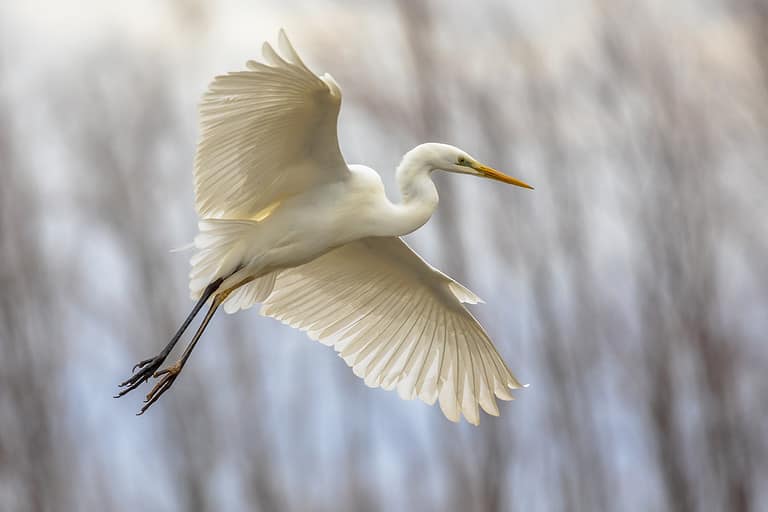
Chinese pond heron Great egret Eurasian wigeon Black-faced spoonbill (occasional migrant) Osprey

Wilderness Areas

  • Remaining Yellow Sea intertidal mudflat belt in eastern Jiangsu (especially the least-reclaimed segments between major ports/sea walls)
  • Large reedbed mosaics and seasonally flooded backwaters around Hongze Lake and Gaoyou Lake (best 'wild' wetland feel inland)
  • River islands, sandbars, and secondary channels along the lower Yangtze in western/central Jiangsu (limited access, low-road density pockets)
  • Yuntai Mountain-Huaguo Mountain upland forest blocks near Lianyungang (one of the province's more continuous semi-natural hill landscapes)
Animals

Wildlife

Jiangsu's wildlife is shaped by water: the lower Yangtze River, big lakes like Hongze and Taihu, a vast canal-and-river network, and the Yellow Sea coast with tidal flats, saltmarsh, and estuaries. Much of the province is farmed and built up, but remaining wetlands—especially the Yancheng coastal wetlands—are important worldwide on the East Asian-Australasian Flyway (EAAF), holding large numbers of migratory shorebirds and places where cranes spend the winter. Land changes have cut down terrestrial mammals, while water and wetland species (waterbirds, fish, river mammals) define Jiangsu's wildlife.

~60-90 species (lower due to intensive land use; includes river/coastal mammals and common forest-edge species) Mammals
~420-500 species recorded (high because of migration bottlenecks and coastal/lake wetlands) Birds
~40-60 species (snakes, turtles, lizards concentrated around wetlands and lowland forests) Reptiles
~15-25 species (frogs/toads/newts, mostly lowland wet habitats) Amphibians
~200-300+ species historically recorded in the Yangtze-lake-coastal systems (composition shifting with fishing pressure, dams, and invasives) Fish
Examples

Iconic Species

Red-crowned Crane A flagship wintering species of the Yancheng coastal wetlands; Jiangsu is one of the best places in China to see this iconic crane in winter.
David's deer A flagship reintroduction and conservation success in Jiangsu, with a major managed population in coastal wetland reserves around Dafeng (Yancheng), making it one of the province's most recognizable large mammals.
Oriental Stork A large, charismatic wetland stork that winters and stages in Jiangsu's coastal and inland wetlands; sightings are strongly associated with protected marshes and fishpond landscapes.
Saunders's Gull A scarce East Asian gull that uses coastal tidal flats and saltmarsh; Jiangsu's coast is among the better places to encounter it during migration and winter.
Eurasian Spoonbill Frequently seen feeding in shallow wetlands, estuaries, and aquaculture landscapes; a conspicuous "wetland emblem" bird for visitors.
Great Knot A classic EAAF shorebird that stages in very large numbers on intertidal flats; Jiangsu's mudflats are crucial refueling habitat during migration.
Bar-tailed Godwit One of the most visible long-distance migrant shorebirds on Jiangsu's tidal flats, often occurring in large flocks during peak migration.
Yangtze Finless Porpoise A rare freshwater porpoise of the Yangtze system; Jiangsu's Yangtze reaches are part of its remaining range, making it a high-profile river conservation symbol.

Endemic & Rare Species

Yangtze Finless Porpoise

Neophocaena asiaeorientalis

Critically Endangered (regional endemic to the Yangtze system)

One of the world's few freshwater porpoises; survives in fragmented Yangtze habitats, with Jiangsu forming part of the lower-river strongholds and survey focus areas.

Spoon-billed Sandpiper

Calidris pygmaea

Critically Endangered (tiny global population; rare migrant)

A marquee rarity on the EAAF; Jiangsu's intertidal flats are among the key stopover sites where this species may be encountered during migration.

Red-crowned Crane

Grus japonensis

Endangered

Jiangsu's coastal marshes are internationally important winter habitat, supporting a highly visible and culturally significant crane population.

Oriental Stork

Ciconia boyciana

Endangered

Depends on healthy wetland mosaics (marshes, shallow waters, and low-disturbance roost sites); Jiangsu is a regular wintering/staging area.

Saunders's Gull

Chroicocephalus saundersi

Vulnerable

Strongly tied to coastal tidal flats and saltmarsh; habitat loss and disturbance make remaining Jiangsu coastal sites especially important.

Chinese Sturgeon

Acipenser sinensis

Critically Endangered (functionally near-extirpated in the wild)

Historically migrated through the Yangtze to the sea; now severely reduced due to dams and other pressures, making any presence in the lower Yangtze/estuary region conservation-significant.

Pere David's Deer

Elaphurus davidianus

Extinct in the Wild; conserved via reintroduced/free-ranging populations

A globally famous recovery program; Jiangsu's coastal reserves are among the best-known places to see established herds in semi-wild conditions.

Notable Populations

  • Yancheng coastal wetlands support internationally significant wintering concentrations of Red-crowned Cranes.
  • Jiangsu's Yellow Sea tidal flats are key staging habitat on the East Asian-Australasian Flyway, with large migrant shorebird assemblages (e.g., Great Knot, Bar-tailed Godwit and many Calidris sandpipers) during spring and autumn.
  • Coastal Jiangsu is part of the wider Yellow Sea network critical to several globally threatened shorebirds (including occasional Spoon-billed Sandpiper records).
  • Lower Yangtze reaches in Jiangsu contribute to the remaining range and monitoring focus for the Critically Endangered Yangtze Finless Porpoise.

Recent Changes

  • Coastal wetland loss from reclamation and shoreline hardening has historically reduced tidal-flat habitat, contributing to declines in many migratory shorebirds; remaining flats have become higher-density, higher-stakes stopovers.
  • Stronger protection and international recognition of key coastal wetlands (including World Heritage listing for parts of the migratory bird habitat) have supported habitat management, restoration efforts, and improved monitoring in some areas.
  • A province-wide shift toward stricter river management (including the Yangtze fishing ban policy context) is intended to reduce pressure on aquatic biodiversity, benefiting species such as the Yangtze Finless Porpoise and native fish over time.
  • Pere David's Deer populations in managed reserves have expanded from reintroduction efforts, increasing visibility and visitor encounters.
  • Despite protection, several flagship migrants (notably Spoon-billed Sandpiper and other threatened shorebirds) continue to face flyway-wide declines driven by habitat loss, disturbance, and food-web changes across their migration route.
Visit

Wildlife Viewing

Jiangsu is excellent for wetland and migratory-bird viewing. Along the Yellow Sea coast, tidal flats and saltmarshes form important stopover/wintering habitat on the East Asian-Australasian Flyway for shorebirds, cranes, geese and raptors. Inland, the Yangtze, lakes, reedbeds and restored wetlands near Nanjing, Suzhou and Wuxi offer easy birding. Start early, check tides, and focus on birds.

Best Seasons

Spring (Mar-May)

Peak northbound migration on the coast: huge numbers of shorebirds (sandpipers, plovers), gulls/terns, and passing raptors. Inland wetlands and lakes host breeding activity and songbird movement. Mild weather; plan around tides for best coastal viewing.

Summer (Jun-Aug)

Breeding season at inland wetlands and reserves: egrets, herons, reedbed birds, and local waterfowl. Hot/humid with mosquitoes; best wildlife activity is early morning and late afternoon. Good time for wetland scenery and photography, but fewer migratory concentrations than spring/fall.

Autumn (Sep-Nov)

Peak southbound migration-often the most dramatic shorebird season on the Yellow Sea coast. Large mixed flocks, juvenile birds, and strong chances for rare migrants. Comfortable temperatures; excellent for photography, especially with sunrise/sunset over tidal flats.

Winter (Dec-Feb)

Best for wintering waterbirds: geese, ducks, swans (in suitable lake areas), and occasionally cranes in select sites. Coastal mudflats and estuaries hold wintering shorebirds and raptors. Cold, sometimes windy; clear days can be superb for long-distance scope viewing.

Top Wildlife Experiences

  • Shorebird migration day on the Yellow Sea coast (Yancheng area): plan a full tide cycle on tidal flats and estuary edges for dense flocks, feeding frenzies, and raptor fly-bys.
  • Visit the Yancheng coastal wetlands/red-crowned crane landscape: scan reedbeds and wetland mosaics for cranes (seasonal), geese, and raptors; combine with sunrise photography over marshes.
  • Yangtze River waterfront birding in Nanjing (e.g., riverside parks and wetland belts): look for wintering ducks, gulls, cormorants, and seasonal passage migrants with city convenience.
  • Lake wetland birding near Suzhou/Wuxi (Taihu and connected wetlands): explore reedbeds and lake edges for herons/egrets, waterfowl, and passerines; ideal for a relaxed half-day with a scope.
  • Dawn walk in a restored urban wetland park (Suzhou Industrial Park and similar wetland greenways): surprisingly productive for common wetland birds, dragonflies in warm months, and easy photography.
  • Autumn raptor and migration watch from coastal dikes and estuary lookouts (Yancheng/Nantong coast): set up with binoculars/scope to track migrating raptors, terns, and mixed shorebird movements.
  • Winter waterfowl circuit on lakes/reservoirs in southern Jiangsu (select public-access viewpoints): focus on ducks, geese, and gull roosts at first light and late afternoon.

Wildlife Watching Types

Coastal shorebirding on tidal flats (migration-focused) Crane and wetland bird watching (seasonal, reserve-dependent) Waterfowl watching on lakes, reservoirs, and river backwaters Raptor migration watches (coast and open wetlands) Urban wetland birding (parks, greenways, restored marshes) Nature photography (sunrise/sunset tidal flats, reedbeds, roost flights) Amphibian/insect watching in summer wetlands (dragonflies, frogs-best in quieter parks/reserves)

Guided Options

  • Reserve-organized birding and interpretation at Yancheng coastal wetland protected areas (visitor centers often offer seasonal programs and educational walks).
  • Local birding clubs/associations in major cities (Nanjing, Suzhou) that run weekend bird walks and migration meetups-useful for site access tips and recent sightings.
  • Specialized China birding tour operators that include the Yellow Sea coast (often branded as East Asian-Australasian Flyway itineraries) and can arrange tide-timed shorebird days with spotting scopes.
  • University/NGO conservation events and citizen-science activities (e.g., winter waterbird counts and migration monitoring days) occasionally open to visitors-check listings at wetland reserve visitor centers.
  • Private bird photography guides in Yancheng/Nantong coastal areas who specialize in hide/blind setups and tide planning (best for serious photographers).
Habitats

Ecosystems

Jiangsu lies on the low, crowded lower Yangtze plain. Natural ecosystems are mostly water: big rivers, canals, shallow lakes, floodplain wetlands, and wide intertidal flats along the Yellow Sea. Much land is now farms and cities (Nanjing–Suzhou–Wuxi–Changzhou), so habitats are fragmented but still very important for migratory shorebirds on the East Asian–Australasian Flyway and for fisheries, waterbirds, and flood control.

Biomes

Temperate Forest

Before warm-temperate to subtropical broadleaf forests and mixed woods on plains, low hills, and lake and river edges; now mostly small regrown patches, shelterbelts, and planted mixed woodlands in parks.

Limited and fragmented; small remnants and planted/secondary woodland scattered across the province, with slightly higher presence in the southwest (around Nanjing) and protected areas.

Freshwater

A dense network of rivers (Yangtze, Huai system), canals, oxbows, and shallow lakes (notably Taihu and Hongze) with reedbeds, submerged vegetation, aquaculture ponds, and floodplain waters.

Widespread across the whole province; especially concentrated in the Yangtze Delta lake district (south) and around Hongze Lake and connected waterways (central-north).

Wetland

Floodplain marshes, riparian wetlands, lake-edge reedbeds, and internationally important coastal wetlands including tidal flats and saltmarsh mosaics that host migratory waterbirds and shorebirds.

Common but heavily modified; major continuous blocks along the coast (Yancheng and adjacent tidal flats) and around large lakes and river floodplains.

Marine

Nearshore Yellow Sea waters influenced by river discharge and strong tidal dynamics; productive coastal seas supporting fisheries, benthic communities, and estuarine mixing zones near the Yangtze outflow.

Along the full Jiangsu coastline and adjacent nearshore shelf waters; strongest marine influence on the coastal fringe and estuaries.

Habitats

River/Stream

Lower Yangtze mainstem and distributaries plus Huai River-connected channels; engineered banks and navigation canals are common, with remaining riparian stretches important for waterbirds and fish movement.

Lake

Large shallow lakes (e.g., Taihu, Hongze) with extensive littoral zones, reedbeds, and fisheries/aquaculture; eutrophication and shoreline hardening are key pressures.

Pond

Dense aquaculture and irrigation pond landscapes across the plains (carp/crab/shrimp systems), forming a semi-natural water mosaic that still supports herons, egrets, and amphibians.

Wetland

Freshwater marshes and lake-edge reed swamps plus restored/managed wetlands in reserves; vital for flood storage and migratory birds.

Marsh

Reedbeds and sedge marshes around lake margins and floodplain depressions; also coastal saltmarsh vegetation behind tidal flats.

Estuary

Yangtze estuary influence at the southern edge of the province and multiple smaller tidal river mouths along the coast; high productivity and nursery habitat for fish and invertebrates.

Coastal

Long, low-lying coastline with extensive intertidal mudflats and reclaimed areas; globally important staging and wintering habitat for shorebirds (notably around Yancheng).

Beach

Sandy to silty coastal stretches occur but are often narrow and modified by seawalls and reclamation; used by coastal birds and recreation in some areas.

Rocky Shore

Very limited due to the predominantly alluvial, muddy coast; small engineered rock revetments substitute for natural rocky habitats.

Deciduous Forest

Small patches of secondary deciduous broadleaf woodland on low hills and in older landscape parks; often mixed with planted species.

Coniferous Forest

Mostly plantation and ornamental conifers (windbreaks, park plantings) rather than extensive native conifer forests.

Woodland

Patchy mixed woodland and shelterbelts in an agricultural matrix, providing connectivity for common birds and small mammals.

Forest

Highly fragmented forest cover overall, concentrated in low uplands around Nanjing and in scattered reserves/parks elsewhere.

Agricultural/Farmland

Dominant land cover: rice-wheat rotations in the south/central plains, mixed cropping in the north, plus widespread aquaculture; high habitat conversion but some biodiversity persists in field margins and water networks.

Urban

Large metropolitan areas and industrial corridors (e.g., Nanjing, Suzhou, Wuxi) with intense land use, impervious surfaces, and engineered waterways.

Suburban

Expanding peri-urban zones with canals, ponds, landscaping, and remnant farmland that can still support adaptable wildlife.

Ecoregions

Changjiang (Yangtze) Plain evergreen forests (WWF terrestrial) Huang He (Yellow River) Plain mixed forests / North China Plain deciduous broadleaf forests (WWF terrestrial; northern Jiangsu transition) Lower Yangtze Basin (WWF Freshwater Ecoregions of the World) Huai River Basin (WWF Freshwater Ecoregions of the World; northern/central Jiangsu drainage influence) Yellow Sea (MEOW - Marine Ecoregions of the World) East China Sea (MEOW; influence near the Yangtze estuary and southern coastal waters)
Protection

Conservation

Primary Threats

  • Coastal land reclamation, port/industrial expansion, and conversion to aquaculture have historically reduced and fragmented tidal flats and saltmarshes along the Yellow Sea coast (e.g., around Yancheng, Rudong, Dongtai). Inland, urban and peri-urban expansion has simplified river/lake shorelines and squeezed wetlands into narrow buffers.
  • High industrial density and intensive agriculture drive nutrient enrichment (nitrogen/phosphorus) and chemical contamination in rivers, canals, and lakes (e.g., Taihu basin influences), contributing to algal blooms, hypoxia, and reduced prey availability for fish and waterbirds. In estuaries, mixed urban/industrial discharges and shipping-related pollution add chronic stress.
  • Invasive cordgrass (Spartina alterniflora) has altered intertidal flats by trapping sediment and converting open mudflat (critical shorebird feeding habitat) into dense vegetated marsh, especially along Jiangsu's coast. Aquatic invasives in canals/lakes can also alter food webs and compete with native species.
  • Sea-level rise and more intense storm surges threaten low-lying tidal flats, seawalls, and coastal wetlands; where hard coastal defenses prevent landward migration, wetlands can be 'coastal-squeezed.' Warmer winters and altered river flows can shift migratory timing and wetland hydroperiods, affecting bird stopover quality and fish spawning.
  • Historically heavy fishing pressure in the Yangtze system and connected lakes/canals reduced fish biomass and altered age structures, affecting higher trophic species (e.g., porpoises, piscivorous birds). Enforcement of the Yangtze fishing ban is improving conditions, but recovery takes time and bycatch risks remain.
  • Seawalls, coastal highways, ports, and channelization/dredging reshape hydrology and sediment dynamics on the coast and in estuaries, reducing natural mudflat formation and disconnecting wetlands from tidal exchange. Inland, water-control structures and river engineering simplify habitat and limit connectivity for aquatic species.
  • Rapid growth of cities such as Nanjing, Suzhou, and Wuxi increases land take, artificial lighting, traffic, and human presence near wetlands and roost sites, elevating disturbance and collision risks for birds (e.g., glass/lighting impacts during migration) and compressing remaining green-blue corridors.
  • Although much farmland is long-established, ongoing consolidation and intensification (e.g., drainage improvement, field leveling, higher fertilizer/pesticide inputs) reduce small wetlands, ditches, and fallow mosaics that support amphibians, invertebrates, and farmland birds; runoff amplifies eutrophication in connected waters.
  • Recreation, bird photography pressure at roosting/feeding sites, aquaculture activity, and vessel traffic in estuaries can repeatedly flush shorebirds and waterfowl, reducing feeding time during critical migration stopovers. Disturbance can be especially consequential on narrow remaining mudflat strips.
  • Demand for wild-caught birds, turtles, and other aquatic wildlife can drive localized poaching or laundering through markets. Even where large-scale hunting is reduced, opportunistic capture and illegal trade can still threaten vulnerable species in wetland and river networks.
Fun Facts

Did You Know?

Some of Jiangsu's most iconic "wild" birds (including Red-crowned Cranes) routinely forage in intensely human-shaped landscapes-rice paddies, aquaculture ponds, and harvested fields-then return to coastal roosts, meaning modern farming mosaics can directly affect a flagship endangered species.

The mudflats at places like Tiaozini function like a high-speed "refuelling station": shorebirds such as Great Knots (*Calidris tenuirostris*) can rapidly gain weight here on buried shellfish and worms to prepare for long, nonstop migratory flights.

You can see a cetacean in a megacity: the Yangtze Finless Porpoise (*Neophocaena asiaeorientalis*) still occurs in the Yangtze River through Jiangsu (including around Nanjing's riverfront), navigating the turbid river primarily by echolocation rather than sight.

Pere David's deer in Dafeng aren't just forest deer-they're unusually well adapted to coastal marsh life, readily feeding on salt-tolerant plants and using waterways and reedbeds that many deer avoid.

Jiangsu's coast still supports "living fossil" arthropods: horseshoe crabs (e.g., the tri-spine horseshoe crab *Tachypleus tridentatus* in the broader Yellow Sea region) rely on intertidal habitats, making the province's remaining natural shorelines disproportionately important for their survival.

Yancheng National Nature Reserve is widely cited as China's largest coastal wetland nature reserve-protecting vast Yellow Sea tidal flats that are irreplaceable for migratory wildlife.

Dafeng Pere David's Deer National Nature Reserve supports the world's largest wild population of Pere David's deer (Elaphurus davidianus)-a species that was once extinct in the wild.

The Jiangsu Yellow Sea coast (notably Dongtai Tiaozini and the Rudong mudflats) is one of the most important stopover systems on the East Asian-Australasian Flyway, with survey counts that can exceed 100,000 shorebirds during peak migration roosts.

Yancheng's coastal wetlands are the key wintering stronghold for the continental migratory population of the Red-crowned Crane (*Grus japonensis*) in China, with winter flocks often numbering on the order of 1,000+ birds in good years.

Rudong's intertidal flats are known worldwide for one of the largest stopover groups of the Critically Endangered Spoon-billed Sandpiper (Calidris pygmaea); some springs over 100 birds, a big part of the world population.

Thank you for reading! Have some feedback for us?