N S W E
Wildlife Expeditions

Wildlife of
Jiangxi Sheng

Jiangxi is China's freshwater wildlife stronghold, where Poyang Lake and subtropical forests host spectacular migratory bird congregations and rich river-basin biodiversity.
15 Species
166,900 km² Land Area
Overview

About Jiangxi Sheng

Jiangxi Province is shaped by water and forest. The Gan River basin runs through low mountains and evergreen broadleaf woods and feeds Poyang Lake, one of East Asia’s most active freshwater systems. This mix supports many kinds of life, from forest mammals, reptiles, and amphibians to a globally important variety of waterbirds on the East Asian–Australasian Flyway. Poyang Lake and its wetlands are the heart of Jiangxi’s wildlife. Seasonal swings in water level create a changing patchwork of open water, mudflats, sedge meadows, and shallow bays that concentrate fish, invertebrates, and waterfowl, making it a key wintering and stopover area for migratory birds. Nearby subtropical forests and protected mountain reserves offer breeding sites for forest birds and carnivores. The lake’s big seasonal change - an inland sea in summer and feeding flats in winter - draws huge flocks and rare species, so visitors can see both peak wetland birding and subtropical forest life.

Physical Features

Geography

Jiangxi's landscape runs from basin to mountains. The Gan River and its tributaries drain into Poyang Lake, forming floodplains, marshes, mudflats, and open water that gather fish, amphibians, and migratory waterbirds. The Wuyi and Luoxiao mountains have subtropical evergreen forests, many habitats, forest wildlife, and corridors between protected areas. Poyang's seasonal water changes shape wintering cranes, geese, and swans.

166,900 km² Land Area
Mid-sized within China; ~18th largest provincial-level division by area Size Rank
China Country
Province Type
Elevation Range

~10-20 m (Poyang Lake lowlands) to 2,158 m (Huanggangshan, Wuyi Mountains)

Coastline

Inland (no ocean coastline); dominated by freshwater shorelines, especially Poyang Lake and major rivers/reservoirs

Key Landscapes

Poyang Lake wetland complex (China's largest freshwater lake by typical extent; seasonally expansive marshes, mudflats, and shallow bays) Gan River basin (north-south river corridor linking upland forests to lake wetlands) Five major tributary systems feeding Poyang Lake (riverine wetlands, riparian forests, floodplain agriculture mosaics) Wuyi Mountains (eastern Jiangxi; higher-elevation subtropical forests and headwater streams) Luoxiao Mountains including Jinggangshan (western/southwestern highlands; forest blocks and montane refugia) Jiuling Mountains and Lushan massif (northwestern uplands influencing local climate, forest types, and watershed habitats)
State Symbols

Official Wildlife Symbols

wildflower

Azalea (Rhododendron)

tree

Camphor tree (Cinnamomum camphora)

Parks & Reserves

Protected Areas

Jiangxi’s protected areas focus on two anchors: Poyang Lake wetland complex, East Asia’s main winter home for many migratory waterbirds; and large subtropical evergreen broadleaf forests and mountain ranges (Luoxiao, Wuyi, Nanling) with intact habitat for forest mammals, pheasants, and amphibians. Protection comes from national nature reserves, forest and wetland parks, and provincial reserves.

Protected Coverage

≈12-15% of provincial land area under some form of protected status (mix of nature reserves, forest parks, wetland parks, scenic areas; coverage and strictness vary by designation).

National Parks & Preserves

Poyang Lake National Nature Reserve

~224 km² (reserve units around the lake; the seasonal lake/wetland complex itself is much larger).

Flagship freshwater wetland reserve protecting key wintering and stopover habitat on the East Asian-Australasian Flyway; famous for massive congregations of cranes, geese, and swans when water levels drop and exposed mudflats/grasslands appear.

Siberian crane (Leucogeranus leucogeranus) Oriental white stork (Ciconia boyciana) White-naped crane (Antigone vipio) Lesser white-fronted goose (Anser erythropus) Swan goose (Anser cygnoides)

Jiangxi Wuyishan National Nature Reserve

~160 km² (approximate).

Subtropical montane forests on the Jiangxi side of the Wuyi Mountains; important for forest bird diversity, intact broadleaf stands, and headwaters that support amphibians and freshwater fauna.

Cabot's tragopan (Tragopan caboti) Chinese giant salamander (Andrias davidianus) Black muntjac (Muntiacus crinifrons) Asiatic black bear (Ursus thibetanus) Clouded leopard (Neofelis nebulosa)

Jiulianshan National Nature Reserve

~134 km² (approximate).

One of Jiangxi's best-preserved subtropical forest blocks near the province's southern border; valued for high plant diversity, rare mammals, and relatively continuous forest cover suitable for secretive carnivores.

Chinese pangolin (Manis pentadactyla) Clouded leopard (Neofelis nebulosa) Black muntjac (Muntiacus crinifrons) Silver pheasant (Lophura nycthemera) Leopard cat (Prionailurus bengalensis)

Jinggangshan National Nature Reserve

~214 km² (approximate).

Montane forest and ridge systems in the Luoxiao Mountains; important regional refuge for subtropical forest mammals and pheasants, with elevational gradients that support diverse bird communities.

Cabot's tragopan (Tragopan caboti) Chinese serow (Capricornis milneedwardsii) Rhesus macaque (Macaca mulatta) Asiatic black bear (Ursus thibetanus) Black muntjac (Muntiacus crinifrons)

Taohongling Sika Deer National Nature Reserve

~125 km² (approximate).

Key stronghold for the remnant native South China sika deer population; managed for recovery of deer and associated low-mountain woodland ecosystems near the middle-lower Yangtze region.

Sika deer (Cervus nippon) Chinese serow (Capricornis milneedwardsii) Wild boar (Sus scrofa) Leopard cat (Prionailurus bengalensis) Crested serpent eagle (Spilornis cheela)

Guanshan National Nature Reserve

~110 km² (approximate).

Forest reserve protecting mid- to high-elevation subtropical habitats and watershed headwaters; notable for forest birdlife and amphibians where streams remain clean and shaded.

Cabot's tragopan (Tragopan caboti) Chinese giant salamander (Andrias davidianus) Chinese serow (Capricornis milneedwardsii) Eurasian otter (Lutra lutra) Asiatic black bear (Ursus thibetanus)

State & Provincial Parks

Lushan Scenic Area / Lushan Geopark

~300 km² (scenic area; conservation-relevant habitat is a subset).

Cool, high-rainfall mountain with forested slopes and ravines; good for forest birds, raptors on migration, and maintaining watershed forests above the Yangtze-Poyang region.

Crested goshawk (Accipiter trivirgatus) Crested serpent eagle (Spilornis cheela) Silver pheasant (Lophura nycthemera) Rhesus macaque (Macaca mulatta) Eurasian otter (Lutra lutra)

Sanqingshan Scenic Area / UNESCO World Heritage site

~229 km² (protected scenic/heritage area footprint, approximate).

Granite peaks with mixed subtropical forests; supports diverse bird communities and small-to-medium forest mammals, with relatively intact montane habitats compared to surrounding lowlands.

Silver pheasant (Lophura nycthemera) Cabot's tragopan (Tragopan caboti) Black muntjac (Muntiacus crinifrons) Rhesus macaque (Macaca mulatta) Leopard cat (Prionailurus bengalensis)

Mingyue Mountain-Tianzhu Peak Scenic Area

~136 km² (reported area of the Mingyue Mountain National Scenic Area).

Montane forest and stream systems that function as a regional biodiversity refuge; helps protect headwater habitats and supports subtropical forest wildlife.

Wildlife Refuges

Nanji Wetland National Nature Reserve (Poyang Lake)

~333 km² (approximate).

Core wintering and foraging area within the Poyang Lake complex; especially important when receding waters expose sedge meadows and shallow feeding zones used by cranes and geese.

Siberian crane (Leucogeranus leucogeranus) Hooded crane (Grus monacha) White-naped crane (Antigone vipio) Greater white-fronted goose (Anser albifrons) Oriental white stork (Ciconia boyciana)

Poyang Lake National Nature Reserve (Wucheng area, Jiangxi)

22,400 ha (224 km²) (reserve total area; Wucheng is a management area within the reserve).

Wetland reserve in the Poyang Lake region; the Wucheng area is a well-known birdwatching and management zone within the reserve and supports very large concentrations of wintering migratory waterbirds.

Siberian crane (Leucogeranus leucogeranus) Oriental white stork (Ciconia boyciana) Swan goose (Anser cygnoides) Lesser white-fronted goose (Anser erythropus) White-naped crane (Antigone vipio)

Xianghu National Wetland Park (Nanchang)

Unknown (a consistent, citable official area figure is not readily available in accessible English-language sources; published figures vary by boundary definition).

Urban-adjacent wetland and lake park in Nanchang that provides habitat for waterbirds and is used for recreation and environmental education.

Black-crowned night heron (Nycticorax nycticorax) Chinese pond heron (Ardeola bacchus) Little egret (Egretta garzetta) Common kingfisher (Alcedo atthis) Eurasian coot (Fulica atra)

Zhelin Lake National Wetland Park

~200-300 km² (wetland/reservoir complex, approximate).

Large reservoir-wetland system with forested shorelines; supports wintering ducks, herons, and fish-eating birds, and helps maintain aquatic habitat diversity outside the Poyang core.

Mandarin duck (Aix galericulata) Great cormorant (Phalacrocorax carbo) Grey heron (Ardea cinerea) Osprey (Pandion haliaetus) Eurasian otter (Lutra lutra)

Wilderness Areas

  • Higher-elevation forest blocks of the Luoxiao Mountains around Jinggangshan (road-poor ridgelines and deep valleys)
  • Jiangxi-side Wuyi Mountains headwaters and montane forests along the Fujian border
  • Jiulianshan forest massif near the southern border (continuous subtropical evergreen broadleaf forest)
  • Guanshan montane reserve hinterland (stream-gorge forests and less-accessed ridges)
  • Seasonally exposed reedbeds, mudflats, and meadow mosaics of the broader Poyang Lake floodplain (largest roadless areas shift with water levels)
Animals

Wildlife

Jiangxi Province sits where subtropical evergreen broadleaf forests (like the Wuyi–Luoxiao ranges and Jiulian Mountains) meet one of East Asia’s largest inland freshwater wetland complexes, Poyang Lake, linked to the Yangtze River. This forest, river, and lake mix supports high biodiversity. Jiangxi’s wildlife is known for wintering and migrating waterbirds at Poyang Lake (large groups of cranes and geese) and for forest mammals and birds in protected mountain reserves. Seasonal water-level changes at Poyang form mudflats and shallow bays that are critical feeding areas for cranes, swans, geese, and storks.
~90-110 species (including forest carnivores/ungulates and freshwater cetaceans in connected waters) Mammals
~520-560 species (very high for inland China; especially rich in migratory waterbirds) Birds
~90-110 species Reptiles
~55-75 species Amphibians
~200-260 species (Gan River-Poyang Lake-Yangtze system) Fish
Examples

Iconic Species

Siberian Crane Poyang Lake is the single most important wintering area globally for this species; large flocks forage on exposed lakebeds and shallow wetlands in winter.
Oriental Stork A flagship wintering waterbird around Poyang Lake's marshes and shallow bays; sought after by birdwatchers due to its rarity and impressive size.
Hooded Crane Regular wintering crane at Poyang Lake; often observed in mixed crane assemblages on mudflats and wet meadows.
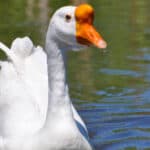
Swan Goose
Swan Goose Poyang Lake is a key wintering site for one of the world's most threatened goose species; concentrations can be nationally significant in good years.
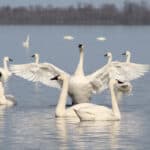
Tundra Swan
Tundra Swan Large, conspicuous wintering flocks draw visitors to Poyang's open-water and nearshore habitats.
Yangtze Finless Porpoise Critically endangered freshwater porpoise that uses Yangtze-linked waters including Poyang Lake; a flagship for freshwater biodiversity conservation.
Cabot's Tragopan A sought-after subtropical forest pheasant of southeastern China; Jiangxi's well-forested mountains are within its stronghold range.
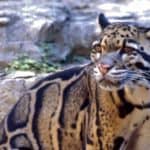
Clouded Leopard
Clouded Leopard Elusive forest cat associated with intact subtropical forests in southern China; presence (where confirmed) signals relatively healthy mountain ecosystems.
Reeves's Pheasant A striking endemic Chinese pheasant of forest edges and secondary growth; encountered in some protected forest landscapes in the province.

Endemic & Rare Species

Yangtze Finless Porpoise

Neophocaena asiaeorientalis

Critically Endangered (IUCN); highly threatened by habitat degradation, boat traffic, and historical bycatch

Poyang Lake and its Yangtze connection are important for remaining populations; conservation here is central to the subspecies' survival.

Siberian Crane

Leucogeranus leucogeranus

Endangered (IUCN); global population relies heavily on a few wintering sites

Poyang Lake is the key wintering ground worldwide, making Jiangxi indispensable to the species' annual cycle.

Oriental Stork

Ciconia boyciana

Endangered (IUCN)

Uses Poyang's shallow wetlands for wintering and staging; Jiangxi helps sustain regional recovery efforts for this iconic stork.

Chinese Pangolin

Manis pentadactyla

Critically Endangered (IUCN); severe declines from trafficking and habitat loss

Remaining populations in Jiangxi's forested hills are of high conservation value and represent one of the species' shrinking strongholds in southeastern China.

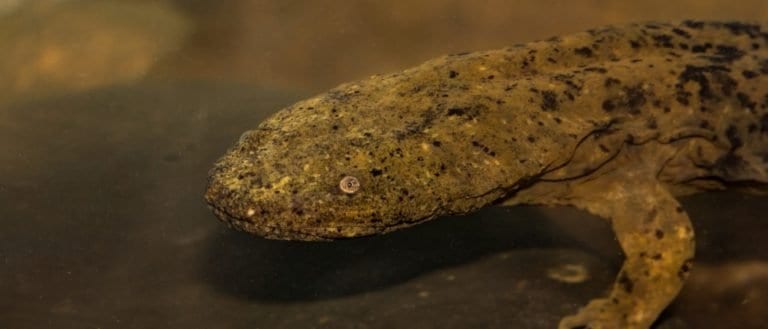
Chinese Giant Salamander

Andrias davidianus

Critically Endangered (IUCN); wild populations depleted, complicated by farming and releases

Mountain streams in Jiangxi historically supported giant salamanders; protecting clean headwaters and preventing disease/genetic impacts from releases are key issues.

Cabot's Tragopan

Tragopan caboti

Near Threatened (IUCN) (often treated as a high-priority forest indicator species in China)

A southeastern China specialty tied to mature subtropical broadleaf forest; Jiangxi's reserves provide important habitat continuity within its range.

Reeves's Pheasant

Syrmaticus reevesii

Vulnerable (IUCN)

Endemic to China and sensitive to hunting and forest fragmentation; Jiangxi's protected forests can support remnant, locally important populations.

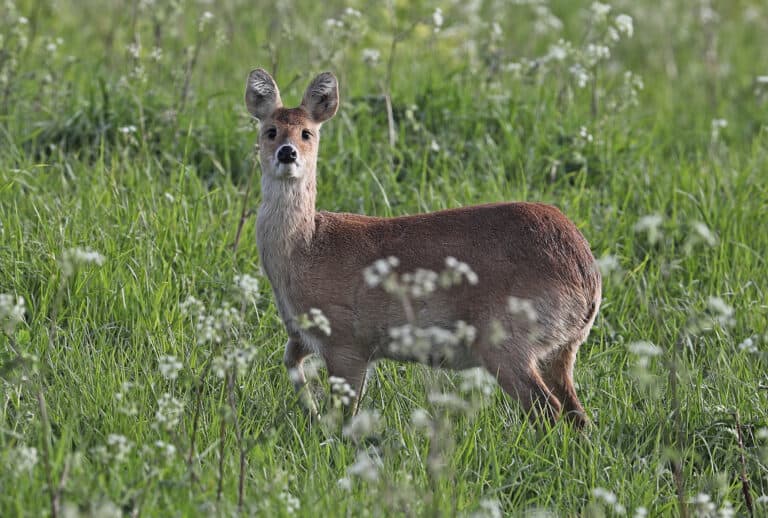
Pere David's Deer

Elaphurus davidianus

Extinct in the Wild (IUCN) with reintroduced free-ranging herds in China

Reintroduced/managed herds in the Poyang Lake region have become a notable conservation-and-ecotourism feature, linking wetland restoration with large herbivore recovery.

Notable Populations

  • Most important wintering concentration globally of Siberian Crane at the Poyang Lake wetland complex (in many years, a majority of the world population).
  • Nationally and internationally significant wintering assemblages of cranes (notably Hooded Crane and often White-naped Crane) and threatened geese (notably Swan Goose) at Poyang Lake.
  • One of the most important connected freshwater habitats in the Yangtze basin for the Critically Endangered Yangtze Finless Porpoise (regular occurrence and conservation focus in Poyang-linked waters).
  • Large, diverse wintering waterfowl communities (swans, geese, ducks) driven by Poyang Lake's seasonal flood-drawdown cycle, making the province a premier inland birding destination in China.

Recent Changes

  • Hydrological shifts and extreme low-water events in the Poyang Lake system (linked to climate variability and Yangtze basin regulation) have altered timing/extent of exposed lakebeds, affecting food availability and distribution for wintering cranes and geese.
  • Strengthened fishery regulations in the Yangtze basin (including the 10-year fishing ban beginning in 2021) have reduced some direct pressures; monitoring in connected waters has reported more frequent/publicized finless porpoise sightings in some areas, though threats persist.
  • Expanded wetland protection and restoration (reserve management, habitat zoning, and tighter controls in some zones) have improved conditions locally for wintering waterbirds, but impacts remain uneven due to development and historical sand mining/boat disturbance.
  • The Poyang Lake region of Jiangxi includes protected-area management for a reintroduced population of Pere David's deer (Elaphurus davidianus), including the Poyang Lake Milu National Nature Reserve.
  • Ongoing decline risk for highly trafficked mammals (notably Chinese pangolin) remains a major concern despite increased enforcement; local recoveries are patchy and difficult to confirm due to the species' secretive nature.
Visit

Wildlife Viewing

Jiangxi Province is a top inland China wildlife area around the Poyang Lake wetland complex (China’s largest seasonal freshwater lake), with subtropical forests, rivers, and mountains. It’s great for birding—wintering cranes and geese—plus forest mammals, amphibians, and rich freshwater life along the Gan River. Winters gather waterbirds on lake flats; spring/autumn bring migrations; summer brings frogs, butterflies, and night wildlife.

Best Seasons

Winter (Nov-Feb)

Peak waterbird spectacle at Poyang Lake as water levels drop and birds concentrate on mudflats and shallow lagoons. Best chances for large flocks of cranes, geese, swans, and raptors; crisp visibility for photography and scope viewing. Cold, damp days possible-plan layered clothing and early-morning field sessions.

Spring (Mar-May)

Northbound migration builds around Poyang Lake and along the Gan River wetlands; songbirds return to forests and breeding activity ramps up. Great for mixed birding: lingering winter birds plus arriving migrants. Forest reserves become active with birdsong, insects, and amphibians after rains.

Summer (Jun-Aug)

Best for subtropical forest biodiversity in mountain areas: frogs, insects, butterflies, and nocturnal wildlife. Expect hot, humid weather and frequent rain; some lowland wetland birding is quieter as many winter visitors are gone, but breeding herons/egrets and resident species remain. Night walks and streamside surveys can be excellent.

Autumn (Sep-Oct)

Southbound migration begins; raptors and passerines move through forest edges and ridgelines, and waterbirds start returning to Poyang Lake as conditions shift. Comfortable temperatures and good hiking conditions make this a strong all-around season for combining wetlands and mountains.

Top Wildlife Experiences

  • Winter crane and goose watching around Poyang Lake: dawn-to-midmorning scope sessions from lakeshore viewpoints and dike roads (aim for areas with broad mudflats and shallow bays; local wardens can advise daily hotspots).
  • Boat-based wetland exploration at Poyang Lake (where permitted and weather-safe): quietly scanning for swans, geese, and congregations of waders while learning about the lake's dramatic seasonal water-level cycle.
  • Wuyuan countryside birding circuit (spring and autumn): mix river valleys, forest patches, and agricultural mosaics for migrant passerines, raptors overhead, and photogenic habitat transitions.
  • Lushan (Mount Lu) forest and ridge hikes: early-morning walks for forest birds, seasonal migrants, and panoramic raptor watching from high viewpoints; combine with misty cloud-forest ambiance.
  • Jinggangshan National Nature Reserve-style mountain forest exploration (southern Jiangxi): guided day hikes plus optional night walks for amphibians, insects, and chance encounters with small mammals; focus on streams and forest edges after rain.
  • Wetland-to-farmland edge birding around Poyang Lake buffer areas: look for raptors hunting over fields, mixed flocks of buntings and finches, and evening fly-ins of waterbirds returning to roost.
  • Night heron/egret roost watching near larger waterways (Gan River tributaries and lake inlets): arrive before dusk to watch commuting lines of birds and listen for wetland soundscapes-excellent for atmospheric photography.

Wildlife Watching Types

Wetland birding (cranes, geese, swans, ducks, waders) Migratory birdwatching during spring/autumn flyways Raptor watching (seasonal migration and winter hunting over wetlands/farmland) Forest birding in subtropical broadleaf and montane habitats Heronry/rookery viewing (seasonal breeding colonies where accessible) Night wildlife walks (amphibians, insects, nocturnal birds; best in summer after rain) Butterfly and insect watching in summer mountain reserves Freshwater ecology watching (river/lake habitats; responsible observation of fish, amphibians, and wetland communities)

Guided Options

  • Poyang Lake wetland birding day trips with local bird guides (typically winter-focused; includes transport along dike roads, scope support, and flexible routing to daily bird concentrations).
  • Nature reserve ranger-led interpretation programs at Poyang Lake protection stations (when available): conservation briefings, designated viewpoints, and guidance on minimizing disturbance to wintering flocks.
  • Custom bird photography itineraries combining Poyang Lake (winter) + Wuyuan/Lushan (spring or autumn), arranged through regional birding clubs or specialist wildlife tour operators.
  • Mountain reserve guided hikes (e.g., Jinggangshan area) with park/nature reserve guides: trail access, habitat interpretation, and optional evening amphibian/insect walks in summer.
  • University- or NGO-linked wetland education activities around Poyang Lake (seasonal public outreach days): talks on migratory birds and wetland restoration-best for travelers who want a conservation-focused visit.
Habitats

Ecosystems

Jiangxi Province lies in the subtropical Gan River basin. It has rugged low-to-mid mountains (Luoxiao, Wuyi), large evergreen broadleaf forests, and Poyang Lake, a major inland freshwater wetland. Strong elevation changes, a dense river network (Gan, Fu, Xin, Rao), and big seasonal floodplains create many habitats that support huge numbers of migratory birds.

Biomes

Temperate Forest

Jiangxi is mainly humid subtropical evergreen broadleaf forest, grouped by WWF as Tropical and Subtropical Moist Broadleaf Forests (e.g., Southeast China–Hainan ecoregion). Higher mountains have mixed broadleaf and conifer woods.

Widespread across Jiangxi's hills and mountain ranges; most continuous in less-developed uplands (south, east, and west) and in protected reserves.

Freshwater

Large river basins and lakes dominated by the Gan River system and its tributaries, with extensive shallow-lake habitats at Poyang Lake and associated channels linking to the Yangtze. Supports diverse fish, amphibians, and wintering waterbirds.

High density across the entire province; strongest concentration in the northern lowlands around Poyang Lake and along major river corridors.

Wetland

Seasonally inundated floodplains, marshes, wet meadows, and reedbeds-especially around Poyang Lake-creating dynamic habitat mosaics that shift with water level fluctuations and are critical for migratory birds (e.g., cranes, geese).

Extensive in the Poyang Lake complex and along lower river floodplains; scattered smaller wetlands throughout valleys and reservoir margins.

Habitats

Forest

Evergreen broadleaf and mixed forests on hills and mountains; important biodiversity refugia in reserves such as Lushan and Wuyishan-adjacent areas.

Deciduous Forest

Patchy deciduous elements and mixed broadleaf stands, more common in cooler montane zones and secondary regrowth.

Coniferous Forest

Montane conifers on higher elevations and widespread plantation conifers (often mixed with broadleaf regeneration) in managed landscapes.

Woodland

Secondary woodlands and mixed scrub-tree mosaics on slopes recovering from past harvesting and on marginal lands.

Shrubland

Early-successional shrublands on disturbed hillsides, fire-affected areas, and along infrastructure corridors; often transitional to forest.

Grassland

Limited natural grasslands; mostly small patches on ridgelines, river levees, and as wet-season meadows on floodplains.

Mountain

Complex topography (Luoxiao/Wuyi-associated uplands) with strong elevational gradients, diverse microclimates, and high headwater stream density.

Cliff/Rocky Outcrop

Rock outcrops and cliffs in mountainous parks (e.g., scenic areas around Lushan-type relief), supporting specialized cliff vegetation and raptors.

Cave

Local limestone/rock shelter systems and small cave networks in hilly areas; important roosting and microhabitats where present.

Lake

Poyang Lake-the dominant freshwater feature-plus numerous smaller lakes/reservoirs; strong seasonal area fluctuations create shifting littoral habitats.

River/Stream

Gan River and major tributaries (Fu, Xin, Rao) with riparian forests, sandbars, and connected floodplain wetlands; key migration and dispersal corridors.

Pond

Widespread aquaculture ponds and small impoundments in lowlands, contributing to a dense small-waterbody network.

Wetland

Floodplain wetlands and wet meadows, especially around Poyang Lake; globally significant wintering habitat for migratory waterbirds.

Marsh

Reedbeds, sedge marshes, and shallow-water marsh complexes around Poyang Lake and river margins; highly seasonal in extent.

Swamp

Localized wooded swamps and backwater areas in low-lying floodplains and oxbow-like settings where drainage is poor.

Bog

Small, scattered montane peat-like wetlands may occur in cool, wet headwater settings, but are not widespread.

Agricultural/Farmland

Rice paddies and mixed cropland dominate many basins and valley floors; paddy-ditch networks interface strongly with natural wetlands.

Plantation

Commercial timber and economic tree plantations (often conifer, bamboo, and other managed stands) form a major part of the working landscape.

Urban

Urban cores such as Nanchang and other prefectural cities concentrated in basin lowlands, with associated riverfront modification.

Suburban

Expanding peri-urban belts around major cities and transport corridors, increasing fragmentation near lowland wetlands and rivers.

Ecoregions

Wuyi Mountains evergreen forests (WWF terrestrial ecoregion; eastern Jiangxi montane forests near the Fujian border) Nanling Mountains evergreen forests (WWF terrestrial ecoregion; southern Jiangxi uplands associated with the Nanling system) Jiang Nan subtropical evergreen forests (WWF terrestrial ecoregion; broad low-mountain/hill country across much of Jiangxi) Yangtze (Chang Jiang) Basin - freshwater ecoregion (FEOW; includes Poyang Lake and tributary networks connected to the Yangtze)
Protection

Conservation

Primary Threats

  • Hydrological alteration is a defining threat in Jiangxi's Poyang Lake system: altered seasonal water regimes (influenced by upstream Yangtze regulation and local water projects) change the timing/extent of exposed mudflats and sedge meadows that cranes and geese depend on, and can concentrate aquatic fauna into smaller areas during low-water periods.
  • Wetland reclamation/shoreline hardening, conversion of floodplain areas to agriculture/aquaculture, and fragmentation of subtropical forests (especially at lower elevations) reduce breeding and foraging habitat and weaken ecological connectivity between lake, river corridors, and surrounding hills.
  • Jiangxi has major metal mining and processing (notably copper/tungsten/rare earth-related activity in parts of the province). Mining footprints and tailings can cause habitat removal and contribute heavy-metal contamination risks to tributaries that ultimately drain to the Gan River-Poyang system.
  • Nutrient runoff and pesticides from intensive agriculture in the Gan River basin, plus urban/industrial effluents around key cities (e.g., Nanchang-lake corridor), can drive eutrophication and degrade freshwater habitats used by fish, porpoises, and wintering waterbirds; localized heavy-metal risks are also associated with mining areas.
  • Over-extraction of sand (river/lake sand mining) and other in-lake resources can deepen channels, destabilize shorelines, and alter benthic habitats and food webs-amplifying low-water problems in Poyang Lake and affecting fish and invertebrate availability for wildlife.
  • Historic high fishing pressure in Poyang Lake and connected rivers reduced fish biomass and altered age structures, affecting aquatic predators (including finless porpoise) and overall lake ecosystem resilience; enforcement and compliance remain variable across the broader lake/river network.
  • Seasonal tourism, boat traffic, shoreline activity, and wintering-bird viewing can disturb large congregations of cranes/geese at key foraging sites and roosts; disturbance is especially consequential during low-water periods when birds are concentrated in fewer safe areas.
  • Illegal take of waterbirds and forest wildlife persists in some areas (e.g., snaring, opportunistic shooting), with heightened risk around accessible lake margins and forest edges where enforcement coverage can be uneven.
  • Demand for high-value species (e.g., pangolins and some turtles) creates poaching incentives in Jiangxi's forested landscapes and along transport corridors, despite national protections.
  • Road expansion, embankments, bridges, and water-control structures fragment habitats and can block movement along riparian corridors; shoreline and port infrastructure around the lake increases disturbance and can constrain natural wetland dynamics.
  • Expansion/intensification of cropland and aquaculture around wetland margins simplifies habitat structure, increases nutrient/pesticide loading, and can displace traditional low-intensity land uses that formerly supported heterogeneous wetland-farmland mosaics used by wintering birds.
  • Growth of metropolitan areas (notably around Nanchang and other Gan River corridor cities) increases land conversion, wastewater loads, and shoreline development pressure that can indirectly impact Poyang Lake and tributary habitats.
  • Although large-scale natural forest logging has declined relative to past decades, plantation forestry and legacy fragmentation can still reduce old-growth characteristics (large trees, cavity resources) important for forest specialists and can increase edge effects and human access.
  • More frequent/extreme droughts, heat, and altered rainfall patterns can intensify low-water episodes at Poyang Lake, compressing wetland habitat availability during critical wintering periods and compounding existing hydrological stressors.
  • High-density congregations of migratory waterfowl at Poyang Lake elevate the risk of avian disease events (e.g., avian influenza dynamics), and degraded water quality can increase stress and susceptibility for aquatic species.
  • As birds concentrate near farmland during certain water-level conditions, crop depredation and perceived competition can increase, sometimes prompting harassment of geese/cranes or pressure to modify habitats that are important for foraging.
Fun Facts

Did You Know?

Poyang Lake can be like two ecosystems in one year: in the wet season it grows very large, and in the dry season it shrinks to grasslands and mudflats that migrating birds feed on.

Siberian cranes at Poyang are picky plant-eating specialists. They probe underwater tubers of aquatic plants, especially Vallisneria. A good crane year depends on how well submerged plant beds grew last season.

Poyang Lake in Jiangxi is like an airport for birds: cranes, geese, and swans that breed in far northern Asia, even Arctic Russia, fly thousands of kilometers to winter there.

Poyang's connection to the Yangtze can temporarily flip normal lake-river dynamics during high water: backflow events and shifting currents can redistribute fish and nutrients, which then ripple up the food web to birds and porpoises.

You can watch large crane flocks feeding far from any shoreline: when water drops, the exposed lakebed becomes a mosaic of shallow pools and sedge meadows, creating open, predator-visible feeding habitat that cranes strongly prefer.

Poyang Lake is the single most important wintering site on Earth for the critically endangered Siberian crane (Leucogeranus leucogeranus): in many winters roughly 90-98% of the global population has been counted there (often ~3,000-4,000 birds).

China's largest freshwater lake (Poyang) also supports one of the largest inland wintering waterbird gatherings in East Asia-midwinter surveys around the lake routinely total hundreds of thousands of ducks, geese, and swans across the wetland complex.

Poyang Lake is a global stronghold for the vulnerable swan goose (Anser cygnoides): counts at Poyang can reach tens of thousands in a single winter, making it one of the largest known wintering concentrations anywhere in the species' range.

The Poyang Lake wetlands are among the last big natural homes for the Yangtze finless porpoise (Neophocaena asiaeorientalis asiaeorientalis). It lives in the Yangtze River and lakes like Poyang and Dongting, so Jiangxi is a good place to spot it.

Thank you for reading! Have some feedback for us?