N S W E
Wildlife Expeditions

Wildlife of
Nunavut

Canada's Arctic heartland, Nunavut delivers unmatched sea-ice and tundra wildlife-polar bears, narwhals, and vast bird colonies across a continent-sized wilderness.
74 Species
1,936,113 km² Land Area
Overview

About Nunavut

Nunavut is a vast, sparsely lived Arctic territory where sea and land blend into one of the most intact cold ecosystems on Earth. Life here is shaped by short, bright summers and long winters when sea ice is used for hunting, travel, and survival. It is a stronghold for Arctic species and an important nursery and feeding area for marine mammals and seabirds. Key habitats include the sea-ice edge (a biological hotspot), polynyas (repeating open-water areas), and wide tundra with wetlands and river valleys that support waterfowl, shorebirds, and caribou. Coastal cliffs and islands host seabird colonies, and channels and sounds are important paths for narwhals, belugas, and bowhead whales. Low human footprint and sea-ice driven ecology make wildlife viewing here remote and special.

Physical Features

Geography

Nunavut's vast Arctic land—tundra mainland and a large Arctic Archipelago coast—creates many habitats that shape wildlife. Inland Canadian Shield uplands, river valleys, and wetlands support caribou, muskoxen, wolves, and migratory bird breeding. The marine edge (sea ice, polynyas, fjords, shallows) is key for polar bears, seals, walrus, whales, and seabirds.

1,936,113 km² (land area) Land Area
Largest subdivision in Canada (largest and northernmost territory) Size Rank
Canada Country
Territory Type
Elevation Range

Sea level to ~2,616 m (Barbeau Peak, Ellesmere Island)

Coastline

Extensive, highly indented Arctic coastline spanning the Arctic Ocean and major marine basins including Hudson Bay, Foxe Basin, Baffin Bay, and Davis Strait, with numerous channels, inlets, and fjords across the Arctic Archipelago.

Key Landscapes

Arctic Archipelago (major islands and island groups, including Baffin and Ellesmere; extensive inter-island channels and sounds) Arctic Ocean and adjacent seas/bays: Baffin Bay, Davis Strait, Lancaster Sound, Foxe Basin, Hudson Bay (marine mammals, seabird colonies, ice-edge habitats) Sea ice system and recurring polynyas (areas of persistent open water that concentrate marine life and predators) Arctic Cordillera (rugged mountains, glaciers, and fjords on Baffin and Ellesmere Islands) Mainland tundra plains and uplands (Kitikmeot and Kivalliq regions) Canadian Shield bedrock landscapes with eskers, rocky barrens, and patchy wetlands (important movement routes and calving areas for some caribou herds)
State Symbols

Official Wildlife Symbols

animal

Caribou

Designated 2000

bird

Rock ptarmigan

Designated 2000

fish

Arctic char

wildflower

Purple saxifrage

Designated 2000

Parks & Reserves

Protected Areas

Nunavut's protected areas include Parks Canada national parks, Migratory Bird Sanctuaries, National Wildlife Areas, and smaller territorial parks near communities. Protection focuses on Arctic tundra, polar desert, seabird colonies, and marine/sea-ice habitats used by marine mammals. Much land is roadless with few buildings, and protection is focused in High Arctic islands, Baffin, Hudson Bay lowlands, polynyas, and migration corridors.

Protected Coverage

Approximately ~12-14% of Nunavut's land and inland waters are in protected/conserved areas (varies by definition and whether marine protected areas are included).

National Parks & Preserves

Quttinirpaaq National Park (Ellesmere Island)

~37,775 km²

One of the world's most northerly parks, protecting polar desert and High Arctic ecosystems that support specialized wildlife and important denning/foraging habitat in an extreme climate.

Peary caribou muskox Arctic wolf Arctic hare ivory gull

Sirmilik National Park (Baffin Island & Bylot Island region)

~22,252 km²

A globally important Arctic marine-and-seabird landscape with ice edges, fjords, and major breeding colonies; excellent for viewing marine mammals and seabirds tied to sea-ice productivity.

narwhal polar bear walrus ringed seal thick-billed murre

Auyuittuq National Park (Baffin Island)

~19,089 km²

Protects dramatic Arctic Cordillera landscapes (glaciers, fjords, and alpine tundra) that support cliff-nesting birds and coastal/nearshore marine mammal use during the open-water season.

Arctic fox Baffin Island caribou peregrine falcon ringed seal polar bear (seasonal/coastal)

Ukkusiksalik National Park (western Hudson Bay)

~20,885 km²

A major tundra-coastal ecosystem around Wager Bay with important denning habitat, migratory bird staging areas, and seasonal concentrations of marine mammals and caribou.

polar bear beluga barren-ground caribou Arctic fox snowy owl

Qausuittuq National Park (Bathurst Island area)

~11,000 km²

Established to protect key High Arctic habitat for imperiled Peary caribou and other polar desert species, including critical calving/foraging areas and predator-prey dynamics in a sparse ecosystem.

Peary caribou muskox Arctic fox snowy owl polar bear (seasonal)

State & Provincial Parks

Sylvia Grinnell Territorial Park (near Iqaluit, Baffin Island)

Small day-use territorial park (local scale; size not typically cited in km²)

Small but accessible tundra-and-river habitat valued for Arctic char runs, migratory birds, and opportunities to view tundra wildlife near the capital.

Arctic char Arctic fox caribou (seasonal) rough-legged hawk snow bunting

Katannilik Territorial Park (Soper River, Baffin Island)

~1,262 km²

Protects a major river corridor and surrounding tundra important for fish, raptors, and migrating birds; noted for wilderness travel and wildlife viewing along the Soper River valley.

Arctic char peregrine falcon gyrfalcon caribou Arctic fox

Mallikjuak Territorial Park (Southampton Island)

Local territorial park (small; size not typically cited in km²)

Known for dense nesting and staging waterfowl and shorebirds in the eastern Arctic; overlaps with highly significant bird habitat on Southampton Island.

snow goose Ross's goose tundra swan sandhill crane Arctic fox

Kugluk (Bloody Falls) Territorial Park (near Kugluktuk)

Local territorial park (small; size not typically cited in km²)

A key river-and-canyon site on the Coppermine River that supports fish and raptors and serves as a wildlife travel corridor in the Kitikmeot region.

Arctic char lake trout peregrine falcon caribou (seasonal) Arctic ground squirrel

Wildlife Refuges

Queen Maud Gulf Migratory Bird Sanctuary (Kitikmeot mainland)

~61,765 km²

One of the most important nesting and staging areas for Arctic-breeding waterfowl in North America, supporting enormous seasonal bird concentrations across tundra wetlands.

snow goose Ross's goose tundra swan sandhill crane barren-ground caribou

Bylot Island Migratory Bird Sanctuary (near Pond Inlet)

Large bird sanctuary (regional scale; exact size varies by zoning/management units)

Internationally significant seabird and waterfowl breeding area (including large goose colonies) that also supports predators and marine mammals along the coastal margin.

greater snow goose king eider Arctic fox polar bear narwhal (nearby waters)

Polar Bear Pass National Wildlife Area (Bathurst Island)

~2,624 km²

Protects a rare High Arctic wetland corridor critical for migrating and breeding birds and for High Arctic mammals; also important for polar bear movement and seasonal use.

polar bear Peary caribou muskox Arctic fox red-throated loon

Wilderness Areas

  • Ellesmere Island interior (High Arctic polar desert and ice-cap landscapes with minimal access and vast roadless terrain)
  • Baffin Island interior and the Arctic Cordillera (remote mountain-and-fjord systems beyond community corridors)
  • Devon Island backcountry (one of the largest uninhabited islands with extensive polar desert wilderness)
  • Foxe Basin islands and coastal wetlands (remote, wildlife-rich shorelines with major bird and marine mammal use)
  • Melville Peninsula and the western Hudson Bay tundra coast (broad, undeveloped tundra important for migratory birds and seasonal polar bear use)
Animals

Wildlife

Nunavut's wildlife is defined by Arctic tundra, vast sea-ice ecosystems, polynyas (recurring open-water areas), and some of the planet's most intact marine mammal habitats. Diversity is lower than in southern Canada, but biomass and spectacle can be extraordinary-large marine mammals (whales, seals, walrus), wide-ranging predators (polar bear), immense seabird colonies on cliffs and islands, and migratory pulses of waterfowl and shorebirds. Many species are highly specialized to cold, ice, and short productive summers, making the territory a bellwether for climate-driven change.
≈40-55 (≈20-30 terrestrial + ≈20-25 marine, depending on taxonomy and seasonal visitors) Mammals
≈160-220 recorded; ≈120-170 regular breeders/migrants (varies strongly by region and year) Birds
0 (no native reptiles) Reptiles
0 (no native amphibians) Amphibians
≈80-120 (marine + freshwater combined; exact totals vary by checklist and survey coverage) Fish
Examples

Iconic Species

Polar Bear
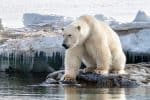
Polar Bear Nunavut contains extensive critical habitat across multiple polar bear subpopulations; bears are closely tied to sea ice for hunting seals and are a defining symbol of the territory's Arctic coasts and islands.
Narwhal
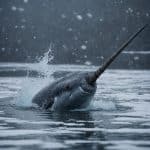
Narwhal Iconic 'unicorn' whale of the Arctic; Nunavut's High Arctic and Baffin region host globally important summering and migration areas where narwhals concentrate in fjords and ice edges.
Beluga Whale Belugas form seasonal coastal aggregations and migration corridors in Nunavut waters; their visibility near shore and strong cultural importance make them a cornerstone Arctic species.
Bowhead Whale
Bowhead Whale A long-lived Arctic baleen whale that uses Nunavut's ice-edge and polynya systems; sightings are a hallmark of offshore and High Arctic travel.
Atlantic Walrus Walrus haul-outs and feeding areas occur across Nunavut's eastern Arctic; large groups on ice or beaches are among the most dramatic wildlife encounters.
Muskox
Muskox A signature tundra grazer of Nunavut's mainland and many Arctic islands; muskoxen are among the most frequently encountered large land mammals in open tundra landscapes.
Caribou
Caribou Caribou (including island and mainland forms) shape the terrestrial ecosystem and are central to Inuit culture; seasonal movements and herd status are key features of Nunavut's wildlife story.
Arctic Fox
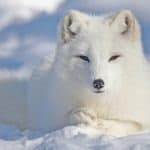
Arctic Fox Common across tundra and sea-ice edges, often seen around bird colonies and lemming-rich areas; an emblematic Arctic predator with white/blue color morphs.
Snowy Owl
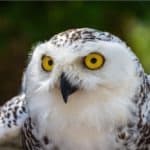
Snowy Owl A flagship Arctic raptor that breeds on tundra; numbers and nesting success can surge in peak lemming years, making it a sought-after species for visitors.
Thick-billed Murre One of the defining seabirds of Nunavut, nesting in huge cliff colonies; colony sites create intense seasonal wildlife concentrations of birds and predators.

Endemic & Rare Species

Peary Caribou

Rangifer tarandus pearyi

Endangered (Canada; COSEWIC-assessed subspecies; listed under SARA as Endangered)

A High Arctic island specialist and one of Nunavut's most distinctive large mammals; persistence depends on fragile forage access and conditions on the Arctic Archipelago.

Dolphin and Union Caribou

Rangifer tarandus groenlandicus

Special Concern (Canada; population-level concern varies by assessment)

Notable for long-distance seasonal movements that can include sea-ice crossings; its status reflects sensitivity to changing ice and hunting/harvest management needs.

Ivory Gull

Pagophila eburnea

Endangered (Canada; globally rare Arctic seabird strongly associated with sea ice)

A high-Arctic, ice-associated gull with limited breeding sites; Nunavut includes key breeding and foraging areas, making it a priority for monitoring and conservation.

Ross's Gull

Rhodostethia rosea

Rare/irregular breeder and migrant in Canada; globally uncommon

A highly sought-after Arctic rarity; Nunavut is among the few places in Canada where it is most plausibly encountered, especially in High Arctic contexts.

Peregrine Falcon

Falco peregrinus

Recovered from historic DDT-era declines; monitored in many Arctic regions

While no longer considered rare in many areas, its recovery is a major Arctic conservation success story; Nunavut cliffs and river valleys provide important nesting habitat.

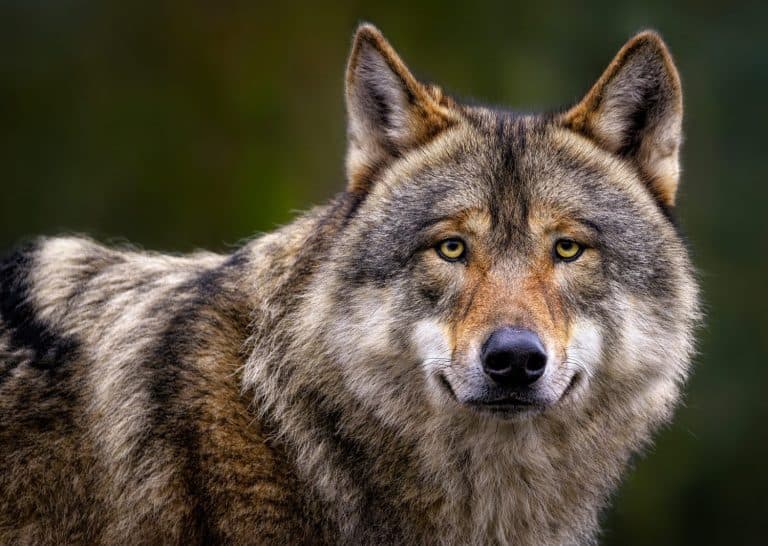
Baffin Island Wolf (taxonomic status debated)

Canis lupus manningi

Taxonomy unresolved; considered a distinct Arctic form by some authorities

Often cited as a distinctive High Arctic wolf form associated with the Baffin region; illustrates Nunavut's role in supporting specialized Arctic-adapted predators (noting ongoing taxonomic uncertainty).

Notable Populations

  • Globally important narwhal summering concentrations and migration corridors in Nunavut's eastern and High Arctic waters (fjords, sounds, and ice-edge systems).
  • Major bowhead whale use of Canadian Arctic waters, including Nunavut regions with recurring open water (polynyas) and productive ice edges.
  • Large, internationally significant seabird colonies (e.g., thick-billed murre and other cliff-nesters) on remote islands and coastal cliffs that concentrate predators and scavengers.
  • Some of Canada's most important polar bear habitats spanning multiple management subpopulations across Nunavut's coasts and archipelago.
  • Key walrus haul-outs and feeding grounds in eastern Arctic waters where large aggregations can occur seasonally.

Recent Changes

  • Sea-ice loss and shorter ice seasons are altering predator-prey dynamics (e.g., polar bear hunting opportunity, seal availability) and increasing open-water periods for shipping and human activity.
  • Increasing reports and seasonal presence of Killer Whales (Orcinus orca) in parts of the Canadian Arctic as reduced ice allows greater access, with potential impacts on narwhal and beluga behavior and survival.
  • Caribou dynamics have been highly variable: several Arctic and island-associated groups have experienced severe declines linked to weather/icing events, harvest pressure, and habitat change, with some local recoveries but continued concern overall.
  • Muskox declines have been reported in some areas at times, with disease and parasite concerns (and strong regional variation), underscoring sensitivity to changing conditions.
  • Northward range expansion/greater frequency of some typically southern/boreal species has been noted in parts of the mainland Arctic (e.g., Red Fox presence increasing in some tundra areas), reflecting broader warming-driven ecological shifts.
  • Seabird and marine ecosystem changes are being monitored as ocean conditions shift (food-web changes, altered timing of ice-edge productivity), with implications for colony success and distribution.
Visit

Wildlife Viewing

Nunavut has iconic Arctic wildlife across sea ice, tundra, and coastal fjords. You can see polar bears, narwhals, belugas, bowhead whales, walrus, muskoxen, Arctic foxes and caribou (seasonal), plus big seabird colonies. Wildlife follows sea-ice breakup and freeze-up and bird breeding. Best trips use boats, local outfitters, or small planes to communities such as Iqaluit, Pond Inlet, and Cambridge Bay.

Best Seasons

Late winter to early spring (March-May)

Classic ice season: long daylight returns, stable travel on sea ice (conditions permitting), and strong chances for Arctic fox and seals near leads/ice edges. Excellent for northern lights, winter birding surprises (ptarmigan), and culturally rich snowmobile and sled excursions with Inuit guides. Polar bear viewing can be possible in some areas but is highly variable and safety-managed.

Early summer / ice breakup (June-early July)

Explosive birdlife as migratory birds arrive and nest; tundra begins to green. Sea ice starts to shift and open-timing varies widely by region/year-creating opportunities for viewing seals, walrus hauled out, and the first whale movements. Great season for hiking with wildlife awareness and for photography under 24-hour daylight in many regions.

Peak summer (mid-July-August)

Prime marine mammal season in many communities: narwhal and beluga viewing in parts of the Eastern Arctic, plus chances for bowhead whales. Seabird cliffs are active; tundra wildflowers peak; boat and expedition cruise access is at its best. Also the most reliable time for multi-day trips (still weather-dependent). Mosquitoes can be intense inland-pack accordingly.

Fall / freeze-up (September-October)

Crisp light, fewer insects, and good chances to see walrus, late-season whales, and migrating birds. Tundra colors can be spectacular. As sea ice starts to form, travel changes fast; storms and early freeze-up can affect boats and flights. In some areas polar bear sightings rise along coasts, so viewing must follow local safety rules.

Winter (November-February)

Deep winter is best for aurora plus cultural and wilderness experiences (dog teams where available, snowmobile travel, ice fishing) and for tracking wildlife signs. Direct wildlife sightings can be less predictable due to darkness and weather, but the Arctic atmosphere is unmatched. Specialized guided trips are recommended.

Top Wildlife Experiences

  • Narwhal & beluga boat excursions from Pond Inlet and nearby Eclipse Sound during mid-summer (timing varies with ice)
  • Seabird cliff viewing at the Akpait National Wildlife Area (near Qikiqtarjuaq/Cumberland Sound region) for thick-billed murres, kittiwakes, and other Arctic seabirds (best in summer)
  • Polar bear-focused travel in the Kivalliq region, including areas around Arviat and along the Hudson Bay coast (best chances often in fall; always with expert local guides and strict safety practices)
  • Muskox viewing in and around the Cambridge Bay region (Victoria Island) and nearby tundra routes, often combined with cultural guiding and landscape photography (summer through shoulder seasons)
  • Beluga watching and coastal wildlife viewing around Iqaluit and Frobisher Bay on summer boat trips, with opportunities to spot seals and seabirds
  • Walrus haul-out viewing by boat in parts of the Eastern Arctic (location varies by year/ice; conducted with careful distance and local guidance to avoid disturbance)
  • Tundra birding day trips near Iqaluit or Rankin Inlet for Snowy Owl (occasionally), jaegers, loons, Arctic terns, shorebirds, and waterfowl during the breeding season (June-July)
  • Multi-day expedition cruise through the Eastern Arctic (e.g., Baffin Island fjords and the Northwest Passage routes) for a "big list" of whales, seabirds, and possible polar bears in a single itinerary (July-September)

Wildlife Watching Types

Whale watching (narwhal, beluga, bowhead; regional/seasonal) Polar bear viewing (highly seasonal; always guide-led and safety-managed) Walrus viewing (haul-outs and nearshore feeding areas, typically by boat) Seabird colony viewing (cliffs, coastal nesting sites) Tundra birding (shorebirds, loons, jaegers, ptarmigan; seasonal) Muskox and Arctic fox tracking/photography (tundra hikes, snowmobile routes) Seal viewing on sea ice and open water (ringed and bearded seals; seasonal) Arctic landscape + wildlife photography (midnight sun, tundra color seasons, aurora)

Guided Options

  • Community-based Inuit outfitter boat trips (common in Iqaluit, Pond Inlet, Clyde River, Qikiqtarjuaq, Cambridge Bay) tailored to whales, seabirds, and coastal wildlife-often the best way to match local conditions and respectful viewing
  • Parks Canada guided programming and interpretation where available in/near Nunavut national parks (e.g., Auyuittuq, Sirmilik, Quttinirpaaq): combine hiking with wildlife-aware travel and local knowledge
  • Licensed expedition cruise operators running Arctic Canada itineraries (Baffin Bay/Eastern Arctic and Northwest Passage routes), typically July-September, with onboard naturalists and shore landings for wildlife viewing
  • Local wildlife viewing and cultural guiding programs run through hamlet tourism offices or local operator associations (varies by community): a practical route for arranging day trips, safety briefings, and region-specific wildlife timing
  • Dedicated polar bear-focused trips led by experienced northern outfitters in regions with reliable seasonal activity, emphasizing distance, deterrence protocols, and community guidance (availability varies by year and local conditions)
Habitats

Ecosystems

Nunavut spans mainland Arctic Canada and most of the Arctic Archipelago, producing a strong north-south gradient from low-shrub tundra near the treeline to High Arctic polar desert and extensive ice-dominated marine systems. Ecosystems are shaped by permafrost, short growing seasons, strong winds, and sea ice dynamics, with globally important habitat for migratory birds, caribou, marine mammals, and cold-adapted predators.

Biomes

Tundra

Dominant terrestrial biome across the mainland and most islands, ranging from dwarf-shrub and sedge tundra in the south (near the treeline) to sparse cushion-plant and moss/lichen communities in the High Arctic.

Most land area (~60-75%), especially Kivalliq/Kitikmeot mainland and lowlands of Baffin, Victoria, and many smaller islands

Cold Desert

High Arctic polar desert with very low precipitation, thin soils, patterned ground, and extremely sparse vegetation (lichens, mosses, scattered forbs); common where exposure, dryness, and cold limit plant cover.

Substantial in the High Arctic islands (e.g., Ellesmere, Axel Heiberg) and exposed uplands (~10-25% of land, regionally dominant in the far north)

Alpine

Mountain and high-elevation environments in the Arctic Cordillera with glaciers, nunataks, scree, and alpine tundra communities where ice-free; strong elevation-driven microclimates.

Patchy but prominent along the eastern Arctic Archipelago (Baffin and Ellesmere ranges; local dominance in mountainous areas)

Boreal Forest (Taiga)

A narrow southern fringe near the continental treeline includes open, stunted spruce-tamarack stands and forest-tundra transitions, often interspersed with wetlands and shrub tundra.

Small, localized band in the far south of mainland Nunavut (generally <5% of territory land area)

Freshwater

Vast networks of glacially carved lakes, ponds, and rivers (often ice-covered much of the year), supporting Arctic char, lake trout, and key breeding habitat for waterfowl and shorebirds.

Widespread throughout; locally dense in lowland shields and coastal plains (numerous lakes/ponds across much of the mainland and larger islands)

Wetland

Permafrost-influenced wetlands (fens, marshy lake margins, peatlands) concentrated in lowlands and along river corridors; important for nesting birds and carbon storage where peat accumulates.

Patchy but extensive in mainland lowlands and some coastal plains (notably along the western Hudson Bay coast and interior lowlands); generally limited in the High Arctic

Marine

Arctic marine ecosystems dominated by seasonal and multi-year sea ice, polynyas, and productive ice-edge waters; critical for seals, walrus, whales (e.g., narwhal, beluga), seabirds, and polar bears.

Very extensive (Nunavut's coastline and surrounding waters span much of the Arctic Archipelago and Hudson Bay/Foxe Basin; sea-ice influence across most marine areas)

Habitats

Tundra

Low-shrub, graminoid, and lichen tundra across mainland and islands; strong microtopography from frost heave and polygonal ground; major caribou ranges and nesting areas for shorebirds.

Shrubland

Willow/birch shrub tundra concentrated in relatively warmer southern and riparian zones, including sheltered valleys and south-facing slopes near the treeline.

Mountain

Arctic Cordillera mountains on Baffin and Ellesmere with steep relief, glaciated valleys, and cold-adapted alpine biota; key denning and nesting sites on cliffs and ledges.

Cliff/Rocky Outcrop

Sea cliffs and inland escarpments used by nesting seabirds (e.g., thick-billed murres, kittiwakes) and raptors; especially around Lancaster Sound/Baffin Bay and rugged fjord coasts.

Lake

Large lakes (e.g., Nettilling Lake on Baffin Island-among Canada's largest) and countless smaller lakes that support Arctic char/lake trout and provide staging habitat for migratory birds.

River/Stream

Major river systems and braided channels (e.g., Thelon, Back, Coppermine, Kazan) with riparian willows, deltaic wetlands, and important fish runs and wildlife travel corridors.

Pond

Abundant tundra ponds and thaw-lake systems in lowlands; highly productive in summer for invertebrates and waterfowl despite long ice seasons.

Wetland

Fens and wet sedge meadows in low-lying permafrost landscapes; crucial breeding habitat for geese and other waterfowl and important for nutrient cycling.

Marsh

Shallow, seasonally flooded lake margins and river deltas with sedges and grasses; locally common in southern mainland lowlands and along broad river valleys.

Bog

Peat-accumulating wetlands where conditions allow (more common toward the southern mainland fringe); typically cold, waterlogged, and underlain by permafrost.

Coniferous Forest

Sparse, open black spruce-tamarack stands at the extreme southern margin (forest-tundra ecotone), often interspersed with wetlands and shrub tundra.

Coastal

Extensive Arctic coastline with barrier beaches, lagoons, tidal flats in places, and ice-scoured shores; critical haul-out and denning areas for marine mammals in some regions.

Beach

Gravel and sand beaches along Hudson Bay/Foxe Basin and parts of the archipelago; shaped by sea ice push, storm surges, and permafrost shoreline dynamics.

Rocky Shore

Ice-scoured bedrock and boulder shores common across the archipelago, with sparse intertidal life adapted to extreme seasonality and freezing conditions.

Estuary

River mouths and deltas where freshwater meets marine waters (notably along Hudson Bay and some mainland Arctic coasts), providing nutrient-rich feeding areas for birds and fish.

Open Ocean

Seasonally ice-covered offshore waters of Baffin Bay, Davis Strait approaches, Foxe Basin, and the central archipelago; productivity peaks at ice edges and polynyas.

Deep Sea

Deep marine basins and troughs in adjacent Arctic waters (e.g., parts of Baffin Bay) supporting cold-water benthic communities and deepwater circulation regimes.

Seabed/Benthic

Continental shelf and fjord seabeds across the archipelago, including soft-sediment basins and rocky substrates; important benthic feeding grounds for walrus and other fauna.

Urban

Small, widely separated communities (e.g., Iqaluit, Rankin Inlet, Cambridge Bay) with concentrated local footprint amid otherwise largely intact landscapes.

Agricultural/Farmland

Minimal to near-absent; limited to small-scale gardens/greenhouses and localized forage production in a few communities due to climate and soils.

Ecoregions

Northern Arctic tundra (WWF) Southern Arctic tundra (WWF) Arctic Cordillera tundra (WWF) Northern Canadian Shield taiga / Taiga Shield (WWF; limited southern fringe) Baffin Island tundra (often treated within Arctic Cordillera/Northern Arctic complexes in regional mappings) Hudson Bay Lowlands tundra-wetland complexes (WWF regional context; Nunavut portions along the western Hudson Bay coast) Arctic Archipelago (MEOW marine ecoregion complex) Hudson Complex (MEOW; includes Hudson Bay/Foxe Basin coastal waters) Baffin Bay-Davis Strait system (MEOW/Arctic marine regionalization; includes Lancaster Sound approaches and Baffin Bay margins)
Protection

Conservation

Primary Threats

  • Faster warming thins sea ice and shortens ice seasons, cutting polar bears' places to hunt and changing prey for seals, walrus, narwhal and beluga. Rain-on-snow and ice layers block caribou winter food, hurting calf survival.
  • Persistent organic pollutants and mercury transported from lower latitudes accumulate in Arctic marine food webs, elevating contaminant exposure in top predators (e.g., polar bears) and in harvested species important for food security. Local spill risks also increase with more shipping and fuel storage in remote communities and nearshore areas.
  • Airports, roads/trails around communities, marine infrastructure, and associated gravel extraction can fragment sensitive tundra habitats locally and increase disturbance near key denning/nesting areas. As marine access improves, new port proposals and expanded marine resupply can increase noise and ship-strike risk in narwhal and beluga travel corridors.
  • Active and proposed mines (and exploration) create localized habitat loss and disturbance, winter/ice-road traffic, and potential impacts from dust, waste rock, and water management. Mine-related aircraft and vehicle activity can disrupt caribou movements and increase energetic costs during calving and migration.
  • More Arctic tourism and ship traffic through key passages can disturb seabird colonies and marine mammals, especially in narrow channels and fjords where animals gather. Aircraft and people near nesting cliffs or polar bear denning areas can lower breeding success and raise stress.
  • Subsistence harvesting is central to Inuit culture and food security and is managed through community/regional systems; however, climate-driven population stress can make some populations less resilient to harvest. Management challenges include aligning quotas and seasonal access with rapidly changing ice conditions that alter where and when hunting occurs.
  • Commercial fisheries are limited compared to southern regions, but expanding interest (e.g., turbot/Greenland halibut and shrimp in adjacent waters) can affect Arctic food webs and increase bycatch risk. As fish distributions shift north with warming, pressure to develop new fisheries in Nunavut waters may rise, requiring precautionary management.
  • International trade in certain wildlife products (historically including polar bear hides and other furs) can create external economic incentives. While trade is regulated, it can complicate conservation when combined with climate impacts and the need for careful, population-specific harvest management.
  • Warmer temperatures and changing species ranges increase the likelihood of novel parasites and pathogens moving north (e.g., in caribou and marine mammals). Disease surveillance is difficult across Nunavut's vast, remote geography, so detecting and responding to outbreaks can be delayed.
  • True terrestrial invasions are limited by climate, but marine invasions become more plausible with increased shipping (hull fouling/ballast water) and longer ice-free seasons. Even small introductions in Arctic ports or near communities could have outsized impacts in slow-recovering cold-water ecosystems.
  • Polar bear-human encounters are a persistent safety issue for coastal communities, and changing ice patterns can increase the time bears spend on land near settlements. Conflict responses (deterrence, relocations, or kills in defense of life/property) can add pressure to local polar bear subpopulations already facing habitat loss.
Fun Facts

Did You Know?

Polar bears in Nunavut are essentially "marine" predators: most of their yearly calories come from seals caught on sea ice, and many bears can fast for months on land when the ice retreats.

Narwhals summering in Nunavut's Arctic waterways (notably around Eclipse Sound and Admiralty Inlet) can dive to roughly 1,500 meters-deeper than many other toothed whales-yet return to breathe through small ice openings they maintain and revisit.

A narwhal's tusk isn't just a weapon: it's an elongated tooth packed with nerves, and research indicates it can sense changes in water (including salinity/temperature), turning the "unicorn horn" into a sensory tool.

Arctic char in Nunavut commonly live a double life: many populations are anadromous-spending part of the year feeding at sea, then migrating back into freshwater rivers and lakes-so a "freshwater fish" can be ocean-fed.

Snowy owl breeding in Nunavut is strongly tied to lemming booms; in high-lemming years, owls can nest at unusually high densities, then largely vanish from an area the next year when prey cycles crash.

Nunavut contains habitat for 12 of Canada's 13 polar bear subpopulations-more than any other Canadian jurisdiction-making it the country's largest polar-bear-management region by area and number of populations.

Foxe Basin (between Baffin Island and the Melville Peninsula, north of Hudson Bay) is documented as one of the highest-density polar bear areas on Earth, with bears concentrated around seasonal sea-ice edges and polynyas.

Nunavut's High Arctic islands (including Ellesmere and Axel Heiberg) are core range for Peary caribou, the northernmost caribou on the planet-living farther north than any other wild member of the deer family.

Baffin Bay and Lancaster Sound support bowhead whales-widely regarded as the longest-lived mammals on Earth (often 100+ years, with evidence some exceed ~200 years) and a signature superlative species in Nunavut waters.

Digges Sound Migratory Bird Sanctuary (at the mouth of Hudson Strait) hosts one of Canada's largest thick-billed murre colonies-on the order of hundreds of thousands of breeding birds-making it a nationally significant seabird "megacolony" site.

Animals Found in Nunavut

74 species documented in our encyclopedia

Thank you for reading! Have some feedback for us?