
N
Species Profile

Northern Cardinal

Cardinalis cardinalis

Red crest, bold song, backyard royalty
Bonnie Taylor Barry/Shutterstock.com

Northern Cardinal Distribution

Click a location to explore more animals from that region

Loading map...

Found in 51 locations

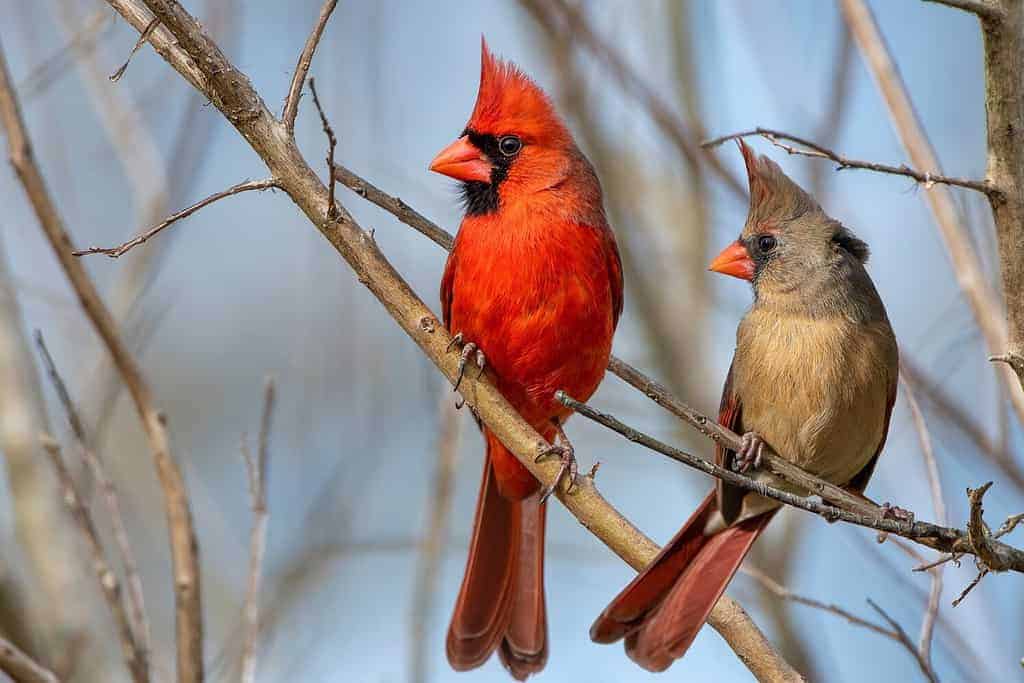
Vibrant Northern Cardinals Perched on Branch in Louisiana Winter

At a Glance

Wild Species
Also Known As Cardinal, Redbird, Red Cardinal, Virginia nightingale
Diet Omnivore
Activity Diurnal+
Lifespan 3 years
Weight 0.065 lbs
Status Least Concern
Did You Know?

Size (adult): 21-23 cm long; 25-31 cm wingspan; ~0.042-0.048 kg mass (commonly cited by Birds of the World/Cornell Lab).

Scientific Classification

A common North American passerine known for the male’s bright red plumage, prominent crest, and strong whistled song; females are mostly buff-brown with reddish accents. Frequently found near human habitation and is a familiar backyard bird.

Kingdom
Animalia
Phylum
Chordata
Class
Aves
Order
Passeriformes
Family
Cardinalidae
Genus
Cardinalis
Species
cardinalis

Distinguishing Features

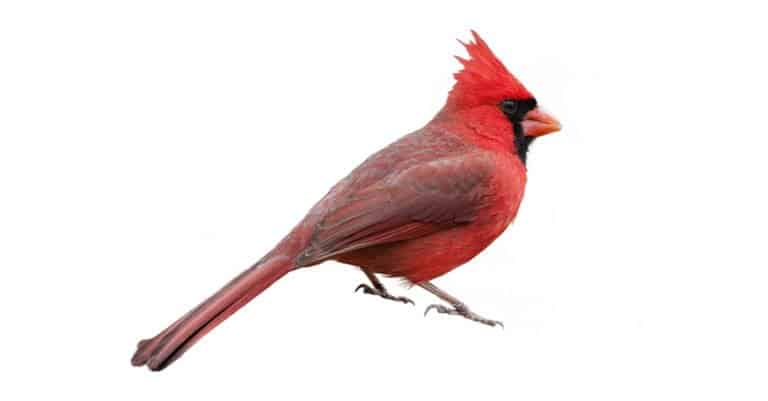
  • Prominent pointed crest and thick, conical orange-red bill
  • Adult male typically vivid red overall with a black facial mask
  • Adult female buffy/tan with warm reddish wings, tail, and crest
  • Rich whistled song and sharp metallic 'chip' call
  • Medium-sized songbird often seen at feeders

Physical Measurements

Length
9 in (8 in – 9 in)
Weight
0 lbs (0 lbs – 0 lbs)
Tail Length
4 in (4 in – 4 in)
Top Speed
28 mph
flying

Appearance

Primary Colors
Secondary Colors
Skin Type Feathered body; keratinized bill; scaly gray legs and feet (tarsi).
Distinctive Features
  • Prominent pointed crest gives a peaked head silhouette, often raised when alert.
  • Heavy, conical, seed-cracking bill; frequent visitor to backyard feeders and seed trays.
  • Adult size: 21-23 cm total length; wingspan 25-31 cm; mass 0.042-0.049 kg (Birds of the World/Cornell Lab).
  • Song: loud, clear whistled phrases; both sexes sing, including female song year-round (Cornell Lab).
  • Longevity: typical wild lifespan ~3 years; maximum banding record 15 years 9 months (USGS Bird Banding Laboratory record reported by Cornell Lab).
  • Range: resident across eastern and central North America; extends south through eastern Mexico; common in suburban gardens, hedgerows, and woodland edges.

Sexual Dimorphism

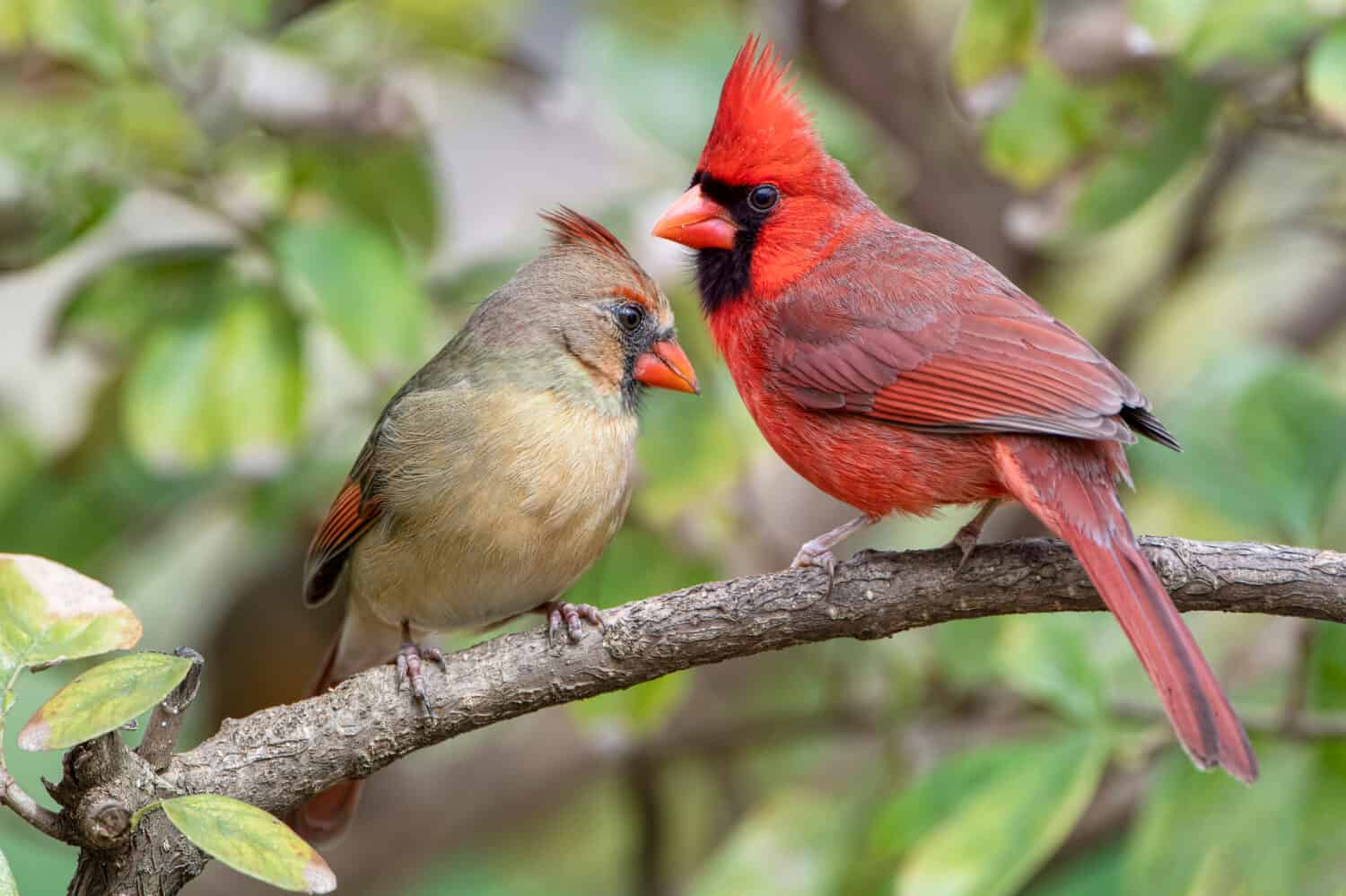
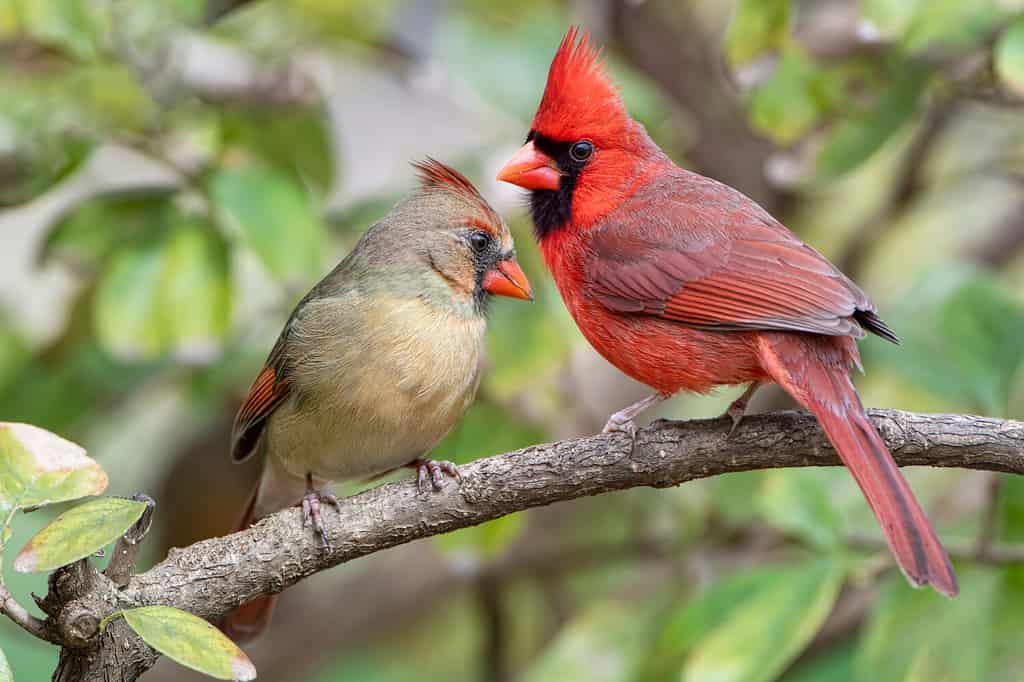
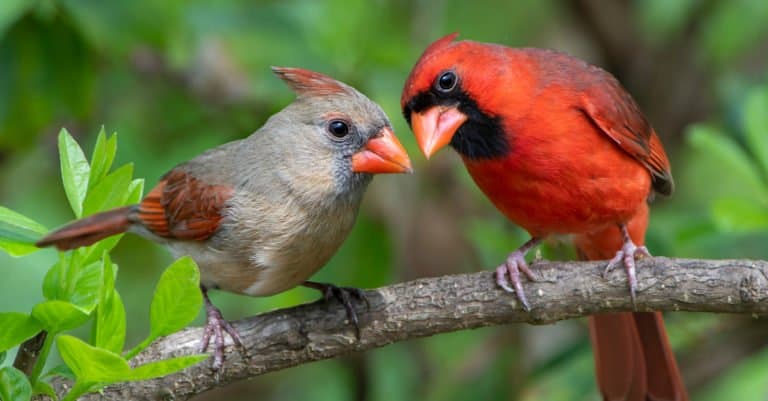
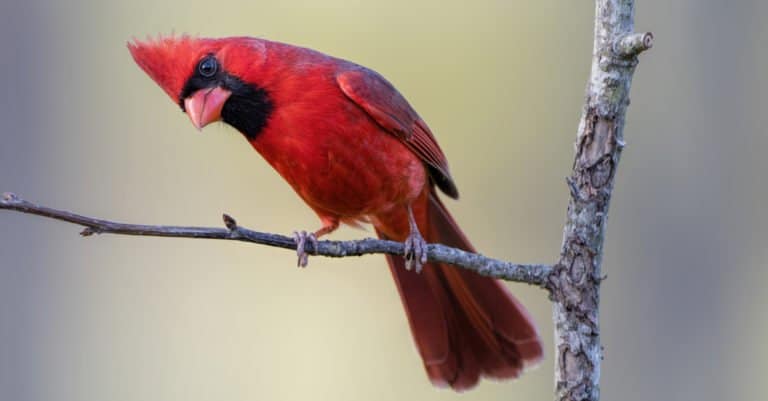
Males are vivid red with a strong black face mask and brighter orange-red bill, while females are buff-tan/brown with muted reddish accents and a weaker mask. Both sexes share the crest and thick bill.

♂
  • Overall bright red (crimson) plumage across head, body, and tail.
  • Bold black mask around bill and throat, typically more extensive.
  • Bill often appears more saturated orange-red; high contrast against facial mask.
♀
  • Overall buff-tan to brown plumage, paler below.
  • Reddish highlights on crest, wings, and tail rather than full-body red.
  • Facial mask reduced and less contrasting; bill orange but usually less striking.

Did You Know?

Size (adult): 21-23 cm long; 25-31 cm wingspan; ~0.042-0.048 kg mass (commonly cited by Birds of the World/Cornell Lab).

Both sexes sing; females may sing from the nest, often in response to a mate or intruder (documented in field studies and Birds of the World accounts).

Breeding pace: typically 2-5 eggs per clutch; incubation ~11-13 days; fledging ~7-13 days; often 2 (sometimes 3) broods per season (Birds of the World).

Longest well-documented wild lifespan is ~15 years 9 months based on banding records (USGS Bird Banding Laboratory longevity reports).

A frequent "window fighter": territorial birds commonly attack their reflection during spring/summer when hormones rise.

It's the official state bird of 7 U.S. states (IL, IN, KY, NC, OH, VA, WV)-more than any other bird species in the U.S.

Unique Adaptations

  • Heavy, conical bill and robust jaw muscles specialized for dehusking hard seeds (a hallmark adaptation in Cardinalidae).
  • Crested head feathers: the crest can be raised or flattened for signaling (arousal, aggression, alarm), adding a high-contrast silhouette.
  • Carotenoid-based plumage: male red coloration derives from dietary pigments and is used in sexual signaling; intensity can correlate with condition and diet quality (reported in ornithological literature on carotenoid signaling).
  • All-season vocal communication: as a passerine, the Northern Cardinal is a vocal learner; individuals develop distinctive local song patterns that aid territory and mate communication.
  • Facial mask contrast: the black mask around the bill increases visual conspicuousness in social signaling at close range, especially in dense vegetation.

Interesting Behaviors

  • Year-round territoriality: pairs (or males) defend feeding areas and song posts even in winter; disputes include chases, wing-flicks, crest-raising, and loud whistled songs.
  • Mate feeding: during courtship and incubation, males often feed females bill-to-bill, strengthening pair bonds and supporting egg production.
  • Song-based neighbor diplomacy: males use repeated song phrases and countersinging at territory edges; song rate often spikes at dawn.
  • Nest-building division of labor: females build the open-cup nest (often 1-3 m above ground in dense shrubs/vines), while males commonly guard nearby and escort the female to materials.
  • Diet switching through the year: heavy seed/fruit use in fall-winter; more insects and soft-bodied prey during breeding to feed nestlings.
  • Feeder tactics: they commonly crack sunflower and safflower seeds by bracing with the feet and using the thick, conical bill to husk efficiently.

Cultural Significance

Northern Cardinal (Cardinalis cardinalis) is a common bird at feeders, bright in winter. It is the state bird of Illinois, Indiana, Kentucky, North Carolina, Ohio, Virginia and West Virginia. Seen as a meaningful visit, it appears in cards, memorials, and holiday art. Its name links to Catholic cardinals' red robes.

Myths & Legends

Appalachian and broader North American folk belief: a cardinal appearing near a home is a message or visitation from a deceased loved one-an enduring grief-and-remembrance tradition, especially common in winter sightings.

Cherokee tale: the Northern Cardinal (Cardinalis cardinalis) got red feathers after being burned while bringing fire or a coal to the people; its crest and body turned red as a reward and sacrifice.

Northern Cardinal (Cardinalis cardinalis) is linked in Christian folk belief: its red feathers stand for the blood of Christ or watching over people, making it a common sign of faith, hope, and remembrance.

Early English speakers named the Northern Cardinal (Cardinalis cardinalis) for its bright red like the scarlet robes of Roman Catholic cardinals, making the bird seem noticeable and important in the landscape.

Conservation Status

LC Least Concern

Widespread and abundant in the wild.

Population Increasing

Protected Under

  • United States: Migratory Bird Treaty Act (16 U.S.C. §§ 703-712)
  • Canada: Migratory Birds Convention Act, 1994
  • General: Protected under various U.S. state/provincial wildlife regulations prohibiting capture, possession, or sale without permits

Life Cycle

Birth 3 chicks
Lifespan 3 years

Lifespan

In the Wild
1–15.8 years
In Captivity
1–28.5 years

Reproduction

Mating System Monogamy
Social Structure Socially Monogamous
Breeding Pattern Long Term
Fertilization Internal Fertilization
Birth Type Internal_fertilization

Typically forms socially monogamous pairs that defend territories and may remain together across multiple breeding seasons. Both parents feed young; clutches 2-5 eggs, incubation ~11-13 days, fledging ~9-11 days. Genetic studies show occasional extra-pair paternity.

Behavior & Ecology

Social Flock Group: 2
Activity Diurnal, Matutinal, Vespertine
Diet Omnivore Sunflower seeds (commonly reported as a preferred feeder food; Cornell Lab-All About Birds).

Temperament

Strongly territorial year-round; males frequently chase intruders and countersing at territory edges.
Seasonally monogamous with high mate fidelity; both sexes participate in territory defense.
Winter social tolerance increases; territorial aggression typically relaxes outside peak breeding.
Longevity record 15 years 9 months (USGS Bird Banding Laboratory); typical wild lifespan ~3 years (Cornell Lab).
Adult body mass ~42-48 g (Dunning 2008); posture and crest position used in threat displays.

Communication

Loud, clear whistled song; both males and females sing Halkin & Linville, Birds of the World
Sharp 'chip' contact call used during foraging and flock cohesion.
Harsh metallic alarm notes given to predators and during aggressive encounters.
Soft courtship calls during pair interactions, including feeding and nest coordination.
Crest raising, bill-up postures, and head-forward stares during escalation.
Wing-flicking, tail-fanning, and short hop-displays during close-range aggression.
Song-posting from exposed perches to advertise territory occupancy and pair status.
Physical chases and pecking at feeders when defending food patches.

Habitat

Biomes:
Temperate Forest Temperate Grassland Tropical Dry Forest Wetland
Terrain:
Coastal Hilly Plains Riverine Valley
Elevation: Up to 8530 ft 2 in

Ecological Role

Omnivorous seed/fruit consumer and seasonal insect predator in edge, shrub, and suburban ecosystems; important mid-trophic-level passerine.

Seed dispersal via fruit consumption (especially shrub/tree berries) Reduction of herbivorous arthropods during breeding season through insect predation (notably caterpillars and other insects fed to nestlings) Supports local food webs as prey for raptors and mesopredators (transfer of energy from seeds/fruits/invertebrates to higher trophic levels)

Diet Details

Other Foods:
Seeds Corn Fleshy fruits and berries Tree and shrub buds and plant material

Human Interaction

Domestication Status

Wild

Northern Cardinal, Cardinalis cardinalis, is wild, not domesticated. It was trapped for the cage-bird trade, but the U.S. Migratory Bird Treaty Act and Canada’s Migratory Birds Convention Act ended legal capture. Adults are about 21–23 cm and 0.042–0.048 kg; max recorded age 15 years 9 months. They use feeders and shrubs near people; males are territorial singers.

Danger Level

Low
  • Minor scratches/pecks if handled (e.g., during licensed rehabilitation/banding); males can be defensive near nests
  • Occasional nuisance behavior at homes (repeated striking at windows/mirrors due to territorial responses to reflections)
  • No meaningful venom/toxin risk and not considered dangerous to humans

As a Pet

Not Suitable as Pet

Legality: In the United States and Canada, keeping a Northern Cardinal as a pet is illegal under migratory bird laws, except with special permits for licensed rehabilitation or education; captive-bred trade is not allowed.

Care Level: Expert Only

Purchase Cost:
Lifetime Cost:

Economic Value

Uses:
Backyard bird feeding/retail (seed, feeders) demand driver Birdwatching/ecotourism and nature photography Cultural/symbolic value (widely used in art/branding; state bird in multiple U.S. states) Ecosystem services: insect consumption (especially for nestlings) and seed dispersal of some fruits
Products:
  • Consumer birdseed and feeder sales associated with attracting cardinals (sunflower/safflower mixes commonly marketed for them)
  • Wildlife-viewing revenue (parks, tours, optics, photography)
  • Educational materials and citizen-science participation (e.g., feeder counts, atlas projects)

Relationships

Related Species 6

Pyrrhuloxia Cardinalis sinuatus Shared Genus
Vermilion Cardinal Cardinalis phoeniceus Shared Genus
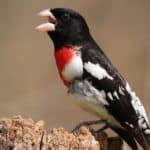
Rose-breasted Grosbeak
Rose-breasted Grosbeak Pheucticus ludovicianus Shared Family
Black-headed Grosbeak Pheucticus melanocephalus Shared Family
Indigo Bunting Passerina cyanea Shared Family
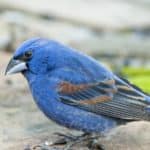
Blue Grosbeak
Blue Grosbeak Passerina caerulea Shared Family

Ecological Equivalents 5

Animals that fill a similar ecological role in their ecosystem

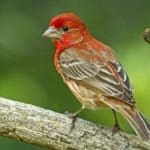
House Finch
House Finch Haemorhous mexicanus Both species overlap at backyard feeders and suburban edges. They are passerine birds that eat seeds (especially sunflower seeds) and small insects, forage in shrubs and low trees, and form winter feeding flocks. Northern Cardinal is about 21–23 cm long.
Tufted Titmouse
Tufted Titmouse Baeolophus bicolor Share habitat in deciduous and mixed woodland edges and residential areas; both use shrubs and the midstory, visit feeders, cache food, and frequently participate in mixed-species foraging flocks in winter.
Carolina Wren Thryothorus ludovicianus Similar niche around dense cover near human habitation. Both are year-round territorial songbirds across much of their overlap, often nesting in or near structures and foraging low in tangles for insects and other small prey.
Eastern Towhee Pipilo erythrophthalmus Both are ground- and low-shrub foragers in brushy edges. They overlap in diet (seeds and insects), use dense cover to avoid predators, and are common in early-successional habitats.
Brown Thrasher Toxostoma rufum Co-occurs in shrubby edges and hedgerows. Both species forage on or near the ground and in low vegetation for insects and fruit, and both maintain breeding territories signaled by loud, far-carrying songs.

The Northern Cardinal is a mid-sized songbird, easily recognized by its vibrant cardinal-red plumage, especially in males. Native to North and South America, the Northern Cardinal is also known by other common names such as red cardinal, common cardinal, or redbird.

Northern Cardinal Mates Perched

Northern Cardinals mate for life.

Where To Find Northern Cardinals

Northern Cardinals inhabit various environments, including wetlands, shrublands, gardens, and woodlands. They are found throughout North and South America, ranging from the southern half of Maine and Minnesota to southern Canada, Mexico, northern Guatemala, and Belize. They have also been introduced to Bermuda, Hawaii, southern California, and southern Arizona.

Classification and Scientific Name

The Northern Cardinal belongs to the Cardinalidae family, which contains 14 genera, including the Cardinalis genus. There are three species in the Cardinalis genus, with Cardinalis cardinalis being the type species. The species is divided into 19 subspecies. The term ‘cardinal’ refers to the red plumage, reminiscent of the robes worn by Roman Catholic cardinals.
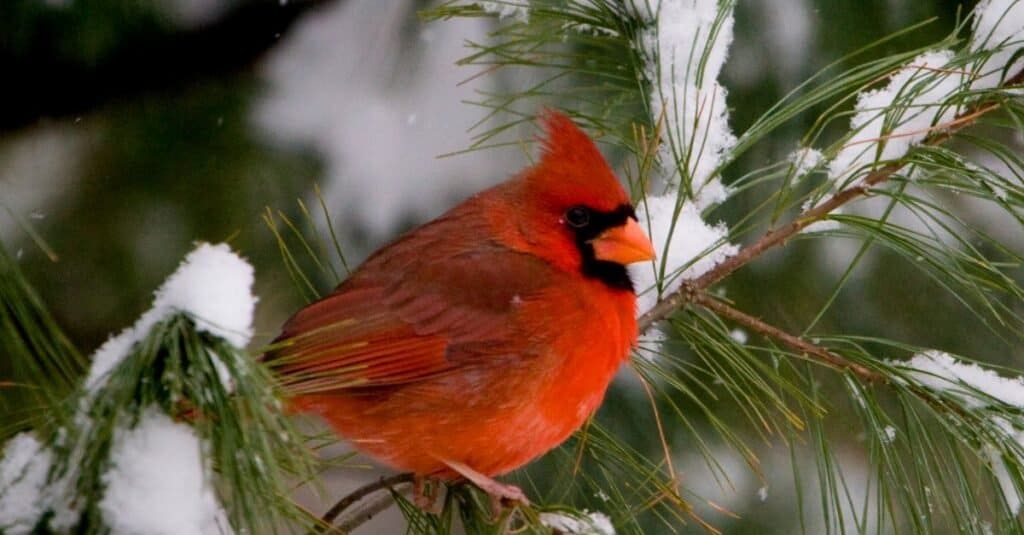
Red Animals - Northern Cardinal

Male and female Northern Cardinals build nests together.

Size & Appearance

The Northern Cardinal is a mid-sized songbird, with males sporting bright, classic plumage while the females are olive-brown with red accents. Both sexes have a raised crest and a coral-colored beak. Adults typically measure 8.3 and 9.3 inches in body length, with a wingspan of 9.8 to 12.2 inches. Males are generally larger than females, with adults weighing between 1.19 and 2.29 ounces. Baby cardinals are born featherless with pink skin, and their plumage develops into a tan color before gradually shifting to mottled browns and soft reds as they mature. Their beaks are black and fade to a coral-red color as they grow into adulthood.

They do not migrate, and they don’t molt. Instead, they lose a few feathers at a time from their bodies and often lose all the feathers on their heads. Molting occurs during late summer through mid-autumn. 
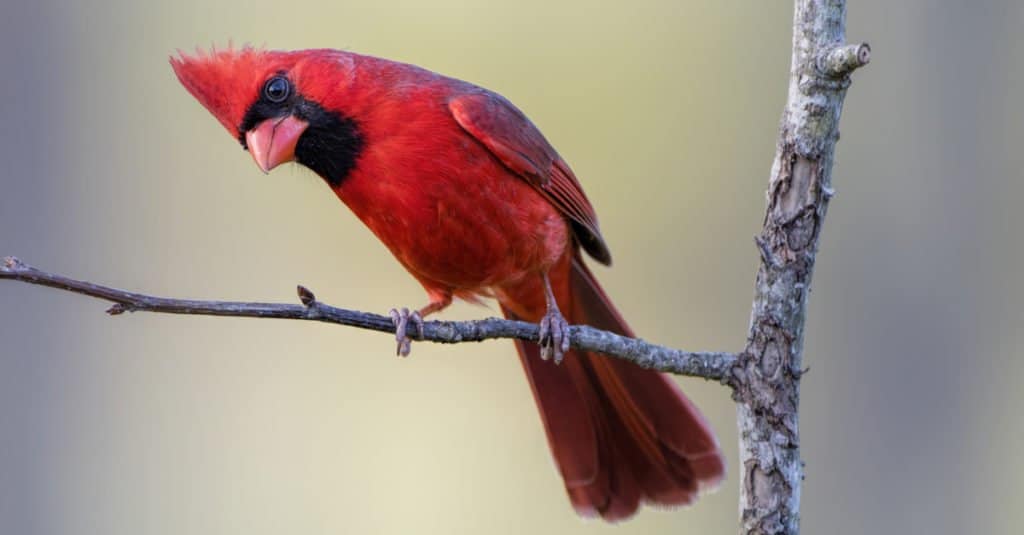
Northern Cardinal on a branch

Northern Cardinals molt from late summer to mid-fall.

Behavior

Northern Cardinals are known for their varied songs, with males using a high-pitched whistle to defend their territory. Both males and females have different-sounding calls due to hormonal differences, although indistinguishable from the human ear. The songs of Northern Cardinals vary based on geographic location, and both sexes learn their songs.

Males are territorial, and one of their calls is a clear, high whistle from high up in a tree to defend its territory. Their songs consist of clear whistles in repeating patterns at first, which become varied. They also make short chirp sounds as warning calls against predators or for a pair to locate each other.
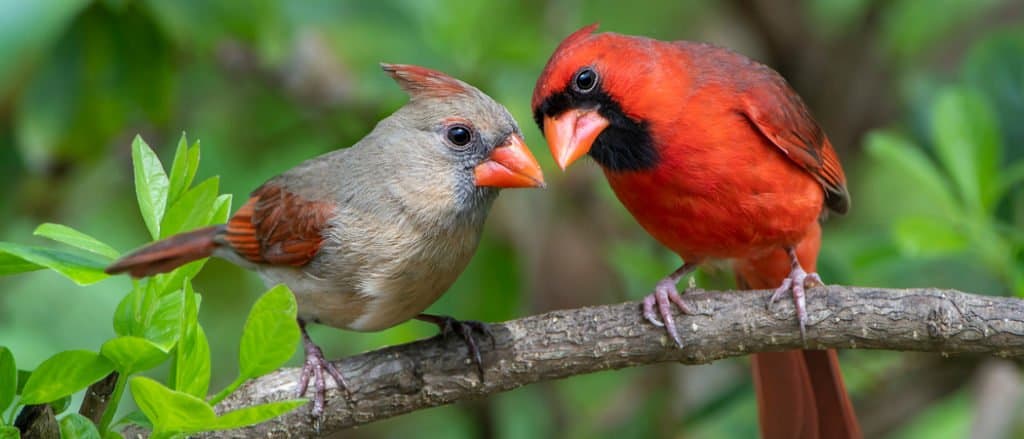
Male and female Northern Cardinals

Male and female sing songs to each other.

Diet

Northern Cardinals are omnivorous, feeding on seeds, grains, fruits, and insects. They also forage for insects such as cutworms, grasshoppers, caterpillars, termites, and beetles, using their strong beaks to dig through the ground and bushes.

Predators and Threats

Because the Northern Cardinal looks for food on the ground and it has bright colors, other animals can easily see it. The search for food leaves it vulnerable to predators, especially birds of prey like eagles and owls, and even more so during the winter because of its stark contrast with snow. Other birds of prey that hunt Northern Cardinals are hawks, falcons, and shrikes. Snakes and domestic cats also hunt them. Even squirrels and chipmunks can kill them, as can crashing into windows. Predators of eggs and chicks are domestic cats, chipmunks, squirrels, crows, blue jays, and snakes.
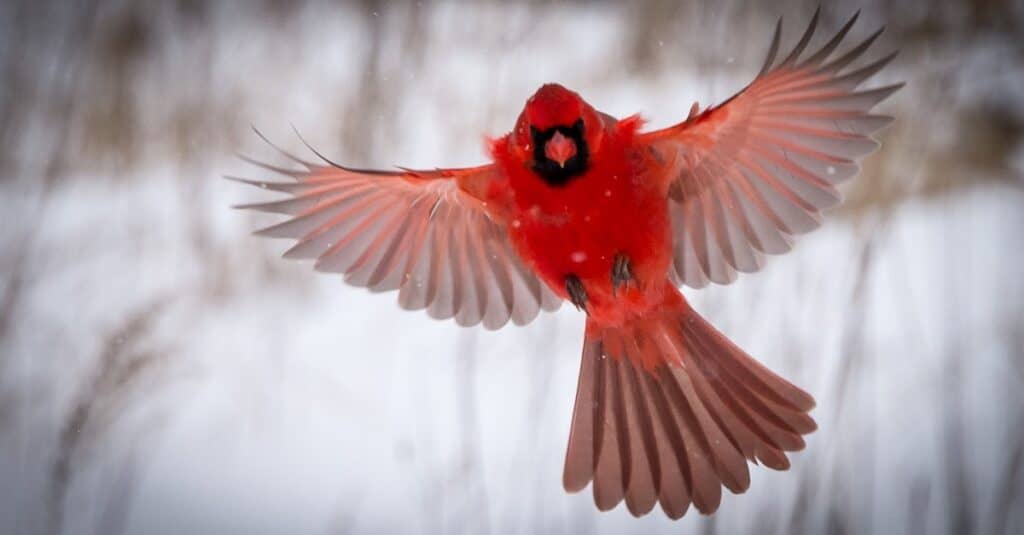
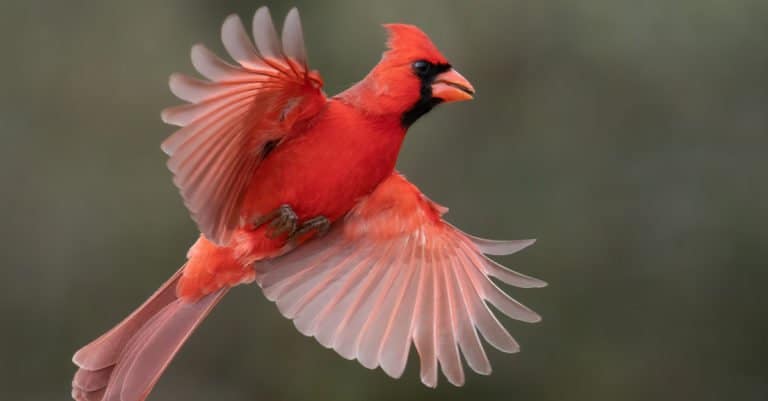
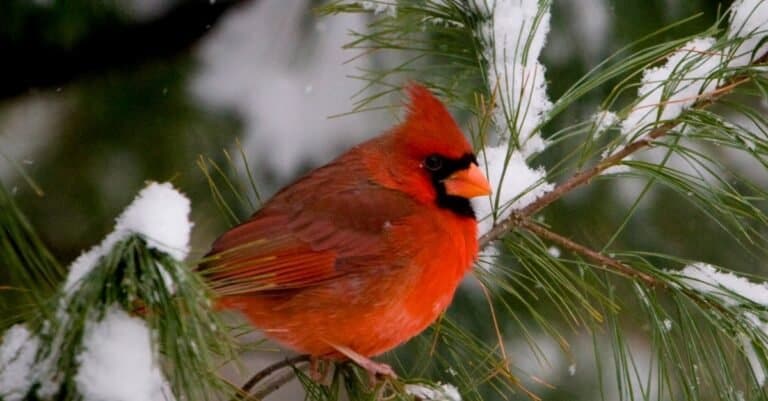
northern cardinal in snowy flight

Northern Cardinals’ bright plumage makes them rather conspicuous to predators such as eagles, falcons, hawks, and owls.

Nesting

Cardinals build their nests in dense shrubs and low trees about 3.3-9.8 feet off the ground. The female builds the nest mainly, with the male providing nesting material. The nest has a cup shape and comprises four layers of coarse twigs, sometimes with pieces of trash, grapevine bark lining, pine needles, rootlets, stems, and grasses. It takes three to nine days to build, with the completed nest measuring 2-3 inches in height, 4 inches across, and an inner diameter of about 3 inches. The pair usually uses the nest only once.

Reproduction, Babies, and Lifespan
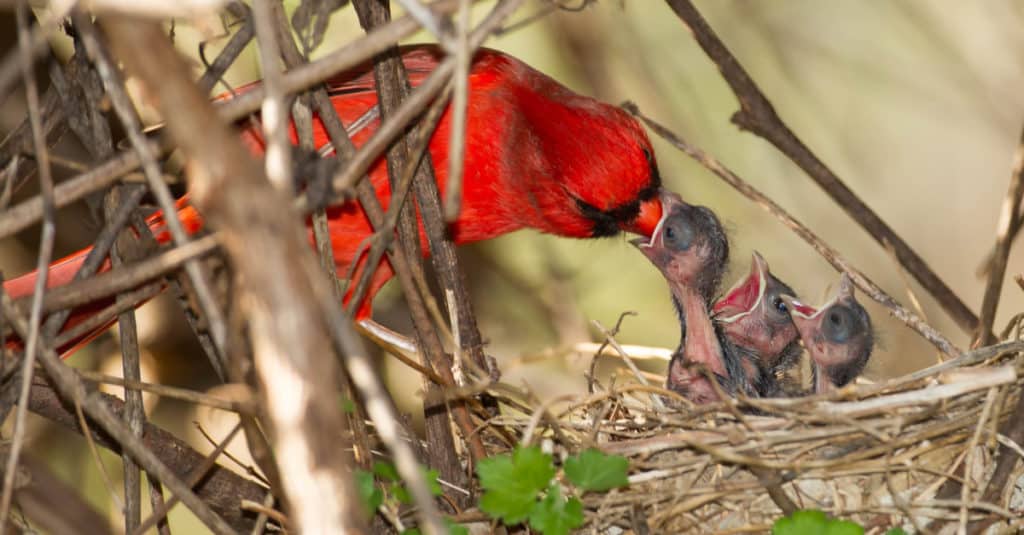
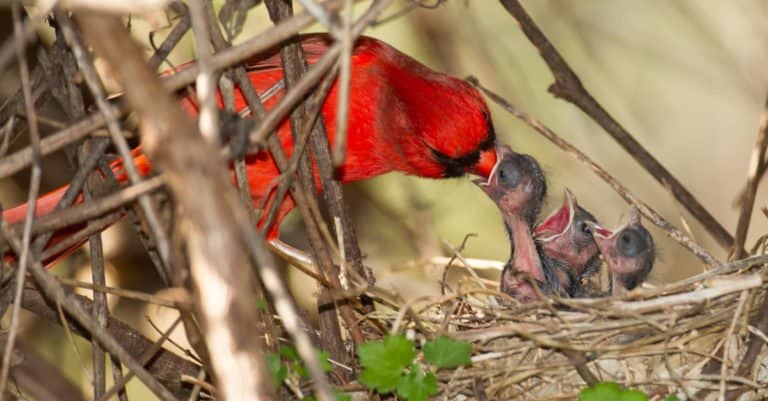
Northern Cardinal with hatchlings

Northern Cardinals both care for their eggs and their young with males responsible for feeding hatchlings.

Mating season for Northern Cardinals begins as early as January and ends as late as September. They usually mate for life, although they may have other mates between seasons, and when their mate dies, they find another one. Males feed females to bond with them and also provide nesting materials. They sing together before nesting.

Females lay eggs one to six days after completing the nest, with a clutch size of three or four eggs each time and two to four broods each year, with the first brood around March and the second between May and July. The eggs are white-tinted brown, blue, or green, with brown, grey, or lavender blotches which get thicker at the larger end. Their shells are smooth and somewhat glossy and measure 1.02 x 0.75 inches in size. Females do most of the incubation, with males incubating briefly on rare occasions, for 12 to 13 days. While the females incubate the next clutch, males feed and care for the existing brood.

The bird reaches sexual maturity at 1 year, while its lifespan is an average of 3 years in the wild. Each year, 40 percent die and many juvenile birds don’t live to adulthood, often only living about a year. The oldest wild cardinal was 15 years old, but in captivity, the oldest cardinal was 28.5 years old.
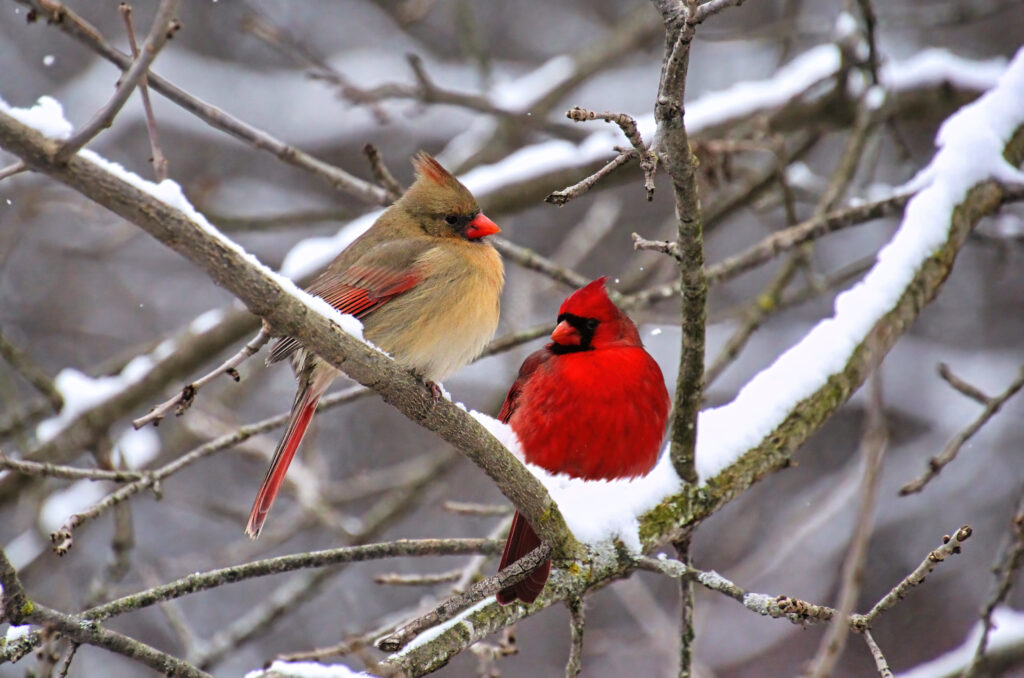
Pair of cardinals perching on a tree branch in the snow

Seven U.S. states have chosen the Northern Cardinal as their official state bird.

Population

According to the known facts about the bird, the Northern Cardinal is not endangered or threatened, but it can encounter many outdoor hazards. The IUCN Red List states its population is stable and listed as Least Concern.

View all 98 animals that start with N

Sources

  1. Wikipedia / Accessed July 14, 2021
  2. BioExplorer / Accessed July 14, 2021
  3. What Birds are in My Back Yard? / Accessed July 14, 2021
  4. Animalia / Accessed July 15, 2021
  5. BirdWatching Buzz / Accessed July 15, 2021
  6. Country Captures / Accessed July 15, 2021
  7. Sciencing / Accessed July 15, 2021
  8. Answers / Accessed July 15, 2021
  9. Animal Diversity Web / Accessed July 15, 2021
  10. Caring Cardinals / Accessed July 15, 2021
  11. The Spruce / Accessed July 16, 2021
  12. Answers / Accessed July 16, 2021
  13. BirdWatching Buzz / Accessed July 16, 2021
  14. Texas A&M AgriLife Research https://txtbba.tamu.edu/species-accounts/northern-cardinal/ Jump to top / Accessed July 16, 2021
Abby Parks

About the Author

Abby Parks

Abby Parks has authored a fiction novel, theatrical plays, short stories, poems, and song lyrics. She's recorded two albums of her original songs, and is a multi-instrumentalist. She has managed a website for folk music and written articles on singer-songwriters, folk bands, and other things music-oriented. She's also a radio DJ for a folk music show. As well as having been a pet parent to rabbits, birds, dogs, and cats, Abby loves seeking sightings of animals in the wild and has witnessed some more exotic ones such as Puffins in the Farne Islands, Southern Pudu on the island of Chiloe (Chile), Penguins in the wild, and countless wild animals in the Rocky Mountains (Big Horn Sheep, Mountain Goats, Moose, Elk, Marmots, Beavers).
Connect:

Thank you for reading! Have some feedback for us?


Northern Cardinal FAQs (Frequently Asked Questions)

Seeing any red cardinal symbolizes a ray of hope and represents good luck and new beginnings.