
S
Species Profile

Seagull

Laridae

Street-smart birds of sea and city
iStock.com/Evgenyi_Eg

Seagull Distribution

Click a location to explore more animals from that region

Invasive Species

This map shows coastal regions where Seagull are found.

Loading map...

Size Comparison

Human 5'8"
Seagull 1 ft 4 in

Seagull stands at 23% of average human height.

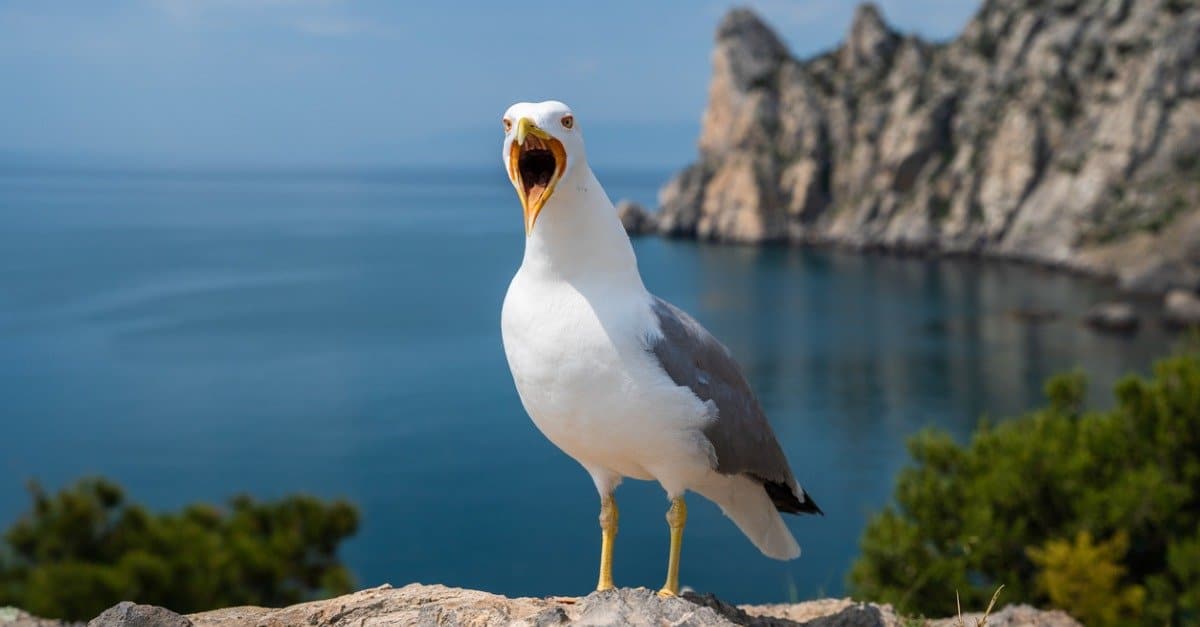
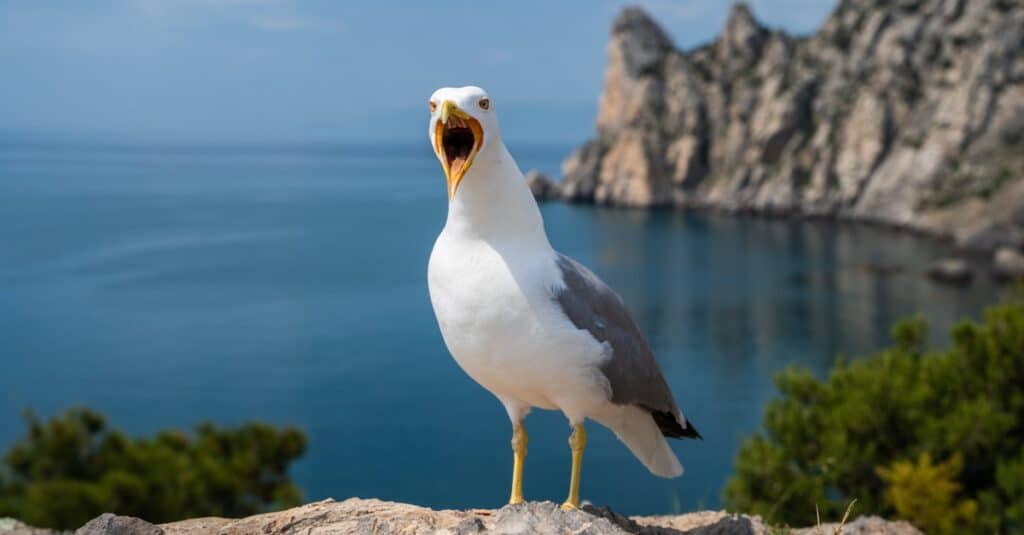
screaming seagull

At a Glance

Family Overview This page covers the Seagull family as a group. Stats below are general traits shared across the family.
Diet Omnivore
Activity Diurnal+
Lifespan 15 years
Weight 2.3 lbs
Status Not Evaluated
Did You Know?

The smallest gulls (e.g., Little Gull) are pigeon-sized, while the largest (e.g., Great Black-backed Gull) can rival a small eagle in wingspan.

Scientific Classification

Family Overview "Seagull" is not a single species but represents an entire family containing multiple species.

Gulls (family Laridae) are medium to large seabirds and generalist foragers found worldwide along coasts, lakes, and rivers. Many species are highly adaptable and commonly associate with human environments (ports, beaches, landfills).

Kingdom
Animalia
Phylum
Chordata
Class
Aves
Order
Charadriiformes
Family
Laridae

Distinguishing Features

  • Long, pointed wings adapted for soaring and dynamic flight in coastal winds
  • Stout, slightly hooked bill suited for varied diets (fish, invertebrates, carrion, human refuse)
  • Webbed feet for swimming and surface-feeding
  • Often gray-and-white plumage with seasonal or age-related changes; many take several years to reach adult plumage
  • Loud vocalizations and colonial nesting behavior common in many species

Physical Measurements

Males and females differ in size

Height
1 ft 4 in (8 in – 2 ft 2 in)
Length
1 ft 6 in (9 in – 2 ft 7 in)
Weight
2 lbs (0 lbs – 5 lbs)
2 lbs (0 lbs – 4 lbs)
Tail Length
6 in (3 in – 10 in)
Top Speed
56 mph
flying

Appearance

Primary Colors
Skin Type Body covered in dense contour feathers and waterproof flight feathers; bare keratin bill and scaled legs/feet. Eye-ring/orbital skin may be colored; webbed feet typical, with coloration varying by species, age, and season.
Distinctive Features
  • Size range across Laridae: roughly 24-76 cm length; ~60-170 cm wingspan; ~0.1 kg to >2 kg mass.
  • Lifespan range: commonly ~10-30 years; large, long-lived species can exceed 35-40 years.
  • Long, pointed wings suited to soaring and dynamic flight; broad wings in larger gulls, narrower in smaller species.
  • Stout to moderately slender bill, often with a slight hook and visible gonydeal angle; bill color and markings vary widely.
  • Plumage changes strongly with age and season: many species have multi-year immature stages and distinct breeding vs nonbreeding head patterns.
  • Foraging ecology is broadly opportunistic: scavenging, surface-feeding, predation on fish/invertebrates, kleptoparasitism; degree varies by species and habitat.
  • Habitat breadth is high: coasts, estuaries, lakes, rivers, agricultural fields; some more pelagic, others strongly inland or urban-adapted.
  • Human association common in many species (ports, beaches, landfills), but reliance on human food sources varies regionally and by species.
  • Often colonial nesters on cliffs, islands, beaches, rooftops, or marshes; colony density and aggression levels vary.
  • Vocal and social displays conspicuous; many species show bold posture, head-tossing, and territorial defense around nests.

Sexual Dimorphism

Sexual dimorphism is usually subtle: males average larger with heavier bills and heads, while plumage is typically similar. Differences are most evident in size-based dominance, bill robustness, and occasionally timing of molt or ornament intensity in some species.

  • Slightly larger body size and wingspan on average, especially in larger gulls.
  • Heavier, deeper bill and broader head profile in many species.
  • Often more dominant in pair and colony interactions due to size advantage.
  • Slightly smaller overall size with slimmer bill and head profile on average.
  • Plumage generally matches male within the same age/season class.
  • May show marginally different foraging roles or incubation/brooding time in some species (variable).

Did You Know?

The smallest gulls (e.g., Little Gull) are pigeon-sized, while the largest (e.g., Great Black-backed Gull) can rival a small eagle in wingspan.

Most gulls take several years to reach adult plumage-many show distinct "juvenile," "immature," and "adult" looks that can change seasonally.

Gulls are famous generalists: across the family they eat fish, insects, worms, crustaceans, eggs, carrion, and human leftovers-diet shifts with habitat and season.

Many species are highly social and nest in colonies, from remote cliffs to city rooftops; others nest more sparsely depending on local conditions.

Kleptoparasitism (stealing food from other birds) occurs in multiple gull species, but how often it's used varies by species, age, and opportunity.

Gulls have specialized salt glands that help many species drink seawater-an important edge for ocean-living birds.

Some gulls are long-lived for birds of their size: while many live around a decade or two, banded individuals of larger species have been recorded living 30+ years.

Unique Adaptations

  • Salt-excreting nasal glands (in many species) allow life in marine environments while maintaining water balance.
  • Webbed feet and strong, moderately long wings support efficient swimming, walking on shore, and long-distance flight/soaring on coastal winds.
  • Versatile bill shapes and head/neck strength: across the family, bills range from slender to heavy with a hooked tip, aiding everything from picking insects to tearing carrion.
  • Waterproof plumage and preening oils help maintain insulation and buoyancy in cold, wet conditions.
  • Age- and season-variable plumage: mottled juveniles and changing winter/summer patterns can reduce aggression from adults and reflect different social roles.
  • High behavioral flexibility and learning: many gulls quickly exploit new foods and human-made habitats, with local "traditions" in foraging tactics.
  • Colonial breeding strategies (in many species) amplify vigilance and predator deterrence through group defense.

Interesting Behaviors

  • Opportunistic foraging across habitats: many gulls switch between beaches, fishing boats, farmland, lakes, rivers, and landfills; the balance varies widely by species and region.
  • Colony life: alarm-calling, group defense (mobbing predators), and synchronized takeoffs are common where they breed densely, especially on islands, cliffs, and coastal dunes.
  • Rooftop and urban nesting: several species readily use buildings as "artificial cliffs," exploiting warmth, safety from some predators, and nearby food sources.
  • Kleptoparasitism: chasing, harassing, or timing approaches to snatch prey from terns, other gulls, or even humans; some species/individuals specialize more than others.
  • Seasonal movements: the family includes long-distance migrants, partial migrants, and largely resident populations-often depending on latitude and food availability.
  • Age-structured flocks: mixed groups often include many immature birds; younger gulls may forage differently and use different habitats than adults.
  • Complex vocal communication: many species have distinct calls for alarm, aggression, pair/territory defense, and contact-useful in noisy colonies.

Cultural Significance

Gulls (seagulls, Laridae) are common at ports, beaches, and fishing boats, and stand for the sea, changing weather, and being resourceful. They follow trawlers, clean harbors, thrive in towns, and often mean freedom, travel, and the shoreline.

Myths & Legends

British and Irish maritime folklore commonly treats gulls as the souls of drowned sailors; harming a gull is often said to invite misfortune or foul weather at sea.

Seafaring superstition in parts of northern Europe holds that gulls gathering and calling near shore can foreshadow storms-making them both omens and "weather birds" in coastal tradition.

In some Pacific Northwest Indigenous storytelling traditions, gulls appear as loud, hungry, clever shoreline characters-often serving as comic foils in tales about sharing food, greed, and the social order of animals.

Coastal place-lore around fishing villages frequently includes "do not kill the gulls" taboos tied to protection of crews at sea, reinforcing respect for birds closely associated with boats and harbors.

The name 'kittiwake' (a gull within Laridae) is rooted in traditional onomatopoeia for its call, reflecting a long-standing practice of encoding seabird voices into folklore and local naming.

Conservation Status

NE Not Evaluated (family-level). Across Laridae, most species are Least Concern, but a minority are Near Threatened to Critically Endangered; several island- or coastal-specialists and a few large gulls have experienced notable regional declines.

Has not yet been evaluated against the criteria.

Population Unknown

Protected Under

  • EU Birds Directive (2009/147/EC)
  • Migratory Bird Treaty Act (United States)
  • Bern Convention on the Conservation of European Wildlife and Natural Habitats
  • AEWA (African-Eurasian Migratory Waterbird Agreement)
  • National and subnational wildlife protection laws in many range states

You might be looking for:

Herring Gull

22%

Larus argentatus

Large, common coastal and inland gull in the North Atlantic; familiar gray-backed gull.

View Profile

Ring-billed Gull

20%

Larus delawarensis

Common North American gull; yellow bill with black ring, often seen in parking lots and lakes.

View Profile

Laughing Gull

16%

Leucophaeus atricilla

Medium-sized gull of coasts; black hood in breeding season; frequent around beaches.

Great Black-backed Gull

14%

Larus marinus

Very large gull with black back; powerful predator/scavenger of North Atlantic coasts.

Western Gull

12%

Larus occidentalis

Large Pacific-coast gull of western North America; common at beaches and harbors.

Life Cycle

Birth 3 chicks
Lifespan 15 years

Lifespan

In the Wild
5–40 years
In Captivity
10–50 years

Reproduction

Mating System Monogamy
Social Structure Socially Monogamous
Breeding Pattern Long Term
Fertilization Internal Fertilization
Birth Type Internal_fertilization

Across Laridae, breeding is typically socially monogamous with biparental incubation and chick care, often in dense colonies. Pair bonds commonly persist across seasons, though mate changes occur, and extra-pair copulations and rare polygyny are reported in some species.

Behavior & Ecology

Social Flock Group: 200
Activity Diurnal, Crepuscular, Cathemeral
Diet Omnivore Fish and marine invertebrates (often supplemented heavily by human-derived foods in urban/coastal populations).
Seasonal Migratory 9,321 mi

Temperament

Highly adaptable generalist; behavior ranges from wary to very human-tolerant
Bold and opportunistic around food, including scavenging and kleptoparasitism
Often aggressive during feeding or nesting; intensity varies by species and context
Territorial at nest sites, but socially tolerant in large roosts and flocks
Inquisitive and persistent; individuals can learn local routines and exploit new resources

Communication

contact calls maintaining cohesion in flocks and colonies
alarm calls and mobbing calls against predators and human disturbance
begging calls by chicks and juveniles; intensity reflects hunger and competition
courtship calls and duets in pair formation; repertoire varies among species
aggressive calls during disputes over food, space, or nesting sites
ritualized postures (upright stance, head-tossing, wing-raising) used in threat and courtship
bill-pointing and mutual preening in pair-bond maintenance
aerial displays and chase flights around colonies, cliffs, and territories
mobbing behavior with coordinated swoops; group participation depends on predator risk
visual cues from plumage and body orientation; important where colonies are dense

Habitat

Biomes:
Marine Freshwater Wetland Tundra Alpine Temperate Forest Boreal Forest (Taiga) Mediterranean Temperate Grassland Savanna Desert Hot Desert Cold Tropical Rainforest Tropical Dry Forest +8
Terrain:
Coastal Island Riverine Plains Valley Mountainous Rocky Sandy Muddy +3
Elevation: Up to 16404 ft 3 in

Ecological Role

Widespread coastal-inland mesopredators and scavengers that couple marine, freshwater, and terrestrial food webs, often strongly influenced by human subsidies.

Carrion and waste removal (scavenging reduces organic refuse in many environments) Regulation of prey populations (fish/invertebrates/insects; locally small vertebrates) Nutrient transport and enrichment between habitats via guano (linking marine/coastal/inland systems) Food-web support as prey for larger predators and as hosts/participants in parasite-disease dynamics Indicators of ecosystem change (diet shifts reflect fisheries activity, pollution, and urbanization)

Diet Details

Main Prey:
Fish Marine and freshwater invertebrates Insects and terrestrial invertebrates Other birds' eggs and chicks Small vertebrates
Other Foods:
Algae and seaweed Plant material and seeds/grains Fruits and berries Human food waste

Human Interaction

Domestication Status

Wild

Laridae (gulls, seagulls) are not domesticated; they are wild worldwide. People and gulls have long interacted: gulls feed near fisheries, ports, towns, beaches, farms, and landfills. People have taken eggs and chicks and sometimes hunted or killed them. Many gulls now nest on buildings and eat human trash, but traits vary.

Danger Level

Moderate
  • Aggressive nest defense (dive-bombing/striking) near colonies or urban rooftop nests; injuries usually minor but can include cuts/eye injuries in rare cases
  • Food-snatching and nuisance behavior in parks/beaches; potential for bites/scratches when habituated
  • Pathogen and parasite exposure risk via droppings or contact with contaminated surfaces (risk varies by setting; generally managed through hygiene and environmental controls)
  • Water quality impacts from fecal contamination at beaches/reservoirs (localized public health management issue)
  • Aircraft strike hazard, which can pose significant human safety risk (severity depends on local gull abundance, species size, and airport proximity to feeding/roosting sites)
  • Property damage/noise from colony nesting on buildings (blocked drains, roof wear, loud calls)

As a Pet

Not Suitable as Pet

Legality: Gulls (seagulls; Laridae) are illegal to keep as pets because they are protected wild birds (e.g., U.S. Migratory Bird Treaty Act, EU Birds Directive). Only licensed rescue, research, or zoos may hold them; welfare and local laws often forbid capture.

Care Level: Expert Only

Purchase Cost: Up to $500
Lifetime Cost: $10,000 - $50,000

Economic Value

Uses:
Fisheries interactions (competition/scavenging at docks and on fishing vessels) Waste management impacts (landfills/transfer stations; both nuisance and scavenging services) Tourism and recreation impacts (beaches/boardwalks; nuisance vs. wildlife-viewing value) Aviation safety management (bird-aircraft strike risk near coasts/landfills/airfields) Ecosystem services (carrion removal, nutrient transport, some pest control) Public health and sanitation management (fecal contamination concerns at beaches/water bodies) Scientific research and monitoring (sentinel species for pollution and marine ecosystem change) Cultural value (coastal symbolism, art, local identity)
Products:
  • No standard domesticated products; historically and locally: collected eggs and occasional hunting/harvest of birds
  • Non-market services: scavenging/carrion removal and nutrient cycling (benefits vary by site)
  • Wildlife-viewing/ecotourism value in some regions

Relationships

Related Species 8

Terns Sternidae Shared Order
Skimmers
Skimmers Rynchopidae Shared Order
Skuas and jaegers
Skuas and jaegers Stercorariidae Shared Order
Auks, murres, and puffins Alcidae Shared Order
Plovers and lapwings Charadriidae Shared Order
Typical gulls Larus spp. Shared Family
Kittiwakes Rissa Shared Family
Black-headed and small gulls Chroicocephalus spp. Shared Family

Ecological Equivalents 5

Animals that fill a similar ecological role in their ecosystem

Crows and ravens Corvus spp. Highly intelligent, opportunistic omnivores and scavengers that exploit human environments and diverse food sources, much like many gulls.
Vultures Cathartidae They share a scavenging niche, especially carrion use, and overlap at shorelines, dumps, and fisheries. They differ in flight style and in their primary foraging cues.
Frigatebird
Frigatebird Fregatidae Marine-associated foragers that often engage in kleptoparasitism (pirating food), paralleling kleptoparasitic behavior seen in several gull species.
Pelican
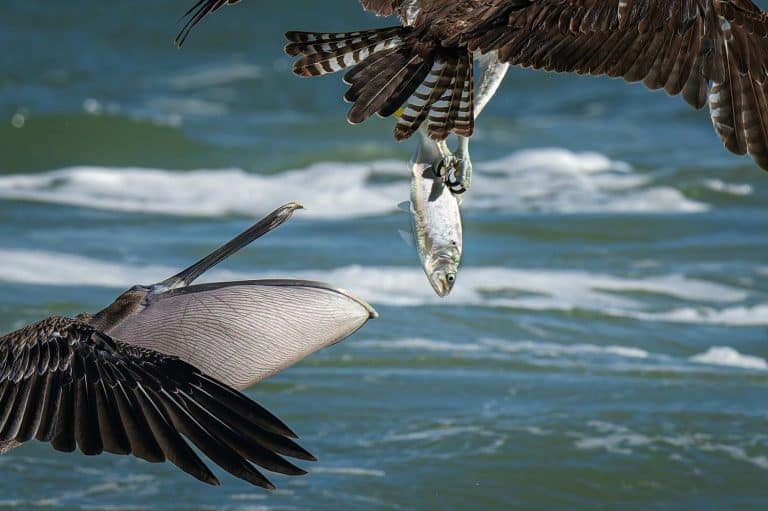
Pelican Pelecanus Coastal and nearshore fish predators that commonly co-occur with gulls at fish schools and fishing operations, forming strong feeding assemblages.
Cormorants and shags Phalacrocoracidae Overlap strongly with gulls in coastal and lacustrine habitats and have fish-based diets; gulls often track and scavenge around their feeding activity.

Types of Seagull

31

Explore 31 recognized types of seagull

Black-legged kittiwake Rissa tridactyla
Red-legged kittiwake Rissa brevirostris
Herring gull
Herring gull Larus argentatus
American herring gull Larus smithsonianus
Great black-backed gull Larus marinus
Lesser black-backed gull Larus fuscus
Western gull Larus occidentalis
Glaucous gull Larus hyperboreus
Iceland gull Larus glaucoides
Glaucous-winged gull Larus glaucescens
California gull Larus californicus
Ring-billed gull
Ring-billed gull Larus delawarensis
Yellow-legged gull Larus michahellis
Caspian gull Larus cachinnans
Heermann's gull Larus heermanni
Black-headed gull Chroicocephalus ridibundus
Laughing gull Leucophaeus atricilla
Franklin's gull Leucophaeus pipixcan
Bonaparte's gull Chroicocephalus philadelphia
Little gull Hydrocoloeus minutus
Mediterranean gull Ichthyaetus melanocephalus
Great black-headed gull Ichthyaetus ichthyaetus
Sabine's gull
Sabine's gull Xema sabini
Ross's gull Rhodostethia rosea
Ivory gull Pagophila eburnea
Swallow-tailed gull Creagrus furcatus
Dolphin gull Leucophaeus scoresbii
Belcher's gull Larus belcheri
Brown-headed gull Chroicocephalus brunnicephalus
Gray gull Leucophaeus modestus
Relict gull Ichthyaetus relictus

Among the most tenacious and clever foragers on the planet, the seagull belongs to a family of birds that lives near the coast. There are more than 50 documented species found all over the world. The most common species you’re probably familiar with are the European herring gull and the American herring gull, but there’s plenty of diversity across the entire family. This article will cover some interesting facts about the appearance, behavior, and diet of the seagull.

3 Incredible Seagull Facts

  • The seagull is considered to be among the most intelligent birds in the world. Some gulls will drop a mollusk shell onto a rock to break it open. Others have been observed baiting fish with bread. One of the most amazing facts is that they can remember new foraging strategies and pass them down to the next generation of gulls.
  • Unlike most animals, the seagull can drink both freshwater and saltwater. A specialized gland right above the eyes can collect and then flush out the salt right through the nostrils.
  • Seagulls have a small claw halfway up the lower leg that allows them to roost on high ledges without falling off.

Where to Find the Seagull
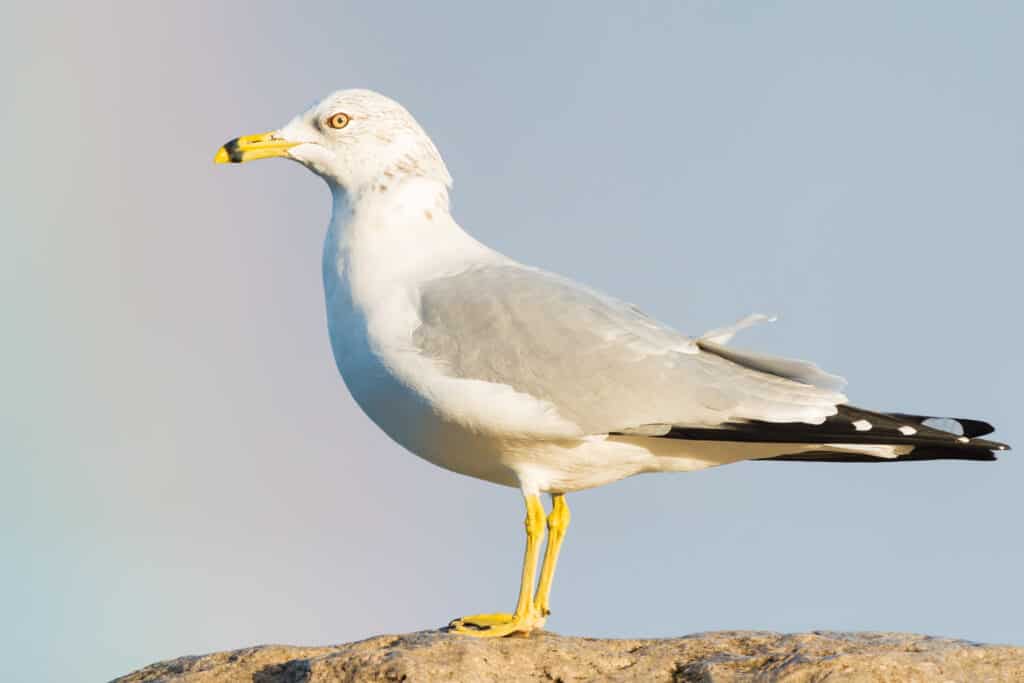
Ring-billed Gull standing on a rock enjoying a rainbow.

Gulls are large, intelligent birds that can be found on every continent, including Antarctica and the Arctic.

The majority of seagulls can be found near coastal habitats all over the world, particularly in the Northern Hemisphere. Some gulls will travel far inland in the non-breeding season, but otherwise, they stick close to the ocean habitats.

Seagulls are found on every continent in the world, including Antarctica and the Arctic. They generally prefer coastal plains and often form large colonies on small islands near the coastline. They are less fond of tropical regions, but can be found there as well. The biggest influence on their distribution is the availability of food. Seagulls are opportunistic and will follow their food source. As a result, human fishing endeavors play a big part in their distribution and population density.

Nests

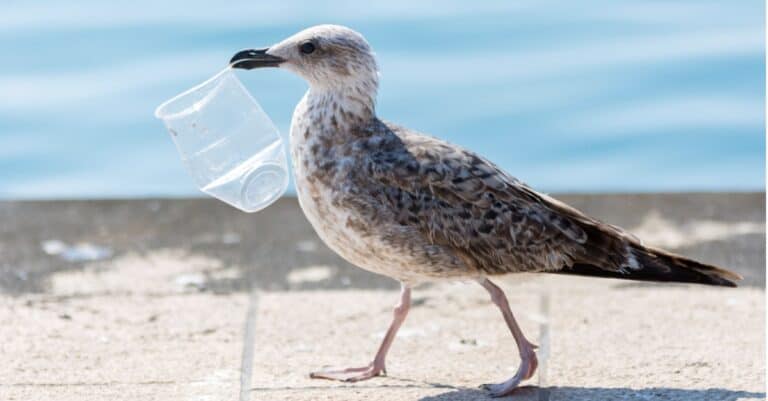
Most seagulls build their nest in a hollow depression on the ground (and sometimes on cliffs) out of vegetation, feathers, rope, and even plastic. The nest is usually located next to a rock, log, or bush to protect it from predators.

Evolution and Origins
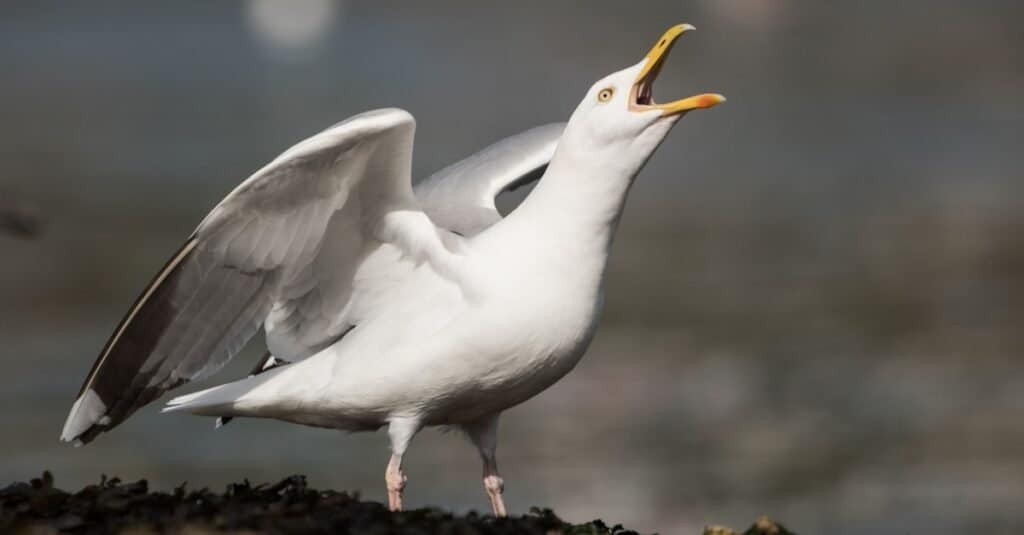
Most Dangerous Birds

Gulls are distant relatives of auks and skuas.

Gulls belong to a large family of seabirds known as Laridae. This vast collective consists of  22 genera and 100 species and also includes kittiwakes, terns, and skimmers. Before the Cretaceous Period (i.e., between 66 and 145 million years ago), the Laridae were part of the family that would give rise to auks and skuas. As a result, gulls are their distant relatives, even though the Laridae went on to separate from that branch during the Cretaceous. Diversification followed during the Paleocene, about 60 million years ago. Evidence of the Laridae has also been found during the earlier stages of the Oligocene Era, between 30 and 33 million years ago. What’s more, species related to gulls dating back to the Miocene, about 23 to 5.3 million years ago, were also reported to have been discovered in France.

Types
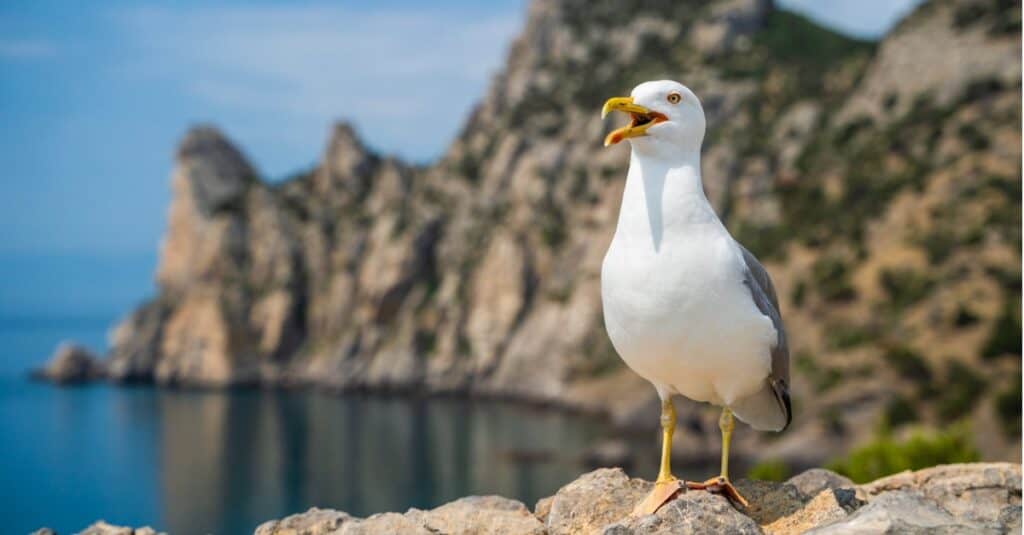
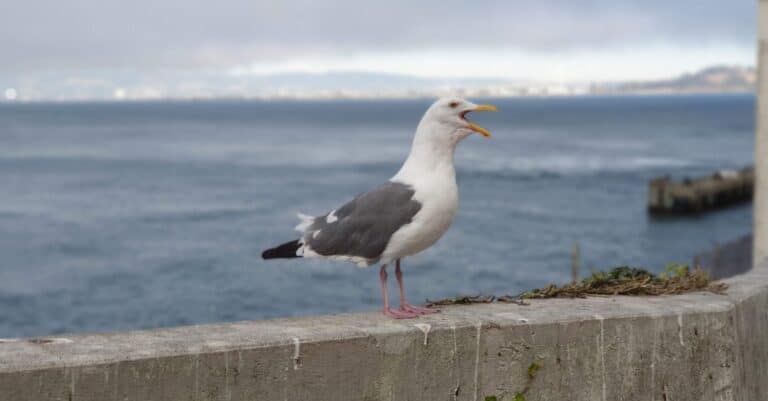
gull on a rock in the water

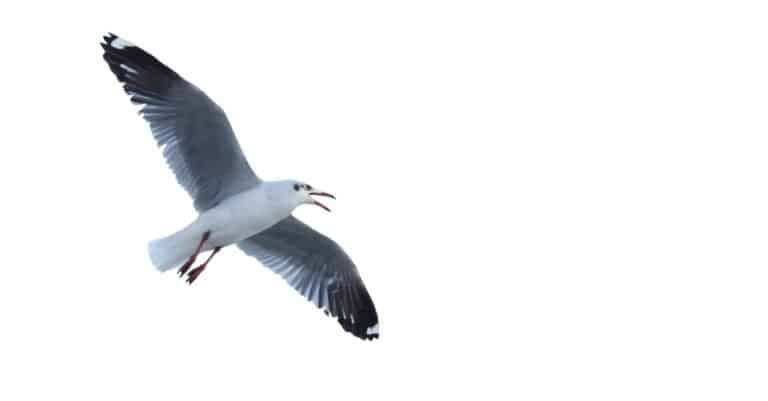
Several gull species have snow-white head and chest feathers, and silver wing feathers.

There are 51 species of gulls, some of the common ones are:

  • California Gull (Larus californicus): These gulls can be found in lakes and marshes from Canada to Colorado. They spend their days searching for food on the water or heading for parks and beaches where they approach beachgoers to ask for food.
  • Dolphin Gull (Leucophaeus scoresbii): Recognizable by its mottled head feathers and reddish beak, this species can be found in Argentina and Chile. It tends to form colonies of a few hundred birds and nests on cliffs or sandy beaches.
  • Herring Gull (Larus argentatus): Found all over Europe with the exception of the south, this species can be found in large numbers in Britain, Iceland, and Ireland. It is somewhat omnivorous with a diet generally consisting of crustaceans, fish, plants, and food pilfered from unsuspecting humans. 
  • Pacific Gull (Larus pacificus): Native to Australia, this large gull is recognizable by its white head, orange-reddish beak, and dark wing and back feathers. It enjoys a mainly crustacean-based diet and is also adept at pilfering food from other birds.
  • Ivory Gull (Pagophila eburnea): At first glance, this small-sized member of the species might be mistaken for a pigeon. It is recognizable by its plumage, which is snow white, and its blue-yellow-tipped beak. The ivory gull breeds in North America, Greenland, and Eurasia.
  • Black-headed Gull (Chroicocephalus ridibundus): Its key distinguishing feature is its black head feathers, which turn white in winter. This species is known to carefully remove any eggshells from its nest once its young have hatched. It can be found all over Europe and also in parts of Canada, China, and Japan.
  • Black-billed Gull (Chroicocephalus bulleri): Noticeable for its black bill, predominantly snow-white head and chest, and wings covered in pale silver feathers, this gull is also known for its legs, which morph from black to red during the mating season. It is located in New Zealand, which is its only home, where it is known as tarāpuka in Maori.
  • Ring-billed Gull (Larus delawarensis):  This gull, which breeds in North America and Canada, can be instantly recognized by its short yellow beak with a thick black band closer to the tip. Its feathers are silver on its wings, white on its head, neck, and chest, and black on its tail.

Size, Appearance, and Behavior
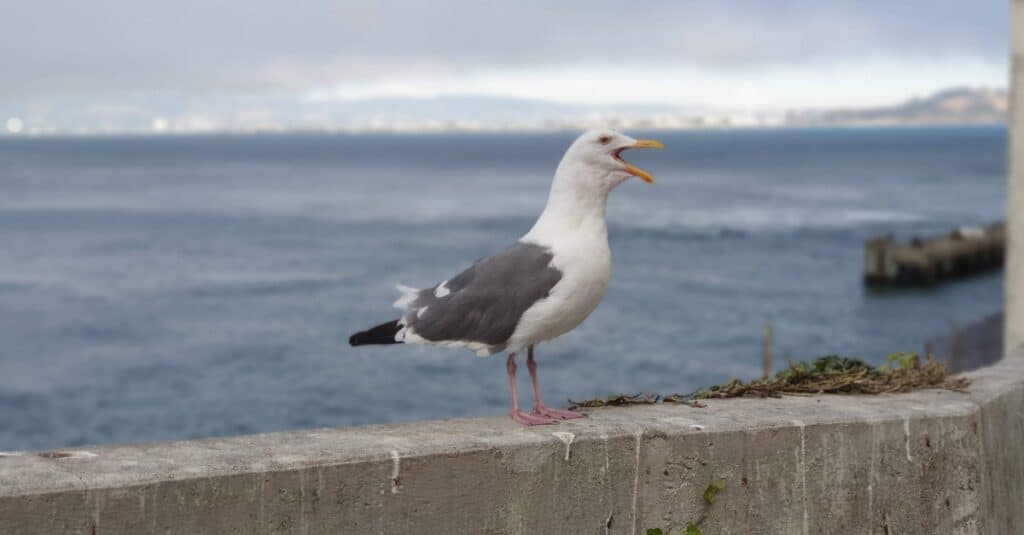
Gulls are social birds that live in large colonies around the coast.

Seagulls are fairly easy to identify from their big, bulky bodies, sinewy legs, long wings, and stout bills, which end in a hook. Their bodies are normally covered in white, gray, and sometimes even black plumage, but the color of the head can vary by species. While the American and European herring gulls sport white heads, several species, including the Franklin’s gull, the little gull, and the swallow-tailed gull, have black heads instead. The head plumage often turns a mottled gray (or, if it’s originally black, then it will turn white) during the winter months. Seagulls can measure anywhere between 11 to 30 inches from head to tail, depending on the species.

Seagulls live in loose, scattered colonies along the coast. The colony can consist of anywhere between just a few pairs and many thousands of birds. Breeding pairs mostly stick to their own territory and defend it against intruders, but they do gather together to hunt and forage for food. Foraging trips are a raucous affair of constant motion and noise. Each bird is essentially fending for itself. They will often steal food from other animals and each other. Seagulls communicate through several distinct calls to demonstrate aggression, identify mating partners, warn the colony of a threat, and resolve a territorial dispute. Baby chicks will also beg for food from their parents.

Migration Pattern and Timing

Most species of gulls do migrate south for the winter. Some journeys take place over just a few miles to search for better foraging opportunities, while other birds complete long migrations over thousands of miles. Perhaps the longest journey is undertaken by Franklin’s gull, which migrates all the way from Canada to South America each year.

Diet
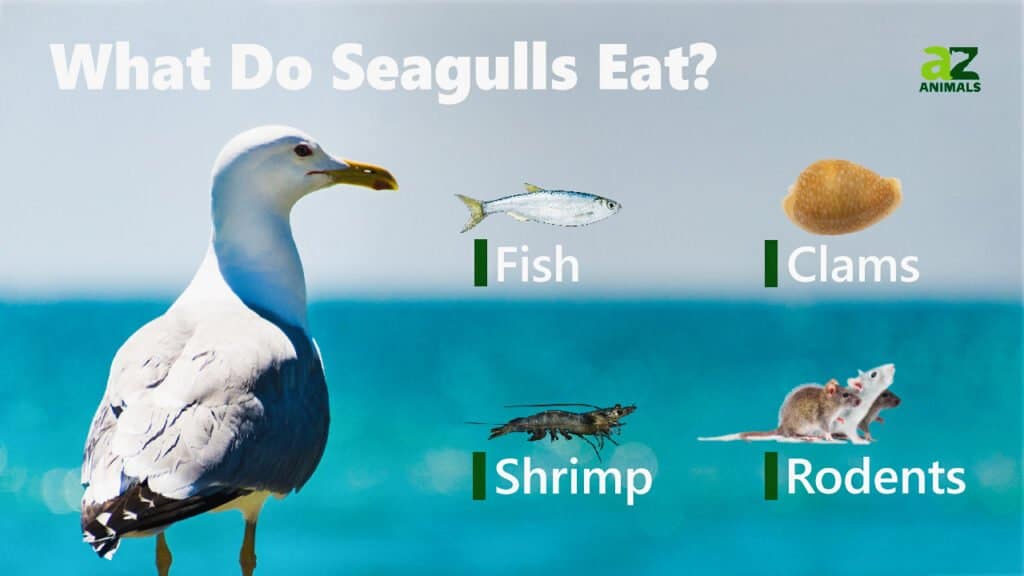
What Do Seagulls Eat
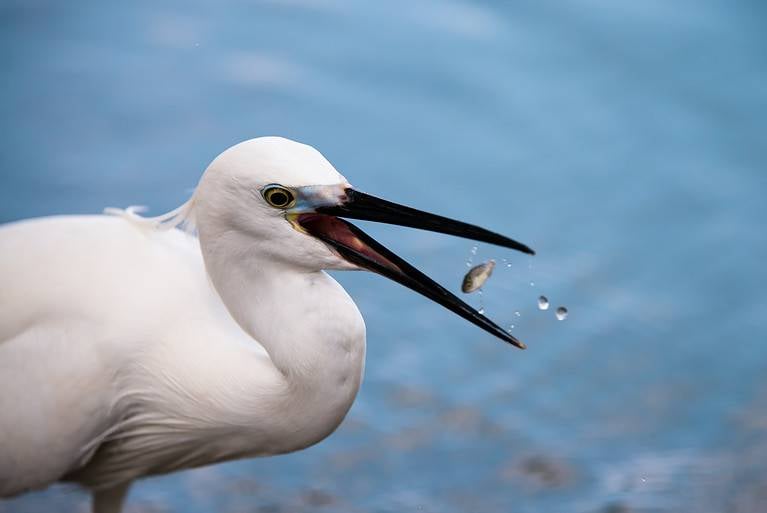
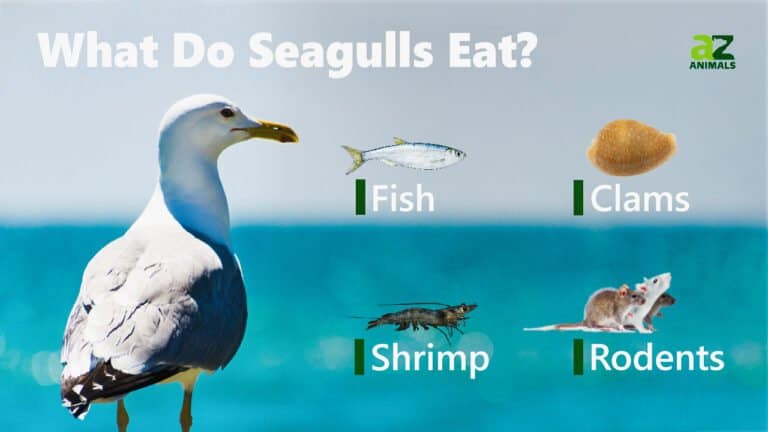
Seagulls eat fish, rodents, mollusks, and insects.

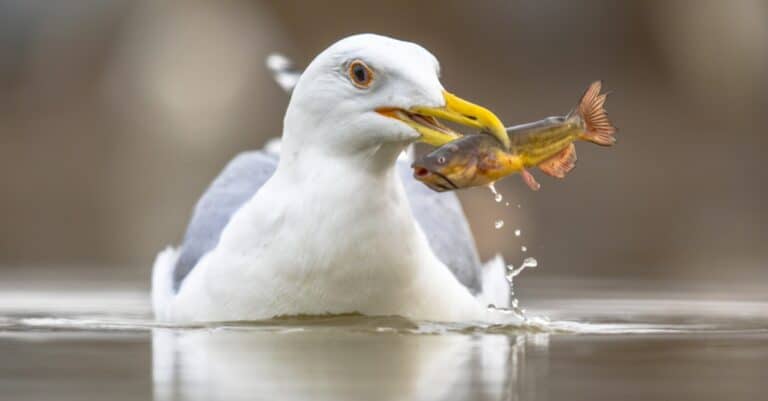
Most seagulls are obligate carnivores, sometimes supplementing their diets with bits of plant matter. They will often scavenge what they can from the surface of the ocean, beach, or land. These bold birds will even snatch food right out of a person’s hands.

What does the seagull eat?

The seagull eats a wide range of different foods. Its diet normally consists of fish, insects, earthworms, mollusks, rodents, small reptiles and amphibians, fruits and seeds, and even other birds and their eggs. They will prowl the same scavenging sites every day or fly high up in the air, diving down to pick off prey. However, they are not capable of diving deep below the surface of the ocean.

Predators, Threats, and Conservation Status
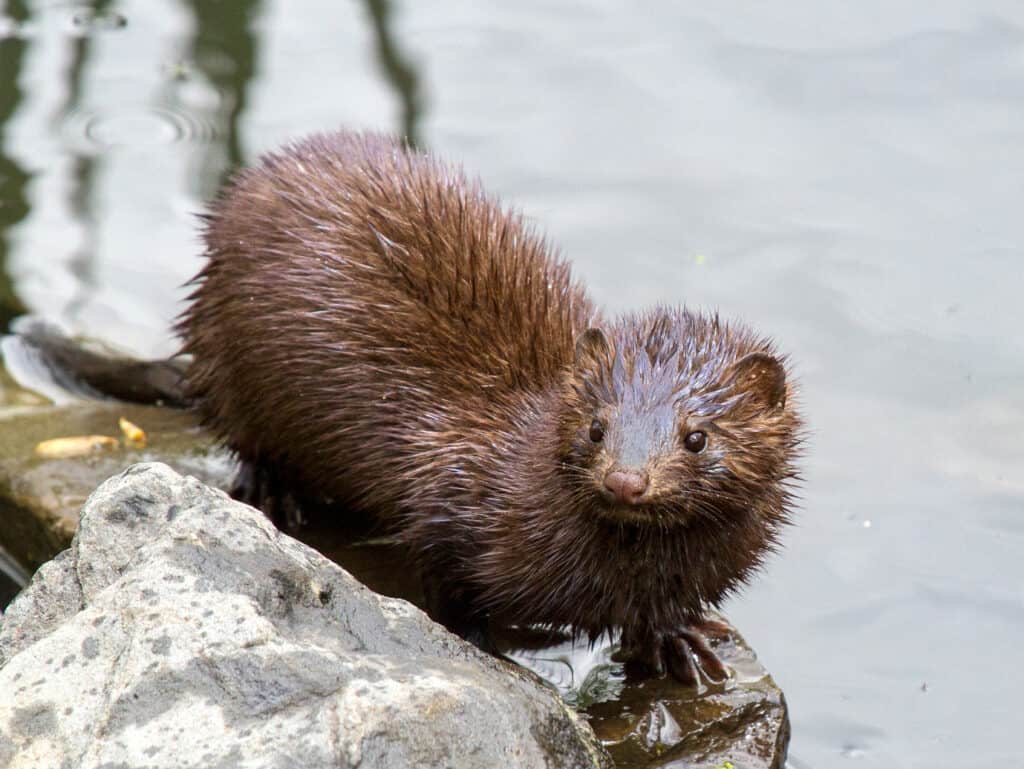
sea mink

Mink are known to hunt seagull chicks and their eggs.

Seagulls are highly versatile and adaptable birds. The vast majority are considered to be species of least concern by the IUCN Red List, although several species, like the lava gull and the kittiwake, are vulnerable to extinction. Climate change, pollution, loss of coastal habitat, overfishing, and deliberate hunting may be responsible for a downward trend in numbers.

What eats the seagull?

Baby seagulls and the eggs are often preyed upon by raccoons, minks, foxes, cats, and birds of prey. Adult gulls are less in danger of being eaten, but they’re sometimes preyed upon by particularly large and dangerous predators. Groups of seagulls will often mob a predator and strike with their wings and feet to drive it away.

Reproduction, Young, and Molting
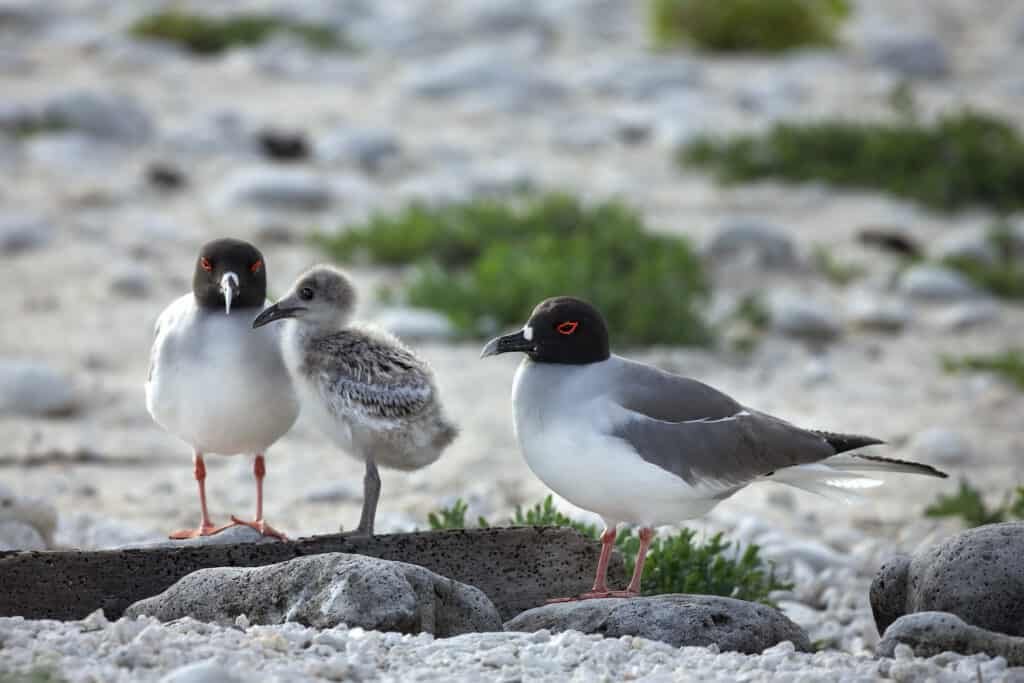
Sabine's Gull

Both male and female gulls take turns hatching the egg and caring for their chicks.

The seagull’s reproductive season usually occurs in the early spring after returning to the same site from the annual migration. They do show a tendency to take the same mate for life and may strengthen their bond through mutual feeding exercises. After mating, the female lays a clutch of up to three eggs per year. The parents will take turns incubating the egg for about a month, while the other parent hunts for food.

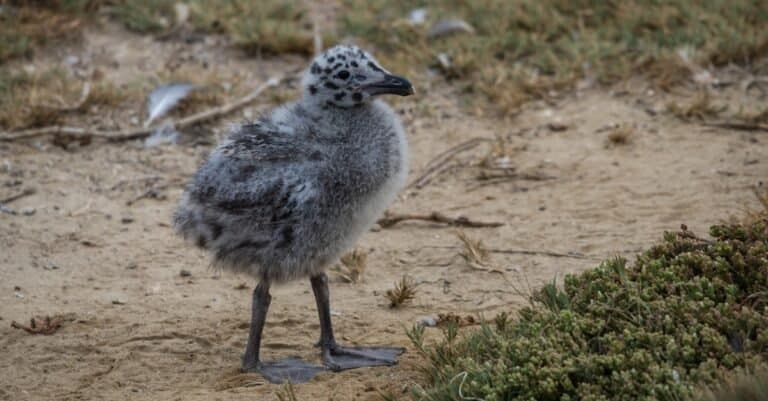
The parents will continue feeding the baby chicks until they’ve obtained their full-flight feathers, a month or two after hatching. Many juveniles have a mottled brown appearance compared with the more solid colors of the adult plumage. It usually takes a few years to obtain full sexual maturity. Many species can live up to 30 years old; the oldest documented specimen was a 49-year-old white-headed gull.

Population
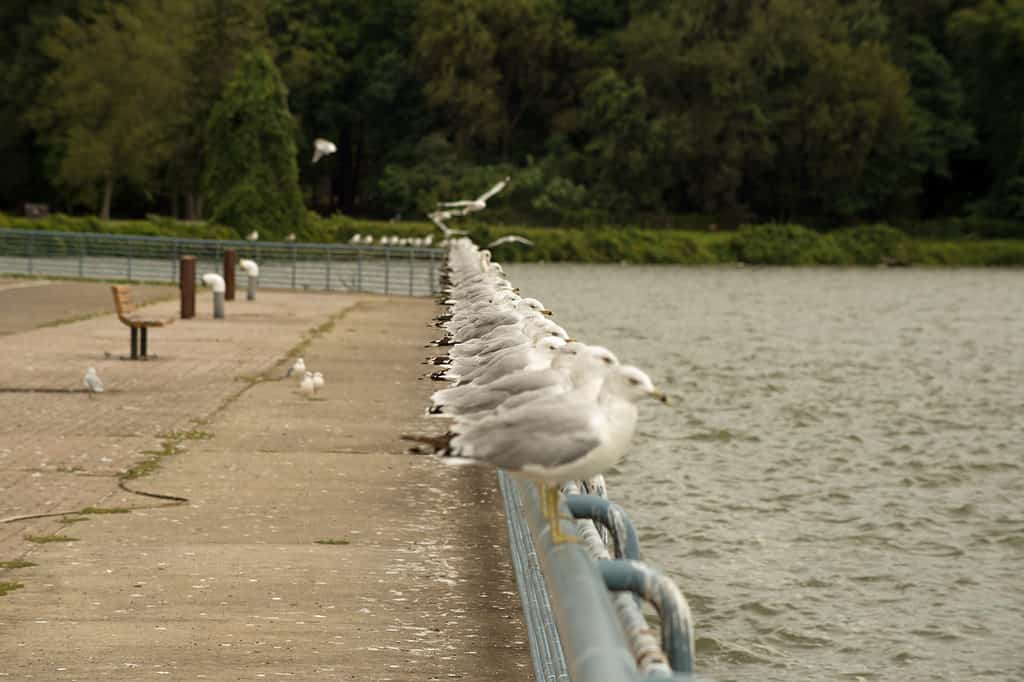
Seagulls at Pymatuning Reservoir in Ohio

Despite a decrease in some species, gulls worldwide are in the millions.

Seagull populations show an unfortunate downward trend in numbers. The American herring gull has an estimated population of some 246,000 breeding pairs, which is actually down from its peak. It’s estimated that numbers fell by some 83% between 1966 and 2015. Altogether, millions of gulls can be found worldwide.

View all 391 animals that start with S

Sources

  1. Britannica / Accessed December 13, 2021
  2. TheCornellLab / Accessed December 13, 2021
  3. OneKindPlanet / Accessed December 13, 2021
A-Z Animals Staff

About the Author

A-Z Animals Staff

AZ Animals is a growing team of animals experts, researchers, farmers, conservationists, writers, editors, and -- of course -- pet owners who have come together to help you better understand the animal kingdom and how we interact.
Connect:

Thank you for reading! Have some feedback for us?


Seagull FAQs (Frequently Asked Questions)

The gull is a medium to large-sized seabird that lives along coasts all over the world.