

Quick Take
- Despite its name, the purple finch isn't actually purple, and what it really looks like reveals something surprising about how it attracts a mate. See the real coloration →
- This bird can live up to 14 years in the wild, yet most never come close to that age. The reason why is more sobering than you'd expect. Lifespan and survival rates →
- A bird introduced to the eastern U.S. in the 1940s has been quietly threatening the purple finch ever since, and the culprit is a species most backyard birders know well. House finch competition →
- The purple finch's courtship display involves a sequence of physical moves that seem almost theatrical, with the female being the one in total control of the outcome. Courtship display details →
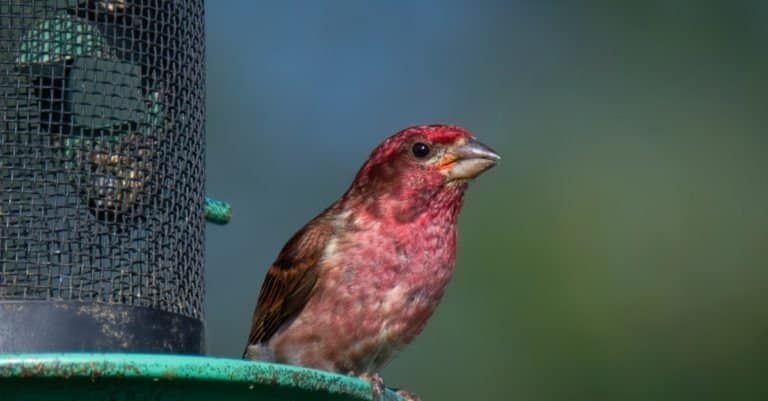
The gregarious purple finch is a small bird that makes its presence felt with a loud, cheerful-sounding warble that can be heard year-round. As one of the most common and popular finches in North America, they are often attracted to bird feeders, especially those with black oil sunflower seeds.

3 Amazing Purple Finch Facts
- There are two separate subspecies of the purple finch. The West Coast subspecies has a longer tail and shorter wings.
- The purple finch is a bird that keeps in contact with its flock mates during flight with a sharp tick sound.
- The purple finch is the state bird of New Hampshire.
Where to Find the Purple Finch
The purple finch is a bird with a wide distribution across forests and urban environments throughout North America, except for northern Canada and parts of the western United States. It prefers to take up residence along the edge of open coniferous or mixed coniferous-deciduous forests. Its range also includes parks, hedgerows, pastures, and orchards.
Nests
The female finch constructs a cup-shaped nest from twigs, grasses, roots, and moss in the branches of conifer trees. It takes about three to eight days to fully build the nest.
Classification and Scientific Name
The scientific name of the purple finch is Haemorhous purpureus. Purpureus is a Latin term that roughly translates to the “color of purple.” This species was once part of the Old World finch genus, Carpodacus, but after careful genetic analysis, it was determined that the New World finch species deserved their own genus, Haemorhous. There are two other species in this genus, the house finch and Cassin’s finch. Together, they belong to the family of true finches known as Fringillidae.
Size, Appearance, and Behavior
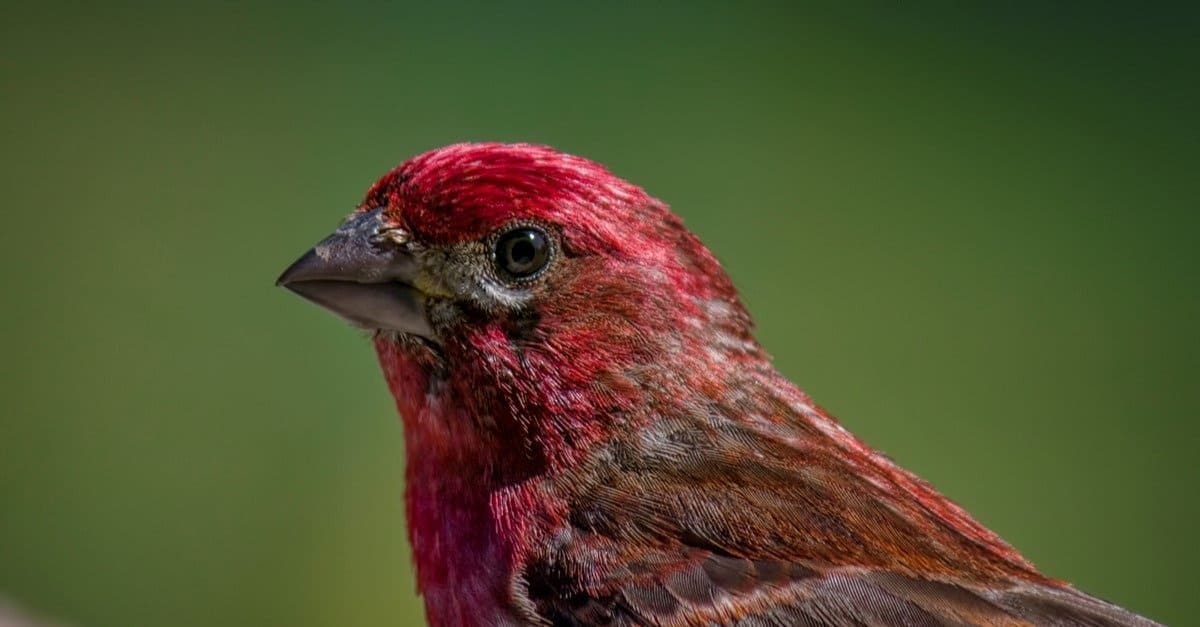
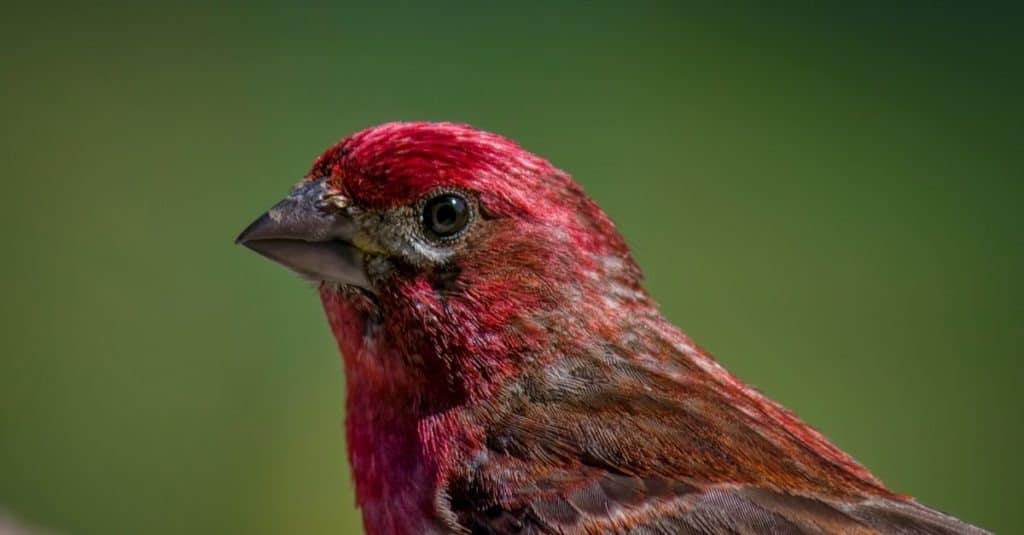
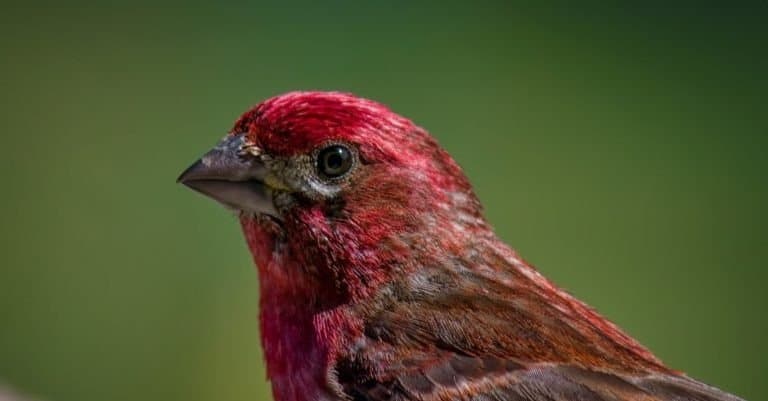
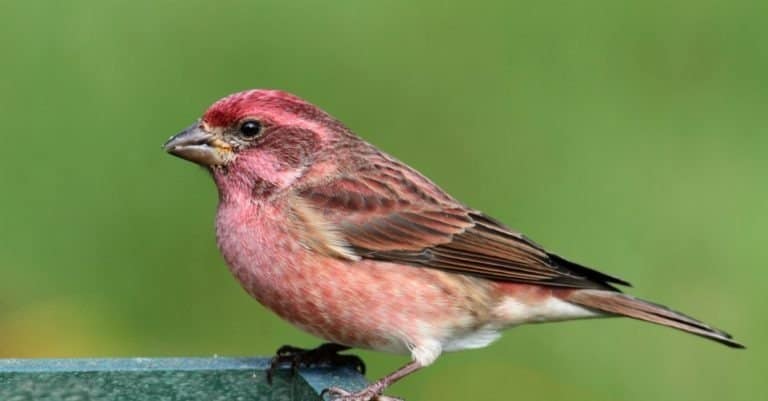
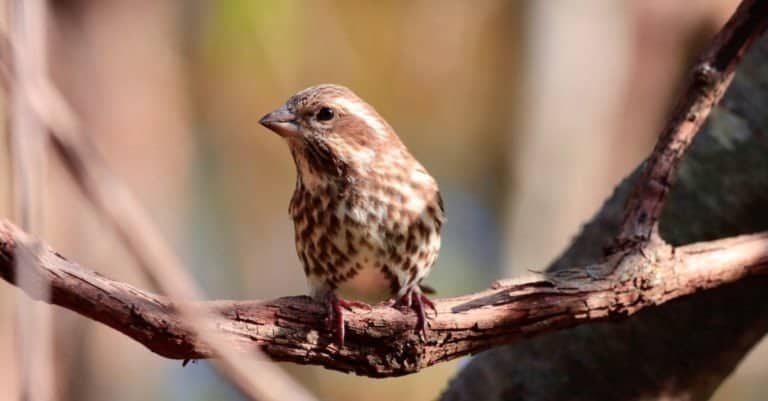
Purple finches are relatively small birds, measuring about 6 inches tall, with a robust body, a long tail, and the same conical bill for which many finch species are known. Despite the name, the purple finch really isn’t purple at all. Instead, the female has a brown back and a white breast and abdomen with brown streaks. The adult male looks like it’s been stained with a red wine color all over the head, back, and abdomen. The intensity of the color may signal to females the overall health and desirability of the male based on its diet.
These birds are a social species that gathers in flocks of up to 200 birds in the winter season. These flocks can consist of American goldfinches, pine siskins, and other finch species. Once the breeding season arrives, males will become highly territorial. They communicate their displeasure to trespassers with aggressive body postures and loud warbling sounds.
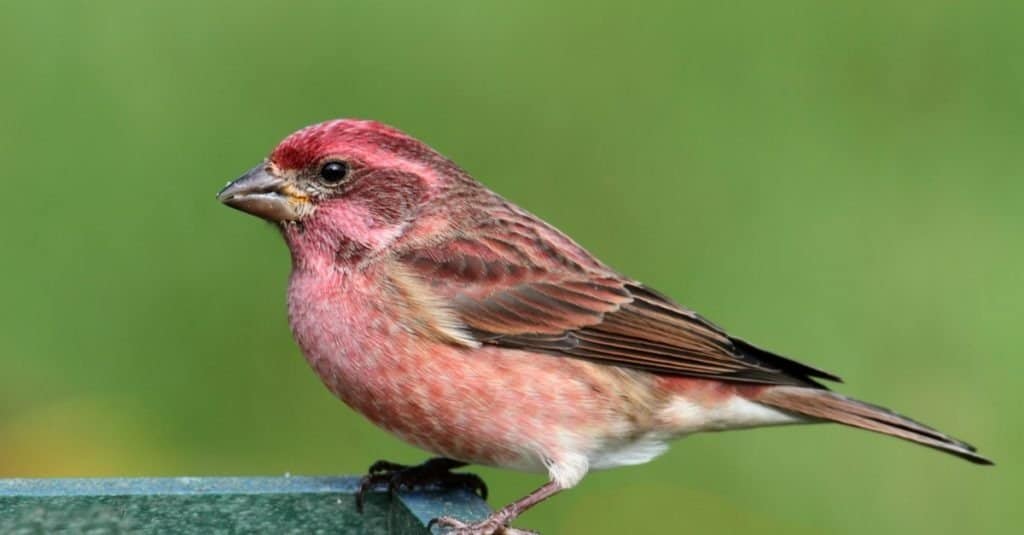
An adult male Purple Finch looks like it was stained with red wine over its back and sides.
©Steve Byland/Shutterstock.com
Migration Pattern and Timing
These birds spend the breeding season in southern Canada, New England, and the Pacific Coast and then travel south for the winter. Whenever population sizes grow for the year, the evidence suggests that this species will dramatically expand its wintering range.
Diet
Like most finches, the purple finch is a heavy seed eater. In fact, this species has a sharp beak that’s well-adapted for cracking open seeds.
What does the purple finch eat?
Although its diet varies with the seasons and location, these birds forage for the seeds of elms, sweet gums, sycamores, ashes, red cedars, junipers, and tulip trees. The finch will also supplement its diet with fruits, buds, and insects.
Predators, Threats, and Conservation Status
These finches face numerous threats from diseases, predators, and brood parasites (other birds that replace the finch’s eggs with their own). Despite this, the IUCN Red List currently classifies the purple finch as a species of least concern.
What eats the purple finch?
Adult finches are commonly preyed upon by barn owls, merlins, American kestrels, blue jays, cats, and even dogs. The nests are also raided by squirrels, grackles, and jays.
Reproduction, Young, and Molting
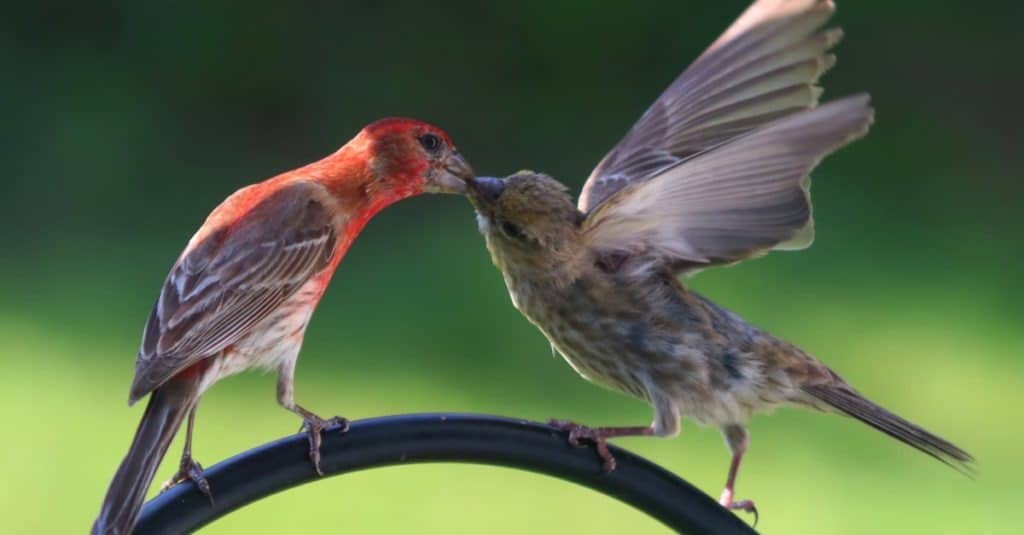
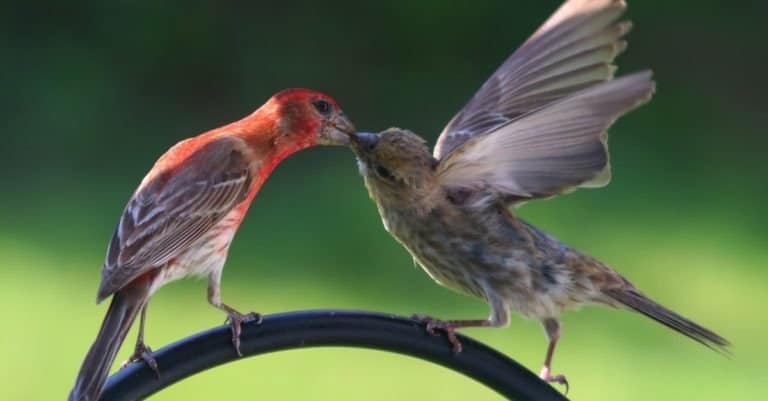
The parents will continue feeding the young birds for the first few months of their lives.
©Eleanor McDonie/Shutterstock.com
Once the breeding season arrives between April and August, purple finches form monogamous pairs, although it’s not clear how long these bonds last. To attract a mate, the male performs an impressive courtship display. It will hop around, puff out its chest, raise its crest feathers, cock its tail, and begin to warble. It will also fly up into the air and land with his body tilted backward.
After choosing a mate, the female will produce between three and six speckled eggs at a time. She alone is responsible for incubating the eggs, while the male goes out to forage and brings back food for her. After 12 to 13 days of incubation, the chicks hatch helpless and without flight feathers. They are completely dependent on their parents, who feed them regurgitated seeds.
Although the immature chicks will fledge after only 13 to 16 days, the parents will continue to feed them through their first few months of life. By autumn, they have matured and travel with the flock to the wintering grounds. Upon returning, these young birds are ready to breed the following season. The maximum lifespan of this finch can reach 14 years in the wild. However, because of the many challenges it faces from diseases and predators, the average purple finch only lives about two years. Many don’t live beyond the first few months of life.
Population
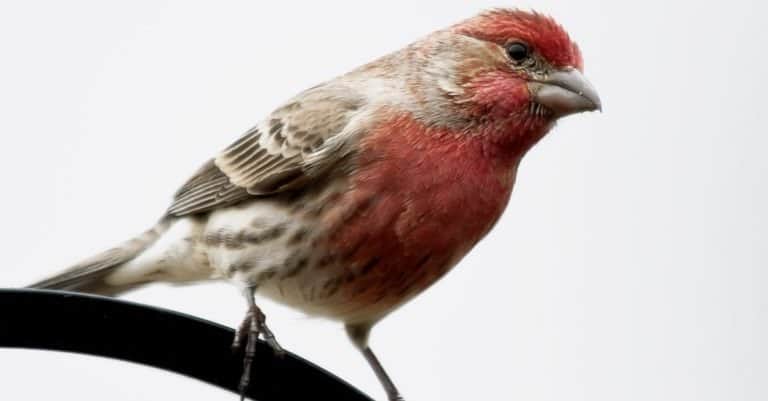
The conservation organization Partners in Flight estimates that there are around 6.5 million of these finches worldwide. Numbers appear to be decreasing, perhaps due to competition with the closely related house finch in their overlapping range. The house finch was only introduced into the eastern United States in the 1940s, and the purple finch has had trouble adapting to its presence ever since.
Purple Finch Pictures
View all of our Purple Finch pictures in the gallery.

Fiona M. Donnelly/Shutterstock.com
Sources
- Animal Diversity Web / Accessed January 27, 2021
- All About Birds / Accessed January 27, 2021
- Audubon / Accessed January 27, 2021