

Quick Take
- The earwig's creepy name has nothing to do with the brain-burrowing legend, and its true origin is actually far stranger. Explore the name's origins →
- That pincer shape actually tells you something specific about the earwig hiding in your garden, provided you know what to look for. See pincer dimorphism →
- This household pest doubles as a garden bodyguard, though only under one key condition. Discover their garden role →
- Earwigs have wings developed enough to fly, yet they almost never use them, and the reason why reveals an unexpected survival trick. See their rare flying behavior →
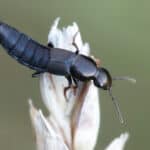
Earwigs are nocturnal insects that can be identified by the large pair of pincers at the end of their bodies. Outside, they’re found under rocks, in rotted tree bark, and in other moist places.
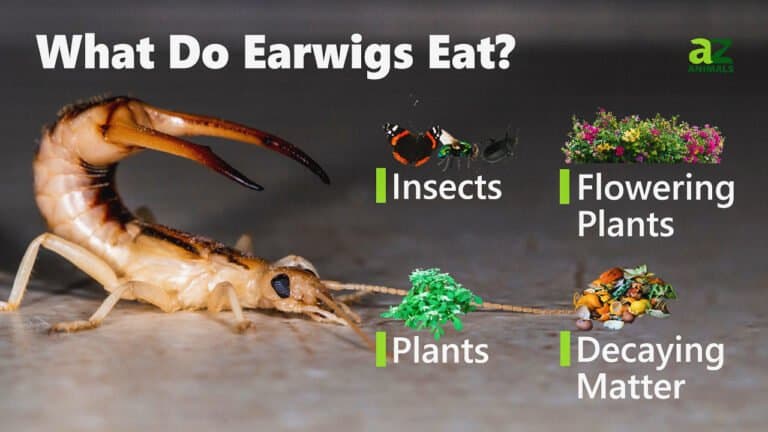
Inside, they can be found in the pantry, where they do eat foods that haven’t been well secured. The earwig also eats crops and garden plants, but it is also a very efficient killer of other garden pests such as thrips, aphids, and snails.
The meaning of the earwig’s name probably doesn’t come from the old wives’ tale that it will enter someone’s ear and lay eggs in their brain while they sleep, but from the unique shape of its hindwing.
It’s possible that an earwig may be found in the ear once in a blue moon, but probably no more frequently than any other bug. Female earwigs certainly don’t lay their eggs in people’s brains.

5 Incredible Earwig Facts
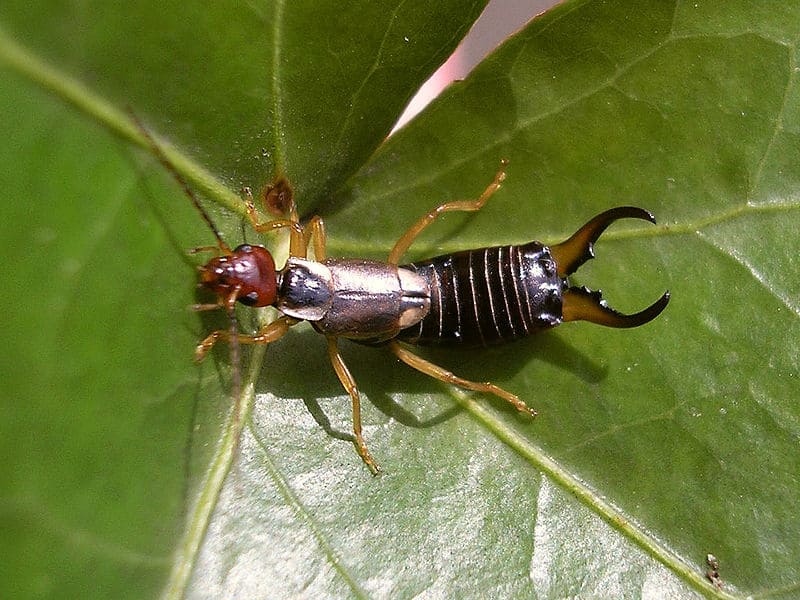
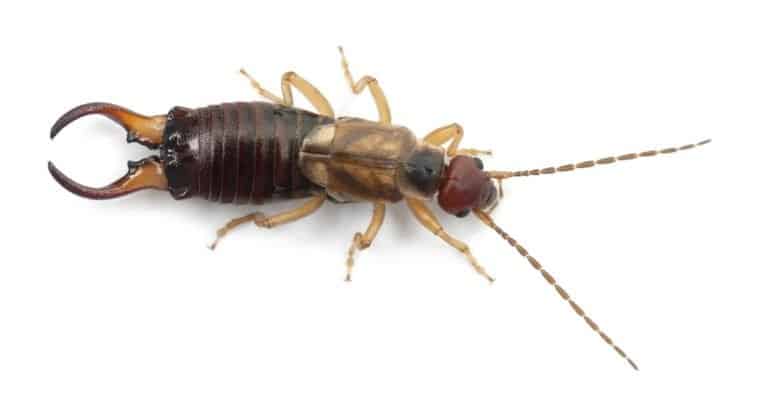
Male Earwig of species Forficula auricularia.
©Pudding4brains – Public Domain
- Earwigs are omnivores, which means they eat both plant and animal material. They prefer scavenging over hunting, however.
- The earwig can be a pantry-raiding pest or useful in controlling such pests as aphids.
- The sex of an earwig can be determined by the shape of the pincers. Those of the male are large and curved, while those of the female are smaller and straighter.
- Earwigs have wings that are developed enough to allow them to fly, but they rarely fly. They prefer to hitch rides on clothing, plants brought in from the garden center, or lumber.
- A baby earwig, called a nymph, is cared for by its mother — an unusual trait among insects.
Evolution and Origins
Originally from Europe, this species has successfully established itself in North America, where it currently thrives. It is distinguishable by its striking dark-red coloration and features distinctive pincer-like appendages known as cerci located at the end of its abdomen.
Earwigs have proven to be a highly successful group of insects, having survived and thrived for an extensive period of time. Earwigs are believed to have first emerged during the Permian period approximately 258 million years ago, and fossil evidence shows they continued through the Late Triassic and Early Jurassic periods to the present day.
Although earwigs have a reputation for being frightening nocturnal scavengers, they play an essential ecological role as beneficial insects. Earwigs are often referred to as “environmental janitors” as they feed on decaying plant and insect matter, which helps keep gardens clean and preserves the natural beauty and health of green spaces.
Species, Types, and Scientific Names
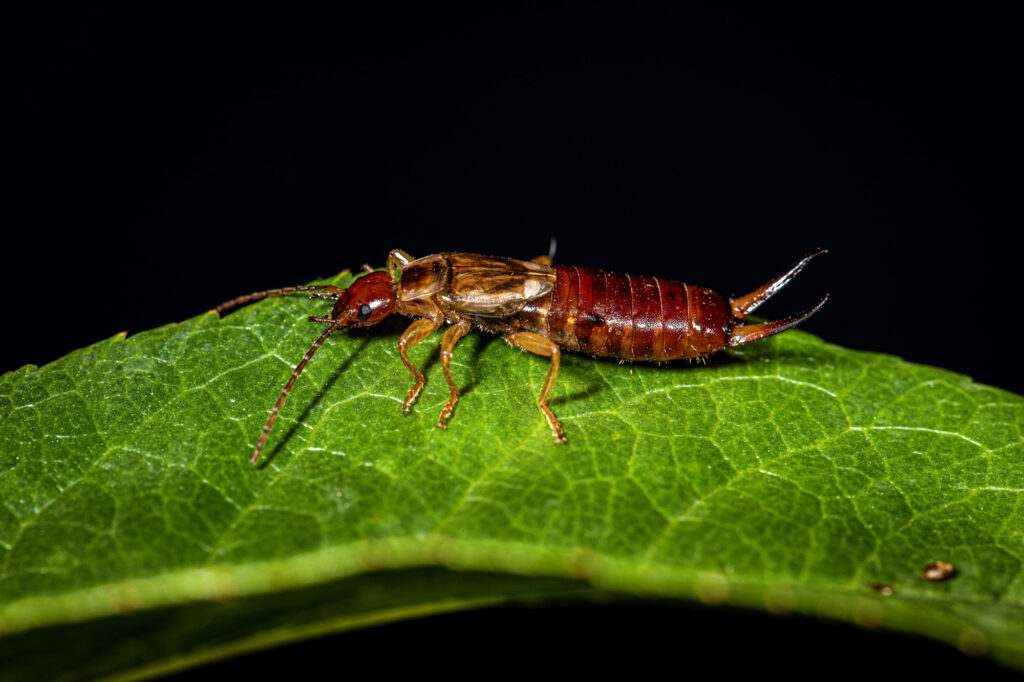
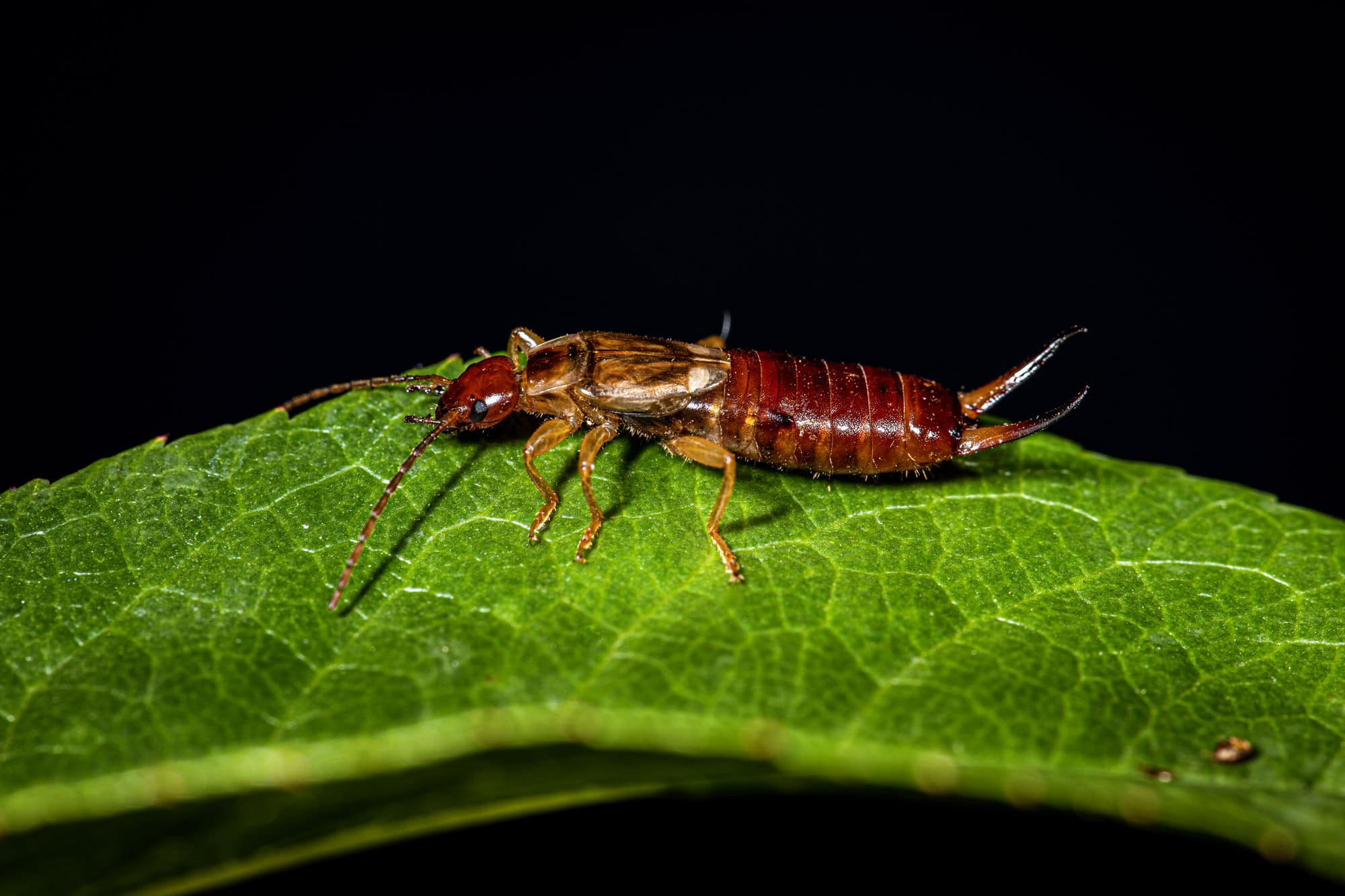
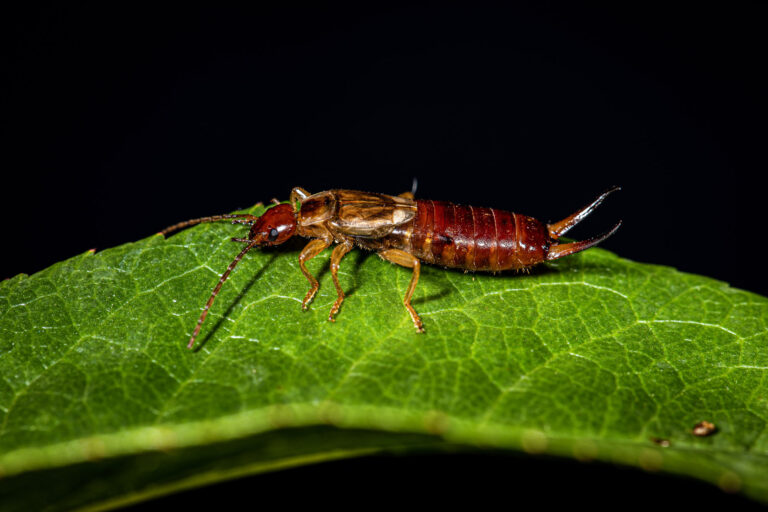
Beautiful Earwig insect close-up on a leaf.
©iStock.com/Huseyin Selcuk KIRAY
The earwig is a member of the Dermaptera order. There are a dozen families and 2,000 species in this order, which is Greek for “skin wing.” Earwig itself derives from an Old English word meaning “ear insect” or “beetle” and refers to the shape of its wings. Despite the thousands of species, Dermaptera is considered a small order when compared to other insect orders.
The scientific name of the common earwig is Forficula auricularia. Forficula derives from a Latin word for “little shears” or “scissors,” which describes the insect’s pincers. Auricularia describes the human ear shape of the insect’s hind wings when they unfold. This earwig is native to Europe but has spread all around the world in temperate areas. There are 71 genera just in the Forficulidae family.
One earwig that is native to the United States is the spine-tailed earwig, which is found outdoors and drawn to porch lights. Its scientific name is Doru aculeatum. Doru is Greek for “spear,” and the meaning of aculeatum is “prickly” in Latin.
Here are a few different types of earwigs:
- European earwig
- Forficulidae
- Archidermaptera
- Anisolabididae
- Neodermaptera
Appearance
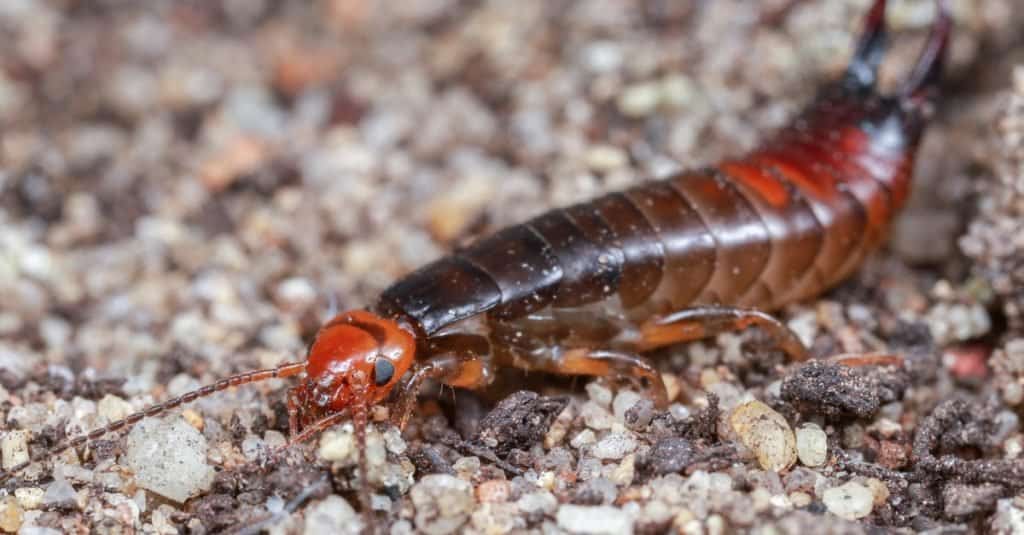
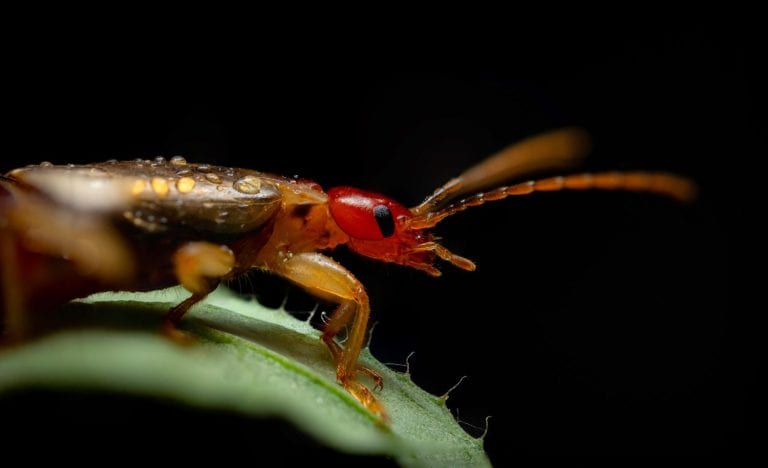
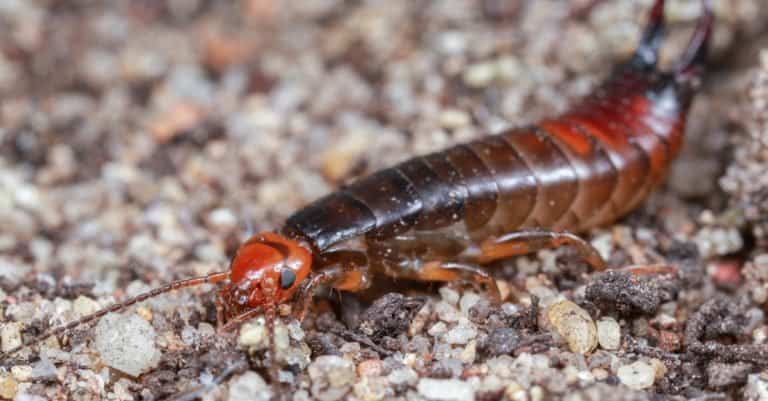
Red-headed earwig crawling on the sand.
©Peter Yeeles/Shutterstock.com
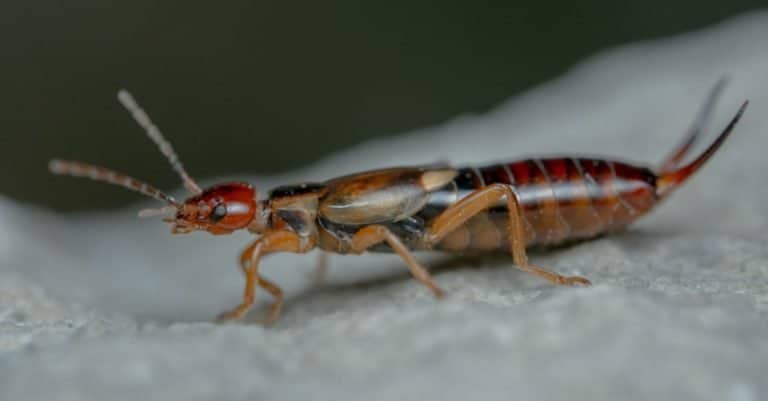
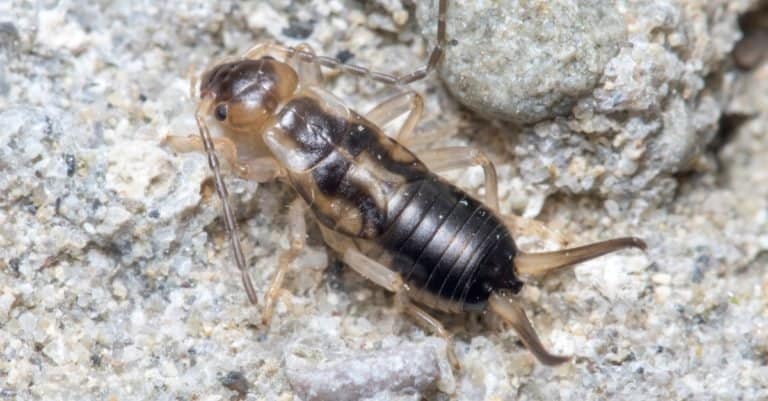
The earwig is about half an inch long when it is mature, though the giant Australian earwig can grow to 2 inches long. Its body is flat, long, hard, and shiny, and comes in shades of yellow or brown.
Its upper wings are short and have a leathery texture, and they protect the hindwings, which are delicate and gauzy. The antennae are long, delicate, and beaded. Like most other insects, the earwig has six legs. Its abdomen is segmented, and its mouthparts evolved to bite and chew.
What distinguishes these insects is the forceps or pincer at the end of their body. The scientific name for these pincers is cerci. Those of the male are not only longer than those of the female, but they are curved and have teeth.
The insect uses its cerci while it feeds, and they also come into play when it mates and defends itself. It also uses the cerci to fold its hindwings up and hide them beneath the forewings. A third-instar nymph can regrow part of its cerci if lost, but the regrown cerci will be straight.
Habitat
Earwigs are found just about everywhere on Earth save Antarctica, which is too cold and dry for them. Their ideal habitat is a moist, dark place that’s around 75 degrees Fahrenheit.
They are active at night, and some species are drawn to outdoor lights. During the day, they hide in crevices, trash, under rocks, or in rotting logs. They’re also found in garbage cans, in bathrooms, and on lawn furniture. Some earwigs are blind and live in caves.
A gardener who suspects earwigs are eating their plants can go out at night with a flashlight and look for them. Earwigs in the home are often seen on the walls or on the ceiling. If they feel threatened, they’ll drop to the floor and scramble away.
Diet
Earwigs are omnivores, which means they eat both plants and animals, living or dead. most prefer to scavenge, though some are predators of other insects such as plant lice, maggots, aphids, and flies. Because of this, earwigs may be beneficial to garden plants and crops. There are suborders of earwigs that are mammal parasites. Many of these earwigs feed on the secretions and even the guano of bats. Others are found on rats.
Prevention
These insects are harmless to humans; they don’t spread diseases, and they’re not even as destructive as other insects such as Japanese beetles. Still, an infestation of them can wreak havoc on the pantry or the garden.
Even if they weren’t household or garden pests, their appearance is off-putting to many people, and they smell bad on top of everything else. There are several ways to get rid of an infestation. One way is to expose them to their own predators. These include types of ground beetles, birds, snakes, and toads.
Another way of getting rid of these insects is to trap them. One type of trap is an oil pit trap. Fill a plastic container with a 50/50 mixture of soy sauce and cooking oil, put a lid on it, and punch holes near the lid’s edge large enough for earwigs to enter. Then, bury the container up to the holes.
Another trap involves placing one-foot pieces of garden hose or bamboo between garden plants. The insects crawl inside, and the gardener simply collects them each morning and shakes the bugs into a container of soapy water. They also avoid walking on petroleum jelly, and sprinkling boric acid around a woodpile is another effective way to kill these insects.
Another way to get rid of them is to spray them with pure rubbing or grain alcohol. Mix the alcohol with some water, and spritz the bugs. The alcohol strips off the protective coating on their bodies, killing them.
Earwig Pictures
View all of our Earwig pictures in the gallery.

iStock.com/Huseyin Selcuk KIRAY
Sources
- The Old Farmer's Almanac / Accessed June 7, 2021
- Wikipedia / Accessed June 7, 2021
- Animal Diversity Web / Accessed June 7, 2021