
A
Species Profile

Agama Lizard

Agama

Colorful rock sentinels of Africa
Mogens Trolle/Shutterstock.com

Agama Lizard Distribution

Click a location to explore more animals from that region

Invasive Species
Loading map...
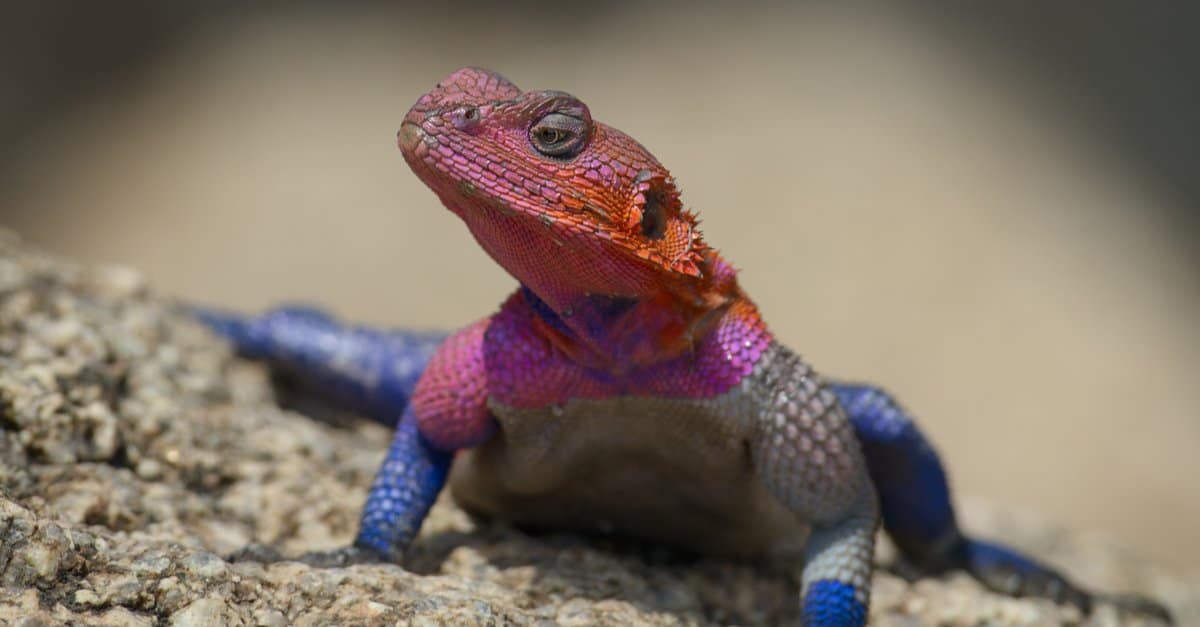
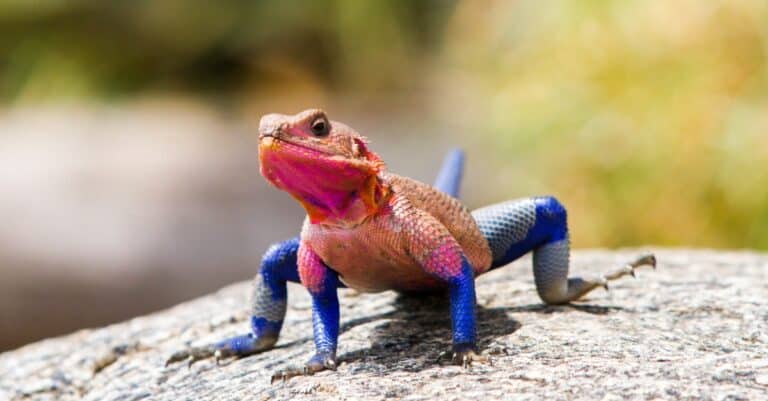
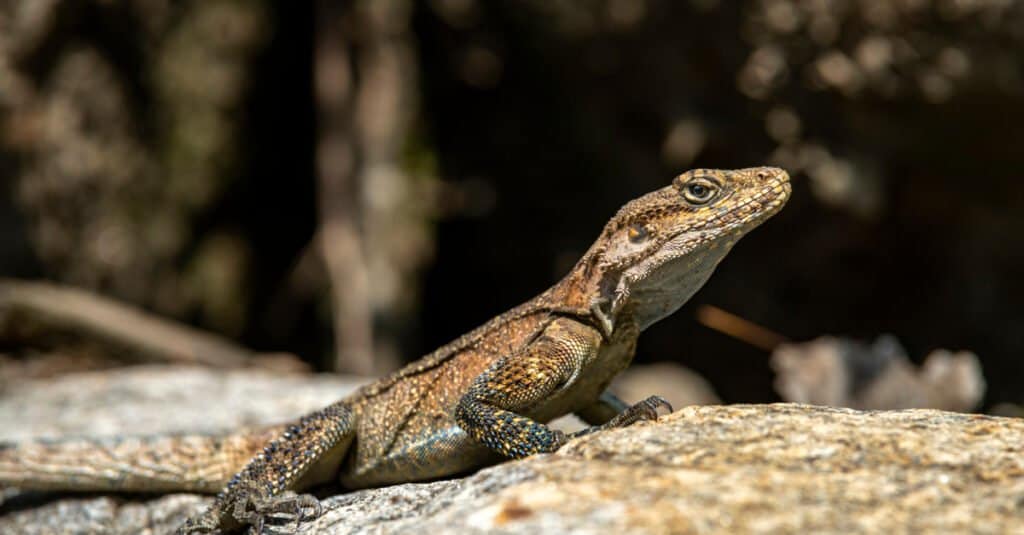
Mwanza flat-headed rock agama lizard, aka spiderman agama, in the Serengeti National Park, Tanzania.

At a Glance

Genus Overview This page covers the Agama Lizard genus as a group. Stats below are general traits shared across the genus.
Also Known As agama lizard, African agama, rock agama, rainbow agama
Diet Omnivore
Activity Diurnal+
Lifespan 6 years
Weight 0.25 lbs
Status Not Evaluated
Did You Know?

Many Agama males shift to striking breeding colors (often blue/red/orange) while females stay more cryptically patterned.

Scientific Classification

Genus Overview "Agama Lizard" is not a single species but represents an entire genus containing multiple species.

Agamas (genus Agama) are Old World agamid lizards best known from Africa, typically diurnal, visually oriented, and often strongly sexually dimorphic, with males displaying bright breeding colors and territorial behavior.

Kingdom
Animalia
Phylum
Chordata
Class
Reptilia
Order
Squamata
Family
Agamidae
Genus
Agama

Distinguishing Features

  • Spiny/keeled scales typical of agamids; sturdy body and well-developed limbs
  • Diurnal basking and ‘sit-and-wait’ insectivory; strong reliance on vision
  • Males often territorial with conspicuous head-bobbing and push-up displays
  • Marked sexual dimorphism; males can show bright red/orange/blue coloration in some species

Physical Measurements

Males and females differ in size

Length
1 ft 1 in (7 in – 1 ft 6 in)
9 in (6 in – 1 ft 1 in)
Weight
0 lbs (0 lbs – 0 lbs)
Tail Length
8 in (4 in – 12 in)
6 in (3 in – 8 in)
Top Speed
12 mph
Short bursts 10–20 km/h

Appearance

Primary Colors
Skin Type Dry, hard reptile skin with overlapping scales. Back and sides often have ridged (keeled) scales that feel rough. Some species have spiny scales or small neck/back crests; belly scales are smoother.
Distinctive Features
  • Genus-level size range (smallest to largest members, generalized): ~12-45 cm total length (SVL commonly ~5-15+ cm), depending on species, sex, and locality.
  • Body form: robust, terrestrial-to-saxicolous (rock-associated) lizards with strong limbs and long, tapering tails; head typically triangular with a fairly strong jawline.
  • Scalation: dorsal scales usually keeled; many species have a rough, armored look; degree of spines/keels varies across species.
  • Color change: many species can darken/lighten with temperature, stress, and social context; males in particular may shift rapidly during interactions.
  • Perch/rock ecology (generalization): often seen basking on rocks, walls, tree trunks, termite mounds, or other elevated perches for surveillance and signaling; degree of arboreality vs ground use varies by species and habitat.
  • Distribution/ecology (generalized): predominantly African (Old World) with many species adapted to savannas, semi-deserts, rocky outcrops, and increasingly human-modified habitats; local habitat specialization varies widely across the genus.
  • Diet (generalization with variation): primarily insectivorous (ants, beetles, orthopterans, etc.), with opportunistic omnivory in some populations/species (e.g., flowers/fruit/soft plant matter) and occasional small-vertebrate predation in larger individuals.
  • Behavior (generalization): diurnal and visually oriented; commonly uses head-bobs, push-ups, lateral body compression, and color displays; basking is frequent for thermoregulation.
  • Social structure (generalization with variation): many species show male territoriality and dominance hierarchies on prominent perches; strength of territoriality and spacing can vary with density, habitat structure, and season.
  • Reproduction (generalization): oviparous; breeding often seasonal and linked to rainfall/temperature cycles; clutch size and frequency vary among species and environments.
  • Lifespan range (generalized across species and conditions): often ~3-8 years in the wild; in captivity some can reach ~10-15+ years depending on species and husbandry.

Sexual Dimorphism

Often pronounced across the genus. Adult males typically develop brighter, high-contrast breeding colors and more conspicuous display behavior; females and juveniles are usually more cryptic. The degree and specific placement of bright colors (head vs body vs tail, and which hues) vary by species, population, and season.

  • Bright breeding/display coloration common (often red/orange/yellow and sometimes blue), frequently concentrated on head, neck, shoulders, flanks, or tail base; intensity may peak in breeding season.
  • More frequent and conspicuous territorial displays (head-bobbing, push-ups, lateral compression, chasing).
  • Often larger head/jaw proportions (and sometimes overall size) than females in the same species, though magnitude varies among species.
  • May show more distinct throat/side patches or stronger contrast between body regions used in signaling.
  • Generally more cryptic browns/tans/grays with mottling/striping for camouflage; usually less vivid seasonal color change.
  • Typically smaller head proportions and less conspicuous display coloration compared with males (species-dependent).
  • Behavior often less overtly territorial; may show increased basking/foraging while gravid and may select nesting sites in suitable substrates (varies with habitat and species).

Did You Know?

Many Agama males shift to striking breeding colors (often blue/red/orange) while females stay more cryptically patterned.

They're classic "sit-and-wait" hunters: bask, watch, then dash to snatch insects.

Several species thrive around people-walls, fences, and rooftops can mimic their natural rock-perches.

Territorial disputes are often decided by push-ups, head-bobs, and color displays rather than prolonged fighting.

Agamas are strongly visual: motion and posture cues matter as much as scent in daily life.

Like many lizards, they can shed and later regrow part of the tail if grabbed by a predator (tail autotomy).

Unique Adaptations

  • Keeled, often spiny-looking scales that can add protection and help break up the body outline against rock and soil backgrounds.
  • Robust limbs and strong claws suited to sprinting and gripping uneven rock faces; many species are well adapted to a "saxicolous" (rock-dwelling) lifestyle.
  • Physiological heat tolerance and behavioral heat management (basking, shade shuttling) enabling activity in hot, open landscapes.
  • Rapid color modulation via skin chromatophores in many species-especially in males-supporting social signaling and (to some extent) thermoregulation.
  • Tail autotomy (in many species): a detachable tail can distract predators, improving escape odds.
  • Egg-laying reproduction typical of the family; timing often tracks rainy/food-rich seasons, but schedules vary across regions and climates.

Interesting Behaviors

  • Perch-and-patrol routine: many species choose elevated rocks, logs, termite mounds, or walls to scan for prey and rivals.
  • Display language: head-bobbing, push-ups, body compression, dewlap/throat presentation (varies by species) and rapid color changes communicate dominance and breeding condition.
  • Territoriality with strong sexual dimorphism: males often hold prime basking sites; females and juveniles use nearby, lower-risk areas-intensity varies among species and habitats.
  • Thermoregulation: frequent shuttling between sun and shade to keep body temperature in an optimal range; timing and basking posture vary with altitude and season.
  • Flexible diets: most species are primarily insectivorous, but some take other arthropods, small vertebrates, and/or plant matter opportunistically depending on local availability.
  • Predator avoidance: freeze-and-blend camouflage is common; when threatened they may sprint to crevices, circle to the far side of rocks, or drop the tail as a decoy.

Cultural Significance

Agamas are common daytime lizards across much of Africa, seen on rocks, village walls, and fences. Bright male colors and 'push-up' displays make them a sign of sun-basking life in savannas and rocky places. People often keep them near homes as insect-eaters and use them in nature education.

Myths & Legends

In Southern African Bantu stories, a chameleon brings a message of life, but a faster lizard brings death and arrives first. Agamas, active by day, are often the lizard pictured.

In West African folktales, the lizard is a quick, watchful, sun-loving trickster/helper. Its basking, sudden dashes, and tail loss explain clever escapes or tough lessons; agamas often model this character.

Ancient Egyptian material culture includes lizard imagery and amulets sometimes linked with renewal and survival; while not specific to Agama, conspicuous sun-basking lizards helped anchor these associations in daily observation.

The scientific name history is itself a cultural artifact: the genus Agama was established in early 19th-century zoology (François-Marie Daudin), reflecting the era when African fauna were being formally cataloged in European natural history.

You might be looking for:

Common agama / Red-headed rock agama

55%

Agama agama

Widespread African agama; males often brightly colored (red/orange head and blue body in many populations). Common in towns and rocky areas.

Kenyan rock agama

15%

Agama lionotus

East African rock-dwelling agama; often treated as a species complex with variable coloration across its range.

Mwanza flat-headed rock agama (often called “spiderman lizard”)

12%

Agama mwanzae

Noted for vivid red-and-blue breeding males; native to Tanzania, Rwanda, and nearby regions.

Sinai agama

8%

Pseudotrapelus sinaitus

Sometimes loosely called an “agama lizard” in older/common usage, but it is not in genus Agama (still in family Agamidae).

Oriental garden lizard

6%

Calotes versicolor

Frequently called “agama” in casual speech in parts of Asia, but belongs to a different agamid genus (Calotes).

Life Cycle

Birth 7 hatchlings
Lifespan 6 years

Lifespan

In the Wild
2–12 years
In Captivity
5–18 years

Reproduction

Mating System Polygyny
Social Structure Harem Based
Breeding Pattern Seasonal
Fertilization Internal Fertilization
Birth Type Internal_fertilization

Agama lizards are mostly polygynous: territorial males hold harems of females. Breeding is seasonal; fertilization happens inside the female and most species lay eggs. Females may mate with many males and non-territorial males can sometimes father young.

Behavior & Ecology

Social Aggregation Group: 6
Activity Diurnal, Crepuscular
Diet Omnivore termites and other abundant, easily captured insects
Seasonal Hibernates

Temperament

Visually oriented and alert; rapid flight to refuge when threatened
Males commonly territorial during breeding periods; aggression directed primarily at rival males
Bolder and more site-attached around reliable basking/refuge structures; shyer in open habitats
Intraspecific tolerance varies: higher tolerance in dense refuge sites, stricter spacing in open areas
Often shows strong sexual dimorphism in display intensity and dominance behavior

Communication

hissing Occasionally during close handling or intense conflict
visual displays: head-bobs, push-ups, posture elevation, lateral body compression, and threat stances
color signaling: rapid changes or intensification of breeding colors (especially in males) used in dominance and courtship; degree varies among species
spatial signaling: perch choice and territory placement around prominent basking sites as an advertisement of status
chases and physical contact in escalated disputes (lunges, biting) and during mating
chemical cues likely contribute at close range (e.g., via glandular secretions/pores) though visual signals dominate in most observed contexts

Habitat

Biomes:
Savanna Tropical Dry Forest Desert Hot Desert Cold Mediterranean Temperate Grassland Temperate Forest +1
Terrain:
Mountainous Hilly Plateau Plains Valley Coastal Rocky Sandy Riverine +3
Elevation: Up to 9842 ft 6 in

Ecological Role

Opportunistic insect-heavy omnivores that function mainly as mid-level predators of arthropods, with secondary roles as occasional plant consumers and as prey for larger vertebrates.

suppression of insect populations (including termites/ants in some settings) energy transfer from invertebrates to higher trophic levels (prey for birds, snakes, mammals) minor seed dispersal via fruit consumption in some populations nutrient cycling through foraging and waste deposition in open terrestrial habitats

Diet Details

Main Prey:
Ant Termite Beetles Grasshoppers and crickets Caterpillars and other insect larvae Flies and other small insects Spiders and other small arachnids Small snails and other soft-bodied invertebrates +2
Other Foods:
Flowers and flower parts Soft fruits and berries Tender leaves and shoots Seeds

Human Interaction

Domestication Status

Wild

Agamas (genus Agama) are wild lizards with no true history of domestication. People mostly meet them near homes, catch them for the pet trade, handle them by chance, study them in science, or eat them in some places. Most kept as pets are wild-caught, not bred long-term.

Danger Level

Low
  • Bites and scratches when handled (generally minor but can break skin)
  • Zoonotic risk common to reptiles (e.g., Salmonella exposure via handling/enclosures)
  • Parasites/pathogens more likely in wild-caught individuals, with potential indirect human health concerns if hygiene is poor
  • Allergic reactions to feeder insects/substrates used in captivity (indirect risk)
  • Nuisance/conflict: may enter buildings, defecate on walls/structures, or be persecuted due to fear/misidentification

As a Pet

Not Suitable as Pet

Legality: Laws for Agama pets differ by country or state. Many places allow keeping if legally gotten, but import, transport, wild-caught trade, and possession may be limited or need papers. Check local rules first.

Care Level: Experienced

Purchase Cost: $25 - $250
Lifetime Cost: $1,500 - $7,000

Economic Value

Uses:
Pet trade (mostly wild-caught; limited captive-bred availability) Education and outreach animals (zoos/schools/nature centers) Scientific research (behavior, ecology, physiology, urban ecology) Ecosystem services (insect predation around homes/farms) Nature tourism/urban wildlife interest
Products:
  • live animals (pet market)
  • husbandry supplies demand (enclosures, heating/UVB lighting, feeders)
  • research/monitoring data products (surveys, ecological assessments)

Relationships

Predators 9

Augur buzzard Buteo augur
Common kestrel Falco tinnunculus
African harrier-hawk Polyboroides typus
Eastern sand snake Psammophis sibilans
Black-necked spitting cobra Naja nigricollis
Puff adder
Puff adder Bitis arietans
Nile monitor
Nile monitor Varanus niloticus
Egyptian mongoose Herpestes ichneumon
Domestic cat
Domestic cat Felis silvestris catus

Related Species 10

Common agama Agama agama Shared Genus
Mwanza flat-headed rock agama Agama mwanzae Shared Genus
Kenyan rock agama Agama lionotus Shared Genus
Southern rock agama Agama atra Shared Genus
Spiny agama Agama aculeata Shared Genus
Brown garden lizard Calotes versicolor Shared Family
Sinai agama Pseudotrapelus sinaitus Shared Family
Starred agama Stellagama stellio Shared Family
Steppe agama Trapelus sanguinolentus Shared Family
Egyptian spiny-tailed lizard Uromastyx aegyptia Shared Family

Ecological Equivalents 5

Animals that fill a similar ecological role in their ecosystem

Wall lizard
Wall lizard Podarcis spp. Diurnal, visually oriented, basking lizards that often use rocks and walls as lookout and basking sites and feed heavily on insects. They differ taxonomically (Lacertidae) and by region (mostly Europe/Mediterranean).
Anole
Anole Anolis spp. Comparable niche as diurnal, display-heavy, territorial, visually oriented insectivorous lizards; differ in being iguanian, New World, and often more arboreal with toe pads.
Fence lizard
Fence lizard Sceloporus spp. Ecological analogs in many habitats: diurnal baskers with strong territorial and display behaviors and insect-based diets; they differ by being phrynosomatid iguanians native to the Americas.
Spotted rock lizards Tropidosaura spp. Occupy rocky outcrops and sun-exposed habitats and forage on arthropods; use similar predator-avoidance strategies (basking and sprinting into crevices), but are in a different family (Lacertidae).
House geckos Hemidactylus spp. Co-occur where agamas are synanthropic (around buildings), but they partition time and microhabitat use—geckos are typically nocturnal; both exploit abundant insects associated with human structures.

Types of Agama Lizard

9

Explore 9 recognized types of agama lizard

Common agama Agama agama
Mwanza flat-headed rock agama Agama mwanzae
Kenyan rock agama Agama lionotus
Southern rock agama Agama atra
Spiny agama Agama aculeata
Cape agama Agama hispida
Turner's agama Agama turneri
Somali agama Agama somalica
Persian agama Agama persica

The Agama Lizard live in small social groups consisting of a dominant male and several subordinate males and females.

The agama is a genus of lizards that lives throughout sub-Saharan Africa. There are more than 40 recognized species within this genus, but for the purpose of this article, the common agama or red-headed agama lizard will be the main focus unless otherwise mentioned. There are plenty of interesting facts to learn about the identification, habitat, reproduction, and behavioral adaptations of the African Agama lizard. Many people enjoy keeping them as exotic pets. Because of their relatively docile nature, they can get used to people handling them with enough time.
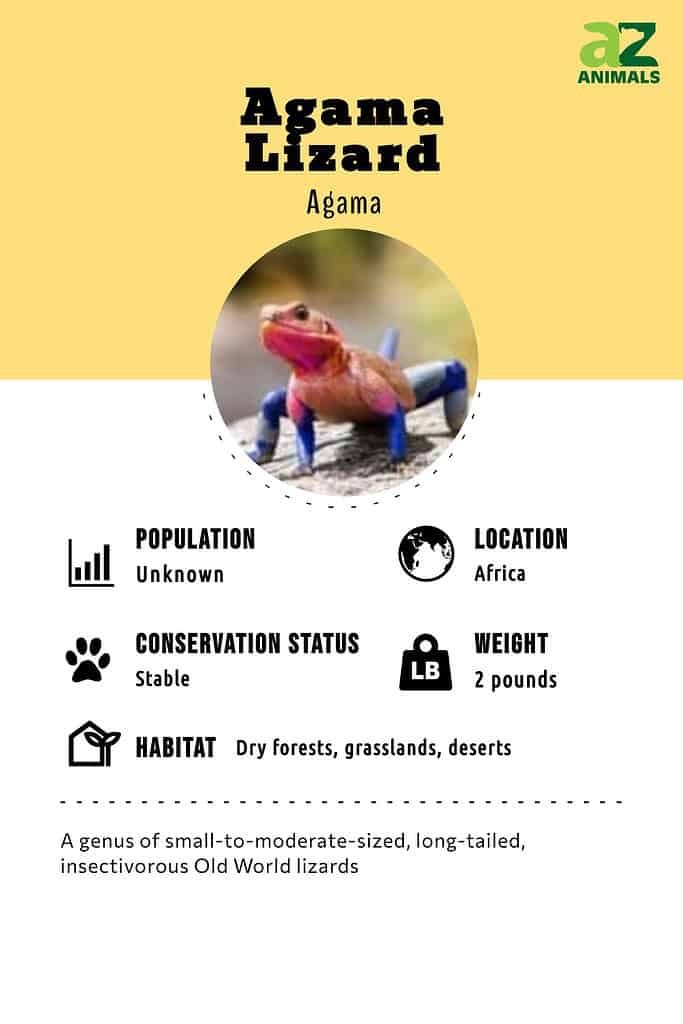
Agama lizard infographic

3 Agama Lizard Facts!

  • The large front teeth and powerful jaws are adaptations to help them eat large, hard prey.
  • Males initiate courtship by bobbing their heads up and down. This has given it the alternative name of koggelmander, or “little mocking man,” in the South African Afrikaans language.
  • The agama’s colors will suddenly become brighter when it’s alarmed or agitated in some manner.

Scientific Name

The scientific name of the Agama genus is simply Agama. This name comes from a local West African word that means lizard. It belongs to a family of dragon lizards, Agamidae, that are common all throughout the Eastern Hemisphere. The scientific name of the common red-headed agama lizard is actually Agama agama, which demonstrates how common and important it is within the genus. There is another group of lizards called the butterfly agamas, but they are part of a separate genus within the same family.

Appearance
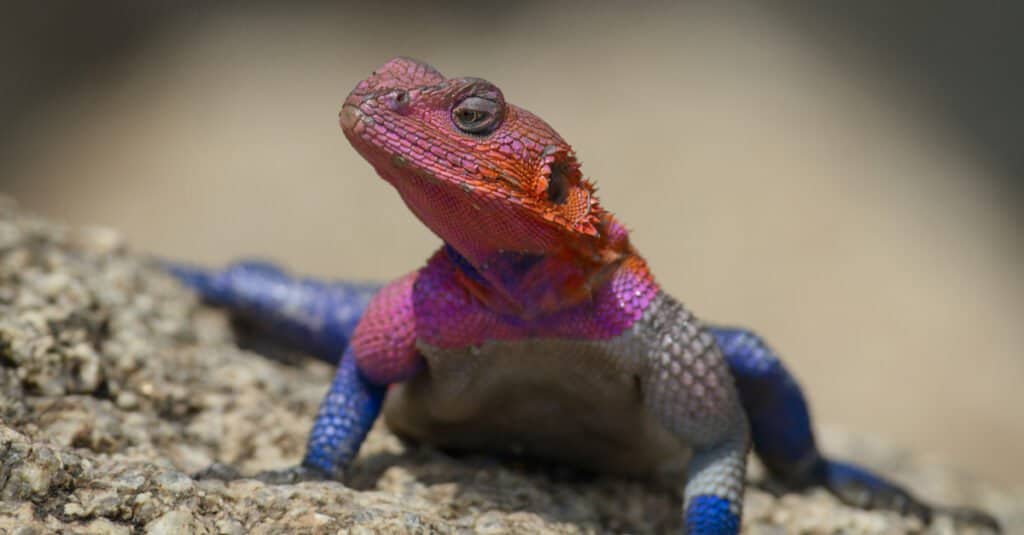
Mwanza flat-headed rock agama lizard, aka spiderman agama, in the Serengeti National Park, Tanzania.

Mwanza flat-headed rock agama lizard, aka spiderman agama has beautiful bright colors

Agamas come in a wide array of bright colors and distinctive body shapes that should make identification easier. For instance, the common agama, also known as the red-headed agama lizard, is characterized by brown muted colors around the body with a light stripe down the middle and six or seven darker patches on the side. Dominant males tend to have blue bodies and yellow heads, whereas subordinate males and females tend to have olive-green heads instead.

Other important features include an exceptionally long tail, a big head, external ear openings, and prominent eyelids. The size of the lizard can vary anywhere between 5 and 12 inches, sometimes even longer. This is about the same size as a human foot. Size is also one of the most important distinguishing characteristics between agama lizard females and males. The males tend to be much larger than the females.

Behavior
Kashmir rock agama lizard with blue legs and flanks sunning on the rock.

Kashmir rock agama lizards live in social groups

Agamas live in small social groups that consist of a lead male, several agama lizard females, and a few younger subordinate males. The structure of the group is rather loose and relaxed. There are no defined hierarchies apart from the lead male, also known as the cock, who has exclusive breeding rights with the females. Agamas are fairly docile animals, but dominant males can become quite aggressive in defense of mates and territory. They will typically show off their colors, lash their tails, or make a threat display when agitated or disturbed.

Subordinate males must either establish their own territory or eliminate the current cock and take his place in order to mate with the females. If the current cock is challenged by an upstart, then he will stand in a prominent position and show off his throat pouch and bob his head up and down. If the intruder hasn’t retreated, then the cock will charge at him with his mouth open and colors displayed. They will then strike at each other with their tails to determine who is the most dominant male.

Habitat

The African agama lizard can be found in dry forests, grasslands, and deserts, as well as urban and suburban environments throughout sub-Saharan Africa. Agama territories are always built around a large object, such as a tree or boulder. Dominant males defend this small range from intruders.

If you are interested in keeping the agama as a pet, then it is a good idea to house multiple lizards together in a single enclosure to replicate the social structure of their natural habitat. Three agamas would need an enclosure of at least 4 feet long and 2 feet tall with enough soil, rocks, artificial plants, and a UVB heat lamp that can maintain a consistent temperature between 80 and 85 degrees Fahrenheit during the day. When they aren’t hunting, lizards spend most of their day basking in the sun. The basking area of the enclosure should therefore reach almost 95 degrees Fahrenheit. They are highly tolerant to high temperatures.

Predators and Threats
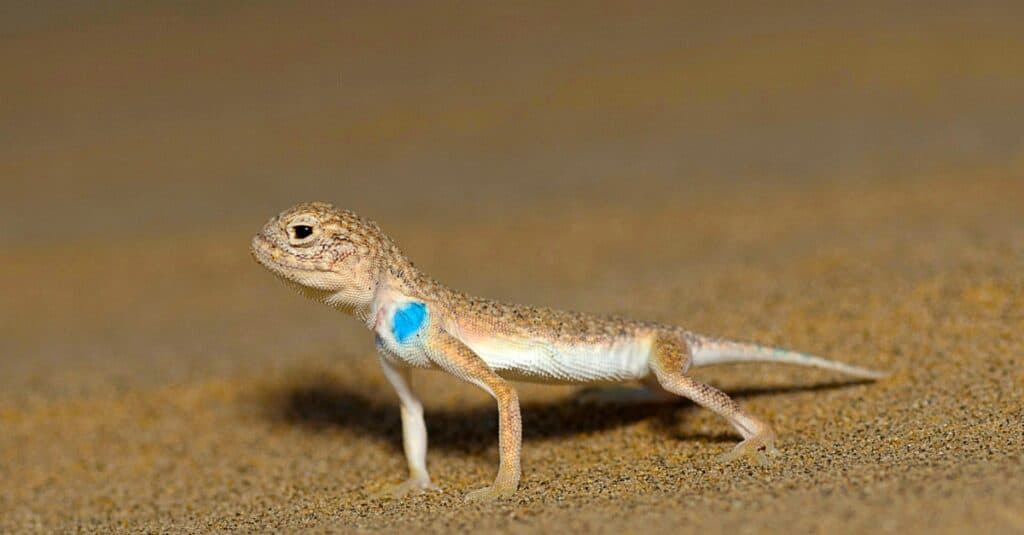
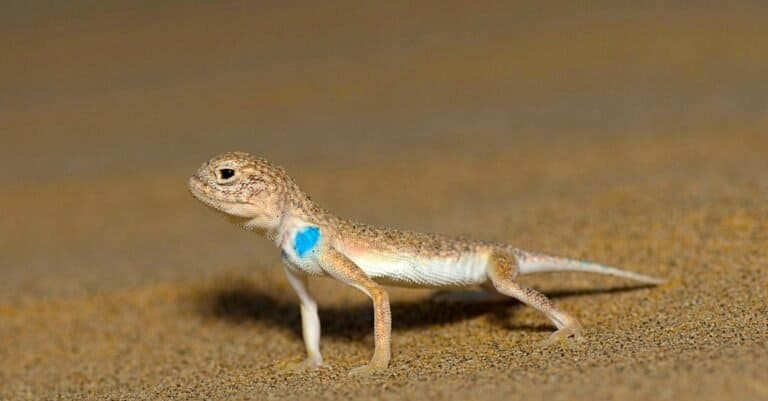
Toad Headed Agama lizard on the sand at the Desert National Park, India.

Toad Headed Agama lizards have to watch out for hawks and other hungry birds.

Agama lizards have a few predators in the wild that feed off them, including birds, snakes, and some mammals. Birds such as hawks and falcons will swoop down to grab an Agama lizard for dinner. Snakes such as pythons are also a threat to these small reptiles and can swallow them whole. Some mammals, like mongooses, may also attempt to prey on Agama lizards when they come across one while scavenging for food. In addition to natural predators, Agama lizards face other threats from humans, such as habitat destruction due to urbanization or careless use of pesticides which can harm the delicate ecosystem that supports their survival.

What eats the agama lizard?

The agama is preyed upon by all kinds of different predators throughout their range, including snakes, birds, and small mammals.

What does the agama lizard eat?

The agama lizard is primarily an insectivore, meaning that insects form the bulk of its diet, including ants, grasshoppers, beetles, and termites. It’s also been known to consume small mammals, reptiles, flowers, grasses, and fruits. The agama will sit and wait for its prey to pass by. It will then catch the prey with its sticky mucus-covered tongue. Agamas also consume sand and rocks along with their food to aid in digestion.

Reproduction and Life Cycle
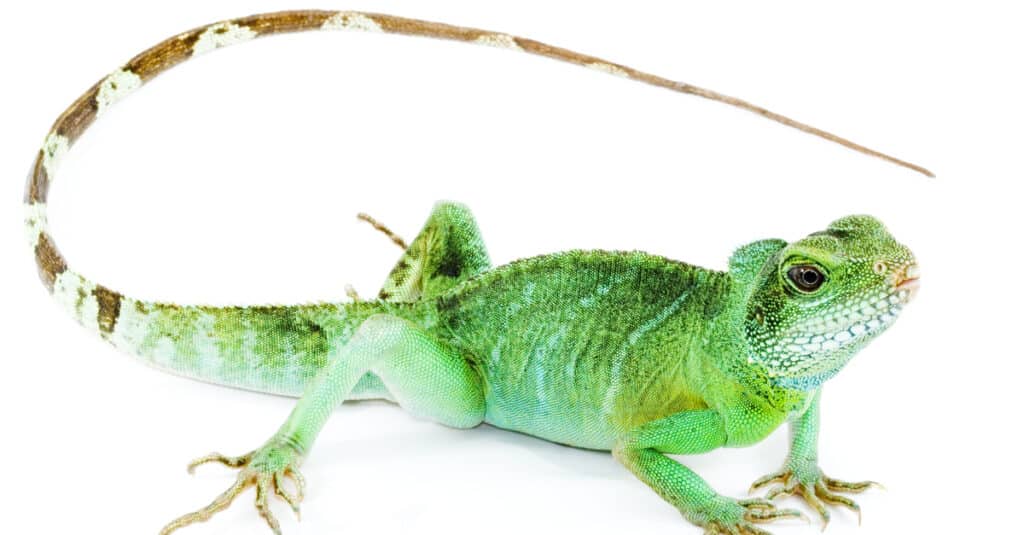
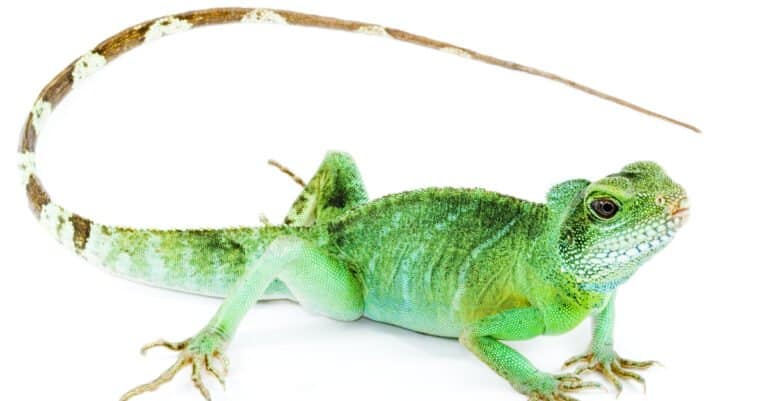
Agama Lizard isolated on white background.

Agama Lizards lay 5-7 eggs in a clutch.

Agama lizards tend to reproduce during the wet season or any other time of the year with sufficient amounts of rainfall. As mentioned previously, the lead male is the only one who’s allowed to mate with the agama lizard females. He will usually initiate the mating ritual with a brief series of head bobbing. The entire reproduction will last for only a few minutes. After the process is complete, the mates will go their separate ways.

When she is ready to lay her eggs, the female will dig a hole about two inches deep in wet, sandy soil with her snout and claws. She will then lay a clutch of five to seven eggs inside of the hole and cover them with herbs or grasses, just enough to hide them from predators but still give them access to sunlight. Although they do not receive much care from their parents, it will take about eight to 10 weeks for the eggs to hatch. Each baby lizard will measure about 1.5 inches long with an additional 3-inch tail.

Solitary at birth, the baby lizards will immediately begin eating plants, insects, sand, and rocks. By around four months old, the juveniles will attempt to join a pre-existing group with a dominant male already in charge. While there isn’t a strict structure for this group, the juvenile male will start in a subordinate position and have a chance to become dominant as they grow up. Females become sexually mature after 14 to 18 months; males take up to two years. Depending on the species, the agama may have a lifespan of as long as 25 years, but most are likely to be much shorter. Many baby lizards fall victim to predators before reaching full maturity.

Population and Conservation
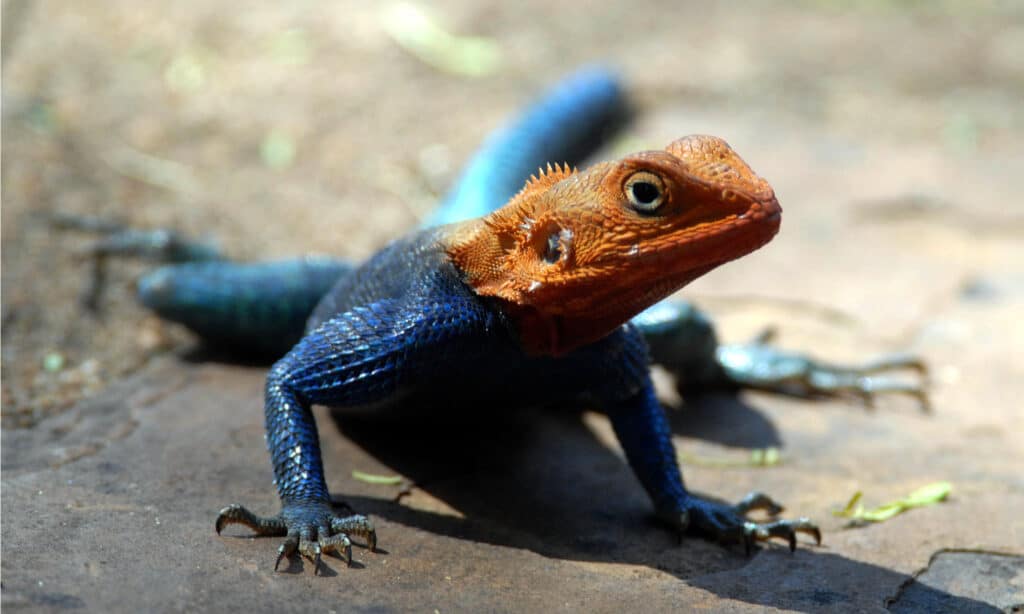
rainbow lizard or rainbow agama

Rainbow agama lizards are threatened by habitat destruction

According to the IUCN Red List, the common red-headed agama lizard (along with most other members of the genus) is a species of least concern. We don’t have any good population estimates for these species, but they are very common and widespread throughout their entire natural range.

The Agama lizard population is considered stable in most areas, with some local declines due to urbanization or agricultural practices. Conservation efforts include habitat protection and captive breeding programs, which have been successful in helping restore the population in certain regions. Additionally, many zoos around the world house Agama lizards as part of their educational exhibits to help raise awareness about this species. Research into their behavior has also helped conservationists better understand how best to protect this species from decline.

40 Types of Agama Lizards
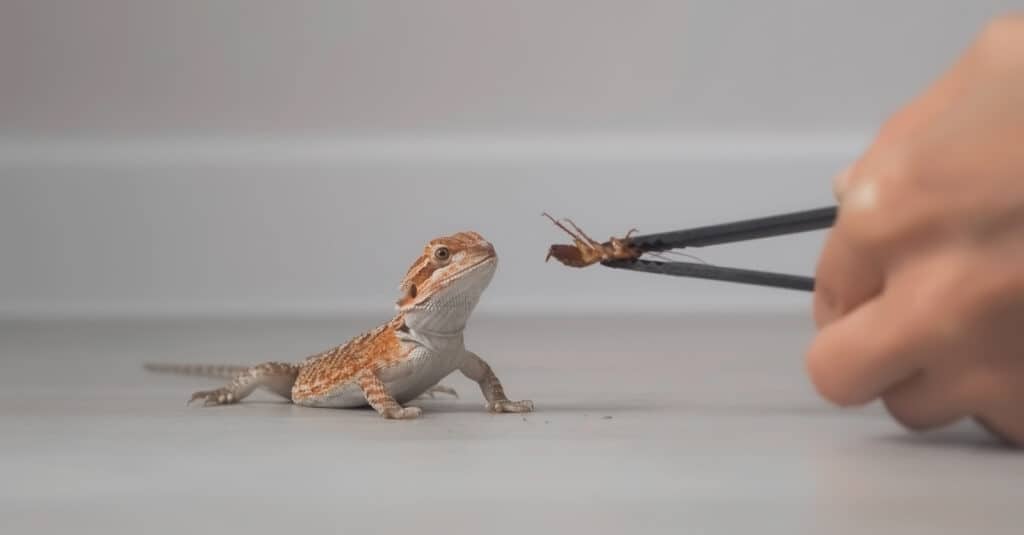
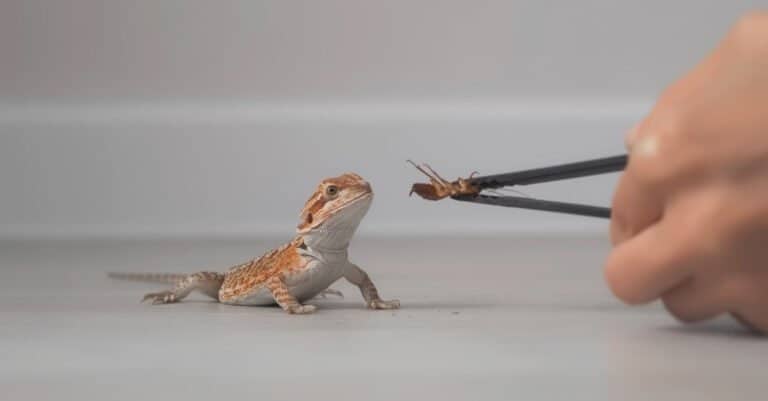
Baby of bearded agama lizard is eating cockroach from a woman's hand.

Baby bearded agama lizards have a big appetite.

Agama lizards are popular among reptile enthusiasts due to their attractive appearance and relatively easy care requirements compared to other species of pet lizards.

Agama Common NameAgama Scientific Name
Ground AgamaAgama aculeata
West African rainbow lizardAgama africana
Red-headed rock agamaAgama agama
Wester rock agamaAgama anchietae
Tropical spiny agamaAgama armata
Southern rock agamaAgama atra
Bibron’s agamaAgama bibronii
Bocourt’s agamaAgama bocourti
Somali agamaAgama bottegi
Mali agamaAgama boueti
Boulenger’s agamaAgama boulengeri
Elmeteita rock agamaAgama caudospinosa
Insular agamaAgama cristata
Nigeria agamaAgama doriae
Etosha agamaAgama etoshae
Finch’s agamaAgama finchi
Benin agamaAgama gracilimembris
Harmann’s agamaAgama harmanni
Common spiny agamaAgama hispida
Kakamega agamaAgama kalmosae
Kirk’s rock agamaAgama kirkii
Southern rock agamaAgama knobeli
Lebreton’s agamaAgama lebretoi
Kenyan rock agamaAgama lionotus
Montane rock agamaAgama montana
MOzambique agamaAgama mossambica
Mucoso agamaAgama mucosoensis
Mwana flat-headed rock agamaAgama mwanzae
False agamaAgama paragama
Painted agamaAgama persimilis
Peters rock agamaAgama picticauda
Namib rock agamaAgama planiceps
Robecchi’s agamaAgama robecchii
Ruppell’s agamaAgama rueppelli
Sunegal agamaAgama sankaranica
Gray’s agamaAgama spinosa
Marsabit rock agamaAgama wachirai
Gambia agamaAgama weidhoizi
Algeria agamaAgama tassiliensis
Tanzania agamaAgama turuensis
View all 327 animals that start with A

Sources

  1. Animal Diversity Web / Accessed February 11, 2022
  2. Everything Reptiles / Accessed February 11, 2022
  3. Petkeen / Accessed February 11, 2022
Heather Hall

About the Author

Heather Hall

Heather Hall is a writer at A-Z Animals, where her primary focus is on plants and animals. Heather has been writing and editing since 2012 and holds a Bachelor of Science in Horticulture. As a resident of the Pacific Northwest, Heather enjoys hiking, gardening, and trail running through the mountains with her dogs.

Thank you for reading! Have some feedback for us?


Agama Lizard FAQs (Frequently Asked Questions)

The agama is an omnivorous animal. Insects make up the bulk of their diet, but they also sometimes supplement this with small bits of plant material.