


E
Species Profile

Eastern Kingbird

Tyrannus tyrannus

Tiny tyrant with a white-tipped tail
John L. Absher/Shutterstock.com

Eastern Kingbird Distribution

Click a location to explore more animals from that region

Loading map...

Found in 83 locations

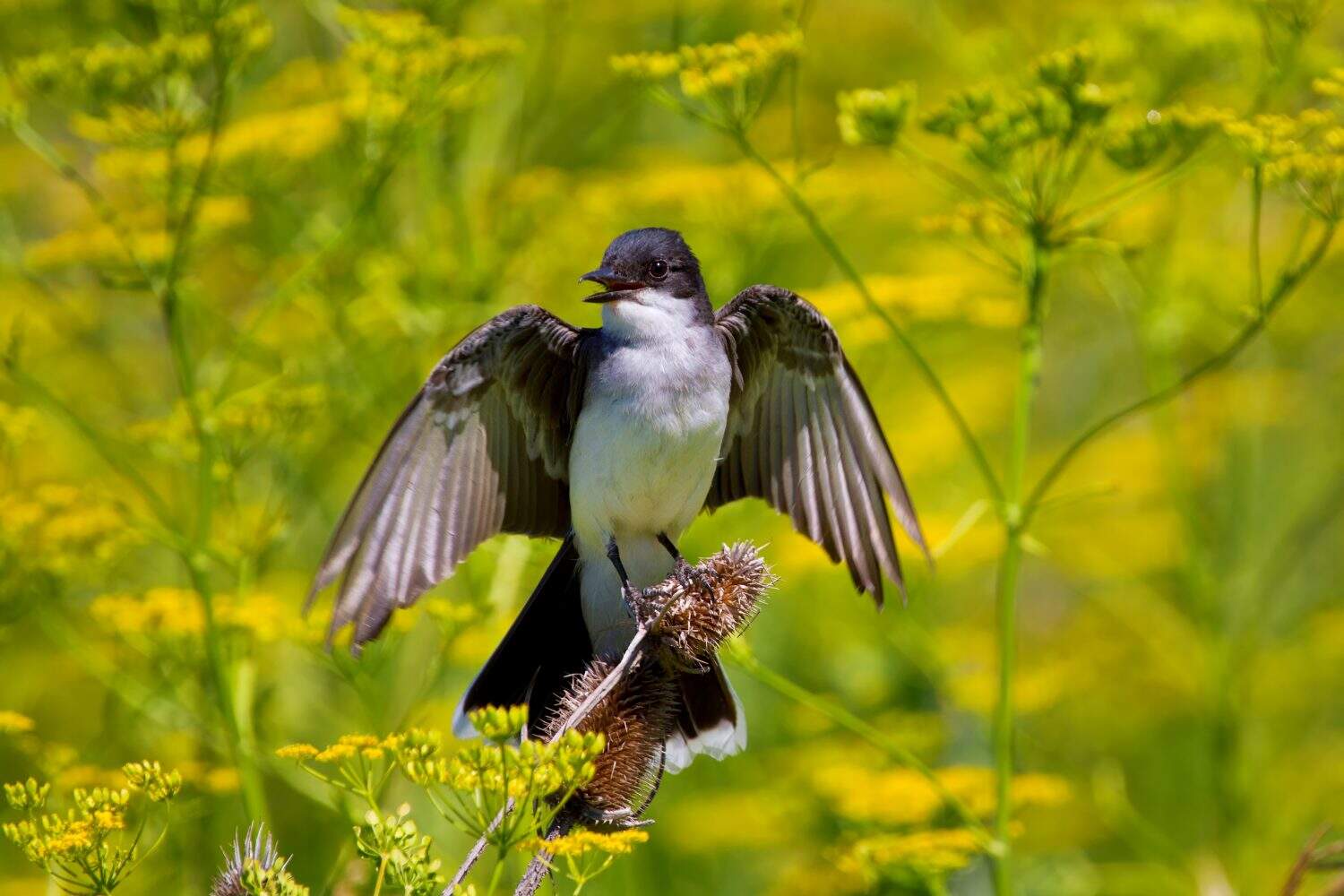
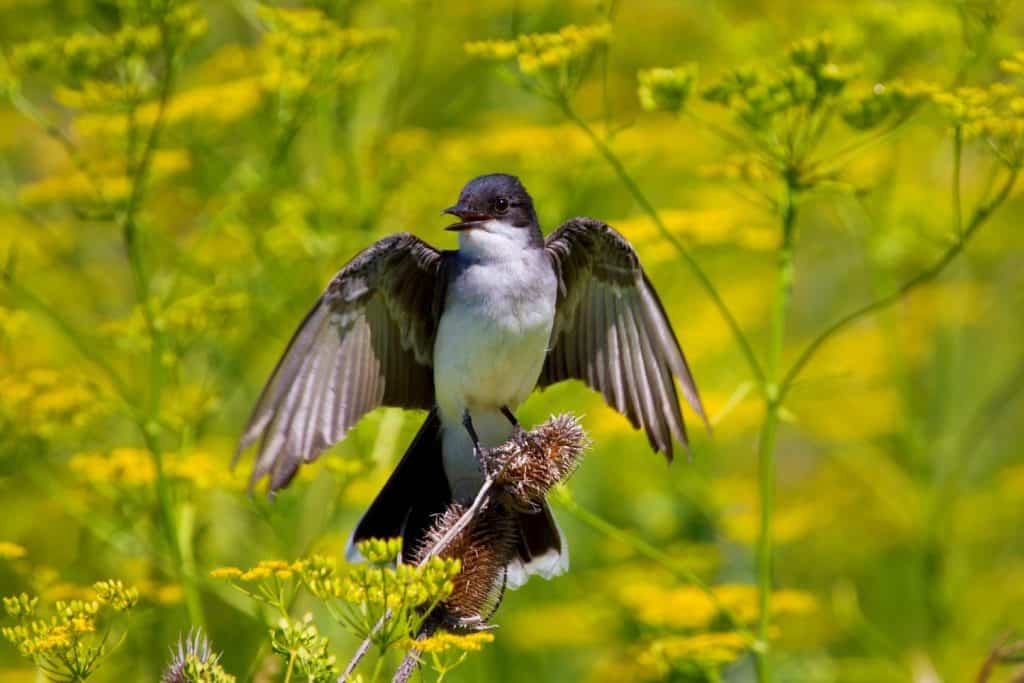
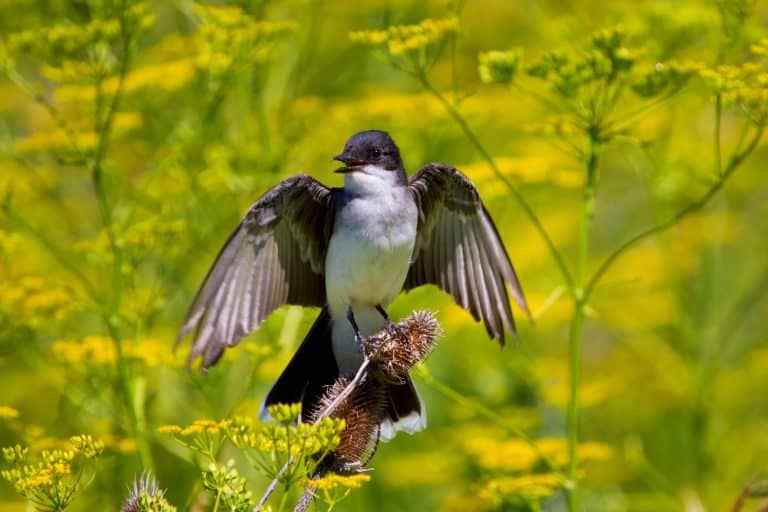
Eastern Kingbird Surrounded By Yellow Foliage With Wings Spread

At a Glance

Wild Species
Also Known As Kingbird, Bee-martin, EAKI
Activity Diurnal
Lifespan 3 years
Weight 0.055 lbs
Status Least Concern
Did You Know?

Size: 19-23 cm long; wingspan 33-38 cm; mass ~33-55 g (Cornell Lab, Birds of the World).

Scientific Classification

A medium-sized tyrant flycatcher known for its bold, aggressive defense of territories and nests, often harassing much larger birds. It is a long-distance migrant, breeding across much of North America and wintering mainly in northwestern South America.

Kingdom
Animalia
Phylum
Chordata
Class
Aves
Order
Passeriformes
Family
Tyrannidae
Genus
Tyrannus
Species
Tyrannus tyrannus

Distinguishing Features

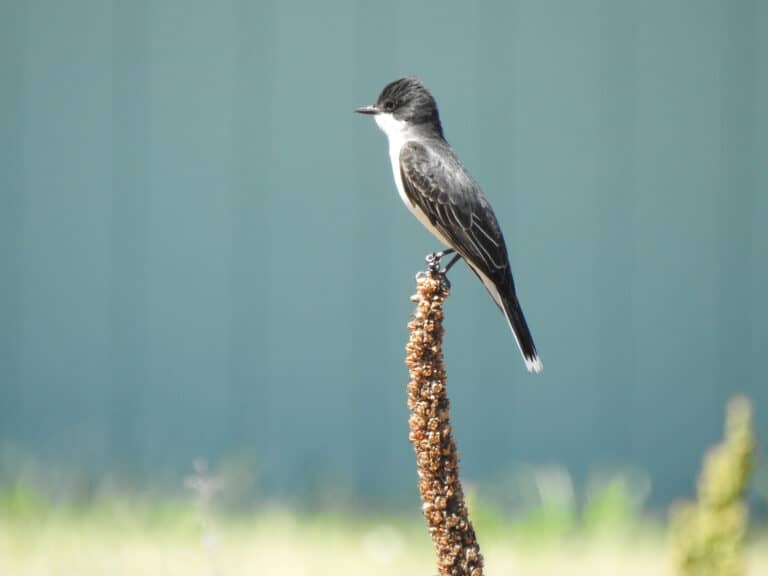
  • Blackish head and upperparts with crisp white underparts
  • White terminal band on the tail (a key field mark)
  • Concealed crown patch that can show reddish/orange when raised
  • Aerial sallying for insects; often very aggressive toward raptors and corvids near the nest

Physical Measurements

Length
8 in (7 in – 9 in)
Weight
0 lbs (0 lbs – 0 lbs)
Top Speed
28 mph
Estimated 45 km/h (unconfirmed)

Appearance

Primary Colors
Secondary Colors
Skin Type Feathered integument (contour feathers with flight feathers on wings/tail); keratinous black bill; legs/feet with scaly skin typical of passerines.
Distinctive Features
  • Medium-sized tyrant flycatcher: total length 19-23 cm; wingspan 33-38 cm; mass commonly ~0.033-0.055 kg (Cornell Lab of Ornithology, All About Birds: Eastern Kingbird).
  • Tail shows a conspicuous white terminal band (tail-tip) that is a key field mark, especially in flight and when perched (Cornell Lab of Ornithology).
  • Bill fairly stout and black; head often looks large and squared with a slightly peaked crown; small concealed orange-red crown patch may be flashed during agitation (Birds of the World).
  • Usually uses exposed perches and an upright posture, sitting on snags, wires, or treetops, then makes short flights (sallies) to catch flying insects and returns to the same or nearby perch.
  • Bold territorial aggression: frequently mobs and strikes at much larger birds (e.g., raptors/corvids) near nest/territory-an especially notable behavioral trait associated with its conspicuous perching and flight (Birds of the World; Cornell Lab of Ornithology).
  • Long-distance migrant: breeds across much of North America and winters mainly in northwestern South America; migration timing varies by region (Birds of the World).
  • Longevity record: 10 years 11 months (banding record; USGS Bird Banding Laboratory longevity data for Eastern Kingbird).

Did You Know?

Size: 19-23 cm long; wingspan 33-38 cm; mass ~33-55 g (Cornell Lab, Birds of the World).

Tail ID: the Eastern Kingbird's black tail ends in a sharp white terminal band-often the quickest field mark in flight.

Hidden "crown": like many Tyrannus flycatchers, it can reveal a small concealed reddish/orange crown patch when excited or displaying.

Feeding style: a classic "perch-and-sally" aerial insect-catcher-launching from exposed wires/snags to snatch insects midair, then returning to a perch.

Diet shift late season: after breeding, it commonly adds fruit (berries) to its diet, especially in late summer and on migration (Birds of the World).

Migration: breeds across much of North America and winters mainly in the Amazon Basin of South America (especially western Amazonia, including parts of Colombia, Ecuador, Peru, Bolivia, and western Brazil), making it a true long-distance migrant.

Unique Adaptations

  • Wide gape + rictal bristles: a broad bill base and facial bristles help funnel and secure flying insects during midair captures-hallmark traits of tyrant flycatchers (Tyrannidae).
  • Bold, high-contrast tail tip: the white terminal tail band is conspicuous in flight and may aid in communication during chases and territorial interactions (visual signaling).
  • Concealed crown patch: a small hidden colored patch can be flashed in high-arousal moments (aggression/courtship), a common Tyrannus signaling feature.
  • Edge-habitat specialization: strong preference for ecotones (forest-field, riparian edges) maximizes both perches and open airspace for sallying.
  • Long-distance migratory physiology: seasonal fattening and timing allow nonstop or near-nonstop migratory legs from North America toward northern/western South America (general migratory passerine adaptation; species account in Birds of the World).

Interesting Behaviors

  • Perch-and-sally hunting: watches from an exposed perch (snag, wire, fence) and makes fast aerial sorties to capture flying insects.
  • Mobbing and strike attacks: aggressively harasses crows, hawks, and other large birds near nests/territories-often chasing them repeatedly and sometimes making contact.
  • Territorial edge patrol: favors woodland edges, riparian corridors, and open areas with scattered trees; males frequently patrol conspicuous perches.
  • Aerial chases: engages in high-speed pursuit flights, especially during territorial disputes and courtship.
  • Nest defense escalation: defense intensity typically increases sharply after eggs hatch; adults may dive-bomb intruders repeatedly at close range (Birds of the World).
  • Foraging over water and fields: frequently hawks insects above open water, pastures, and crop fields, capitalizing on insect swarms.

Cultural Significance

The name "kingbird" comes from its bold nest defense. Eastern Kingbird (Tyrannus tyrannus) drives away hawks and crows and has long been a familiar summer symbol along farm edges, hedgerows, and roadside wires across North America.

Myths & Legends

Naming tradition: "Kingbird" entered English as a behavioral title-local observers likened its boldness to a tiny monarch because it persistently attacks much larger birds that approach its nest.

Naturalist lore: early American ornithologists (notably Alexander Wilson) popularized the bird's reputation as a "tyrant" for its fearless aerial attacks on raptors near breeding territories-an anecdotal tradition repeated in later nature writing.

In some farming areas the Eastern Kingbird (Tyrannus tyrannus) was nicknamed "bee-martin" because people thought it ate bees near hives, and the name stayed in local country talk.

Conservation Status

LC Least Concern

Widespread and abundant in the wild.

Population Decreasing

Protected Under

  • United States: protected under the Migratory Bird Treaty Act (MBTA; 16 U.S.C. §§ 703-712) as a native migratory bird-prohibits take/possession without authorization.
  • Canada: protected under the Migratory Birds Convention Act, 1994 (and associated Migratory Birds Regulations).
  • Occurs in numerous federal/state/provincial parks, wildlife refuges, and other protected areas across its breeding range; protection is generally through broad habitat conservation rather than species-specific listing.
  • HUBS (tyrant flycatchers, Family Tyrannidae): conservation status across the family spans from Least Concern for many widespread edge/open-country species to threatened categories (VU-CR) concentrated in habitat-specialist taxa (notably in Andean/Atlantic Forest and other rapidly converted tropical systems). Common, recurring threats across the group include habitat loss/fragmentation from agricultural expansion and urbanization, degradation of riparian/edge structure, and pesticide-driven prey reductions for insectivorous species; climate change and extreme weather are increasingly cited as compounding risks. Notable at-risk tyrannids (examples) include Kaempfer's Tody-Tyrant (Hemitriccus kaempferi; Endangered) and other narrow-range forest specialists in heavily deforested regions (IUCN/BirdLife assessments by species).

Life Cycle

Birth 3 chicks
Lifespan 3 years

Lifespan

In the Wild
0–10.9 years
In Captivity
0–12 years

Reproduction

Mating System Polygynandry
Social Structure Socially Monogamous
Breeding Pattern Seasonal
Fertilization Internal Fertilization
Birth Type Internal_fertilization

Eastern Kingbird (Tyrannus tyrannus) forms socially monogamous pairs that defend a breeding territory. Both parents feed young and the female mainly incubates, but extra-pair paternity occurs; it is not a cooperative breeder.

Behavior & Ecology

Social Flock Group: 2
Activity Diurnal
Diet Insectivore Large flying insects captured by perch-and-sally hawking (notably bees/wasps and dragonflies when available).
Seasonal Migratory 4,039 mi

Temperament

Bold
Highly territorial during breeding
Aggressive nest/territory defense (notably frequent aerial attacks on much larger birds)
Socially flexible: shifts from territorial pairs to gregarious flocking/roosting outside breeding season
Opportunistic forager (hawking insects; increased fruit-eating in late summer and on wintering grounds)

Communication

sharp alarm/contact notes (commonly transcribed as "kip"/"kik") used during territorial interactions and mobbing
rapid chatter/buzzy notes given during agitation and aggressive encounters near the nest
variable dawn/daytime song-like sequences Less elaborate than many passerines; used in pair/territory context
aerial chase/attack flights as a primary aggressive signal Close passes, strikes
postural displays: erect stance, head/crest raising to expose the concealed crown patch, and tail/wing movements during high arousal
territorial spacing and repeated use of exposed perches as visual signals of ownership
communal roosting behavior as an information/coordination HUB Site fidelity within seasons; strong variation in roost size by locality and time of year

Habitat

Biomes:
Temperate Forest Temperate Grassland Boreal Forest (Taiga) Freshwater Wetland Tropical Dry Forest Savanna +1
Terrain:
Plains Riverine Coastal Valley Hilly Plateau
Elevation: Up to 8858 ft 3 in

Ecological Role

Aerial insect predator with seasonal frugivory; functions as an insect-population regulator and occasional seed disperser in open and edge habitats.

Suppresses populations of flying insects (including some agricultural/forest pest taxa) via intensive hawking Contributes to seed dispersal when consuming and later depositing small fruits/berries during late summer-migration and on the wintering range Transfers energy from aerial insect communities to higher trophic levels (as prey for raptors and other predators), linking insect pulses to vertebrate food webs

Diet Details

Main Prey:
Flying insects Arthropods
Other Foods:
Seasonal fruits and berries

Human Interaction

Domestication Status

Wild

Eastern Kingbird (Tyrannus tyrannus) has no domestication history. It is a wild, free-living migratory songbird and is not a species that has been selectively bred or maintained as a domestic animal; any human possession is typically limited to permitted rehabilitation, research, or education rather than domestication.

Danger Level

Low
  • Seasonal defensive dive-bombing near nests; birds may strike heads/hair when people approach nesting territory (well documented behavior in Birds of the World).
  • Minor scratch risk if contact occurs; no venom/toxin and no meaningful predation threat to humans.
  • Indirect risk is limited to distraction/startle response (e.g., while on ladders/trails) during repeated close passes.

As a Pet

Not Suitable as Pet

Legality: Eastern Kingbird (Tyrannus tyrannus) cannot be kept as a pet in the United States. Protected by the Migratory Bird Treaty Act; having, catching, buying, selling, or moving them or feathers needs federal permits. Canada and many countries have similar laws.

Care Level: Expert Only

Purchase Cost:
Lifetime Cost:

Economic Value

Uses:
Ecosystem services (aerial insect predation) Birdwatching/ecotourism Education and scientific research Indicator species for habitat change (open/edge habitats)
Products:
  • No commercial products; species is not domesticated or farmed. Primary value is non-consumptive (pest-control service and recreation).

Relationships

Related Species 10

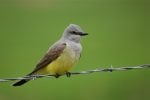
Western Kingbird
Western Kingbird Tyrannus verticalis Shared Genus
Tropical Kingbird Tyrannus melancholicus Shared Genus
Gray Kingbird Tyrannus dominicensis Shared Genus
Cassin's Kingbird Tyrannus vociferans Shared Genus
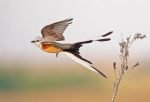
Scissor-tailed Flycatcher
Scissor-tailed Flycatcher Tyrannus forficatus Shared Genus
Fork-tailed Flycatcher Tyrannus savana Shared Genus
Loggerhead Kingbird Tyrannus caudifasciatus Shared Genus
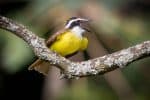
Great Kiskadee
Great Kiskadee Pitangus sulphuratus Shared Family
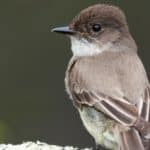
Eastern Phoebe
Eastern Phoebe Sayornis phoebe Shared Family
Eastern Wood-Pewee Contopus virens Shared Family

Ecological Equivalents 5

Animals that fill a similar ecological role in their ecosystem

Eastern Wood-Pewee Contopus virens They occupy overlapping niches as aerial insectivores that hawk flying insects from perches (sallying/gleaning), frequently using forest edges and open woodlands. Both are long-distance migrants and forage primarily on flying insects during the breeding season.
Barn Swallow
Barn Swallow Hirundo rustica Strong niche overlap as a diurnal aerial insectivore in open habitats. Both commonly feed on flying insects over fields and water and are migratory. They differ mainly in foraging mode (continuous flight vs. perch-and-sally), but their prey base overlaps heavily.
Purple Martin Progne subis Shares open-country aerial insectivory and seasonal movements; both take large numbers of flying insects (notably winged Hymenoptera, Odonata, and Diptera) and often forage above open habitats near water.
American Kestrel Falco sparverius Partial niche overlap in open habitats and perch-hunting behavior: both commonly hunt from exposed perches along fields and edges. Kestrels focus more on vertebrates and large insects, but both use similar hunting vantage points within the same landscapes.
Red-winged Blackbird
Red-winged Blackbird Agelaius phoeniceus Ecological analogue in aggressive territorial and nest defense in open and edge habitats. Eastern Kingbirds are well known for intense mobbing of intruders (including much larger birds), and red-winged blackbirds similarly defend nesting areas vigorously; both can shape local predator behavior through harassment.

The eastern kingbird is mostly monochromatic, just black, dark gray, and white, but it has a secret under its cap. Beneath the velvety black feathers on its head, there is a brightly colored crown of red, orange, or yellow. It only shows this impressive crown when it has a good reason, such as courting a potential mate or challenging a predator or foe. This fierce little bird may be only the size of a robin, but it won’t hesitate to take on much larger birds, snakes, or other animals that threaten its territory.

This flycatcher is a deadly hunter, catching large insects on the fly or diving down to snatch up terrestrial prey. This bird loves to be near the water, and migrates thousands of miles each year from its breeding grounds as far north as Canada to its winter range as far south as Argentina. Look for its white-tipped tail and listen for its metallic “dzeet dzeet” call in open or lightly wooded areas across North America from spring through fall.

Incredible Eastern Kingbird Facts

  • These birds are fierce fighters, taking on foes much larger than themselves and often winning.
  • DNA studies show that eastern kingbirds, though mostly monogamous, are prone to cheating.
  • The tail feathers of these birds look like they have been dipped in white paint.
  • Eastern kingbirds rarely walk or hop. They prefer to fly everywhere.
  • These birds hide their colorful crown underneath black feathers, and only show it when they have a good reason.

Where to Find the Eastern Kingbird

This common flycatcher may be easy to spot throughout its breeding range. It hangs out in open areas, often perched on wires, fences, tree limbs, or posts, looking for its next meal. In North America, the eastern kingbird is most often found in open areas like grasslands or marshes, near trees, although not usually deep in the forest. It typically lives near water, over which it easily catches prey and even sometimes builds its nests.

The range of the eastern kingbird is expansive, extending from northern Canada all the way to Argentina. The breeding territory of this bird includes most of the United States, except for parts of the southwest, and much of Canada, except for the far northern regions. It migrates through eastern Mexico and the Caribbean en route to its winter grounds in Central and South America. There it is found primarily along the Amazon River basin, where it lives within tropical forests.

During migration, the bird can be found in more diverse habitats, including deeper in forests and farther away from water.

Classification and Scientific Name

The eastern kingbird is a flycatcher in the Tyrannidae family. This family, filled with a wide variety of flycatchers, is the largest family of birds with more than 430 known species.

This particular flycatcher was first described by Linnaeus in 1758. He assigned the name Lanius tyrannus — which translates roughly to “butcher king” — to the bird. In 1799, French naturalist Bernard Germain de Lacépède reassigned the bird to the Tyrannus genus. The eastern kingbird is the type species of said genus, and one of 13 species that comprise it, most of which are called kingbird.

Eastern Kingbird Appearance
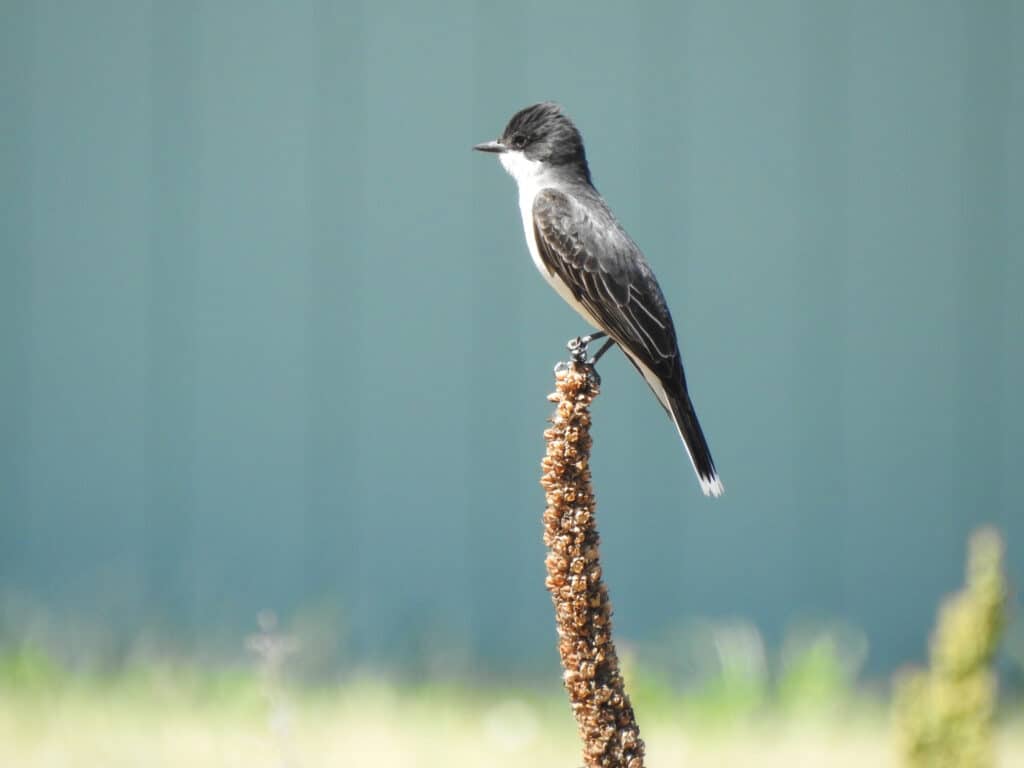
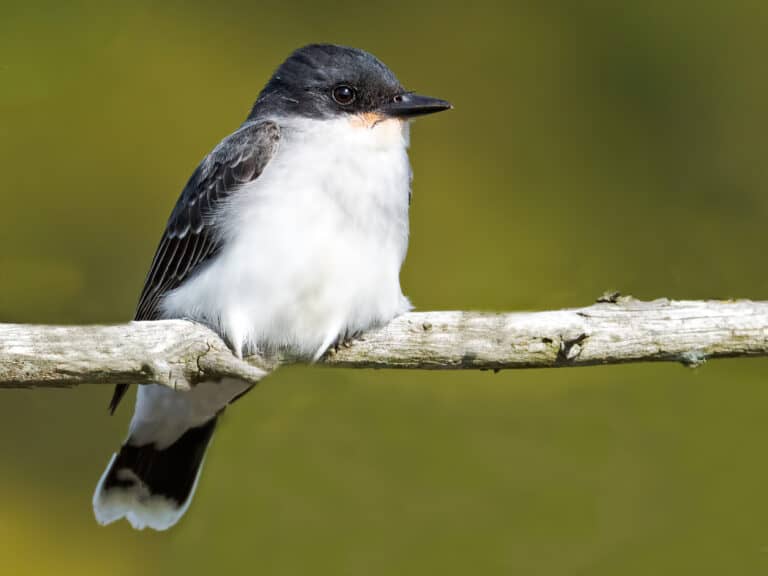
Eastern Kingbird

Eastern kingbirds are about the size of an American robin.

This bird is approximately the size of an American robin. Males and females look similar, except that males can be a little larger. Adults grow to about 7.7 to 9.1 inches in length and can attain weights of 1.2 to 1.9 ounces. Their lovely, fan-shaped wings extend to around 13 to 15 inches.

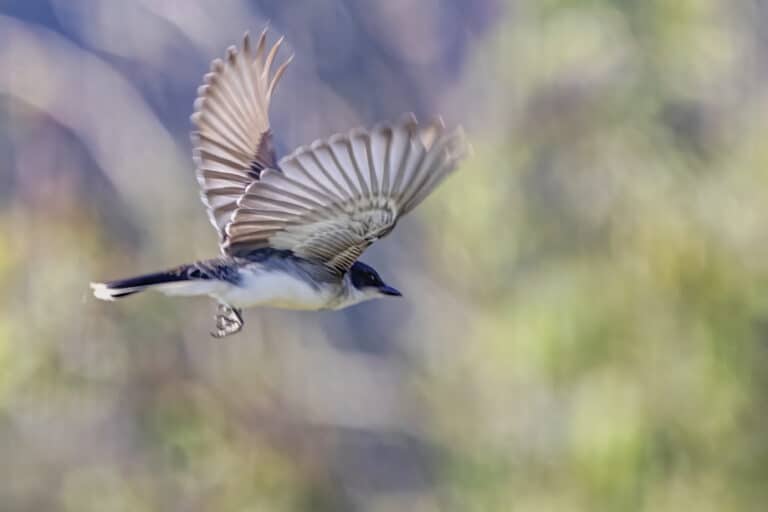
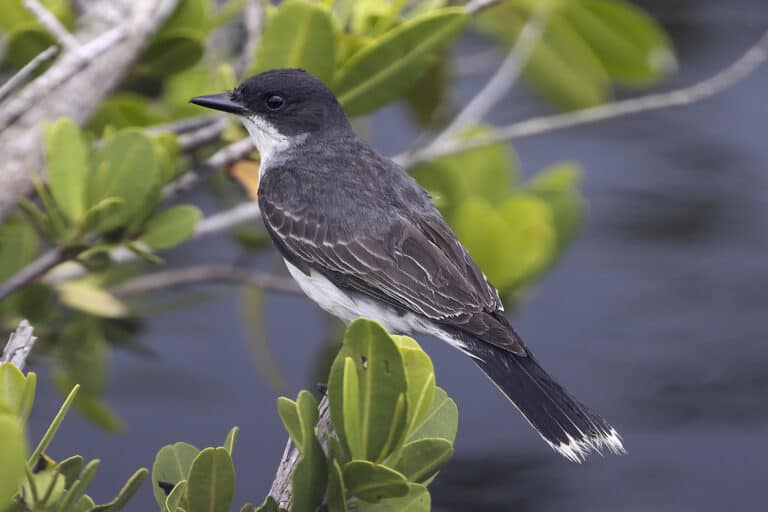
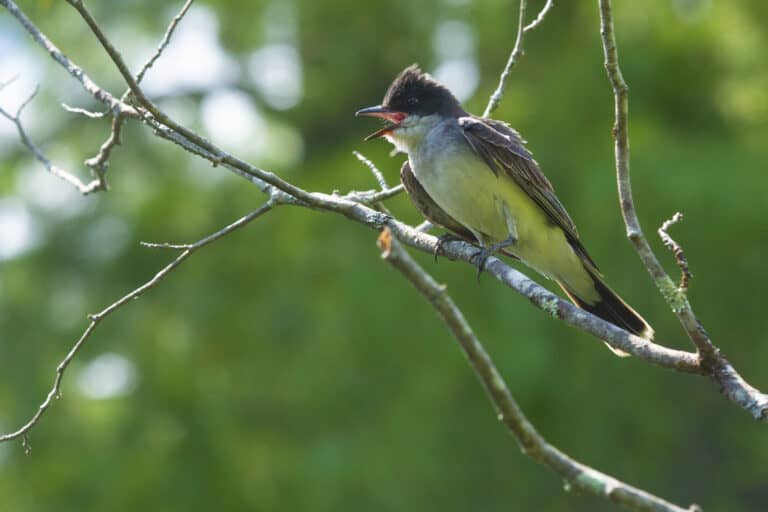
The eastern kingbird is striking, but somewhat monochromatic in appearance. Its body is mostly dark gray with clean, white feathers on its underparts. The long tail feathers are each tipped in bright white, as if they’d been dipped in paint. They make a distinctive display when the tail is fanned out in flight. This flycatcher has a large, black, or very dark gray head with deep, black eyes, and a short, pointy black bill. Its feet are also black.

This flycatcher seems to have been painted all in grayscale, except for the one splash of color that it conceals most of the time. On the bird’s crown, hidden underneath its dark feathers, there is a small crest of red, red-orange, or even sometimes yellow. When the bird is agitated, it can raise these feathers to create a startling and distracting display. Males, especially, are likely to flash their colorful crowns when engaging predators or other foes.

Eastern Kingbird Behavior

This migratory bird spends its summers in North America and its winters in Central and South America, migrating in flocks back and forth each year. During its breeding season, it spends much of its time hunting, but in the winter, it is mainly a foraging bird.

The eastern kingbird is fiercely aggressive. Its original scientific name, Lanius tyrannus, means “butcher king” and is a reference to the bird’s vicious predatory style. It is known for catching large insects in midair and bashing them to death against a hard surface before gobbling them up.

This small bird is equally aggressive with other birds. It attacks much larger birds, including blue jays and crows, especially in defense of its nest. It is highly territorial and will fight other birds, including rivals of the same species. When eastern kingbirds fight one another, they lock their feet together and try to rip each other’s feathers out, sometimes plummeting to the ground in full combat rather than submitting to defeat.

After the breeding season, eastern kingbirds become quite social. They migrate together in flocks from a few dozen up to thousands of birds without exhibiting much aggression toward one another at all. In the spring, once they return to their northern range, all bets are off.

Diet

The eastern kingbird is a flycatcher from the Tyrannidae family. Its diet consists mostly of insects that it catches in midair. It prefers large flying insects, such as bees, wasps, grasshoppers, and beetles. However, it is also adept at hunting insects on the ground or surfaces of plants, such as ants or terrestrial bugs. The bird often does this by hovering in the air and then swooping in on its prey.

Berries, fruits, and seeds are also an important part of the eastern kingbird’s diet. This omnivorous bird eats more and more plant-based foods as it prepares for migration. Once it reaches its winter home, it depends largely on berries and other vegetation.

Eastern Kingbird Reproduction

Male and female eastern kingbirds form mostly monogamous pairs. Evidence from DNA testing, however, indicates that these pairs are not entirely faithful to one another. Males usually work to attract a female to a territory they favor. They perform acrobatic dances in the air, hovering and darting, and raise their colorful crown feathers in courting displays. When a female chooses her mate, she proceeds to pick a nest location, often within the area suggested by the male she has selected.

The female builds a cup-shaped nest, usually in a lone tree. The nest is made of twigs, dried grass and weeds, pieces of stripped bark, and even trash. The male stays close by and guards the territory while the female is busy building the nest. She lines the middle of the nest with soft plant fibers and animal hair. Then she lays about two to five small eggs, each about an inch long.

Incubation takes approximately 14 to 17 days. The nestlings fledge around 16 or 17 days later. The female incubates and broods the young, and she does most of the feeding as well. Males do help with feeding the nestlings insects, both before and for about five weeks after they fledge. During that time, the parents usually watch over the young in a cluster of trees somewhere near the nest.

Eastern kingbirds have only one brood per year, unless their nest is destroyed early. In that case, they will sometimes make another attempt. The pairs are extremely aggressive in defending their nests. Because they nest in relatively open areas, and so many of their nests get destroyed by predators, they need to be fierce to increase the chances that their offspring will survive.

Predators

Blue jays, crows, and the American kestrel are all common predators of the eastern kingbird. However, this feisty flycatcher does not go down without a fight. It has been known to attack much larger birds and win, due to its highly aggressive tendencies and amazing maneuverability in the air.

Nest predators, such as snakes and squirrels, are particularly deadly foes. According to research, more than 50 percent of eastern kingbird nests are destroyed by nest predators. Female adults, who spend much more time at the nest than males, also have a shorter life expectancy.

Both male and female adults work hard to protect their nests from predators. They will put on defensive displays, hovering and diving at their opponents, opening their mouths wide and raising their brightly colored crowns. They won’t hesitate to attack a predator that is threatening them or their offspring. If their nest is destroyed by predators, the breeding pair may make another attempt, usually within the same nesting territory.   
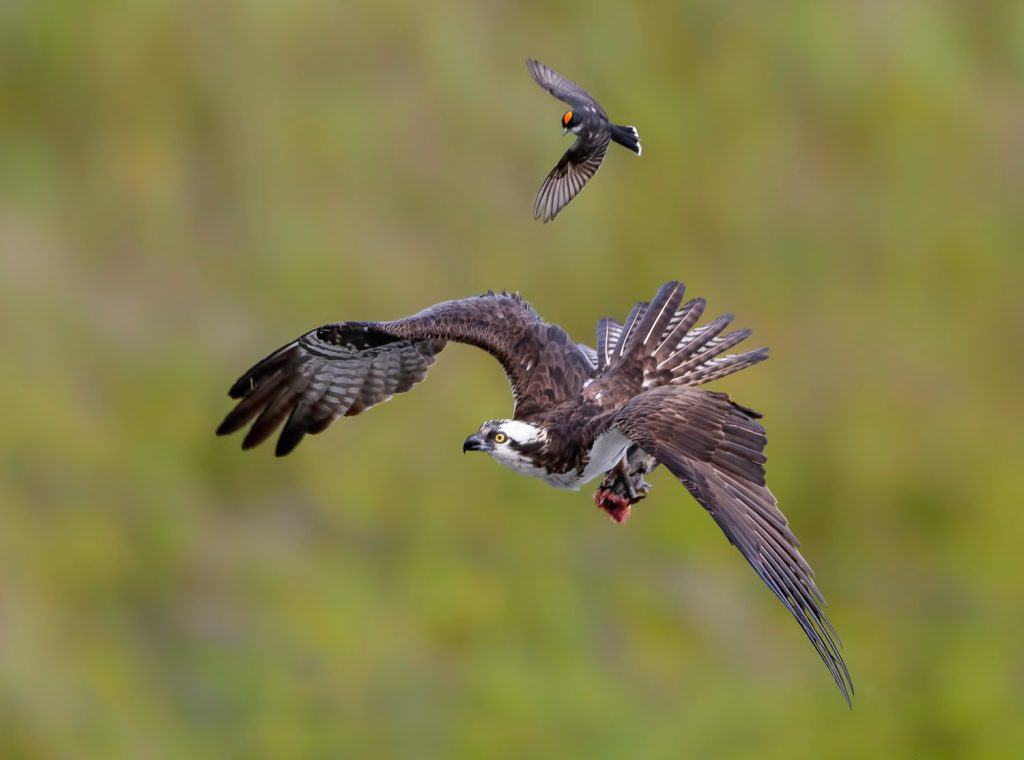
Osprey Harassed by Eastern Kingbird

Osprey attacked by an Eastern Kingbird.

Nest Parasitism

Another threat to eastern kingbirds, common to many songbirds, is nest parasitism by the brown headed cowbird. This lazy bird lays its eggs in the nests of other species, then goes on its way, leaving them to raise its young. Fortunately, the eastern kingbird is not easily suckered. When it recognizes the cowbird’s eggs as different from its own pale eggs ringed with red spots, it pierces their membranes, causing them to die.   

Lifespan of the Eastern Kingbird

The average lifespan of an eastern kingbird is less than 3 years, with the longest living specimens reaching about 10 years of age. Males tend to live a few months longer than females on average. This is possibly due to the fact that predation at the nest is especially high, and females are the ones who spend most of the time at the nest.

Currently, approximately 26 million eastern kingbirds exist, and they are listed as a species of least concern on the IUCN Red List. However, their numbers have been slowly but steadily decreasing since the 1960s. Researchers believe that a combination of factors, including habitat destruction and pesticide use, may have contributed to the decline in this species.

View all 185 animals that start with E

Sources

  1. eBird / Accessed October 26, 2022
  2. Oxford Academic / Accessed October 26, 2022
  3. New York State Ornithological Association / Accessed October 26, 2022
  4. International Union for Conservation of Nature Red List / Accessed October 26, 2022
  5. Holden Arboretum / Accessed October 26, 2022
Tavia Fuller Armstrong

About the Author

Tavia Fuller Armstrong

Tavia Fuller Armstrong is a writer at A-Z Animals where her primary focus is on birds, mammals, reptiles, and chemistry. Tavia has been researching and writing about animals for approximately 30 years, since she completed an internship with the U.S. Fish and Wildlife Service. Tavia holds a Bachelor’s Degree in Biology with a wildlife emphasis from the University of Central Oklahoma. A resident of Oklahoma, Tavia has worked at the federal, state, and local level to educate hundreds of young people about science, wildlife, and endangered species.
Connect:

Thank you for reading! Have some feedback for us?


Eastern Kingbird FAQs (Frequently Asked Questions)

The eastern kingbird is dark gray with clean white underparts and a velvety black head. Its tail feathers are tipped with white and look as if they were dipped in paint. It has black feet, a short and pointed black bill, and black eyes. It has a concealed colorful crown that is red, orange or yellow, which it can flash like a crest when it chooses.