S
Species Profile

Sedge Warbler

Acrocephalus schoenobaenus

The chatterbox of the reedbeds
vitalii_otroshko/Shutterstock.com

Sedge Warbler Distribution

Click a location to explore more animals from that region

Loading map...
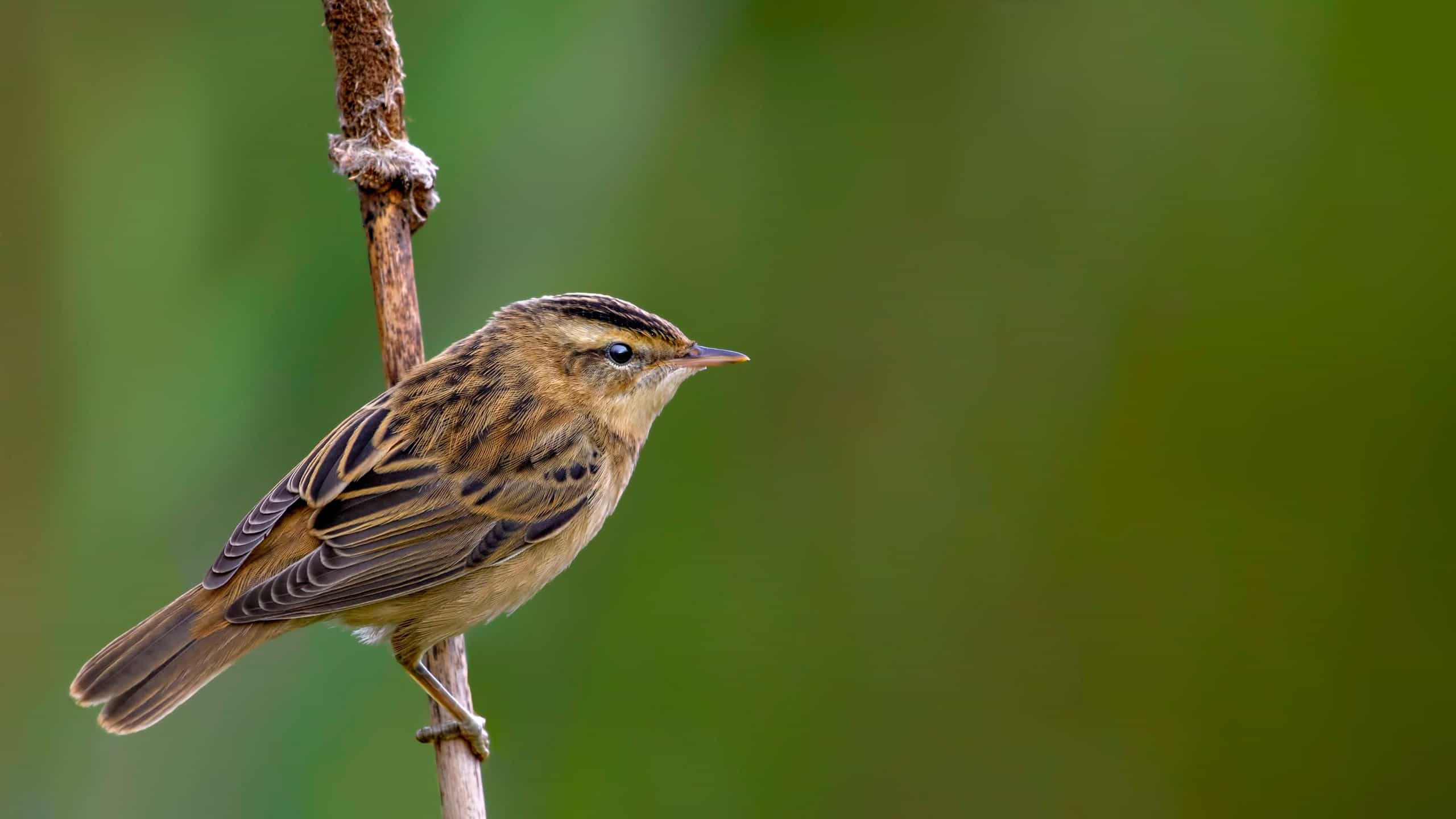
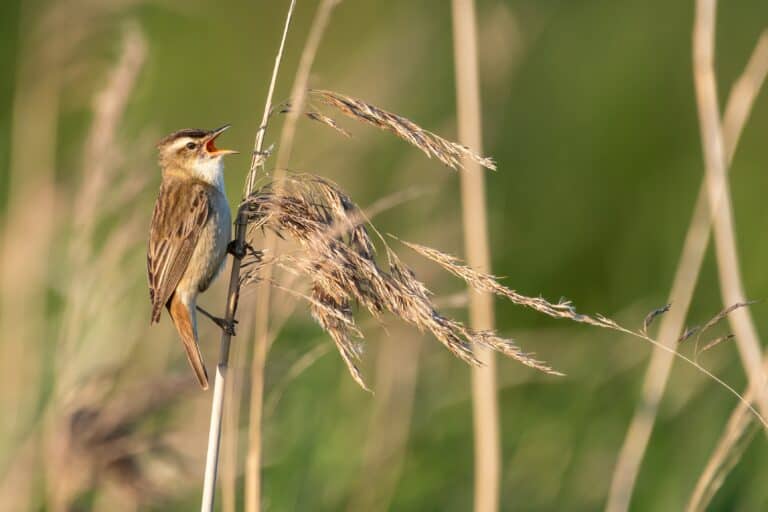
A sedge warbler perched on a sedge against a blurred green background

At a Glance

Wild Species
Activity Diurnal+
Lifespan 2 years
Weight 0.015 lbs
Status Least Concern
Did You Know?

A pre-migration Sedge Warbler can nearly double its body mass: about 0.010-0.014 kg in the breeding season, rising to around 0.024 kg at late-summer stopovers in northwest Europe.

Scientific Classification

A small migratory passerine of the Old World reed- and sedge-beds, known for its energetic, variable song and strong association with wetland vegetation.

Kingdom
Animalia
Phylum
Chordata
Class
Aves
Order
Passeriformes
Family
Acrocephalidae
Genus
Acrocephalus
Species
Acrocephalus schoenobaenus

Distinguishing Features

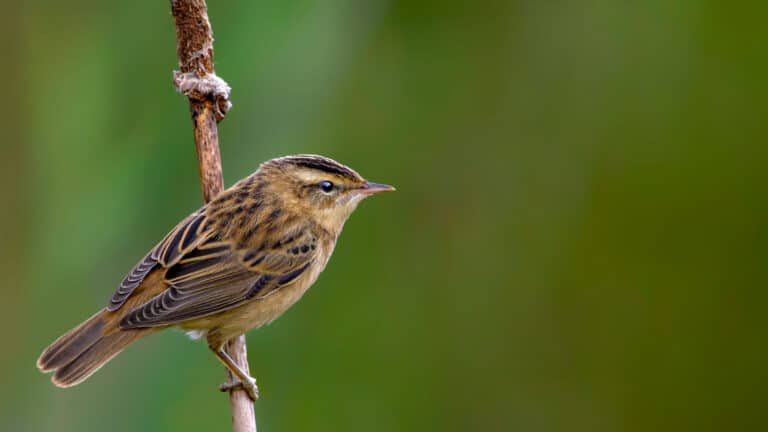
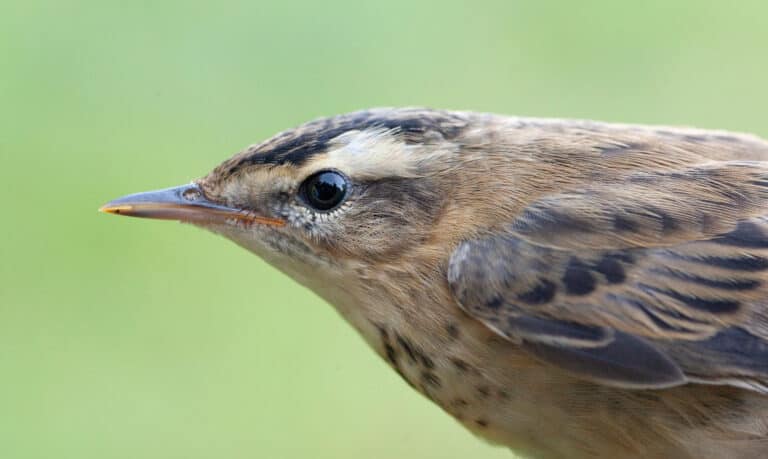
  • Prominent pale supercilium (eyebrow) contrasting with darker eye-stripe
  • Streaked crown and upperparts compared to many similar reed warblers
  • Often sings from exposed perches with a fast, chattering, imitative song
  • Typically favors sedge/reed margins and wetter scrub rather than dense pure reed stands

Physical Measurements

Length
5 in (5 in – 5 in)
Weight
0 lbs (0 lbs – 0 lbs)
Top Speed
25 mph
flying

Appearance

Primary Colors
Secondary Colors
Skin Type Feathered body; keratin bill; scaly tarsi and toes typical of passerines.
Distinctive Features
  • Total length 11.5-13.0 cm; wingspan 17-21 cm; mass typically ~10-13 g (standard field references).
  • Bold pale supercilium with dark eye-stripe; face pattern stronger than Eurasian Reed Warbler (Acrocephalus scirpaceus).
  • Crown and mantle distinctly streaked; Reed Warbler usually plainer brown above with weaker head pattern.
  • Bill relatively fine and pointed; often shorter-looking than Reed Warbler's longer, heavier bill impression.
  • Often cocks and flicks tail while moving mouse-like through sedges and low reeds.
  • Song a key field mark: rapid, chattering, highly variable with mimicry, delivered from low cover or brief song-flights.
  • Wetland specialist of sedgebeds, reed margins, and rank riverside vegetation; typically skulking but sings conspicuously.
  • Long-distance Palearctic-Afrotropical migrant (trans-Saharan); many populations migrate nocturnally and use reedbed stopovers.
  • Longevity: maximum ring-recovery records reported at ~10 years (EURING/BTO longevity summaries).

Did You Know?

A pre-migration Sedge Warbler can nearly double its body mass: about 0.010-0.014 kg in the breeding season, rising to around 0.024 kg at late-summer stopovers in northwest Europe.

Male song repertoire size (many distinct syllable/phrase types, often >100) is linked in studies to mating success-bigger repertoires tend to attract mates sooner.

Its song can include mimicked notes; some elements are thought to be learned on migration or on African wintering grounds, so older males can sound more "varied."

It is a regular host of the Common Cuckoo (Cuculus canorus); cuckoos lay eggs in Sedge Warbler nests in parts of its range.

Despite being a "reedbed bird," it often breeds in sedge, nettles, willow scrub, and damp rank grass-so long as there's dense cover near water.

Identification shortcut in the field: the strong pale supercilium (eyebrow) and streaked crown/back usually separate it from the plainer Eurasian Reed Warbler (Acrocephalus scirpaceus).

Unique Adaptations

  • Rapid fuel deposition ("fattening") for migration: can store substantial subcutaneous fat and increase mass from ~0.01-0.015 kg to around ~0.02 kg at peak stopover condition in late summer (recorded in ringing studies).
  • Cryptic wetland camouflage: warm brown, streaked upperparts and a strong supercilium break up the head-and-back outline among sedges and reed stems.
  • Song-learning flexibility: a large, variable repertoire (often >100 distinct phrase types) supports individual recognition and sexual selection in dense, visually occluded habitats.
  • Fine, pointed bill and agile gleaning: adapted to picking small insects (including aphids) from narrow leaves and stems in sedge/reed tangles.
  • Nest attachment strategy: weaving/tying the nest to multiple vertical stems reduces the risk of collapse in moving, waterlogged vegetation.

Interesting Behaviors

  • Explosive, variable song as a key field mark: delivered from a concealed perch or brief song flights; may sing day and night early in the breeding season.
  • Territorial but often in dense wetland mosaics: males defend song posts and nesting cover while foraging low in vegetation for insects and spiders.
  • Polygyny occurs: in good habitat, some males may pair with more than one female, with singing used to advertise and maintain territories.
  • Nest-building in low wetland vegetation: the deep cup is typically woven to stems of sedge/reed/rushes, helping stabilize it against wind and fluctuating water levels.
  • Long-distance nocturnal migration: breeds across much of Europe and western/central Asia and winters mainly in sub-Saharan Africa; stopover sites with abundant aphids and other insects are crucial for rapid refuelling.
  • Anti-parasite responses to cuckoos vary by population: some birds show nest guarding and may abandon heavily parasitized attempts.

Cultural Significance

The Sedge Warbler (Acrocephalus schoenobaenus) is a familiar "sound of summer" in marshes, fens, and river edges. Birdwatchers use it as a sign of dense wet plants and many insects. Its name means "pointed head" and "sedge."

Myths & Legends

Unlike swans, ravens, or owls, the Sedge Warbler has little documented stand-alone folklore; its cultural footprint is mostly through traditional natural-history writing that treats reedbed songbirds as heralds of spring and healthy marshes.

Name-and-place lore is its strongest "story": across northern Europe, vernacular names translate to "reed/sedge singer," reflecting a long-standing association between its voice and summer wetlands rather than a specific legend cycle.

In British and European field writing, the Sedge Warbler (Acrocephalus schoenobaenus) is liked for its fast, chattering, made-up song, called a small 'marsh minstrel' in wetland and fen stories.

Conservation Status

LC Least Concern

Widespread and abundant in the wild.

Population Stable

Protected Under

  • EU Birds Directive (2009/147/EC) - protected as a naturally occurring wild bird in the EU
  • Bern Convention on the Conservation of European Wildlife and Natural Habitats - Appendix II
  • United Kingdom: Wildlife and Countryside Act 1981 (as amended) - general protection for wild birds

Life Cycle

Birth 5 chicks
Lifespan 2 years

Lifespan

In the Wild
1–9 years
In Captivity
1–12 years

Reproduction

Mating System Polygyny
Social Structure Harem Based
Breeding Pattern Seasonal
Fertilization Internal Fertilization
Birth Type Internal_fertilization

Territorial males attract one or more females with persistent song; many are polygynous. Females build nests and incubate; males usually feed young of the first mate more than later females, with occasional extra-pair copulations.

Behavior & Ecology

Social Pair Group: 2
Activity Diurnal, Matutinal
Diet Insectivore Soft-bodied insects and larvae from reed/sedge vegetation (especially Diptera and Lepidoptera larvae).
Seasonal Migratory 3,107 mi

Temperament

Strongly territorial in breeding season; males defend song territories aggressively (Cramp 1992).
Generally secretive and skulking in cover; tolerates close conspecifics more outside breeding.
High site fidelity to suitable reed/sedge patches during breeding; dispersive during migration.
Longevity record: 10 years 1 month from ringing recoveries (BTO BirdFacts).

Communication

Loud, rapid, highly variable song with mimicry; key in mate attraction and territory defence Catchpole & Slater 2008
Sharp alarm calls Hard 'tchack'/'tek') given to predators and intruders (Cramp 1992
Short contact calls ('tzip'/'tsip') used when moving through vegetation or in loose flocks.
Song-post display from exposed stems/shrubs; frequent countersinging with neighbouring males Cramp 1992
Visual threat displays and chases along territory boundaries; occasional wing/tail flicking during agitation.
Close-range courtship and pair coordination via repeated approach-retreat movements through reed stems.

Habitat

Biomes:
Wetland Freshwater Temperate Grassland Mediterranean Savanna
Terrain:
Plains Valley Riverine Coastal Island Muddy
Elevation: Up to 6561 ft 8 in

Ecological Role

Insectivorous wetland passerine; mesopredator of reedbed arthropods and seasonal fruit consumer.

Regulation of wetland insect populations (predation on Diptera, Lepidoptera larvae, etc.) Trophic energy transfer from aquatic/semiaquatic invertebrate production to higher predators (as prey for raptors and other vertebrates) Occasional seed dispersal via consumption of soft fruits during migration

Diet Details

Main Prey:
Flies and larvae Lepidoptera caterpillars Beetles True bugs Ants and wasps Spider Small aquatic and semiaquatic invertebrates associated with reed and sedge beds +1
Other Foods:
Berries and soft fruits

Human Interaction

Domestication Status

Wild

The Sedge Warbler (Acrocephalus schoenobaenus) is a wild, not domesticated, migratory songbird. It has not been bred to be tame or as a pet. People mainly manage wetlands and reedbeds, study and ring/band them for research, watch them for birding, and sometimes illegally catch them for song.

Danger Level

Low
  • No inherent danger: small passerine incapable of serious injury.
  • Minor handling risk (licensed ringing/rehab contexts): superficial scratches/pecks are possible.
  • Low-probability zoonotic considerations common to wild birds: ectoparasites (mites/ticks) and exposure to avian pathogens are possible but typical risk is low with basic hygiene and PPE in professional settings.

As a Pet

Not Suitable as Pet

Care Level: Expert Only

Purchase Cost:
Lifetime Cost:

Economic Value

Uses:
HUBS (Acrocephalidae/Acrocephalus): conservation-relevant wetland birds; value via ecosystem services, biodiversity indicators, birdwatching; costs/benefits mediated by reedbed/wetland management and water policy. Non-consumptive/ecotourism value (birdwatching; nature tourism in reedbed reserves). Ecosystem service: insect predation (insectivorous songbird) contributing to local arthropod regulation in wetlands and adjacent farmland mosaics. Scientific value: widely used in migration studies (ringing/banding, stopover ecology, fat deposition), and in song/behavioral ecology research due to its complex, variable song.
Products:
  • No standard commercial products (not a harvested or farmed species). Economic relevance is indirect (tourism, conservation funding, research).

Relationships

Predators 9

Eurasian Sparrowhawk
Eurasian Sparrowhawk Accipiter nisus
Merlin Falco columbarius
Eurasian Hobby Falco subbuteo
Common Kestrel Falco tinnunculus
Western Marsh Harrier Circus aeruginosus
Least Weasel Mustela nivalis
Stoat
Stoat Mustela erminea
Eurasian Magpie
Eurasian Magpie Pica pica
Carrion Crow Corvus corone

Related Species 6

Eurasian Reed Warbler Acrocephalus scirpaceus Shared Genus
Marsh Warbler Acrocephalus palustris Shared Genus
Aquatic Warbler Acrocephalus paludicola Shared Genus
Great Reed Warbler Acrocephalus arundinaceus Shared Genus
Blyth's Reed Warbler Acrocephalus dumetorum Shared Genus
Icterine Warbler Hippolais icterina Shared Family

Ecological Equivalents 5

Animals that fill a similar ecological role in their ecosystem

Eurasian Reed Warbler Acrocephalus scirpaceus Both are small, insect-eating Acrocephalus warblers that feed and nest low in reedbeds and sedgebeds in the same marshes. The Sedge Warbler, Acrocephalus schoenobaenus (11.5–13 cm, ~10–13 g), has a lively, varied song and migrates to sub-Saharan Africa.
Savi's Warbler Locustella luscinioides Shares a similar niche in extensive reedbeds: a secretive, low-foraging passerine that feeds largely on small arthropods and nests within or close to dense marsh vegetation; overlaps in breeding habitat structure (tall reeds and sedges) and in predator suite.
Reed Bunting Emberiza schoeniclus Frequent reedbed and sedge-bed associate: breeds in the same wetland mosaics and feeds heavily on insects during the breeding season, switching to seeds outside the breeding season, creating strong habitat and trophic overlap even though it is not a warbler.
Bearded Reedling Panurus biarmicus Specializes on reedbeds and forages low in emergent stems by clambering. Both species depend on wetland vegetation structure for nesting cover; diet overlap is strongest in summer, when bearded reedlings take many invertebrates.
Sedge Wren Cistothorus platensis Ecological analogue outside the Old World: a small passerine strongly tied to wet grass and sedge habitats, insectivorous, with a conspicuous, energetic song and concealed nesting in dense wetland vegetation.

The sedge warbler is a medium-sized bird with complex songs and interesting mating behavior. They have an extensive range that covers three continents and migrates long distances to their breeding and wintering grounds. Discover everything there is to know about this warbler, including where they live, how they mate, and how to identify them.

5 Amazing Sedge Warbler Facts

  • The oldest recorded sedge warbler was a banded warbler caught in Finland, reaching ten years and one month.
  • Males never sing the same song twice. Females choose their mates based on who has the most complex phrases.
  • Sedge warblers have an enormous population and an extensive range spanning over 100 countries on three continents.
  • This species is usually monogamous, but some males participate in a polygamous lifestyle and mate with many females.
  • They feed at dawn and dusk when the weather is cooler, thus immobilizing much of their insect prey.

Where to Find the Sedge Warbler

The sedge warbler inhabits over 100 countries in Europe, Africa, and Asia, from Finland to Siberia, down to Botswana and South Africa. These long-distance migrants have an enormous range, spending their springs and summers throughout Europe and Western Asia before migrating to their wintering homes in most parts of Africa. They breed in lowlands and valleys in cooler regions near water, and in winter, you can find them in wet grasslands and lowland rainforests. However, you can occasionally spot them in the drier brush, thickets, or desert scrub. Studies in Nigeria and Uganda suggest these birds return yearly to the same wintering grounds. Look for these birds perched on reeds and listen for their unusual and complicated songs.

Sedge Warbler Nest

Females build their nest near water in vegetation, such as reed beds and sedge marshes, typically on the ground. She forms a cup-shaped structure with an outer layer of grass, stems, weeds, and spider webs. She lines the inside with a thick layer of reed flowers, animal hair, and plant down. 
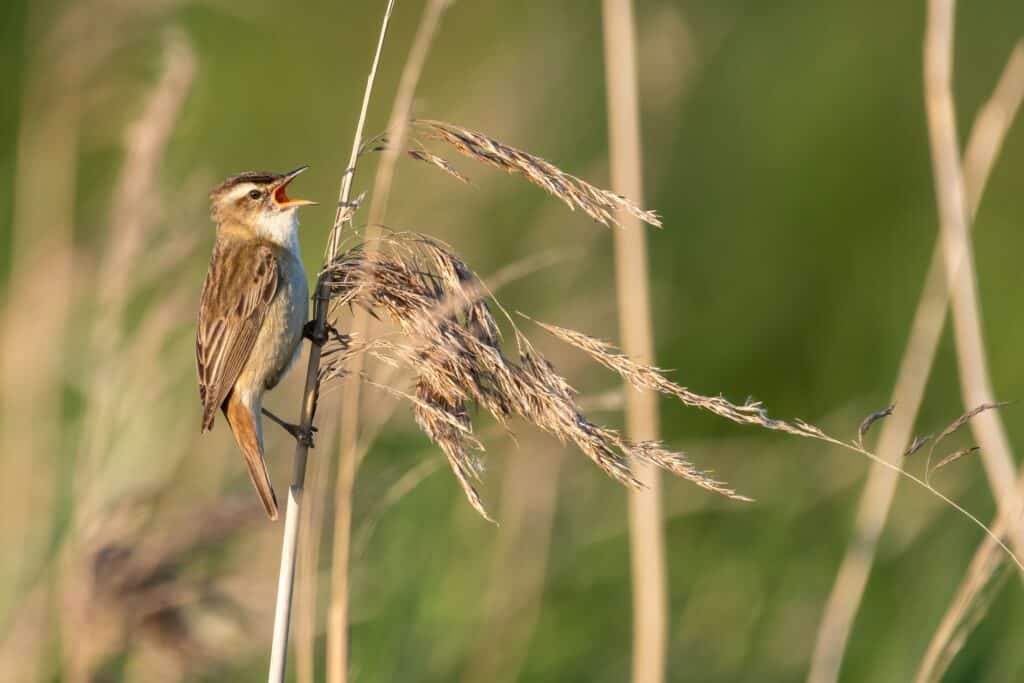
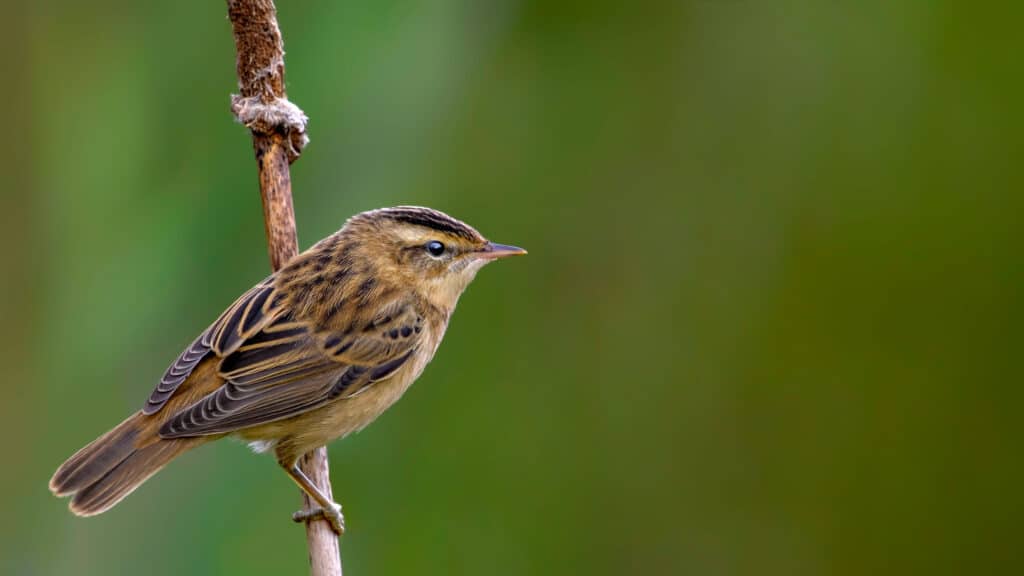
A sedge warbler singing while perched vertically on a reed

Both male and female adult sedge warblers have the same brown plumage.

Scientific Name

The sedge warbler (Acrocephalus schoenobaenus) is from the Acrocephalidae family, which consists of singing perching birds, such as reed, marsh, and acrocephalid warblers. Their genus, Acrocephalus, is Ancient Greek for “highest head,” but “sharp-pointed” may be the proper translation. Its specific name, schoenobaenus, is also Ancient Greek and means “reed” and “to tread.” The sedge warbler has no recognized subspecies.

Size, Appearance, and Behavior

This species is a medium-sized warbler, measuring 4.5 to 5.1 inches long and weighing around 0.42 ounces. Their wingspan is 6 to 10 inches. Both adult sexes have the same brown plumage with heavily streaked backs and paler undersides. It has a flattened forehead and black streaks on its crown with a strong, pointed bill. Juveniles have dark spots on their breast. The average lifespan is only two years, but they’ve been known to live as long as ten years.

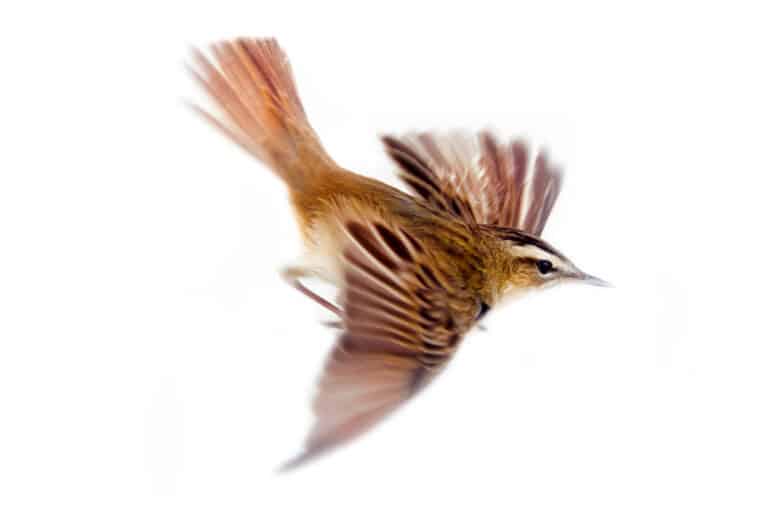
Males arrive at their breeding grounds two weeks before the females to select their territories. During courting, males perform elaborate flight displays and singing. Females choose their mates based on their complex song phrases. Males never sing the same tune twice, and females appreciate an extensive repertoire. Their tunes can also mimic other species. The sedge warbler is usually monogamous, but some polygamous individuals mate with many females. Males are often more social before they form pair bonds. 

Migration Pattern and Timing

Sedge warblers are long-distance migrants. They spend their springs and summers in Europe and Western Asia, as far north as Scandinavia and Siberia. It flies south during migration to winter in Sub-Saharan Africa, as far south as the eastern coast of South Africa. They reach their wintering grounds from mid-September to December, depending on how far south they travel. They are back on their breeding grounds from mid-March to early May.

Diet

Sedge warblers are primarily insectivorous but may supplement their diet with berries.

What Does the Sedge Warbler Eat?

The sedge warbler eats aphids, moths, beetles, spiders, slugs, snails, worms, grasshoppers, flies, and insect larvae. It will consume berries, such as elderberry and blackberry, in its wintering habitats. On the African continent, it’s known for eating flowers and other fruits. Before migration, they will double their fat reserves for nonstop flights. They feed at dawn and dusk in low, dense vegetation, where they pick insects from plants. Sometimes you can observe them hovering or “leap-catching” flying insects.

Predators, Threats, and Conservation Status

The IUCN lists the sedge warbler as LC or “least concern”. Due to its extensive range and vast, stable population, this species does not qualify for “threatened” status. However, they had a significant decline in their West African wintering quarters from severe drought in the past. The effects of global warming may change their population size in the future.

What Eats the Sedge Warbler?

Not much is known about the sedge warbler’s predators, but they may have similar threats as other warblers. Their possible predators include squirrels, raccoons, foxes, weasels, crows, jays, and snakes. They’ve also been witnessed performing alarm calls against doves, cuckoos, and sparrowhawks.
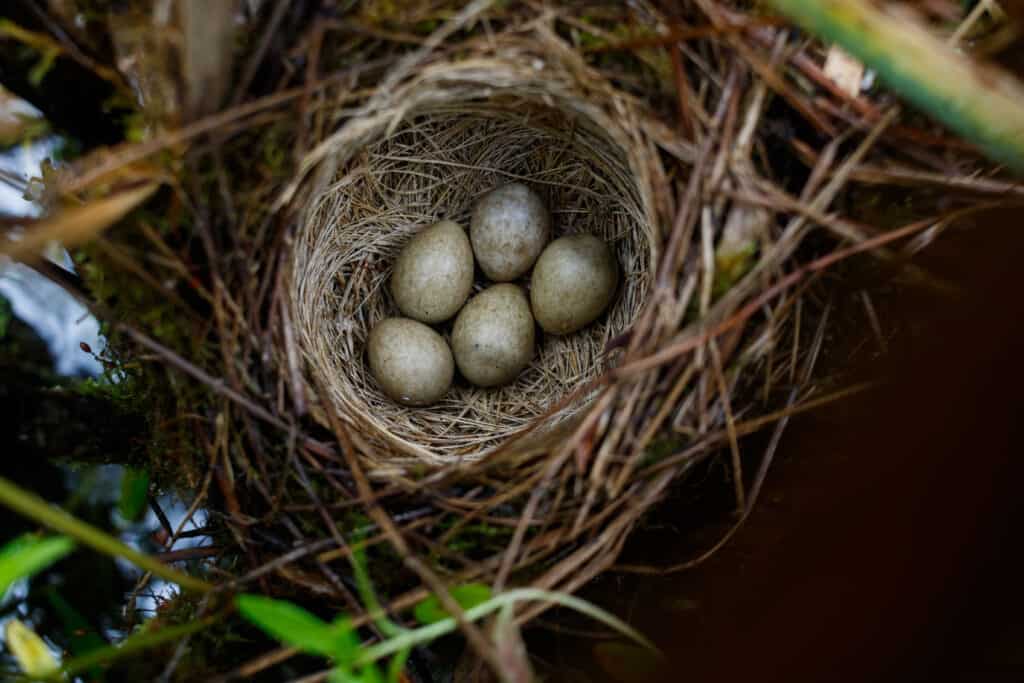
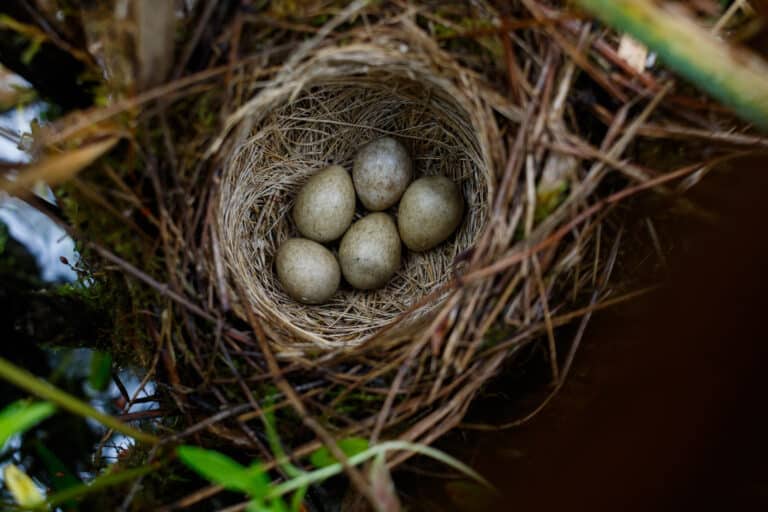
A top view of a sedge warbler nest with 5 eggs

Top view of a sedge warbler nest with five eggs.

Reproduction, Young, and Molting

The breeding season begins in the spring, and egg laying begins in late April to mid-May, depending on the region. The female lays five to six light green eggs with olive markings. She incubates them by herself for 13 to 15 days, but both parents help with feeding duties. The young leave the nest 11 to 12 days after hatching, but won’t be entirely independent for another two to three weeks. They have an average lifespan of two years but can live as long as ten.

Population

The sedge warbler’s global estimated population is between 15 million and 22 million mature individuals. Europe contains 60% of its worldwide range and estimates its breeding population to be between 3.8 and 6.5 million pairs. The IUCN suggests their current population trend is stable with no extreme fluctuations.

View all 390 animals that start with S

Sources

  1. IUCN Red List / Accessed September 8, 2022
  2. British Birds / Accessed September 8, 2022
  3. Science Direct / Accessed September 8, 2022
Niccoy Walker

About the Author

Niccoy Walker

Niccoy is a professional writer for A-Z Animals, and her primary focus is on birds, travel, and interesting facts of all kinds. Niccoy has been writing and researching about travel, nature, wildlife, and business for several years and holds a business degree from Metropolitan State University in Denver. A resident of Florida, Niccoy enjoys hiking, cooking, reading, and spending time at the beach.
Connect:

Thank you for reading! Have some feedback for us?


Sedge Warbler FAQs (Frequently Asked Questions)

They breed in lowlands and valleys in cooler regions near water, and in winter, you can find them in wet grasslands and lowland rainforests.