M
Species Profile

Mongoose

Herpestidae

Small hunters, big attitudes
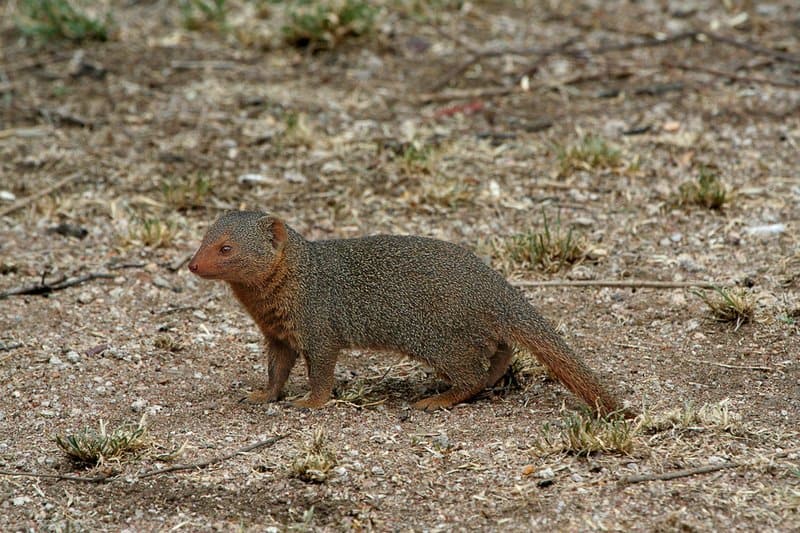
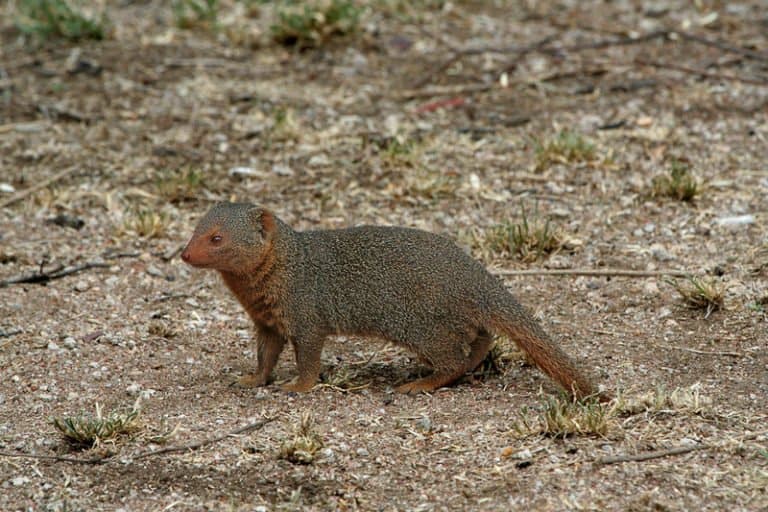
Taken by Schuyler Shepherd (Unununium272)Canon 350D, 100-400mm f/4.5-5.6 L IS., CC BY-SA 2.5, via Wikimedia Commons

Mongoose Distribution

Click a location to explore more animals from that region

Invasive Species
Loading map...

Found in 83 countries

Size Comparison

Human 5'8"
Mongoose 7 in

Mongoose stands at 10% of average human height.

A Dwarf Mongoose in the Serengeti, Tanzania

At a Glance

Family Overview This page covers the Mongoose family as a group. Stats below are general traits shared across the family.
Also Known As Ichneumon
Diet Omnivore
Activity Diurnal+
Lifespan 8 years
Weight 5 lbs
Status Least Concern
Did You Know?

Size spans the family: roughly 18-72 cm head-body length, 12-47 cm tail, and ~0.2-5 kg in weight (smallest dwarf mongooses to the largest white-tailed/marsh mongooses).

Scientific Classification

Family Overview "Mongoose" is not a single species but represents an entire family containing multiple species.

Mongooses are small-to-medium carnivorous mammals in the family Herpestidae (order Carnivora). They include many species across Africa, the Middle East, and parts of Asia, ranging from solitary, territorial forms to highly social group-living species (e.g., meerkats and banded mongooses).

Kingdom
Animalia
Phylum
Chordata
Class
Mammalia
Order
Carnivora
Family
Herpestidae

Distinguishing Features

  • Elongated body with relatively short legs and a long tail; generally agile terrestrial locomotion
  • Pointed snout and small rounded ears; many species have grizzled/peppered coat texture
  • Carnivorous/omnivorous diet: insects, small vertebrates, eggs, and fruit depending on species
  • Some species are strongly social with cooperative breeding and group defense (e.g., Suricata, Mungos)

Physical Measurements

Males and females differ in size

Height
♂ 7 in (4 in – 12 in)
♀ 8 in (4 in – 1 ft 2 in)
Length
♂ 2 ft 6 in (12 in – 3 ft 10 in)
♀ 2 ft 6 in (12 in – 3 ft 11 in)
Weight
♂ 4 lbs (0 lbs – 11 lbs)
♀ 3 lbs (0 lbs – 11 lbs)
Tail Length
♂ 12 in (5 in – 1 ft 7 in)
♀ 12 in (5 in – 1 ft 10 in)
Top Speed
20 mph
running

Appearance

Primary Colors
Secondary Colors
Skin Type Dense short-to-medium fur over tough skin; coarse guard hairs common; tail fur ranges from sleek to bushy depending on species and habitat.
Distinctive Features
  • Family-wide size range: head-body ~18-71 cm; tail ~12-54 cm; mass ~0.21-5.0 kg (smallest dwarf mongooses to largest species such as the white-tailed mongoose).
  • Elongated, low-slung body with relatively short legs; quick, bounding gait and flexible spine.
  • Pointed muzzle with strong jaw musculature; small rounded ears in many species, reducing debris entry.
  • Non-retractile or semi-retractile claws suited for digging, foraging, and tearing apart insect nests.
  • Anal scent glands used for marking; scent communication prominent in both solitary and social species.
  • Dentition and robust canines support insectivory and small-vertebrate predation; diets vary widely by habitat.
  • Behavioral/ecological generalization: ranges from solitary territorial hunters to highly social cooperative groups; activity often diurnal but varies with heat, predation, and human presence.
  • Lifespan range across species: typically ~6-15 years in the wild; longer in captivity, up to ~20 years in some species.
  • Geographic diversity: widespread across Africa, the Middle East, and South/Southeast Asia; introduced populations can have invasive ecological impacts in some regions.
  • Comparison within Carnivora: superficially mustelid-like, but typically slimmer heads, different scent-gland anatomy, and less aquatic specialization than otters.

Sexual Dimorphism

Sexual dimorphism is generally mild: males often average larger and heavier, with broader heads. In some social species, dominance and reproductive roles vary strongly, but external coat coloration differences between sexes are usually minimal.

♂
  • Slightly larger body mass and head width in many species.
  • More pronounced scent-marking behavior; scent glands may appear fuller seasonally.
  • Occasional thicker neck/shoulder musculature in larger species.
♀
  • Often similar coat color and pattern to males.
  • In some social species, dominant females may be comparable in size to males.
  • Mammary development visible during lactation; otherwise subtle external differences.

Did You Know?

Size spans the family: roughly 18-72 cm head-body length, 12-47 cm tail, and ~0.2-5 kg in weight (smallest dwarf mongooses to the largest white-tailed/marsh mongooses).

Lifespan varies widely: about ~6-12 years is typical in the wild, while some species can reach ~15-20 years in captivity under good care.

Herpestidae are feliform carnivores (more closely related to cats and hyenas) and not mustelids (otters/ferrets), despite similar "weasel-like" body shapes in some species.

Social systems range from strongly solitary, territorial hunters to highly social, group-living species with cooperative vigilance and pup care (e.g., meerkats and banded mongooses).

Diet is flexible across the family: many specialize on invertebrates, but most also take small vertebrates, eggs, and some fruit-making them important controllers of pests in many ecosystems.

Some mongooses have evolved partial resistance to certain snake venoms (especially cobra-type neurotoxins), but this varies by species and does not make them "snake-proof."

Introductions outside their native range (e.g., on some islands) have sometimes caused major declines in native birds and reptiles-an example of how a successful predator can become an invasive threat.

Unique Adaptations

  • Long, low bodies with short legs and non-retractable claws suit fast ground pursuit and digging-well matched to prey like insects, scorpions, and burrowing rodents.
  • Cranial and dental versatility: robust jaws and varied tooth shapes across species support a broad diet from beetles to small vertebrates, plus occasional fruit.
  • Partial resistance to some snake neurotoxins in certain lineages (through changes at toxin-binding sites) can reduce vulnerability during snake encounters; resistance level differs among species.
  • Highly developed olfaction and scent glands support complex social recognition, mate choice, and territorial spacing in both solitary and group-living species.
  • Heat and habitat flexibility: across the family, species occupy deserts, savannas, forests, scrub, and wetlands; adaptations include behavioral thermoregulation (shade use, timing of activity) and flexible denning.
  • Anti-predator toolkit that scales with sociality: from cryptic, solitary avoidance to coordinated group defense and alarm-call systems in social species.

Interesting Behaviors

  • Hunting styles vary: many species forage by rapid ground-searching and digging, while others stalk more like small cats; activity can be diurnal or nocturnal depending on habitat and risk.
  • Cooperative vigilance in social species: individuals take turns acting as sentinels, giving distinct alarm calls for different threats; group members often mob predators together.
  • Scent-based communication is central across the family: frequent marking with anal-gland secretions and urine helps maintain territories and social cohesion.
  • Den and burrow flexibility: mongooses commonly use termite mounds, rock crevices, or abandoned burrows; some species regularly switch dens to reduce parasites and predation risk.
  • Teaching and learning in groups: in some social mongooses, adults facilitate youngsters' prey-handling skills (especially with difficult or dangerous prey).
  • Egg and hard-object handling: several species are adept at raiding nests; some have been observed cracking eggs by forceful throwing or smashing against hard surfaces (behavior varies among species and locations).
  • Human-edge adaptability: multiple species use farmland, towns, and roadsides for food, increasing conflict (predation on poultry) as well as pest-control benefits (rodents/insects).

Cultural Significance

Across Africa, the Middle East, and South Asia, mongooses (Herpestidae) are seen as bold, clever snake and pest hunters. People kept them to fight snakes; when introduced for rat control they caused harm. They teach about solitary and group species like meerkats and banded mongooses.

Myths & Legends

South Asian tales (Panchatantra/Hitopadesha) 'The Brahmin and the Mongoose' is about a loyal mongoose who kills a snake to save a child but is killed by mistake — a warning about anger and judging too fast.

Buddhist Jataka-style story cycles include mongoose-and-snake narratives in which the mongoose's speed and boldness against a serpent illustrate moral lessons about prudence, timing, and the dangers of rashness.

In Rudyard Kipling's widely retold story "Rikki-Tikki-Tavi," a pet mongoose protects a household from cobras-an influential modern fable that reinforced the mongoose's cultural image as a fearless defender.

In several East African folk traditions, the mongoose appears as a clever small animal who outwits more dangerous opponents (often a snake), reflecting a common storytelling theme: intelligence and agility overcoming brute strength.

Conservation Status

LC Not Evaluated

Widespread and abundant in the wild.

Population Unknown

Protected Under

  • Protection varies by range state; many species occur within national parks and reserves across Africa and Asia.
  • Some species have legal protection or hunting/trapping restrictions under national wildlife legislation (country-specific).

You might be looking for:

Meerkat

25%

Suricata suricatta

A highly social southern African mongoose species famous for upright sentinel behavior.

View Profile

Indian gray mongoose

20%

Urva edwardsii

Widespread in the Indian subcontinent; commonly referenced in human–mongoose stories and snake predation lore.

Small Indian mongoose

18%

Urva auropunctata

Introduced to many islands for pest control; notorious invasive species impacting native wildlife.

Banded mongoose

15%

Mungos mungo

Social mongoose of sub-Saharan Africa, often seen in groups with cooperative behaviors.

Egyptian mongoose

12%

Herpestes ichneumon

North African and Iberian species; one of the more familiar mongooses in Mediterranean contexts.

Slender mongoose

10%

Galerella sanguinea

Common African mongoose with an agile build and varied coat color by region.

Life Cycle

Birth 3 pups
Lifespan 8 years

Lifespan

In the Wild
4–15 years
In Captivity
8–20 years

Reproduction

Mating System Polygyny
Social Structure Solitary
Breeding Pattern Transient
Fertilization Internal Fertilization
Birth Type Internal_fertilization

Across Herpestidae, mating is often polygynous with brief, non-pair-bonded encounters. However, several group-living species show polygynandry/promiscuity and cooperative breeding, where multiple adults may mate and non-parents can help rear pups.

Behavior & Ecology

Social Mob (also called clan in some social species) Group: 10
Activity Diurnal, Crepuscular, Nocturnal, Cathemeral
Diet Omnivore Insects and other invertebrates (especially abundant, easily captured prey such as beetles, termites, and grasshoppers).

Temperament

Alert and vigilant; frequent scanning and sentinel-like behavior in social species
Territorial; scent-marking and boundary patrols common across many species
Inquisitive and opportunistic; flexible foraging tactics and diet choices
Bold and defensive when threatened; mobbing and coordinated aggression occur in group-living species
Social tolerance varies widely: from strongly solitary to highly cooperative breeders

Communication

alarm calls with graded intensity Aerial vs terrestrial threats
contact calls to maintain cohesion during foraging
aggressive growls, snarls, and barks during conflicts
soft chirps/squeaks from juveniles and during affiliative interactions
scent marking using anal and facial glands; latrine use in some species
body postures and piloerection as threat displays; tail and head signals for intent
tactile communication through grooming, huddling, and play More pronounced in social species
visual vigilance cues: sentinel stance and coordinated movement in open-habitat group foragers

Habitat

Biomes:
Savanna Tropical Dry Forest Tropical Rainforest Desert Hot Mediterranean Temperate Grassland Temperate Forest Wetland Freshwater Marine Alpine +5
Terrain:
Plains Hilly Plateau Valley Mountainous Rocky Sandy Riverine Coastal Island +4
Elevation: Up to 13123 ft 4 in

Ecological Role

Small-to-medium mesocarnivores/omnivores functioning primarily as insectivores and small-vertebrate predators, with additional roles as occasional scavengers and minor seed dispersers depending on species and habitat.

population control of insects and other invertebrates (including pest species) suppression of small-vertebrate populations (e.g., rodents) nutrient cycling and soil disturbance/aeration via digging and foraging seed dispersal when fruit is consumed food-web support as prey for larger carnivores and raptors

Diet Details

Main Prey:
Insects Other invertebrates Earthworms and other soil invertebrates Small mammals Reptiles Amphibians Birds and nest contents Crustaceans Fish Carrion +4
Other Foods:
Fruits and berries Seeds and plant matter Roots, bulbs and tubers Nectar and pollen from flowers

Human Interaction

Domestication Status

Wild

Mongooses (family Herpestidae) are not domesticated. People tamed or kept some species near homes for rodent control in North/East Africa and South Asia and used them in cultural performances. In the 19th–20th centuries they were introduced to Caribbean and Pacific islands for pest control, creating wild invasive populations that harmed native wildlife—this was human spread, not domestication.

Danger Level

Moderate
  • bites and scratches (defensive aggression when cornered/handled; higher risk with captive animals)
  • zoonotic disease exposure depending on region (e.g., rabies where present; bacterial/parasitic infections)
  • parasites (fleas, ticks) and associated pathogen transmission
  • indirect risks via invasiveness (ecosystem disruption leading to broader environmental and economic harms)

As a Pet

Not Suitable as Pet

Legality: Laws about keeping mongooses (Herpestidae) vary and are often strict. Many places ban or tightly limit them for rabies, disease, invasive-species, and animal-welfare reasons. Permits, secure housing, vet checks, and import rules may apply—check national, state, and local rules.

Care Level: Expert Only

Purchase Cost: Up to $5,000
Lifetime Cost: $10,000 - $30,000

Economic Value

Uses:
Ecotourism and wildlife viewing Pest control (historical/limited; also controversial due to invasiveness) Research and education (behavioral ecology, social behavior, disease ecology) Cultural significance/folklore Negative economic impact where invasive (predation on poultry, impacts to native fauna)
Products:
  • tourism revenue (guided safaris, wildlife reserves, viewing platforms)
  • educational programs and exhibits (zoos/sanctuaries)
  • research outputs and biological samples (regulated)
  • limited/local use of skins/pelts in some regions (not a major global commodity)

Relationships

Predators 5

Eagles and large hawks Aquila spp.; Buteo spp.
Owls
Owls Bubo
Jackal
Jackal Canis aureus; Lupulella spp.
Large cats Felidae
Large snakes
Large snakes Serpentes

Related Species 4

Civets and genets Viverridae Shared Order
Hyenas and aardwolf
Hyenas and aardwolf Hyaenidae Shared Order
Malagasy carnivores Eupleridae Shared Order
Cats Felidae Shared Order

Types of Mongoose

29

Explore 29 recognized types of mongoose

Meerkat
Meerkat Suricata suricatta
Banded mongoose Mungos mungo
Egyptian mongoose Herpestes ichneumon
Slender mongoose Galerella sanguinea
Small Indian mongoose Urva auropunctata
Indian grey mongoose Urva edwardsii
Javan mongoose Urva javanica
Crab-eating mongoose Urva urva
Stripe-necked mongoose Urva vitticollis
Brown mongoose Urva fusca
Short-tailed mongoose Urva brachyura
Collared mongoose Urva semitorquata
Ruddy mongoose Urva smithii
Jungle (Indian) brown mongoose Urva fusca
White-tailed mongoose Ichneumia albicauda
Marsh mongoose Atilax paludinosus
Yellow mongoose Cynictis penicillata
Dwarf mongoose Helogale parvula
Somali dwarf mongoose Helogale hirtula
Common kusimanse Crossarchus obscurus
Alexander's kusimanse Crossarchus alexandri
Bushy-tailed mongoose Bdeogale crassicauda
Black-footed mongoose Bdeogale nigripes
Jackson's mongoose Bdeogale jacksoni
Liberian mongoose Liberiictis kuhni
Meller's mongoose Rhynchogale melleri
Selous's mongoose Paracynictis selousi
Cape grey mongoose Galerella pulverulenta
Black mongoose Galerella nigrata

Fast and agile, the mongoose is an animal that is an adept hunter that will feed on almost anything it can catch.

The mongoose is a small, sleek animal (similar in appearance to a weasel) that roams the forests and plains of Asia and Africa. Because of its rather bold temperament, the mongoose has been the subject of human myths and stories for thousands of years. However, the life of a mongoose as a normal animal is far more complex and interesting than these myths suggest.
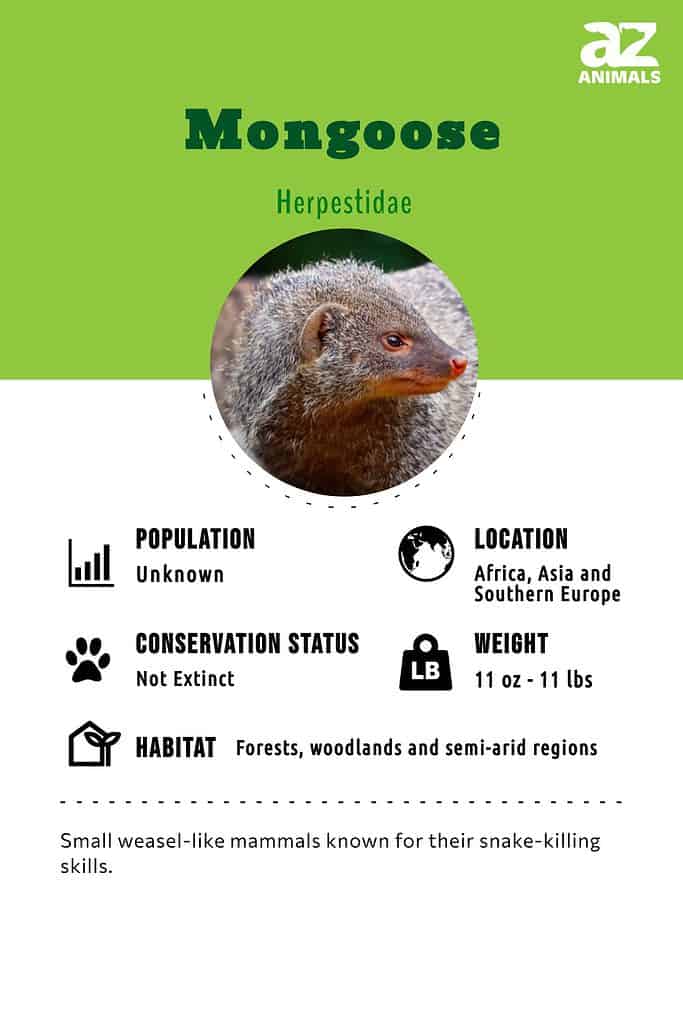
Interesting Mongoose Facts

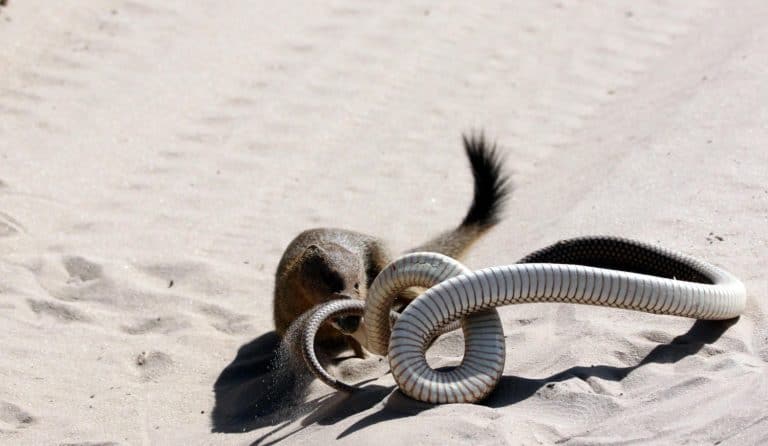
  • The mongoose is an animal that is perhaps best known for its remarkable ability to kill snakes, like the cobra. Scientists believe that they have evolved a protein that provides some degree of protection against snake venom. However, they are not completely immune from repeated snake bites.
  • Ancient Egyptians would sometimes put mummified mongooses in tombs with their owners since they were common pets.
  • An Indian grey mongoose called Rikki-Tikki-Tavi was immortalized in Rudyard Kipling’s The Jungle Book.
  • Mongooses have horizontal-shaped pupils, similar to sheep and horses, to help avoid predators.
  • In many places, mongooses are seen as an invasive species because they are a threat to native birdlife, including protected and endangered species.
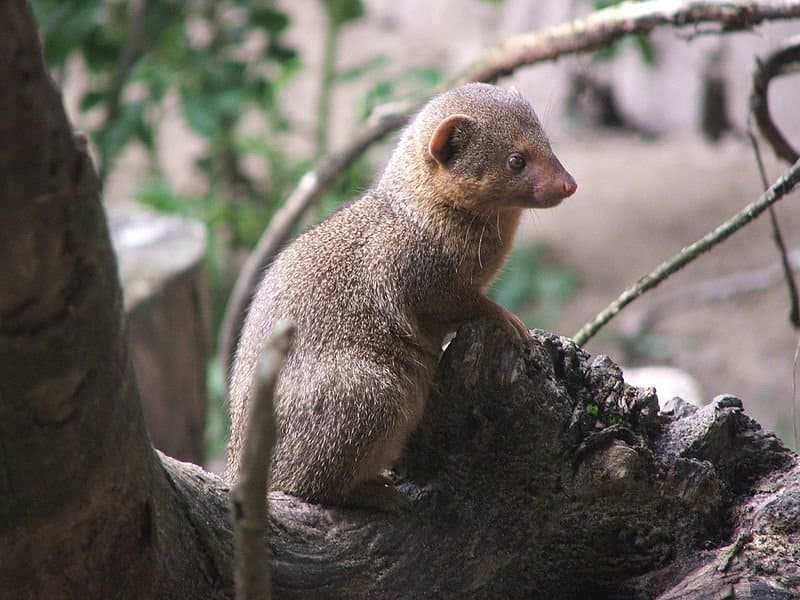
Mongoose in front of rock

Mongooses are an example of feliformia or a cat-like carnivore.

Scientific Name

Mongoose is the colloquial, or common, the term for a group of similar species that belong exclusively to the family of Herpestidae. The scientific name derives from a Greek word for an animal that walks or creeps on all four feet. Mongooses occupy the same order — Carnivora — as cats, bears, dogs, seals, and raccoons. They are the most closely related to viverrids such as civets, genets, and linsangs. The mongoose is an animal somewhat more distantly related to the hyena, and an example of a feliformia, or a cat-like carnivore.

Evolution

It is believed that at some point early in its evolution, these animals split into two different subfamilies: the Herpestinae and Mungotinae. A third subfamily called Galidiinae was once classified with the other two. Endemic to Madagascar, Galidiinae was sometimes known as the Malagasy mongoose for its similar appearance. However, this subfamily is now classified as the family Eupleridae instead of Herpestidae.

There are around 34 mongoose species still living. This includes 23 species of Herpestinae and 11 species of Mungotinae. A few extinct species are also known from the fossil record. Mongoose species are unevenly distributed across the entire family. Some genera only have a single species in them. The genus Herpestes, however, has approximately 10 living species, including the well-known Indian grey, the Egyptian, and the crab-eating mongoose.
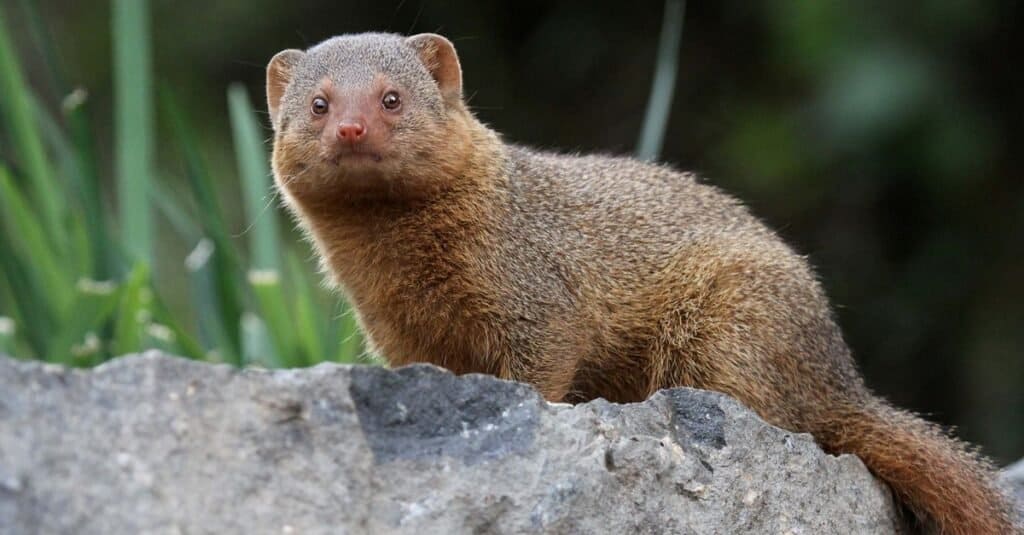
What Eats Snakes

Mongooses are noted for their audacious attacks on highly venomous snakes, such as king cobras.

Appearance 

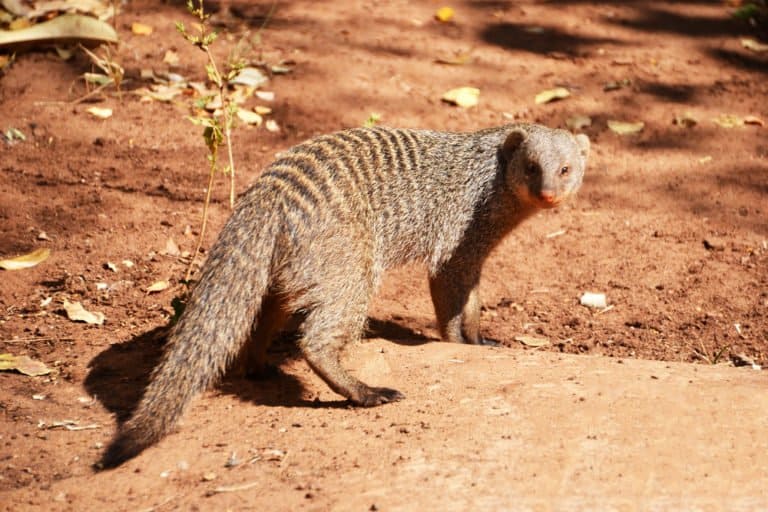
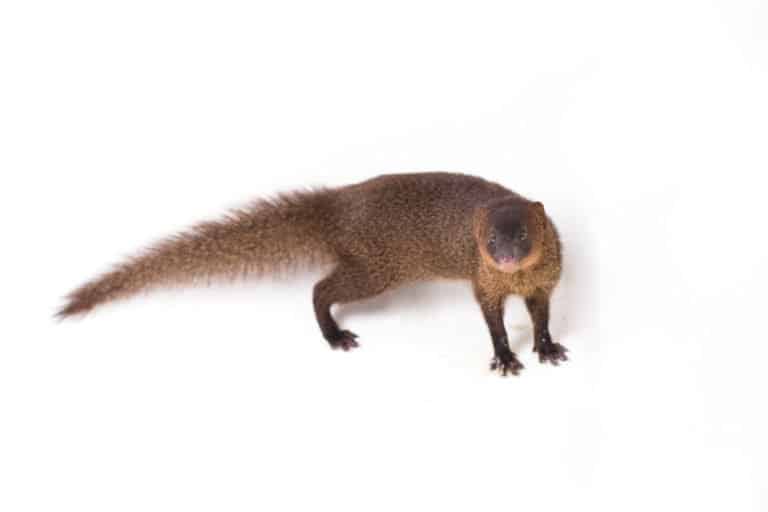
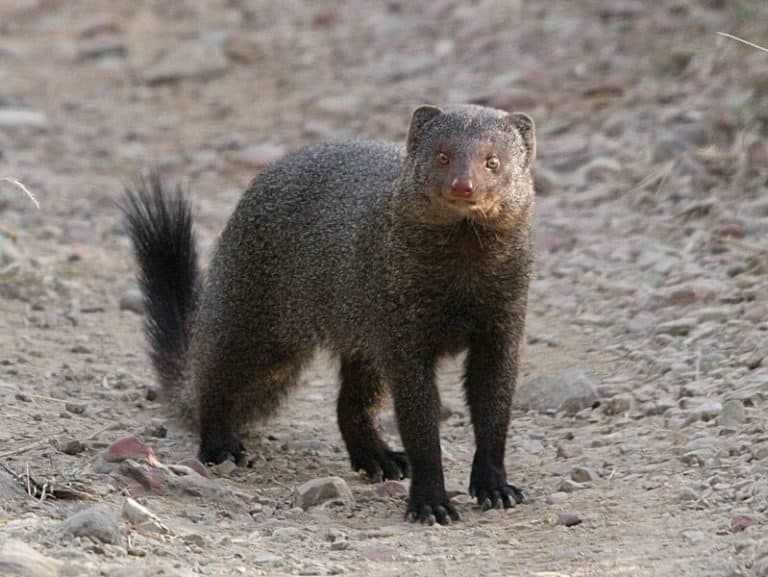
These animals are typically slender creatures with elongated bodies, short legs, thin snouts, and small rounded ears. The coat color is almost always brown, gray, or even yellow, sometimes interspersed with markings or stripes. The tail may also have a unique ring pattern or coloring on it. Because of their appearance, some people mistake them for a weasel, even though their traditional range rarely overlaps.

The mongoose as an animal (not the myth!) varies in size from one species to another. Their body can range from seven inches on average for the diminutive dwarf mongoose to 25 inches on average for the massive Egyptian mongoose, while the tail adds another six to 21 inches. This makes the typical animal about the size of a house cat. The largest species can also weigh up to 11 pounds when fully grown.
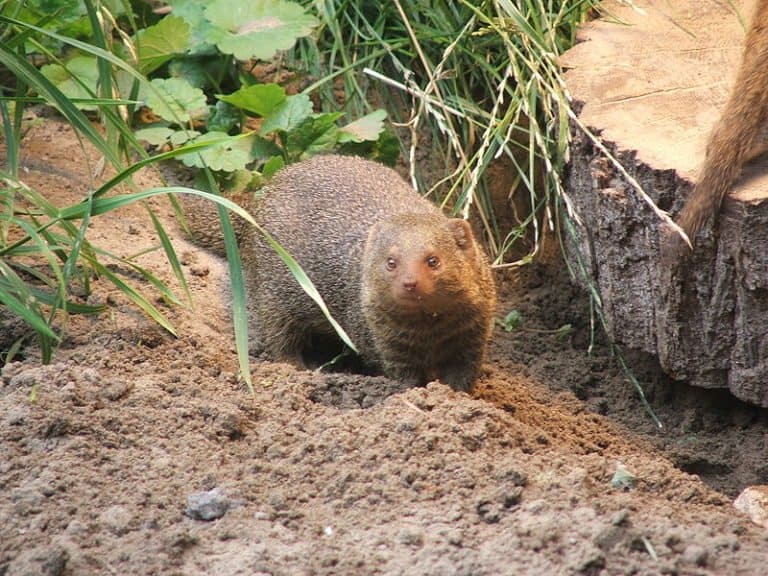
mongoose - Herpestidae - type of mongoose in the dirt
Mongooses rely on vocalizations to signal threats, begin a courtship and convey information.

Behavior

Their sense of smell is an important part of mongoose communication. This is facilitated by the presence of large scent glands near the anus that they use to signal for mates and mark their territory. In fact, the scent gland is the primary characteristic that separates these animals from the civets, genets, and linsangs. Mongooses (the correct plural of mongoose) are animals that also rely on vocalizations to signal threats, begin courtship, and convey other critical information to other members. They have an impressive range of sounds to communicate with each other, including cries, growls, and giggling. Each sound is accompanied by a different set of behavior.

The Herpestidae family in general exhibits a wide array of social structures and behavior. While some species thrive in solitude or small clusters, other species live in colonies of up to 50 individuals. The well-known meerkat, for instance, (which was made famous by a TV show) lives in large cooperative bands with a distinct social hierarchy. Individuals are sometimes responsible for specialized tasks such as guard duty, hunting, and child protection. The colony lives or dies based on the actions of each individual member.

The particular social arrangement of a species may be related to its physical size and type of animal. The larger and more physically intimidating Egyptian mongoose is a lone hunter, while the smaller dwarf mongoose is a more social creature that staves off predators by clustering together into large groups. Alone, an individual is vulnerable. But even smaller animals can be difficult to kill when it is part of a pack.

The mongoose’s small size conceals its rather bold disposition. The creature is able to hold its ground against dangerous predators much larger or more aggressive than itself. Being able to kill snakes (even venomous species!) is only one example. These animals can also sometimes evade or bamboozle deadly predators with their impressive speed and agility. Some species can run at an average of 20 mph.

These animals are most active during the day while they hunt and socialize. They tend to spend the night in their dens asleep. Mongooses can be quite intelligent and playful, especially in social settings.
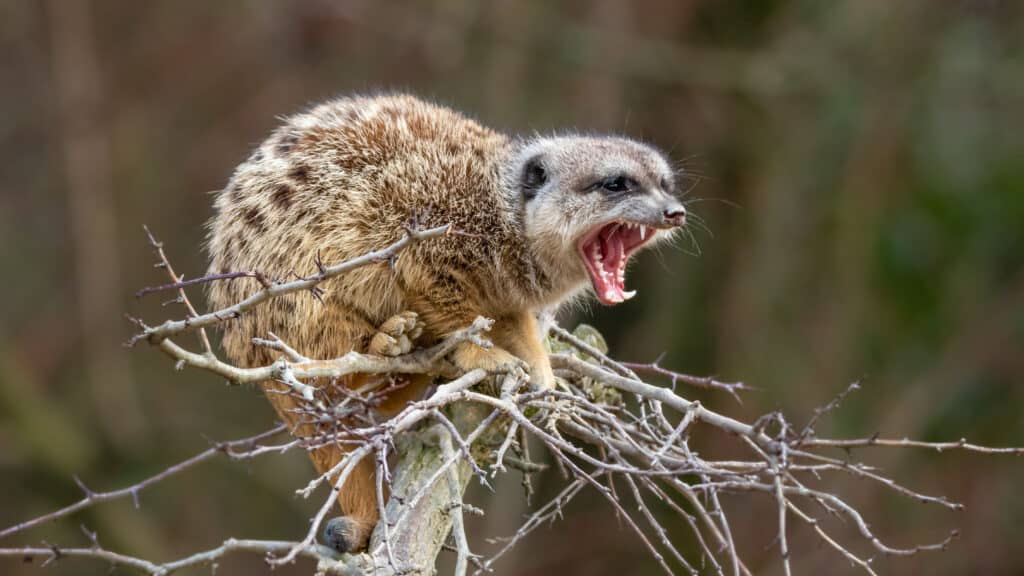
Mongoose teeth

Mongooses hunt by day and sleep in their burrows at night.

Habitat

The mongoose is an old-world animal that thrives largely in hot or tropical areas. The largest populations can be found across sub-Saharan and Eastern Africa, including most species of Mungotinae and some species of Herpestinae. They are also fairly common throughout a long stretch of territory in southern Asia, from China to the Middle East. Other common locations include southern Iberia, Indonesia, and Borneo.

These are largely terrestrial mammals that roam the ground. They reside in a variety of different climates and habitats, including tropical forests, deserts, savannas, and grasslands. However, there are a few notable exceptions. Some species such as the crab-eating mongoose are semi-aquatic and spend a good deal of their lives in and around the water. They are quite adept at swimming with webs between their digits. Other species inhabit the trees, moving effortlessly between branches. The terrestrial mongooses, on the other hand, burrow into the ground with their big non-retractable claws. They spend much of their time within the complex system of tunnels they have created. 
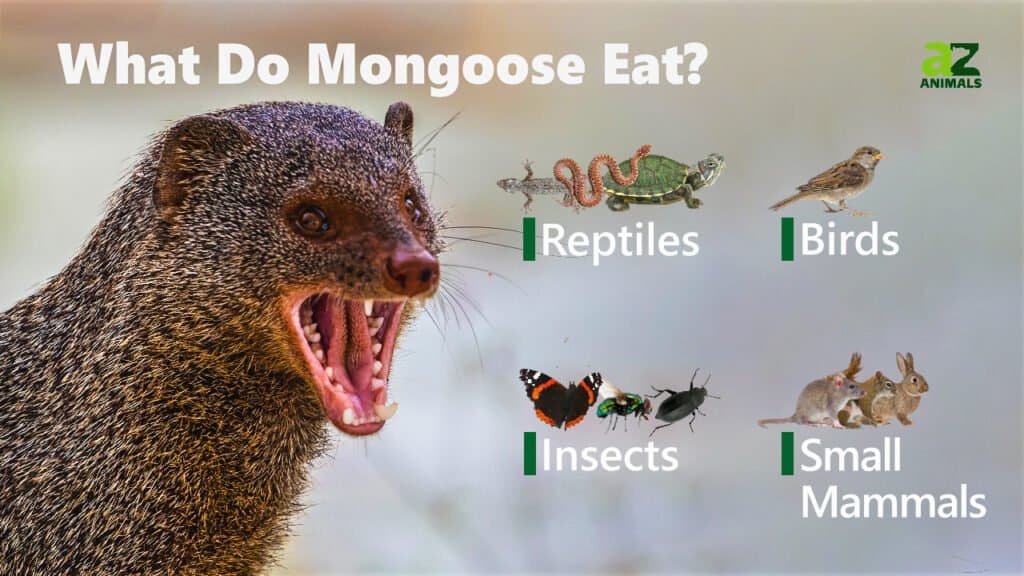
What Do Mongoose Eat

Diet

These animals are opportunistic carnivores that will feed on a huge variety of different foods, whether living or dead. These may include reptiles, small birds and mammals, amphibians, insects, worms, and crabs. However, some species will supplement their diets with fruits, vegetables, roots, nuts, and seeds. If the opportunity presents itself, then the animal will steal or feed on another creature’s kill.

A clever animal, mongooses have learned the ability to smash shells, nuts, or eggs against rocks to crack them open. It can pound the object directly against a hard surface or throw the object from a distance. This tactic is passed from one generation to another, which may represent a form of transmissible culture.

The mongoose’s diverse palate can be a problem for other species, however, and they have been considered an invasive species in some areas.
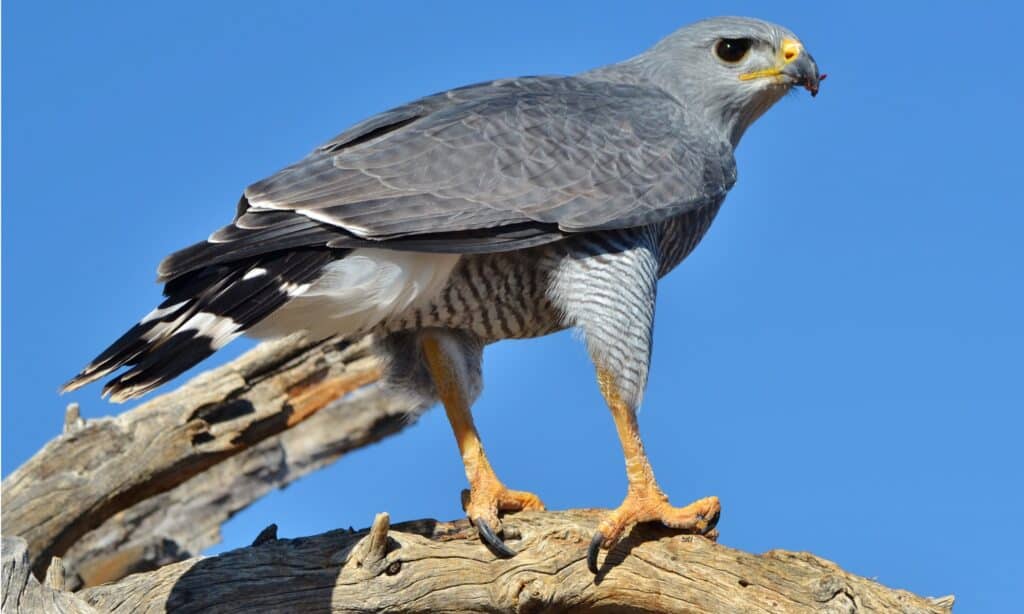
A gray hawk perched on a rock against a blue sky

Hawks are one of only a few natural predators of the mongoose.

Predators and Threats

The Mongoose has only a few natural predators in the wild such as hawks and big cats. Larger mongooses can ward off predators through sheer physical size, but smaller species in particular are vulnerable to predation from large carnivores. The mongoose is also sometimes threatened by venomous snakes, but thanks to its agility and speed, the mongoose is more than a match for the fearsome reptile. Its sheer adaptability has enabled it to thrive across many different geographical regions around Asia and Africa. However, some types of mongooses are currently declining due to habitat loss from human encroachment. They require ample space for burrows and social arrangements.

 In the 19th and 20th centuries, human settlers introduced mongooses around the globe — particularly to several oceanic islands such as Hawaii — to help with pest control on plantations and farms. Although mongooses rarely succeeded in this task, it did have the unintended consequence of driving much of the local wildlife — including many unique bird species — to the brink of extinction. For this reason, mongooses are considered to be one of the top invasive species in the world, and some efforts have been made to cull or limit mongoose populations in non-indigenous areas.
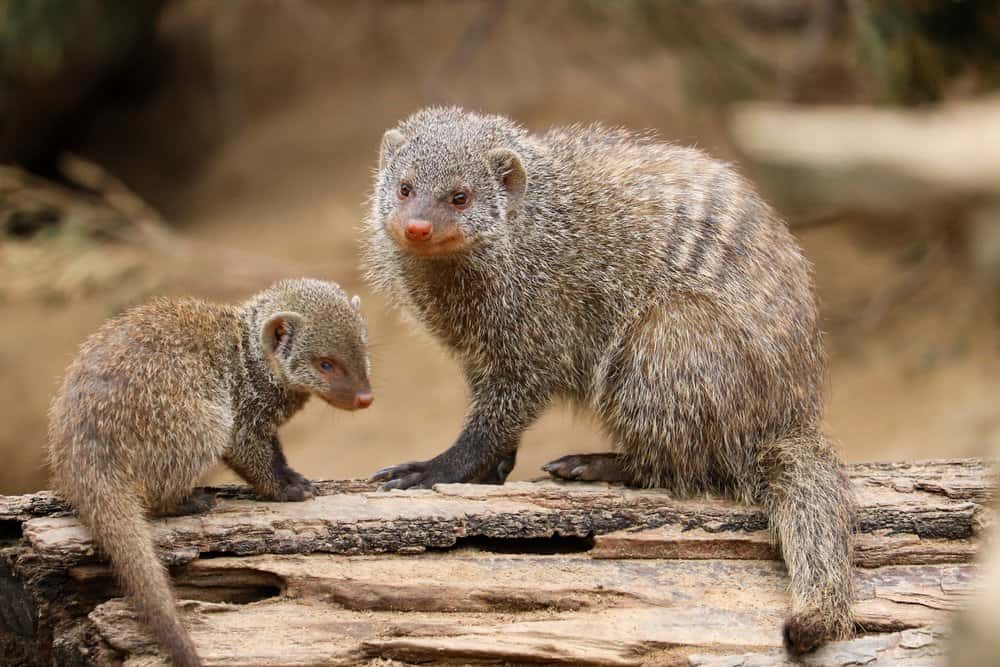
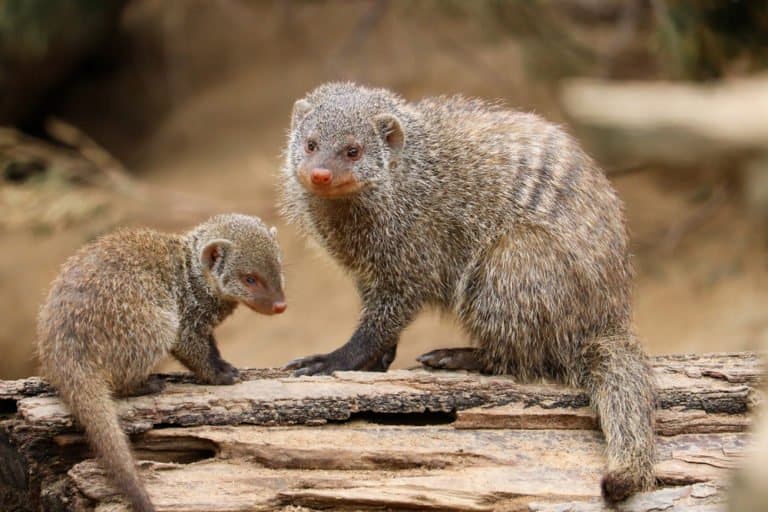
Mongoose (Helogale Parvula) - and baby

Mongooses give birth to litters of between one and six pups.

Reproduction, Babies, and Lifespan

Mongoose reproduction varies widely between species since it is often a reflection of their social structure. Solitary mongooses only meet up at regular intervals to reproduce, usually once a year. One or both parents may raise the young pups. Large colonies, on the other hand, tend to have a dominant member of the pack with almost exclusive breeding rights to several females — or sometimes there is a single male-female dominant pair.

Once mating is completed, the female will give birth a few months after conception. She can give birth to a litter of anywhere between one and six pups at a time. The mongoose pups tend to grow up relatively quickly. After they are weaned, the pups will remain dependent on the parent(s) for another several months. It can take between six months and two years for a pup to become fully mature.

Among more social mongoose species, pups are introduced into the colony from an early age. When foraging, several members will stay behind to protect the young. In some colonies, a pup will choose a specific adult to provide regular sustenance and attention. Individuals may even form lifelong bonds with family and/or fellow members of the colony or pack.

Lifespan depends greatly on the species, but a typical mongoose can live around 10 years in the wild and perhaps twice that in captivity.
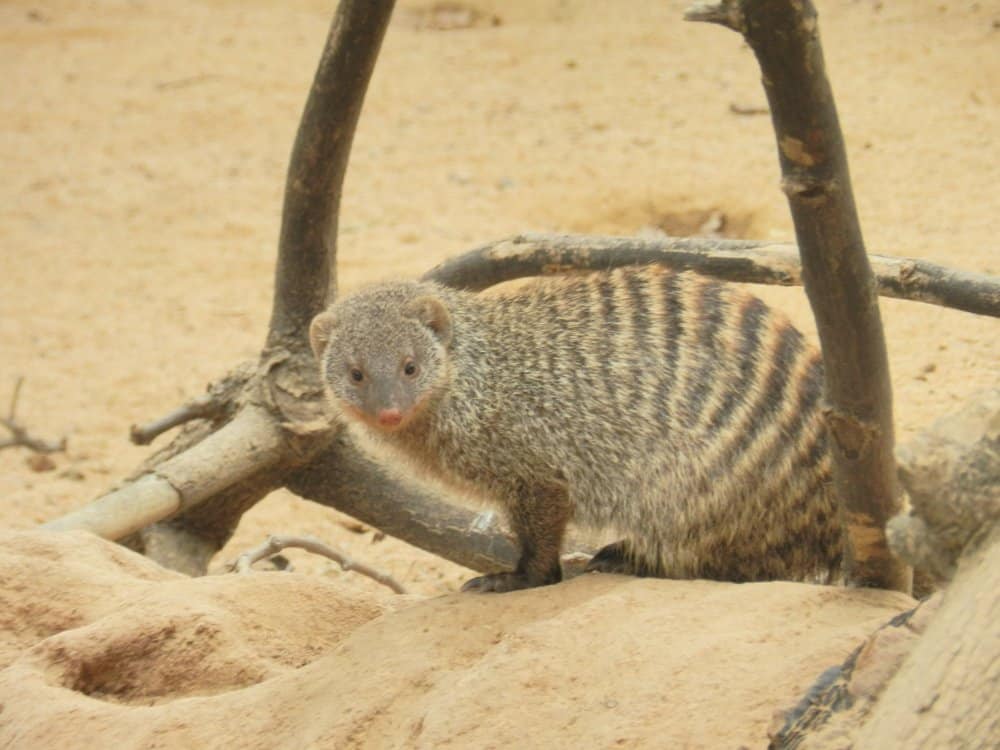
Mongoose in Barcelona Zoo

While actual population numbers are unknown – the mongoose species appear to be in robust health.

Population

Although precise population numbers are difficult to estimate, many Mongoose species across the globe appear to be in robust health. The Indian grey mongoose is perhaps the most widespread species. It is commonly found throughout the Indian subcontinent and southern Iran in a single unbroken range.

According to the International Union for the Conservation of Nature (IUCN) Red List of threatened species, the Liberian mongoose is the only species that qualifies for vulnerable status, while several other types of mongoose are near threatened. However, the Malagasy mongoose, though not a true mongoose, is under threat in its native habitat, since several species have fallen to endangered status. Habitat loss will need to be halted or reversed for some species to rebound again to their former levels.

Species

Herpestidae

  • Common Slender Mongoose – Also known as the black-tailed mongoose, this common species is native to sub-Saharan Africa.
  • Cape Gray Mongoose – These little mongooses are often seen darting across the roads of southern Africa. They stand on their hind legs like meerkats.
  • Indian Gray Mongoose – Native to India and West Asia, the Indian Gray inhabits open forests, scrublands, and cultivated fields close to human habitation.
  • Java Mongoose – Native to Southeast Asia, the Java mongoose has a creamy sepia and rich tawny brown coat.
  • Yellow Mongoose – This mongoose is native to Asia and is known for its yellowish coat.
  • White-tailed Mongoose – One of the largest members of the mongoose family – the white-tailed mongoose can be found in most of Africa south of the Sahara and in the southern portion of the Arabian Peninsula.
  • Long-nosed Mongoose – This is another of the African mongooses – occupying most of Africa south of the Sahara and in the southern portion of the Arabian Peninsula.
  • Selous Mongoose – The only member of the genus Paracynictis, the Selous mongoose is native to southern Africa.
  • Bushy-tailed Mongoose – Known for its bushy tail, this mongoose is found in central Africa – from Kenya to central Mozambique.
  • Meller’s Mongoose – Native to the savannas and woodlands of southeastern Africa – this little brown mongoose loves to eat termites.
  • Egyptian Mongoose– This largest mongoose lives in upper Africa including Egypt.
  • Crab-eating Mongoose – This species likes to hunt along river banks and bodies of water where they dine on crabs, fish, frogs, snails, birds, rodents, insects, and reptiles. They can be found in the eastern Indian subcontinent, southern China, southeastern Asia, and Taiwan.

Mungotinae

  • Ringed Mongoose – Also called the banded mongoose, this species lives in the savannas and grasslands of southern Africa. They are brown with white bands across their backs and feed mostly on beetles and millipeeds.
  • Gambian Mongoose – This very vocal mongoose lives in groups as large as 40 in the Guinean forest-savanna mosaic from Gambia to Nigeria.
  • Poursargues Mongoose – Also known as the African tropical savanna mongoose, this species in native to central Africa. Little is known about its distribution and ecology.
  • Liberian Mongoose – This social mongoose is native to Liberia and the Ivory Coast and is closely related to the ringed or banded mongoose.
  • Ethiopian Dwarf Mongoose – Also known as the desert dwarf mongoose, this little animal will send out warning calls to its clan if danger is present. They are native to east Africa – mostly Ethiopia, Kenya and Somalia.
  • Common Dwarf Mongoose – The smallest African carnivore, this little mongoose is extremely social and territorial. Common dwarf mongooses can be found in Angola, northern Nambia,KwaZulu-Natal in South Africa, Zambia and East Africa.
  • Kusimanse Mongoose – A smaller mongoose, the Kusimanse is found in the west African countries of Ghana, Ivory Coast, Benin, Liberia and Sierra Leone. It prefers forests near water instead of grasslands that other mongoose inhabit.
  • Meerkat – Probably the most famous mongoose of all is the adorable meerkat! Native to south Africa, these highly intelligent creatures use complex coordinated behavior like chimps, dolphins and humans!

Similar Animals

View all 330 animals that start with M

Sources

  1. David Burnie, Dorling Kindersley (2011) Animal, The Definitive Visual Guide To The World's Wildlife / Accessed November 8, 2008
  2. Tom Jackson, Lorenz Books (2007) The World Encyclopedia Of Animals / Accessed November 8, 2008
  3. David Burnie, Kingfisher (2011) The Kingfisher Animal Encyclopedia / Accessed November 8, 2008
  4. Richard Mackay, University of California Press (2009) The Atlas Of Endangered Species / Accessed November 8, 2008
  5. David Burnie, Dorling Kindersley (2008) Illustrated Encyclopedia Of Animals / Accessed November 8, 2008
  6. Dorling Kindersley (2006) Dorling Kindersley Encyclopedia Of Animals / Accessed November 8, 2008
  7. David W. Macdonald, Oxford University Press (2010) The Encyclopedia Of Mammals / Accessed November 8, 2008
Lisha Pace

About the Author

Lisha Pace

After a career of working to provide opportunities for local communities to experience and create art, I am enjoying having time to write about two of my favorite things - nature and animals. Half of my life is spent outdoors, usually with my husband and sweet little fourteen year old dog. We love to take walks by the lake and take photos of the animals we meet including: otters, ospreys, Canadian geese, ducks and nesting bald eagles. I also enjoy reading, discovering books to add to my library, collecting and playing vinyl, and listening to my son's music.

Thank you for reading! Have some feedback for us?


Mongoose FAQs (Frequently Asked Questions)

The plural form of mongoose is simply mongooses, not mongeese as it’s sometimes assumed to be.