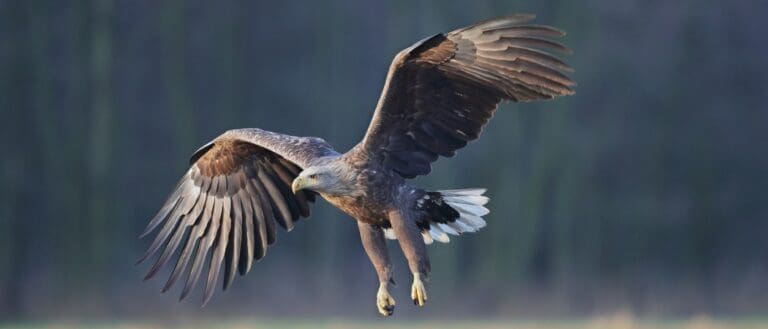
White-Tailed Eagle
Wedge-tailed ruler of northern waters

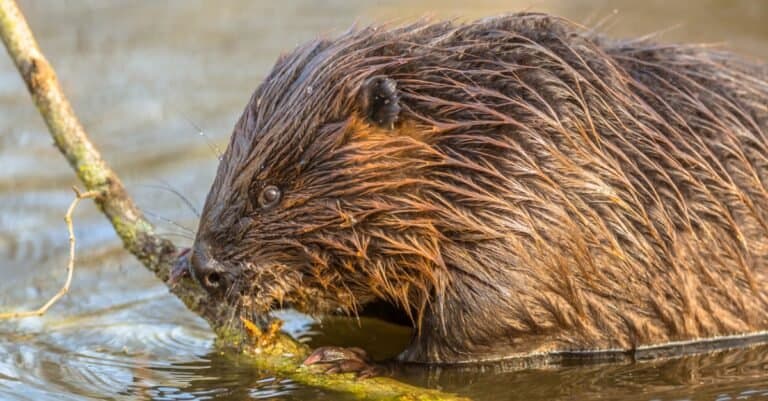
Yaroslavl Oblast lies in the Upper Volga heartland where mixed conifer-broadleaf forests meet hay meadows, fields, and long river valleys. This mix of forest and farmland supports classic central Russian animals: elk, wild boar, roe deer, fox, and hare. Quieter backwaters and small rivers favor beaver, muskrat, and locally otter. Life here follows the Volga's rhythms of spring floods, summer reedbeds, and autumn migrations.
Key habitats are the Volga and its tributaries, large open waters like the Rybinsk Reservoir, and a chain of lakes and wetlands, notably Lake Pleshcheyevo and the marshes around Lake Nero. These areas are vital for breeding and resting waterfowl, gulls, terns, and birds of prey that hunt along shores and floodplain meadows. Fish-rich waters support a strong food web. Compared with nearby regions, Yaroslavl is easy to visit for big-water birding, beaver watching in wooded channels, and unique lake ecosystems tied to the Upper Volga.
Yaroslavl Oblast's wildlife is shaped by the Upper Volga river system and a low, glacial plain. River valleys, floodplains, wetlands, and reservoir shores create key water and riparian habitats. Mixed and boreal forests and farm mosaics determine where large mammals, forest birds, and waterfowl live—often along the Volga and its tributaries or in forest blocks.
Lowland terrain, approximately ~80 to ~300 m above sea level, with limited relief; habitat diversity is driven more by rivers/wetlands and land cover than by elevation.
No ocean coastline; extensive freshwater shorelines along the Volga (including the Rybinsk Reservoir) and other major rivers and lakes.
Yaroslavl Oblast has federal and regional protected sites. Federal ones are Pleshcheyovo Lake National Park and Darwin Nature Reserve (Rybinsk Reservoir). Regional refuges, landscapes, and natural monuments protect Upper Volga habitats—lake and river shores, floodplain meadows, peat bogs, mixed conifer–broadleaf forests and reservoir wetlands—especially near Pleshcheyovo, Lake Nero, Volga and Rybinsk Reservoir, supporting waterbirds, river mammals and forest wildlife.
~6-8% of the oblast's land area (approx.; varies by accounting method and whether small natural monuments are included)
The oblast's flagship federal protected area, combining a large glacial lake, reedbeds, shoreline wetlands, and surrounding mixed forest. It is especially strong for birdwatching during migration and breeding (waterfowl, raptors), and for observing beaver activity along inlets and small rivers.
A shallow, highly productive lake with extensive marshy margins that can hold large numbers of waterbirds in spring and autumn. Reedbeds and wet meadows provide nesting/stopover habitat, making it one of the most reliable local areas for waterbird viewing in the Upper Volga landscape.
Forested river corridor with oxbows, alder carrs, and floodplain meadows-valuable for beaver/otter systems and as a movement corridor for large mammals. Good chances of seeing forest birds (woodpeckers, grouse) and raptors hunting along openings.
Reservoir bays, reedbeds, and island thickets act as staging and breeding areas for waterbirds and raptors. The mix of open water, emergent vegetation, and quiet backwaters is particularly important during migration and for fish-eating birds.
A federally protected nature reserve on the Rybinsk Reservoir, spanning Yaroslavl and Vologda oblasts. It was established to conserve forest and wetland ecosystems and the wildlife associated with the reservoir shoreline, bogs, and taiga-type forests; it is a major protected area for birds and large mammals in the region.
Bog and fen systems provide key breeding and feeding habitat for wetland birds and other wildlife and support water regulation and carbon storage.
Riparian protected strips and floodplain reserves concentrate wildlife in an otherwise agricultural landscape. They are best for raptors, owls, beavers, and spring/autumn passage of geese, ducks, and waders.
Yaroslavl Oblast sits in the Upper Volga lowlands, where the Volga River and large reservoirs (notably the Rybinsk Reservoir) meet a mosaic of southern taiga and mixed conifer-broadleaf forests, floodplain meadows, peatlands, and agricultural fields. Wildlife diversity is shaped by extensive riparian habitats (supporting beavers, otters, waterfowl, and fish), forest blocks (moose, large carnivores, forest grouse), and wetland complexes that act as stopover and breeding sites for migratory birds. The overall feel is "central Russian forest-and-river" fauna, with especially strong birdlife around wetlands and the big water bodies.
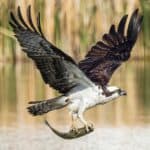
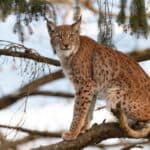
Yaroslavl Oblast offers Volga-region wildlife along Volga, Kotorosl, Sheksna rivers and Rybinsk Reservoir. Habitats include mixed conifer and broadleaf forests, wetlands, meadows and farmland. Expect strong birding (migrants, raptors, owls, waterfowl), beavers, spring amphibians, and chances for moose and wild boar near protected areas and Rybinsk shore. Best seen by boat, on foot, or from viewpoints rather than big safaris.
Peak bird migration and courtship: large movements of geese/ducks on rivers and flooded meadows; early songbirds in forest edges; cranes and waders where wetlands open first. Excellent time for amphibian choruses in ponds and for spotting beavers along ice-free channels at dusk. Trails can be muddy; waterproof footwear is essential.
Long daylight for boat-based wildlife viewing on the Volga and Rybinsk Reservoir; active beavers at twilight; dragonflies and butterflies in meadow habitats; forest birding (woodpeckers, warblers). Mosquitoes can be intense in wet areas-bring head net/repellent. Good season for family-friendly nature walks and kayaking.
Best overall for comfortable hiking and photographing: fall colors, clearer undergrowth, and strong raptor/waterfowl movements along river corridors. Good odds of seeing moose tracks/sign and hearing autumn rut activity in/near forests. Late autumn brings large gatherings of waterfowl on reservoir bays and river backwaters.
Outstanding for tracking and winter birding: fresh snow reveals moose, hare, fox, and wild boar sign; stable cold improves visibility in forests. Great chance for owls and resident birds at feeders. Ice safety is critical on rivers/reservoir; go with local guidance for any ice travel.
Yaroslavl Oblast in the Upper Volga of central European Russia is a mix of mixed and conifer-broadleaf forests, large farm fields, and rivers and reservoirs. The Volga (including Rybinsk Reservoir) and tributaries like the Kotorosl, Sit and Sheksna shape wide floodplains, riparian forests, wetlands, peatlands, and many small lakes and ponds.
Mixed (conifer-broadleaf) forests with spruce, pine, birch, aspen, and patches of oak or linden. These forests are broken up by farms and towns but remain common outside big cities.
Widespread across the oblast; largest terrestrial natural cover, though interspersed with extensive cropland and villages.
Southern-taiga character appears in cooler/moister parts and in more conifer-dominated tracts (spruce-pine forests), especially away from intensive agriculture; often grades into mixed forest rather than forming a sharp boundary.
Patchy to moderate presence, more evident in less-developed/northern and poorly drained areas.
Major freshwater systems include the Volga River and the Rybinsk Reservoir, plus numerous tributaries, oxbows, and small lakes/ponds; supports fisheries, riparian habitats, and waterbird migration/stopover areas.
Major linear corridors (rivers) and a large open-water block at Rybinsk Reservoir; dense network of smaller waters throughout.
Floodplain wetlands along the Volga and tributaries, plus peat-forming bogs and wet depressions; important for water regulation, carbon storage, and breeding habitat for amphibians and birds.
Scattered but locally extensive in floodplains and low-lying/glacial depressions; more frequent near river valleys and poorly drained flats.
Mixed forest landscape dominated by spruce-pine with birch/aspen succession; remaining blocks often occur away from the main agricultural belt and around less accessible lowlands.
Birch and aspen stands are common (often post-disturbance), with locally richer broadleaf patches (e.g., linden/oak) on fertile soils and warmer microclimates.
Spruce and pine stands (southern-taiga type), including commercially managed forests and secondary regrowth after logging.
Forest edges, shelterbelts, and small woodlots embedded within cropland-village mosaics, providing connectivity for wildlife in farmed areas.
Floodplain meadows and hayfields, plus dry meadows on higher terraces; many are semi-natural and maintained by mowing/grazing.
The Volga and tributaries (e.g., Kotorosl) with broad floodplains, riparian vegetation, and seasonally inundated areas; key ecological corridors and spawning/feeding grounds.
Large reservoir-lake habitat at the Rybinsk Reservoir and smaller natural lakes; shorelines include reedbeds, flooded woods, and sandy/muddy bays depending on exposure.
Small ponds, old river channels, and artificial waterbodies in rural landscapes; important for amphibians and local waterfowl.
Riparian wetlands, wet meadows, and sedge/reed complexes, especially in low floodplains and near reservoir margins.
Reed and sedge marshes along slow-flowing reaches, backwaters, and reservoir bays; strong seasonal water-level influence.
Peat bogs and boggy spruce/birch lowlands in poorly drained depressions; acidic, nutrient-poor habitats with specialized vegetation.
Large areas of cropland and hay meadows forming a dominant human-shaped matrix; field margins and fallows contribute secondary habitats.
Urban ecosystems centered on Yaroslavl and other towns, including river embankments, parks, and industrial areas along major waterways.
Peri-urban dacha areas, gardens, and mixed low-density development with patches of secondary woodland and small wetlands.
Two well-known lakes differ: Lake Nero is wide but very shallow (about 1.6 m average), while nearby Lake Pleshcheyevo is much deeper, so they react differently to heat waves, winter fish kills, and spawning.
Pleshcheyevo Lake is famous for a small salmonid relative, the Pereslavl vendace (a local form of European vendace, Coregonus albula): it became so culturally important that modern conservation in the area specifically includes protecting this fish and its spawning habitat.
Because the Rybinsk Reservoir is managed with seasonal water-level changes, its shoreline can transform dramatically: exposed sandbars and newly isolated islets appear in low-water periods, which can become temporary nesting/roosting places for colonial waterbirds.
In Yaroslavl Oblast, large forest animals like moose/elk live in land shaped by farming and big rivers, so the most visible wild mammals are often seen along field edges and forests along rivers rather than deep wilderness.
Lake Nero's huge reedbeds aren't just scenery: they function like a giant biological filter and nursery zone, supporting high productivity for species that rely on aquatic vegetation (including many cyprinid fish and wetland birds) despite the lake's very shallow water.
Rybinsk Reservoir, which borders Yaroslavl Oblast, is one of Europe's largest artificial lakes by area (~4,580 km²), creating an inland "sea" of shallow-water habitat that supports large fish and waterbird communities.
The Darwin State Nature Biosphere Reserve (on the Rybinsk Reservoir shoreline, spanning Yaroslavl and Vologda oblasts) protects ~1,126 km² (112,630 ha) of Upper Volga wetlands and forests-one of the largest protected wetland complexes in the Upper Volga region.
Lake Nero (near Rostov Veliky) is the largest natural lake in Yaroslavl Oblast (~54 km²), making it the oblast's biggest non-reservoir freshwater body and a major reedbed/wetland habitat within the region.
Lake Nero is also "record-like" for how shallow it is for its size: average depth is about 1.6 m (with only a few meters at maximum), an extreme size-to-depth combination that strongly shapes its ecology (warm, plant-rich, fish nursery conditions).
2 species documented in our encyclopedia
Thank you for reading! Have some feedback for us?
We appreciate your help in improving our content.
Our editorial team will review your suggestions and make any necessary updates.
There was an error submitting your feedback. Please try again.