Bearded Vulture
The Bone-Breaking Mountain Vulture

North Ossetia–Alania has a lot of nature in a small area. Steep gorges, fast rivers and high ridgelines of the Central Caucasus make sharp habitat changes over short distances. This up-and-down landscape supports typical Caucasus wildlife: forest mammals and birds lower down, and cliff- and meadow-adapted species higher up, shaped by long isolation in mountain shelters and seasonal moves along valleys.
Key habitats are temperate broadleaf and mixed forests (often beech and hornbeam with some conifers) that give food, cover and nests; river valleys and riverside thickets that act as migration routes and feeding areas; and subalpine to alpine meadows whose summer flowers attract pollinators and grazing herbivores. Above them, rocky slopes, cliffs and glacial areas support specialists that tolerate cold, wind and little plant life. The republic's steep valley-to-crest profile near the Greater Caucasus lets you move from forest birds to meadow raptors to cliff specialists in one day.
North Ossetia-Alania's wildlife is shaped by a big north–south change in height: northern lowland steppe and river valleys pass into forested foothills and then into the rugged Central/Greater Caucasus highlands with subalpine meadows, alpine scree, and glaciated peaks. Deep gorges and the Terek-Ardon rivers help animals move and find shelter, creating isolated habitats and patchy species ranges.
Lowland plains/river valleys (~200-300 m) to ~4,780 m (Mount Dzhimara) in the Central Caucasus, creating steppe → forest → subalpine → alpine/glacial habitat zonation
North Ossetia–Alania's protected areas protect high Central Caucasus: glaciated peaks, subalpine meadows, scree, montane broadleaf-conifer forests, and river valleys. Main sites are Alania National Park and the North Ossetian State Nature Reserve, plus regional sanctuaries and natural monuments. Priorities include mountain ungulates, their predators and scavengers, old-growth forest animals, and raptors and vultures.
about 10.6% (based on federally protected areas: Alania National Park + North Ossetia State Nature Reserve; excludes additional regional/local protected sites)
The republic's premier large landscape-protection area, spanning rugged ridgelines, alpine meadows, and forested gorges in Digoria. It is notable for strongholds of mountain ungulates and intact predator-scavenger food webs, making it one of the best areas in the republic for viewing highland wildlife and raptors above dramatic terrain.
A well-known high-mountain gorge complex used for conservation and recreation management, valuable for observing alpine-meadow wildlife, cliff-nesting raptors, and seasonal movements of ungulates along steep valley walls and cirques.
A mosaic of cliffs, river corridors, and forest patches that supports raptors and a mix of forest and rock-dwelling mammals. The gorge topography creates excellent vantage points for eagle and vulture flights.
Steep canyon habitats along the Terek corridor near the Georgian border, important for cliff-nesting birds and as a movement corridor for mountain fauna between valleys and high ridges.
A federally protected strict nature reserve in North Ossetia-Alania established to conserve Central Caucasus mountain ecosystems (forests, subalpine and alpine habitats) and associated wildlife under minimal human disturbance.
North Ossetia-Alania is on the north slope of the Greater Caucasus. Broadleaf and mixed montane forests (oak, beech, hornbeam; some pine and spruce) rise to subalpine meadows, rocky scree, and high-alpine zones. These height zones support a Caucasus wildlife mix: hoofed mammals and large carnivores in the highlands; many raptors and vultures along cliffs and gorges; and river-valley animals such as otter, trout, and barbel in fast, cold tributaries of the Terek River. Protected areas like Alania National Park and North Ossetia Nature Reserve help keep mountain animals healthy.
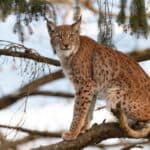
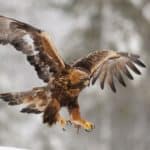
North Ossetia–Alania has steep gorges, alpine ridges, mixed forests, subalpine meadows and fast rivers. Watch open slopes and cliffs for mountain hoofed animals and raptors, and quiet forest edges for deer, wild boar and bears. Highlights: East Caucasian tur, chamois, golden eagle and bearded vulture. Many top sites are in protected valleys—guided hikes and ranger routes are best.
Bird migration and singing season in river valleys and forest edges; fresh green slopes make scanning for chamois/tur easier at mid-elevations. Wildflowers begin in foothills, and rivers are lively (watch for dippers and wagtails). Expect changeable weather, lingering snow in high passes, and muddy trails.
Peak alpine season: tur and chamois often visible on high ridges and grassy ledges at dawn and late afternoon; raptors ride thermals over gorges. Subalpine meadows explode with flowers and butterflies-excellent for macro photography. Expect crowds in popular valleys, strong sun, afternoon storms, and best access to high trails.
Crisp air and clearer visibility for long-range glassing. Deer activity increases (rut timing varies by elevation), bears may be active in berry/nut areas, and raptors continue moving through the mountains. Foliage adds dramatic landscapes for photography. Nights get cold quickly; higher routes may close after early snow.
A tracking-focused season: fresh snow reveals wolf/fox/hares and occasionally lynx sign in quieter forests; many birds concentrate in lower valleys. Mountain ungulates may be seen on sun-exposed slopes during stable weather windows. Expect difficult access, avalanche risk in steep terrain, and the need for local guidance/permits in protected areas.
North Ossetia–Alania ranges from steppe near Mozdok and the Terek basin up the north slope of the Greater Caucasus to steep valleys and alpine zones. Habitats shift from dry grasslands and farmland to broadleaf and mixed montane forests, subalpine shrub and woodland, alpine meadows, and nival scree. Rivers (Terek, Ardon, Fiagdon, Gizeldon, Urukh) create riparian forests and wetlands.
Lowland and foothill steppe/forest-steppe on the northern plains and valley bottoms, with grass-forb communities and extensive agricultural conversion; also includes dry meadow slopes in lower foothills.
Moderate in the north and on broader valley bottoms; more continuous toward the Mozdok area, fragmented elsewhere by cultivation and settlements.
Montane forests on mid-elevation slopes and valley sides, ranging from broadleaf (e.g., beech, oak, hornbeam) to mixed and conifer-influenced stands (pine/fir/spruce components depending on site), with rich understory in moist ravines.
Widespread across the central/southern mountainous zone; strongest on mid-elevation slopes and wetter aspects.
High-elevation belts above treeline: subalpine shrub and krummholz transitioning to alpine meadows, rocky ridgelines, talus/scree, and small nival zones; supports cold-adapted mountain biota.
Extensive in the high Greater Caucasus and main ridges along the southern border; patchy by aspect and elevation.
Fast-flowing mountain rivers and streams, braided gravel reaches, spring-fed tributaries, and a limited number of small lakes/impoundments; critical for riparian habitat and migratory corridors.
Linear network throughout; highest density in mountainous catchments feeding the Terek system.
Floodplain wetlands, oxbow remnants, wet meadows, and reedbeds concentrated along larger river valleys and in lowland depressions; generally small and localized due to steep terrain and regulation/land use.
Localized and patchy, mainly in the Terek valley and lower reaches of major tributaries.
Greater Caucasus ridges and deep gorges (e.g., in the upper Ardon/Fiagdon valleys) with strong elevational zonation and high landscape heterogeneity.
Mid-montane broadleaf forests (notably beech- and oak-dominated stands) on moist slopes and sheltered valleys; important for large mammals and forest bird communities.
Pine and mixed conifer elements on cooler aspects and higher montane belts, often intergrading with broadleaf forest and subalpine woodland.
Open-canopy forest/wooded slopes and forest-steppe edges in foothills, frequently shaped by grazing, fire history, and proximity to settlements.
Foothill dry meadows and managed hayfields; also natural grass-forb communities on lower mountain slopes.
Northern lowland steppe and forest-steppe mosaics (especially toward Mozdok), heavily converted to cropland but retaining fragments on less arable sites.
Subalpine shrub belts and slope scrub (including krummholz-like formations near treeline) that buffer forest-to-alpine transitions.
Species-rich alpine and subalpine meadows above treeline used for summer pastures, interspersed with rocky outcrops and snowbed vegetation.
Sheer limestone and metamorphic rock faces in gorges and high ridges, providing nesting/roosting sites and specialized cliff flora.
Karst and fracture caves in mountainous areas, locally important for bats and subterranean invertebrates.
Terek River corridor and major tributaries (Ardon, Fiagdon, Gizeldon, Urukh) with gravel bars, riparian willow/poplar zones, and high-gradient headwaters.
Small natural and artificial lakes/ponded waters in valleys and foothills; limited in extent compared to rivers.
Floodplain wet meadows, backwaters, and reedbeds along lower river sections; sensitive to drainage, embankment, and flow regulation.
Croplands and pastures dominate many lowland/foothill areas, forming a mosaic with steppe remnants and riparian strips.
Urban/industrial habitats around Vladikavkaz and other towns, with associated transport corridors through major valleys.
Peri-urban gardens, smallholdings, and mixed land use belts around major settlements, often adjacent to foothill woodlands and river terraces.
North Ossetia lies in the Greater Caucasus meeting zone for tur. West and East Caucasian tur meet and interbreed, so one ridge can have mixed horn shapes and coat patterns that change over time.
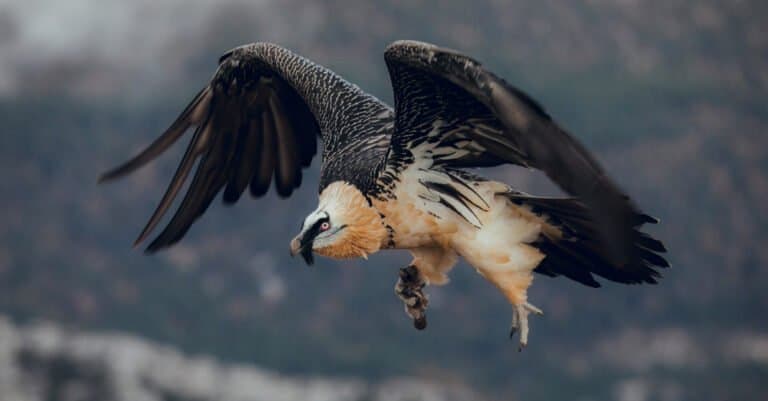
Bearded vultures don't just eat carcasses-they target bones. A classic behavior is carrying large bones high and dropping them onto rocks ("bone-breaking") to access marrow, turning gravity into a tool.
Caucasian grouse males gather in traditional display arenas (leks) in open subalpine meadows at dawn; outside the breeding season the same birds can become almost invisible by staying low in rhododendron/juniper thickets just a short distance away.
Caucasian chamois move up and down more than across: in one river valley they spend summer above the treeline on alpine lawns, then go downslope to forest edges and sunny cliffs in winter, often changing elevation by over a kilometer.
Golden eagles and other big birds of prey in the Central Caucasus use strong upward winds along ridges to glide with little flapping, letting North Ossetia's gorges act like a natural energy conveyor.
Bearded vulture-a cliff-nesting scavenger of the high Caucasus found in North Ossetia's mountain reserves-has one of the largest wingspans of any raptor: up to about 2.8 meters.
The bearded vulture has very acidic stomach juices (about pH 1), which allow it to dissolve and digest bones.
The Eurasian lynx, present in the forested gorges and montane forests of North Ossetia-Alania, is the largest lynx species in the world (adults commonly about 18-30 kg, with large males heavier).
The Caucasian tur, a wild mountain goat, lives only in the Greater Caucasus. North Ossetia–Alania protects part of its main range in high mountain areas.
The Caucasian snowcock and Caucasian grouse live in North Ossetia's alpine and subalpine zones. Each species only lives in the Caucasus and has a very small wild range in the Palearctic.
2 species documented in our encyclopedia
Thank you for reading! Have some feedback for us?
We appreciate your help in improving our content.
Our editorial team will review your suggestions and make any necessary updates.
There was an error submitting your feedback. Please try again.