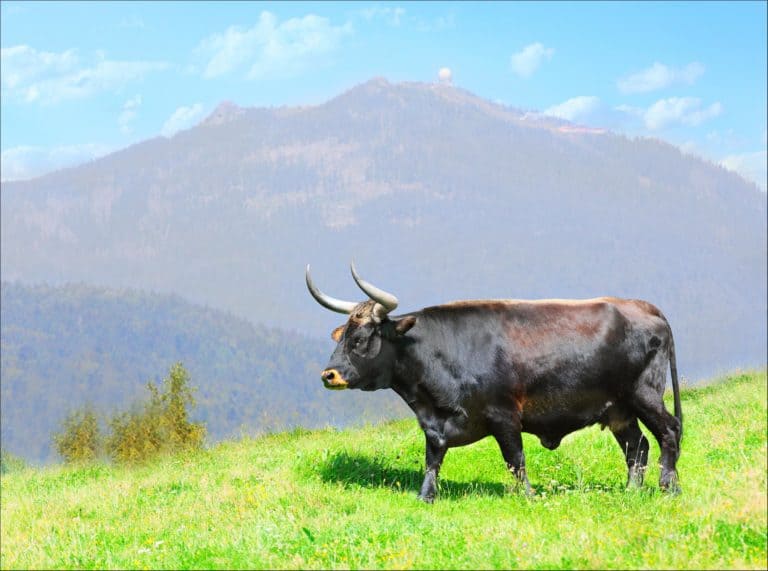
Aurochs
The original wild cattle

Tula Oblast sits south of Moscow in Russia’s forest-steppe belt, where broadleaf woods and open meadow-steppe mix across gentle plains. This edge habitat supports deer along forest edges, foxes and hares in fields, raptors and songbirds in oak and linden groves. Pockets of mature deciduous forest, including historic defensive forest belts (abatis forests), keep a Central Russian feel. The region’s rivers belong to the Oka-Don watershed, with valleys, floodplain meadows, oxbows, and riparian thickets that gather wildlife all year. Rivers support beavers and other semi-aquatic mammals, nursery areas for fish, and migration routes for waterfowl. Close-packed forest-steppe, the Oka-Don divide, and many headwaters give quick access to contrasting habitats, making Tula good for wildlife watching and seasonal birding near Russia’s central cities.
Tula Oblast lies on the forest-steppe of the East European Plain in the Oka-Don watershed. A patchwork of broadleaf and mixed woods, river valleys, wetlands, and farmland shapes wildlife. Forests and ravines support woodland mammals and birds. Floodplains, oxbows, and marshes hold amphibians, beavers, otters, and waterfowl. Farmland and steppe-like areas favor open-country species but break up forest corridors.
Approximately 120-290 m above sea level (low river valleys to higher rolling uplands), providing modest but meaningful habitat and microclimate variation across floodplains vs. upland forests/fields
Tula Oblast's protected areas are mainly regional nature sanctuaries, natural monuments, and protected forest tracts. They protect broadleaf (oak-linden) forests of the Abatis Forests belt, river valleys of the Oka, Upa, and Don, and forest-steppe meadows. The oblast has many woodland species, waterways with many beavers, and waterbird migration stopovers but no federal national park or strict nature reserve.
≈7.9%
Largest and most wildlife-significant block of old broadleaf forest in the oblast, with mature oak-linden stands, deadwood-dependent insects, and a strong woodland bird community. Excellent for quiet wildlife watching (tracks, woodpeckers, dusk mammals) and conserving remnant forest-steppe forest biodiversity.
A large, lightly urbanized mosaic of forest-steppe grasslands, shelterbelts, and river valleys that supports meadow/edge species, raptors over open fields, and rich pollinator communities; also important for maintaining semi-natural grassland remnants in an otherwise agricultural landscape.
Sandy terrace pine forests near the Oka basin create a contrast to broadleaf Zaseki forests and provide habitat for forest mammals, owls, and woodland passerines; good for observing forest-edge wildlife and signs of beaver along nearby waters.
Backwaters, oxbows, wet meadows, and riparian woods along the Oka system support beaver activity, amphibians, and seasonal concentrations of waterbirds. High wildlife-viewing value during spring/fall migration and at dawn/dusk for mammals.
River-valley corridors with reeds, wet meadows, and willow/alder stands provide breeding habitat for wetland birds and act as movement corridors through agricultural landscapes; good for birding and tracking mammals along banks.
Small but conservation-critical remnants of species-rich meadow-steppe support butterflies and other pollinators and maintain open-habitat bird communities; best visited in late spring-summer for flowers and insects.
Tula Oblast lies in Russia's forest-steppe belt, where mixed broadleaf forests (oak, linden, birch), river floodplains, wetlands, and extensive agricultural landscapes form a mosaic. Wildlife is typical of the Oka-Don watershed: a rich bird fauna tied to rivers and open farmland, common forest-edge mammals (moose, roe deer, boar), and locally important wetland species (beaver, cranes). True endemics are not expected in this part of the East European Plain, but the region can hold nationally protected species associated with floodplains, old forests, and traditional meadows.


Tula Oblast lies in Russia's forest-steppe belt. Abatis forests, floodplains of the Oka, Upa and tributaries, meadow-steppe patches, ponds and old manor parks make rich habitats near Tula city. Expect roe deer, wild boar, fox, beaver, hare; woodpeckers, owls, thrushes, and strong spring–autumn migrations. Best for slow dawn walks, floodplain birding, and winter tracking.
Peak bird activity: spring migration on river corridors, loud dawn choruses in oak-lime forests, displaying grouse/woodcock in suitable woodland edges, and amphibian breeding in ponds. Floodplains can be wet-bring waterproof footwear and plan around muddy tracks.
Best for long days outdoors: butterflies and dragonflies around meadows/ponds, beaver activity at dusk, and forest mammals at sunrise. Meadows and steppe patches flower early-mid summer. Mosquitoes/ticks can be significant-use repellent and do tick checks.
Crisp visibility for photography, mushroom-rich forests, active mammals preparing for winter, and strong bird movement (geese/ducks/raptors) over rivers and harvested fields. Rut activity for some ungulates can increase chances of sightings at dawn/dusk.
Prime season for tracking: fresh snow makes it easier to read trails of fox, hare, boar and roe deer. Look for winter finches and search forest edges for owls. Short daylight rewards early starts; dress for wind on open floodplains.
Tula Oblast lies on the East European Plain in Russia's forest-steppe belt, producing a fine-grained mosaic of broadleaf/mixed forests, meadow-steppe grasslands, and heavily cultivated landscapes. River valleys (notably the Upa-Oka system and other Oka-Don watershed tributaries) add floodplain meadows, oxbows, and small wetland patches; overall, natural habitats are fragmented but still regionally important for forest-steppe biodiversity.
Broadleaf and mixed forests (oak, linden, maple, birch; with pine in places) occur as patches on interfluves, slopes, and in protected areas, forming the wooded component of the forest-steppe.
Low to moderate; mostly fragmented woodlots and managed/protected tracts (roughly on the order of ~10-20% of the oblast).
Forest-steppe grasslands and meadow-steppe communities, including dry meadows on uplands and open areas maintained by soils, land use, and disturbance; many remnants persist along slopes, field margins, and protected steppe fragments.
Moderate historically but now largely converted; remaining semi-natural grasslands are patchy, while the broader grassland zone is mostly agricultural (semi-natural remnants scattered).
River networks (e.g., Upa and other tributaries within the Oka-Don watershed), small reservoirs, ponds, and riparian corridors support aquatic and riparian communities.
Linear and localized; rivers and associated waterbodies occur throughout but occupy a small proportion of total area.
Floodplain backwaters, wet meadows, small fens/peaty depressions, and marshy margins along rivers and around ponds/reservoirs.
Small and localized, mainly in floodplains and low-lying depressions.
Oak-linden and mixed broadleaf stands on well-drained soils; important refuges for forest-steppe flora and fauna in ravines, slopes, and protected tracts.
Pine stands (often planted/managed) on sandy soils and terraces, sometimes mixed with birch; locally important for structure and species diversity.
Small woodlots, shelterbelts, and secondary growth between fields; key for connectivity in a fragmented forest-steppe landscape.
Meadow-steppe remnants, dry and mesic meadows on uplands and slopes; frequently occur as patches among agricultural lands and along infrastructure corridors.
Shrubby edges and successional scrub (e.g., along ravines, fallows, and forest margins) that develop where grassland/field is abandoned or lightly managed.
Upa and other tributary rivers with riparian strips, floodplain meadows, and occasional oxbows/backwaters supporting high local diversity.
Farm ponds, quarry ponds, and small impoundments used for water supply/fisheries; provide amphibian and waterbird habitat.
Very limited natural lake habitat; mostly small oxbow-like waterbodies and reservoir-lake analogs rather than large natural lakes.
Wet meadows and floodplain wetlands along river corridors; seasonal inundation shapes plant communities and breeding habitat for birds/amphibians.
Reed/sedge-dominated patches in floodplains and around pond margins, especially where water levels fluctuate.
Small peat-forming or peaty depressions/fens in low-lying areas; not extensive but ecologically distinctive where present.
Extensive croplands and improved grasslands dominate the landscape, interspersed with field margins, hedgerows/shelterbelts, and small semi-natural fragments.
Urban/industrial ecosystems centered on Tula and other towns, with river-adjacent development influencing local riparian habitats.
Peri-urban mosaics of gardens, dachas, small woodlots, and ruderal habitats that can support adaptable forest-steppe species.
Tula's Zaseki forests began as a military defense project: dense abatis-style barrier woods along the Great Abatis Line. Surprisingly, some of the oblast's broadleaf stands rich in wildlife survive because of that.
In the forest-steppe, beaver ponds don't just make "cute dams"-they can measurably stabilize local hydrology by holding water through dry spells. That means more amphibian breeding sites and more insect biomass for bats and swallows in otherwise drought-prone small valleys.
A single black woodpecker hole in an old oak can become a long-term wildlife apartment: after the woodpecker leaves, owls, stock doves, goldeneyes (if water is nearby), and bats may reuse it for years.
Tula Oblast sits on the Oka-Don watershed divide. Nearby streams can flow to very different systems (Volga-Oka or Don), so fish and wetland records are grouped by basin in biodiversity surveys.
The Eurasian beaver (Castor fiber)-Europe's largest rodent-lives on Tula Oblast rivers (notably the Oka and its tributaries), and its dams can convert narrow forest-steppe streams into multi-hectare wetland "beaver systems."
The moose/elk (Alces alces), the world's largest deer species, is native to Tula Oblast's forest and forest-steppe mosaics; it's the oblast's most "record-sized" wild ungulate by body mass and height at the shoulder.
The black woodpecker (Dryocopus martius), Europe's largest woodpecker, occurs in Tula's mature broadleaf and mixed forests (including protected tracts such as the "Tula Zaseki"), where it excavates the largest routinely made tree-cavities in the region.
The white-tailed eagle (Haliaeetus albicilla), among Europe's heaviest and widest-winged eagles (wingspan ~2.4–2.5 m), is seen along big rivers like the Oka; the Oka floodplain gives the best chance, but sightings, not constant presence, matter.
1 species documented in our encyclopedia
Thank you for reading! Have some feedback for us?
We appreciate your help in improving our content.
Our editorial team will review your suggestions and make any necessary updates.
There was an error submitting your feedback. Please try again.