
Wildlife of
Vladimirskaja oblast'
About Vladimirskaja oblast'
Vladimir Oblast lies on the East European Plain mostly in Russia's mixed-forest zone. It has patches of broadleaf and mixed conifer-broadleaf woods, meadow edges, fields, and river valleys in a small area. This mix supports forest specialists and edge species: moose and wild boar in woodlands, roe deer at forest edges, and many songbirds and raptors where woods meet farms. The oblast's ecological backbone is its rivers, especially the Klyazma basin, with floodplain meadows, oxbows, wet forests, and reedbeds used by breeding and migrating waterbirds. Peatlands and wet hollows, including parts of the Meshchera lowlands, add homes for amphibians and many insects, which help bats and insect-eating birds. The close mix of river wetlands and mixed woods in farmed land makes wildlife sightings varied: beavers and herons at backwaters one day, hoofed mammals and spring bird choruses in woods the next.
Geography
Vladimir Oblast on the East European Plain is a forest and forest-steppe area with mixed forests, river valleys, wetlands, and farmlands that shape wildlife. Klyazma floodplains have riverside forests and wet meadows for breeding birds and water-loving mammals. Sandy lowlands and peatlands hold pine forests and bog species; Opolye uplands are open and good for edge and farmland animals.
Elevation Range
~70-270 m above sea level (lowland-to-gentle-upland gradient that mainly affects wetland extent, soil moisture, and forest-field patterns rather than alpine zonation)
Coastline
No marine coastline; inland oblast with extensive riverine shorelines (Klyazma/Oka floodplains) and wetland-lake/peatland systems in lowland areas.
Key Landscapes
Protected Areas
Vladimir Oblast's protected areas follow Russia's OOPT system, with a few federal sites and many regional zakazniks and natural monuments. Protection focuses on Meshchera lowlands (pine forests, bogs, lakes) and river habitats of the Klyazma and tributaries, which have many birds, beaver and otter waterways, and large ungulates. Smaller sites protect floodplain meadows, peatlands, and old-growth conifers.
≈6-8% (order-of-magnitude estimate; varies by accounting method and whether smaller regional monuments are included)
National Parks & Preserves
Meshchyora National Park (Vladimir sector)
≈118,900 ha (≈1,189 km²) total park area (shared with neighboring regions; a substantial part lies within Vladimir Oblast)The oblast's flagship large protected landscape: extensive pine forests, peat bogs, lakes, and slow rivers typical of the Meshchera lowlands. It is notable for wetland birdlife, intact beaver waterways, and good chances of observing large forest mammals along river corridors and forest edges.
Klyazminsko-Lukhsky State Nature Sanctuary (federal-level sanctuary)
≈40,000-50,000 ha (reported figures vary by source/zonation)A major floodplain-wetland and mixed-forest complex tied to the Klyazma-Lukh river system. Valuable for breeding and migratory waterbirds, black stork habitats, and a dense network of small channels used by beaver and otter.
Meshchyora National Park
about 118,900 ha (about 1,189 km²)A national park spanning Vladimir and Ryazan oblasts that protects the Meshchyora Lowland's extensive peat bogs, wetlands, pine and mixed forests, and river-valley habitats, supporting a rich assemblage of boreal and wetland wildlife.
State & Provincial Parks
Dyukinsky State Nature Sanctuary (regional/oblast-level)
≈4,000-10,000 ha (site boundaries/zones reported differently across references)A well-known regional protected site valued for relatively undisturbed forest habitats (including mature conifer stands and mixed woodland) and associated woodland bird communities; also important for conserving local habitat diversity in the Sudogda-area landscapes.
Bogolyubovsky Meadow Natural Monument / Protected Meadow Complex (regional)
≈1,000-2,500 ha (protected meadow complex; size depends on included parcels)A floodplain meadow and wet-grassland complex that is notable for breeding meadow birds and seasonal concentrations of passerines and raptors hunting over open habitats; it also functions as a corridor node near the Klyazma basin.
Wildlife Refuges
Klyazma River Floodplain Protected Area Complex (regional wildlife refuge areas)
≈5,000-15,000 ha (aggregate floodplain protection footprint varies by included tracts)A set of floodplain habitats (oxbow lakes, wet meadows, riparian shrubs/woods) used by breeding herons/rails and migratory ducks, and by semi-aquatic mammals. Particularly valuable for wildlife viewing during spring-early summer when water levels are high.
Gus River Wetlands Sanctuary Complex (regional)
≈3,000-10,000 ha (wetland complex; varies by delineation)Wetland corridors and boggy lakeshores in the Meshchera landscape supporting cranes, ducks, and wetland passerines, plus beaver-engineered channels that maintain habitat structure and fish/amphibian productivity.
Kirzhach River Valley Forest-and-River Corridor (protected tracts/natural monuments)
Patchwork corridor protection (site sizes vary; typically hundreds to a few thousand ha per tract)Forested river-valley corridors with steep banks, springs, and riparian woods that serve as local biodiversity refuges and movement routes for mammals; notable for woodland birds and raptors hunting along the river edge.
Wilderness Areas
- Meshchera lowlands (Gus-Khrustalny area): large peat-bog and pine-forest blocks with limited road access away from settlements
- Upper Lukh river wetlands and swamp-forest mosaics (notably within/near the Klyazminsko-Lukhsky protected landscape)
- Klyazma floodplain oxbow-lake belts: seasonally inundated meadows and reedbeds with relatively low development in some stretches
- Sudogda-Sudogodsky forest massifs: extensive mixed-forest tracts where forestry roads thin out and wildlife tracks become dominant
- Kirzhach river ravines and spring-fed tributary valleys: locally roadless, steep-sided wooded corridors important for connectivity
Wildlife
Vladimir Oblast, east of Moscow, is in the mixed forest and forest-steppe zone. It has large conifer-broadleaf woods, peatlands and marshy lowlands, and many rivers, especially the Klyazma basin, with floodplain meadows and oxbows. Wildlife is like Central Russia: large hoofed mammals (ungulates), recovering beavers in forests and rivers, and many breeding birds in wetlands and forest edges. Cool, temperate weather means fewer reptiles. Forestry, farming and towns make a patchwork of habitats that helps edge species, waterbirds, and big mammals that move along river valleys.
Iconic Species
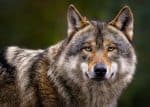
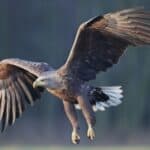
Endemic & Rare Species
Notable Populations
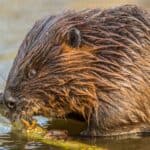
- Forest-river corridor populations of Eurasian beaver (Castor fiber) that strongly influence floodplain habitat structure and biodiversity.
- Breeding and migratory stopover use by Common Crane (Grus grus) in bogs, wet meadows, and forested wetlands typical of the Central Russian landscape.
- Regionally important assemblages of forest grouse (capercaillie and black grouse) where mature conifer/mixed stands and open bog-glade mosaics remain extensive.
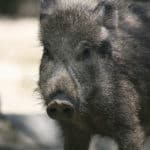
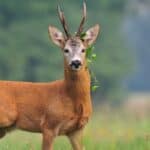
- Large-ungulate communities (moose, roe deer, and seasonally variable wild boar) sustained by the mixed forest-agricultural mosaic and extensive river valleys.
Recent Changes
- Eurasian beaver has continued a long-term recovery/expansion trend across Central Russia, increasing wetland creation and altering small-stream hydrology.
- Wild boar numbers have shown sharp fluctuations linked to African swine fever control measures and disease dynamics, with local declines followed by partial rebounds in some areas.
- White-tailed eagle observations and nesting success have generally improved in many parts of European Russia following reduced persecution and better protection, with increases most evident along major rivers/reservoirs.
- Ongoing decline/near-disappearance of European mink in much of European Russia due to habitat change and competition from American mink; any remaining occurrences are increasingly isolated.
- Wetland specialists (including Russian desman where present) face continued pressure from river regulation, water pollution, shoreline disturbance, and by-catch in fishing gear.
- Forestry intensification and fragmentation (clear-cuts, road expansion) tend to reduce habitat quality for mature-forest species (e.g., capercaillie, some owls) while benefiting edge-adapted generalists.
Wildlife Viewing
Vladimir Oblast offers classic Central Russian wildlife viewing in mixed forests, pine bogs, river floodplains, and the Meshchera lowlands, especially along the Klyazma basin. Look for moose (elk), roe deer, wild boar, beaver, fox, hare, and many birds (cranes, herons, ducks, woodpeckers, owls, raptors). Good for slow travel: dawn/dusk river walks, canoe trips, spring birding, and winter tracking on skis.
Best Seasons
Spring (late March-May)
Peak bird activity: migrants return to floodplains and wetlands; courtship displays (grouse/woodland birds) and strong dawn chorus. Rivers open up, and beavers become easier to spot near fresh cuttings and lodges. Best time for birding and nature photography-bring waterproof footwear for muddy trails.
Summer (June-August)
Long daylight for paddling and forest hikes. Dragonflies, butterflies, and amphibians are active around bogs and backwaters; woodland birds are present but quieter after breeding peaks. Great for canoe/kayak wildlife watching on calmer river stretches and for combining wildlife with berry-picking in pine forests.
Autumn (September-early November)
Migration continues (geese, ducks, cranes in suitable wetlands/floodplains), rut activity for moose/roe deer, and excellent visibility as leaves fall. Photogenic landscapes and comfortable hiking temperatures. Look for fresh tracks along forest roads and riverbanks.
Winter (late November-March)
Best season for mammal tracking: clear prints of moose, hare, fox, and sometimes wolf sign in remote areas. Quiet forests make owls and woodpeckers easier to locate by sound. Ideal for guided ski hikes and "winter safari" style outings; dress for deep cold and short daylight.
Top Wildlife Experiences
- Canoe or kayak wildlife float on the Lukh River (Meshchera lowlands): scan quiet bends at dawn for beaver, herons, ducks, and raptors; plan a silent drift-and-listen approach.
- Dusk beaver-watching walk on sheltered backwaters of the Klyazma River: look for fresh gnaw marks, slides, and lodge entrances; bring binoculars and stay downwind.
- Spring birding in river floodplains and wet meadows near the Klyazma basin (around oxbows and seasonal pools): focus on cranes, wagtails, warblers, ducks, and harriers where open fields meet reeds.
- Winter tracking-by-ski in mixed forest (Meshchera pine forests and adjacent woodlands): follow fresh hare/fox/moose tracks to feeding sites and bedding areas; practice ethical distance and quiet observation.
- Early-morning owl and woodpecker listening route in mature conifer-birch forest: locate great spotted woodpecker activity and nocturnal species at forest edges and clearings; best in late winter-early spring.
- Moose/roe deer viewing from forest edges at first light in autumn: choose quiet agricultural-forest boundaries and watch for animals moving between cover and feeding fields (use a long lens and stay stationary).
- Wetland-and-bog boardwalk style exploration in the Meshchera landscape (where access exists): focus on amphibians, dragonflies, and specialized plants; scan open water for ducks and waders in summer.
- Night sky + nocturnal mammal stakeout from a safe, quiet riverside spot: listen for beavers, watch for fox movement along the bank, and note bat activity in summer (headlamp with red light recommended).
Wildlife Watching Types
Guided Options
- Ranger-led routes and educational programs in Meshchera National Park (seasonal walks, ecology talks, and marked trail guidance-confirm current schedules locally).
- Local guided paddle trips on calm stretches of the Lukh/Klyazma system (half-day and full-day floats oriented to quiet wildlife viewing and photography).
- Winter "tracking safari" outings with local naturalists (ski-based route planning, track ID, and wildlife sign interpretation).
- Birdwatching outings organized through regional nature clubs/ornithology communities in Vladimir and nearby towns (often best in spring migration-ask for weekend field trips).
- Small-group wildlife photography tours from Moscow to Vladimir Oblast focusing on moose/beaver and winter landscapes (typically private guides; request ethical viewing practices and minimal disturbance).
- Visitor-center led eco-programs and school-ecology excursions that accept adult visitors in season (good for learning local species and habitats; availability varies by district).
Ecosystems
Vladimir Oblast, on the East European Plain, sits between the mixed-forest belt and the forest-steppe. It has temperate mixed forests (spruce, pine, birch, aspen, oak), farms, floodplains of the Klyazma and Oka rivers, and peatlands in lowlands like the Meshchera. This mosaic of forests, valleys, meadows, and wetlands supports high habitat diversity despite human land use.
Biomes
The oblast's main biome is mixed, deciduous and conifer forests on glacial and alluvial plains, with pine, spruce, birch, aspen, and patches of oak, linden, and maple on warmer or richer soils and river terraces.
Dominant across most of the oblast; especially extensive outside major agricultural belts and urban corridors.
Occurs mainly as meadow complexes (including floodplain meadows) and as forest-steppe-like openings/edges where agriculture, soils, and microclimate favor open vegetation; also includes hayfields and semi-natural grasslands maintained by mowing.
Patchy; concentrated in river valleys and more open southern/southeastern areas, plus widespread as small fragments within the forest-agriculture mosaic.
Large river networks (Klyazma and tributaries; basin connections toward the Oka) with oxbows, small lakes, ponds, and reservoirs; supports riparian vegetation, fish communities, and seasonally flooded habitats.
Widespread along major valleys and numerous tributaries; linear but ecologically influential throughout the region.
Peatlands, fens, marshy depressions, and swampy forest patches in low-lying areas; includes floodplain wetlands and peat-forming systems that store carbon and regulate water flow.
Localized but significant in lowlands and along floodplains; notable clusters in poorly drained landscapes (e.g., Meshchera-type terrain).
Habitats
Mixed-forest matrix forming the primary natural cover; includes managed stands, secondary regrowth after logging, and protected patches with older structure.
Pine and spruce-dominated stands common on sandy or well-drained soils and in lowland forest tracts; often interspersed with birch/aspen after disturbance.
Birch-aspen secondary forests widespread; broadleaf elements (oak, linden, maple) occur in warmer sites and fertile river terraces, especially in the south and along valleys.
Forest edges, shelterbelts, and smaller woodlots embedded in agricultural landscapes; important for connectivity and edge-associated species.
Floodplain meadows and upland hayfields; many are semi-natural where maintained by mowing/grazing, and provide high floral diversity relative to surrounding cropland.
Willow and other shrub thickets on disturbed floodplains, along ditches, and in early successional clearings; also occurs on abandoned fields transitioning back to forest.
Klyazma and numerous tributaries with riparian zones, sandy/loamy banks, and oxbow features; spring floods shape vegetation and nutrient cycles.
Primarily small natural lakes and floodplain oxbows rather than large lake systems; often surrounded by wet meadows or peatland vegetation.
Farm ponds, village ponds, and small impoundments common in settled/agricultural areas; provide amphibian and waterfowl habitat when water quality is adequate.
A mix of floodplain wetlands and depressional wetlands, including sedge fens and marshy forest hollows; critical for water filtration and biodiversity.
Waterlogged forest patches (often alder or mixed swamp forest) in low-lying terrain and along sluggish tributaries; prone to seasonal inundation.
Emergent-vegetation zones (reeds/sedges) along oxbows, pond margins, and slow-flowing river reaches; important breeding habitat for birds and amphibians.
Peat-forming wetlands in poorly drained lowlands; can include sphagnum-dominated communities where conditions allow, with acidic, nutrient-poor waters.
Extensive croplands, hayfields, and pasture forming a major share of the forest-field mosaic; field margins and fallows can add habitat heterogeneity.
Built-up areas centered on cities such as Vladimir and industrial/transport corridors; includes urban greenspaces that can serve as small habitat refuges.
Dacha and peri-urban settlement belts with gardens, small woodlots, and fragmented habitats; often a transition zone between urban cores and agricultural/forest land.
Ecoregions
Conservation
Primary Threats
- Commercial forestry and sanitary cuttings fragment mature mixed forests and reduce deadwood, affecting forest specialists (raptors, woodpeckers, hollow-nesting birds) and simplifying habitat structure, especially outside protected areas.
- Drainage and degradation of peatlands and floodplain meadows (for forestry access, peat extraction legacies, and agriculture) shrink and fragment wetland habitats crucial for species like the Russian desman and black stork.
- Municipal wastewater, industrial discharges (including legacy contaminants from manufacturing centers), and agricultural runoff increase nutrient loading and degrade water quality in the Klyazma basin and tributaries, impacting fish and semi-aquatic mammals.
- The M7 corridor and dense rail/road network between Moscow and the Volga region create barriers to animal movement, increase roadkill, and promote edge effects and development pressure around transport nodes.
- Growth and densification around Vladimir, Kovrov, Murom and satellite settlements consume peri-urban forests and riverbank habitats, increase recreation pressure, and intensify stormwater impacts on small rivers.
- Conversion and intensification of fields and hay meadows reduce biodiversity in the forest-steppe portion of the oblast; drainage and early mowing degrade breeding habitat for ground-nesting birds and reduce floodplain meadow diversity.
- Channel modification, bank reinforcement, small dam/weir operations, and floodplain disconnection alter flow regimes in the Klyazma system, reducing spawning/nursery habitat and simplifying riparian wetlands.
- Legal hunting combined with localized poaching affects ungulates and carnivores and can disrupt sensitive wetlands during breeding seasons; incidental take and disturbance are concerns near protected-area borders.
- High recreational use (berry/mushroom harvesting, fishing, off-road vehicles) in forests and peatlands-especially near easy road access-disturbs nesting birds and compacts/erodes sensitive wetland margins.
- Wild boar, elk and beaver can damage crops, young forest plantations, and infrastructure (e.g., road-side flooding from beaver activity), creating pressure for lethal control rather than coexistence measures.
- More frequent drought/heat periods elevate peatland and forest fire risk in the Meshchera landscapes, while winter thaws and altered hydrology can destabilize wetland conditions needed by rare semi-aquatic species.
- Local extraction of peat (legacy and occasional), sand and gravel affects wetlands and river terraces, causing habitat loss, hydrological change, and increased turbidity/sedimentation in nearby waterways.
- African swine fever outbreaks in wild boar populations (regionally recurring in central Russia) can trigger intensive control actions and carcass disposal challenges; disease surveillance demands can divert resources from broader biodiversity work.
- American mink and other invasive/expanding species pressure native fauna; American mink is a key competitor/predator contributing to the decline of the European mink in riverine habitats.
Did You Know?
In Meshchyora's bogs and acidic lakes, you can find carnivorous plants such as round-leaved sundew (Drosera rotundifolia) and bladderworts (Utricularia spp.)-they supplement nutrients by trapping and digesting insects in nutrient-poor peatland water.
Moose in the Klyazma floodplain don't just browse shrubs: they regularly wade into water to eat aquatic plants, and they're strong swimmers that can cross broad river reaches and oxbow networks.
Beavers act like "wetland firefighters" in peat landscapes: by raising local water tables with dams, they can re-wet dried areas and reduce the spread/intensity of peat fires-an ecosystem service that matters in the Meshchyora-type peatlands of central Russia.
Some of the oblast's shyest birds are forest wetland specialists, not open-water birds. The black stork (Ciconia nigra) likes hidden forest swamps and old trees, even in regions known for fields and towns.
Grouse in Vladimir's snowy winters use the snow itself as shelter: species like hazel grouse (Tetrastes bonasia) can dive into soft snow to form insulating snow-burrows, escaping wind and predators in temperatures far below freezing.
Vladimir Oblast is home to the Eurasian moose (Alces alces), the world's largest deer. Adult bulls can weigh over 600 kg and stand about 2 m tall, living in mixed forests and floodplain thickets.
The Eurasian beaver (Castor fiber), common along rivers and backwaters in the Klyazma basin, is the largest rodent in Europe (often ~20-30 kg, occasionally more). Its dams and canals can reshape entire side-channels and floodplain ponds.
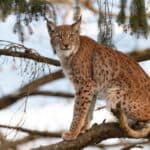
Where it occurs in the oblast's big forest tracts (including the Meshchyora landscape), the Eurasian lynx (Lynx lynx) represents the largest lynx species on Earth - a top-tier predator that can persist surprisingly close to Moscow's hinterland.
Meshchyora National Park (National Park "Meshchera") is the largest protected natural area in Vladimir Oblast (about 1,189 km²). That scale helps maintain a continuous mosaic of pine forests, bogs, and river valleys large enough for wide-ranging mammals and wetland birds.
Part of the Meshchyora Lowlands, one of European Russia’s largest wetland and peatland regions. Its deep peat stores huge amounts of carbon and supports rare bog wildlife unlike nearby agricultural Opolye.