N S W E
Wildlife Expeditions

Wildlife of
Irkutskaja oblast'

Where Siberian taiga meets the world's deepest lake, Irkutsk Oblast pairs classic boreal megafauna with Lake Baikal's unrivaled freshwater endemics.
42 Species
774,846 km² Land Area
Overview

About Irkutskaja oblast'

Irkutsk Oblast is one of Siberia's richest wildlife crossroads. Vast boreal taiga and Angara river valleys meet forest-steppe edges and the western and northern shores of Lake Baikal. This mix supports famous Siberian animals—brown bear, moose, wolf, and lynx—along with many birds, frogs, and cold-adapted insects. Lake Baikal, an inland "sea," shapes food chains, migration routes, and seasonal animal patterns. Main ecosystems include dark conifer taiga (spruce, fir, cedar, pine), larch forests on cold slopes, boggy wetlands, steppe openings, and rocky shorelines. Rivers like the Angara are highways for mammals and breeding areas for waterfowl. Baikal's shallows, cliffs, and islands make nesting sites for birds and resting spots for seals. The region's special mix lets you see taiga predators and ungulates and, in the same trip, Baikal's unique fish and the Baikal seal.

Physical Features

Geography

Irkutsk Oblast, in south-central Siberia, is a transition zone: boreal taiga on the Central Siberian Plateau and large river basins in the north and center, changing to forest-steppe and mountains in the south. Lake Baikal’s rift-valley shores form cliffs, bays, deltas, and nearshore waters that support many unique freshwater species and shoreline wildlife.

774,846 km² Land Area
4th largest federal subject in Russia (by area) Size Rank
Russia Country
Oblast Type
Elevation Range

~200 m (major river valleys/lowlands) to ~3,300 m (highest Eastern Sayan peaks within/near the oblast), driving taiga-to-alpine habitat zonation

Coastline

No ocean coastline; extensive freshwater 'coastline' along Lake Baikal (western and northern shores, including bays, cliffs, beaches, and delta/wetland complexes).

Key Landscapes

Lake Baikal western and northern shores (bays, rocky capes, deltas, nearshore wetlands; globally important freshwater/endemic biodiversity) Baikal Rift Zone and Primorsky Range along the lake's western side (steep slopes, rocky habitats, microclimates) Angara River basin (Irkutsk-Bratsk-Ust-Ilimsk corridor; riparian forests, islands, floodplains) Major reservoir systems on the Angara: Irkutsk, Bratsk, and Ust-Ilimsk (large water bodies influencing shore/wetland habitats and fish assemblages) Central Siberian Plateau taiga (vast conifer forests, bogs, and larch-pine mosaics supporting wide-ranging Siberian fauna) Eastern Sayan uplands on the southwestern/southern margin (montane forests, subalpine meadows, alpine tundra refugia)
Parks & Reserves

Protected Areas

Irkutsk Oblast's protected areas focus on Lake Baikal's west and northwest shores and large taiga and mountain systems (Baikal Ridge, Primorsky Range, Eastern Sayan/Tofalaria). Federal protection includes a national park and a strict nature reserve, plus many regional sanctuaries and monuments that protect wetlands for migratory birds, key habitats for hooved animals, and boreal forest corridors feeding Baikal's watershed.

Protected Coverage

~8% (approx.; depends on whether small nature monuments and some categories of zakazniks are included in official totals)

National Parks & Preserves

Pribaikalsky National Park

~4,170 km²

The flagship Baikal-adjacent protected area on the lake's western shore, spanning coastal cliffs, pine-larch taiga, river mouths, and island/nearshore habitats. It is one of the best places in the region for wildlife viewing tied to Baikal's shoreline ecosystems and raptor concentrations.

Baikal seal White-tailed eagle Osprey Sable Brown bear

State & Provincial Parks

Kultuksky State Nature Sanctuary (regional wildlife sanctuary)

~566 km² (56,563 ha)

A regional protected area at the southern end of Lake Baikal focused on conserving wetland and floodplain habitats important for wildlife, especially waterbirds.

Migratory waterfowl (including swans and ducks) Shorebirds (waders) Raptors (birds of prey)

Wildlife Refuges

Tofalarsky State Nature Sanctuary

~1,330 km²

A regional protected area (state nature sanctuary) in Irkutsk Oblast managed primarily for wildlife and habitat protection.

Kultuksky State Nature Sanctuary

~530 km²

A regional protected area (state nature sanctuary) in Irkutsk Oblast focused on protecting wetland and lakeshore habitats important for birds.

Wilderness Areas

  • Baikalo-Lensky State Nature Reserve (roadless taiga and mountain terrain along Lake Baikal and the Lena River)
  • Pribaikalsky National Park (undeveloped Lake Baikal shoreline and forested backcountry areas)
  • Vitim State Nature Reserve (remote northern taiga and river valleys in the Vitim River basin)
Animals

Wildlife

Irkutsk Oblast spans classic south-central Siberian taiga (larch, pine, cedar forests of the Angara and Lena basins), forest-steppe edges in the south, mountain habitats along the Eastern Sayan and Baikal ranges, and the globally unique freshwater ecosystem of Lake Baikal along its western and northern shores. This mix produces a "Siberian signature" fauna-large boreal mammals (bear, moose, lynx), furbearers (sable), rich raptor and grouse communities, and exceptional freshwater biodiversity tied to Baikal's deep, cold waters and ancient isolation.
~70-80 species (taiga and mountain mammals plus steppe-edge species) Mammals
~300-340 species recorded across taiga, wetlands, rivers, and Baikal shores (strongly seasonal with migrants) Birds
~6-8 species (low diversity due to climate; mostly snakes and a few lizards) Reptiles
~4-6 species (frogs/toads/salamanders in warmer lowlands and river valleys) Amphibians
~50-60+ in the oblast overall; Lake Baikal itself supports ~50+ fish species with many endemics (especially sculpins) Fish
Examples

Iconic Species

Baikal seal The world's only entirely freshwater seal and the flagship animal of Lake Baikal; often seen hauled out on rocks/ice or surfacing in nearshore waters.
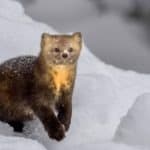
Sable
Sable A classic taiga furbearer associated with dense cedar-larch forests; emblematic of Siberian wilderness and still a key species in regional ecology and culture.
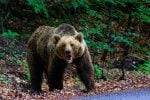
Brown bear
Brown bear A top omnivore of Irkutsk's boreal forests and river valleys; tracks and sign are common, and sightings occur around salmonid runs and berry-rich habitats.
Moose (Eurasian elk) The largest herbivore of the taiga; frequently encountered in wetlands, river floodplains, and post-logging regrowth areas.
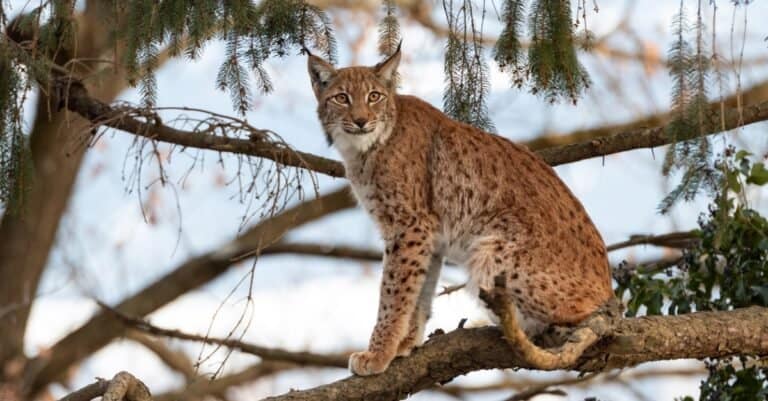
Eurasian lynx
Eurasian lynx An iconic, elusive forest predator that defines intact taiga food webs; present across large forest tracts and mountainous areas.
Siberian musk deer A small, secretive deer of conifer forests and rugged slopes; notable for its role in traditional wildlife lore and vulnerability to poaching for musk.
Steller's sea eagle A spectacular, globally rare raptor that can occur along Baikal and major rivers during migration or seasonal movements, drawn by open water and fish.
White-tailed eagle
White-tailed eagle A large fish-eating eagle of big lakes and rivers; Lake Baikal shorelines and the Angara system provide prime habitat and viewing opportunities.
Baikal omul The best-known Baikal fish and a cultural symbol of the region; central to the lake's food web and a major draw for nature-focused visitors (and historically for fisheries).

Endemic & Rare Species

Baikal seal

Pusa sibirica

Endemic to Lake Baikal; IUCN: Least Concern (population sensitive to ice and food-web changes)

A globally unique mammal lineage tied to Baikal's ice regime and fish community; an irreplaceable conservation responsibility for the region.

Baikal omul

Coregonus migratorius

Endemic to Lake Baikal; locally depleted at times due to fishing pressure and ecosystem shifts (management-dependent)

A keystone and cultural species; its abundance reflects broader Baikal food-web health and fishery sustainability.

Baikal oilfish (big Baikal oilfish)

Comephorus baikalensis

Baikal endemic; highly specialized deepwater fish

A defining Baikal endemic that underpins pelagic food webs (including seal diet) and illustrates the lake's unique evolutionary history.

Yellowfin sculpin (one of the Baikal sculpins)

Cottocomephorus grewingkii

Baikal endemic (representative of the lake's endemic sculpin radiation)

Baikal's sculpins represent an exceptional endemic diversification; they are important indicators of nearshore and deepwater ecosystem condition.

Saker falcon

Falco cherrug

IUCN: Endangered (regional rarity; threatened by trapping and habitat change)

A high-profile raptor of open landscapes and forest-steppe edges; its presence highlights the conservation value of southern Irkutsk's steppe-margin habitats.

Steller's sea eagle

Haliaeetus pelagicus

IUCN: Vulnerable (globally threatened; regionally important seasonal occurrence)

One of the world's largest eagles; Baikal and major rivers can be important seasonal feeding areas within its broader Far Eastern range.

Black stork

Ciconia nigra

IUCN: Least Concern globally but scarce and sensitive locally; often protected nationally/regionally

A disturbance-sensitive wetland and old-forest associate; its occurrence points to high-quality riverine forests and secluded wetlands.

Notable Populations

  • Lake Baikal's endemic freshwater fauna: one of the world's most distinctive inland aquatic assemblages (including the only freshwater seal and numerous endemic fishes, especially sculpins).
  • Regionally important raptor and waterbird habitats along Lake Baikal shorelines, the Angara River system, and large wetland complexes that support breeding and migratory stopovers.
  • Extensive, contiguous boreal-forest (taiga) landscapes that sustain intact communities of large mammals (bear-moose-lynx-sable systems) compared with more fragmented parts of Eurasia.

Recent Changes

  • Stronger management actions and restrictions around Baikal omul fisheries in recent years following concerns about stock declines; ongoing monitoring and variable recovery by area/year.
  • Increasing climate and disturbance pressures (warmer winters, more frequent/severe wildfires in parts of Siberia) are altering taiga habitat structure, with knock-on effects for ungulates, furbearers, and forest birds.
  • Shifts in ice duration and nearshore conditions on Lake Baikal are affecting seal haul-out/pupping conditions and the timing/availability of key prey fish-an emerging concern for endemic Baikal species.
  • Localized increases in human access (roads, recreation, shoreline development) have raised disturbance and poaching risks in some accessible valleys and Baikal-adjacent areas, prompting more targeted protected-area enforcement in priority sites.
Visit

Wildlife Viewing

Irkutsk Oblast is one of Siberia’s richest wildlife areas, centered on Lake Baikal. Visitors can hike shores and take boats to see the unique Baikal seal (nerpa) and other freshwater life, track moose, red deer, and brown bear in taiga and river valleys, and birdwatch in wetlands, deltas, and cliffs along the lake. Seasons change viewing.

Best Seasons

Winter (Dec-Mar)

Best time for Baikal ice scenes and good chances to see Baikal seals (nerpa) on the ice, especially Feb–Mar. Clear ice is great for photos, ice hiking, and, where allowed, looking into pressure ridges and ice shapes. Forest animals are harder to spot, but snow tracking with guides can work; expect very cold weather and short daylight.

Spring (Apr-May)

Dynamic shoulder season: ice breaks up (timing varies), and migratory birds surge through river valleys and Baikal-adjacent wetlands. Great for birders seeking cranes, geese, ducks, and raptors on passage. Trails can be muddy; boat access may be limited during ice-out, but wildlife activity increases rapidly.

Summer (Jun-Aug)

Best all-around season to reach Baikal by boat and use trails on the western shore, Olkhon area, and northern Baikal. Great for nerpa viewing from boats and rocky headlands, strong birding (gulls, terns, songbirds), and possible bear sightings along remote coasts and taiga edges. Peak mosquito season—bring bug spray.

Autumn (Sep-Nov)

Crisp air, fewer crowds, and dramatic fall colors in taiga and larch forests. Good time for quiet mammal watching (rut activity for some ungulates earlier in the season) and raptor movement along ridgelines and lake corridors. Increasingly cold nights; boat schedules begin to wind down later in autumn, and some remote areas become less accessible.

Top Wildlife Experiences

  • Boat-based Baikal seal (nerpa) watching along the western and northern Lake Baikal coast (timing and exact route vary with conditions; aim for calm mornings and bring binoculars).
  • Winter ice expedition on Lake Baikal with guided stops at known nerpa haul-out areas (typically Feb-Mar), combining ice trekking/photography with seal watching from a respectful distance.
  • Birding the Angara River basin and connected wetlands during spring migration (Apr-May): focus on waterfowl concentrations, cranes, and raptors using river corridors.
  • Hiking and wildlife photography on the Great Baikal Trail segments near Listvyanka-Bolshoye Goloustnoye (western shore): look for coastal birds, small mammals, and fresh bear sign (keep food secured and follow local safety guidance).
  • Multi-day trek/jeep-and-hike into taiga landscapes of the Irkutsk Oblast interior (away from the lake) to track signs of moose, red deer, and brown bear with a specialist guide.
  • North Baikal shoreline exploration (remote coves, river mouths, and rocky points) for a mix of seal viewing, waterbirds, and dramatic habitat transitions where taiga meets lake.
  • Sunrise/sunset wildlife watch from cliff viewpoints on Olkhon Island and adjacent coastal headlands (excellent for bird activity, scenic photography, and occasional distant seal sightings on calm water).

Wildlife Watching Types

Freshwater seal watching (Baikal seal/nerpa) by boat and during winter ice season Birding hotspots: wetlands/river valleys (migration) and Baikal shoreline cliffs/forests (breeding season) Large mammal tracking in taiga (moose, red deer, brown bear sign) with guides Scenic nature hikes and coastal viewpoint watches (passerines, raptors, lakebirds) Winter wildlife and ice-ecology viewing (ice formations, tracks, seal haul-outs) Wildlife photography trips (ice season, shoreline birds, taiga landscapes)

Guided Options

  • Lake Baikal nerpa-focused boat excursions (small-group trips departing from key Baikal-side hubs such as Listvyanka/Olkhon-area settlements; choose operators that follow wildlife-distance rules).
  • Guided winter Baikal ice tours that include seal-viewing stops, ice safety briefings, and route planning based on current ice conditions.
  • Specialist birding guides offering spring migration day trips in the Angara River corridor and Baikal-adjacent wetlands (often customizable by target species).
  • Great Baikal Trail guided hiking programs (day hikes to multi-day point-to-point treks) with naturalist interpretation and logistics support.
  • Multi-day taiga wildlife tracking tours (vehicle + hiking) led by local guides experienced in bear safety and spoor identification; often paired with rustic lodges or tent camps depending on route.
  • Protected-area or ranger-led interpretation where available in Baikal-adjacent reserves/nature parks (availability varies; confirm permits, access rules, and seasonal closures in advance).
Habitats

Ecosystems

Irkutsk Oblast covers south-central Siberia from dense boreal taiga across the Angara-Lena watershed to mountains near Lake Baikal and the Sayan foothills. Forests of larch, pine, spruce and fir, with birch and aspen patches, mix with rivers, peatlands and southern steppe edges. Lake Baikal adds steep rocky shores, cold low-nutrient waters and many unique species.

Biomes

Boreal Forest (Taiga)

Vast Siberian taiga across most lowlands and uplands: larch- and pine-dominated forests with spruce/fir in moister sites; frequent fire-driven mosaics and large intact forest blocks.

Dominant biome; roughly ~70-85% of the oblast, especially the Angara basin and northern/central areas.

Temperate Forest

Warmer, more productive mixed and small-leaved forests (birch, aspen) and mixed conifer-broadleaf patches in southern valleys/foothills and around settlements; often secondary after logging/fire.

Patchy; more common in the south and river valleys, ~5-15% locally.

Temperate Grassland

Forest-steppe/steppe-like grasslands on drier south-facing slopes and intermontane basins in the south/southwest; often interleaved with open pine and birch woodland and heavily used for hayfields/pasture.

Limited; mostly southern margins and basin bottoms, generally <5-10%.

Alpine

High-elevation belts of subalpine sparse woodland, alpine meadows, and mountain tundra in the Eastern Sayan and Baikal mountain ranges; long snow cover and short growing season.

Mountain tops and upper slopes; roughly ~3-8% depending on elevation zones.

Freshwater

Lake Baikal (western and northern shores) plus large rivers (Angara, Lena headwaters/tributaries) and numerous lakes/streams; cold, clear waters with strong seasonality and ice cover.

Regionally significant but small by area; ~2-5%, concentrated at Baikal and major river corridors.

Wetland

Floodplain wetlands, oxbows, riparian marshes, and peatlands/mires in poorly drained taiga lowlands and along major rivers; important for waterfowl and carbon storage.

Scattered; often concentrated in lowlands and river valleys, ~2-6%.

Habitats

Forest

Extensive taiga landscapes with large intact tracts, mixed-age stands, and disturbance mosaics from fire and logging.

Coniferous Forest

Larch and pine forests widespread; spruce-fir in cooler/moister sites; cedar pine (Pinus sibirica) locally in mountain/valley settings.

Deciduous Forest

Birch and aspen stands common as post-fire/post-logging succession, especially in southern and accessible areas.

Woodland

Open pine-birch woodland and forest-steppe transitions in drier southern basins and slopes.

Grassland

Steppe/forest-steppe grasslands in the south and intermontane basins; many areas converted to hayfields and pasture.

Shrubland

Willow/alder shrub thickets on floodplains, lake margins, and post-disturbance sites; dwarf shrub communities near treeline.

Mountain

Eastern Sayan and Baikal ranges with strong elevational zonation, steep valleys, and cold microclimates.

Alpine Meadow

Subalpine and alpine meadow complexes above treeline in the Sayan and Baikal highlands, important for summer grazing wildlife.

Cliff/Rocky Outcrop

Rocky escarpments and cliffs along parts of Lake Baikal's shore and mountain valley walls; localized nesting and talus habitats.

Lake

Lake Baikal dominates freshwater habitat diversity (nearshore, pelagic, and deepwater zones) with many endemic organisms; smaller taiga lakes also occur.

River/Stream

Major rivers (Angara; tributaries feeding the Lena and Baikal) with riparian forests, gravel bars, and floodplain channels.

Wetland

River floodplains, oxbow complexes, wet meadows, and lowland mire systems supporting high bird diversity.

Marsh

Shallow, vegetated margins of rivers and lakes and seasonally inundated floodplain basins.

Bog

Peat-forming mires in poorly drained taiga lowlands; acidic, nutrient-poor conditions with sphagnum and dwarf shrubs.

Urban

Urban/industrial habitat concentrated around Irkutsk, Angarsk, Bratsk, Ust-Ilimsk and other towns, with strong river-reservoir influence.

Agricultural/Farmland

Cropland, hayfields, and pasture mainly in the south and in broader river valleys where climate/soils allow.

Ecoregions

East Siberian taiga Sayan montane conifer forests Sayan alpine meadow and tundra Trans-Baikal conifer forests Daurian forest steppe
Protection

Conservation

Primary Threats

  • Industrial clearcuts and associated road building in the Angara basin and accessible taiga (especially near timber-processing hubs and along major rivers/roads) fragment habitat, increase edge effects, and elevate fire risk; illegal or poorly documented harvest persists in some remote districts.
  • Gold and other mineral extraction in northern and upland catchments can increase sediment loads and contaminate tributaries that ultimately drain toward the Baikal/Angara systems; legacy sites and poorly managed tailings pose chronic risks during floods and thaw.
  • Wastewater and solid-waste leakage from shoreline settlements and seasonal tourism around Baikal drive localized eutrophication and nearshore degradation; industrial emissions and accidental spills in the Angara corridor affect air and water quality, with pollutants transported into rivers and lakes.
  • Hydropower regulation on the Angara River (downstream of Baikal) alters flow, temperature, and sediment regimes, affecting spawning and migration conditions for native fishes and reshaping riverine wetlands important for waterbirds.
  • Warming increases the frequency/severity of drought and extreme fire weather in southern taiga and forest-steppe edges, shifts permafrost stability in the north, and changes ice phenology on Baikal-affecting ice-dependent ecology and nearshore processes.
  • Conversion and degradation are concentrated in the forest-steppe margins and around Irkutsk-Angarsk-Shelekhov and shoreline settlements (housing, dachas, quarrying, small-scale agriculture), reducing riparian buffers and wetland habitat.
  • Rail/road corridors (including Trans-Siberian and BAM-related networks) and energy infrastructure increase wildlife mortality, open previously remote forests to extraction/poaching, and create barriers for large mammals; shoreline roads intensify erosion and disturbance.
  • Recreation pressure on Baikal's western shore (boat traffic, off-road driving, camping) disrupts nesting waterbirds, damages fragile coastal vegetation and dunes, and increases litter and wildfire ignitions in popular bays and capes.
  • High demand and historically heavy harvest of Baikal endemic/valuable fish (notably omul; also pressure on taimen in rivers) has required strict regulation; illegal catch and bycatch remain risks, especially where enforcement is difficult.
  • Poaching and unsustainable take of high-value furbearers and ungulates occur in some districts, often facilitated by logging roads; enforcement challenges are greatest in remote taiga and along navigable rivers.
  • Brown bears increasingly access anthropogenic foods near settlements, tourist areas, and waste sites around Baikal and along river valleys; conflicts also occur where ungulates use agricultural fields at the forest-steppe edge.
  • Wildfire smoke stress, warming, and forest disturbance can amplify pest/disease dynamics in taiga stands (e.g., bark beetle outbreaks) and elevate vulnerability of wildlife populations; episodic disease events are a concern for concentrated or stressed populations in the Baikal basin.
Fun Facts

Did You Know?

Baikal's most "ghostlike" fish, the Baikal oilfish (Comephorus spp.), is largely translucent and gives birth to live young (not eggs); it's also extremely oil-rich and forms a major food base for the Baikal seal.

Baikal seals routinely overwinter on the lake ice: they maintain breathing holes with their claws and use snow lairs to shelter pups-behavior more associated with Arctic seas than an inland lake.

Some of Baikal's endemic sponges can appear bright green because of symbiotic algae living in their tissues; these sponges filter huge amounts of water and are sensitive indicators of ecosystem change along the Irkutsk coast.

A "deer with fangs" lives in Irkutsk Oblast's forests: the Siberian musk deer (Moschus moschiferus) lacks antlers, and males use elongated canine teeth in rivalry-an unexpected look for a deer.

Baikal's famous water clarity isn't just geology-tiny endemic plankton (notably the copepod Epischura baikalensis) graze on algae and help keep the water unusually clear for such a vast lake.

Lake Baikal's Irkutsk Oblast shoreline borders the world's deepest lake (max depth ~1,642 m), a setting that supports uniquely cold-adapted freshwater fauna.

Lake Baikal holds the largest volume of liquid freshwater on Earth (~23,600 km³-about 20% of the planet's unfrozen surface freshwater), making the Baikal-Angara system one of the world's biggest freshwater wildlife reservoirs.

Baikal is widely cited as the world's oldest lake (~25 million years), and that long isolation helped produce extraordinary endemism-well over half (often cited ~two-thirds) of its recorded species occur nowhere else.

The Baikal seal (Pusa sibirica) is the only seal species that lives entirely in freshwater-an evolutionary outlier found along Irkutsk Oblast's Baikal coasts.

Rivers and tributaries in Irkutsk Oblast's taiga (Lena/Angara basins) are part of the range of the Siberian taimen (Hucho taimen), commonly described as the world's largest salmonid, capable of exceeding 2 m in length.

Thank you for reading! Have some feedback for us?