N S W E
Wildlife Expeditions

Wildlife of
Kirovskaja oblast'

A taiga stronghold of European Russia where vast spruce-pine forests and the Vyatka River basin sustain classic boreal wildlife and rich wetland birdlife.
5 Species
120,374 km² Land Area
Overview

About Kirovskaja oblast'

Kirov Oblast sits in the Volga-Vyatka region as a wide belt of boreal (taiga) and mixed forests. It has a strongly continental climate with long winters and short summers. The land is mostly conifers, birch, and aspen, with spruce-fir and pine taiga and mixed-forest mosaics. Rivers such as the Vyatka and its tributaries, with oxbows, marshes, and wet meadows, cut through the forests and make wildlife corridors and feeding areas. The area supports a north-forest mix of animals: large mammals moving through deep woods, forest grouse and owls in old trees, and a spring-summer wave of migratory songbirds and waterbirds. Beavers, otters, and waterfowl gather on waterways. Compared with nearby areas, Kirov remains largely forested, giving a true deep taiga feel.

Physical Features

Geography

Kirov Oblast is in the forested interior of European Russia. Broad, low uplands and wide river valleys hold large taiga and mixed forests, peatlands, and floodplains along the Vyatka and its tributaries. This mix of wet and dry habitats favors boreal forest species in the north and mixed-forest, meadow, and floodplain animals in the south and along rivers.

120,374 km² Land Area
Mid-sized Russian federal subject (roughly around the 40th-largest by area among Russia's federal subjects) Size Rank
Russia Country
Oblast Type
Elevation Range

Mostly lowland to low upland terrain, approximately ~60-300 m above sea level (local ridges and uplands provide modest habitat and drainage variation)

Coastline

Landlocked; no marine coastline (wildlife is shaped instead by the dense river network, wetlands, and floodplains rather than coastal systems).

Key Landscapes

Boreal taiga forests (spruce-fir-pine) forming large, contiguous habitat blocks Mixed forests with increasing birch/aspen and some broadleaf elements toward the south Vyatka River basin (Vyatka River and extensive tributary network) with riparian corridors and oxbow/floodplain habitats Wetlands and peat bogs (including forested swamps) important for amphibians, waterbirds, and large mammals Low uplands and rolling morainic plains (e.g., parts of the Vyatka-Kama upland / Northern Uvaly influence) creating varied forest structure and drainage patterns Floodplain meadows and forest-meadow edges that concentrate herbivores and predators and provide breeding grounds for many birds
Parks & Reserves

Protected Areas

Kirov Oblast's protected areas are mostly regional wildlife refuges, nature monuments, and protected forests and wetlands that guard taiga, mixed forests, Vyatka River floodplains, and large bogs. A strict federal state nature reserve protects intact ecosystems and sensitive species. Best wildlife viewing is at river wetlands (raptors, beavers, otters) and remote conifer forests and bogs (ungulates, grouse, carnivores).

Protected Coverage

Approximately ~6-10% of the oblast's land area is under some form of protected status (federal + regional combined; figure varies by what categories are counted).

National Parks & Preserves

Nurgush State Nature Reserve (Государственный природный заповедник "Нургуш")

On the order of tens of thousands of hectares (strict reserve; exact area depends on cluster boundaries and reporting year).

The oblast's key federal protected area: a strict nature reserve safeguarding intact taiga/mixed-forest communities, wet meadows, and river-and-bog mosaics important for breeding birds, large mammals, and old-growth forest biodiversity. Its strict protection regime helps maintain low-disturbance habitat for sensitive species.

Eurasian elk (moose) Brown bear Eurasian lynx Eurasian beaver Western capercaillie

Nurgush State Nature Reserve - "Bylina" Cluster (участок "Былина" в составе заповедника "Нургуш")

Cluster area is also on the order of thousands to tens of thousands of hectares (reported figures vary by source and boundary updates).

A separate cluster of the Nurgush zapovednik protecting a largely roadless taiga landscape with a high proportion of wetlands and mature conifers-valuable for forest raptors, grouse, and wide-ranging mammals where human disturbance is minimal.

Eurasian elk (moose) Gray wolf Black grouse White-tailed eagle Eurasian otter

State & Provincial Parks

Bylina Nature Park

About 80,000 hectares (regional nature park; commonly reported around 80-85 thousand ha).

A regional nature park in Kirov Oblast protecting middle-taiga forest landscapes, river valleys, bogs, and lakes. These habitats support large mammals and forest birds, and the park is one of the oblast's best-known large protected areas for observing taiga wildlife.

Moose (elk) Brown bear Eurasian beaver Eurasian lynx Western capercaillie

Upper Kama / Verkhnekamsk Taiga & Bog Protected Areas (regional wetland-forest complexes)

Large multi-site complexes; many component bog/forest blocks are thousands of hectares each.

Regional protection focused on large raised-bog systems, pine bog woodlands, and associated taiga-important for carbon-rich wetlands, nesting cranes, and forest grouse, and as refugia for large mammals in less-fragmented northern landscapes.

Eurasian elk (moose) Brown bear Common crane Western capercaillie Eurasian lynx

Old-growth Conifer Forest Nature Monuments (regional protected forest tracts; various sites)

Typically tens to hundreds of hectares per monument, occasionally larger depending on site designation.

Smaller but high-value regional protected areas set aside to retain mature spruce-fir and pine stands, deadwood-dependent biodiversity, and forest interior conditions that benefit grouse, owls, and mammal communities.

Western capercaillie Ural owl Hazel grouse Eurasian red squirrel Eurasian pygmy owl

Wildlife Refuges

Regional Wildlife Refuges for Elk, Bear, and Forest Game (multiple sites across Kirov Oblast)

Highly variable; commonly from a few thousand to tens of thousands of hectares per refuge.

Kirov Oblast uses numerous regional wildlife refuges as practical conservation tools-limiting certain land uses and/or hunting pressure seasonally or permanently to maintain populations of large mammals and forest birds, and to protect key breeding areas.

Eurasian elk (moose) Brown bear Gray wolf Black grouse Western capercaillie

Wetland and Waterbird Wildlife Refuges (marsh, oxbow, and bog sites; multiple local designations)

Generally hundreds to several thousand hectares per site; some larger complexes occur where bog systems are included.

A network of wetland-focused refuges protecting nesting and stopover habitat for cranes, ducks, and other waterbirds, plus associated riparian mammals. These are disproportionately important for biodiversity relative to their area.

Common crane Whooper swan (migratory/seasonal in the region) Eurasian beaver Eurasian otter White-tailed eagle

Spawning and Riparian Protection Zones (river tributaries of the Vyatka/Kama basins; protective-use areas)

Linear corridors; total protected length can be substantial, but widths are typically limited compared to large reserves.

While not always branded as 'refuges,' many rivers and tributaries have protective-use designations that function similarly by restricting disturbance along banks and in key aquatic habitats-supporting fish, beavers/otters, and raptors that hunt along waterways.

Eurasian otter Eurasian beaver White-tailed eagle Osprey Northern pike (representative river fish)

Wilderness Areas

  • Remote taiga blocks in the northern and north-eastern parts of Kirov Oblast (largest remaining roadless forest tracts outside settlements and timber corridors).
  • Upper Kama raised-bog massifs and pine bog woodlands (often difficult to access, functioning as de facto wilderness).
  • Less-fragmented interfluve forests between major river systems (Vyatka-Kama tributary divides) where large mammals maintain larger home ranges.
  • Low-development floodplain backwaters and oxbow-lake complexes along the Vyatka River outside major towns (seasonally roadless during floods, strong for birdlife).
Animals

Wildlife

Kirov Oblast sits in the Volga-Vyatka part of European Russia and is dominated by boreal (taiga) and mixed conifer-broadleaf forests, extensive peatlands, and large river systems (notably the Vyatka and its tributaries). Wildlife is characteristically "north-forest": large ungulates and carnivores, rich forest birdlife (grouse, owls, woodpeckers), and a freshwater fauna tied to slow, meandering rivers, oxbows, and boggy lakes. The region's best wildlife experiences are in intact forest tracts, river floodplains, and wetland mosaics where mammals leave strong sign (tracks, browsing, beaver works) even when sightings are brief.
~55-65 species Mammals
~240-280 species (higher during migration) Birds
~5-7 species Reptiles
~8-10 species Amphibians
~35-45 species (river- and lake-associated) Fish
Examples

Iconic Species

Moose (Eurasian Elk) A defining taiga herbivore of Kirov's forests and riverine willow stands; tracks and browsing signs are common, and dawn/dusk sightings occur along forest roads and wet meadows.
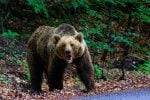
Brown Bear
Brown Bear An emblematic predator of large forest landscapes; most often detected by footprints, digging sites, and berry-feeding areas in remote taiga.
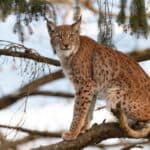
Eurasian Lynx
Eurasian Lynx A flagship forest carnivore closely associated with extensive conifer-mixed forests; rarely seen but highly sought-after, with winter tracking a key way to experience it.
Grey Wolf
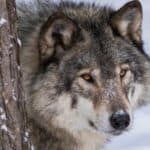
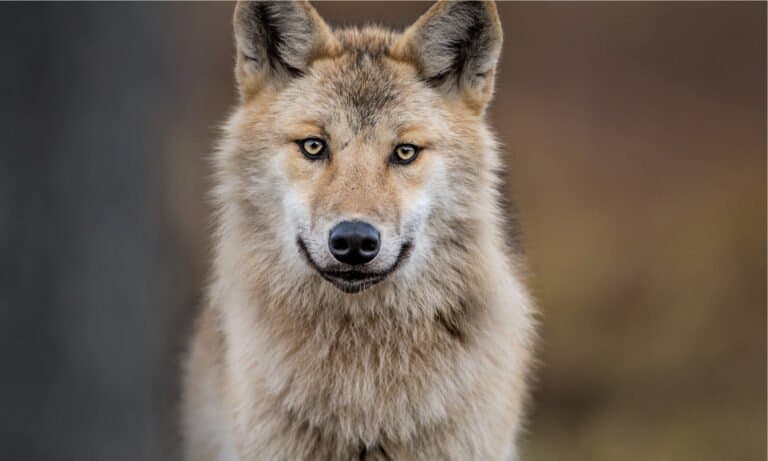
Grey Wolf A top predator that shapes ungulate behavior and is part of the classic northern-forest fauna; howling and winter trail sign are notable in quieter forest districts.
Eurasian Beaver
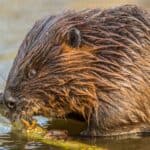
Eurasian Beaver A major "ecosystem engineer" on Kirov's rivers and streams; lodges, dams, and cut trees are conspicuous and create habitat for many wetland birds and amphibians.
Western Capercaillie One of the most iconic taiga birds; traditional lekking areas in mature conifer stands define spring wildlife tourism and birdwatching.
Black Grouse Common in forest edges, bogs, and young stands; spring display sites (leks) are among the most reliable seasonal wildlife spectacles.
Great Grey Owl A northern owl associated with forest-bog mosaics and vole cycles; prized by birders in years of high small-mammal abundance.
White-tailed Eagle
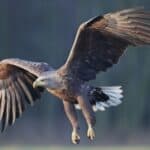
White-tailed Eagle A large raptor tied to major rivers and fish-rich floodplains; a conservation success story in many parts of European Russia, and an iconic river-sky sighting when present.

Endemic & Rare Species

European Mink

Mustela lutreola

Endangered (IUCN); extremely rare/possibly locally extirpated in many areas due to habitat change and competition with American mink

A high-priority conservation species historically linked to clean, structured riverbanks; any confirmed occurrences in the Vyatka basin region are of major conservation interest.

Sterlet

Acipenser ruthenus

Vulnerable (IUCN); declining in many Volga-basin rivers due to regulation, pollution, and overharvest

A native sturgeon of the Volga drainage; where it persists in larger river reaches, it represents valuable remnant populations of a heavily impacted group.

Black Stork

Ciconia nigra

Least Concern (IUCN) but scarce and legally protected in Russia; sensitive breeder

A hallmark species of undisturbed forest rivers and secluded wetlands; breeding presence indicates low disturbance and high habitat quality.

Wolverine

Gulo gulo

Least Concern (IUCN) but rare and patchy in European Russia; near the southern edge of stable occurrence in many areas

A taiga specialist that requires large, quiet landscapes; records are significant as indicators of intact northern ecosystems and connectivity.

Osprey

Pandion haliaetus

Least Concern (IUCN) but protected; sensitive to disturbance and reliant on fish-rich waters

A charismatic fish-eating raptor of big rivers and lakes; nesting and hunting activity highlights productive aquatic systems.

Notable Populations

  • Representative taiga mammal assemblage for European Russia (moose-bear-wolf-lynx) supported by extensive forest cover and low-density landscapes outside urban/industrial corridors.
  • Strong riverine beaver activity across many catchments, with landscape-scale wetland creation that benefits waterfowl, amphibians, and fish nurseries.
  • Regionally important grouse habitats (capercaillie/black grouse/hazel grouse) in conifer stands, bog margins, and forest mosaics where forestry intensity is lower.
  • River-floodplain raptor and waterbird assemblages (e.g., osprey and occasionally white-tailed eagle) where fish stocks and riparian nesting sites remain intact.

Recent Changes

  • Ongoing pressure on mature-forest specialists (notably capercaillie and some owl/woodpecker communities) where clear-cutting, road expansion, and fragmentation increase disturbance and reduce old-growth structure.
  • Recovery/expansion of Eurasian beaver in many parts of European Russia has generally increased wetland habitat locally, with knock-on benefits for amphibians and wetland birds where persecution is low.
  • Range and abundance shifts of wild boar (Sus scrofa) in the broader region: northward expansion in milder periods followed by localized declines tied to harsh winters and African swine fever management.
  • Continued decline and local losses of European mink, largely linked to competition from introduced American mink (Neogale vison) and ongoing riparian habitat alteration.
  • Large raptors (including white-tailed eagle in parts of European Russia) have shown broader-scale improvements where protection reduced persecution and contaminants; local presence in Kirov Oblast is most noticeable along productive river corridors.
Visit

Wildlife Viewing

Kirov Oblast is Volga‑Vyatka taiga: vast spruce‑pine forests, mixed birch and aspen, raised bogs, and the Vyatka River with tributaries and oxbows. It has moose, brown bear, wolf, lynx, beaver, otter, and birds—woodpeckers, owls, grouse, cranes and migratory waterfowl. Best viewing is at dawn or dusk along rivers, forest edges and bog boardwalks, often with local guides.

Best Seasons

Spring (late March-May)

Peak bird activity and sound: woodpecker drumming, early migrants along river floodplains, and grouse display (lek) season. As snow retreats, animal tracks concentrate on remaining snow patches and muddy forest roads; beavers become active at dusk. Expect variable conditions (ice breakup, muddy trails), but this is one of the best times for birding and photographing "taiga awakening."

Summer (June-August)

Long daylight for river-based wildlife trips (canoe/kayak) and forest walks. Young animals are visible; beavers and sometimes otters are best watched in the evening on quiet backwaters. Great for butterflies, dragonflies, and bog flora. Bring insect protection-mosquitoes and midges can be intense in wetlands and calm evenings.

Autumn (September-October)

Crisp air, fewer insects, and excellent visibility in thinning foliage. Moose rut increases chances of hearing/seeing moose at dawn; bears and many birds focus on feeding (berries, mast). Spectacular fall colors along the Vyatka River and forest-edge meadows; prime season for wildlife photography and tracking sign.

Winter (November-early March)

The best season for reading the forest: fresh tracks of moose, hare, fox, wolf, and sometimes lynx on snow, plus clear views through leafless understory. Ideal for guided snowshoe/ski safaris, identifying animal trails to feeding sites, and listening for owls. Days are short and temperatures can be severe; plan warm gear and conservative distances.

Top Wildlife Experiences

  • Ranger-led taiga walk in Nurgush State Nature Reserve (a strict nature reserve): focus on forest birds (woodpeckers, owls), large-mammal sign, and quiet observation from established routes/edges where sightings are most likely.
  • Sunset beaver-watching on a quiet tributary of the Vyatka River: choose a bend with cut willow/aspen, fresh slides, and lodges; arrive early, stay still, and watch for swimming beavers and ripples near bank entrances.
  • Dawn birding and migration watch on Vyatka River floodplain meadows and oxbow lakes near Kirov: scan for ducks, geese, cranes (seasonal), raptors over open fields, and mixed flocks along riparian shrubs.
  • Spring grouse display (lek) outing with a local guide in taiga clearings (capercaillie/black grouse depending on habitat): early starts, strict silence, and careful distance are essential for ethical viewing.
  • Canoe/kayak wildlife float on calm backwaters and smaller rivers feeding the Vyatka: look for beaver, waterbirds, kingfishers, and tracks on sandy/muddy banks; best in early morning or late evening.
  • Winter tracking safari on skis or snowshoes in mixed forest: learn to recognize moose browsing sign, hare/fox trail patterns, mustelid bounding tracks, and how predators use river corridors and forest roads.
  • Bog-edge nature hike (late summer-early autumn): raised bogs and wetland margins can be excellent for cranes/waders (seasonal), berry-rich feeding areas, and macro nature photography (mosses, lichens, dragonflies).
  • Nocturnal owl listening and spotlight-free night walk (late autumn-winter) on quiet forest roads outside major settlements: focus on calls, silhouettes, and track interpretation rather than close approach.

Wildlife Watching Types

Taiga mammal watching (moose, bear sign, wolf/lynx tracks; best with guides) River and wetland wildlife viewing (beaver/otter possibilities, waterfowl, riparian birds) Birding and migration watching on river floodplains and forest edges Grouse display (lek) viewing in spring (ethical, guided) Winter tracking and spoor identification (ski/snowshoe-based) Wildlife photography trips (dawn/dusk hides, river floats, track-to-animal interpretation) Nocturnal wildlife listening/watching (owls and other night-active species) Insect and botany-focused nature walks (summer bogs/meadows, dragonflies, butterflies)

Guided Options

  • Nurgush State Nature Reserve visitor programs: inquire about permitted routes, seasonal excursions, and ranger-led interpretation (advance coordination typically required for protected areas).
  • Local eco-guides based in Kirov offering taiga tracking, birding, and photography outings (often customized to season-spring lekking, autumn moose rut listening, winter track safaris).
  • Canoe/kayak outfitters and river guides on the Vyatka and tributaries: guided floats timed for dusk wildlife activity and safe navigation of backwaters.
  • Regional birding clubs/university naturalist groups (when available) that organize weekend bird counts and migration walks-useful for finding current hotspots and recent sightings.
  • Forestry or hunting-base guesthouses that run non-consumptive nature programs on request (track interpretation, wildlife sign walks, observation from quiet forest roads)-confirm "wildlife watching" focus in advance.
  • Photography workshops with local nature photographers (seasonal): winter track-to-subject sessions, autumn color + mammal sign tours, and spring bird soundscape trips.
Habitats

Ecosystems

Kirov Oblast in the Volga‑Vyatka region of European Russia is mostly taiga, shaped by a humid continental climate. Large conifer and mixed forests cover most land, with big rivers—especially the Vyatka and its tributaries—floodplains, and widespread peat wetlands. People live mainly in Kirov and towns; farming and managed forests are in the south and river valleys.

Biomes

Boreal Forest (Taiga)

Taiga is the defining biome: large tracts of spruce-fir and pine forests with birch/aspen succession after logging or fire, plus abundant forest bogs and cold-season conditions.

Dominant; roughly ~65-80% of the oblast, especially central and northern districts

Temperate Forest

Transition into mixed and more broadleaf-influenced forests (birch, aspen and locally more temperate broadleaf elements in sheltered sites), particularly toward the southern parts and along warmer river valleys.

Secondary; roughly ~10-25%, mainly in the south/southwest and in riverine mosaics

Freshwater

Dense river network (Vyatka basin) with oxbows, small lakes, ponds, and riparian habitats supporting aquatic and semi-aquatic communities.

Widespread but spatially limited; ~2-5% as open water and active channels, plus extensive riparian influence

Wetland

Peatlands (raised bogs and fens), marshy floodplains, and waterlogged forest depressions common in lowlands and poorly drained areas; important for carbon storage and breeding birds.

Patchy but significant; ~5-15%, highest in flat, poorly drained landscapes and river floodplains

Habitats

Coniferous Forest

Spruce-fir taiga and pine stands; large managed forest areas with clearcut/regrowth mosaics and natural old-growth remnants.

Deciduous Forest

Birch and aspen forests common as secondary growth after disturbance; mixed patches increase toward the south.

Woodland

Forest-edge and mixed-structure stands around settlements, along river terraces, and in fragmented southern landscapes.

Grassland

Floodplain meadows and hayfields, plus small openings within forest landscapes; often maintained by mowing or grazing.

River/Stream

Vyatka River and numerous tributaries with riparian forests, sand/gravel bars in places, and oxbow formation on meandering reaches.

Lake

Mostly small natural lakes and oxbows; generally lowland, often associated with wetlands and peatlands.

Pond

Farm and settlement ponds, small impoundments, and fish ponds that add local aquatic habitat diversity.

Wetland

Lowland wet meadows, floodplain wetlands, and waterlogged forest hollows; strong seasonal inundation dynamics near rivers.

Bog

Peat bog complexes (including raised bogs) with sphagnum carpets and stunted pine; key habitat for specialized flora and fauna.

Marsh

Reed/sedge-dominated marshes in floodplains, lake margins, and slow tributary backwaters.

Swamp

Forested wetlands (alder/birch-swamp types) in depressions and along sluggish streams with saturated soils.

Agricultural/Farmland

Croplands and pasture concentrated in the south and around towns; creates a forest-field mosaic and edge habitats.

Urban

Built-up areas centered on Kirov and smaller towns, with parks and green corridors along rivers.

Ecoregions

East European Taiga
Protection

Conservation

Primary Threats

  • Industrial timber harvest (clear-cuts and dense networks of log-haul roads) fragments taiga habitats, simplifies forest age structure, and reduces old-growth elements needed by cavity-nesters and sensitive raptors. Logging near riparian buffers can increase sedimentation into small tributaries of the Vyatka system and degrade spawning/overwintering habitat for fish.
  • Beyond logging, habitat loss occurs through peatland drainage, conversion of forest edges to fields/dachas, and incremental development along rivers and near settlements. This disproportionately affects wetlands and floodplain habitats that are already spatially limited but important for rare birds (e.g., black stork) and semi-aquatic mammals.
  • Water quality issues concentrate in the Vyatka River and its urban/industrial tributaries due to municipal wastewater, stormwater runoff, and industrial legacies/effluents in the Kirov-Kirovo-Chepetsk area. Pollutants and eutrophication pressure aquatic invertebrates and fish, and reduce suitability of quiet backwaters used by sensitive species.
  • Warmer winters and more frequent weather extremes increase forest fire probability on drained or degraded peatlands, alter river ice regimes (affecting wintering and early-spring hydrology), and can exacerbate pest/pathogen outbreaks in conifer stands. Northward shifts of forest zones may also change the composition of taiga communities over time.
  • Expansion/upgrade of roads, bridges, and linear infrastructure increases access into previously remote forest blocks (raising hunting pressure and disturbance), creates barriers to wildlife movement, and can intensify edge effects. Road crossings and poorly designed culverts can disrupt small-stream hydrology important for the region's headwaters.
  • Extraction of peat and common construction materials (sand/gravel, clays/limestones where present) can directly remove wetland habitats, lower water tables, and create long-lasting altered hydrology. Peat extraction in particular can increase fire risk and carbon emissions if sites are not rewetted and restored.
  • Illegal netting and unregulated take in portions of the Vyatka and connected waters can depress local fish populations, especially during spawning migrations and in floodplain channels. Loss of large, mature fish is a concern in river sections already stressed by pollution and habitat modification.
  • Legal hunting is culturally and economically important, but poaching and poor compliance can affect elk and other game, and incidental take/disturbance can impact protected raptors and wetland birds. Increased access from timber roads can elevate hunting pressure in remote habitats.
  • Recreation and resource use (fishing camps, off-road vehicles, snowmobiles, shoreline development) can disturb nesting sites along rivers and lakes, degrade riverbanks, and increase littering. Disturbance is especially problematic in sensitive wetland complexes and around protected-area boundaries.
  • Conflicts arise from bears and wolves near villages and seasonal settlements, beaver damming that floods forest roads or fields, and occasional livestock depredation. Such conflicts can drive retaliatory killing or pressure to remove habitat features (e.g., beaver dams) that are ecologically beneficial.
  • The American mink (Neogale vison) is an invasive predator in much of European Russia and can harm native European mink by competing with and eating them, especially along rivers. Invasive water species (e.g., hardy carp relatives) can make fish groups simpler in polluted waters.
  • Wild boar diseases (e.g., African swine fever risk in broader European Russia) and rabies cycles in carnivores can affect wildlife management decisions and sometimes increase pressure for lethal control. Disease risk can rise where human food waste or carcass disposal attracts animals toward settlements.
  • While the oblast is forest-dominated, localized expansion/intensification around settled areas can remove meadow-forest mosaics, drain small wetlands, and increase nutrient runoff into tributaries feeding the Vyatka. Field enlargement and reduced hedgerows also reduce habitat for edge and grassland-associated fauna.
  • Drainage networks for forestry and peatlands, channel straightening, and shoreline hardening modify natural hydrology and floodplain dynamics. These changes reduce wetland connectivity, diminish natural water filtration, and can lower resilience to droughts/floods under a continental climate.
  • High pressure harvesting of non-timber forest products (berries, mushrooms) is generally sustainable when dispersed, but concentrated commercial collection and associated vehicle access can increase disturbance, trampling, and informal road creation in sensitive habitats, particularly near accessible protected-area edges.
  • Growth and sprawl around Kirov and other towns increases impervious surfaces, stormwater pollution, and habitat fragmentation on the urban-forest interface. Urban expansion also increases recreation pressure on nearby river corridors and forests that serve as local biodiversity refuges.
Fun Facts

Did You Know?

Moose in Kirov Oblast aren't just forest browsers: they readily wade and dive in oxbows and marshy backwaters of the Vyatka system to eat aquatic plants (a behavior many people associate more with hippos than with deer).

Beavers can make a stream *cooler in summer and warmer in winter* locally by changing water flow and storage; those temperature shifts can alter where amphibians, fish, and aquatic insects thrive in small tributaries.

Crossbills (Loxia spp.) - birds typical of Kirov's spruce-pine forests - can nest in mid-winter if cone crops are heavy, timing breeding to food availability rather than to warm weather.

Capercaillie chicks depend heavily on insects in their first weeks; in cool, wet springs (common under a continental climate), low insect activity can reduce chick survival even when forests look "perfect."

Many taiga mammals present in Kirov Oblast (e.g., wolverine, Gulo gulo, when present) can range over enormous areas; a single individual's roaming territory can span multiple districts, so sightings are rare despite suitable habitat.

Kirov Oblast's taiga supports the Eurasian elk/moose (Alces alces) - the world's largest living deer species - commonly using the Vyatka River floodplains and forest-edge wetlands for feeding.

The Vyatka River basin in Kirov Oblast is habitat for the European beaver (Castor fiber), the largest native rodent in Europe/Eurasia; its dams can re-engineer entire small-stream valleys into wetland mosaics.

Old conifer stands in Kirov Oblast hold the Western capercaillie (Tetrao urogallus), the world's largest grouse, a signature "record-holder" of boreal-forest birdlife.

Boreal forests and boggy edges in the region can host the great grey owl (Strix nebulosa), often cited as one of the world's largest owls by length - a classic giant of the taiga bird community.

Thank you for reading! Have some feedback for us?